Texas Attorney General and U.S. Senate candidate Ken Paxton (R) is suing a New York-based company for marketing chest binders to minors.
Paxton has accused trans and nonbinary-inclusive youth undergarment brand Lola Olivia of violating his state’s consumer protection laws banning false, misleading, or deceptive advertising. The company, he claimed in a February 20 press release, sells chest binders “to Texas girls as young as nine-years-old to ‘transition’ them” without “informing them that they could be subjected to no less than twenty-eight different medical conditions.”
According to the World Professional Association for Transgender Health’s (WPATH) 2022 Standards of Care for the Health of Transgender and Gender Diverse People, trans masculine young people who bind their chests — described as a reversible, nonmedical practice that involves “compression of the breast tissue to create a flatter appearance” — report benefits including “increased comfort, improved safety, and lower rates of misgendering.” Risks such as back/chest pain, shortness of breath, and overheating are common. However, more serious risks, such as those Paxton cites in his lawsuit, like skin infections, respiratory infections, and rib fractures, are rare and more common among adults.
Paxton’s complaint includes multiple misrepresentations of medical research. Them notes it cites WPATH’s acknowledgement of certain risks associated with chest binding, but fails to note the infrequency of those risks among young people or the benefits when done properly.
The lawsuit also cites research published in the International Journal of Sexual Health last year, which found a “significant number of negative health implications” reported among trans and nonbinary people who bind. However, researchers also noted that “some studies also found positive effects on dysphoria, life satisfaction, and mental health,” and noted that several studies indicated a lack of knowledge about binding among healthcare providers. Researchers recommended further research “on long-term effects, safer methods, and promoting education” on chest binding.
The complaint also cites the U.S. Food and Drug Administration’s recent interpretation of chest binders as Class I medical devices under section 201(h) of the Federal Food, Drug, and Cosmetic Act because they are “intended for use in the diagnosis of disease or other conditions, or in the cure, mitigation, treatment, or prevention of disease, or to affect the structure or any function of the body.” Under this interpretation, Paxton alleges Lola Olivia is in violation of the Federal Food, Drug, and Cosmetic Act by not registering its products with the FDA. But the Dallas Voice notes that the FDA has said class 1 medical devices, which include items like manual stethoscopes and bedpans, “are generally exempt from premarket notification and approval.”
In his press release, Paxton falsely described “transitioning” minors as “child abuse” and accused Lola Olivia of making “a fortune by hurting kids.”
The lawsuit seeks a temporary restraining order, injunctive relief, and over $1,000,000 in monetary relief, including civil penalties.
Texas Attorney General Ken Paxton (R) has declared that it is illegal for mental health care providers licensed by the state to affirm trans youth and that doing so is child abuse.
The virulently anti-trans official issued the opinion on Monday to explain that the state’s gender-affirming care ban applies to mental health care as well. In a press release, Paxton’s office referred to the practice of affirming someone’s gender as “‘transitioning’ our kids.”
“Any radical facilitating the ‘transitioning’ of our kids is committing child abuse,” Paxton said in a statement. “The law is clear that these radical procedures are illegal and in no world should Texans’ tax dollars be used to permanently harm children. This opinion should send a clear warning there will be consequences for any medical professional, whether a doctor or a therapist, who is illegally ‘transitioning’ Texas kids.”
Trans news site Transitics said the opinion can be interpreted as essentially requiring mental health professionals to either refuse to see young trans patients or else engage in conversion therapy. The opinion states that therapists have an obligation to help children with “overcoming” an “underlying… condition,” which in this case is gender dysphoria.
“Even if they want to, they can no longer affirm a trans kid’s identity, offer alternatives in another state, or encourage parents to accept their kids for who they are,” Aleksandra Vaca at Transitics explained. “Under Paxton’s opinion, doing anything other than push a child to accept being their assigned sex at birth will result in providers losing their license and/or being imprisoned. This is conversion therapy, which is recognized by the United Nations as being tantamount to torture.”
Paxton has spent his tenure as attorney general terrorizing the trans community. In 2022, he issued a non-binding opinion calling gender-affirming health care a form of child abuse, which led Gov. Greg Abbott (R) to order the Texas Department of Family and Protective Services (DFPS) to investigate for child abuse any parents who allow their trans children to access gender-affirming medical care prescribed by their doctors.
Paxton was previously impeached by the Texas House in 2023 for 16 counts of bribery but was later acquitted by the Texas Senate. The FBI also investigated him for years for securities fraud, but the Department of Justice eventually dropped its investigation. He also settled a state securities fraud case against him, paying $300,000 and participating in community service to avoid legal charges.
In July, it came to light that his wife filed for divorce from him due to adultery.
Paxton told his staff about an extramarital affair in September 2018 while holding hands with his wife, The Texas Tribune reported. But while he recommitted to their marriage during that confession, he continued to cheat on her, the publication reported, even going through great lengths to hide affairs from her: using burner phones, secret email addresses, and secret rideshare accounts to meet with his mistress.
In a win for LGBTQ+ Texans, a federal judge has temporarily barred a group of public school districts from enforcing the nation’s first law explicitly banning LGBTQ+ student clubs.
Judge Charles Eskridge of the U.S. District Court for the Southern District of Texas ruled that the state’s Houston, Plano, and Katy school districts could not enforce state law S.B. 12, which passed last year and was called “one of the most nakedly hateful bills we have had on the floor of this House” by out state Rep. Erin Zwiener (D).
Republicans who supported the bill claimed LGBTQ+-supportive clubs are “sexualizing” children.
“We’re not going to allow gay clubs, and we’re not going to allow straight clubs,” said state Rep. Jeff Leach (R). “We shouldn’t be sexualizing our kids in public schools, period. And we shouldn’t have clubs based on sex.”
S.B. 12 was billed as a “Bill of Parental Rights” and also restricted diversity initiatives in public schools and required more parental notification when it comes to mental and physical health in schools.
It also bans teachers from referring to trans students by their preferred first names, even if their parents support their child’s transition. Students have been deadnamed in some school districts while others have complied with the law by calling trans kids by their last names only.
The lawsuit was filed by the ACLU of Texas, Transgender Law Center, and Baker McKenzie on behalf of the Texas American Federation of Teachers (AFT), the Genders & Sexualities Alliance (GSA) Network, Students Engaged in Advancing Texas (SEAT), a teacher, and two students.
The plaintiffs argued that the law “censors huge swaths of constitutionally protected speech.”
“This win is bigger than me,” said plaintiff Adrian Moore, a Katy ISD student. “It’s a win for all trans students, and students from all backgrounds in my district. Schools should be places where all students feel safe and supported. I hope this lawsuit sends the message that when the LGBTQIA+ community and our allies work in solidarity, we can make a difference.”
Julie Johnson, Moore’s parent, said the ruling is “evidence that justice can sometimes prevail, that speaking up matters, and that it can have a positive impact in the broader community.”
“In a world that feels like basic human dignity is no longer a given right, it means something to my child that their voice was heard,” Johnson said. “In the weeks to come, Adrian will have a name at school. He will no longer be referred to by only his last name, while other students are referred to on a first-name basis. I will see my child’s name listed on programs and playbills at school events. My child will be seen and recognized as the worthy human being he is.”
J. Gia Loving and Maya LaFlamme, co-executive directors at Genders & Sexualities Alliance Network, said the decision “strengthens Texan trans, queer and Two Spirit youth’s right to gather, build connection and safely exist in their schools.”
“GSAs enable students with the skills to build confidence through leadership roles, create spaces of belonging for their peers, and advocate for justice,” they added. “While this is one battle won, our efforts to protect students’ right to safe, inclusive learning spaces and communities will continue. Today and every day, GSAs are here to stay!”
SEAT executive director Cameron Samuels also celebrated the temporary injunction. “Today’s ruling reminds us that queer and trans students’ resilience and joy are here to stay,” Samuels said. “We won’t stop fighting until all Texas students are guaranteed safe and welcoming school environments.”
The federal Equal Access Act requires federally funded public secondary schools to provide equal access to extracurricular student clubs. While that law was passed in 1984 because Christian activists worried that schools might stop Bible clubs from meeting, it has long been used by GSAs to protect their right to meet on school campuses.
GSAs – Gay-Straight Alliances or Gender-Sexuality Alliances – have been targeted by conservatives ever since they were first formed in the 1980s.
In the late 1990s, when Salt Lake City tried to shut down a local school’s GSA, and when they were told they were legally required to give all clubs equal access to school resources, the school board decided to cancel all extracurricular clubs just to stop the GSA, which eventually led to a federal lawsuit. A federal judge ruled that the school district had violated the Equal Access Act and students’ First Amendment rights, which resulted in the district allowing the GSA to meet again.
Hate incidents against the LGBTQ+ community are increasing across the country, including in Texas.
That’s according to a new report by GLAAD, one of the largest LGBTQ+ advocacy organizations in the country.
Data from GLAAD’s 2025 Anti-LGBTQ Extremism Reporting Tracker desk shows that in Texas alone, there were over 60 incidents against members of the community. Those incidents include violent assaults, vandalism, and threats of mass shootings.
“We unfortunately found that there were more than 1,000 of these incidents, and in Texas specifically, we found that Texas was ranked third highest in the U.S.,” said GLAAD’s Sarah Moore. “It’s a snapshot of what LGBTQ people are going through, and not a total, you know, all-encompassing number. We know so many of these stories are not going reported, and if they are being reported, they might be uninvestigated, or they might be dismissed by local police departments.”
“This isn’t just, you know, something that people are putting into comment sections on Facebook. It’s not just something that we’re using to win political campaigns, but this type of rhetoric is having a very real impact on the lived experience of LGBTQ folks,” Moore said.
In Arlington, organizers of Arlington Pride cancelled this year’s celebration after the city council’s vote to revise the ordinance over concerns it could jeopardize federal funding. Critics said the new version strips away protections for the LGBTQ+ community and other marginalized groups.
“There’s a very strategic political agenda out there to make people feel other,” said Deejay Johannessen, the CEO at the Help Center for LGBTQ+ Health. “It’s showing that they’re less than and people then act upon that because they’re taking the lead from the political leaders.”
Johannessen said while members of the LGBTQ+ community have long faced challenges, the current climate is especially difficult.
“We can have our differences, but everybody has the right to live their lives. and feel safe in their own community,” Johannessen said.
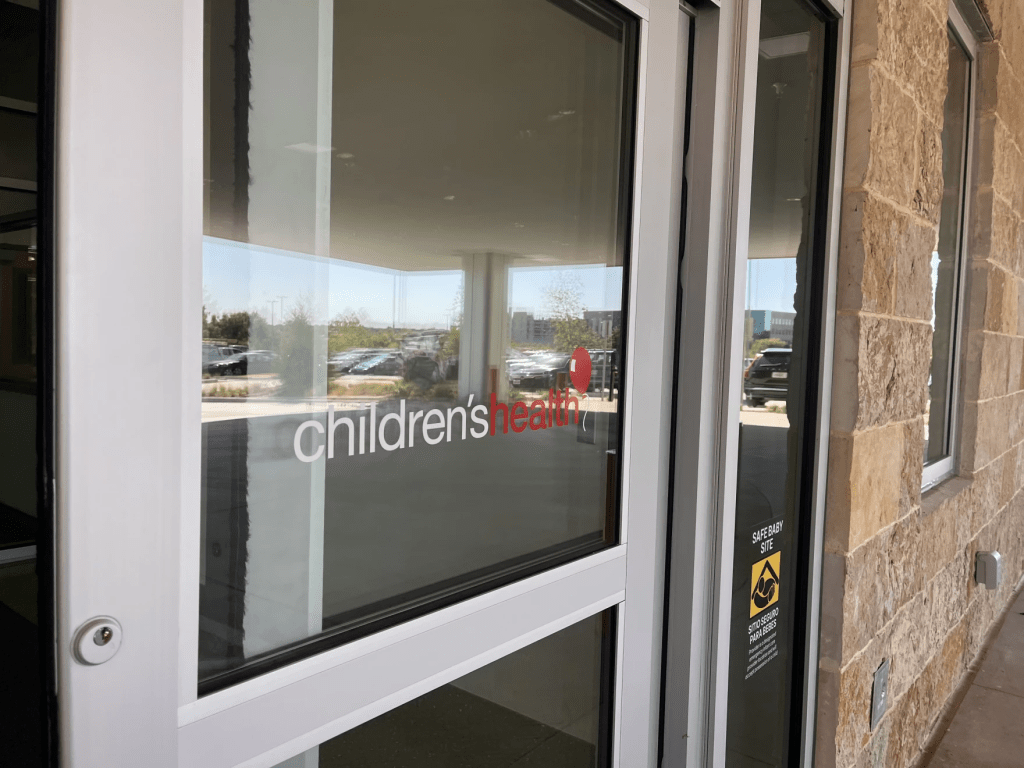
Attorney General Ken Paxton sued Children’s Health System of Texas and a Dallas doctor Wednesday for allegedly violating a Texas ban on gender-affirming care for minors.
The AG asked a Collin County judge for a temporary injunction to stop the two defendants from providing any gender-affirming care or filing any claims to Texas Medicaid for that care.
The suit alleges Jason Jarin, a pediatric and adolescent gynecologist at Children’s Health and associate professor at UT Southwestern Medical Center, violated the law with 19 patients. It alleges he violated a 2023 law that prevents health care providers from giving transgender youth puberty blockers, hormone replacement therapy or surgery for the purpose of transitioning — one of a number of Texas laws aimed at limiting the type of care transgender adults and children can receive.
Paxton also argues Jarin filed claims for these services with Texas Medicaid, which doesn’t cover any gender-affirming care.
“This criminal extremist not only permanently harmed children, but he also then defrauded Medicaid and stuck Texas taxpayers with the bill for this insanity,” Paxton wrote in a statement. “Experimental ‘transition’ procedures on minors are illegal, unethical, and will not be tolerated in Texas.”
Jarin told KERA News Wednesday morning he had just learned of the lawsuit, and declined to comment.
Children’s Health told KERA in a statement its “top priority is the health and well-being of the patients and families we serve.”
“We comply with all applicable local, state and federal health care laws. Due to ongoing legal proceedings, we are unable to comment further at this time,” the statement read.
Jarin became an assistant professor at UT Southwestern in 2016 and has published studies on transgender children, according to his faculty profile.
Many of the lawsuit allegations claim he intentionally prescribed extra hormones for transgender kids leading up to Sept. 1, 2023, when the law took effect, so that they could continue to get treatment.
The law, known as Senate Bill 14, did allow for prescriptions to continue for children who were “already subject to a continuing course of treatment that began prior to June 1, 2023,” and children who “attended at least 12 mental health counseling or psychotherapy sessions over a period of at least six months prior to starting treatment,” according to Paxton’s suit. But those prescriptions had to be for the purpose of weaning the patient off the drug.
Jarin is accused of violating SB 14 with 12 of the 19 patients. If found liable, he could lose his medical license — SB 14 requires the Texas Medical Board to revoke the license of any physician who provides gender-affirming care to a child.
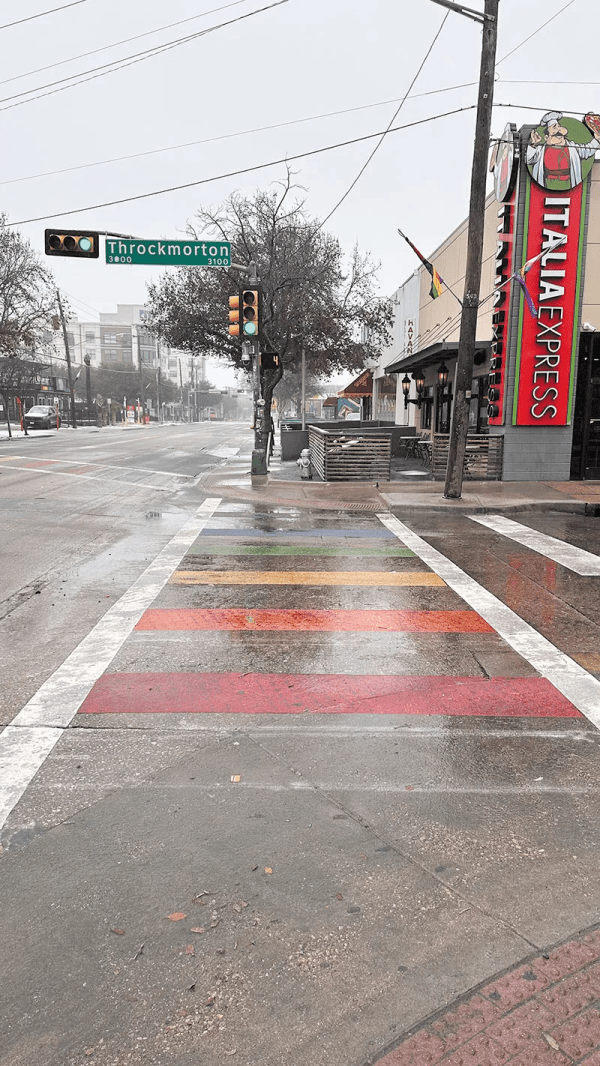
According to a press release dated Jan. 30 and time-stamped 7:38 p.m., the city of Dallas has officially caved to the rainbow-hating homophobes in Texas government, and Oak Lawn’s privately-funded rainbow crosswalks — and any other nonstandard crosswalk designs in the city — will be removed within the next 90 days.
The press release says: “The City of Dallas has notified the Texas Department of Transportation that it will comply with TxDOT’s directive requiring removal or correction of non-compliant pavement markings.”
The TxDOT “request” (aka Greg Abbott’s homophobic demand in order to kowtow to Trump, just like he did with the mid-decade congressional redistricting and by turning over Texas voter rolls to the feds) covers 30 decorative crosswalks citywide, the press release said.
“In a letter signed by Dallas City Manager Kimberly Bizor Tolbert, the city notified the director of the TxDOT Traffic Safety Division that it will comply with the order within 90 days,” the press release continues, quoting Tolbert as saying that “The city appreciates TxDOT’s partnership in sustaining safe multimodal transportation in Dallas. The city will work with affected communities on ways to recognize their neighborhoods.”
The press release concludes: “TxDOT rejected the city’s appeal of the directive to remove pavement markings stating the intersections identified did not meet current Texas Manual on Uniform Traffic Control Devices requirements. TxDOT emphasized that all treatments must comply with the TMUTCD, the Secretary of Transportation’s Safe Road Initiative, and the governor’s directive issued Oct. 8, 2025, which prioritize uniformity and predictability in traffic control devices statewide.”
Considering that numerous studies and incidental data have proven that creative crosswalk designs actually enhance safety, the obvious truth is that Abbott and his minions don’t actually give a fat rat’s ass about safety; they just want to try and suppress the LGBTQ+ community and, at the same time, lick Trump’s boots.
Knowing our LGBTQ+/Oak Lawn community, however, we feel sure that while the homophobes may be winning this battle in the Rainbow War, the fight continues. We expect to see even more rainbows waving proudly across Oak Lawn soon.
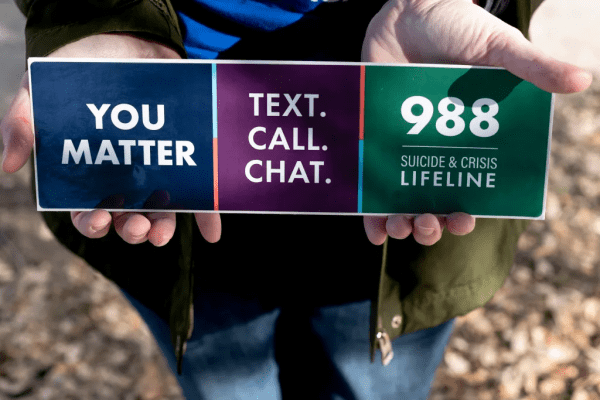
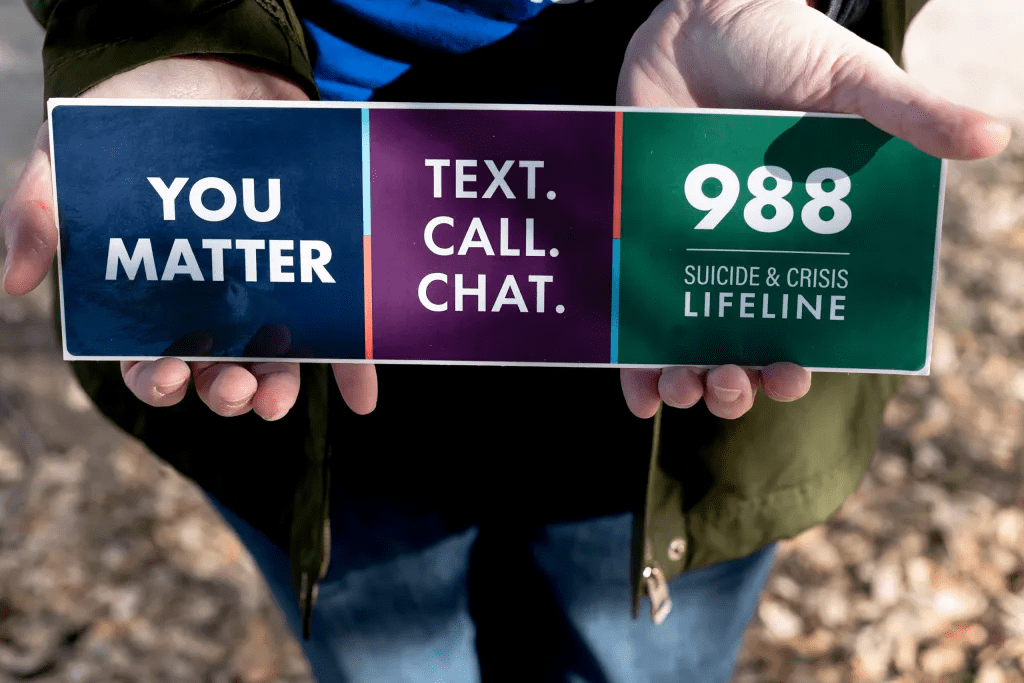
For Julia Hewitt, the removal of LGBTQ+ services from the 988 Suicide and Crisis Lifeline and potential funding freezes and cuts are a personal and professional issue.
As a suicide prevention leader with the American Foundation for Suicide Prevention, a lived experience adviser with Vibrant Emotional Health, which oversees the crisis line in Texas, and a parent of an LGBTQ child raised in Texas, Hewitt, who as a child witnessed her mother struggle with suicidal ideation, has spent decades putting her energy into providing reliable crisis services for everyone who needs them.
But now, she’s watching the foundation she and others created crumble.
“It was a punch to the gut because if you work or volunteer in this space, you know the families who are impacted by this; it can be hard to reconcile when you know how much good this does,” Hewitt said. “When access narrows for those at highest risk, the system becomes less protective overall.”
The 988 Lifeline was created through bipartisan legislation signed into law by President Donald Trump during his first term. This nationwide network of locally based crisis centers offers one-on-one support for mental health, suicide, and substance use-related problems for anyone 24/7.
When someone called 988 in the past, they would hear a greeting message, followed by a menu of choices offering access to specially trained counselors for veterans, Spanish speakers, and LGBTQ+ youth, or sometimes a local crisis counselor.
But last summer, the Trump administration announced in a press release that it will no longer silo LGBTQ+ youth services, which had been the “Press 3 option” for 988 callers, to focus on serving “all help seekers,” saying that these specific LGBTQ+ services had become too expensive.
The Trump administration and theSubstance Abuse and Mental Health Services Administration, the federal agency that provides the majority of the funding for the 988 Lifeline, said the specialized LGBTQ subnetwork’s initial pilot budget of $33 million had been exceeded and unifying services for all callers was a better option.
After the change, only veterans and Spanish speakers still received a tailored option through the 988 call line.
The call line had received nearly 1.3 million contacts nationally from LGBTQ+ people since its launch in 2022 — leaving a void that Texas crisis care centers, already operating at a $7 million funding deficit, are expected to fill.
In Texas, calls made to the line have increased over the years. In December 2025, the Texas 988 system received 25,511. A year prior, that figure was 18,916 and in December 2023, it was 14,961. It’s not clear from publicly available data how many calls are rerouted to LGBTQ+ subnetworks.
Texas Health and Human Services officials said the agency doesn’t have data on how many calls are rerouted to a subnetwork.
Veterans and LGBTQ+ youth have a higher risk of suicide compared to the general population, and canceling specialized services for only one group has mental health experts questioning the administration’s true intent.
“The program was created with overwhelming bipartisan support because, despite our political differences, we should all agree that every young person’s life is worth saving,” Jaymes Black, CEO of the Trevor Project, an organization that helped create option 3, said in a statement. “I am heartbroken that this administration has decided to say, loudly and clearly, that they believe some young people’s lives are not worth saving.”
This comes at a time when some federal funding for the hotline is set to expire, and budget freezes and cuts are wreaking havoc on the network of local crisis centers that the entire 988 infrastructure depends on.
“Currently, Texas’s 988 system faces a convergence of challenges,” said Christine Busse, a peer policy fellow for the Texas branch of the National Alliance on Mental Illness, a nonprofit mental health organization that provides education and peer-to-peer support. “Without additional investment, meeting current demand — let alone absorbing the additional contacts previously handled by specialized services — will remain difficult.”
The removal of option 3
For many LGBTQ+ youth, the hotline was a safe space to be themselves, where they could be transferred to specialists within the LGBTQ+ Youth Subnetwork who usually had the lived experience to relate to them and help them talk through problems like drug and alcohol abuse, bullying, relationship troubles and suicidal thoughts.
Busse said the hotline handled up to 70,000 contacts per month nationwide, and her organization is troubled by its sudden removal because those young people are more than four times as likely to attempt suicide as their peers.
Specialized services are still offered by the Trevor Project and other organizations, but advocates say including them in 988 made it easy for people in crisis to get help by remembering just three numbers.
Now that options have been removed, LGBTQ+ youth are left with 988 dispatchers who are trained to handle a crisis, but might not have the lived experience or training needed to make someone feel safe during an emergency.
“While all callers can still reach trained counselors through 988, the loss of Option 3 eliminates a service designed to address the specific needs of a higher-risk population,” Busse said.
Some states like California have decided to address this issue by having experts from the Trevor Project train their operators. However, Texas lawmakers have not committed any additional resources to this effort.
“LGBTQ+ young people need more resources to end suicide, not fewer,” said Mark Henson, vice president of advocacy and government affairs at The Trevor Project.
Hewitt said she is confident that local operators will receive the specialized LGBTQ+ training to provide the needed care, but the issue is why they need to do it at all.
“There was an entire network that was created just for this, and that is the difference,” she said. “But this means additional training, and that equates to time, experience, people, and hours.”
Busse said another advantage of option 3 was that it routed calls from LGBTQ youth out of the 988 system to other organizations, and its cancellation means a heavier workload for everyone in the system.
The month-to-month data on the crisis hotline shows a steady increase in calls to Texas crisis centers that were already overburdened before the removal of the LGBTQ+ subnetworks.
“Texas’s 988 system was already strained before the removal of Option 3,” Busse said. “Without additional investment, meeting current demand — let alone absorbing the additional contacts previously handled by specialized services — will remain difficult.”
The cost of saving a life
The Texas 988 system currently receives $19 million in funding from two federal grants: the Mental Health Block Grant and the 988 State and Territory Improvement Award. The latter is set to expire in September, and it’s unclear whether Congress will extend it or whether the Trump administration will establish new funding streams.
This comes at a time when local crisis care centers, where many of the 988 call centers operate out of or partner with for their resources, are seeing investment in their services disappear and reappear at the whims of the federal government.
In a span of 24 hours earlier this month, the Trump administration announced wide-ranging budget cuts that many in health care warned would cripple mental health and crisis services across the nation. Amid a national outcry, the administration reversed its decision before the end of the day.
“People got letters, and everyone was panicking, and then it got reversed,” Hewitt said. “A great outcome, but this terminal uncertainty is creating a really poor experience for not only the client but also the person answering the calls.”
The 988 system wasn’t meant to be supported by the federal government forever, and Texas lawmakers like state Sen. José Menéndez have attempted to create a safety net for it.
Last year, lawmakers established the 988 Trust Fund through House Bill 5342 and required a study on sustainable funding mechanisms, including a potential state telecommunications fee, due by December. However, no state dollars have been appropriated to the trust.
Menéndez, who authored the bill that created the trust fund, said the idea of using a telecommunications fee, similar to the fee that supports 911, was quickly shot down at the Capitol.
“I’m concerned that if we don’t have any state funds, 988 is going to have to get reliant on philanthropy, fundraising, and other methods, and we have already started reaching out about how people can make contributions because this year some funds run out,” he said.
As federal funds continue to dwindle and the state shows little interest in propping up the service, the future of 988 in Texas might depend on donations from Texans.
“That uncertainty is precisely why legislative action is imperative,” Busse said. “The infrastructure exists; what is needed now is the commitment to fund it. Without dedicated funding mechanisms, such as a telecommunications fee, Texans risk facing a mental health crisis without the community support network that took years to build.”
For mental health support for LGBTQ youth, call the Trevor Project’s 24/7 toll-free support line at 866-488-7386. For trans peer support, call the Trans Lifeline at 877-565-8860. You can also reach a trained crisis counselor through the Suicide and Crisis Lifeline by calling or texting 988.
Texas judges can decline to perform same-sex weddings because of their “sincerely held religious belief” and not be in violation of the rules on judicial impartiality, according to the Texas Supreme Court.
A lawsuit is being brought by Judge Brian Keith Umphress in Jack County, Texas, against the Texas State Commission on Judicial Conduct. In November 2019, the commission issued a “public warning” to Dianne Hensley, a justice of the peace who recused herself from officiating at same-sex weddings, according to coverage by Legal Newsline.
Umphress later sued the commission’s members, citing that a judge’s refusal to officiate only same-sex unions could result in sanctions by the commission and violate his federal constitutional rights.
He is seeking declaratory and injunctive relief to restrain the commission from punishing judges for not performing same-sex marriage ceremonies, for either religious or secular reasons.
Texas’ virulently anti-trans attorney general, Ken Paxton (R), has launched a tip line that allows people to report on suspected trans people they believe are violating the state’s new bathroom ban.
In a statement announcing the tip line, Paxton said the Texas Women’s Privacy Act – which requires people in public buildings to use bathrooms based on sex assigned at birth – “was passed to ensure that women and girls in Texas are protected from mentally ill men wanting to violate their basic right to privacy.”
“It’s absolute insanity that action like this is even needed,” he claimed, “but unfortunately, in the day and age of radical leftism, it is.”
In reality, research has shown no evidence that allowing trans women access to single-sex spaces like bathrooms poses a safety risk to cisgender women.
In fact, forcing trans people to use facilities that do not align with their gender identity can result in “high rates of harassment and violence against transgender people as well as cisgender people, particularly women who do not conform to traditional ideas of femininity,” according to the Movement Advancement Project. A 2021 study from UCLA’s Williams Institute found that trans people are four times more likely than cis people to be victims of violent crime.
Nevertheless, the enactment of the legislation marks the culmination of a 10-year effort by Texas Republicans. The law does not allow an individual to be punished or fined by the state; rather, it fines the institution that allowed the infraction $25,000, plus an additional $125,000 per day for additional violations.
The law also requires the attorney general’s office to investigate complaints, but first, complaints must be filed with the accused agency. “Together, we will uproot and bring justice to any state agency or political subdivision that opens the door for men to violate women’s privacy, dignity, and safety,” Paxton said.
Paxton’s tip line requires folks to submit the original complaint that was filed with the accused agency in addition to filling out the online form and providing “evidence” that a trans person used the restroom. Perhaps most concerning, it also includes an option to submit up to five photos, even though taking pictures in restrooms is illegal.
Brian Klosterboer, senior staff attorney for the American Civil Liberties Union of Texas, said the tip line “wrongly encourages Texans to violate each other’s privacy in bathrooms.”
“The Attorney General has tried for years to vilify and dehumanize transgender Texans,” Klosterboer said, “but he can’t strip away every person’s right to privacy and right to live our lives free from gender stereotyping.”
Critics of the law have worried that it will spark violent over-policing by the institutions at risk of these massive fines. This policing will affect both trans and cis people who don’t fit strict gender norms.
The law has already been used in ways that lawmakers may not have intended. Students at the University of Texas San Antonio (UTSA), for example, are being forced out of their current dorm rooms and made to relocate because of the ban.
At UTSA, mixed-gender dorms include pairs of rooms separated by a shared bathroom; often, those rooms are occupied by people of different genders. Any students sharing a bathroom between their rooms with someone of a different sex assigned at birth are being forcibly rehoused to comply with the new law.
On December 6, transgender protestors with a group called the 6W Project visited the Texas Capitol and attempted to use the restrooms that aligned with their gender identities to make a point about the lack of enforcement mechanisms in the law.
At first, they easily entered the bathrooms of their choice, then proceeded to give speeches in the Capitol Rotunda, The Texas Tribune reported. But when they attempted to use the restrooms a second time, officers stopped them and asked to see their IDs.
Officers claimed in a statement that the ID requests were voluntary, though those who did not show their IDs were barred from entering the bathroom. The officers did allow two trans women with female markers on their IDs to enter the women’s restrooms. Officers also reportedly only guarded the women’s restroom and not the men’s.
“I think that the Texas government just established that they have no consistent enforceable standards for this law,” protester Matilda Miller told the Texas Tribune.
“What we did was not radical, it was not profound,” added 6W Project co-founder Ry Vazquez. “People use the restroom every day in a public setting, and for it to become what it is now, where it is now an active threat to someone who is not prepared, is utterly abysmal.”
The state of Texas has continued collecting information on transgender drivers seeking to change the sex listed on their licenses, creating a list of more than 100 people in one year.
According to internal documents The Texas Newsroom obtained through records requests, the Texas Department of Public Safety has amassed a list of 110 people who tried to update their gender between August 2024 and August 2025. Employees with driver’s license offices across the state, from El Paso to Paris to Plano, reported the names and license numbers of these people to a special agency email account. Identifying information was redacted from the records released to The Texas Newsroom.
The data was collected after Texas stopped allowing drivers to update the gender on their licenses unless it was to fix a clerical error. It is unclear what the state is doing with this information.
An agency spokesperson did not respond to questions about why the list was created and whether it was shared with any other agencies or state officials. The Texas Newsroom filed records requests in an attempt to find the answers but did not receive any additional information that sheds light on what the state may be doing with these names.
In recent years, GOP lawmakers have passed multiple laws restricting the rights of transgender Texans, including two new measures that went into effect this year.
One defines “male” and “female” on state documents as being based on a person’s reproductive system. The other, known as the “bathroom bill,” bars governments from allowing people to use a restroom at public buildings, parks or libraries that do not match their sex at birth.
While it’s unclear how the state plans to enforce the bathroom bill, transgender activist Ry Vazquez told KUT News she was asked to show her ID before using a restroom in the state Capitol earlier this month. Vazquez said she and three other people were then cited with criminal trespassing and banned from the building for a year.
Landon Richie, the policy coordinator with the Transgender Education Network of Texas, is concerned that the list the state is keeping will be used to pass more state laws targeting the rights of transgender Texans.
“The state collecting this information raises a lot of red flags, not just in terms of people’s privacy and ability to exist not under a magnifying glass,” he said. He added that he wonders “how this information will be leveraged in terms of drafting and crafting additional legislation” to chip away at the civil rights and freedoms of transgender Texans.
For years, transgender people in Texas could update their state IDs to match their gender identity by obtaining a court order and then submitting this document to the state agencies that issue driver’s licenses and birth certificates. After the state restricted updates to driver’s licenses last fall, the state’s health agency followed suit, blocking changes to birth certificates other than to correct hospital errors or omissions.
In March, The Texas Newsroom reported that the state was collecting information on people who continued to ask for these changes despite the policy shift.
The attorney general, whose office determines what records are public, allowed the agency to keep other documents about the policy shift secret. But it did release a list of the four employees with access to the special email account.
The Texas Newsroom also obtained records that show the agency investigated threats against the driver’s license division chief after news of the policy change was made public. But no case was referred to the Travis County Attorney’s Office for prosecution.
The Texas Newsroom has requested an updated version of the list.






You must be logged in to post a comment.