Organizers of Arlington Pride announced Friday they will cancel next year’s event after the City Council rejected a plan to ban discrimination against gay and transgender residents.
The head of the HELP Center for LGBT Health and Wellness said in a statement the organization would not invite visitors to a city that does not offer “the most basic protections.”
“Pride is about safety, celebration, and community,” said DeeJay Johannessen, CEO of the HELP Center, which has offices in Arlington and Fort Worth. “Without local anti-discrimination safeguards, we cannot guarantee those values for our attendees, performers, or partners.”
Arlington Pride began in 2021 and quickly grew to one of the largest celebrations of its kind in North Texas, drawing more than 15,000 people to downtown in June this year. The all-day festival featured performances by RuPaul’s Drag Race queens, live music, an art show and local food vendors.The decision to suspend the event comes only three days after City Council members scrapped a plan to enshrine protections for LGBTQ residents into a city ordinance. The 5-4 vote followed months of debate, delayed votes and impassioned pleas from the LGBTQ community and allies to restore protections.
Initially passed unanimously in 2021, the ordinance prohibited discrimination based on sexual orientation and gender identity for housing, employment and public services. Discrimination against race, religion, national origin, sex and disability was also banned.
In September, the City Council temporarily suspended the ordinance over fears that Arlington risked losing more than $60 million in federal funding after President Donald Trump pledged to withhold money from cities with diversity, equity and inclusion, or DEI, programs. The president’s order has sown widespread confusion among cities that are unsure what qualifies as DEI.
For now, this means Arlington is no longer investigating complaints from people who say they faced discrimination by a landlord, business owner or employer. The vote makes Arlington one of the first cities in the country, if not the first, to repeal a nondiscrimination ordinance over fears of clashing with the Trump administration.
Some Arlington council members said they did not think the city could enforce its anti-discrimination ordinance. Council member Rebecca Boxall, who voted against restoring the ordinance, called it “bad policy.”
“From the very beginning, it was unenforceable at the city level,” said Boxall, who represents downtown Arlington. “The way I looked at it, and a lot of you mentioned protections, it does not offer protection. So in that respect, it’s just misleading. It’s just plain misleading.”
Federal law protects Americans from being discriminated against in public places based on disability, race, color, religion or national origin, but does not explicitly provide protections based on sexual orientation or gender identity.
More than 20 states and nearly 400 cities across the country have policies banning discrimination based on sexual orientation and gender identity, according to the Movement Advancement Project, a nonprofit research organization that tracks legislation related to LGBTQ issues. Texas has no such policy. Dallas, Fort Worth and Plano include LGBTQ residents in their anti-discrimination ordinances.
Mayor Jim Ross, who voted to restore protections, pledged to continue working on the issue and said the council will revisit the ordinance in coming weeks.
“Arlington is one of the most welcoming places,” Ross said. “We want everyone to know they can feel safe and comfortable here.”
On social media, responses to the cancellation of the 2026 Pride festival were mixed. Some said they did not want to spend time or money in a community that did not protect them, but others said this should drive an even larger event. Pride began in 1970 in a handful of U.S. cities to commemorate the one-year anniversary of the police raids on the Stonewall Inn in New York.
“Don’t you think now more than ever,” one person asked on Instagram, “we should host a louder, more exuberant pride?”
The Arlington City Council voted Tuesday night not to reinstate local anti-discrimination protections for LGBTQ residents and others.
As a result, the city’s entire anti-discrimination ordinance will remain suspended for the time being, including provisions that previously protected people based on sexual orientation, gender identity, race, religion and other characteristics.
The measure failed 5-4. Mayor Jim Ross joined Councilmembers Nikkie Hunter, Andrew Piel and Barbara Odom-Wesley in voting to bring back the ordinance. Councilmembers Mauricio Galante, Raul Gonzalez, Rebecca Boxall, Long Pham and Bowie Hogg voted against reinstatement.
“I’ve had heated discussions with community leaders on both sides of the fence and it hasn’t been easy,” Ross said. “Ultimately, tweaking this in some way, shape or form is necessary. I also believe reinstating this ordinance in its entirety is necessary. We have to let our community in Arlington know – you matter to us.”
Ross asked what kind of message they are sending to their children by removing these protections.
“I would not be able to live with myself if I didn’t vote yes on this ordinance,” he said.
There was no other vote on the ordinance Tuesday night, meaning the rest of its protections remain suspended for now.
Those who voted against reinstatement argued that state and federal laws already prohibit much discrimination, making the local ordinance unnecessary.
Councilmember Rebecca Boxall described the 2021 ordinance as “bad policy,” saying it was a symbolic gesture at best and unenforceable at the city level. She argued existing laws give everyone the same protections.
“We already have the protections under our federal and state laws,” she said.
Councilmember Bowie Hogg added that allegations of discrimination should be addressed at the state or federal level rather than by city government.
Supporters of reinstatement rejected that position, saying federal and state laws are not enough.
“We have zero tolerance for discrimination,” Councilmember Barbara Odom-Wesley said.
She argued local safeguards remain necessary because laws alone cannot regulate people’s hearts or guarantee people are treated with respect.
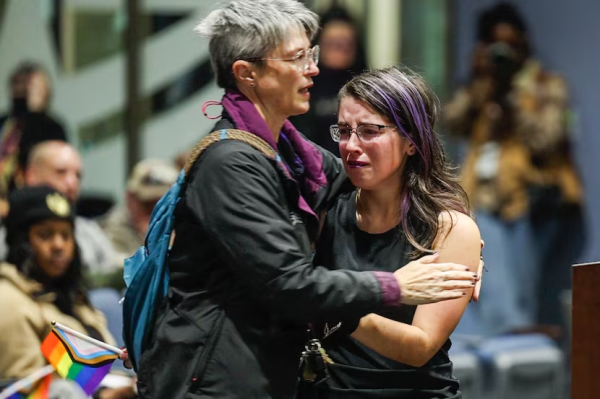
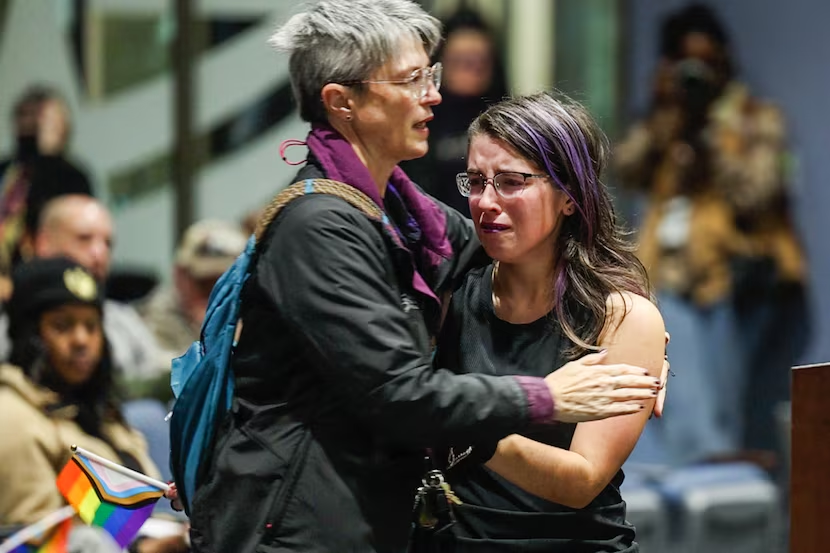
During the public hearing portion of the meeting, 34 speakers urged the council to restore the protections, while 11 spoke in opposition. Many supporters described the ordinance as a critical safeguard for their dignity and safety.
“This is my life on the line, and I don’t want to have to leave,” one resident said.
Nathan Smith, director of public affairs & community engagement at the HELP Center for LGBT Health & Wellness, was one of many speakers against the proposal at the meeting.
“I have no idea why you started us down this path,” Smith told council members. “You’ve been handed legal opinions stating funding is not at threat.”
Arlington resident Katie Duran told council members that if they oppose the non-discrimination ordinance, they’re saying to other families that they can be born in Arlington, but based on who they are, they can’t stay here.
“We are the dream city, we are not the discrimination city,” Duran said. “Why is this even up for discussion? We’re talking about human rights. Show that you actually do care about the citizens of Arlington and reinstate the protections.”
Some speakers argued that there were already state and federal laws covering protections against discrimination, and that there was no need to duplicate those protections in a city ordinance.
The city began debating the change months ago after the Trump administration said it would revoke federal grants from cities that they say violate federal anti-discrimination laws by providing access to “opportunities, benefits, or advantages” based on protected characteristics such as race, gender, or sexual orientation.
In October, the city delayed a vote on a proposal to remove the protections from the city’s anti-discrimination ordinance, saying it needed additional legal counsel. The vote was delayed again in November after a council member experienced a death in the family.
If the protections are removed, it would make Arlington one of the first, if not the first, U.S. cities to take that step, WFAA previously reported.
Ross previously told WFAA that he will vote to keep the city’s current anti-discrimination ordinance intact. He said the city is working to balance residents’ concerns with financial considerations.
“It’s a difficult process. I think we’ve come up with a solution. We’re fine-tuning that as we speak,” Ross said. “I want everybody in Arlington to feel like we’re taking care of them, but when you’re talking hundreds of millions of dollars, it’s tough.”
LGBTQ+ advocates have previously packed city council meetings to oppose the proposal, WFAA previously reported.
“We’re never gonna sit back while civil rights are being stripped away,” DeeJay Johannessen, CEO of the Help Center for LGBTQ+ Health, who is leading a citywide campaign urging residents to oppose the change, previously told WFAA.
Conservative advocacy groups, such as Texas Values, support the change.
“Texas Values recommended that the Arlington City Council remove the terms ‘sexual orientation’ and ‘gender identity’ from the ordinance in order to comply with federal directives, as well as newly enacted state law such as the Texas Women’s Privacy Act (S.B. 8), which went into effect last week,” the organization said in a statement.
The grim consequences for transgender students in Texas are coming into focus three months after the state’s sweeping new Don’t Say Gay legislation went into effect in September.
Texas Gov. Greg Abbott (R) signed the so-called “Bill of Parental Rights” in June, a draconian right-wing wishlist of MAGA priorities banning discussion of LGBTQ+ identity and race in classrooms, shutting down gay-straight student alliances (GSAs) on school campuses, and explicitly prohibiting school staff from supporting trans students, alongside other restrictive measures.
The prohibitions around social transition mean kids known to their classmates and teachers by their preferred name and identity for years are now being deadnamed and forced to assume an identity they’d abandoned long ago.
Ethan Brignac, a trans student at Wylie East High School northeast of Dallas, has been known by his chosen name since seventh grade. With the new legislation in effect, the high school senior lobbied teachers to continue using it.
“In the first week of school, when I was kind of trying to convince my teachers to call me Ethan, I was like, ‘Hey, look, it’s still on my ID.’”
“Then one of my teachers this year said, ‘Okay, they’re gonna fix that soon.’”
Three weeks later, school administrators called him to the library and gave him a new ID. Ethan was now officially identified by his deadname.
He says some teachers seem to make a point of working his legal name into every interaction, he told the Texas Tribune, outing him to peers and rekindling the dread he felt in his time before Ethan.
“It was definitely a big change having my deadname kind of sprawled everywhere,” he said, “It was like, wow, okay, that wasn’t just a social media post I saw, this is real life.”
A school spokesperson confirmed the change was “to ensure full compliance with state law, including Senate Bill 12.”
In the Leander school district north of Austin, faculty may continue to call students by their preferred name, if it was done prior to SB 12’s implementation. But for new students, the use of their chosen names and pronouns is banned. Parents can request a name change, but those updates are only allowed if they’re unrelated to social transitioning, said Conner Carlow, a classroom support specialist in the district.
Carlow grappled with his own sexuality as a middle schooler and recalled how hard it was.
“I wasn’t telling my parents what was going on, so I imagine these kids aren’t either,” Carlow said. “The fact they’re willing to tell us before even the parents is a big deal, and now the fact that we have to just not accept them, I mean, it’s awful.”
The school board in Conroe, Texas, north of Houston, was among the first in Texas to bar teachers from using gender-affirming names and pronouns.
At Woodlands High School in the district, junior Cassie Hilborn had planned to come out as trans, but the onslaught of anti-LGBTQ+ legislation stripped her of her confidence, she says.
“It feels like every day I look at the news and then the headline just reads, ‘Sorry, more things you’ve lost.’”
Cassie takes refuge at the school’s Dungeons & Dragons club, where classmates and a faculty adviser call her by her chosen name. She lodges a small protest against SB 12 by hiding the deadname on her school ID under blue masking tape.
But Cassie remains discouraged, she said.
“Now, even teachers that might have respected my identity have been told that they unequivocally are not allowed to do so,” Cassie said.
A Texas A&M committee agreed that the university was wrong to fire a professor earlier this year after a controversy over a classroom video that showed a student objecting to a children’s literature lesson about gender identity.
The internal committee ruled that the university didn’t follow proper procedures and didn’t prove there was good cause to fire Melissa McCoul, who was a senior lecturer in the English department with over a decade of teaching experience. Republican lawmakers, including Gov. Greg Abbott, had called for her termination after seeing the video.
The committee unanimously voted earlier this week that “the summary dismissal of Dr. McCoul was not justified.”
The university said in a statement that interim President Tommy Williams has received the committee’s nonbinding recommendation and will make a decision in the coming days or weeks after reviewing it.
McCoul’s lawyer, Amanda Reichek, said this dispute seems destined to wind up in court because the university appears to plan to continue fighting and the interim president is facing the same political pressure.
“Dr. McCoul asserts that the flimsy reasons proffered by A&M for her termination are a pretext for the University’s true motivation: capitulation to Governor Abbott’s demands,” Reichek said in a statement.
The video showing a student questioning whether the class discussion was legal under President Trump’s executive order on gender roiled the campus and led to sharp criticism of university president Mark Welsh, who later resigned, but he didn’t offer a reason and never mentioned the video in his resignation announcement.
The opening of the video posted by state Rep. Brian Harrison showed a slide titled “Gender Unicorn” that highlighted different gender identities and expressions.
Students in the class told the Texas Tribune that they were discussing a book called “Jude Saves the World” about a middle schooler who is coming out as nonbinary. That was just one of several books included in the course that highlights LGBTQ+ issues.
After a brief back-and-forth discussion about the legality of teaching those lessons, McCoul asked the student to leave the class. Harrison posted other recordings of the student’s meeting with Welsh that show the university president defending McCoul’s teaching.
The Tribune reported that McCoul had taught the same course at A&M at least 12 times since 2018. University officials decided to end this particular summer class early after the confrontation, but McCoul returned to teach in the fall until after the videos were published online.
Welsh had said when McCoul was fired that he learned she had continued teaching content in a children’s literature course “that did not align with any reasonable expectation of standard curriculum for the course.” He also said that the course content was not matching its catalog descriptions. But her lawyer disputed that, and said McCoul was never instructed to change her course content in any way, shape or form.
Earlier this month, the Texas A&M Regents decided that professors now need to receive approval from the school president to discuss some race and gender topics.
The new policy states that no academic course “will advocate race or gender ideology, or topics related to sexual orientation or gender identity” unless approved in advance by a campus president.
Various universities and their presidents around the country, including Harvard and Columbia have come under scrutiny from conservative critics and President Donald Trump administration over diversity, equity and inclusion practices and their responses to campus protests.
Ethan Brignac, a transgender student at Wylie East High School, has been “Ethan” since seventh grade — to his friends, family and teachers. When he reached high school, his dad further validated his chosen name by requesting “Ethan” be used in school records, including in his email, class rosters and ID, which his teachers honored until this fall.
Three weeks after Brignac started his senior year, Wylie East administrators called him to the library and gave him a new ID. On it, in white capital letters, was a name he hadn’t been called in five years.
“In the first week of school, when I was kind of trying to convince my teachers to call me Ethan, I was like, ‘Hey, look, it’s still on my ID,’” said Brignac, who did not want The Texas Tribune to publish his birth name because it causes him discomfort. “Then one of my teachers this year said, ‘Okay, they’re gonna fix that soon.’”
Now, he said, some teachers seem to wedge his legal name into every interaction, outing him to peers and resurrecting the dread he felt before school records reflected his chosen name.
“It was definitely a big change having my deadname kind of sprawled everywhere,” Brignac said, referring to a derogatory practice of calling a trans person by their birth name. “It was like, wow, okay, that wasn’t just a social media post I saw, this is real life.”
A Wylie spokesperson said the move was “to ensure full compliance with state law, including Senate Bill 12.”
A sweeping piece of legislation that went into effect Sept. 1, SB 12 bars public school employees from socially transitioning a student, which it defines as helping to change a student’s sex assigned at birth by using a different name, pronoun or other practice that denies the birth sex. Dubbed the “Parents’ Bill of Rights,” the law allows guardians to report school-supported social transitioning to the school board, among other powers.
The law also prohibits K-12 faculty from referencing LGBTQ+ identities in class instruction and casual conversations, and it bans school-sanctioned clubs that center sexual orientation or gender identity.
Several transgender students at Texas schools that enforce birth names told the Tribune the new policies have transformed school from a place of support to one that rejects who they are. Considered a derogatory practice in the LGBTQ+ community, dead-naming undermines the wishes of trans people and in some cases, forcibly reveals their trans identity, which can cause or worsen mental health problems among these children, studies have found.
Some parents of trans Texas students say they are frustrated because the law appears to ignore their rights for those of other guardians. A few of these parents joined advocacy and teacher groups to file a lawsuit against SB 12 in August, seeking to pause districts from enforcing the law while the case proceeds.
Parents who support SB 12 say the law boosts their role in their children’s education. Many of them want to erase LGBTQ+ topics from K-12 schools, saying they prompt children to question their identities or that schools force progressive views onto their kids.
“We live in an insane world where a school board has to remind teachers that they cannot tell children, you know, suggest to kids they might be homosexual or they might be actually a girl if they’re a biological male,” said Jeffrey Keech, whose children go to Wylie schools. “It’s unbelievable to me that this even is an issue.”
The Tribune contacted two dozen districts across the state, including districts in the Austin, Houston and San Antonio areas, and spoke with a dozen teachers, parents and transgender students about how schools are implementing SB 12, finding that administrators are taking varied approaches. This is because the law leaves the Texas Education Agency and school districts to decide how to implement it, said Rachel Moran, a law professor at Texas A&M University who directs the education law program.
Some Texas school districts and boards, like Wylie, have adopted policies to ban teachers from aiding in social transitioning, but many have not yet — and are still allowing teachers to honor students’ preferred names and pronouns.
TEA would not respond to questions about how school districts are implementing SB 12, how many districts have complied with the law or deadlines for doing so.
Moran said schools might adopt hard-line policies to shield themselves from retribution.
“This is true with any broad mandate — some are going to be overcomplying,” she said. “It has a real chilling effect. They’re afraid to get anywhere close to a perceived line.”
Teachers told the Tribune the law leaves them anxious and confused because they are unsure when they can use nicknames or how they should respond to parents who request their children’s preferred names and pronouns be used. They lament that they won’t be able to support students who come out as queer. School district officials also worry how the policies will interfere with federal and district rules and daily affairs.
Now, Texas public school students sit in the crosshairs of debates over free speech, race, religion and gender and sexuality in school.
SB 12 is part of a slate of laws that increase oversight of K-12 schools, including new rules that mandate the Ten Commandments in classrooms and clear the way for book bans. In federal and state governments and now school board meetings, disagreements have escalated from “I don’t think that you have the right idea,” to “I don’t think you’re the right kind of person,” Moran said.
Once a place to hear diverse perspectives, she worries schools will leave children unable to tolerate different views.
“The stakes are not just whether I win or lose this particular culture war,” Moran said. “It’s whether I preserve a tradition that has been so formative of our democracy.”
School policies vary
In addition to the ban on social transitioning, SB 12 prohibits hiring, training, programs and activities centered on race, ethnicity, gender identity and sexual orientation — referenced in the law as diversity, equity and inclusion, or DEI, initiatives.
It also requires schools to tell parents their rights, such as allowing them access to school records and course content, and requiring that they give permission for their child to receive health care, hear lessons about sexuality and join clubs.
Among parts of the bill that confuse teachers and administrators is how to respond when parents ask that schools use their child’s preferred name and pronouns or what to call students who have already transitioned.
More than two months after the deadline to comply with SB 12, districts are implementing the bill differently.
Conner Carlow, a former registrar who now works as a classroom support specialist in the Leander school district, said faculty can continue to call students by their preferred name if that was done prior to SB 12 going into effect. However, faculty cannot use new names or new pronouns moving forward, and administrators must approve fresh changes on a case-by-case basis through a form parents submit. These updates are only allowed if they appear unrelated to social transitioning, he said.
The name change form is the only written directive Carlow has gotten regarding SB 12. Leander spokesperson Crestina Hardie would not say how the school district is handling name changes because the board has no policy about it. Hardie said the school district is waiting to enact new rules while it reviews the law and gets clarification from TEA and the district’s legal counsel.
“SB 12 deeply impacts personal and highly complex areas of school life, and the biggest challenge for districts statewide is the lack of clarity and consistency in how these laws intersect with existing Board policy, federal protections and day-to-day school operations,” Hardie said.
The Cypress-Fairbanks and Conroe school districts adopted policies that ban DEI practices and prohibit social transitioning or providing information about it.
Argyle and Academy school districts have posted parental rights resolutions, but nothing on social transitioning.
Deer Park linked SB 12 on its website, but it is unclear how the district will implement the law, including gender-affirming names and pronouns.
Wylie distributed a fact sheet advising employees to use the names and pronouns in school records and barring them from discussing race, color, ethnicity, gender identity and sexual orientation.
Although officials disagreed with parts of the law, Houston-based DRAW Academy rolled out the new rules. The 98% Hispanic charter district issued parental notices and consent forms, banned DEI and limited instruction about sexual orientation and gender identity, according to superintendent and CEO Patricia Beistegui.
“DRAW Academy stands for Diversity, Roots, and Wings, founded under the core belief that diversity and inclusivity is a strength in our democracy,” Beistegui said in an email. She said SB 12 is designed to make positive changes but actually revokes protections.
SB 12 and the way schools are implementing it forces teachers to blindly try to follow the law, said Charlotte Wilson, a Garland ISD special education teacher.
“It’s not clear to teachers what we can say or even do,” Wilson said, referencing instruction about race and LGBT topics. “Teachers are afraid because we don’t want to lose our certifications.”
Wilson wants a say in her children’s learning, but she thinks the law might lead teachers to skip lessons that touch on prohibited themes, undermining students’ quality of education.
“We already highlight different cultural historical events throughout the year, like MLK Day, Hispanic Heritage Month, women’s history,” Wilson said. “If we approach Pride Month the same way, as part of America’s inclusion, and communicate about what’s being taught, that shouldn’t violate anyone’s rights.”
Carlow said Leander’s bar on LGBTQ+ topics makes it hard to support his students. He remembers grappling with his sexuality as a middle schooler and how hard that was.
“I wasn’t telling my parents what was going on, so I imagine these kids aren’t either,” Carlow said. “The fact they’re willing to tell us before even the parents is a big deal, and now the fact that we have to just not accept them, I mean, it’s awful.”
“Called something I’m not”
The varied approaches to SB 12 means transgender students across Texas are experiencing different levels of alienation.
Pride flags fly and teachers use gender-affirming pronouns at Alief Early College High School, said Marshall Romero, a transgender third-year. The only change he noticed was a permission slip to join the speech and debate club.
An Alief spokesperson said the district also sent parents an opt-in and opt-out form for school health services.
Romero said the school remains largely supportive of LGTBQ+ students.
“I never had to worry about the teacher or any instructor telling me, like, ‘Hey, I can’t call you that, or I’m not going to call you that,’” Romero said. “Being able to be called by a name that reflects who I am, being called by certain pronouns, just really gives me a quality of life that I feel like I can hold on and is worth living.”
Cassie Hilborn, a Woodlands High School junior, yearns to be called her gender-affirming name at school. One of Hilborn’s earliest memories is looking in the mirror and wishing she was a girl. During the pandemic, she watched a YouTube video explaining what it meant to be transgender and finally understood why she felt misaligned with her body.
But the past year’s onslaught of transgender-focused federal and state policies stripped her confidence and dashed her plan to wear feminine clothes and ask her teachers to use her chosen name.
“It feels like every day I look at the news and then the headline just reads, ‘Sorry, more things you’ve lost,’” Hilborn said.
The Conroe school board, which governs Woodlands High School, was among the first in Texas to bar teachers from using gender-affirming names and pronouns.
At the school Dungeons & Dragons club, Hilborn’s peers and faculty adviser call her “Cassie,” but everyone else uses the legal name on her ID, which she hides under blue masking tape. She wants her classmates and teachers to know she’s transgender, but laws like SB 12 have discouraged her from coming out.
“Now, even teachers that might have respected my identity have been told that they unequivocally are not allowed to do so,” Hilborn said.
Once school records reflected Brignac’s preferred name, his grades climbed. He became president of the National Art Honor Society and founded an art mentorship program. He raised his hand so often that one teacher joked about it.
His stepmom Shannon Keene worries that being misgendered at school will thrust him back into isolation, like she saw before he entered high school.
This year’s reversal “made him feel rejected as a human being,” she said.
Having socially transitioned in seventh grade when he cut his hair and asked to go by Ethan, Brignac’s peers have been confused to hear his feminine name now used.
He’s reminded every day that his state and school deny his identity. “It’s rough being called something I’m not,” said Brignac, who now avoids talking in class.
Queer young people have disproportionate rates of depression and mental illness. But a study of 129 transgender and gender nonconforming students found that having their identities affirmed decreases symptoms of severe depression. Being called preferred names and pronouns is correlated with a drop in suicidal thoughts by 29% and suicidal behavior by 56%, according to the study published in the Journal of Adolescent Health in 2018.
Refusing to use preferred names tells transgender and nonbinary students they’re unworthy of respect, said Johnathan Gooch of Equality Texas, a nonprofit that advocates for LGBTQ equality.
“It’s as if someone else picked a nickname for you that you didn’t want, a malicious nickname, that they repeatedly use despite the fact they know what you prefer to be called,” Gooch said.
Parental rights for all?
Some parents who support expelling discussions about queer identities from schools say SB 12 protects children from viewpoints that might spur them to question who they are.
Around three years ago, after Kevin Brooks’ then-middle school daughter returned from school in the Wylie district and said her friend used nonbinary pronouns, he responded: “Sweetheart, don’t buy into that foolishness.”
The army veteran thinks children are too young to learn about LGBTQ+ identities and that it confuses them to hear that gender and sexuality are spectrums, like some schools have taught.
“Why are you teaching these kids that are as young as 5 and 6 years old all this stuff that they don’t need to deal with?” Brooks said. “I told my son the other day, I wish you’d stay innocent till you’re 35 years old, because the stuff that’s going on in the world right now absolutely just, it not only mortifies me, it terrifies me. It just really pisses me off.”
Brooks hasn’t heard of teachers at Wylie discussing LGBTQ+ identities, but he’s terrified to imagine them pledging allegiance to a rainbow flag, which happened in a California classroom in 2021.
In May, Don Zimmerman participated in a protest against a transgender teacher at Cedar Ridge High School in the Round Rock district, where he lives and previously ran for the school board.
Students and at least one faculty member stood across the street with posters saying, “Y’all means all.” To Zimmerman, the faculty member’s presence is proof of schools “coaching children and encouraging them to embrace and publicly protest in favor of this transgender extremism.”
“The school is so hell bent on this agenda of promoting transgenderism and the LGBT lifestyle, …and the parents feel so powerless at stopping the public schools agenda that they go to the Legislature and get these laws passed,” said Zimmerman, who sent his third grader to private school to shield him from LGBTQ+-themed lessons.
Parents of transgender students say new policies complying with the so-called “parents’ bill of rights” are a slap in their face. Keene, Brignac’s stepmom, said policies against using gender-affirming names and pronouns pander to conservative views and hurt gender-queer children, who are 3.3% of youths ages 13-17 in the U.S.
Brignac’s biological mom told the Tribune she is now seeking to change her son’s legal name so he hears Ethan when he graduates.
“I fail to see the correlation between a parent asking that their child be called by their preferred name and pronouns and providing direct instruction on gender identity,” Keene said. “It’s about control, not about rights. And it’s also just blatant disregard for a person’s sense of self. And to do that to kids is unconscionable.”
Arlington Mayor Jim Ross stood under the June sun and delivered an impassioned speech in front of a crowd awash in rainbows and glitter.
“You know Martin Luther King taught us way back in the ‘60s, that there’s only one thing strong enough to overcome hate,” the North Texas mayor said.
“Love! Love!” the crowd gathered at the city’s annual Pride celebration shouted, answering his call.
His faith, he continued, instructed him to love his neighbor regardless of their differences.
“So I wanted to come here and say thank you for loving us,” he said. “And I love you!”
Five months later, Ross faced a similar crowd at City Hall on Oct. 14. There was no love in the room.
The Dallas-area suburb was — in an effort to comply with new presidential executive orders — considering eliminating the city’s protections for LGBTQ+ people that prohibit employers and any business providing accommodation from discriminating against them.
More than $60 million in federal funds for parks, roads and public safety were at stake, city leaders said.
“It’s a horrible balancing attempt,” Ross said in a recent interview with The Texas Tribune, referring to protecting the city’s budget and its residents.
Other Texas cities, including Dallas and Fort Worth, have revised city policies and ended programs that comply with Trump’s executive orders that end diversity and inclusion efforts. Arlington is believed to be the first city to consider ending explicit protections for LGBTQ+ residents.
The City Council tabled its vote and is expected to revisit the issue Monday night. The impending vote is the result of a pressure campaign waged by conservative activists, state Republican lawmakers and the White House to roll back protections for LGBTQ+ people they say are unfair and harm women and children.
LGBTQ+ advocates, meanwhile, argue that such revisions push residents further away from public life. And these decisions erode the recognition and acceptance this community worked for decades to secure.
Texas — like many states — has a long history of criminalizing certain acts by LGBTQ+ people. While the U.S. Supreme Court has overturned sodomy laws and legalized same-sex marriage, Texas state lawmakers and Gov. Greg Abbott have since 2023 sought to undo those victories by passing a suite of laws that put new limits on how LGBTQ+ people live their lives and express their identities in public.
Meanwhile, at the federal level, President Donald Trump has, since returning to office in January, instructed government agencies to remove words and phrases associated with diversity, race and transgender people — exerting the full strength of the federal government across the U.S. to achieve its agenda.
It’s those executive orders that triggered the Arlington City Council to review its policies, which LGBTQ+ advocates fought to put in place to provide protections that don’t exist at the state and federal levels.
Brad Pritchett, interim CEO of Equality Texas, one of the state’s oldest advocacy groups, said the policies at the city level are one of this community’s few available safeguard.
“It has fallen on local municipalities to find a way to protect the folks that live in their communities,” he said. “And I think when we see these types of non-discrimination laws passed at the local level, what that’s really doing is sending a message to the residents of these cities that who you are should not impact whether or not you have a job, a roof over your head, or can access basic services.”
Many of the recent efforts to curtail the LGBTQ+ community have been largely targeted toward transgender people. However, Pritchett said the Arlington debate shows more is on the line for all LGBTQ+ people.
“When they shift their gaze to another group of people that they don’t like,” he said, “they’ve proven that they can weaponize government to harm anyone they want.”
Conservative leaders say they aim to reset an imbalance pushed by former Democratic presidential administrations and to protect women. Passing these laws and executive orders, conservatives argue, is a necessary step toward acknowledging the differences between the two genders.
“I think what’s been missing a lot of times from the opposition is the recognition of the rights of women and the vulnerability that women have in these private spaces,” said Mary Elizabeth Castle, director of government relations at Texas Values, a statewide nonprofit that advocates to end abortion, expand religious liberties, and other conservative causes. “It’s very important to have that in law because the dignity of the two sexes is not recognized. A lot of rights and modesty that belong to women are diminished.”
“I promised to obey the law”
Ross, the Arlington mayor, first learned the city might have to revisit its anti-discrimination policies when the city’s lawyer told him the municipality lost out on a $50,000 federal grant because a certain policy used the word “inclusive.”
Ignoring Trump’s orders could come at too great an economic loss for the city. And his job is to obey the law, he said.
“I took an oath, and I promised to obey the law,” Ross said. “I didn’t say I’ll follow the law unless I disagree with it, so I’m torn. I don’t want to do things that are harmful to any part of our community or that paint the perception that we don’t love every single person here.”
To be sure, executive orders are not laws. They serve as marching orders for agencies across state and local governments, said Cathryn Oakley, senior director of legal policy at the Human Rights Campaign, a nationwide LGBTQ+ advocacy group.
The manner in which the Trump administration has issued its orders is meant to intimidate and bully, Oakley said.
“It’s really frustrating if you’re a person who cares about the rule of law,” Oakley said. “It is not clear how folks are supposed to implement these things, and it sets up this culture of fear and intimidation because there’s no safe harbor. Either the president will come after you, or the governor will come after you.”
Presidents of both political parties have used executive orders increasingly to drive policy outcomes. For example, President Joe Biden used executive orders to push a climate-friendly agenda and diversity efforts in the wake of the 2020 Black Lives Matter movement.
Sherry Sylvester, a senior fellow at the conservative Texas Public Policy Foundation, said rolling back Biden-era DEI efforts was a return to the status quo — and fundamentally American.
“When you remove Diversity, Equity and Inclusion policies from agencies, universities and public schools, all you’re saying is all decisions must be made on merit,” Sylvester said. “When you interview people for a job, you’ve hired a person who is most qualified for the job. You get no points if you’re African American, no points if you’re female, no points if you have a gender identity based on your sexual preference.”
Executive orders are meant to spur local governments to act quickly and comply to win much-needed capital to keep their cities operating. Conservatives supporting Trump’s efforts say the tactic began with former President Barack Obama.
In 2011, Obama issued a directive intended to crack down on sexual violence in public schools and universities. In 2016, the U.S. Department of Education updated those rules and said that schools receiving federal funding had to respect a transgender student’s gender identity, which Castle said sparked a movement to oppose such acknowledgements, including in Texas.
In 2017, the Texas Legislature attempted to pass a bill restricting transgender people’s access to restrooms. It died in the legislative process. With Trump back in office this year, the movement to regulate transgender people’s actions in public gained momentum and lawmakers passed a bill restricting the restrooms transgender people can use in government buildings and schools. Castle insisted that such a bill would promote safety in restrooms.
“No one is being denied going to the restroom,” Castle said. “They just have to go to the restroom based on their biological gender.”
The result of Trump’s orders naming transgender people undermines decades of work by the LGBTQ+, the scientific and medical community to participate in public life, said Elana Redfield, federal policy director for UCLA’s School of Law. And they undermine years of scientific research that helped governments and communities understand transgender people’s place in society.
“We can’t function in society without bathrooms,” Redfield said. “It’s very difficult to have a job, take public transportation, travel long distances, go shopping, or do anything without access to bathrooms. These kinds of laws really do have the potential to deeply, deeply exclude transgender people from all aspects of society.”
A renewed movement for queer equity
LGBTQ+ Texans are familiar with laws regulating their right to exist publicly and have fought for an equal standing with everyone else for just as long. The modern movement can be traced back to the 1960s, said Wesley Phelps, a historian at the University of North Texas whose focus is the LGBTQ+ community in the south.
At the time, Texas advocates fought sodomy laws banning sex for gay men and lesbian women.
“There were activists all over Texas who understood that as long as that sodomy law was on the books, as long as it was illegal to engage in sex with someone of the same sex, queer people would always wear that stigma of criminality,” Phelps said. “You could be denied employment, you could be denied housing, you could be denied food stamp assistance, because if you were gay, you were an admitted criminal.”
By the 1970s, advocacy groups had been established in major cities, including Dallas and Houston. And in these cities, activists formed political advocacy groups. The sentiment eventually spread farther, reaching Austin, San Antonio and El Paso. Part of that movement included adding local protections to city charters that prohibited housing and employment discrimination that don’t exist at the state or federal level.
And in 2003, the Texas Supreme Court ruled the sodomy law unconstitutional.
The push to eliminate protections for the broader LGBTQ+ community will trigger a backlash, Phelps said.
“I think things like that have reignited a movement for queer equality today,” Phelps said. “It’s not just that we’re entering a period where it’s going to be difficult to win victories, but the ones already achieved are under threat.”
Many Texans told The Texas Tribune that they plan to stay put, regardless of the policies seeking to regulate their everyday lives. They are turning to optimism and each other, reminding themselves of their right to live openly, they said.
In Houston, Daron Yanez Perez hosts support groups for transgender men. Trans Men Empowerment, which he founded in 2023, has more than 200 members and hosts meetings in person and online. As part of the programming, Perez invites policy and mental health experts who help the members understand how the policies affect them.
Many of Perez’s members are reluctant to use public restrooms, he said, out of fear for their safety. Perez said he would not use the women’s restroom because he does not think women would feel comfortable sharing a restroom with him.
“They’re using restrooms to go after us because they don’t like us, but we’re not going anywhere, we’ve always been here,” Perez said.
In Dallas, Javier Enriquez helps LGBTQ+ people who struggle with loneliness. Enriquez, who is president of the Dallas Social Queer Association, hosts about a dozen events a month. Up to 40 attended each event, which include gay trivia and activities tailored for disabled, elderly people, Hispanic and Asian Pacific Islanders who identify as LGBTQ+.
Enriquez said directives that spell out limits for transgender people and rainbow crosswalks are a distraction from real issues like potholes and unmet trash service. And LGBTQ+ Texans as a community are used to enact that distraction, he said. The resources spent on removing the rainbow colors from the crosswalks, he said, could be put to better use on the city’s infrastructure.
Still, he acknowledged that the orders have instilled fear.
“There are people, especially our transgender siblings, who are worried about being able to call Dallas their home with everything going on, and not all of them have the privilege of the resources to be able to move out,” he said. “And to some of them, this is home, where they built their lives and families… and despite what happens in this world, we are here and we aren’t going anywhere.”
The Texas State Board of Education is reshaping how public schools will teach social studies for years to come, but its recent selection of the panelists who will advise members during the process is causing concern among educators, historians and both Democrats and Republicans, who say the panel’s composition is further indication that the state wants to prioritize hard-right conservative viewpoints.
The Republican-dominated education board earlier this year officially launched the process of redesigning Texas’ social studies standards, which outline in detail what students should know by the time of graduation. The group, which will meet again in mid-November, is aiming to finalize the standards by next summer, with classroom implementation expected in 2030.
The 15 members in September agreed on the instructional framework schools will use in each grade to teach social studies, already marking a drastic shift away from Texas’ current approach. The board settled on a plan with a heavy focus on Texas and U.S. history and less emphasis on world history, geography and cultures. Conservative groups like Texas Public Policy Foundation and the Heritage Foundation championed the framework, while educators largely opposed it.
In the weeks that followed, the board selected a panel of nine advisers who will offer feedback and recommendations during the process. The panel appears to include only one person currently working in a Texas public school district and has at least three people associated with far-right conservative activism. That includes individuals who have criticized diversity efforts, questioned school lessons highlighting the historical contributions of people of color, and promoted beliefs debunked by historians that America was founded as a Christian nation.
That group includes David Barton, a far-right conservative Christian activist who gained national prominence arguing against common interpretations of the First Amendment’s establishment clause, which prevents the government from endorsing or promoting a religion. Barton believes that America was founded as a Christian nation, which many historians have disproven.
Critics of Barton’s work have pointed to his lack of formal historical training and a book he authored over a decade ago, “The Jefferson Lies,” that was pulled from the shelves due to historical details “that were not adequately supported.” Brandon Hall, an Aledo Republican who co-appointed Barton, has defended the decision, saying it reflected the perspectives and priorities of his district.
Another panelist is Jordan Adams, a self-described independent education consultant who holds degrees from Hillsdale College, a Michigan-based campus known nationally for its hard-right political advocacy and efforts to shape classroom instruction in a conservative Christian vision. Adams’ desire to flip school boards and overhaul social studies instruction in other states has drawn community backlash over recommendations on books and curriculum that many felt reflected his political bias.
Adams has proclaimed that “there is no such thing” as expertise, describing it as a label to “shut down any type of dialogue and pretend that you can’t use your own brain to figure things out.” He has called on school boards to craft policies to eliminate student surveys, diversity efforts and what he considers “critical race theory,” a college-level academic and legal framework examining how racism is embedded in laws, policies and institutions. Critical race theory is not taught in K-12 public schools but has become a shorthand for conservative criticism of how schools teach children about race.
In an emailed response to questions from The Texas Tribune, Adams pointed to his earlier career experience as a teacher and said he understands “what constitutes quality teaching.” Adams also said he wants to ensure “Texan students are taught using the best history and civics standards in America” and that he views the purpose of social studies as forming “wise and virtuous citizens who know and love their country.”
“Every teacher in America falls somewhere along the political spectrum, and all are expected to set their personal views aside when teaching. The same goes for myself and my fellow content advisors,” Adams said. “Of course, given that this is public education, any efforts must support the U.S. Constitution and Texas Constitution, principles of the American founding, and the perpetuation of the American experiment in free self-government.”
Republicans Aaron Kinsey and LJ Francis, who co-appointed Adams, could not be reached for interviews.
David Randall, executive director of the Civics Alliance and research director of the National Association of Scholars, was also appointed a content adviser. He has criticized standards he felt were “animated by a radical identity-politics ideology” and hostile to America and “groups such as whites, men, and Christians.” Randall has written that vocabulary emphasizing “systemic racism, power, bias, and diversity” cannot coexist with “inquiry into truth — much less affection for America.” He has called the exclusion of the Bible and Christianity in social studies instruction “bizarre,” adding that no one “should find anything controversial” about teaching the role of “Judeo-Christian values” in colonial North America.
Randall told the Tribune in an email that his goal is to advise Texas “as best I can.” He did not respond to questions about his expertise and how he would work to ensure his personal beliefs do not bleed into the social studies revisions.
Randall was appointed by Republican board members Evelyn Brooks and Audrey Young, both of whom told the Tribune that they chose him not because of his political views but because of his national expertise in history and civics, which they think can help Texas improve social studies instruction.
“I really can’t sit here and say that I agree with everything he has said. I don’t even know everything that he has said.” Brooks said. “What I can say is that I can refer to his work. I can say that he emphasizes integrating civics.”
The advisory panel also consists of a social studies curriculum coordinator in the Prosper school district and university professors with expertise ranging from philosophy to military studies. The group notably includes Kate Rogers, former president of the Alamo Trust, who recently resigned from her San Antonio post after Lt. Gov. Dan Patrick criticized her over views she expressed in a doctoral dissertation suggesting she disagreed with state laws restricting classroom instruction on race and slavery.
Seven of the content advisers were selected by two State Board of Education members each, while Texas’ Commissioner of Higher Education Wynn Rosser chose the two other panelists. Board member Tiffany Clark, a Democrat, did not appoint an adviser, and she told the Tribune that she plans to hold a press conference during the board’s November meeting to address what happened.
Staci Childs, a Democrat from Houston serving on the State Board of Education, said she had anticipated that the content advisory group would include “extremely conservative people.” But her colleagues’ choices, she said, make her feel like “kids are not at the forefront right now.”
Pam Little, who is the board’s vice chair, is one of two members who appear to have chosen the only content adviser with active experience working in a Texas K-12 public school district. The Fairview Republican called the makeup of the advisory panel “disappointing.”
“I think it signals that we’re going in a direction where we teach students what we want them to know, rather than what really happened,” Little said.
The board’s recent decisions show that some members are more focused “on promoting political agendas rather than teaching the truth,” said Rocío Fierro-Pérez, political director of the Texas Freedom Network, a progressive advocacy organization that monitors the State Board of Education’s decisions.
“Whether your political beliefs are conservative, liberal, or middle of the road really shouldn’t disqualify you from participating in the process to overhaul these social studies standards,” Fierro-Pérez said. “But it’s wildly inappropriate to appoint unqualified political activists and professional advocates with their own agendas, in leading roles and guiding what millions of Texas kids are going to be learning in classrooms.”
Other board members and content advisers insist that it is too early in the process to make such judgments. They say those discussions should wait until the actual writing of the standards takes place, which is when the board can directly address concerns about the new framework.
They also note that while content advisers play an integral role in offering guidance, the process will include groups of educators who help write the standards. State Board of Education members will then make final decisions. Recent years have shown that even those within the board’s 10-member Republican majority often disagree with one another, making the final result of the social studies revisions difficult to predict.
Donald Frazier, a Texas historian at Schreiner University in Kerrville and chair of Texas’ 1836 Project advisory committee, who was also appointed a content adviser, said that based on the panelists’ conversations so far, “I think that there’s a lot more there than may meet the eye.”
“There’s people that have thought about things like pedagogy and how children learn and educational theory, all the way through this panel,” Frazier said. “There’s always going to be hand-wringing and pearl-clutching and double-guessing and second-guessing. We’ve got to keep our eye on the students of Texas and what we want these kids to be able to do when they graduate to become functioning members of our society.”
The makeup of the advisory panel and the Texas-heavy instructional framework approved in September is the latest sign of frustration among conservative Republicans who often criticize how public schools approach topics like race and gender. They have passed laws in recent years placing restrictions on how educators can discuss those topics and pushed for instruction to more heavily emphasize American patriotism and exceptionalism.
Under the new framework, kindergarteners through second graders will learn about the key people, places and events throughout Texas and U.S. history. The plan will weave together in chronological order lessons on the development of Western civilization, the U.S., and Texas during grades 3-8, with significant attention on Texas and the U.S. after fifth grade. Eighth-grade instruction will prioritize Texas, as opposed to the broader focus on national history that currently exists. The framework also eliminates the sixth-grade world cultures course.
When lessons across all grades are combined, Texas will by far receive the most attention, while world history will receive the least.
During a public comment period for the plan, educators criticized its lack of attention to geography and cultures outside of America. They opposed how it divides instruction on Texas, U.S. and world history into percentages every school year, as opposed to providing students an entire grade to fully grasp one or two social studies concepts at a time. They said the plan’s strict chronological structure could disrupt how kids identify historical trends and cause-and-effect relationships, which can happen moreeffectively through a thematic instructional approach.
But that criticism did not travel far with some Republicans, who argue that drastic changes in education will almost always prompt negative responses from educators accustomed to teaching a certain way. They point to standardized test results showing less than half of Texas students performing at grade level in social studies as evidence that the current instructional approach is not working. They also believe the politicization of education began long before the social studies overhaul, but in a way that prioritizes left-leaning perspectives.
“Unfortunately, I think it boils down to this: What’s the alternative?” said Matthew McCormick, education director of the conservative Texas Public Policy Foundation. “It always seems to come down to, if it’s not maximally left-wing, then it’s conservative indoctrination. That’s my perspective. What is the alternative to the political and policymaking process? Is it to let teachers do whatever they want? Is it to let the side that lost the elections do what they want? I’m not sure. There’s going to be judgments about these sorts of things.”
This is not the first time the board has garnered attention for its efforts to reshape social studies instruction. The group in 2022 delayed revisions to the standards after pressure from Republican lawmakers who complained that they downplayed Texan and American exceptionalism and amounted to far-left indoctrination. Texas was also in the national spotlight roughly a dozen years prior for the board’s approval of standards that reflected conservative viewpoints on topics like religion and economics.
Social studies teachers share the sentiment that Texas can do a better job equipping students with knowledge about history, geography, economics and civics, but many push back on the notion that they’re training children to adhere to a particular belief system. With challenges like budget shortfalls and increased class sizes, they say it is shortsighted to blame Texas’ academic shortcomings on educators or the current learning standards — not to mention that social studies instruction often takes a backseat to subjects like reading and math.
“I think we’re giving a lot more credit to this idea that we’re using some sort of political motivation to teach. We teach the standards. The standards are there. That’s what we teach,” said Courtney Williamson, an eighth-grade social studies teacher at a school district northwest of Austin.
When students graduate, some will compete for global jobs. Others may go to colleges across the U.S. or even internationally. That highlights the importance, educators say, of providing students with a broad understanding of the world around them and teaching them how to think critically.
But with the recent moves requiring a significant overhaul of current instruction — a process that will likely prove labor-intensive and costly — some educators suspect that Texas leaders’ end goal is to establish a public education system heavily reliant on state-developed curricula and training. That’s the only way some can make sense of the new teaching framework or the makeup of the content advisory panel.
“I’m really starting to notice an atmosphere of fear from a lot of people in education, both teachers and, I think, people higher up in districts,” said Amy Ceritelli-Plouff, a sixth-grade world cultures teacher in North Texas. “When you study history, you look at prior conflicts and times in our history when there has been extremism and maybe too much government control or involvement in things; it starts with censoring and controlling education.”
The Texas A&M University System’s board of regents will vote on Thursday on whether to prohibit faculty at its 12 universities from teaching “race or gender ideology” unless those lessons are pre-approved by each campus president or a delegate.
The proposal appears to be the first time that a Texas public university system offers definitions of what kind of instruction related to race and gender should not be permitted.
“Race ideology,” the draft of the proposal says, would encompass any concept that “attempts to shame a particular race or ethnicity” or “promotes activism on issues related to race or ethnicity rather than academic instruction.” The proposal would define “gender ideology” as “a concept of self-assessed gender identity replacing, and disconnected from, the biological category of sex.”
The policy does not say how the university would decide what constitutes “race ideology” or “gender ideology,” or what would happen if a faculty member is accused of violating the rule. A Texas A&M University System spokesperson did not respond to a request for comment.
The regents’ Committee on Academic and Student Affairs will hear presentations and consider the proposed policy on Thursday morning, according to the agenda for the meeting. The full board of regents will take public testimony on the proposal and vote on it later that day. The meeting will be livestreamed and the public is invited to testify.
Leonard Bright, president of the Texas A&M Chapter of the American Association of University Professors, said faculty were not consulted on the proposed changes, which he called “a direct violation” of their expertise and freedom to teach.
“And if that’s the case, there’s just going to be a further black eye on higher education here in Texas,” he said.
Robert Shilby, special counsel for campus advocacy at the Foundation for Individual Rights and Expression, said the proposal would “invite unlawful censorship, chill academic freedom, and undermine the core purpose of a university,”
“Hiring professors with PhDs is meaningless if administrators are the ones deciding what gets taught,” he said. “Faculty will start asking not, ‘Is this accurate?’ but ‘Will this get me in trouble?’ That’s not education, it’s risk management.”
In a Monday email to faculty, Simon North, interim dean of Texas A&M’s College of Arts and Sciences, acknowledged that the proposal raised many questions about its implementation, “such as the criteria that will determine when course content is considered relevant, controversial, or inconsistent with a syllabus; the mechanisms by which course material would be approved and compliance evaluated; and the timing of implementation.” He added that he is working with the provost’s office to answer those questions and that he will seek input on the proposal from other leaders in the college and department heads.
“Approval of these revisions could have far-reaching implications for undergraduate education, and the scope of the implications will depend on the answers to these questions,” North said.
Faculty are already signaling they will show up in force to the regents’ meeting to push back against the proposal. Bright, a professor at Texas A&M’s Bush School of Government and Public Service, said professors are organizing testimony, drafting statements and coordinating with colleagues across Texas to oppose the revisions.
He said the policy would affect disciplines across the university — from political science and history to public service and biology — and that some faculty fear it would shift control over classroom content from faculty to administrators. He added that some of his colleagues believe the revisions are an attempt to “institutionalize indoctrination” and that if the proposed changes are approved, they will likely be challenged in court.
The proposed prohibition comes two months after the system’s College Station flagship fired Professor Melissa McCoul, whose discussion of gender identity in a children’s literature class was secretly recorded by a student and later circulated online, drawing fire from Republican lawmakers and ultimately toppling the university’s former president.
Since McCoul’s firing, other university systems have begun imposing their own restrictions on classroom content.
On Sept. 25, the Texas Tech University System instructed its faculty to ensure their courses comply with a federal executive order, a letter from Gov. Greg Abbott and a new state law that recognizes only two sexes. In the weeks that followed, Texas’ other public university systems — including the University of Texas, University of North Texas, Texas State and Texas Woman’s University — announced or began internal audits of their course offerings. All said they were acting to ensure compliance with state or federal law, though few detailed what they were looking for or what changes might follow.
No state or federal law prohibits instruction on race, gender or sexual orientation in universities. However, recent state legislation has put direct and indirect pressure on how universities implement policies related to race and gender.
In 2023, the Texas Legislature approved Senate Bill 17, which banned diversity, equity and inclusion offices and initiatives at the state’s public universities. Earlier this year, lawmakers approved Senate Bill 37, which gave governor-appointed university regents the final say on whether to approve new courses and prohibited lessons that “advocate or promote the idea that any race, sex, or ethnicity or any religious belief is inherently superior to any other.” An earlier version of the legislation would have required that college courses “not endorse specific public policies, ideologies or legislation,” but the proposal was narrowed down after pushback from professors who said such a restriction would lead to self-censorship and infringe on academic freedom.
The Texas A&M Board of Regents will also consider on Thursday a new policy that would bar faculty from teaching material “inconsistent with the approved syllabus for the course.” The clause mirrors the reason university officials gave McCoul for firing her. They said she refused to change her course content to match the catalog description, but McCoul and other faculty have countered that course descriptions are often broad and that professors are expected to design their own syllabi and teach according to their expertise.
McCoul has appealed her termination through the university’s Committee on Academic Freedom, Responsibility and Tenure, which concluded its hearing last week. The committee is expected to share a recommendation with interim university President Tommy Williams in the coming weeks on how to respond to McCoul’s appeal, but Williams is not obligated to follow it.
A U.S. Court of Appeals just reversed a ruling made by a District Court judge in 2023, overturning his permanent injunction against Texas’ wide-reaching and vaguely worded drag ban, which the judge claimed infringed on First Amendment rights.
The plaintiffs in The Woodlands v. Paxton issued a joint statement, saying, “Today’s decision is heartbreaking for drag performers, small businesses, and every Texan who believes in free expression. Drag is not a crime. It is art, joy, and resistance — a vital part of our culture and our communities. We are devastated by this setback, but we are not defeated. […] We will not stop until this unconstitutional law is struck down for good.”
Texas S.B. 12 was signed into law in June 2023 by Gov. Greg Abbott (R) and was set to go into effect on September 1 of the same year. While the bill ostensibly made it a crime to provide “sexually oriented performances” in a commercial space, on public property, or in the presence of minors, the language of the bill and the rhetoric around it made it clear that it was intended to target drag shows in particular.
The law was quickly challenged by LGBTQ+ advocacy groups and drag groups, including The Woodlands Pride, Abilene Pride Alliance, and 360 Queen Entertainment. The case of The Woodlands v. Paxton went to U.S. District Court Judge David Hittner, who originally placed a temporary injunction on the law when plaintiffs’ arguments made it clear that the bill would impinge their First Amendment rights if it was allowed to go into effect. Hittner then doubled down by extending the injunction and then making it permanent in September 2023.
At the time, Hittner wrote that the bill “impermissibly infringes on the First Amendment and chills free speech,” while making it clear that he felt the bill discriminated on point of view, was overly broad, and vague. “Not all people will like or condone certain performances,” Hittner continued in his original decision. “This is no different than a person’s opinion on certain comedy or genres of music, but that alone does not strip First Amendment protection.”
The U.S. Court of Appeals for the Fifth Circuit made a majority ruling today to reverse Hittner’s ruling and remanded the case back to his court. The justices declared that most of the plaintiffs in the case did not have the requisite standing to bring the lawsuit in the first place, as they found the performances of The Woodlands Pride and Abilene Pride insufficiently sexual to have a real risk of punishment under the law’s wording.
They now require that Hittner revisit the case, focusing only on the claims from 360 Queen Entertainment, whose performances include simulated sexual acts and include other features more likely to be targeted by S.B. 12. They are also requiring Hittner to make his new decision under the standard established in the Supreme Court case for Moody v. NetChoice, which set the precedent for First Amendment challenges to only be viable if the law is unconstitutional more than it is constitutional.
One of the Appeals Court judges partially dissented, presenting concerns that the decision “turns a blind eye to the Texas Legislature’s avowed purpose: a statewide ‘drag ban.’” In doing so, he highlighted the rhetoric used by Republicans during the bill’s passage, which clearly expressed their intent, regardless of the letter of the law.
Both Texas and many of its cities already have laws on the books that protect minors from witnessing sexually explicit performances. Gov. Abbott shared on X/Twitter an article titled “Texas Governor Signs Law Banning Drag Performances in Public,” adding the words “That’s right.” Similarly, Lt. Gov. Dan Patrick (R) said it was to “ban children’s exposure to drag shows.” The author of the bill, state Sen. Bryan Hughes (R), provided “drag shows” as an example of the “sexually explicit performances” that would be prohibited.
While the intent is clear from the comments of those involved, the bill’s original text demonstrates the motivations that underpinned it. An earlier version of the bill has a line under the definitions of “features” in “sexual conduct” that includes “a male performer exhibiting as a female, or a female performer exhibiting as a male, who uses clothing, makeup, or other similar physical markers and who sings, lip syncs, dances, or otherwise performs before an audience.” That definition would include everything from Tom Holland’s Lip Sync Battle appearance to cosplayers.
The House Committee report from May 26, 2023, shows the line removed. Instead, the definition of “sexually oriented performances” is edited to include “exhibition of sexual gesticulations using accessories or prosthetics that exaggerate male or female sexual characteristics,” which clearly targets breast forms and packers common in drag shows.
The Texas Supreme Court on Friday gave judges in the state a pass if they don’t want to marry same-sex couples, unilaterally granting public officials the right to discriminate against queer couples.
In an end run around equal protection concerns, the high court amended the Texas Code of Judicial Conduct to read, “It is not a violation of these canons for a judge to publicly refrain from performing a wedding ceremony based upon a sincerely held religious belief.”
The change follows years of litigation that inspired a lawsuit by a county judge in Texas asking federal courts to declare that Texas law does not and cannot punish him for his practice of officiating opposite-sex, but not same-sex, marriages in the state.
Jack County Judge Brian Umphress, who sued in 2020 because he only wanted to perform weddings for opposite-sex couples, argued that his conduct would run afoul of the Texas State Commission on Judicial Conduct, despite protections he believed he enjoyed consistent with his religious freedom rights under the First and Fourteenth Amendments, Houston Public Media reports.
In response, the U.S. Court of Appeals for the Fifth Circuit put the lower federal-court proceedings on hold and asked the Texas Supreme Court to answer the question, “Does Canon 4A(1) of the Texas Code of Judicial Conduct prohibit judges from publicly refusing, for moral or religious reasons, to perform same-sex weddings while continuing to perform opposite-sex weddings?” That part of the code requires judges to refrain from behavior that would “cast reasonable doubt on the judge’s capacity to act impartially as a judge.”
The high court’s answer came with the amended code of conduct, bypassing public argument.
Judge Umphress’ fear of sanction for his discriminatory conduct was based on the case of McLennan County Justice of the Peace Dianne Hensley in Waco, who spent years in court arguing she had a right to refuse to marry gay couples.
Hensley replied to requests from gay couples with a statement that read, “I’m sorry, but Judge Hensley has a sincerely held religious belief as a Christian, and will not be able to perform any same-sex weddings.”
That conduct earned a public warning from the Judicial Conduct Commission, which said Hensley was violating a requirement that justices of the peace be impartial, even in extrajudicial duties like officiating weddings.
Her refusal to treat LGBTQ+ people equally cast “doubt on her capacity to act impartially to persons appearing before her as a judge due to the person’s sexual orientation,” the commission wrote.
Hensley claimed that no one’s rights were denied since a same-sex couple could have found another judge to marry them, despite the fact that she was the only justice of the peace performing marriages in Waco at the time.
Hensley filed a lawsuit against the commission with help from the First Liberty Institute, a Texas-based anti-LGBTQ+ legal organization, arguing for protections under the Texas Religious Freedom Restoration Act. The commission eventually dismissed its sanction a few months after the Texas Supreme Court allowed Hensley’s case to proceed.
That decision from the Texas high court earned Hensley a supportive concurring opinion from the chief justice, who publicly supported the Waco judge before his appointment.
“Judge Hensley treated them respectfully,” Chief Justice Jimmy Blacklock wrote of the couples she refused to marry. “They got married nearby. They went about their lives. Judge Hensley went back to work, her Christian conscience clean, her knees bent only to her God. Sounds like a win-win.”
Jason Mazzone, a law professor at the University of Illinois at Urbana-Champaign who’s familiar with both cases, said the Texas Supreme Court’s code of conduct workaround still leaves open the possibility for a gay couple with standing to challenge a judge’s decision not to marry them on constitutional equal protection grounds.
“One of the claims that I think will be made in response to litigation that is likely is that, ‘Well, there are other people who can perform the wedding ceremony, so you can’t insist that a particular judge do it,’” Mazzone said. “But that, of course, is not how equal protection works, and it’s not how we expect government officials to operate.”














You must be logged in to post a comment.