Part 2: Texas backlash to Obama fueled conservative drive to reinterpret U.S. Constitution

This blog originally appeared at The Texas Tribune.

Barraging the Obama administration with lawsuits, the Texas attorney general’s office wasn’t just trying to block policies. It was injecting disruptive, overtly Christian legal philosophies into the mainstream, and grooming a generation of conservative legal warriors.

Righting the Rule of Law

In November 2008, almost 70 million people turned out to vote for the nation’s first Black president and their hope for once-in-a-generation political change.

Barack Obama, a young, former community organizer, promised he’d help more people afford health care, stop the pollution of the planet, expand pathways to legal citizenship and help families dig their way out of the worst recession in decades.

With congressional majorities at his back, it seemed Republicans in D.C. would be hard-pressed to stop Obama’s liberal juggernaut. But 1,500 miles away, a group of conservative attorneys were loading the canons and pointing them north.

Over the previous eight years, the Texas Office of the Attorney General had transformed from a Democrat-led bureaucratic workhorse into a Republican war machine, peppering the federal courts with conservative cases and friend-of-the-court filings. Now, Greg Abbott, a man elected by 2.5 million people to be the top lawyer for one of fifty states, stepped up to do what his fellow conservatives in Washington could not: stop, or at least slow, Obama’s agenda.

During the Obama administration, Abbott’s office, and especially its elite appellate unit, the Office of the Solicitor General, became a government in exile, a refuge for the Republican party’s brightest minds. Top-tier conservative attorneys came to Texas for the chance to gain courtroom experience, burnish their bonafides and strengthen their commitment to the cause.

They had plenty of opportunities. Under Abbott, Texas brought more than 30 lawsuits against the Obama administration in six years, including an average of one suit a month in 2010. Texas used the federal courts to try to stop the federal expansion of government subsidized health care; block protections for young people who entered the country illegally with their parents; guard businesses against environmental regulations intended to stave off climate change; and even extend the fishing season by two weeks.

Texas emerged as an almost co-equal party to the federal government, casting itself as the defender of state sovereignty, federalism and the U.S. Constitution, and quietly helping push the nation’s legal apparatus to the right.

Abbott defined his role quite simply: “I go into the office, I sue the federal government, and then I go home.”

Reformation takes root

Several forces aligned to allow Texas to punch above its constitutional weight during the Obama administration.

In the previous decade, state attorneys general had taken a more proactive stance in the federal courts, banding together to pursue consumer protection and environmental regulation cases. Many states, including Texas, built solicitor general offices to improve their performance before appellate courts, and even bring cases to the U.S. Supreme Court.

This accelerated after a 2007 U.S. Supreme Court decision, Massachusetts v. EPA, granted states “special solicitude” to bring lawsuits against the federal government, effectively lowering the bar for states to get into court. The ruling’s true meaning has been hotly debated since, but Texas took it as pre-clearance to file more, and more ambitious, cases.

“The AG’s have really latched onto that,” said Paul Nolette, a Marquette University political scientist. “They’ve really expanded their ability to be, in some ways, unlike any other plaintiff. It’s just a lot easier to get into court for them.”

click here to see full blog: https://www.texastribune.org/2023/07/31/texas-federal-courts-conservative-takeover-obama-paxton/
Part 1: In 1998, a legal revolution was quietly born in Texas. It would pull America’s courts rightward. | The Texas Tribune

This blog originally appeared at The Texas Tribune.

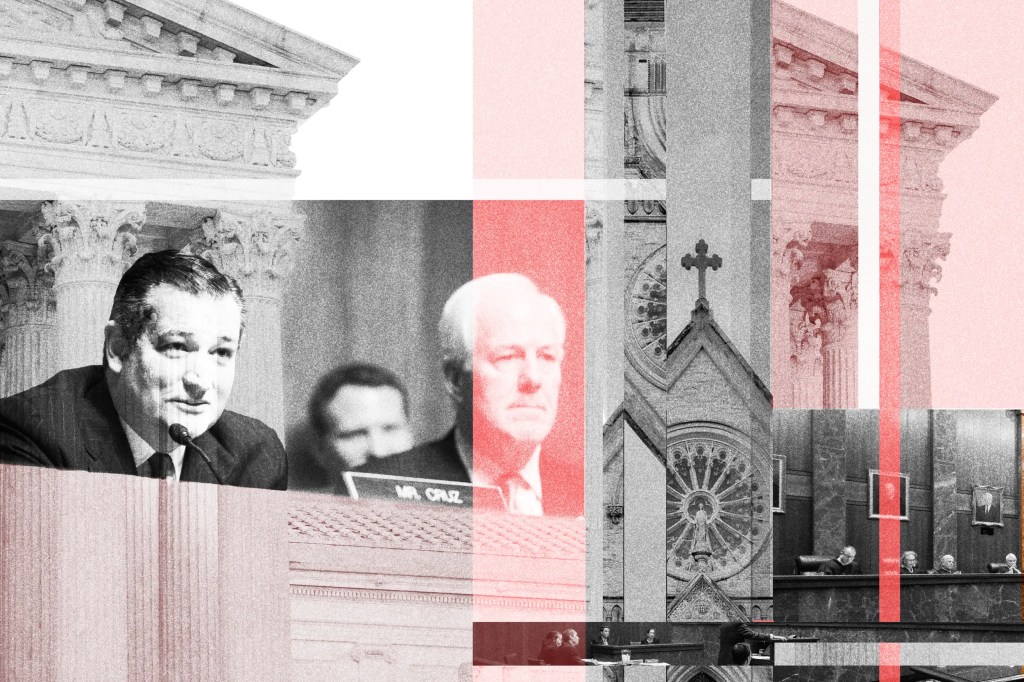
With his election as Texas attorney general, U.S. Sen. John Cornyn planted the seeds of conservatism. Gov. Greg Abbott used his tenure to cultivate them into an aggressive strain of right-wing activism aimed at driving the nation’s courts and laws to the right.

Righting the Rule of Law

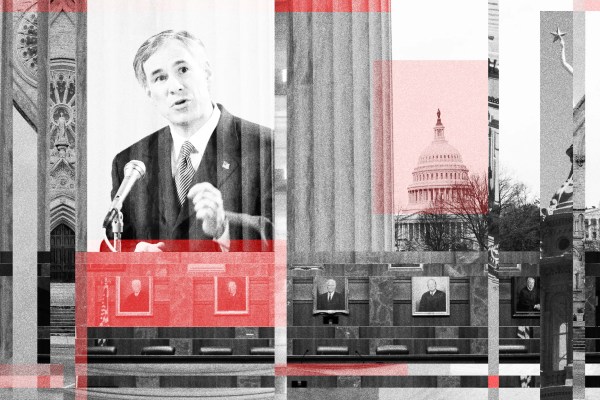
In March, Texas Gov. Greg Abbott sat before the next generation of conservative legal warriors and shared with them the gospel of Texas.

The story began several decades earlier, when conservative lawyers like himself looked out over the nation’s legal landscape and saw “opinion after opinion after opinion that seemed to rewrite the Constitution,” Abbott told this gathering of law students put on by the Federalist Society.

The nation had strayed from its constitutional roots, as divined by these conservatives, and their vision of America as a Christian nation was slipping away: Federal courts were protecting abortion rights, keeping prayer out of schools, restricting gun ownership and letting the federal government rein in the liberties of states, businesses and individuals.

It was long past time to put an end to it.

“A principle that causes America to stand apart from all other countries is our Constitution and our adamant insistence on the rule of law,” Abbott explained. But the way things were going back then, “we would soon become the rule of men, whoever was interpreting and applying the law.”

The rule of law is often cast as democracy’s equalizer, a nonpartisan social contract insulated from politics and arbitrated by impartial judges. But as these conservative lawyers realized, quite the opposite is true.

Whoever shapes the courts shapes the law.

So it was to the federal judiciary, paradoxically ripe for ideological influence with its unelected, lifetime appointees, that those conservative lawyers turned for salvation. In that crusade, Texas would become their Jerusalem.

Gov. Greg Abbott speaks about this year’s legislative session to an audience at the Texas Public Policy Foundation offices in Austin on June 2.

In less than a generation, the Texas Office of the Attorney General transformed into the beating heart of a nationwide conservative legal revolution. Under three occupants, including Abbott, the office barraged the federal courts with state-funded lawsuits born of increasingly overt right-wing activism. The best and brightest of the conservative legal elite came to Austin to help Texas become “the standard bearer for the United States in showing what the rule of law is,” Abbott said.

By the time Abbott spoke to this auditorium of rapt law students in March, his was a success story. Disciples of this movement — alumni of the Texas attorney general’s office and their ideological allies — now fill the federal bench, often deciding the lawsuits Texas continues to bring against the federal government.

click here to see full blog: https://www.texastribune.org/2023/07/31/texas-federal-courts-conservative-takeover-cornyn-abbott/

Base Air Show Featuring Scantily Clad Models Raises Questions About Justification for Drag Show Ban

This blog originally appeared at Yahoo News.


The recent ban on drag shows has raised significant questions about its justification and implications. In this blog post, we delve into the controversial decision, exploring the arguments put forth by both supporters and opponents of the ban. Join us as we examine the legal, cultural, and social dimensions surrounding the ban and consider its potential impact on freedom of expression and LGBTQ+ rights. Get ready to challenge assumptions and engage in a thoughtful discussion as we navigate the complex terrain of this contentious issue.

Four of the U.S. Air Force Air Demonstration Squadron “Thunderbirds” fly F-16 Fighting Falcon aircraft above the McChord Field flightline in preparation for the Joint Base Lewis-McChord Airshow and Warrior Expo before landing at JBLM, Washington, July 13, 2023.

At Joint Base Lewis-McChord‘s air show just outside of Tacoma, Washington, this past weekend, onlookers and families saw tactical military jets, high-performance sports cars and risqué models dancing on stage in skintight red,white and blue bikinis, part of what organizers described as a “way to thank the Puget Sound community.”

Instagram was flooded with pictures and videos of the models alongside sports cars, on the runway posing in front of cargo planes and in front of hot rods parked inside a hangarTwo dancers were also featured wearing revealing flight suits while dancing on stage. It was all featured in the Air Force‘s air show event at the base, which was open to the public, with the dancers representing an entertainment company called Hot Import Nights.

In the midst of ongoing controversy over a Pentagon decision to limit drag shows on bases after some critics complained of alleged adult content, the models and the racy musical performances over the weekend raised questions from LGBTQ+ advocates about what criteria Defense Secretary Lloyd Austin is using to stop some performances associated with the gay community while allowing other provocative acts.

Read Next: Army Shift from Brigades Back to Divisions Raises Concerns Among Retired Generals

Austin ordered two drag shows canceled in June during Pride Month, which is typically a time that the military celebrates LGBTQ+ diversity. The decisions were made after Austin was criticized during a congressional hearing in March over the military in rare instances allowing drag shows, which have become the political target of Republicans.

Following the canceled events, the Department of Defense has not yet clarified what entertainment is acceptable, and critics say it adds to the confusion of what shows should be prohibited for service members and their families.

Jennifer Dane, an LGBTQ+ advocate and an Air Force veteran who was one of the last to be investigated under the Pentagon’s old “Don’t Ask, Don’t Tell” policy, told Military.com that allowing the models at Joint Base Lewis-McChord appears to point to a double standard.

“It just sends a message that that’s OK, assuming that’s heteronormative,” Dane said. “But if it’s homosexual-based or anything else, that’s not OK.”

Some GOP representatives have said that drag isn’t acceptable or appropriate for children or military families. One lawmaker, Rep. Mark Alford, R-Mo., said during the House Armed Services Committee’s June 21 markup of the National Defense Authorization Act that he didn’t endorse any type of “oversexualized performance” on military bases.

“This is not anti-trans; this is not homophobic,” Alford said. “If this were females in an oversexualized arena performing like this, I would be against it as well. Let’s get the woke, let’s get the sexual nature out, wherever it is. Whether it’s performers in drag shows or women doing burlesque shows, it doesn’t matter. That’s not America.”

Austin Higginbotham, a spokesman for Alford, did not return a request for comment asking whether the Missouri Republican condemned the risqué models present at the Joint Base Lewis-McChord air show.

Footage from the event over the weekend was shared on the popular Air Force amn/nco/snco Facebook page where service members often post insider news.

A monumental LGBTQ rights case is barreling toward the Supreme Court

This blog originally appeared at Vox.

A new federal appeals court decision is a terrible blow to trans rights, and a potential earthquake in the fight for LGBTQ equality.

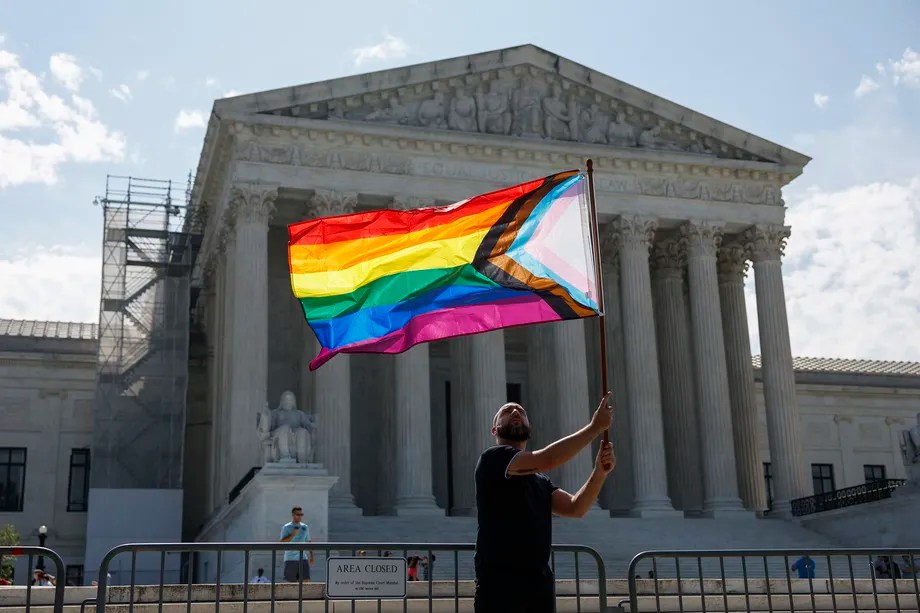
A same-sex marriage supporter waves an LGBTQIA Pride flag in front of the US Supreme Court building.

Ian Millhiser is a senior correspondent at Vox, where he focuses on the Supreme Court, the Constitution, and the decline of liberal democracy in the United States. He received a JD from Duke University and is the author of two books on the Supreme Court.

In recent months, Republican lawmakers in many states enacted laws targeting LGBTQ Americans, attempting to shut down their right to free expression and even deny them medical care, among other things. Until Saturday, however, civil rights lawyers challenging these laws fared surprisingly well in federal court, convincing even many Republican judges.

The United States Court of Appeals for the Sixth Circuit’s decision in L.W. v. Skrmetti, threatens to upend all of that. Before L.W. was handed down this past weekend, there was a consensus among federal courts that the Constitution prohibits states from banning gender-affirming medical care.

L.W. destroys that consensus. It reinstated a Tennessee law, previously blocked by a federal trial court, that prohibits gender-affirming care for transgender patients under the age of 18. And the Sixth Circuit’s opinion was written by Chief Judge Jeffrey Sutton, a widely respected judge, especially among the Supreme Court’s GOP-appointed majority.

Sutton, a George W. Bush appointee, is one of the federal judiciary’s leading “feeder” judges, meaning that his law clerks are frequently hired to clerk for the Supreme Court justices — a sign that the justices are likely to pay careful attention to Sutton’s views when deciding how to resolve a case like L.W.

Sutton’s decision to reinstate Tennessee’s anti-trans law is temporary, and he ends his opinion by saying his court will reconsider this question “with the goal of resolving it no later than September 30, 2023.” So it is possible that the Sixth Circuit will reconsider and join the other courts that have blocked bans on transgender health care.

In the fairly likely event that the Sixth Circuit hews to Sutton’s position, however, that will make it very likely that the Supreme Court will take up this issue, and soon. The justices pay special attention to legal questions that have divided lower federal appeals courts when deciding which cases to hear.

click here to see full blog: https://www.vox.com/scotus/2023/7/10/23789633/supreme-court-lgbtq-lw-skrmetti-transgender-health-care-jeffrey-sutton-sixth-circuit

BBC News: Issue 1: Ohio vote delivers win for abortion-rights supporters

This blog originally appeared at BBC News.

Ohio has rejected a Republican motion to make it harder to change the state’s constitution – a move seen as a defeat for anti-abortion groups.

The Republican-controlled state legislature had hoped to raise the bar for constitutional amendments to 60% instead of a simple majority.

It was largely seen as a move to derail a planned referendum to place abortion rights into the constitution.

President Joe Biden called it a victory for democracy and for women.

The Republican-backed move was a “blatant attempt to weaken voters’ voices and further erode the freedom of women to make their own health care decisions”, Mr Biden said.

When the US Supreme Court ended the nationwide right of women to have an abortion a year ago, a ban on the procedure after six weeks of pregnancy came into effect in Ohio – although it is currently on hold following a legal challenge.

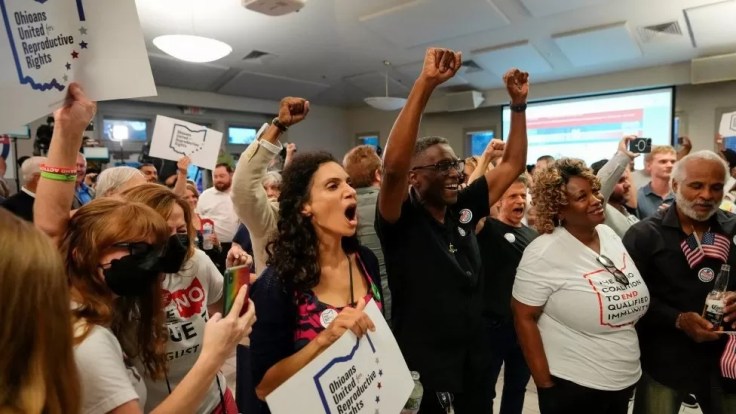
Pro-choice groups in Ohio are planning on using November’s elections to reverse this, by getting the right to have an abortion enshrined into the midwestern state’s constitution.

The measure being voted on, called Issue 1, was rejected by a margin of 57% to 43% with nearly all voting precincts tallied by Wednesday morning.

A campaign group One Person, One Vote told Politico in a statement that Issue 1 was a “deceptive power grab designed to silence” the voice of voters.

Ohio Democratic Party Chair Liz Walters told the Columbus Dispatch that the result is “a victory for the kind of state we want to see”.

More than 600,000 submitted early ballots on the issue – a historically high turnout for August elections in the state.

So was the vote on Issue 1 about protecting the constitution, as its supporters claim, or was it really about abortion?

What is Issue 1?

Issue 1 was the only question on the ballot in Ohio’s 8 August special election.

If passed, it would have changed the threshold for approving amendments from 50% to 60%. And Issue 1 would have also made it harder to put amendments before voters in the first place, asking petitioners to gather signatures from 5% of eligible voters in each of Ohio’s 88 counties, instead of the current 44.

In the 111 years since Ohio first granted voters the power to introduce citizen-led amendments, just 19 of 71 proposed measures have passed the 50% benchmark.

click here to see full blog: https://www.bbc.com/news/world-us-canada-66442370

Texas ban on gender-affirming care leaves trans teens without options

This blog originally appeared at CBC News.

Texas to become largest state in U.S. to ban puberty blockers and other gender-affirming care for teens

Pediatric endocrinologist Ximena Lopez worries for her young patients as she closes her clinic in Dallas that offered gender-affirming care to those under 18. With Texas banning that treatment, transgender teenagers are ‘livid’ and left without options. (Jason Burles/CBC)

From her now near-empty home in the Dallas suburb of Plano, with moving boxes stacked high in the garage, pediatric endocrinologist Ximena Lopez says she never thought she’d see this day.

Fearing violence that could target her family — a response by some to the type of medical treatment she offers — Lopez is closing her health clinic, selling her house and fleeing Texas for California.

“I don’t feel safe,” she said. “With so many people with guns [who] have gone to protest against me, or our clinic … armed.”

She adds, “I’m afraid of leaving my son home alone, and I don’t want to live like that.”

For years, Lopez has operated a clinic at a Dallas medical centre that offers what’s known as gender-affirming care for young people. It’s aimed at aiding and comforting transgender teens.

Treatment includes recurrent counselling and — controversially — medication that temporarily blocks puberty.

In America, it’s an extremely divisive program. 

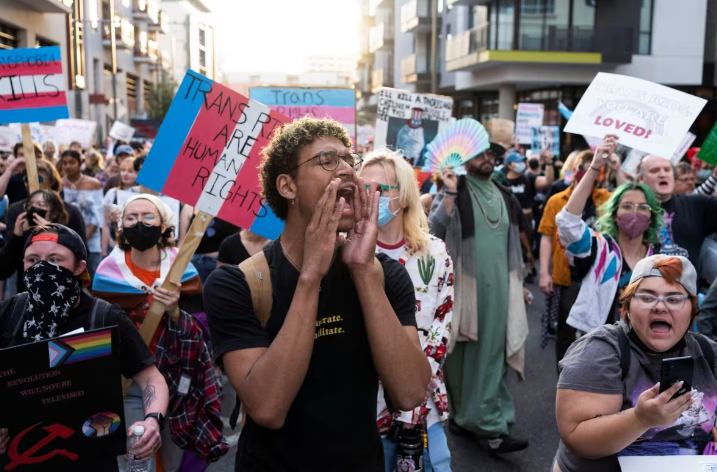
Amid rising anti-trans sentiment in the U.S., protesters rally for the International Transgender Day of Visibility in Tucson, Arizona on March 31. (Rebecca Noble/Reuters)

Nearly two dozen U.S. states, mostly Republican-led, have now taken steps to ban the treatment. (Some of those bans have been successfully challenged in court. Civil rights advocates pledge more challenges will follow.) 

Separately, various state legislatures have put forward roughly 500 bills this year alone deemed by the American Civil Liberties Union as being anti-LGBTQ, including restrictions on bathroom use, pronouns, drag performances and education. 

Civil libertarians describe it as a growing wave of intolerance in the U.S. targeting that community and medical providers such as Lopez.

Texas passed its bill banning gender-affirming care for teens this spring after a raucous debate, with vocal protests by the program’s supporters.

The new law takes effect in September.

Lopez and others underline that the treatment is decisively evidence-based, and she believes in it deeply. She calls it “one of the most important things I’ve done in my life.”

But opponents have called her a child abuser and a Nazi. Some have said she “should die in hell,” leaving Lopez frightened, frustrated and angry.

“The whole state has become crazy,” said Lopez. It “is right now full of hate.”

“I felt like things were evolving with society, with progress. Now we are going backwards,” she said.

“It has become unbearable.”

Patients caught in the crosshairs

Chief among those caught in the crosshairs are the patients of Lopez. When she moves to California, where her treatment remains legal, her patients in Texas will face dwindling access to medications and no easy path for direct care.

Most of those contacted directly by CBC News said they strongly support Lopez and her work but were afraid to speak out publicly, worried about stigma and violence that could target them.

But on agreement to withhold their surname to reduce the risk, parents Kristen and Wes and daughter Audrey sat down with CBC News at their home northeast of Dallas to talk about all of it. They strongly wanted others to know what Audrey has gained from her time with Lopez and what the new law in Texas now threatens. 

In short, they believe Lopez and her program saved Audrey’s life.

click here to see full blog: https://www.cbc.ca/news/world/texas-lgbtq-legislation-1.6887130

A judge has ruled Texas’ abortion ban is too restrictive for women with pregnancy complications

This blog originally appeared at AP News.

AUSTIN, Texas (AP) — A Texas judge ruled Friday the state’s abortion ban has proven too restrictive for women with serious pregnancy complications and must allow exceptions without doctors fearing the threat of criminal charges.

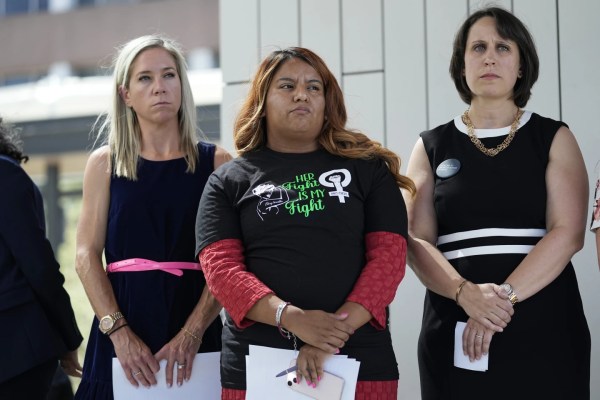
Amanda Zurawski, who developed sepsis and nearly died after being refused an abortion where her water broke at 18 weeks, left, and Samantha Casiano, who was forced to carry a nonviable pregnancy to term and give birth to a baby who died four hours after birth, center, stand with their attorney Molly Duane outside Travis Country Courthouse, Wednesday, July 19, 2023, in Austin, Texas. A Texas judge ruled Friday, Aug. 4, 2023, the state’s abortion ban has proven too restrictive for women with serious pregnancy complications and must allow exceptions without doctors fearing the threat of criminal charges. The challenge is believed to be the first in the U.S. brought by women who have been denied abortions since the Supreme Court last year overturned Roe v. Wade, which for nearly 50 years had affirmed the constitutional right to an abortion.

The ruling was the first to undercut Texas’ law since it took effect in 2022 and delivers a major victory to abortion rights supporters, who see the case as a potential blueprint to weaken restrictions elsewhere that Republican-led states have rushed to implement.

However, the injunction was immediately blocked by an appeal to the Texas Supreme Court, the state attorney general’s office said.

”The trial court’s injunction is ineffective, and the status quo remains in effect,” spokesperson Paige Willey said in an email.

State District Judge Jessica Mangrum’s ruling granted a temporary injunction that prevents Texas from enforcing the ban against physicians who in their “good faith judgment” end a pregnancy that, because of complications, creates a risk of infection or is otherwise unsafe for the woman to continue.

The injunction also applies to women who have a condition “exacerbated by pregnancy” who can’t be effectively treated during their term. It also covers cases where the fetus has a condition that makes it unlikely to survive after birth.

“For the first time in a long time, I cried for joy when I heard the news,” lead plaintiff Amanda Zurawski said in a statement. “This is exactly why we did this. This is why we put ourselves through the pain and the trauma over and over again to share our experiences and the harms caused by these awful laws.”

Mangrum’s decision said the injunction would run until the completion of the case, which is scheduled for a trial to begin next March 25.

However, the state’s immediate appeal “stays an activist Austin judge’s attempt to override Texas abortion laws pending a ruling by the Texas Supreme Court,” said a statement from First Assistant Attorney General Brent Webster.

The immediate impact of Mangrum’s decision also was unclear in a state where all abortion clinics have shuttered in the past year.

The challenge to the state law is believed to be the first in the U.S. brought by women who have been denied abortions since the Supreme Court last year overturned Roe v. Wade, which for nearly 50 years had affirmed the constitutional right to an abortion.

In a six-page ruling, the judge found that portions of the abortion law violated the rights afforded to pregnant people under the Texas Constitution.

The court found that the patients challenging the law each experienced “emergent medical conditions” during pregnancy that risked their health or lives “and required abortion care.”

click here to see full blog: https://apnews.com/article/abortion-texas-lawsuit-ban-exceptions-women-denied-pregnancy-d90f3bce68d86e5eafe3ba4ba5939188?fbclid=IwAR2v6UNMtThWNPWyrJ748SCn7lyuBoNVw3L_qew3V041hY5WpM46_6PY04w

Republican attorneys general issue warning letter to Target about Pride merchandise

This blog originally appeared at CBS News.

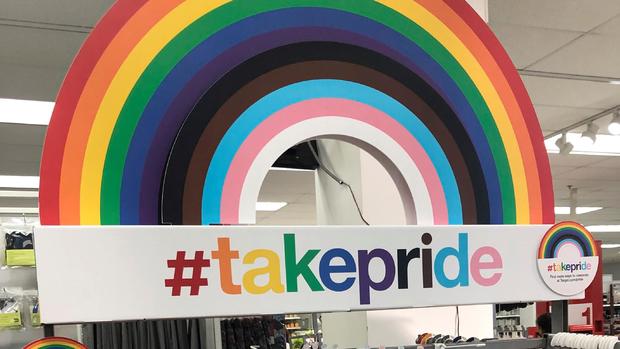
A group of Republican attorneys general has issued a warning letter to Target regarding its Pride merchandise. The letter raises concerns about the messaging and content of the products, suggesting that they promote a “radical agenda” and may violate consumer protection laws. Target has not yet responded to the letter, but it has faced criticism from conservative groups in the past for its inclusive marketing campaigns.

Seven U.S. state attorneys general sent a letter to Target on Wednesday warning that clothes and merchandise sold as part of the company’s Pride month campaigns might violate their state’s child protection laws.

Republican attorneys general from Indiana, Arkansas, Idaho, Kentucky, Mississippi, Missouri and South Carolina signed the letter, writing that they were “concerned by recent events involving the company’s ‘Pride’ campaign.” 

The attorneys said that they believed the campaign was a “comprehensive effort to promote gender and sexual identity among children,” criticizing items like T-shirts that advertised popular drag queens and a T-shirt that said ‘Girls Gays Theys.’ They also highlighted merchandise with “anti Christian designs such as pentagrams, horned skulls and other Satanic products.” 

The letter also criticized Target for donating to GLSEN, an LGBTQ+ organization that works to end bullying in schools based on sexual and gender identity. The company stated in a 2020 guide that school staff should not tell parents about a child’s gender or sexual orientation without consulting the child first, something the attorneys general said undermines “parents’ constitutional and statutory rights.” 

The letter did not include any specific demands nor did it outline how they believe the campaign could violate child protection laws, but the attorneys general did suggest that Target might find it “more profitable to sell the type of Pride that enshrines the love of the United States.”

The attorneys general also said they believed Target’s Pride campaign threatened their financial interests, writing that Target leadership has a “fiduciary duty to our States as shareholders in the company” and suggesting that company officials “may be negligent” in promoting the campaign since it has negatively affected Target’s stock prices and led to some backlash among customers. 

Target shares have declined 12% this year, but the company is facing issues far beyond the backlash to its Pride collection, which included onesies, bibs, and T-shirts for babies and children. Like many retailers, the company is struggling with a pullback in consumer spending because of high inflation, which has weighed on its profits.

But Target is also facing scrutiny for its merchandise selection, including its Pride line, with its stores removing some of the items in May after facing threats. At the time, the company didn’t specify which products were being removed, although Target has faced criticism online over swimsuits advertised as “tuck-friendly” with “extra crotch coverage” in its Pride collection.

“Target’s management has no duty to fill stores with objectionable goods, let alone endorse or feature them in attention-grabbing displays at the behest of radical activists,” the attorneys general wrote. “However, Target management does have fiduciary duties to its shareholders to prudently manage the company and act loyally in the company’s best interests.” 

Backlash to the Pride campaign did involve threats of violence to Target stores and workers. Some merchandise was relocated to less popular areas of the store, and other pieces, including the swimsuits criticized by the attorneys general, were removed. 

“Since introducing this year’s collection, we’ve experienced threats impacting our team members’ sense of safety and well-being while at work,” Target said in a statement earlier in June. “Given these volatile circumstances, we are making adjustments to our plans, including removing items that have been at the center of the most significant confrontational behavior.”

Historically Black fraternity drops Florida for convention because of DeSantis policies

This blog originally appeared at AP News.

ORLANDO, Fla. (AP) — The oldest historically Black collegiate fraternity in the U.S. says it is relocating a planned convention in two years from Florida because of what it described as Gov. Ron DeSantis’ administration’s “harmful, racist and insensitive” policies towards African Americans.

Alpha Phi Alpha Fraternity said this week that it would move its 2025 convention from Orlando to another location that is yet undecided. The convention draws between 4,000 and 6,000 people and has an economic impact of $4.6 million, the fraternity said.

The decision comes after the NAACP and other civil rights organizations this spring issued a travel advisory for Florida, warning that recently passed laws and policies are openly hostile to African Americans, people of color and members of the LGBTQ+ community.

Willis Lonzer, the fraternity’s general president, said in statement on Wednesday that the decision was motivated in part by Florida’s new education standards that require teachers to instruct middle school students that slaves developed skills that “could be applied for their personal benefit.”

“Although we are moving our convention from Florida, Alpha Phi Alpha will continue to support the strong advocacy of Alpha Brothers and other advocates fighting against the continued assault on our communities in Florida by Governor Ron DeSantis,” Lonzer said.

An email seeking comment on Saturday about the fraternity’s decision was sent to Jeremy Redfern, the governor’s press secretary and the governor’s office.

DeSantis, who is running for the 2024 GOP presidential nomination, has come under fire this week over Florida’s new education standards. Among those criticizing the Florida governor on Friday was a rival for the Republican nomination, U.S. Sen. Tim Scott of South Carolina, the sole Black Republican in the Senate.

Responding to the criticism, DeSantis said Friday that he was “defending” Florida “against false accusations and against lies. And we’re going to continue to speak the truth.”

In May, the NAACP joined the League of United Latin American Citizens (LULAC), a Latino civil rights organization, and Equality Florida, a gay rights advocacy group, in issuing travel advisories for the Sunshine State, where tourism is one of the state’s largest job sectors. The groups cited recent laws that prohibited state colleges from having programs on diversity, equity and inclusion, as well as critical race theory, and the Stop WOKE Act that restricts certain race-based conversations and analysis in schools and businesses.

They also cited laws that they say made life more difficult for immigrants in Florida and limited discussions on LGBTQ topics in schools.

At least nine other organizations or associations have pulled the plug on hosting conventions in Orlando and Fort Lauderdale, two of the state’s most population convention cities, because of Florida’s political climate, according to local media reports.

Florida is one of the most popular states in the U.S. for tourists, and tourism is one of its biggest industries. More than 137.5 million tourists visited Florida last year, marking a return to pre-pandemic levels, according to Visit Florida, the state’s tourism promotion agency. Tourism supports 1.6 million full-time and part-time jobs, and visitors spent $98.8 billion in Florida in 2019, the last year figures are available.

click here to see full blog: https://apnews.com/article/florida-tourism-desantis-race-conventions-ff4dd10dba418c8fd9e7c80b3167f7cd

Federal judge freezes Florida gender-affirming care bans

This blog originally appeared at Axios Tampa Bay.

A federal judge on Tuesday temporarily blocked a pair of Florida bans on gender-affirming care for three minors while a legal challenge plays out, arguing that both are likely to be found unconstitutional.

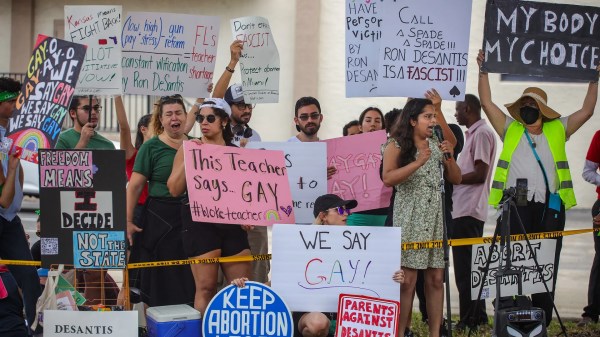
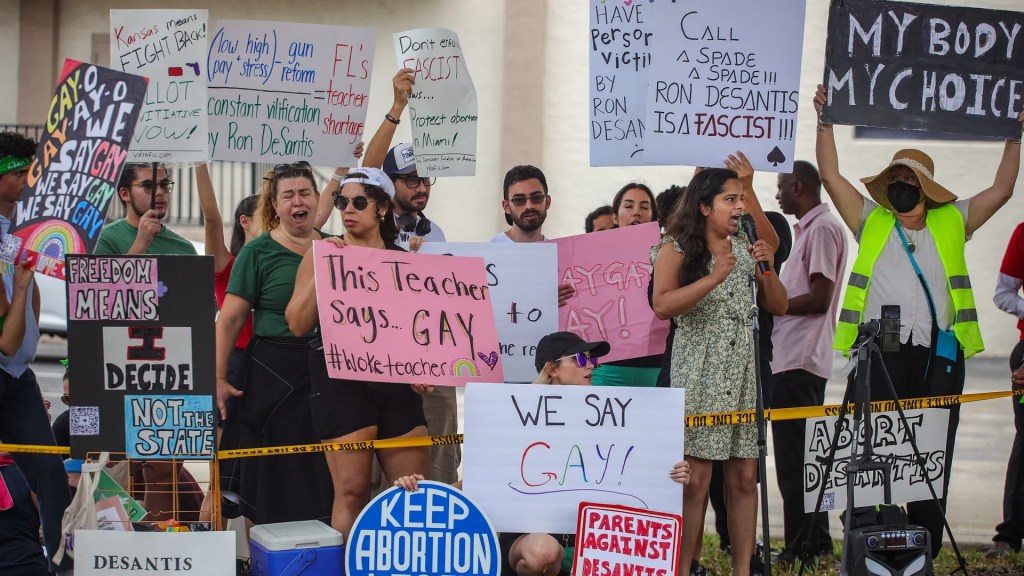
Protesters in support of abortion rights and trans rights gather during a speech by Gov. Ron DeSantis on Aug. 21, 2022.

Why it matters: U.S. District Judge Robert Hinkle, a Clinton appointee, wrote that “gender identity is real” and agreed with the plaintiffs in a lawsuit against the state that gender-affirming care is “medically necessary.”

  • The lawsuit asserts that the bans violate the Constitution’s equal protection clause by singling out trans minors. Three Florida families asked the court to freeze the bans while the lawsuit is reviewed, saying their children had immediate medical needs.
  • Hinkle said that both of Florida’s bans represent a “purposeful discrimination against transgenders.”

Between the lines: A spokesperson for Gov. Ron DeSantis (R) told Axios the ruling applies only to three trans children seeking immediate access to such care, who are plaintiffs in the case. “Florida’s law otherwise remains in effect,” press secretary Jeremy Redfern said.

  • Yes, but: While narrow in scope, Simone Chriss, a lawyer for the plaintiffs, said the judge’s opinion “sends a really, really clear message that what the state has done here is politically motivated, predetermined and unconstitutional.”

State of play: Florida prohibited health providers from offering gender-affirming care to minors with a first-of-its-kind rule issued by the state’s medical board and recent legislation that DeSantis signed into law.

  • The law not only criminalized care for trans people under 18, but added restrictions for adults seeking such care.
  • While the injunction doesn’t address the adult restrictions, lawyers for the plaintiffs are planning to ask the court to block them, said Chriss, director of the Transgender Rights Initiative at the Florida-based Southern Legal Counsel. That could mean adding an adult trans Floridian as a plaintiff in the suit.

Details: “The elephant in the room should be noted at the outset. Gender identity is real. The record makes that clear,” Hinkle wrote in his opinions.

  • Hinkle also said the defendants — including Florida Surgeon General Joseph Ladapo, members of the medical board and other state officials — had contradictory views of trans people, noting that they both acknowledge that trans people exist and say trans identity “is made up.”
    • “Any proponent of the challenged statute and rules should put up or shut up: do you acknowledge that there are individuals with actual gender identities opposite their natal sex, or do you not? Dog whistles ought not be tolerated,” Hinkle said.
  • The judge said that “[t]he overwhelming weight of medical authority supports” gender-affirming care and “not a single reputable medical association has taken a contrary position.”
  • Hinkle said that the parents who are challenging the bans can better evaluate the benefits and risks of treating their trans children than the state: “I find that the plaintiffs’ motivation is love for their children and the desire to achieve the best possible treatment for them. This is not the State’s motivation.”

What they’re saying: “My husband and I have been heartbroken and worried sick about not being able to care for our daughter in the way we know she needs,” said one of the plaintiffs, who is identified as Jane Doe and has a daughter named Susan.

  • “Today my entire family is breathing a huge sigh of relief knowing we can now access the treatment that we know will keep Susan healthy and allow her to continue being the happy, confident child she has been,” Doe added.
  • The legal groups that represented the plaintiffs called the ruling “a powerful affirmation of the humanity of transgender people, the efficacy of well-established, science-based medical care.”
  • A spokesperson for the Florida Department of Health declined to comment, citing the ongoing litigation. A spokesperson for Attorney General Ashley Moody did not respond to requests for comment.

Zoom out: The Florida lawsuit is one of many filed in various states that have adopted bans on health care for trans minors.

click here to see full blog: https://www.axios.com/2023/06/06/judge-blocks-florida-transgender-health-care-ban

Blog at WordPress.com.

Up ↑