The Swiss government says it supports a uniform, national ban on so-called conversion therapy, and it’s moving ahead to consider federal legislation to outlaw the discredited practice.
A report from the government published last week details a number of current national regulations addressing the practice, as well as a patchwork of laws or procedures in various cantons (independent member states) across the country, which include their own administrative or criminal measures and corresponding legislative proposals that have been initiated, the Swiss Broadcasting Corporation reports.
Zurich is the latest canton to initiate government action banning the practice. Anyone practicing the so-called therapy in that canton would face a fine, according to the government council’s proposal.
The patchwork of Swiss laws makes a national ban on the practice worth considering at the federal level, the government said.
It’s unclear how widespread conversion therapy is in Switzerland, but several individuals offering it have earned the public’s attention over the last several years, including a homeopathic doctor in Geneva and Vaud who, in 2018, offered to “cure homosexuality,” and also a psychiatrist in Schwyz who, in 2020, recommended himself for the reparative “therapies.”
Conversion therapy, which seeks to change the sexual orientation of those subjected to it, is well known to cause psychological distress, anxiety and depression, and impair self-esteem and social relationships.
Michigan agreed in August to abandon its ban on anti-LGBTQ+ conversion therapy following a federal judge’s decision against it, making it the first state to say it will stop enforcing its ban in the wake of the Supreme Court’s ruling.
Cantonal parliaments in Switzerland that have already spoken in favor of a ban include Schaffhausen, St. Gallen, Valais, Vaud, and Bern. Others expressing support for a national ban include Aargau, Basel-City, and Lucerne among them.
Switzerland is made up of 26 full and half cantons. Neuchâtel became the first Swiss canton to ban conversion therapy in 2023.
The European Commission recommended earlier this year that all EU countries ban conversion therapy.
While Switzerland is not an EU member, neighboring Germany outlawed conversion therapy for minors and nonconsenting adults in 2020.
Several other EU countries, including Belgium, Cyprus, France, Malta, Norway, Portugal and Spain, have banned the practice outright. Greece banned it for minors in 2022.
The latest EU nation to address the practice is the Netherlands, where the Dutch Senate in June approved a bill to ban it, following the parliament’s lower house approving the measure in September 2025.
The Netherlands will ban conversion therapy after the Senate voted 75 to 57 in favor of legislation to eradicate the harmful practice. The Dutch House of Representatives has already approved the bill, which will reportedly punish anyone who practices conversion therapy on children or vulnerable adults with up to two years in prison and a fine of up to 27,500 euros (about $31,500). Therapists could also lose their licenses.
The country already bans some of the more extreme methods of conversion therapy, like medication and shock therapy, according to the NL Times, but the authors of the bill did not feel existing law was comprehensive enough.
During parliamentary debate about the bill, Senator Peter Nicolaï, a member of the left-wing Partij voor de Dieren, reportedly emphasized the need to also cover the dangers of exorcism, prayer-based therapy, psychological pressure, and pseudo-therapy sessions.
The D66 and VVD parties, who spearheaded the bill, celebrated the victory and declared that “years of commitment to freedom, equality, and human dignity have been rewarded.”
The Dutch LGBTQ+ Rights Group COC Netherlands celebrated the bill’s passage. “We have been fighting for the ban with victims and colleague organizations for almost 15 years and are very happy with this result. We see it as a victory for the victims,” the group said on social media, according to Facebook’s translation tool.
A 2013 survey, for example, showed that 84% of former patients who tried ex-gay therapy said it inflicted lasting shame and emotional harm, and in 2022, a report found that LGBTQ+ people who participated in sexual orientation or gender identity change efforts were more likely to experience negative impacts than those who did not, including serious psychological distress (47% vs 34%), depression (65% vs 27%), substance abuse (67% vs 50%), and attempted suicide (58% vs 39%).
The European Union rejected a call to ban conversion therapy on Wednesday, even after over a million people petitioned for the ban in its 27 member states.
Last month, the European Parliament voted in favor of a ban on conversion therapy. The vote came after the European Citizens’ Initiative petitioned the European Parliament to take up the matter after 1.2 million people signed a petition.
The matter was then sent to the European Commission, the only body that can introduce binding legislation in the EU. But the European Commission has rejected the call, saying that the EU does not have the authority to force member states to ban the harmful practice.
European Commission President Ursula von der Leyen said that conversion therapy has “no place in our union” and that the EU will push each individual member state to ban the practice in a recommendation to be published next year. That recommendation will be non-binding.
The European Commission flew the rainbow flag outside its headquarters in Brussels, Belgium, yesterday, Le Monde reports.
The EU’s Agency for Fundamental Rights said in 2024 that one in four LGBTQ+ European citizens is the victim of conversion therapy practices, which have been linked to depression, low self-esteem, substance abuse issues, anxiety, suicidality, and other mental health issues. Ten of the 27 EU member states already ban the practice.
The group Against Conversion Therapy, which launched the original petition, called the decision a “missed opportunity” in a statement.
“In an international political context where the rise of reactionary ideas is affecting the entire world, it is urgent the European Union acts,” the group said.
European Commissioner for Equality Hadja Lahbib hailed the decision to encourage member states to ban the practice as “historic,” the LA Times reports.
“Conversion practices are built on a lie, the lie that LGBTQ+ people need to be fixed, that there is something wrong with who they are,” Lahbib said after listening to victim testimony. “And there is, of course, nothing to fix, there is nothing to cure, and there is no one to change.”
“You cannot torture away a person’s identity, and you cannot legislate it away. And yet these practices continue, unfortunately.”
Last month, the European Economic and Social Committee (EESC) held a debate on conversion therapy before it voted to recommend that Europe ban the practice.
“These so-called conversion practices or therapies are not only harmful, they are a profound violation of human dignity and fundamental rights,” said EESC President Séamus Boland during the debate, according to an EESC release. “Let us be absolutely clear: there is nothing to fix or cure. What needs to change is not people, but the systems, attitudes, and structures that deny them their dignity.”
Graeme Reid, the United Nations independent expert on sexual orientation and gender identity, also spoke during the debate, saying that banning conversion therapy is key to the EU meeting its human rights obligations and that “every person has the right to live free from coercion, fear and shame.”
The United Nations has called for conversion therapy to be banned worldwide. Last month, the U.S. Supreme Court ruled that conversion therapy practices are protected by the First Amendment and can only be banned if states can meet the high legal requirements involved in curtailing religious free exercise.
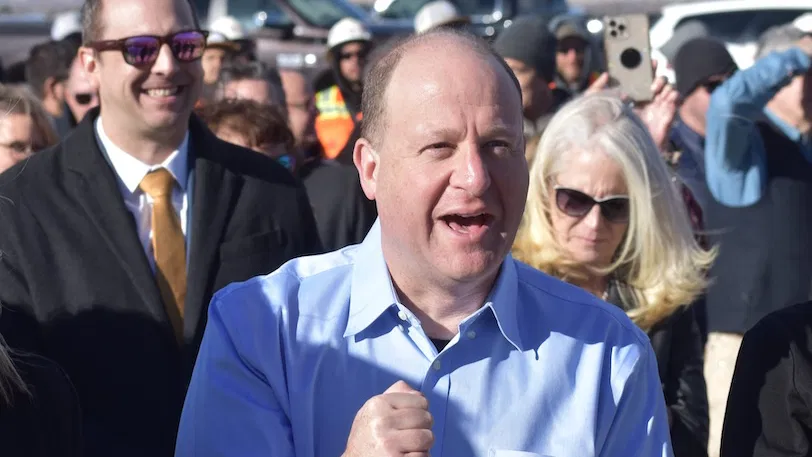
Colorado’s legislature has just passed a bill to curtail conversion therapy in the state. It now goes to Gov. Jared Polis‘ (D) desk. Polis is gay, has been supportive of LGBTQ+ rights in the past, and is expected to sign it.
The bill, H.B. 26-1322, or the Civil Actions for Conversion Therapy Survivors Act, would allow conversion therapy survivors to sue therapists for damages if they tried to change their sexual orientation or gender identity.
The bill defines conversion therapy as treatment provided by a licensed mental health professional with the “predetermined outcome” of changing someone’s gender identity or sexual orientation. This effectively keeps the bill from applying to members of the clergy or lay ministries – most conversion therapy in the U.S. is performed by religious organizations, not licensed therapists – and creates an exemption for discussions of LGBTQ+ identities that come up in therapy, a matter of contention in a recent Supreme Court case.
The legislation passed the state senate last week in a party-line vote after already passing the Colorado House of Representatives. The state senate amended the bill so it had to pass the state house again, which happened late last week, the Colorado Daily Camera reports.
The bill was introduced as the Supreme Court considered a challenge to Colorado’s previous ban on conversion therapy, passed in 2019. That ban on conversion therapy has never been enforced in the state, but a Christian therapist sued, saying that it violated her freedom of speech. She argued that it would ban her from even discussing LGBTQ+ identities with her clients, even though the state said repeatedly that it would not.
The Court ultimately ruled against the ban in Chiles v. Salazar, saying that it violated therapists’ First Amendment rights, and sent the case back to a lower court to reevaluate the law under a higher legal standard. Experts believe this means that Colorado’s 2019 conversion therapy ban – and bans like it passed in 26 other states and hundreds of municipalities – will likely eventually be overturned by courts.
The new bill is an attempt to circumvent the Court’s decision by treating it as a civil matter. The bill was introduced by state Reps. Alex Valdez (D) and Karen McCormick (D), and in the Colorado Senate by state Sens. Lisa Cutter (D) and Kyle Mullica (D).
LGBTQ+ rights advocates supported the bill, including trans National Center for LGBTQ Rights Legal Director Shannon Minter, who referred to the Supreme Court’s decision in Chiles as “specific guidance about how to amend conversion therapy laws to be viewpoint-neutral.”
“Given the urgency of this issue and the danger that conversion therapy poses to youth, Colorado moved swiftly,” he said. “Today this legislation is moving to the desk of Governor Polis and will protect Colorado’s youth and families from this discredited practice.”
“Colorado’s story is still being written, and today we took another step toward becoming a state where LGBTQIA+ people can live openly, safely, and fully as themselves,” said One Colorado executive director Nadine Bridges in a statement. “This victory belongs to the survivors, advocates, and community members who refused to let this issue be forgotten.”
Conversion therapy is a harmful practice based on the idea that LGBTQ+ identities are the result of trauma and that LGBTQ+ people need to fundamentally change who they are in order to be a good person. The practice has been linked to several harmful results, including anxiety, depression, eating disorders, and suicidality.
The European Parliament voted in favor of a ban on conversion therapy this Wednesday. The demand is now being sent to the European Commission for a response.
The move comes after the European Citizens’ Initiative successfully petitioned the European Parliament to take up the issue. Starting in 2024, the ECI gathered over 1.2 million signatures from EU citizens to ban conversion therapy.
The European Economic and Social Committee (EESC) held a debate on the matter earlier this week, which resulted in the committee adopting two opinions, one calling for stronger enforcement of the EU’s LGBTIQ+ Equality Strategy 2026–2030 and the other calling for a ban on conversion therapy throughout the EU.
While seven member states ban conversion therapy, including France, Portugal, and Spain, speakers at the EESC pointed out that conversion therapy is still practiced in parts of the EU.
“These so-called conversion practices or therapies are not only harmful, they are a profound violation of human dignity and fundamental rights,” said EESC President Séamus Boland during the debate, according to an EESC release. “Let us be absolutely clear: there is nothing to fix or cure. What needs to change is not people, but the systems, attitudes, and structures that deny them their dignity.”
Graeme Reid, the United Nations independent expert on sexual orientation and gender identity, also spoke during the debate, saying that banning conversion therapy is key to the EU meeting its human rights obligations and that “every person has the right to live free from coercion, fear and shame.”
In a blow to LGBTQ rights, the Supreme Court on Tuesday ruled that Colorado’s ban on conversion therapy aimed at youths struggling with their sexual orientation or gender identity violates the free speech rights of a conservative Christian therapist.
The 8-1 decision in favor of therapist Kaley Chiles on her claim brought under the Constitution’s First Amendment is likely to have national implications — more than 20 states have similar laws. It could also have an impact on other forms of medical treatment that involve speech.
Writing for the majority, Justice Neil Gorsuch said that “the First Amendment stands as a shield against any effort to enforce orthodoxy in thought or speech in this country.”
Colorado’s law “does not just ban physical interventions,” Gorsuch wrote. It also “censors speech based on viewpoint.”
In deciding the case, the court embraced Chiles’ argument that the Colorado law banning conversion therapy regulates speech, not conduct, as Colorado had argued. As such, the measure is not like other health care regulations that focus on conduct, the court concluded. The case, decided on the global Transgender Day of Visibility, will now return to the lower courts.
“The Supreme Court’s ruling is a victory for counselors and, more importantly, kids and families everywhere,” Chiles said in a statement. With the ban not in effect, she will be able to speak freely to clients “when they choose the goal of growing comfortable with their bodies,” she added.
Liberal Justice Ketanji Brown Jackson was the sole dissenter, taking the unusual step of reading a summary of her opinion in the courtroom. She focused on the distinction between speech and conduct.
“Under our precedents, bedrock First Amendment principles have far less salience when the speakers are medical professionals,” Jackson wrote.
Conversion therapy, favored by some religious conservatives, seeks to encourage gay or lesbian minors to identify as heterosexual and for transgender children to identify as the gender assigned to them at birth. Colorado bans the practice for licensed therapists, not for religious entities or family members.
The ruling could have an impact on other forms of medical regulation, with Jackson saying the court could be “ushering in an era of unprofessional and unsafe medical care” where some forms of treatment are effectively free from regulation. She mentioned as an example what are known as “informed consent” regulations that require medical practitioners to ensure patients are aware of any potential risks before they undergo a treatment.
“The fallout could be catastrophic,” Jackson added.
Fellow liberal Justice Elena Kagan wrote a concurring opinion making it clear the Colorado law did implicate free speech rights, but so would what she called “mirror image” laws that could seek to ban therapy aimed at affirming a teen’s gender identity.
“Once again, because the state has suppressed one side of a debate, while aiding the other, the constitutional issue is straightforward,” she said, describing how courts would address such a measure.
The Supreme Court has a 6-3 conservative majority that has frequently ruled in favor of Christian conservatives who bring free speech cases that touch upon their religious beliefs.
The ruling follows a similar 2018 decision in which the conservative majority backed a free speech challenge to a California law that requires anti-abortion pregnancy centers to notify clients about where abortion services can be obtained.
The Supreme Court has backed LGBTQ rights in the past, legalizing same-sex marriage in 2015 and ruling five years later that a federal law barring employment discrimination applies to both gay and transgender people.
But, in a separate string of cases, the court has embraced free speech and religious expression rights when they conflict with anti-discrimination laws aimed at protecting LGBTQ people.
Last year, for example, the court backed a religious rights challenge to a Maryland school district’s policy of featuring LGBTQ-themed books in elementary schools without providing an opt-out option for families.
The US Supreme Court agreed to consider whether scores of state and local governments are violating the Constitution by barring licensed counselors from trying to change a child’s sexual orientation or gender identity.
The justices said they will hear a challenge to Colorado’s ban on what critics call “conversion therapy.” A counselor says the 2019 law violates her free speech rights.
The case adds to a growing list of culture-war clashes the Supreme Court has agreed to hear. The justices are already assessing a Tennessee law that outlaws certain medical treatments for transgender children. And in April they will hear a dispute over the use of LGBTQ-friendly books in the classroom and a case over efforts to create the country’s first religious public charter school.
Twenty-eight states and more than 100 other jurisdictions either fully or partially ban the disputed practice, according to Movement Advancement Project, an LGBTQ advocacy group that tracks laws around the country. The Supreme Court rejected a challenge to Washington state’s ban in 2023.
The Colorado law is being challenged by Kaley Chiles, a licensed counselor who says she views her work as an outgrowth of her Christian faith. She is represented by the Alliance Defending Freedom, a Christian legal group that has been behind some of court’s highest profile cases in recent years, including the successful effort to overturn the constitutional right to abortion.
In a call with reporters, Chiles said the law “silences diverse perspectives and interferes with my ability to serve my clients with integrity.” One of her lawyers, ADF’s Jim Campbell, said Chiles had turned away multiple clients because of the law, though he didn’t disclose how many.
In upholding the law, the Denver-based 10th US Circuit Court of Appeals said it legitimately regulates professional conduct and only incidentally affects speech. Colorado officials urged rejection of the appeal, likening the measure to malpractice laws and informed-consent requirements.
The Constitution “allows states to reasonably regulate professional conduct to protect patients from substandard treatment, even when that regulation incidentally burdens speech,” Colorado argued.
The court will hear arguments and rule in the case in the nine-month term that starts in October.
A federal appeals court on Wednesday blocked Michigan’s ban on conversion therapy for minors who are LGBTQ+, declaring it violates the First Amendment rights of therapists and counselors.
In a 2-1 opinion, the court said the law illegally restricts speech that reflects the moral beliefs of therapists. It set aside a lower court’s ruling and granted a preliminary injunction sought by Catholic Charities of Jackson, Lenawee and Hillsdale Counties.
“The Michigan law discriminates based on viewpoint — meaning the law permits speech on a particular topic only if the speech expresses a viewpoint that the government itself approves,” Judge Raymond Kethledge wrote, joined by Judge Joan Larsen.
They noted that the law permits counseling that helps someone undergoing a gender transition.
The court’s decision comes more than two months after the U.S. Supreme Court heard arguments in a Colorado case that could resolve the issue nationwide.
In a dissent, Judge Rachel Bloomekatz said the 6th U.S. Circuit Court of Appeals should have waited for the Supreme Court to act.
The Michigan bill was passed by the Democratic-controlled Legislature and signed into law in 2023 by Democratic Gov. Gretchen Whitmer, who said conversion therapy is a “horrific practice.” Therapists could lose their license if they violate the law. More than 20 states have a similar law.
LGBTQ+ rights advocates have cited research suggesting conversion therapy can increase the risk of suicide and depression.
Juan Viana recalls having a happy childhood in a Christian community in Bogotá but when he came out as gay at age 18, that all changed.
“Unfortunately, that community of support became a place of deep repudiation of who I really was,” said Viana, now 48.
His family took him to a center for ‘conversion therapy’ — aimed at changing a person’s sexual orientation or gender identity — on the advice of a psychologist.
“I was told that homosexuality was a disease, that it was caused by a demonic force that was going to destroy my family,” Viana said.
He said he went to the center willingly and stayed for months, thinking he was protecting his loved ones from destruction but found himself living in a nightmare.
“They break you in all senses: physically, mentally,” he said.
Several times he thought of taking his own life and tried once, he said.
“They were the darkest moments of my life,” he said.
Such traumatic experiences could become illegal in Colombia, where an estimated one in five LGBTQ people have undergone conversion therapy, according to the government’s Ombudsman’s Office.
Lawmakers are considering a bill to ban conversion therapy in the South American nation. Other countries where it is permitted include China, South Africa and the United Kingdom.
An unknown number of unlicensed rehabilitation clinics in Colombia and elsewhere in Latin America offer such therapy based on the idea that homosexuality, bisexuality and transgender identities are a mental illness that needs to be cured, rights groups said.
The World Health Organization removed homosexuality from its list of mental illnesses in 1990.
In Colombia, LGBTQ advocates have documented a range of conversion therapy practices that include humiliation, exorcism, food deprivation, electroshocks, waterboarding and rape of lesbian women.
The new legislation aims to criminalize the therapy in the conservative and Catholic country, where activists say faith is often used to mask the practices.
“We hope that more and more Colombians will understand that this is what the right to liberty, the right to intimacy and the right to having an identity looks like,” said Carolina Giraldo, a lawmaker for the center-left Green Alliance and a proponent of the bill.
Third time’s the charm?
Two previous proposed bans were defeated after conservative lawmakers and evangelical and Catholic groups mobilized in opposition.
They argued that a ban on conversion therapy could land priests and parents in prison, and some said LGBTQ groups wanted to turn children gay and trans.
Such a ban “infringes upon family autonomy by preventing parents from guiding their children,” said conservative senator Maria Fernanda Cabal after voting against last year’s bill.
From Brazil and Mexico to Spain and Vietnam, at least 17 countries have nationwide legislation in the works targeting the practice, according to ILGA-World, an international LGBTQ rights group.
LGBTQ activists in Colombia hope the third time is the charm.
“When we first started to talk about these practices, people just didn’t believe something like this could still happen in Colombia,” said Danne Belmont, executive director at GAAT, a Bogota-based trans rights group.
Belmont, a trans woman, said she was given testosterone as a child and underwent exorcisms in efforts to change who she was.
Advocates have altered their approach since the first bill was introduced in 2022, trying to broaden its appeal.
In the current rendition, the campaign is not only that LGBTQ people have “nothing to heal” but it asks their parents to “always love them,” Belmont said.
“This bill is aimed at Colombia’s families, at offering safe spaces where people can ask questions about their sexual orientation and gender identity,” she said.
Contrary to claims made by some Catholic lawmakers and ultra-Catholic groups, Father Carlos Guillermo Arias Jimenez of Colombia’s Bishop’s Conference said the latest bill does not contradict religious freedom.
“The church could not accept, nor has it ever taught, the practice of actions aimed at changing or reversing people’s sexual orientation,” he said.
Colombia’s Evangelical Confederation did not reply to several requests for comment.
In Congress, the bill passed its first reading in April with support from members of various political parties, but it must pass two more readings before next year’s elections.
Survivors, not victims
Belmont said trauma often prevents many LGBTQ people from realizing they have undergone conversion therapy until they hear stories from their peers.
A national network was set up in May of more than 50 people who have undergone conversion therapy to share their stories on social media and at events in hopes they will help others.
“Sometimes conversion therapy is a gradual, sophisticated process that mixes religion, spirituality and psychology that lays the ground,” David Zuluaga, 27, who was raised in the small town of Antioquia.
What started as manipulation and social isolation at age 12 turned into being hit in the stomach at age 14 to make him “vomit the spirit of homosexuality,” he said.
The conversion therapy lasted until he was 17, but it took him far longer to understand what had happened, let alone speak about it.
“Fear has to change sides. We used to be ashamed of having gone through this,” said Zuluaga, now an out gay man.
“But they should be the ones who are ashamed of having done this, of still doing this — mistreating, abusing and torturing people.”
According to research by the United Nations’ independent expert on LGBTQ rights, which has documented conversion therapy in at least 100 countries including Uganda, the Philippines and the United States, the practices leave deep physical and psychological traces.
“It broke my relationship with my family, with spirituality, with my body,” said Viana, who added that it has taken decades to rebuild bonds with his family, trust people and find love.
“Darkness needs to be total to exist. For light to exist, a single spark is enough,” he said.
“The work we’re doing is to multiply these sparks along the way… which we all light up together.”
The Whitehall City Council voted unanimously to pass an LGBTQ-inclusive nondiscrimination ordinance and a conversion therapy ban at their regular meeting on Tuesday.
The Columbus suburb became the 37th location in Ohio to pass LGBTQ-inclusive nondiscrimination protections and the 14th location to ban conversation on minors.
Joseph Soza, Equality Ohio’s Central Ohio organizer, lives right on the border of Columbus and Whitehall.
“I was previously living with the awkward scenario of having legal protections at home, but not in many of the public spaces I frequent in Whitehall,” Soza said in a statement. “Until we achieve statewide nondiscrimination protections, I know that most Ohioans find themselves in a similar situation. While I’m grateful for the initiative taken by cities like Whitehall, it continues to be disappointing that we don’t have these protections statewide.”
Whitehall’s nondiscrimination ordinance covers a range of identities – including sexual orientation, gender identity and gender expression – with protections extending to employment, housing and public accommodations. The ordinance contains an exception for religious institutions to give preference to those who share their religion, provided that such “offerings are not for commercial purposes or supported by public funds.”
Whitehall’s conversion therapy ban prohibits mental health professionals from engaging in “any practices or treatments that seek to change a [minor’s] sexual orientation or gender identity, including efforts to change behaviors or gender expressions or to eliminate or reduce sexual or romantic attractions or feelings toward individuals of the same gender.”
Both the nondiscrimination protections and the conversion therapy ban are housed under Whitehall’s prohibition on “unlawful discriminatory acts or practices.” Violations could result in a civil penalty of up to $2,500.
Ohio does not have statewide LGBTQ-inclusive nondiscrimination protections, despite decades of attempts by legislators. The Ohio Fairness Act, which would grant these protections, currently sits in the Ohio House (HB 136) and Senate (SB 70), but has not been scheduled for a hearing in either chamber.
There also is no statewide ban on conversion therapy on minors, despite many years of attempts by legislators. A bill to ban conversion therapy on minors currently sits in the Ohio House (HB 300) and Senate (SB 71), but has not been scheduled for a hearing in either chamber.
LGBTQ+ advocates point to Whitehall as an example of what can be achieved locally, despite the lack of movement in the Columbus Statehouse.
“Equality Ohio is embarking on a journey to flip the state back to equality through our bold new local advocacy strategy,” said Dwayne Steward, executive director of Equality Ohio. “We have won before. And we will win again. But only if we do so together.”









You must be logged in to post a comment.