Virginia officials have agreed not to fully enforce a 2020 law banning conversion therapy for minors as part of an agreement with a faith-based conservative group that sued over the law, authorities said earlier this week.
The Virginia Department of Health Professions, represented by the state’s office of the attorney general, entered into a consent decree with the Founding Freedoms Law Center last month, saying officials will not discipline counselors who engage in talk conversion therapy.
Shaun Kenney, a spokesperson with the Virginia Attorney General’s Office, said on Tuesday his office was satisfied with the consensus.
“This court action fixes a constitutional problem with the existing law by allowing talk therapy between willing counselors and willing patients, including those struggling with gender dysphoria,” Kenney said in a statement. “Talk therapy with voluntary participants was punishable before this judgment was entered. This result—which merely permits talk therapy within the standards of care while preserving the remainder of the law—respects the religious liberty and free speech rights of both counselors and patients.”
A Henrico Circuit Court judge signed the consent decree in June. Two professional counselors represented by the law center sued the state’s health department and counseling board last September, arguing that the law violated their right to religious freedom.
The term “conversion therapy” refers to a scientifically discredited practice of using therapy in an attempt to convert LGBTQ people to heterosexuality.
The practice has been banned in 23 states and the District of Columbia, according to the Movement Advancement Project, an LGBTQ rights think tank.
The practice has been a matter of dispute in several states. A ruling is expected any day from the Wisconsin Supreme Court over whether a legislative committee’s rejection of a state agency rule that would ban the practice of “conversion therapy” for LGBTQ people was unconstitutional.
The U.S. Supreme Court decided in March to take up a case from Colorado to determine whether state and local governments can enforce laws banning conversion therapy for LGBTQ children.
According to the law center, the Virginia consent decree applies not only to the two counselors but to all counselors in Virginia.
“We are grateful to the Defendants in this case and to the Attorney General, who did the right thing by siding with the Constitution,” the law center said in a statement.
Democratic Senate Majority Leader Scott Surovell, who backed the 2020 bill, blasted the decree.
“This was a statute that was enacted to save lives,” he told reporters during a Zoom session on Tuesday. “All the research, all the professional psychiatric organizations have condemned conversion therapy. They say it doesn’t work, and they say it’s counterproductive.”
Kentucky’s legislature has overridden Gov. Andy Beshear’s veto of a bill that allows conversion therapy to resume in the state and that bans Medicaid funds from being used for gender-affirming care, including for adults. Beshear also allowed a bill banning incarcerated people from receiving or continuing to receive publicly funded gender-affirming care to pass into law without his signature.
On Wednesday, the Kentucky House and Senate, which are both controlled by Republicans, voted to override Beshear’s veto of House Bill 495, per the Lexington Herald-Leader. The bill reverses the governor’s September 2024 executive order, which banned so-called conversion therapy from being practiced on youth in the state. Though HB 495 was originally only meant to roll back the ban on the harmful, discredited practice, the bill was additionally amended to add a ban on the use of Medicaid funds for gender-affirming care for trans adults, per the Herald-Leader. HB 495 has an emergency clause, meaning that it takes effect immediately. According to the Kentucky Lantern, the House voted to override the veto 78-20, and the Senate voted 31-6.
However, Beshear did not veto Senate Bill 2, which bans gender-affirming care for incarcerated trans people. At a press conference in December, Beshear stated that “convicted felons do not have the right to have any and all medical surgeries paid for entirely by tax dollars, especially when it would exceed the type of coverage available to law-abiding citizens in the private sector,” according to The Hill. As the publication noted, though, the state has never provided a gender-affirming surgery for an incarcerated person. Even so, gender-affirming care, including surgery, is medically necessary. As the ACLU’s Chase Strangio told Them in September, “Courts have consistently held that blanket denials of medical care, including medical treatment related to gender dysphoria, are unconstitutional,” since the denial of that care could violate the Eighth Amendment, which prohibits cruel and unusual punishment.
According to the Kentucky Lantern, there are only 67 trans people incarcerated in Kentucky prisons, all of whom will be forced to stop gender-affirming hormone therapy if that care is paid for with public funds. At a February hearing, Louisville psychologist Jacks Gilles testified against the bill, stating that stopping that care “will result in negative outcomes, including increased anxiety, disturbances in social and familial relationships, depression, suicidality and death,” according to the Lantern. “Gender-affirming medical care is not experimental, it’s not elective, and it’s not cosmetic,” Gilles said.
Beshear has previously been hailed as an outspoken advocate for the trans community. In a November 2024 op-ed for the New York Times, the governor pleaded with his fellow Democrats to not scapegoat trans people for the party’s loss. Though the legislature overrode his veto, in 2023 Beshear did attempt to put a stop to a wide-sweeping anti trans bill that banned minors from receiving gender-affirming care, prohibited trans kids from using the bathrooms that align with their identities at school, and banned discussion of LGBTQ+ topics in elementary schools.
In a statement posted to Facebook, Chris Hartman, the executive director of statewide LGBTQ+ advocacy organization Fairness Campaign, called the passage of the bills “a sad day in Kentucky.”
“Two anti-LGBTQ+ bills will become law with devastating consequences for our community,” he said, calling both bills “cruel” and that they “have no place in our Commonwealth.”
Finnish Prime Minister Petteri Orpo (NCP) has told the Uutissuomalainen news group that he considers it unlikely a proposal to ban conversion therapy will move forward during his government’s term in office.
Conversion therapy is the practice of attempting to turn members of sexual minorities into heterosexuals using a variety of different methods. The practice is usually carried out by priests, pastoral care workers, youth workers and others in some conservative religious communities.
Among Finland’s coalition government’s parties, the ban was supported by the NCP and the Swedish People’s Party, while it was opposed by the Finns Party and the Christian Democrats.
“Since there is no government programme document about the matter, and government parties do not share a unified position about banning conversion therapy, I do not believe the matter will progress during this governmental term,” Orpo told Uutissuomalainen, according to the news group.
Justice Minister Leena Meri (Finns) said on Friday that the justice ministry does not have time to prepare legislation to ban conversion therapy, as there is a long list of projects listed in the government programme that are waiting to move forward.
Kentucky state Representative David Hale, a Republican, has introduced legislation aimed at overturning a 2024 executive order issued by Democratic Governor Andy Beshear that bans conversion therapy. This controversial practice, which attempts to change a person’s sexual orientation or gender identity, has been widely discredited by medical and psychological experts. Despite numerous opponents testifying against Hale’s bill, the lawmaker insists that his research supports the need for the legislation, although he declined to disclose the organizations that helped him draft the bill.
Governor Beshear’s Executive Order and Its Impact
In September 2024, Governor Beshear signed an executive order that outlaws conversion therapy for minors in Kentucky. The executive order not only prohibits state-funded programs from supporting the practice, but it also calls for licensing boards for counselors to consider disciplinary action against those who engage in conversion therapy. Beshear’s order aims to protect minors from a practice that has been shown to have detrimental effects on mental health.
At the time of signing the order, Beshear emphasized that conversion therapy “has no basis in medicine or science” and cited research linking the practice to increased rates of suicide and depression. “This is about doing what is right and protecting our children,” Beshear said in a statement. “Hate is not who we are as Kentuckians.”
Hale’s Proposed Bill and its Justifications
On February 15, 2025, Hale introduced House Bill 495, a measure designed to reverse Beshear’s executive order. Hale, who is known for his conservative stances, argues that his bill would protect counselors, therapists, and pastors who offer conversion therapy from government interference. He insists that parents should have the right to seek therapy that aligns with their beliefs and the needs of their children.
During a committee meeting, Hale claimed that his bill would protect mental health providers offering “therapy to relieve discomfort or distress caused by an individual’s sex or romantic or sexual attraction.” He further added that the bill would also safeguard practitioners who offer other forms of therapy, including pro-LGBTQ or gender-affirming care. Despite the claims, Hale did not specify which organizations assisted in drafting the bill’s language.
The bill, which was approved in a 15-4 party-line vote by the committee’s Republican members, is now one step closer to being debated by the full Kentucky legislature. Some Republicans on the committee argued that the bill would ensure mental health professionals could offer care that respects both LGBTQ+ individuals and those seeking therapy to change their sexual orientation.
Opposition Voices and Concerns
Numerous witnesses spoke out against Hale’s bill, citing the harm caused by conversion therapy and the damage it can do to vulnerable individuals. Eric Russ, a licensed clinical psychologist and executive director of the Kentucky Psychological Association, testified that the bill “directly threatens the trust between a mental health provider and our clients” by legitimizing practices that are widely considered harmful.
Rev. Brandon Long, an ordained minister and former victim of conversion therapy, shared his personal experience of being subjected to the practice after coming out as gay. He described how conversion therapy had attempted to alter his sexual orientation by blaming it on childhood trauma and demonic influence. “Conversion therapy weaponized sacred pastoral practices,” Long said, adding that it was “spiritual and psychological abuse.”
Chris Hartman, executive director of the Fairness Campaign, an LGBTQ+ rights group, questioned why the committee responsible for overseeing state government functions was involved in passing legislation related to mental health care.
Hale, who said he had found “no evidence” supporting the personal testimonies of those who spoke against his bill, went on to shake hands with several of the witnesses who had opposed it. Rev. Long refused to shake his hand, accusing Hale of dismissing their lived experiences and framing their testimony as lies.
Political Landscape and Future of the Bill
Hale’s bill is part of a broader culture war in Kentucky, where conservative lawmakers have made several attempts to restrict LGBTQ+ rights. In 2023, Kentucky Republicans successfully passed a ban on gender-affirming medical care, though it is currently on hold due to ongoing court challenges. While this ban focuses on medical care, it does not address gender-affirming psychological counseling.
Conversion therapy has been banned in 23 states, and the practice has faced widespread condemnation from major U.S. medical and psychological associations. Research has consistently shown that conversion therapy leads to increased emotional distress, including depression and suicidal thoughts, particularly among LGBTQ+ youth. According to the Trevor Project, nearly 21% of LGBTQ+ youth in Kentucky have reported being subjected to conversion therapy, with 83% of those experiences occurring before the age of 18.
A Divisive Issue for Kentucky’s Future
Hale’s bill comes at a time when Republicans hold supermajorities in both chambers of Kentucky’s legislature, which could threaten the future of Beshear’s executive order. If passed, the bill would reverse the protections set forth by Beshear, allowing the practice of conversion therapy to continue in the state.
As the bill moves through the legislative process, it is clear that the debate over conversion therapy is far from settled. Advocates for LGBTQ+ rights are committed to fighting the bill, while opponents argue that parents should have the freedom to choose therapeutic options that align with their values. With the state’s political climate increasingly polarized, Kentucky’s legislature is set to remain at the center of a larger national conversation about the rights of LGBTQ+ individuals and the role of government in regulating mental health practices.
For those struggling with issues related to conversion therapy, several resources are available, including the Trevor Project (1-866-488-7386) and the Trans Lifeline (1-877-565-8860). These organizations provide safe, confidential support for LGBTQ+ youth and adults.
The Supreme Court announced Monday it will hear a case regarding whether state bans on “conversion therapy” trying to change minors’ sexual orientation or gender identity are legal—a case that could carry billions of dollars in repercussions, as a 2022 study found conversion therapy carries an economic burden of approximately $9 billion annually for patients and their families.
Key Facts
The Supreme Court took up Chiles v. Salazar, a case challenging Colorado’s ban on LGBTQ “conversion therapy” for minors, which asks the justices to more broadly decide whether laws that “[censor] certain conversations between counselors and their clients based on the viewpoints expressed” are constitutional.
LGBTQ “conversion therapy,” as it’s commonly known, refers to any practices—including both emotional efforts, like talk therapy, or physical efforts, like electroconvulsive therapy—that aim to influence a patient’s sexual orientation or gender identity, which are typically framed as efforts to “cure” homosexuality or being transgender.
Repeated studies have shown such efforts are ineffective at changing people’s sexual orientation or gender identity and carry a variety of harmful effects—such as elevated risks for suicide, drug abuse and mental health issues—which has led to bans on conversion therapy for minors being enacted in more than 20 states.
Conversion therapy and its negative effects also have an economic impact, as a 2022 study published in JAMA Pediatrics found conversion therapy and its “associated harms” result in an economic burden of approximately $9.23 billion per year.
Conversion therapy alone costs approximately $650 million for participants annually in the U.S., with individuals who undergo it paying an extra $97,985 for treatment as compared with people who don’t undergo any counseling, according to the study, which was based on data from LGBTQ youth ages 13-24.
There are also significant costs associated with knock-on effects from conversion therapy and the study estimates each conversion therapy patient pays an extra $83,366 on average to treat the “downstream consequences” associated with the procedure, which combined raise the total economic burden of conversion therapy to $9.2 billion.
What To Watch For
The Supreme Court will hear the case on conversion therapy at some point during its next term, which begins in October, so any ruling in the case is likely more than a year away.
What Did The Study Conclude?
The study, which was conducted by pro-LGBTQ rights organization The Trevor Project and research group Cytel, concluded there is a “high economic burden and high societal costs” that come along with conversion therapy, which the study refers to as sexual orientation and gender identity change efforts (SOGICE). Researchers analyzed the difference in costs between patients who underwent conversion therapy, LGBTQ youth who received no therapy and those who received therapy that affirmed their sexual orientation or gender identity. The study found conversion therapy carried the highest economic burden: In addition to the $650 million per year in total attributed to the therapy itself, there are also total annual costs of $190 million related to anxiety or “severe psychological distress” among those that underwent conversion therapy, $1.36 billion related to depression, $2.42 billion from suicide attempts, $1.17 billion from fatal suicides, $1.26 billion from alcohol use disorder and $2.18 billion from substance abuse. The likelihood of those negative outcomes was largely markedly higher among those who underwent conversion therapy as compared with other LGBTQ populations—except alcohol use disorder, where those without any therapy registered the highest number by one percentage point (42.26% among those with no intervention versus 41.26% among conversion therapy patients). As a result, the total costs incurred by conversion therapy patients were higher than the $4.85 billion in total annual costs among those who hadn’t received any treatment, and $3.04 billion among those who received affirmative therapy.
Contra
Researchers noted there were some limitations with the study’s methodology that may affect its results, such as being based on studies in which patients self-reported their experiences. That means it might not be fully representative of all LGBTQ patients, as many people may be unwilling to discuss their experiences. It also assumes the risks are the same across the LGBTQ population and for various types of conversion therapy, which may not be the case. Researchers argued they took a “conservative approach” with their findings, however, and noted the $9 billion figure is likely an underestimate of the total economic impact. The study only looked at adverse impacts from conversion therapy for three years after the treatment, for instance—though such effects could likely extend for much longer—and did not examine some other potential impacts, like post-traumatic stress disorder or medical consequences from various medications or electroconvulsive therapy.
Big Number
13%. That’s the share of LGBTQ youth who have either been subjected to or threatened with conversion therapy, according to a 2024 survey conducted by The Trevor Project among more than 50,000 Americans ages 13-24. That includes 5% who have been subjected to the therapy and 8% who were threatened with it. The 5% share is down from 10% who said in 2020 they were subjected to the therapy, though that number could rise again should the Supreme Court outlaw state bans.
Key Background
The Supreme Court case was brought by Kaley Chiles, a licensed counselor in Colorado who said in a court filing “she believes that people flourish when they live consistently with God’s design, including their biological sex.” Chiles objects to Colorado restricting her from counseling clients to change their sexual orientation or gender identity, claiming it violates her First Amendment rights and classifying state bans on conversion therapy as “silenc[ing] counselors’ ability to express views their clients seek on a topic of ‘fierce public debate.’” Chiles asked the Supreme Court to take up the case after a federal appeals court upheld Colorado’s policy restricting conversion therapy, ruling that it was regulating counselors’ professional conduct, rather than chilling First Amendment-protected speech. The case is the latest in a string of major cases related to LGBTQ rights the 6-3 conservative-leaning court has decided in recent years—such as cases over businesses being allowed to discriminate against same-sex couples or discriminate on the basis of sexual orientation and gender identity—and the court is deliberating on a case this term over gender-affirming care for minors.
He laughed along as the gay conservative he was speaking with mocked trans kids, describing “a 9-year-old girl” with “a beard.”
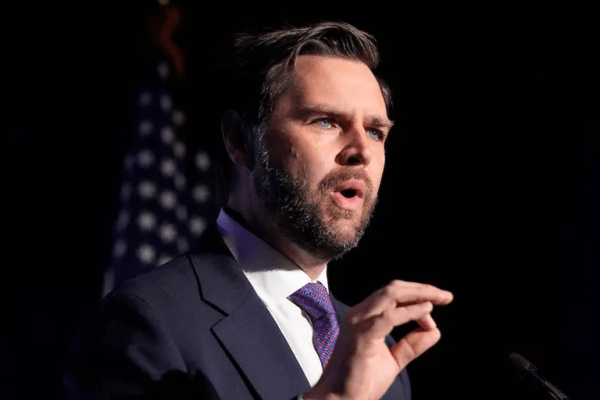
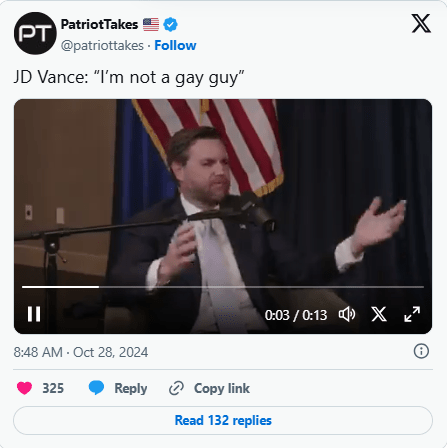
During an interview last weekend, Sen. J.D. Vance (R-OH) and conservative podcaster Tim Dillon echoed transphobic right-wing rhetoric, with Vance notably stressing to Dillon that he isn’t gay. Dillon claimed that supporters of transgender rights want nine-year-old girls “to have a beard,” while Vance argued that medical transitioning is a form of “conversion therapy” aimed at turning gay individuals transgender. Vance also alleged that the medical industry is profiting from transitioning minors and suggested that “they” are pushing gay kids to believe they’re actually transgender.
“I’m not a gay guy, but I’ve heard this from gay friends of mine…” Vance began, prompting Dillon to burst into laughter at Vance’s insistence on clarifying his sexuality.
“I’ve discussed this with gay friends who feel personally affronted [by gender-affirming care for youth],” Vance claimed. “They wonder if, at 14 and feeling confused, someone would have pushed them to transition. In some ways, it’s like a new version of conversion therapy through pharmaceuticals, as if to say, ‘Oh no, you’re not gay; you’re actually a different gender!’”
In the recent interview, Vance presented no evidence for his claim that cisgender gay youth are being pressured into transitioning. Earlier, Dillon sarcastically questioned why children can’t undergo “life-altering” surgeries, framing it as a sign of “fascism” for opposing it. He joked, “Why wouldn’t you allow an eight-year-old to fully transition?… Why can’t a nine-year-old girl have a beard?” In reality, gender-affirming surgeries are not performed on pre-pubescent children and are almost never performed on minors. Gender-affirming care for young children typically includes choices about clothing, names, and play preferences.
Vance continued, alleging that the medical industry profits from transitioning minors and manipulates government policy to push this, stating, “the very people who are getting rich off this are also lobbying the American Medical Association [AMA] and the U.S. government.” However, the AMA and other medical associations have recommended gender-affirming care as safe and essential for trans youth. According to the Williams Institute, only an estimated 300,000 trans individuals ages 13 to 17 could require such care—a small fraction of the U.S. population.
Dillon expressed skepticism over puberty blockers and hormone therapy for minors, saying many believe young children should be left alone, adding, “A lot of gay people feel that way…[but] none of them are ever listened to.” Vance mentioned a friendship strained by his stance on trans youth, citing a former classmate who had argued that puberty blockers are reversible—a point the Mayo Clinic supports, stating that puberty restarts once treatment stops.
The conversation then shifted, with Dillon criticizing “extreme” voices in public debate and calling for a focus on traditional subjects like math and science, echoing right-wing claims against teaching “critical race theory or gender theory.” This reflects the Republican platform, which opposes federal funding for schools promoting “radical” ideologies. Vance criticized anti-racist education as “bullshit” that divides people.
In a tangent about U.S. foreign policy, Dillon mocked the idea of promoting gender inclusivity abroad, saying, “we are there so that drag queens in Russia can have more of a say.” Vance replied that taxpayer funds are “funding programs to teach people that there are nonbinary genders out there.” This exchange, underscoring right-wing criticism of the military’s inclusivity efforts, continued their alignment with far-right narratives on gender and foreign policy.
The interview’s exchange on LGBTQ+ topics begins at the 29:40 mark.









You must be logged in to post a comment.