Canadian doctors denied patients gender-affirming care, citing Trump’s executive order

Read more at LGBTQ Nation.

McGill University in Quebec has denied gender-affirming care to at least two trans American students since March, when the school adopted a preemptive policy denying hormone replacement therapy over fears the Trump administration would retaliate, two sources say.

The new policy is an embarrassment, said an American staffer for The Montreal Trans Patient Union (TPU), who spoke to CBC on the condition of anonymity.

“These are American laws. American laws don’t apply in Canada,” they said.

The staffer and another member of TPU, Emma Gimbert, were at a meeting at McGill’s Student Wellness Hub in March when doctors brought up the change in policy.

“They said they wouldn’t be prescribing HRT to American citizens who were under 19 because of the executive order that Donald Trump issued,” Gimbert said.

The student was referring to Trump’s executive order, Protecting Children from Chemical and Surgical Mutilation, issued a year ago in January, which directs federal agencies to carry out the American president’s crusade against transgender identity across the U.S. government.

“If you told me a month ago that a U.S. executive order would be influencing how doctors do their job across the border, I would have been like, no, that can’t be the case,” Gimbert said.

Canadians have been overwhelmingly critical of Trump and his trolling threats to their sovereignty since the start of his second term. McGill’s decision, from fiercely independent Quebec, no less, would seem antithetical to the rest of Canada’s posture facing Trump.

About 1000 Americans are currently enrolled at McGill, a public research university in Montreal known as “the Harvard of Canada.” Among nearly 40,000 students, a high proportion are from abroad.

Adding to the absurdity of a Canadian university bowing down to an American president, the decision may have been based in part on a clerical error.

The TPU staffer explained.

“The doctors said the reason for this was specifically the fact that the form the U.S. released had provisions for targeting Canadian doctors and taking down their information.”

The document in question was a snitch form issued by the U.S. Department of Health and Human Services to report health professionals administering gender-affirming care to minors in the U.S.

The drop-down menu, like many forms online, included the word “province” along with “state.”

Panicked administrators at McGill apparently thought that word put a target on Canadian medical professionals’ backs. HHS had even removed it by the time McGill denied the HRT to their American students.

McGill would neither confirm nor deny the existence of a policy barring Americans from gender-affirming care for fear of retaliation by Trump.

“Access to gender-affirming care is available to McGill students, including international students,” the university said in a statement.

“The medical aspects of this care are provided by licensed physicians. These decisions are not made by the university,” the school added, in a probably doomed effort to evade accountability from Canadians incensed at McGill’s failure to defend their independence.

“I think it’s definitely important for them to acknowledge what’s been going on because the way they’re currently treating this, it’s kind of covert,” Gimbert said. 

“We know this is something that they’re aware of. It’s just not something that they’re publicly talking about.”

Added the American TPU staffer: “I mean, we don’t say that 18-year-old Americans can’t buy alcohol here because the drinking age in the U.S. is 21.”

Hobby Lobby is funding the latest push to end marriage equality

Read more at LGBTQ Nation.

Earlier this year, a group of 47 anti-LGBTQ+ organizations launched a new campaign to end marriage equality in the U.S., demanding that the Supreme Court overturn Obergefell v. Hodges. The campaign, called “Greater Than” – a response to the push for equality by claiming that straight people are “greater than” queer people – immediately got the media’s attention.

Now the Seattle Times has revealed that a key organization behind the Greater Than campaign is being funded by the conservative Christian business Hobby Lobby, the same business that got the Supreme Court to rule in 2014 that for-profit corporations don’t have to pay for employees’ health care that covers contraception if that contraception goes against the corporation’s religious beliefs.

Katy Faust is the founder and president of Them Before Us, an organization devoted to ending marriage rights for same-sex couples in the U.S. Faust’s mother is a lesbian who came out after marrying Faust’s father, and her parents divorced when she was 10. She converted to Christianity a few years later, when she was in high school.

Faust insists that she didn’t devote her life to attacking LGBTQ+ rights out of some kind of resentment towards her mother, although she now says she no longer considers her mother a parent.

The Seattle Times notes that Faust has been campaigning against marriage rights since at least 2012, when she started a blog called “Ask The Bigot,” a website she claimed would “debunk” the notion that marriage rights opponents are bigots.

She advocated for ending marriage rights over the years, but saw an opportunity for a renewed push after the Supreme Court overturned federal reproductive rights protections guaranteed in Roe v. Wade in 2022. The Court effectively let states decide whether abortion would be legal, and many of them immediately banned it, something people like Faust hope to see happen for same-sex marriage.

And the recent push is getting more funding. Them Before Us was founded in 2018, and its IRS reports show that it received less than $50,000 in revenue for its first few years of operation before Roe was overturned. In 2022, though, it received $200,000. In 2024, that became nearly $1 million, and Faust collected a salary of $135,000.

Them Before Us’s 2024 filings show a $300,000 donation from The Servant Foundation, a Christian organization funded by Hobby Lobby’s founder, David Green, and his family. It’s the same organization behind those “He Gets Us” ads about Jesus that ran during the 2024 and 2025 Super Bowls.

Them Before Us – referring to how children’s interests should come before adults’ – is attempting to refocus the debate on marriage rights around children in order to capitalize on the recent moral panic around “groomers,” a push from the right that started in the early 2020s to associate LGBTQ+ people with child sex abuse once again.

Faust claims that marriage equality has made children’s lives worse, contrary to what social science says on the matterShe said in a March Uncloseted Media interview that there is no “right to adopt” but that children “have a natural right to be known and loved by their mother and father.”

Faust herself has adopted a child who is from China.

Federal judge blocks FTC probes into trans medicine groups, citing ‘extensive evidence of animus’

Read more at the Advocate.

President Donald Trump suffered a pair of legal setbacks Thursday after a federal judge in Washington, D.C., blocked the Federal Trade Commission from enforcing investigative demands against two of the nation’s most influential medical organizations involved in transgender health care guidance.

Chief Judge James Boasberg of the U.S. District Court for the District of Columbia granted preliminary injunctions to both the World Professional Association for Transgender Health and the Endocrine Society, temporarily halting FTC investigations that the groups argued were politically motivated and unconstitutional.

The FTC investigations began earlier this year amid the administration’s broader effort to target institutions connected to gender-affirming treatment for trans youth. The agency issued civil investigative demands, or CIDs, seeking years of internal records, communications, financial information, conference materials, and documents related to medical guidance on transgender care.

In separate lawsuits filed in D.C., WPATH and the Endocrine Society accused the administration of weaponizing federal investigative powers to intimidate organizations that support evidence-based medical care for transgender patients.

The complaints argued the FTC was not conducting ordinary consumer protection oversight, but instead attempting to chill scientific debate, suppress protected medical speech, and deter physicians and researchers from participating in discussions about health care for transgender people.

Boasberg appeared deeply skeptical of the administration’s motives in both rulings, repeatedly pointing to what he described as evidence of hostility toward the organizations and their views on clinical standards for gender dysphoria treatment.

In the WPATH ruling, Boasberg wrote that the record “strongly suggests that the CID was issued at least in part because of hostility toward WPATH’s viewpoint and advocacy regarding transgender care.”

The judge explicitly tied that conclusion to the administration’s broader conduct surrounding transgender health care. “This Court’s Opinion in the parallel suit brought by the Endocrine Society details the range and depth of animus displayed by the President and agency leadership toward gender-affirming care,” Boasberg wrote.

He went further, writing that “[t]he circumstantial evidence of animus towards WPATH overlaps significantly with the record in the Endocrine Society’s case,” particularly through what he described as a “pattern of litigation and information demands” alongside “articulated hostility towards proponents of gender-affirming care.”

In one of the ruling’s sharpest passages, Boasberg concluded that “[o]n this preliminary record, with extensive evidence of animus and wafer-thin justifications lacking evidentiary support, it finds that WPATH is likely to demonstrate a causal link between its protected speech and the FTC’s issuance of the CID.”

Boasberg also noted that administration officials had publicly attacked WPATH before the FTC investigation began, including statements accusing the organization of lacking “scientific integrity” and contributing to “blatant harm done to children.”

At another point, the judge wrote that the evidence supported an inference of “viewpoint-based animus” toward WPATH and its advocacy surrounding gender-affirming care.

The court additionally found evidence that the investigation had already chilled protected speech and association. According to the opinion, WPATH leaders testified that they had curtailed educational programming and altered internal communications due to fears of retaliation and disclosure of sensitive member information.

“WPATH welcomes the Court’s decision to grant our request for a preliminary injunction against this unlawful and retaliatory investigative demand by the FTC,” the organization said in a statement to The Advocate late Thursday. “We are hopeful that this preliminary injunction will prevent further harm to the First Amendment rights of WPATH and its members.”

“For more than 50 years, WPATH has been committed to developing guidelines informed by established scientific standards, expert consensus, and patient-centered values,” the organization added. “WPATH’s dedication to this mission and the patient population it serves remains unwavering.”

In the parallel Endocrine Society case, Boasberg similarly warned that the FTC’s actions threatened constitutionally protected scientific discourse and associational rights. He wrote that the record raised “serious concerns that the agency’s investigatory power is being used not to police commercial fraud, but to target disfavored speech and advocacy.”

The judge also emphasized the breadth of the FTC’s demands, which sought years’ worth of records related to publications, internal deliberations, and communications involving transgender care recommendations. Boasberg concluded that the organizations had shown evidence of “ongoing self-censorship and withdrawal from protected expressive activity” as a result of the investigations.

“The D.C. District Court ruling is an important victory that recognizes medical guidelines are a valued resource that allow doctors to support patients in making decisions about their care,” the Endocrine Society said in a statement to The Advocate on Friday. “This ruling sends a powerful message that government efforts to pressure the medical and scientific community to abandon evidence-based practices are not permissible.”

The statement continued, “In addition to affirming the Endocrine Society’s First Amendment right to speak freely on matters of public health, the court recognized the chilling effect the government’s actions have on the Society’s work and the harm to public interest. This decision is a helpful step in ensuring the Endocrine Society can continue to advance endocrine health and patient well-being by providing clinicians with medically sound, evidence-based information.”

The rulings arrive as federal courts increasingly scrutinize whether the administration’s policies targeting transgender people and transgender health care are rooted in evidence or animus.

In Talbott v. United States, the ongoing challenge to the administration’s transgender military ban in D.C. courts, Judge Ana Reyes previously wrote that the policy was “soaked in animus and dripping with pretext.” Reyes also criticized government arguments portraying transgender service members as inherently dishonest or unstable, describing aspects of the administration’s rhetoric as evidence of unadulterated animus.

Boasberg’s rulings are not final decisions on the merits of either case, but they temporarily block the FTC from enforcing the investigative demands while the lawsuits proceed.

Ohio Republicans are trying to strip transgender adults of health insurance coverage

Read more at the Advocate.

Ohio Rep. Josh Williams (R-Sylvania Twp.) has introduced his latest bill in his crusade against transgender Ohioans.

Williams introduced HB 838 last Thursday. The bill would prohibit Medicaid from covering most gender-affirming surgeries and procedures for transgender Ohioans and ban state and local municipalities from providing a contract to their employees that includes “coverage, benefits, or services for gender reassignment surgery.”

The legislation also stipulates that if these benefits are offered, the cost would then be subtracted from the local authority’s “local government fund payments,” the revenue-sharing portion of the state’s General Revenue Fund.

The bill has not yet been assigned to a committee.

Williams has broken a record, introducing more than 100 bills in a single General Assembly as he runs for a spot in the U.S. House of Representatives.

Six of those bills are explicitly anti-LGBTQ+, complementing his public statements that it would be “harmful to society” to affirm trans identity.

  • HB 249 (“The Indecent Exposure Modernization Act”), which would ban drag and gender performance in public spaces where minors are present. (Status: The bill passed the Ohio House and now moves to the Ohio Senate.)
  • HB 262, to designate “Natural Family Month,” to celebrate only heterosexual married couples with children. (Status: The bill is sitting in a House committee; three hearings have been held.)
  • HB 693 (“The Affirming Families First Act”), to grant protections to parents who reject their trans children. (Status: The bill is sitting in a House committee; two hearings have been held.)
  • HB 796 to ensure that all incarcerated people in state custody are housed according to the state’s definition of “biological sex.” (Status: The bill has been introduced, but not assigned to a committee.)
  • HB 798 (“The Privacy Protection Act”) that would limit trans Ohioans’ access to public bathrooms and ban Ohioans from being able to change the sex marker on birth and death certificates. (Status: The bill has been introduced, but not assigned to a committee.)

In the Cleveland suburb of Lakewood, the city’s robust “Gender Freedom Policy” would protect LGBTQ+ employees from the effects of HB 838.

The policy was introduced by Council President Sarah Kepple and out LGBTQ+ Councilmember Cindy Strebig, and will allow the city to provide medical coverage for transgender employees and covered family members who seek gender-affirming care, “even if such care must legally be provided outside the State of Ohio.”

“This is another attempt by the Republican led and out of touch state government to draw attention away from their continued failure to serve Ohioans,” Strebig told The Buckeye Flame. “I will continue to fight for my community and the dignity and respect of all people.”

Dara Adkison, executive director of TransOhio, said that HB 838 is just the latest bill in an “exhausting pattern of a single politician repeatedly targeting transgender Ohioans instead of addressing the real challenges facing our state.”

“Continued increasing of restrictions and limitations to healthcare undermines the safety, health and wellbeing of not only trans Ohioans but everyone,” Adkison said.

Adkison called HB 838 “reprehensible,” but reminded Ohioans that the bill was just introduced and is not law.

“Everyone deserves the ability to make informed decisions about their own healthcare, and every municipality deserves to maintain the authority over what will be covered by city employee insurance plans,” Adkison said.

New HUD Proposal Targets Trans Housing Protections

Read more at Truthout.

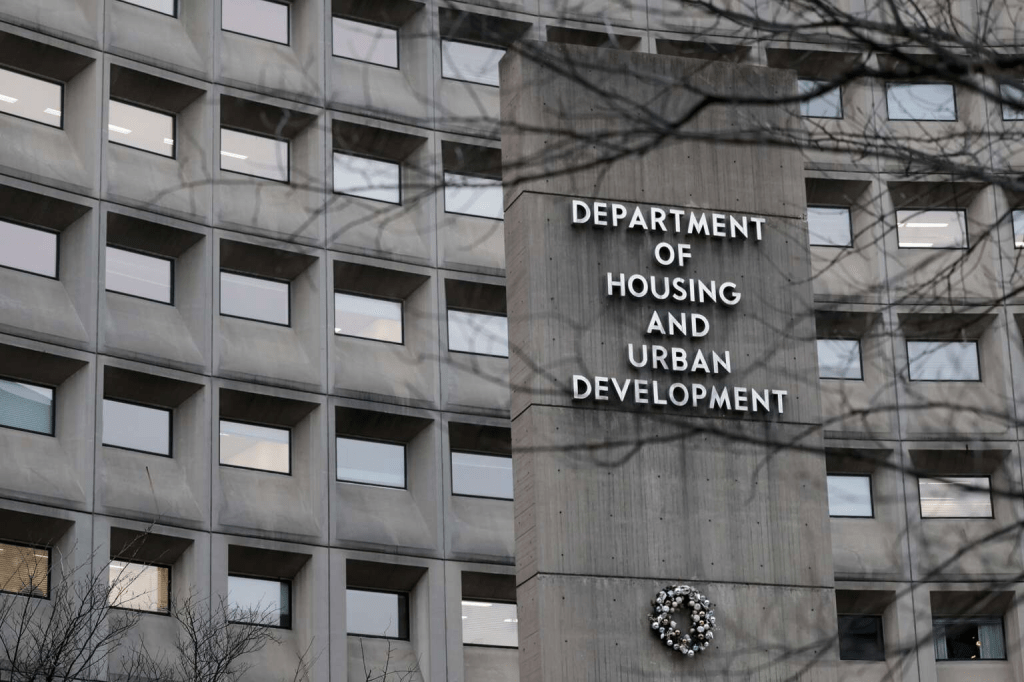
A newly proposed rule within the Department of Housing and Urban Development (HUD) would target transgender people, allowing federally funded shelters and housing providers receiving funds from the government to discriminate on the basis of gender.

The HUD proposal purportedly “harmonizes” the department’s existing Equal Access regulations with President Donald Trump’s anti-transgender executive order he issued on the first day of his second term. That order errantly equates gender with sex, and has been challenged in other realms of the federal government for its discriminatory nature.

The rule change would remove terms like “gender” and “gender identity,” replacing them instead with the word “sex.” Gender is generally understood as “a social construct expressed and reinforced by norms, behaviors, and roles assigned to people based on their perceived sex,” and is understood by scientists as not being binary, whereas sex is based on an individual’s arrangement of chromosomes.

The HUD proposal would allow housing partners of the federal government to resume discrimination against people seeking housing based on gender, rolling back standards that were implemented during the Obama administration.

The change appears to be religiously motivated, as HUD Secretary Scott Turner — a noted Christian nationalist — announced the proposed rule by citing his personal beliefs.

“God created two sexes: male and female,” Turner said. “The Left’s war on biological reality through radical gender ideology will no longer take precedence.”

Notably, Turner had already directed the department to stop enforcing current rules protecting people from discrimination based on gender last year. The rule change formalizes that action.

Research demonstrates that transgender people face enormous difficulties in securing housing, with one study from 2022 demonstrating that nearly one-third of trans people have been unhoused in their lifetimes.

Deborah Thrope, chief program officer for the National Housing Law Project, decried the new HUD proposal, stating that it is a “baseless assault by the Trump administration” against LGBTQ people.

Describing the rule as a “cruel proposal,” Thrope added:

Not only will the proposed policies directly harm families and communities, they will increase costs for state and local governments, hospital systems, and social services agencies by forcing more housing insecure people to live on the street rather than in shelter.

“Our country has the resources to ensure that all of us have a roof over our heads, and we are steadfast in our commitment to fight alongside LGBTQ+ tenants and neighbors until we’re all stably housed,” Thrope said.

State Department bans trans employees from using the appropriate restrooms at work

Read more at LGBTQ Nation.

The State Department announced on Monday a new policy that will ban trans employees from using the restroom that matches their gender identity.

Right-wing news site, The Daily Signal, reports that they obtained a memo from the State Department titled “Updates Regarding Biological Sex and Intimate Spaces, Including Restrooms.” The memo says, “ACTION: Post must abide by the President’s directive in E.O. 14168, ensuring intimate spaces are designated by biological sex.”

The memo is designed to update the State Department’s policies in line with Donald Trump’s January 2024 anti-trans executive order, which declared that there were only “two sexes” and that they were immutable. While not a legal action in its own right, an executive order instructs the federal government on how Trump would like laws to be implemented.

Several federal agencies had already implemented an anti-trans bathroom ban, but the State Department had not previously made its own policy.

In July of 2025, the acting director of the Office of Personnel Management (OPM) sent out a memo instructing all federal agencies to bring themselves in line with the executive order, with the stated goal of “Ending Gender Ideology in the Federal Workplace and Protecting Women.”

That order included a note that all agencies should have “ensured that intimate spaces (such as bathrooms, locker rooms, and lactation rooms) at Federal worksites designated for women, girls, or females (or for men, boys, or males) are designated by biological sex and not gender identity.”

The State Department’s delay in implementing a bathroom ban likely doesn’t stem from Secretary of State Marco Rubio having empathy for the trans community, but rather from a case before the Equal Employment Opportunity Commission (EEOC).

Last summer, a transgender person filed a complaint with the EEOC after being denied access to the appropriate restrooms and “intimate spaces.” A decision was reached by the commission in February, which upheld that “Title VII permits a federal agency employer to maintain single-sex bathrooms and similar intimate spaces,” and “permits a federal agency employer to exclude employees, including trans-identifying employees, from opposite-sex facilities.”

Title VII is the federal law that bans job discrimination on the basis of sex. In 2020, the Supreme Court ruled in Bostock v. Clayton Co. that Title VII’s ban on sex-based discrimination also bans anti-LGBTQ+ discrimination, since it’s impossible to discriminate against trans or queer people without taking their sex assigned at birth into account.

The guidance goes against previous recommendations from OSHA, which stated: “The core belief underlying these policies is that all employees should be permitted to use the facilities that correspond with their gender identity. For example, a person who identifies as a man should be permitted to use men’s restrooms, and a person who identifies as a woman should be permitted to use women’s restrooms.”

Those guidelines were removed from the Department of Labor’s website at some point between January 15, 2025, and February 1, 2025.

The Daily Signal touted the new policy under the headline “Rubio Cracks Down on Men in Women’s Restrooms.” That can be added to his resume, alongside defunding USAID so that thousands will suffer from HIV and changing the State Department’s default font because the old typeface was too “woke.”

“Banning transgender people from using facilities in alignment with their gender identity deprives them of the ability to participate in public life,” Advocates for Trans Equality’s website notes. “Without the ability to use a public restroom, trans people are less able to live their lives and travel outside their home. Trans employees need to be able to use the restroom at work to keep their jobs without risking their health and safety.”

“Transgender people cannot safely use the bathroom of the gender they were assigned at birth just because the law requires them to. Trans people are routinely subjected to harassment and assault in bathrooms. Sixty-eight percent of trans people have been verbally harassed, and 9% have been physically assaulted when using a public restroom in the past 12 months. And sadly, 8% of trans people have faced a kidney or urinary tract infection from having to avoid restrooms for their safety.”

Colorado Dems pass “profound” law to protect trans kids who change their names

Read more at LGBTQ Nation.

Colorado Governor Jared Polis (D) has signed a law to protect trans children by sealing name changes for those who are under 18 when they file for one. The legislation will protect trans children

“Passing this bill is simple, but its impact is profound,” Colorado state Senator Katie Wallace (D), a sponsor of the bill, said in February. “It gives children the safety and dignity they deserve, and it treats their private life with the same care we afford in other sensitive cases.”

Colorado’s Senate Bill 18, “Legal Protections for Dignity of Minors,” simply makes it so that starting July 1, when anyone who is under 18 years old petitions for a name change, the court is required to suppress the record. That means the petition will not be part of the public record and cannot be collected through searches or data harvesting.

The only exception to the process is if the petitioner was previously convicted of a felony.

While the court will keep a record for administrative purposes, it cannot publish the petitioners’ names or their deadnames. The record can only be accessed by the petitioner or by someone who has obtained the petitioner’s verbal consent and submitted an affidavit to that effect.

The bill will easily benefit anyone who might want to change their name as a child, whether to have a name they feel more connected to or to distance themselves from a family name. While the language of the bill itself does not mention trans people, it will have a huge impact for trans kids, which has always been the mission of the legislation.

At a senate committee hearing in February, Z Williams, co-director of Bread and Roses Legal Center, spoke of how a parent thought someone in their child’s class might be trans and was able to search for their name change document online and out the second grader to the school, Colorado Newsline reported.

Williams said the parent “exposed that child is transgender in second grade to the entire school community through flyers and through her own children, not only practicing hate herself, but teaching others how to. That is why we asked the senators and representatives to run this bill.”

At the same hearing, Elsie Fierro, the political and policy director at LGBTQ+ advocacy organization One Colorado, shared the story of a Colorado family who had petitioned for a name change on behalf of their trans child. But when they searched the new name online, a search engine returned results that included the child’s deadname along with identifying information that had been scraped from public court documents. “That family spent months trying to remove it and protect their minor child in an increasingly hostile political climate. This is the reality some families are navigating,” Fierro told the committee.

In the face of Republican opposition, state Sen. Wallace said, “This bill will protect children from AI data-scraping of those public records, the potential of bullying if they should be found and from hostile individuals in the wider world.”

The bill was originally intended to do even more good, but had a section stripped from it in February. It originally sought to instruct family court judges to consider acceptance of a child’s gender identity when determining custody cases. Several studies, including one by The Trevor Project, have linked trans children being connected to accepting adults to lower risk for depression and suicide attempts.

The custody clauses had originally been included in an earlier bill, HB 1312, which passed last year and introduced legal protections for trans people against deadnaming, misgendering, and more. However, they were removed before it passed after LGBTQ+ groups raised concerns that the language could erode existing protections.

For SB 18, the clauses had been reworked, but Polis threatened to veto the bill unless the clauses were removed, claiming to have received word of similar concerns once again. However, state Sen. Wallace and Williams both suggested that Polis’ view of the provisions being “substantially the same” was incorrect and that they had been amended to assuage concerns.

Colorado Republicans have opposed this bill and other pro-trans legislation, pushing anti-trans bills in their place. However, Democrats currently hold a supermajority in the state and have been defending trans rights with new protections.

A transgender teen’s case in Ecuador opens path for others seeking legal recognition

Read more at AP News.

Her name translates from Spanish as “beloved.”

“We decided to call her ‘Amada’ because she came into our home to be cherished,” said Lorena Bonilla, whose transgender daughter was recently authorized to change her identity documents under a ruling by Ecuador’s Constitutional Court.

Her case — alongside another decided in March — has opened the door for Ecuadorian adolescents seeking to modify their name and sex in official records. Adults gained that right after years of advocacy efforts culminating in a 2024 reform.

The court’s rulings were welcomed by supporters of LGBTQ+ rights in a region where conservative movements have gained ground in recent months. Yet they also warn of the legal and social hurdles that transgender people continue to face.

“In Ecuador there are still political, religious and social sectors that portray gender recognition for adolescents as a threat,” said Cristian González Cabrera, an LGBTQ+ rights researcher at Human Rights Watch. “That climate can translate into institutional hostility, delays and unjustified denials.”

Bonilla and her daughter, 17, experienced that firsthand in 2018. Their legal battle began when Amada was 9 and school authorities refused to admit her because her legal documents did not match her gender identity.

“We went through 14 schools and none would take her in,” Bonilla said. “We then knew we needed to change her name.”

A court initially granted Amada the right to modify her identity documents. But the civil registry appealed the decision and a higher court later ruled that her passport and ID card should reflect her birth name and sex.

“It was a step backward for our rights,” Bonilla said.

LGBTQ+ rights in Ecuador have largely been shaped by court rulings rather than by lawmakers or government officials. A similar dynamic has unfolded in other Andean countries such as Colombia and Peru.

“The legislative and executive branches represent the country’s broad majorities, yet LGBTQ people are often overlooked,” said Christian Paula, president of the Pakta Foundation, which provides legal support in cases like Amada’s. “Turning to the courts reflects a lack of openness and sensitivity within our institutions.”

Among Ecuador’s most important advances in LGBTQ+ rights, three have come through the courts. They include the decriminalization of homosexuality in 1997, a 2009 ruling that allowed an Ecuadorian transgender woman to change her name, and the legalization of same-sex marriage in 2019.

Those court decisions sparked a backlash from right-wing and religious groups.

In a post on X following the Constitutional Court’s 2026 rulings, André Santos, president of one of Ecuador’s most vocal conservative groups, said the court had overstepped its authority. He has also spoken against school protocols allowing students to use uniforms and bathrooms that align with their gender identity.

The country’s Catholic bishops conference also expressed concern over the court’s action. “Allowing adolescents to make decisions of this nature poses serious risks to their overall development,” it said.

President Daniel Noboa has not been as outspoken against transgender causes as some other conservative leaders in Latin America, but his administration has shown little support for LGBTQ+ rights.

As a candidate, he pledged to defend the traditional family. Since taking office, violence and economic instability have overshadowed gender and diversity issues in his political agenda.

“What worries us are his ministers,” said Diane Rodríguez, a lawyer and president of Ecuadorian LGBTQ+ organization Silueta X.

Rodríguez, a trans woman, pointed to officials in the Education Ministry, including current minister Gilda Alcívar, who has rejected the inclusion of what she calls “gender ideology” in education. That climate, Rodríguez said, is reflected in her daily interactions.

From Guayaquil, where she raises a 4-year-old daughter with her partner, a trans man, Rodríguez has faced difficulties at her child’s school.

“We had trouble enrolling her because people see me and assume I’m going to turn children transgender because of how I look,” Rodríguez said.

Throughout her career, she has provided legal support for people facing sex-based discrimination and backed a program providing hormone treatment for trans people. Her work has also focused on raising awareness about violence against her community.

Silueta X publishes an annual record of killings of LGBTQ+ people. Its first report in 2013 documented two killings and the numbers have risen every year. The 2025 publication reported 30 deaths, 21 of them trans women.

Amada told her parents that she was a girl at age 3. She asked for a princess-themed birthday party. But Bonilla and her husband — both raised Catholic — assumed she was confused and dressed her as a prince instead.

It took them a few years to understand their daughter and dismiss psychologists who said something was wrong with her or that they had done a poor parenting job.

“Comments can be ruthless and people have no idea what families like ours go through,” said Mauricio Caviedes, Amada’s father. “I hope education on this issue changes so people can understand.”

As they learned more about the trans community, their fight to modify Amada’s identity documents evolved into a broader cause. Bonilla and Caviedes became activists, bringing their kids with them to protests and conferences. They supported other LGBTQ+ causes such as same-sex marriage and founded an organization for families of trans children like their own.

“That became the only way we could fight the state,” Bonilla said. “We were 25 families with transgender children of different ages, the oldest being 12.”

Her family moved to Canada during the COVID-19 pandemic. And while she treasures how welcoming their new home has been for her daughter, she keeps advocating for LGBTQ+ rights in Ecuador.

Amada, now a strong student who dreams of becoming a nurse, was shaped by years of watching her parents support trans friends and community members struggling to access health care without discrimination. She has never appeared publicly on camera, but the visibility of her case feels like a lifelong legacy for Bonilla.

“People think the destiny of transgender people is to become sex workers or live in hiding,” Bonilla said. “But we want every parent to know that one day their child can become whatever they want to be.”

Family of trans college student flees Idaho after state passes draconian anti-trans law

Read more at LGBTQ Nation.

The parents of a young trans woman in Idaho say that they’re leaving their state after it passed a law to criminalize trans people who use the restroom.

“Obviously, this law is a disaster for families like ours,” Michael Devitt, the father of 20-year-old Eve, wrote in a letter notifying his patients that his physical therapy practice would be shutting down. “We can no longer take a road trip across our beloved state, or even enjoy a family night out at a restaurant, or a movie, without running the risk of Eve being charged and sent to a prison merely for using the facilities.”

The law he’s referring to is H.B. 752, which Gov. Brad Little (R) signed into law on March 31, the Trans Day of Visibility. The hostile law makes it a criminal offense for trans people to use the restroom that aligns with their gender identity, even in private businesses. Multiple offenses could get a trans person life in prison.

While several states have passed bathroom bills, Idaho is one of only four states – along with Florida, Kansas, and Utah – to introduce criminal penalties for using the restroom.

Eve Devitt, who is attending college in New York, testified against a different transphobic bill several years ago.

“Since I started estrogen almost three whole years ago, my mental health has gotten significantly better,” she told the Idaho House Judiciary, Rules, and Administration committee in 2023. “I’ve been able to get myself off of a cliff that I wasn’t sure if I would ever find myself off of. I feel so much better and more complete with myself.”

But today the Devitts say they’ve had enough, comparing their state to an abusive partner.

“We say ‘We’re in an abusive relationship with the state of Idaho’ — all people with transgender relatives, or all transgender people. And you always think, ‘Oh, they’ll stop hitting me.’ But they’re not gonna,” Michael Devitt told the Idaho Capital-Sun. He said that H.B. 752’s penalties for multiple offenses are more than the prison sentence someone in the state could get for manslaughter.

“I mean, there are all kinds of things you can do in Idaho that will get you prison time that are less than the second offense for using the bathroom that aligns with your gender identity.”

He said that even though his daughter is in New York at the moment, he worries about how she’ll be treated when she comes home to Boise. For example, he’s worried she’ll be forced to undergo a physical exam in public.

“Every single day when I’m out in public, I have to decide: Do I feel like going to jail today, or do I feel like being attacked?” said Nikson Mathews, a trans man and the chair of the Idaho Democratic Queer Caucus, about the new law.

Eve’s mother, Dr. Angie Devitt, said that she would continue to see patients in Idaho even after the family moves to another state.

H.B. 752 is one of three anti-LGBTQ+ laws passed in Idaho this year. H.B. 561, which was also signed on the Trans Day of Visibility, bans local governments from flying Pride flags. The state passed a similar ban last year that had an exemption for official city flags, so the city of Boise made the Pride flag one of its official flags. The GOP-controlled legislature responded this year by passing another flag ban that said flags had to be officially adopted before 2023 to count, just to keep Boise from flying the Pride flag.

And last Friday, Gov. Little signed the “Pediatric Secretive Transitions Parental Rights Act,” which requires doctors and teachers to report gender non-conforming kids to their parents without investigating whether those children will face abuse if outed.

The Idaho Capital-Sun reports that a fourth anti-LGBTQ+ bill could still be passed by the legislature. House Bill 557, which would ban local governments from enacting LGBTQ+ anti-discrimination protections, passed the Idaho House of Representatives but has stalled in the state Senate. Twelve local governments have passed ordinances that would be repealed by this bill if it passes.

GOP Idaho governor signs severe anti-trans bill to ban kids from “secretive transitions”

Read more at LGBTQ Nation.

Idaho Gov. Brad Little (R) signed a severe anti-trans bill into law last Friday that will require child care providers, health care providers, and educational institutions to out trans kids to their parents if they express any desire to act in a way perceived as discordant with their sex assigned at birth.

The Pediatric Secretive Transitions Parental Rights Act, which will take effect in July, bans folks who care for minors “from facilitating a pediatric sex transition or social transition without informing and obtaining informed consent from a minor child’s parents or guardians.”

The bill aims to close a “loophole” in the state’s anti-trans laws, as cosponsor state Sen. Ben Toews (R) reportedly put it during the state Senate’s debate on the legislation. That loophole, Toews said, is the fact that the state’s gender-affirming care ban does not cover social transitions, which he referred to as “the process by which vulnerable children are led into the pipeline.”

The legislation defines social transition as “the process by which an individual goes from identifying with and living as a gender that corresponds to the individual’s sex to identifying with and living as a gender different from the individual’s sex and may involve social, legal, or physical changes, including adopting a name, pronouns, appearance, or dress that does not correspond to the individual’s sex.”

The covered entities, then, must notify a student’s parents within 72 hours if they request to be referred to using new pronouns or a different name than their legal name; if they ask to use facilities like bathrooms and locker rooms that don’t correspond with their sex assigned at birth; or if they ask to join a sports team that does not align with their birth sex.

Not doing so, the bill says, means “aiding and abetting” a child’s transition before parental consent is obtained. Parents will also be allowed to sue entities for violating the bill, and the attorney general will be authorized to seek civil penalties of up to $100,000.

Democrats argued against the bill for its vague language and the possibility that it would put children with unaccepting families in unsafe situations.

“When we write these bills, we write these statutes, we’re writing them for all families,” argued state Sen. James Ruchti (D), according to the Idaho Statesman. “And so when nurses, when doctors, when educators, tell us we need a little room to be able to handle these situations carefully… and being required to report this within 72 hours takes that out of our hands, and it means that we have to possibly go to a family… and tell them something that that family may not be in a great place to hear.”

State Sen. Melissa Wintrow (D) called the bill “one more that’s just overcontrolling overreach and just goes far beyond what’s necessary.”

“Life isn’t that black and white,” she said. 

A lone Republican, state Sen. Jim Guthrie, spoke out against the bill, saying it will “force our teachers to be tattletales” and “put additional stress on teachers that are already stressed… already overworked, and more and more they have to deal with laws like this that are going to force them within 72 hours to make a judgment.”

After the legislature passed the bill, ACLU of Idaho spokesperson Rebecca De León called it an “example of unconstitutional, big government overreach into our private lives.”

“HB 822 threatens to undermine bedrock free speech protections for students, teachers, and health care professionals and is clearly unconstitutional,” she said. “Politicians who stand for small government and personal liberties should not regulate how people dress or express themselves.”

Jane Migliara Brigham, a writer for trans news publication The Needleslammed the bill for turning doctors, teachers, and the like into “a kind of gender secret police.”

“The language is written such that there is no clear limit on what does not constitute social transition,” Brigham explained. “As a result, whether or not some behavior which is not listed here actually constitutes social transition will be in the eye of the beholder, or more accurately, in the eye of whoever is reporting the behavior to the child’s parents. This ambiguity leaves room for personal judgment, especially where that judgment is informed by anti-trans bigotry.”

Brigham questioned whether a boy wearing pink could count as evidence of a social transition and whether the legislation does not make clear where such an act would fall.

“Most casual observers cannot reliably tell the difference between a child who is trans, gay, gender non-conforming, or one who is simply socially awkward. As a result, what does and does not get reported to parents will, in all likelihood, be determined by bigotry and stereotypes, rather than any clear guidelines.”

At the end of March, Little also signed the nation’s most extreme bathroom ban. The law is the fourth in the U.S. to criminalize trans people’s use of bathrooms and other sex segregated spaces that don’t match the sex they were assigned at birth — similar laws have been enacted in Florida, Kansas, and Utah.

Guthrie was again the lone Republican against the bill. “If [a trans woman goes] in the bathroom of their biological sex, they’re going to upset a lot of people and freak people out,” he told the Associated Press. “If they go in the bathroom that is consistent with their looks — they are knowingly and willingly going into the bathroom — that is breaking the law.”

“They’re human beings,” he said, “just like us, and what are they supposed to do?”

Blog at WordPress.com.

Up ↑