*This is reported by New Republic Opinion via Yahoo News.
A MAGA judge in Texas has issued a sweeping ruling that destroys workplace discrimination protections for LGBTQ+ people in the United States.
Judge Matthew Kacsmaryk, who holds a reputation for being a far-right activist judge, declared that while Title VII of the Civil Rights Act does not protect LGBTQ people from workplace harassment based on their sexual or gender orientation. The case was brought forth by the Heritage Foundation, a far-right, culturally conservative organization that heavily influenced the writings and goals of Project 2025.
Kacsmaryk, a Trump appointee, specifically targeted transgender people in his ruling, stating that they had to simply deal with any kind of discriminatory treatment in their workplace. He deduced that “a male employee must use male facilities like other males,” an assertion that completely invalidates transgender identity in its entirety rather than actually acknowledging the issues they face at work. Kacsmaryk even went so far as to order federal employment policy to remove“all language defining ‘sex’ in Title VII to include ‘sexual orientation’ and ‘gender identity.”.
This all directly contradicts the Supreme Court’s 2020 Bostock v. Clayton County ruling, which stated plainly that Title VII protects LGBTQ workers from identity-based firing and harassment.
Kacsmaryk is not new to this. He has been referred to as the “go-to jurist” for right wingers looking for judicial validation for cruel, oppressive, and deeply culturally conservative policy. He attacked LGBTQ protections in the Affordable Care Act, suspended FDA approval of the live-saving abortion pill mifepristone, and tried (and failed) to make Planned Parenthood pay $2 billion to Texas and Louisiana on the grounds that they were “defrauding” Medicaid. This is yet another coordinated attack from the right intended to erode hard fought social justice victories.
The military has been ordered to identify troops who either have or may have gender dysphoria, the psychological term for the distress caused by one’s gender identity and sex assigned at birth not being the same. The goal is to get started on forcing transgender people out of the military ahead of the June 6 date set by Defense Secretary Pete Hegseth to start the purge.
Earlier this month, the Supreme Court ruled that the administration could start forcing transgender people out of the military, while several legal challenges to the trans military ban are being heard by lower courts. Hegseth then said that transgender service members would have until June 6 (or July 7 for those in the reserves) to voluntarily leave the military and have a chance to keep some of the benefits they accrued in their time in the armed services.
Orders issued yesterday, Advocate reports, will have each branch of the military start identifying transgender people to kick out after June 6. It tells each branch to identify people who have a diagnosis of gender dysphoria or “symptoms consistent with gender dysphoria” and review their medical records.
“Commanders who are aware of service members in their units with gender dysphoria, a history of gender dysphoria, or symptoms consistent with gender dysphoria will direct individualized medical record reviews,” the directive says. It also reaffirms that gender-affirming care is banned for transgender active-duty members of the military.
Stars and Stripes reports that an unnamed senior Defense Department official explained that commanders can now start medical screenings for servicemembers who don’t identify as transgender but who they suspect may have gender dysphoria.
“[This] is also consistent with what we expect and require of commanders generally, to ensure that their service members are fit and capable for duty — whether it’s under this policy or any other qualification where they may have concern that that service member requires medical intervention or is not able to perform their duties,” they said.
“The implementation requires some steps to ensure that those who go forward in service remain eligible to meet the high standards of the department. The department requires high standards to ensure that the force is ready to fight and win the nation’s wars as called upon.”
On May 8, Hegseth issued a memo saying that transgender servicemembers would have until June 6 to voluntarily start the process of leaving the military and get an honorable discharge, which would make them eligible for voluntary separation pay, as well as some health care and employment assistance benefits.
“There’s no guarantee to access to your pension or severance or an honorable discharge,” said Rae Timberlake of the trans service member organization Sparta Pride. They are one of the estimated 1000 transgender service members choosing to leave the military voluntarily now in order to get some of the benefits they have been earning throughout their career that might not be available if the military forces them out for being transgender after June 6.
“This is not voluntary,” they said. “This is a decision that folks are coming to under duress.”
National Center for Lesbian Rights attorney Shannon Minter told Advocate that the May 15 memo is “disturbing.”
“From the beginning this policy has been implemented in a rushed and chaotic manner that is completely unnecessary and deeply disrespectful to these service members, who deserve at the very least clear information and an orderly process so that they can make informed decisions that will have such a profound effect on their lives and their families,” he said.
“It is also deeply concerning that the separation codes that this guidance indicates will appear on the records of officers who are involuntarily separated will create the false impression that they are some sort of risk to national security. This is grossly untrue and will needlessly limit their civilian employment opportunities.”
The purge stems from an executive order issued in January that said that trans people can’t lead “an honorable, truthful, and disciplined lifestyle and that not using pronouns associated with a person’s sex assigned at birth violates the military’s “high standards for troop readiness, lethality, cohesion, honesty, humility, uniformity, and integrity.” This runs counter to actual studies of transgender people in the military that have found that they can serve without issue.
The executive order led to several lawsuits challenging it, including a lawsuit filed in Washington state brought by seven transgender servicemembers and one trans person who wants to join the military. A federal judge in that case issued a temporary injunction, blocking the Department of Defense from implementing the ban while the court heard the case.
Trump’s Department of Justice (DOJ) appealed the injunction, but the U.S. Court of Appeals for the Ninth Circuit refused to lift it. So, the DOJ appealed to the Supreme Court, which lifted the injunction earlier this month.
Stars and Stripes reports that there are around 4200 service members with a diagnosis of gender dysphoria.
The Rainbow Map and Index has been published annually since 2009 and ranks all 49 European countries on legal and policy practices for LGBTQ+ people.
The latest rankings, published on Wednesday (14 May), show that the UK had dropped to 22nd, with an overall score of 46 per cent, making it now the second-worst country for LGBTQ+ laws in western Europe and Scandinavia – above only Italy.
The UK was named the best place in Europe for LGBTQ+ rights, with an 86 per cent rating, in 2015. But it has been falling ever since and dropped seven places from last year’s position, mainly because of the recent Supreme Court ruling which deemed that the protected characteristic of “sex” in the 2010 Equality Act was based on “biology” and excluded trans people.
For laws that relate to the recognition of trans people’s gender identity, the UK is now ranked 45th. ILGA-Europe said that the Supreme Court’s verdict constituted a legal block on effective recognition of trans people’s identities. The only other European nations in a similar position are Bulgaria, Georgia, Hungary and Russia.
While Scotland had had introduced the Hate Crime and Public Order (Scotland) Act, which came into effect last year, the legislation only applies to the devolved nation so had only a minimal effect on the UK’s overall score.
Malta tops the new list, with a score of 89 per cent, followed by Belgium (85 per cent), Iceland (84 per cent), Denmark (80 per cent) and Spain (78 per cent).
Other nations above the UK include Finland (70 per cent), Ireland (63 per cent), Austria (54 per cent), Croatia (49 per cent) and Estonia (46 per cent).
‘The UK must do better’
Commenting on the rankings, ILGA-Europe’s executive director, Chaber, said: “The time to push back is now, before the targeted attacks we’re seeing in countries like Hungary, the UK and Georgia become the norm rather than the exception. Political leaders must lead by example and turn their words into action.”
A spokesperson for TGEU, the European transgender rights network, claimed that while the UK was once a “frontrunner on equality”, it now has a Supreme Court, prime minister and equality watchdog “singing from the same hymn sheet as anti-trans campaigners”.
They went on to say: “The UK Supreme Court’s decision, which defined a ‘woman’ for the anti-discrimination law, has severely undermined legal certainty for trans people. Furthermore, it has reinforced privacy risks and exclusion from essential services such as hospital wards, public toilets, changing rooms and refuges, as well as reception centres for asylum seekers.”
Meanwhile, Equality Network chief executive Rebecca Don Kennedy said: “It is shameful that having been ranked best in Europe for LGBTI+ laws 10 years ago, we have fallen so far. For our treatment of trans people after the Supreme Court ruling, we are now known as one of the worst countries in Europe. The UK must do better.
“Scotland, when analysed separately, has in the past been considered progressive and a beacon of LGBTI+ equality and human rights. That seems to be quickly deteriorating. We ask the Scottish government to act now and do everything they can to improve the lives of LGBTI+ people and to not submit to growing anti-LGBTI+ narratives both globally and right here in Scotland.
And Vic Valentine, the manager of Scottish Trans, said: “That the UK has slipped so far down the rankings for LGBTI+ equality in Europe is an important reminder that we can’t take progress for granted.
“From the outside, the UK is viewed as a cautionary tale of how things can go backwards rather than forwards. But none of this is inevitable.
“Governments and parliaments can – and should be – forced to protect and promote the rights of everyone. Yet politicians across the UK are quietly watching on as last month’s Supreme Court ruling seems to have set back trans people’s rights by two decades. It is very much in their power to put us back on the right path.
‘We call on the UK government to urgently take whatever action is needed to ensure that trans people can live safely and freely, and [to] reverse this decade of decline in the rights of LGBTI+ people.”
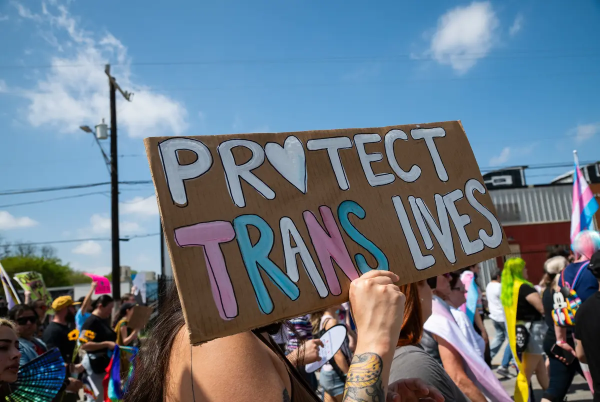
Dozens of trans people and their allies gathered in the outdoor Capitol rotunda Friday, chanting at the top of their lungs.
They will not erase us.
The next day, the Texas House of Representatives preliminarily passed a bill that aims to do just that.
House Bill 229 strictly defines men and women based on the reproductive organs they were born with, and orders state records to reflect this binary. The bill, titled the “Women’s Bill of Rights,” lays out the “biological truth for anybody who is confused,” said author Rep. Ellen Troxclair, an Austin Republican.
The bill passed on second reading 86-36 after an at times tense debate, and is expected to be finally approved next week before going to the Senate, which has already passed several bills with a similar focus.
Surrounded by a cadre of Republican women, Troxclair said the goal of the bill was to ensure women’s rights aren’t “eroded by activists” as more people come out as trans and nonbinary. Democrats argued against the bill for almost three hours with Rep. Jessica González, D-Dallas, saying “it is harmful, it is dangerous, and it is really freaking insulting.”
If this bill becomes law, more than 120,000 trans Texans would be forced to be defined in state records by the sex they were assigned at birth, rather than the gender they identify as, even if they’ve already legally changed their birth certificates and driver’s licenses.
This year, the proposals that have gained the most traction reflect a more fundamental question: what is a woman?
For conservative lawmakers, the answer is simple, and best defined by reproductive organs. For trans people and their allies, the answer is simple, and best left to an individual’s assertion of their gender identity.
Only one of those groups controls the Texas Capitol.
“We’re a state that believes in truth, and we’re a state that honors the hard-won achievements of women, the women who fought for the right to vote, to compete in sports and to be safe in public spaces, to be treated equally under the law,” Troxclair said on the floor. “But if we can no longer define what a woman is, we cannot defend what women have won. We cannot protect what we cannot define.”
In the bill, a woman is defined as “an individual whose biological reproductive system is developed to produce ova,” and a man is “an individual whose biological reproductive system is developed to fertilize the ova of a female.” Democrats criticized this as overly simplistic, excluding trans people, but also intersex people and those who can’t conceive children.
“Any biologist knows there are variations in sex chromosomes, hormone levels and other traits … where an individual’s biological characteristics don’t align with typical male or female categorization,” said Rep. Jon Rosenthal, a Democrat from Houston. “The real question is, do you believe that all people have the basic rights of life, liberty and the pursuit of their own personal happiness?”
This bill aligns with an executive order from Gov. Greg Abbott, who declared in January that Texas only recognizes two sexes, male and female, and a non-binding legal opinion from Attorney General Ken Paxton, who said state agencies should not honor court opinions to change someone’s sex listed on official documents.
At the Capitol rally on Friday, Lambda Legal senior attorney Shelly Skeen said revoking these changed documents, and preventing people from changing them in the future, “affects every aspect of our daily lives.” Having a birth certificate or drivers’ license that reflects a different sex than their physical presentation, or that doesn’t align with their passport or other documents, could leave trans people in a legal limbo and potentially open them up to violence, she said.
It could impact the state facilities, like prisons, they are sorted into, the bathrooms and locker rooms they are supposed to use and the discrimination protections they are entitled to, Skeen said. Unlike other bills, like the so-called “bathroom bill,” this legislation does not have civil or criminal penalties for using a facility that doesn’t align with one’s sex.
Troxclair did accept one amendment, by El Paso Democrat Rep. Mary González, to clarify how intersex people, who are born with both sets of reproductive organs, fit into these definitions.
The chamber also preliminarily approved Senate Bill 1257, which would require health insurers that cover gender-affirming care also cover any adverse consequences and costs of detransitioning. The bill, authored by Sen. Bryan Hughes and sponsored by Rep. Jeff Leach, passed 82-37.
Leach said he brought this bill on behalf of people who were left with tens and hundreds of thousands of dollars of medical bills because their health insurance wouldn’t cover the costs of detransitioning.
“The illustration that I think best describes this is, if you take somebody to the dance and they want to go home, then you have to take them home,” Leach said during the debate on Saturday.
The bill says that any insurance company that covers gender-affirming care must cover all detransition-related costs for its members, even if that person wasn’t on the health insurance plan at the time they transitioned. Democrats filed more than half a dozen amendments to narrow the scope of the bill, critiquing the bill as a health insurance mandate. None of the amendments passed.
Last session, Texas lawmakers outlawed gender-affirming care for minors. Trans advocates worry that raising the cost of covering gender-affirming care will result in health insurers not covering the treatments for adults, either.
“If you can make it painful enough for providers and insurers, health care is gone,” said Emmett Schelling, the executive director of the Transgender Education Network of Texas. “It doesn’t just feed into gender-affirming care. It bleeds into health care that we all need, that we all deserve.”
Speaking on the floor Saturday, Rep. Ann Johnson, a Houston Democrat, said the Legislature was telling insurance companies not to cover gender-affirming care.
“The reality is this bill, however you couch it, is about eliminating the existence of trans individuals in Texas,” Johnson said. “Stop pretending that you’re for freedom. Stop pretending that this is about the kids.”
The City Council of Spokane, Washington, has passed an ordinance enhancing protections for LGBTQ+ people, with a focus on protecting trans folks.
Council members voted 5-2 to implement the ordinance, which updates the city’s human rights code to define gender-affirming care and ensure equal protections for LGBTQ+ people.
A press release explained that both Spokane Municipal Code and state law already provide protections for LGBTQ+ people, but the ordinance adds language to “acknowledge the inherent risks faced by the LGBTQIA2S+ community in Spokane, particularly due to federal policies and interjurisdictional legal processes from states that do not recognize LGBTQIA2S+ rights or are working to deny such individuals access to essential medical care, including gender-affirming care.”
The policy “prohibits the city from collecting or disseminating information about anyone’s sex assigned at birth, unless it’s related to a criminal investigation.”
The ordinance also adds a definition of gender-affirming care to the human rights code’s glossary of terms and adds a section requiring city-provided healthcare to cover it. It also requires the Spokane Police Department to keep an LGBTQ+ liaison officer on staff.
“LGBTQIA2S+ people deserve the freedom to make their own health care decisions and deserve to feel safe in our community,” Council Member Zack Zappone said in a statement. “That freedom and safety are under threat across the country. This ordinance ensures the City continues to protect LGBTQIA2S+ people and that they know that in Spokane, we all belong.”
“I want to thank all the powerful and heartfelt testimony in support of this ordinance that is about supporting safety, freedom, and dignity,” added Council Member Paul Dillon. “Spokane is a city where diversity is not just accepted but celebrated, and this ordinance shows our commitment to our city motto that in Spokane, we all belong, especially in a time of targeting and discrimination…”
Councilmembers Jonathan Bingle and Michael Cathcart voted against the ordinance, with Bingle attempting to add five amendments, including measures to ban trans people from using the bathrooms and playing on sports teams that align with their genders and to ban those under 18 from receiving gender-affirming care through city insurance. None of the amendments passed.
During the city council meeting, Bingle defended his position, claiming he doesn’t want anyone in the city to be discriminated against, including those “who have sincerely held religious, moral, or ethical objections to this.”
“It’s a live and let live situation that I’m totally cool with,” he said. “I think that’s a great idea.”
Dozens of people showed up at the meeting to advocate for passing the ordinance.
One mother of an adult trans son said she fled to Spokane from Idaho with her son and his wife after her son experienced horrific mistreatment by doctors in Idaho.
In Spokane, she said, they found support, dignity, and a “welcoming spirit.” But she said hostility has been growing in the city in the wake of the federal government’s anti-trans policies. “We are feeling the fear and stress we thought we left behind,” she said.
The ordinance, she said, “is not just about symbolism; it’s about real protections, real care, real safety for people who are just trying to live their lives.”
Allentown City Council passed a resolution at its Wednesday night meeting to protect and grant refuge to the LGBTQ+ community in Allentown by proclaiming the city a “safe and welcoming haven.”
Resolution “R48” was initially discussed at City Council’s Human Resources, Administration, and Appointments committee meeting on April 9, where it received a favorable vote to move forward to the full council.
The resolution responds to a “record number of discriminatory anti-trans legislative bills and executive orders being proposed and enacted throughout the country,” according to council documents.
“As attacks against transgender and gender non-binary adults and youth across the United States continue, it is the responsibility of Allentown to ensure transgender and non-binary people, particularly youth, continue to be protected and welcomed,” the resolution states.
It emphasizes the importance of treating all individuals with fairness, respect, dignity, and full human rights, regardless of sexual orientation, gender identity, or expression.
Not a single seat was empty at the council’s Wednesday night meeting in anticipation of the resolution’s passage, which had full council sponsorship.
Multiple public commenters — including members of the LGBTQ+ community, psychologists specializing in transgender affirming care and state representatives — spoke in support of the resolution before council’s vote.
Amelia, a transgender woman, shared her personal experience receiving gender-affirming care in the city of Allentown and what she described as its life-changing impact.
“Access to this treatment quite literally made my life as one worth living,” Amelia said. “It was the antidote for my dysphoria or gender misalignment that had plagued me since puberty.”
Christine Hartigan, a licensed psychologist in Allentown specializing in transgender affirming care, also voiced her support for the resolution.
“We have a lot of research backing up what we do, and we know that limiting access to this care is incredibly detrimental to individuals, especially transgender individuals,” Hartigan said.
“They can lead to increased rates of anxiety, depression, substance use, and as several people have already mentioned, even suicide,” she continued. “So this is lifesaving care, and we know it works.”
State Rep. Josh Siegel, a Democrat representing Lehigh County, commended council’s efforts and emphasized the need for state-level protections.
“I’ve introduced legislation at the state level to create a shield law around gender and affirming care in Pennsylvania and protect our prosecutors,” Siegel said. “Those bills will never see the light of day because our Republican Senate won’t move them.”
“It is more important than ever now that our local bodies, our counties and our cities speak with one voice to push back on this hateful narrative that the reason for people’s hardship in life is that trans kids wants to belong and play sports with their friends,” he continued.
Mayor Matt Tuerk, also present at the meeting, acknowledged the thousands of transgender people in Allentown and outlined policy changes underway.
“Estimates across the country are that anywhere between 1 and 2% of the population identifies as transgender, which would make the number here in Allentown in the thousands,” Tuerk said. “There are thousands of people that you and I represent who are looking for safety, and that’s our fundamental duty as city leaders.”
“We looked at the five bullet points that you put out there as policy that you’ve started to craft now at the city of Allentown that would prohibit criminal prosecution or administration penalty against individuals who are seeking gender affirming health care” he continued.
City Council unanimously voted to pass the resolution.
“We might not be able to change the world, but maybe we can change Allentown,” said Councilmember Ce-Ce Gerlach.
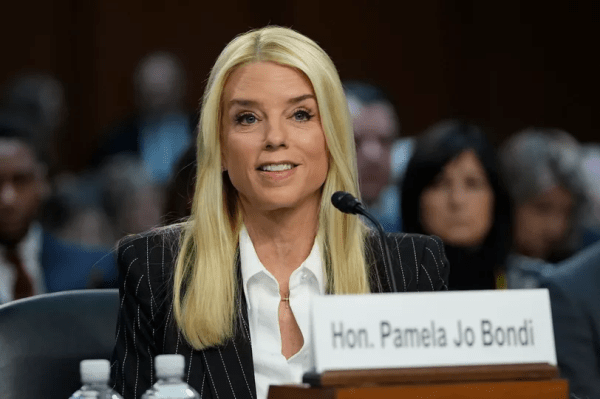
Attorney General Pam Bondi, who has a long history of opposing LGBTQ+ rights, issued a memo to the Department of Justice (DOJ) telling employees to investigate and prosecute cases of minors accessing gender-affirming care as female genital mutilation (FGM).
“The Department of Justice will not sit idly by while doctors, motivated by ideology, profits, or both, exploit and mutilate our children,” the memo states. “Under my watch, the Department will act decisively to protect our children and hold accountable those who mutilate them under the guise of care.”
“I am putting medical practitioners, hospitals, and clinics on notice: In the United States, it is a felony to perform, attempt to perform, or conspire to perform female genital mutilation on any person under the age of 18. That crime carries a maximum prison sentence of 10 years per count. I am directing all U.S. Attorneys to investigate all suspected cases of FGM—under the banner of so-called “gender-affirming care” or otherwise—and to prosecute all FGM offenses to the fullest extent possible.”
It’s unclear what that part of the memo will do, since gender-affirming genital surgery isn’t performed on minors in the U.S. Under federal law, FGM is defined as “partial or total removal of the external female genitalia or other injuries to the female genital organs for non-medical reasons.” The only case of gender-affirming care cited in the memo involved a mastectomy.
The memo goes on to say that the DOJ will go after “on- or off-label use of puberty blockers, sex hormones, or any other drug used to facilitate a child’s so-called ‘gender transition’” as a violation of consumer protection laws. Bondi directed the Civil Division’s Fraud Section to investigate the use of puberty blockers as a violation of the False Claims Act and accused hospitals of performing gender-affirming genital surgery on minors “while billing Medicaid for an entirely different procedure.”
The memo tells the department to ignore the medical recommendations of the World Professional Association for Transgender Health (WPATH), the medical organization that sets standards of care for the treatment of gender dysphoria, saying that the group “muzzled dissenting members,” a common accusation against scientific organizations that produce recommendations that the right doesn’t like.
The memo does not discuss circumcision or genital surgeries often performed on intersex children in order to make their bodies conform to stereotypes of what male or female genitalia should look like.
Gender-affirming care is supported by all major medical associations in the U.S., including the American Medical Association, the Endocrine Society, and the American Academy of Pediatrics, as safe and life-saving for young people with gender dysphoria.
Williamette University Constitutional Law professor Robin Maril said that Bondi’s memo doesn’t create any new laws, and the parts about fraud are already part of how the DOJ handles the law.
“The bulk of this is just showing how they’re going to use resources and investigate,” she told NBC News. “That’s not a law change. It’s meant to have a chilling effect on physicians providing access to necessary care, fearing that it will be characterized as chemical and surgical mutilation of children.”
The memo comes after the president signed an executive order in January to ban gender-affirming care, even though the president doesn’t have the authority to do so. The executive order told federal departments to look for ways to fight against gender-affirming care, even though Congress has not banned the practice despite bills to ban it being introduced several times over the past few years.
Also this week, Bondi convened the first meeting of the administration’s “anti-Christian bias” task force. She started the meeting by saying that President Joe Biden – a devout Catholic – had “abused and targeted Christians,” citing a 2023 FBI memo about threats posed by anti-choice protestors.
Over the past five years, Republican lawmakers have turned anti-trans legislation into a full-blown political obsession. What began as a handful of bills targeting sports participation and so-called religious exemptions has metastasized into a sweeping campaign against nearly every facet of transgender life — bathroom access, IDs, medical care, even the legality of one’s identity. In 2020, there were just over 100 bills aimed at LGBTQ+ people. In 2025, that number has ballooned to more than 850, the vast majority singling out transgender Americans. What we are witnessing now is not a legislative trend — it’s a coordinated nationwide crusade.
In 2020, most anti-trans legislation centered on banning transgender youth from sports — a proposal that, at the time, was considered extreme. The political optics of attacking LGBTQ+ people so soon after the Obergefell ruling were poor, and the memory of North Carolina’s disastrous bathroom ban was still fresh. That law, which forced trans people to use restrooms that didn’t align with their gender identity, backfired spectacularly and was widely credited with helping sink Republican prospects in the 2018 midterms in the state.
Nevertheless, some Republicans had identified sports as a way to get their foot in the door to further discrimination. The president of the American Principles Project, Terry Schilling, detailed how this was the case: “The women’s sports issue was really the beginning point in helping expose all this because what it did was, it got opponents of the LGBT movement comfortable with talking about transgender issues.”
In the years that followed, the volume and severity of anti-trans legislation escalated dramatically. Over 200 bills were proposed in 2022, and more than 500 in 2023, with each legislative session raising the ceiling on what Republicans considered politically palatable. Sports bans, once fringe, became boilerplate by 2021. The next year, states that had passed sports bans moved swiftly to criminalize gender-affirming care, and drag bans and bathroom restrictions emerged as the new line of attack. Today, those once-extreme measures are commonplace, and Republicans are setting their sights on even broader targets: bans on ID changes, adult healthcare restrictions, and increasingly punitive measures that chip away at the basic legal recognition of trans lives. Some bills have even been proposed to criminalize transgender identities altogether.
As of 2025, a staggering 867 bills have been introduced targeting transgender people across the United States. Of these, 122 would ban gender-affirming care for some segment of the trans population. Another 77 seek to bar transgender people from certain bathrooms — a threat made more tangible as arrests for alleged “wrong bathroom” usage have begun to mount. Seventy-three bills aim to eliminate legal recognition of transgender people entirely, often by revoking updated driver’s licenses, stripping correct gender markers, and invalidating identification documents. Others target drag (and transgender people dressed in the “wrong clothes”) or require schools to forcibly out transgender students. A newer, especially chilling category would classify gender-affirming care or even social transition as child abuse, opening the door for state-sanctioned removal of trans youth from supportive homes. So far, 51 anti-trans bills have been signed into law this year, with many more advancing through state legislatures.
As state legislatures escalate their assault on transgender rights, the federal government under Trump has doubled down — punishing blue states for protective laws, banning transgender people from military service, investigating teachers for affirming trans students, defunding hospitals that provide care, and targeting organizations simply for acknowledging the word “transgender.” In scope and intensity, 2025 has become the most punishing year yet for transgender people in America. The goal is unmistakable: to make it nearly impossible for transgender people to live openly, safely, and with dignity in public life.
The Trump administration has opened a new “snitch line” to report what it calls violations of Trump’s executive order “Protecting Children From Chemical and Surgical Mutilation.”
In twin actions this week, the Department of Health and Human Services (HHS) continued its efforts to end gender-affirming care for trans youth with the new whistleblower portal and the launch of an investigation of “a major pediatric teaching hospital” over the alleged firing of a nurse because she sought a religious exemption to avoid administering puberty blockers and hormones to minor patients.
Though unnamed, the nurse is likely whistleblower Vanessa Sivadge, who worked at Texas Children’s Hospital and provided testimony to Congress this week about her alleged termination.
The “snitch line” was shared publicly on Monday with guidance for potential whistleblowers published on the HHS website.
“You have three options to report a tip or complaint related to the chemical and surgical mutilation of children or whistleblower retaliation,” the guidance states, with instructions to provide identifying information of those involved in the alleged order violation.
“Please reference EO 14187 in your complaint,” the guidance states, referring to Trump’s “Chemical and Surgical Mutilation” order.
That order has been blocked by multiple federal judges with temporary restraining orders, but the Trump administration continues to invoke it in its crackdown on doctors and hospitals.
One ruling, by U.S. District Judge Lauren King in the Western District of Washington, termed the order a violation of constitutional protections by “treating people differently based on sex or transgender status.” Those cases continue to make their way through the courts.
The concurrent hospital investigation is designed to showcase the administration’s weaponization of 50-year-old federal anti-abortion provisions known as the Church Amendments to protect anti-trans whistleblowers. Those allow religious accommodation to anti-abortion healthcare providers based on “religious beliefs or moral convictions respecting sterilization procedures.”
Trump’s order characterizes gender-affirming care as “maiming and sterilizing.”
In January, the Justice Department dropped charges against Dr. Eithan Haim, a Texas surgeon accused of leaking private medical information about minors who received gender-affirming care at the same Texas hospital where Sivadge worked. He shared that information with rightwing media outlets.
The DOJ had previously charged Haim with violating HIPAA laws with “intent to cause malicious harm.” He called himself a whistleblower.
The Trump administration continues to characterize evidence-based trans healthcare as “mutilation”, despite every major medical association, including the American Academy of Pediatrics, the American Medical Association, and the Endocrine Society, supporting the practice.
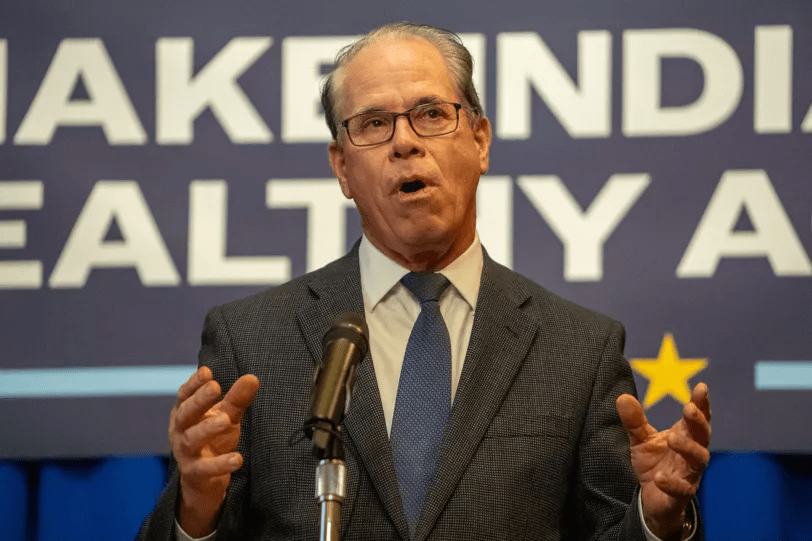
On Tuesday, Indiana Gov. Mike Braun (R) signed legislation banning trans women from playing on college women’s sports teams.
The law “prohibits a male, based on the student’s biological sex at birth in accordance with the student’s genetics and reproductive biology, from participating on an athletic team or sport designated as being a female, women’s, or girls’ athletic team or sport.” It also requires state schools and some private schools to “establish grievance procedures for a violation of these provisions.”
The legislation extends the state’s anti-trans sports policies that already exist for K-12 athletes. In 2022, the Indiana legislature voted to override then-Gov. Eric Holcomb’s (R) veto of an anti-trans sports bill, which banned transgender girls and women from participating in school sports. Holcomb claimed it was unconstitutional and addressed a nonexistent issue in the state.
In March, Braun also signed two anti-trans executive orders, one banning trans women from women’s sports at the collegiate level and the other declaring there are only two genders: male and female.
“Women’s sports create opportunities for young women to earn scholarships and develop leadership skills,” he said in a statement at the time. “Hoosiers overwhelmingly don’t want those opportunities destroyed by allowing biological males to compete in women’s sports, and today’s executive order will make sure of that.”
In a statement defending his executive order legally erasing trans and nonbinary identities, he touted the “scientific fact of biological sex” and claimed “replacing” that with “the always-changing, self-reported idea of ‘gender identity’ has real consequences.”
“Indiana will not go along with this radical new idea of what gender means,” he said, “and we will not allow tax dollars to be used to promote this ideology — instead, we’re going to focus on providing Freedom and Opportunity for all Hoosiers.”
The press release announcing the orders stated, “Indiana will not go along with the extreme gender ideology that created the problem in women’s sports in the first place.”
In reality, there is no problem in women’s sports, as there is only a record of a handful of out transgender college and K-12 students even participating.
NCAA President Charlie Baker told a Senate committee in December that he is aware of fewer than 10 transgender athletes among more than 500,000 student-athletes who compete in NCAA championship sports.
And reporting by the Associated Press in 2021 revealed that dozens of lawmakers who sponsored legislation to restrict trans athletes’ participation in school sports couldn’t cite a single example in their own state where trans athletes had caused problems.
Even more, a recent study found that trans women actually underperform when compared to cis athletes. The study confirms that transitioning presents various physical changes, such as a lower center of mass and fat distribution, decreased muscle mass and bone density, and lower blood oxygen levels.









You must be logged in to post a comment.