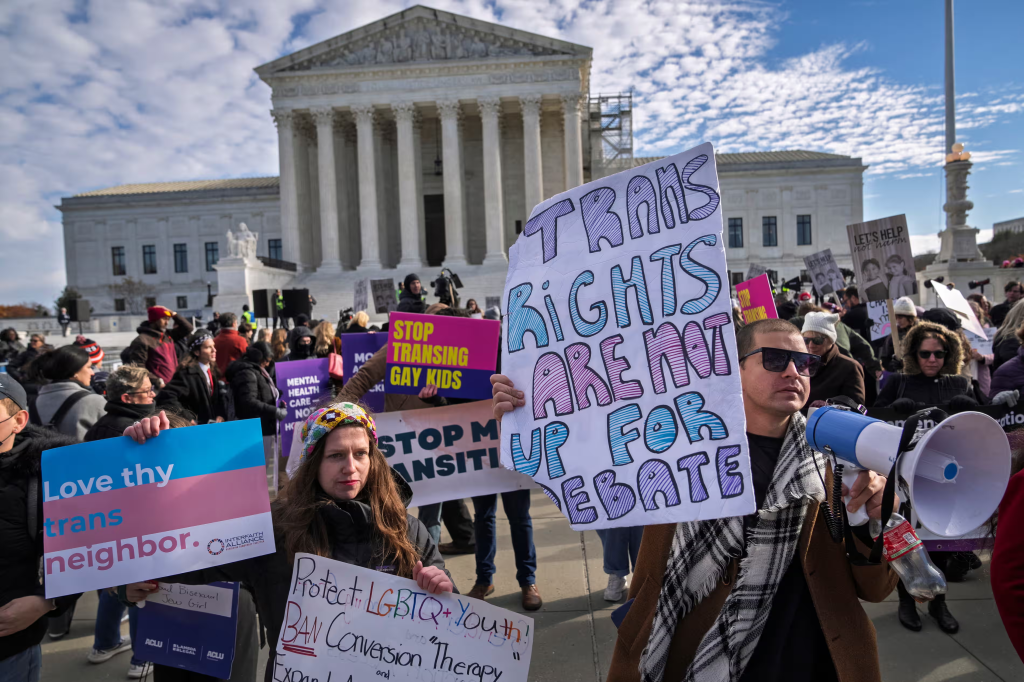
The US Supreme Court’s decision to uphold Tennessee’s ban on gender identity care for transgender minors earlier this summer has fueled ongoing polarization around LGBTQ issues and controversial policies across the nation. The high court has also agreed to take on more cases dealing with trans rights in its next session that begins in October.
Twenty-seven states have passed lawslimiting access to gender identity health care for transgender children and teenagers, according to KFF, a nonpartisan health policy think tank. An estimated 40% of trans youth ages 13 to 17 live in these states.
There have already been more anti-LGBTQ bills introduced in state legislatures so far this year than in any full year since at least 2020, a CNN analysis of American Civil Liberties Union data found. These bills span various aspects of everyday life, including bathroom access, school sports and identification documents.
CNN is tracking where these laws are being passed and where these bills are being introduced. This story will be updated.
Gender identity care includes medically necessary, evidence-based care that uses a multidisciplinary approach to help a person transition from their assigned sex— the one the person was designated at birth — to their affirmed gender, the gender by which one wants to be known.
Most of the states limiting gender identity care for trans minors adopted their bans in 2023, a record-breaking year for such laws. So far this year, one state — Kansas — has passed a ban, prohibiting the use of state funds to provide or subsidize health care for transgender youth.
Not all laws are currently being enforced, however. The ban in Arkansas has been permanently blocked by a federal court, though the state said it would appeal the ruling. Montana’s ban is also permanently blocked, according to KFF. Though Arizona has a 2022 law on the books banning surgical care for transgender minors, Democratic Gov. Katie Hobbs signed an executive order in 2023 ensuring access to gender identity health care.
Nearly 600 anti-LGBTQ bills have been introduced into state legislatures as of July 11, which is already more than any other year on record, according to the ACLU.
Education and health care continue to be key targets. There were more bills restricting student and educator rights — enforcing school sports bans and targeting students’ access to facilities consistent with their gender identities, for example — than any other category of bills, according to a CNN analysis of ACLU data.
Legislators in Texas have introduced 88 anti-LGBTQ bills so far this year, more than double the number of bills being considered in any other state. Four of those — including one that limits changes to gender markers on state medical records — have been passed into law.
Lawmakers in every state, except for Vermont, have filed at least one anti-LGBTQ bill in 2025, according to a CNN analysis. Twenty-two states have signed those bills into law.
A Hong Kong judge on Wednesday ruled to strike down regulations criminalizing the use of bathrooms designated for the opposite sex, ruling in favor of transgender individuals’ rights to access public toilets matching their identity.
Judge Russell Coleman approved the judicial review of K, who was born a woman and identifies as a man, saying the regulations contravene an article of the city’s mini-constitution that stipulates all residents should be equal before the law.
But he suspended the declaration to strike down the regulations for a year to allow the government “to consider whether it wishes to implement a way to deal with the contravention.”
He said in the judgment that the regulations and “drawing the line of a person’s biological sex at birth create a disproportionate and unnecessary intrusion into the privacy and equality rights.”
The ruling marks another step forward in recognizing the rights of LGBTQ+ people in the Chinese financial hub. In recent years, the government has revised policies following activists’ wins in legal challenges.
Currently, only children under 5 years old accompanied by an opposite sex adult can enter a public washroom designated for the opposite sex. Those violating the rule face a fine of up to 2,000 Hong Kong dollars (about $255).
K launched a legal challenge in 2022, seeking to expand the exemption to pre-operative transgender people who have been diagnosed with gender dysphoria and have a medical need to undergo the process of living in their identified gender. He argued that his constitutional rights were infringed by the prohibition against him using public toilets allocated for men, the court heard.
The Environment and Ecology Bureau said in an emailed statement that the government will carefully study the judgment and consult the Department of Justice on the appropriate follow-up action.
Quarks, a group serving transgender youth in Hong Kong, welcomed the ruling, urging officials to take immediate action to rectify what it called long-standing discrimination in the system.
“The ruling is not just an affirmation of transgender rights legally but also a big step forward for Hong Kong’s overall human rights development,” it said on Instagram.
In 2023, Hong Kong’s top court ruled that full sex reassignment surgery should not be a prerequisite for transgender people to have their gender changed on their official identity cards.
The next year, the government revised its policy to allow people who have not completed full gender-affirmation surgery to change their genders on ID cards as long as they fulfill certain conditions. The conditions include the removal of breasts for transgender men, the removal of the penis and testes for transgender women, and having undergone continuous hormonal treatment for at least two years before applying.
Applicants also have to continue their hormonal treatment and submit blood test reports for random checks upon the government’s request.
In April, activist Henry Tse, who won the legal battle in 2023 and received his new ID card reflecting his gender change last year, lodged a fresh legal challenge over the new requirements.
Puerto Rico’sRepublican Gov. Jenniffer González-Colón signed into law Wednesday a far-reaching ban on gender-affirming medical care for transgender people under 21, enacting one of the harshest measures of its kind in the United States and its territories and prompting swift condemnation from medical experts and LGBTQ+ advocates.
The law received the governor’s approval late in the day, according to the Associated Press.
The law, Senate Bill 350, prohibits the use of puberty blockers, hormone therapy, and gender-affirming surgeries for anyone under 21, threatening doctors and other health professionals with up to 15 years in prison, a $50,000 fine, and the permanent loss of their licenses and permits. Public funds are also barred from being used for such care.
In recent days, the College of Physicians and Surgeons, the Association of Psychology, the College of Social Work Professionals, the Puerto Rican Association of Professional Counseling, and the Bar Association, among other organizations, had urged that the bill be vetoed.
The Advocate previously reported that González-Colón had asked for amendments to protect access to puberty blockers and allow minors already undergoing treatment to continue care, but lawmakers did not adopt those changes. Last month, the U.S. Supreme Court ruled in Skrmetti that a Tennessee ban on gender-affirming care for minors could be enacted, which allowed other states and territories to continue to ban such care.
“What a disgrace! Jenniffer González, through her actions, declares herself the most anti-equality governor in history. She ignored her own Secretary of Health and the medical associations that support treatment for trans minors. By signing Senate Bill 350 into law, she has just endangered trans youth and their families and criminalized health professionals for doing their job,” Pedro Julio Serrano, president of the Puerto Rico LGBTQ+ Federation, said in a statement to The Advocate.
Harvard Law Instructor Alejandra Caraballo reacted to the law’s signing on Bluesky. “A twenty-year-old trans person can go drink themselves to death but can’t legally get hormones,” she wrote, noting that the drinking age in Puerto Rico is 18.
The Federation, a coalition representing hundreds of individuals and more than 100 organizations, said it would pursue legal action against the new law.
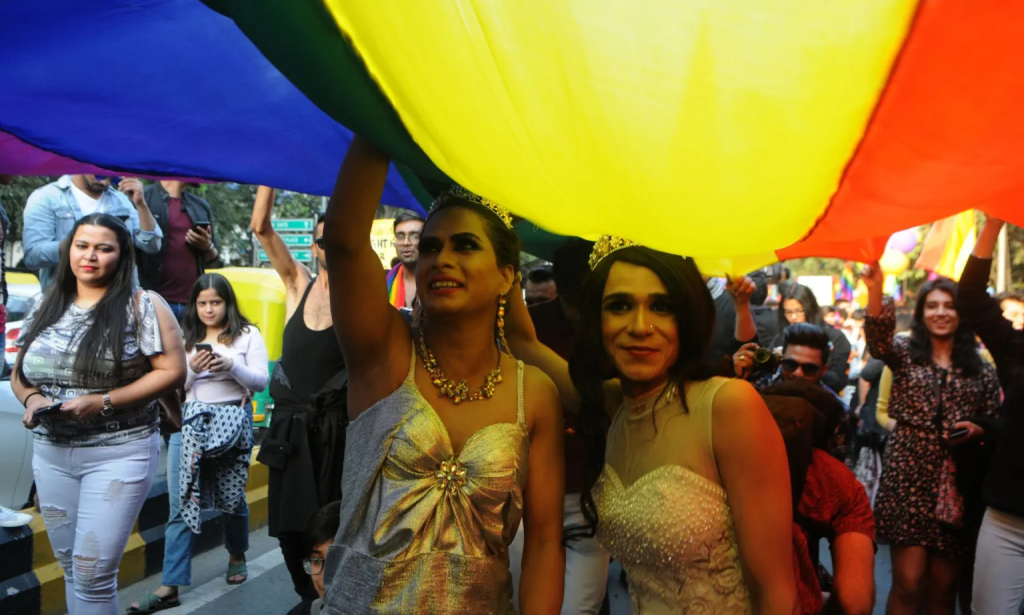
In a landmark ruling for the country, after rejecting claims that womanhood was preserved only for those who can bear children, the High Court of Andhra Pradesh ruled that trans women were “legally entitled” to recognition as women.
Presiding over the case, justice Venkata Jyothirmai Pratapa decided that tying the definition of women to pregnancy was “legally unsustainable” and contradicted India’s constitution, which emphasises equality before the law.
Quoting a Supreme Court decision from 2014, which legally recognised the rights of “third gender” individuals, Pratapa said that prohibiting trans women’s right to identify as women “amounted to discrimination”.
The case was brought to the high court in 2022 after transgender woman Pokala Shabana looked to use a section of the Indian penal code to seek protection from her in-laws, whom, she said, had been abusive towards her.
Her husband’s parents petitioned the court to deny her use of Section 498A, which protects women from cruelty by a husband or relatives, arguing that it only applied to cisgender women. They claimed that trans women don’t meet the legal definition of women under Indian law because they cannot get pregnant and said Shabana’s allegations of harassment lacked evidence.
However, the judge said that articles 14, 15 and 21 of the constitution, which guarantee a variety of discrimination protections, including the right to life and personal liberty, meant trans women’s rights to be recognised as women superseded the law.
“A trans woman, born male and later transitioning to female, is legally entitled to recognition as a woman,” he wrote in his ruling. “Denying such protection by questioning their womanhood amounts to discrimination.”
Trans activist and artist Kalki Subramaniam told the Washington Blade that she was relieved and delighted to see the court “upholding our basic human right to be identified as what we want.” She went on to say: “For [the] transgender community, especially trans women, this verdict means a lot.”
The Indian government has been under mounting pressure to modernise its laws and policies on LGBTQ+ rights. Same-sex marriage is still illegal, despite growing support for its legalisation.
Prime minister Narendra Modi’s government have previously labelled same-sex marriage an “elitist” viewpoint that “seriously affects the interests of every citizen”.
An affidavit establishing the government’s views on same-sex unions, in 2023, proclaimed that marriage was valid only between “biological males and females [and that] this definition [was] socially, culturally and legally ingrained into the very idea and concept of marriage and ought not to be disturbed or diluted by judicial interpretation”.
A Tennessee state law banning gender-affirming care for minors can stand, the US supreme court has ruled, a devastating loss for trans rights supporters in a case that could set a precedent for dozens of other lawsuits involving the rights of transgender children.
The case, United States v Skrmetti, was filed last year by three families of trans children and a provider of gender-affirming care. In oral arguments, the plaintiffs – as well as the US government, then helmed by Joe Biden – argued that Tennessee’s law constituted sex-based discrimination and thus violated the equal protection clause of the 14th amendment. Under Tennessee’s law, someone assigned female at birth could not be prescribed testosterone, but someone assigned male at birth could receive those drugs.
Tennessee, meanwhile, has argued that the ban is necessary to protect children from what it termed “experimental” medical treatment. During arguments, the conservative justices seemed sympathetic to that concern, although every major medical and mental health organization in the US has found that gender-affirming care can be evidence-based and medically necessary. These groups also oppose political bans on such care.
All six of the supreme court’s conservative justices joined in at least part of the decision to uphold the law, although several also wrote their own concurring opinions. In his majority decision, Chief Justice John Roberts emphasized that the ruling primarily rested on the justices’ finding that the law did not violate the equal protection clause, rather than on an ideological opposition to trans rights.
“This case carries with it the weight of fierce scientific and policy debates about the safety, efficacy and propriety of medical treatments in an evolving field. The voices in these debates raise sincere concerns; the implications for all are profound,” Roberts wrote. He added: “We leave questions regarding its policy to the people, their elected representatives, and the democratic process.”
In recent years, the question of transgender children and their rights has consumed an outsized amount of rightwing political discourse. Since 2021,26 states have passed bans on gender-affirming care for minors, affecting nearly 40% of trans youth in the US. Twenty-six states have also outlawed trans kids from playing on sports teams that correspond with their gender identity.
Many of these restrictions have been paused by court challenges, but the supreme court’s decision could have vast implications for those lawsuits’ futures. A study by the Trevor Project, a mental health non-profit that aims to help LGBTQ+ kids, found that anti-trans laws are linked to a 72% increase of suicide attempts among trans and nonbinary youth.
Justice Sonia Sotomayor dissented from the majority opinion, alongside Justices Ketanji Brown Jackson and Elena Kagan. Because the law discriminates on the basis of sex, Sotomayor argued in her dissent, it should face higher legal scrutiny than the majority decided to give it.
“Male (but not female) adolescents can receive medicines that help them look like boys, and female (but not male) adolescents can receive medicines that help them look like girls,” Sotomayor wrote. “By retreating from meaningful judicial review exactly where it matters most, the Court abandons transgender children and their families to political whims. In sadness, I dissent.”
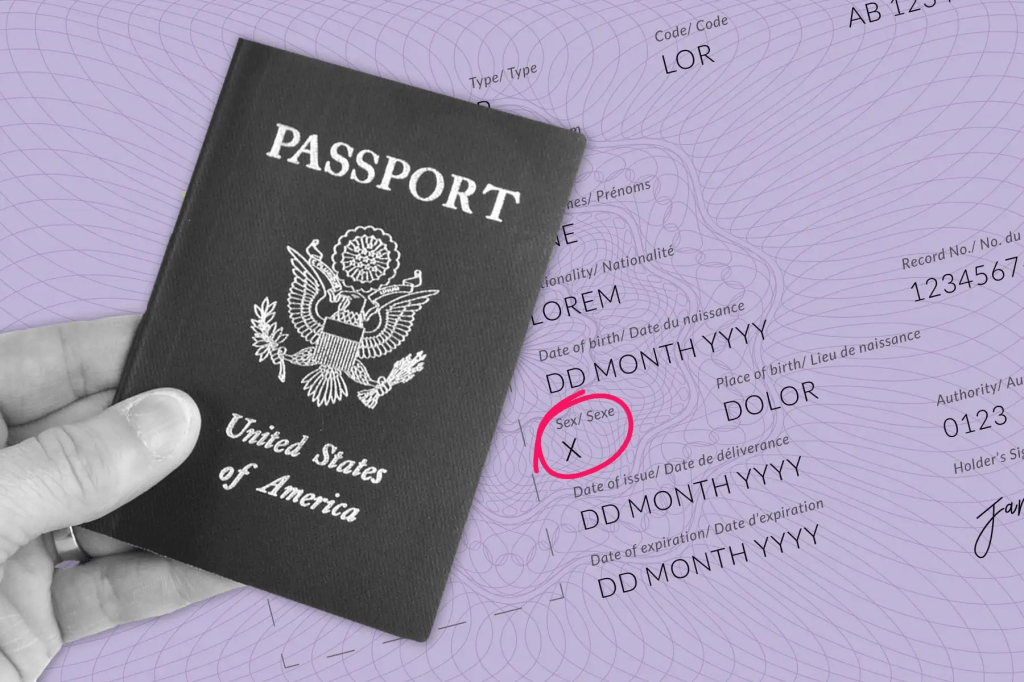
A federal judge on Tuesday blocked President Donald Trump’s administration from refusing to issue passports to transgender and nonbinary Americans nationwide that reflect their gender identities.
U.S. District Judge Julia Kobick in Boston expanded, opens new tab a preliminary injunction she issued in April that allowed six transgender and nonbinary individuals who challenged the policy to obtain passports consistent with their gender identities or with an “X” sex designation while the lawsuit moves forward.
Kobick did so after concluding the policy the U.S. Department of State adopted pursuant to an executive order Trump signed likely discriminated on the basis of sex and was rooted in an irrational prejudice toward transgender Americans that violated the U.S. Constitution’s Fifth Amendment.
While Kobick’s April ruling was limited in its scope, the judge, an appointee of Democratic President Joe Biden, on Tuesday granted the case class action status and halted the policy’s enforcement against transgender, nonbinary and intersex passport holders.
Kobick said granting class action status to two categories of passport holders was appropriate given that the administration’s actions affected them uniformly “by preventing them from obtaining passports with a sex marker consistent with their gender identity.”
Li Nowlin-Sohl, a lawyer for the plaintiffs at the American Civil Liberties Union, called the ruling “a critical victory against discrimination and for equal justice under the law.”
White House spokeswoman Anna Kelly in a statement called the decision “yet another attempt by a rogue judge to thwart President Trump’s agenda and push radical gender ideology that defies biological truth.”
The case is one of several concerning an executive order Trump signed after returning to office on January 20 directing the government to recognize only two biologically distinct sexes, male and female.
The order also directed the State Department to change its policies to only issue passports that “accurately reflect the holder’s sex.”
The State Department subsequently changed its passport policy to “request the applicant’s biological sex at birth,” rather than permit applicants to self-identify their sex, and to only allow them to be listed as male or female.
Prior to Trump, the State Department for more than three decades allowed people to update the sex designation on their passports.
In 2022, the Biden administration allowed passport applicants to choose “X” as a neutral sex marker on their passport applications, as well as being able to self-select “M” or “F” for male or female.
As Oklahoman legislators push to restrict trans rights and overturn the 2015 Supreme Court decision legalizing gay marriage, Zane Eaves says his identity as a transgender man has put a target on his back in his home state.
One of 18,900 trans adults in Oklahoma, Eaves has received death threats as has his wife of 10 years and their two children.
“All the hatred and political stuff going on” are driving this Oklahoma lifer from the place he was born and raised, Eaves, 35, said. He has only crossed the state line three times in his life, but in recent weeks, he made the difficult decision to move his family to North Carolina to be closer to friends and allies.
“I am just trying to stay alive and keep my marriage,” Eaves said.
Oklahoma ranks 44th in the nation on a list released Monday of the most and least welcoming states for lesbian, gay, bisexual, transgender and queer Americans.
LGBTQ+ equality fell across the board for the third straight year, according to Out Leadership’s State LGBTQ+ Business Climate Index shared exclusively with USA TODAY. But the sharpest declines came in Republican-led states.
While progressive strongholds championed supportive policies and protections, conservative states elected a slate of leaders who openly oppose gay and trans rights and sponsored an unprecedented wave of anti-LGBTQ+ legislation, Out Leadership CEO and founder Todd Sears said.
So-called “Don’t Say Gay” bills, religious exemptions and other legislation tanked the rankings of 19 red states in the Out Leadership index, according to Sears.
Today, the divide between states that roll out the welcome mat and less hospitable parts of the country is wider than ever, he said.
The least and most welcoming LGBTQ+ states
Each year for the last seven, Out Leadership has released the State LGBTQ+ Business Climate Index to gauge the overall climate for gay and transgender people state by state, mapping out where they will face the most and the least discrimination and hardship.
Out Leadership’s index measures the impact of state government policies and prevalent attitudes about the LGBTQ+ community, weighing factors such as support for young people and families, health access and safety, political and religious attitudes, work environment and employment and nondiscrimination protections.
The Northeast had six of the 10 highest-ranked states, while the Southeast had six of the lowest-ranked.
Massachusetts, led by the nation’s first openly lesbian governor, Democrat Maura Healey and New York, which guaranteed gender-affirming care and LGBTQ+ refugee protections, tied for first place in this year’s index, with Connecticut and New Jersey close behind.
The least LGBTQ+ friendly state was Arkansas, which ranked last for the third straight year. South Carolina, Louisiana, South Dakota and Alabama also received low scores.
The states that had the largest gains in the index were Kentucky and Michigan, which Out Leadership attributed to “pro-equality” leadership from governors Andy Beshear and Gretchen Whitmer, both Democrats. The steepest declines were in Ohio, Florida and Utah, all led by Republican governors.
Where are the safest places to live?
The Out Leadership index was created as a LGBTQ+ inclusion reference guide for business leaders. But gay and trans people soon began using it to figure out where they should – and should not – live and work, never more so than now as rights rollbacks from the Trump administration and red statehouses hit close to home.
Opposition to transgender rights was a central plank in Trump’s presidential campaign and since taking office he has signed a series of executive orders recognizing only male and female genders, keeping trans athletes out of women’s sports, banning trans people from serving in the military and restricting federal funding for gender-affirming care for trans people under age 19.
Even states seen as safer for LGBTQ+ people have been navigating these edicts around trans athletes. Trump threatened to cut federal funding to California if a trans girl competed in a state track and field event held Saturday.
AB Hernandez, a junior from Jurupa Valley High School in Riverside County, shared first place in the high jump and triple jump and second in the long jump. She shared the awards podium with her cisgender competitors under a new rule drafted by state athletics officials days before the event to mollify critics.
Republican-led states have been in the vanguard of anti-trans legislation, causing greater geographic polarization and prompting fears among LGBTQ+ residents, even those who live in liberal cities.
Jordan McGuire, a 27-year-old gay man in North Dakota, said the years he spent living in the Deep South taught him about the repressive discrimination routinely faced by gay and genderqueer people.
At the same time, socially progressive cities in conservative states like Fargo and Grand Forks are no longer the safe havens they once were, he said.
Now that his fiancee is transitioning to female, the couple is exploring a move to a “sanctuary” state that will be safer for them.
“It feels like five or 10 years ago, trans people were not under the same microscope they are now and that has definitely influenced our move,” McGuire said. “Yeah, people were prejudiced but it wasn’t a witch hunt. They weren’t looking for people in bathrooms and schools. But now things are so polarized.”
That rising anxiety was captured in a post-election survey from UCLA’s Williams Institute which found that nearly half of transgender people had already fled unsupportive communities and nearly 1 in 4 were considering uprooting their lives.
The most frequently cited reasons for wanting to move were concerns about LGBTQ+ rights – 76% – the sociopolitical climate – 71% – anti-trans rhetoric and climate – 60% – and anti-trans laws and policies – 47%.
LGBTQ+ Americans on the move
Interest in relocating to friendlier states is even higher today than it was after Trump’s reelection, say nonprofit workers who aid trans and gender-diverse people relocate to more liberal states with broader protections.
So far in 2025, Rainbow Railroad in Canada has received more than 3,000 requests from LGBTQ+ people living in the United States, up more than 1,000% from the same time last year, according to communications director Timothy Chan.
Nearly all requested international relocation support. For now, Rainbow Railroad can’t aid Americans with resettlement services because of immigration restrictions, Chan said.
TRACTION has heard from a record number of people from states as far away as Texas, Oklahoma and Arkansas with many of them reporting being threatened or feeling unsafe in their homes and neighborhoods, said Michael Woodward, the executive director of the trans-led organization in Washington state.
Trans and gender-diverse people historically face financial hardship due to systemic oppression and discrimination, and need assistance finding jobs and housing as well as with interstate moving expenses that can run tens of thousands, Woodward said.
TRACTION used to get a few applications a week until Trump won a second term. In the two weeks following the election, “we received as many requests for assistance as we’d received in the entire life of the project thus far,” he said.
After the inauguration, TRACTION started getting three to five applications every day. With one employee and a handful of volunteers, his organization is struggling to keep up with demand, Woodward said.
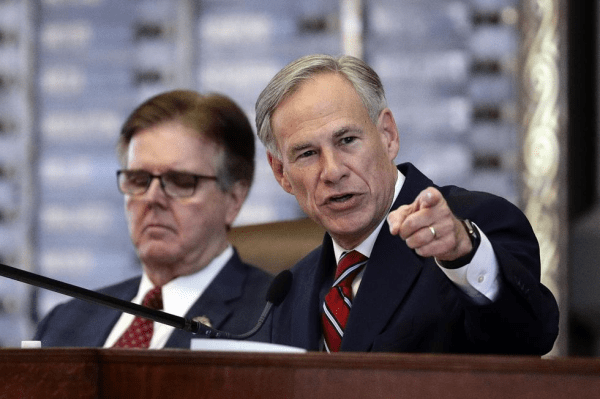
The Texas Senate has sent legislation to Gov. Greg Abbott (R) that would strictly define genders across state law based on male and female reproductive organs — potentially creating new hurdles for transgender and intersex Texans whose gender identity would revert to the sex they were assigned at birth in state records.
Abbott spokesman Andrew Mahaleris confirmed to The Hill on Wednesday that the governor plans to approve the measure.
“The State of Texas recognizes only two sexes — male and female,” Mahaleris said. “Governor Abbott looks forward to reaffirming this universal truth and signing HB 229 into law.”
Supporters of the legislation said that it follows a directive Abbot issued earlier this year that state government in “Texas recognizes only two sexes — male and female.”
Abbott cited in the directive an executive order that President Trump signed shortly after his January inauguration that designates male and female as the only sexes recognized by the federal government and on a biological basis.
“All Texas agencies must ensure that agency rules, internal policies, employment practices, and other actions comply with the law and the biological reality that there are only two sexes—male and female,” Abbott wrote in his January letter to state agencies.
The latest Senate-approved bill, dubbed the “Women’s Bill of Rights,” defines sex as “an individual’s biological sex, either male or female.” Under the legislation, a woman or female is an “individual whose biological reproductive system is developed to produce ova” and a male or man is “someone whose reproductive system is developed to fertilize the ova of a female.”
Additionally, it defines “mother” as “a parent of the female sex.”
Critics of the measure argue that the bill oversimplifies sex, gender and a broad spectrum of personal experiences.
“If a law forces non-binary Texans, who are real people, into categories that don’t reflect their lived experiences or identities … that would actually become discrimination in practice,” state Sen. José Menéndez (D) said during the floor debate on the bill before its passage. “That’s a concern that I have.”
State Sen. Mayes Middleton (R), who sponsored the bill, said that it would preserve women’s designated spaces, like restrooms and prisons, based on “biological reality.” He noted that it carries no criminal or civil penalties.
“For our entire history we never had to define this because common sense dictated we didn’t, but unfortunately, that seems to have changed,” he said in the floor debate.
Abbott has previously pushed back against past criticism for signing laws that target LGBTQ people. He approved legislation in 2023 and 2021 to bar transgender athletes from competing in women’s and girls sports in Texas schools and colleges.
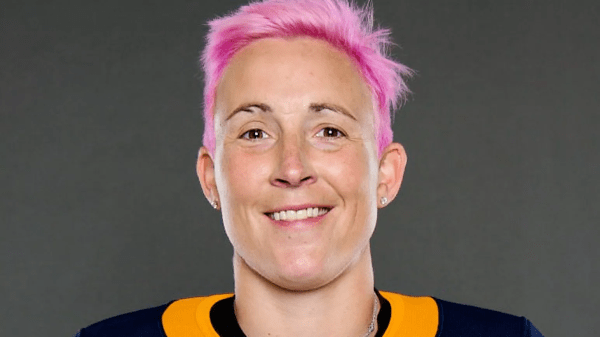
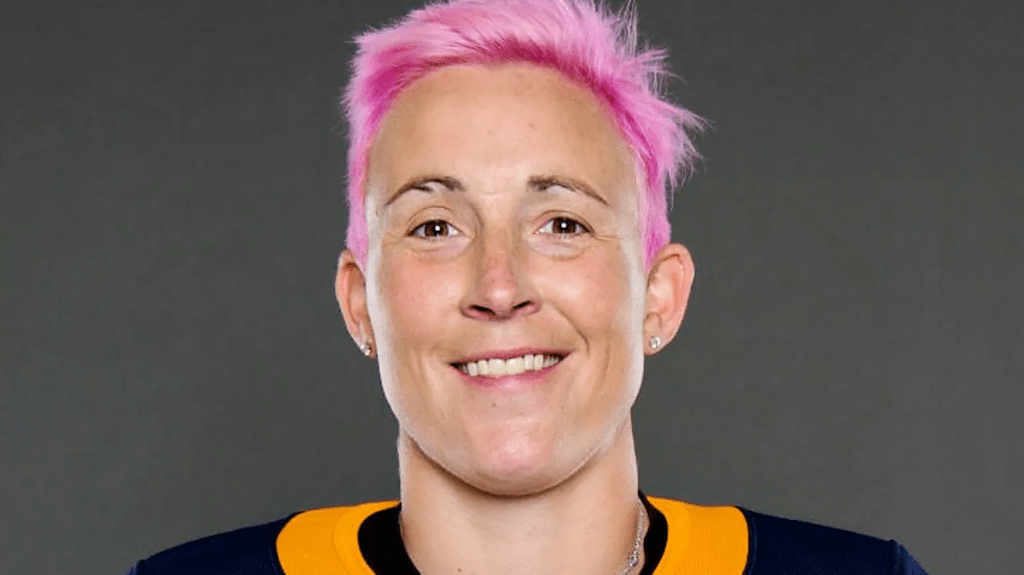
Hockey star Madison Packer played in five All-Star Games and is the second-highest goalscorer in the history of the Premier Hockey Federation, which was the forerunner to the National Women’s Hockey League.
Packer is widely recognized as an icon of women’s sports. Yet not for the first time, Packer recently found herself being misgendered as a result of gender policing she believes is escalating in line with heightened anti-trans rhetoric.
Two weeks ago, the 33-year-old posted an Instagram story to say that in late April she had been “forcibly removed” from a women’s bathroom stall in a Florida nightclub.
Packer, who spent eight seasons with the Metropolitan Riveters in the NWHL and PHF, wrote “sounds familiar” when sharing an article about the incident on social media.
She describes her own experience in Florida as “humiliating” and connects it directly to the ongoing discourse in society that suggests trans people pose a threat in women’s spaces.
“The entire bathroom situation is absurd,” Packer tells Outsports.
“The fear-mongering and outright propaganda we have perpetuated against the trans community in this country is pathetic.”
Packer says she had been with her wife and their friends at the club in Naples, Fla., when she left them to visit the restroom.
“Upon walking in, the female bathroom attendant several times said, ‘Sir sir,’ as to get my attention,” recalled Packer. “I am a cis female. I don’t respond to ‘sir.’”
During her playing days, the former power forward was a vocal leader on and off the ice, partnering with You Can Play on the organization’s LGBTQ advocacy initiatives.
She ignored the attendant and headed into a stall.
It was then that Packer felt the attendant pulling her backwards by the shoulder.
“Again, she addressed me as ‘sir’ and told me I was in the wrong bathroom. We proceeded to argue over the bathroom I was in until I showed her my driver’s license.”
In Florida, trans people are prohibited by law from using public bathrooms and gendered facilities that align with their gender identity in all government-owned buildings, including K-12 schools and colleges.
The law applies only to facilities run by the state, but there have been several reports of trans, nonbinary and gender nonconforming people being challenged when using restrooms inside private businesses.
The Movement Advancement Project lists five other states — Arkansas, Montana, South Dakota, Utah and Wyoming — as having passed bathroom bills similar to that of Florida.
For women like Packer, who in her own words is “masculine presenting,” the chances of being confronted in a restroom are by no means limited to certain states.
She says that a few years ago, she was also involved in a physical altercation with a male bouncer in the bathroom of a bar in Connecticut.
It’s natural for her to speak out about the damage done by gender policing. After announcing her retirement from hockey last November, Packer and her wife, Anya Battaglino, started a podcast called “These Packs Puck” in which they discuss queer parenthood and navigating life after pro sports.
On the latest episode, they talk about how being challenged in Florida left Packer “very upset” on what was, by coincidence, Lesbian Visibility Day. The couple had posted to Instagram to mark that awareness day, using an old photo taken in a Palm Springs restroom to make a point.
Anya wrote the caption: “Minding mine. (Wish the government would do the same).”
A little over a week later, Packer shared more details of her confrontation after reading online about what had happened in the Boston hotel.
In its reporting of that incident, CBS News quoted the executive director of PFLAG Greater Boston, Nina Selvaggio, who said: “For gender nonconforming lesbians, women in general, being harassed in public restrooms is a tale as old as time.
“I do think the surge in national anti-trans rhetoric is contributing to an increased policing of women’s bodies and their expression of gender.”
Packer told Outsports she agrees “wholeheartedly” with Selvaggio’s comments.
“I find it infuriating that we’re now going as far as to dictate or try to regulate what ‘female’ looks like.
“I’ve shared locker rooms and bathrooms with straight men, gay men, gay women, straight women, trans men, and trans women… I’ve never once had an altercation or inappropriate exchange with a trans person.
“I think we’re concerning ourselves with the wrong groups when it comes to restroom safety.”
Transgender woman Michelle Rosenblum, of Ventura, California, has been planning a family vacation to Hawaii, but recent law changes regarding identification documents have made her wary of travel.
After President Donald Trump’s election to a second term last November, Rosenblum had been rushing to get her identification in order as a safety precaution.
According to Rosenblum, she updated her California birth certificate to show she had transitioned and renewed her passport.
Rosenblum was shocked to receive a letter from the State Department telling her she needed to correct her information on her passport application to show her biological sex at birth.
As Rosenblum prepares to fly, she fears that the discrepancies between her California Real ID and her passport will create problems when traveling. While the federal government requires Real ID for air travelers, states oversee the gender marker listed on the IDs.
Rosenblum is now debating traveling with a stack of documents, such as her birth certificate, Social Security card, and a court order showing her gender change.
Rosenblum tells The Los Angeles Times, “In the 10 years that I’ve been transitioned, I have never felt like, ‘Whoa, I need to get all my papers together.’ I was never concerned about traveling.”
Rosenblum’s experience echoes similar concerns that trans people have about traveling, as noted in a recent survey conducted by the Williams Institute at the UCLA School of Law. In the survey, 302 trans, nonbinary, and other gender non-conforming American adults were surveyed — nearly a third said they were travelling less frequently as a result of the 2024 election.
Though the survey was conducted a month before Trump’s official inauguration. Trump’s campaign focused heavily on attacking the rights of trans people. On the day of his inauguration, President Trump issued an executive order directing the federal government to no longer acknowledge the existence of trans people in any capacity. This led the State Department, which issues passports to U.S. citizens, to announce they no longer accept gender markers that do not align with a person’s sex assigned at birth.
Trump’s continual attacks on the trans community in his official capacity as president have emboldened many GOP members to begin proposing anti-trans legislation in their home states, making travel even less desirable.
In the survey, nearly 70% of respondents said they’d be less willing to vacation in states they viewed as more hostile to trans people, particularly states that hold a GOP majority.
The survey also showed that 48% of respondents were considering moving to or had already moved to states they viewed as safer, particularly states with a liberal majority, such as Washington, California, New York, and Minnesota.
Lead author of the survey, Abbie Goldberg, wrote, “When you feel that you need to consider moving, you’ve been pushed to a certain point…. If you’re a trans person living in the U.S., particularly in a state with not a lot of protections and some explicitly anti-trans legislation, you’re thinking about your physical safety, your children’s safety at school, the possibility you could be fired from your job, and no way to push back.”
Rosenblum said she is grateful to live in California, where she is protected by anti-discrimination laws but as she gets ready for vacation, she said, “It feels like people are trying to shove me back into the closet.”








You must be logged in to post a comment.