
I was misgendered for having “female breasts” as a kid. Here’s why it hurt.

*This commentary by Matt Keeley was originally published by LGBTNation.

Some cisgender people think the recent Republican fad of banning of transgender people from sports and bathrooms won’t affect them, and that if people just conform closely to gender stereotypes, they won’t have trouble. But these don’t realize that random nuts have confronted cis women in the ladies’ room just for wearing pants and having short hair.

Gender policing goes from controlling how we look to controlling how we behave. And cis people who have never been misgendered may not realize just how much it can hurt… but as a cis man who has been misgendered, I do.

As a kid, I had gynecomastia, a condition where prominent breasts develop on a boy or man. And my breasts were indeed prominent — probably a C- or D-cup in bra size. It started around when I was 10 or so. While we never figured out the reason, it doesn’t really matter when you’re in middle school and kids confront you in the bathroom, calling you “titty boy.” 

Even friends would make the occasional crack to my chagrin. I remember once talking about how my uncle’s internal organs were backwards; one of my friends immediately joked, “And you’ve got two hearts: here and here,” gesturing at each breast. It didn’t feel great!

I hated my breasts. I often fantasized about chopping them off. It was never gory or gross in my mind — it usually was more like picking off a scab — a little bit of pain at first, but then perfectly fine with a normal chest just like every other boy.

The teasing changed my relationship with my body. My nipples usually inverted into my areolas by nature. But whenever they weren’t, I’d push them back in because, in my weird kid mind, women’s breasts had outward-facing nipples for babies to feed. If mine pointed inward, then that meant they weren’t breasts like what women had, and were…. something different.

I didn’t know the word “dysmorphia” at the time, but looking back, it seems like a manifestation of that. Most of all, I wanted to ignore that my breasts even existed. I hated even using the word “breast” in any context. While taking swimming lessons, I’d refer to the breaststroke as the “whip-kick stroke” based on the leg movements. When I wore collared shirts, they had chest pockets — men had chests, women had breasts.

While the teasing and bullying was bad, unintentional cruelty was somehow even worse. One expects bullies to be mean and to focus on one’s flaws. But if someone unintentionally misgendered me, it felt like they couldn’t help but hurt me, based solely on my appearance, infringing on my misguided attempts to ignore and feel indifferent to my own body.

One moment that’s seared in my brain (and will be for the rest of my life) happened around age 11 one afternoon at an office supply store. I needed a new graphing calculator for math class. I approached a worker kneeling on the floor, re-stocking the bottom shelf. 

“Pardon me, do you know where the graphing calculators are?” I asked.

“Oh, sure, sir,” he said, turning and seeing my shoes. 

His eyes raised to my chest and said, “…ma’am…”

His eyes then hit my face and he quickly went back to “sir,” before telling me where they were located.

I could tell he wasn’t being mean, he was just processing the visual stimuli in the order presented. I could tell he was embarrassed and neither of us wanted to call attention to his error, so I thanked him, and went to pick up the TI-85 calculator I needed. 

I have no idea if he remembers that day at all. Probably not. But it’s a moment I relive over and over. I was wearing my standard uniform of jeans and a loose-fitting green/yellow Hypercolor T-shirt — it was the early ‘90s after all.

It’s hard to explain why it hurt so much to be mistaken for a woman. It wasn’t merely that it proved I was “different” from other boys. It wasn’t shame at being seen as a woman or less than “manly” — in fact, I don’t think real-or-perceived misogyny played a part in what happened or how I felt. I’ve always had various “feminine”-coded interests even as a kid: In first grade, I loved The Baby-Sitter’s Club book series (which features mostly girl characters) and I’d often pretend to be the magical Mrs. Piggle-Wiggle from the classic children’s novels.

The misgendering bothered me more so because it just wasn’t me — I wasn’t being perceived correctly. I couldn’t put it into words; I wasn’t necessarily “manly” and had no real desire to be seen as such, but I was a man (or at least, I would be one day when I grew up).

I was lucky; I was able to get a breast reduction — top surgery in trans masc parlance — the summer I turned 13. My surgeon, Dr. Kropp — whose name somewhat matched his surgical specialty — was excellent, and confirmed that I had excess breast tissue, not just fat. 

That fall, I came into a new school as a high school freshman, and no one ever commented on my chest again; I was thankfully average. Friends even seemingly forgot about it, and no one asked about the change.

It took me a very long time to get over it — my chest was the one thing I was sensitive about. I’m pushing 45 now; it’s been 30 years, and the wounds have finally scabbed over. (The figurative ones, I mean. As for the actual surgical scars, those healed very nicely and relatively quickly after the procedure.)

But it took decades for me to get over the misgendering. And I immediately “passed as male” otherwise, if you wanted to call it that. It was just: one day boobs, one day none. So I can only imagine the pain that accumulates over when a trans person gets misidentified for so long, sometimes even after transitioning. 

Misgendering can lead to depression and psychological distress. (It certainly did for me.) It can also create a sense of emotional exhaustion. I know that when I came home from a particularly bad day at school, I just wanted to shove everything out of my mind, and just veg in front of the TV. But the teasing made me think about self-obliteration. I never attempted suicide — but the idea of just not existing for a while definitely appealed to me.

Truthfully, these days, when I start feeling very anxious, stressed, or depressed, the idea of not existing for a while still appeals to me. And I can’t help but think that this desire to disappear first began when people mocked and mistook me for having “female” body parts.

I have just a glimpse of how cruel Trump and his transphobic followers have been in their constant crusade to demonize and misgender trans people. I can’t imagine feeling the full force from a lifetime of this meanness — the years I endured it was enough for me.

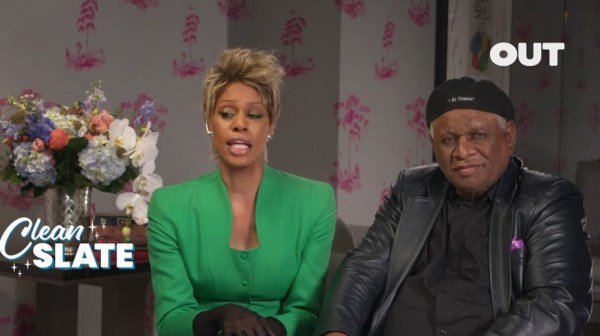
Laverne Cox New TV Series Clean Slate Challenges Red States & ‘Rehumanization’

*This was first published by Out.com

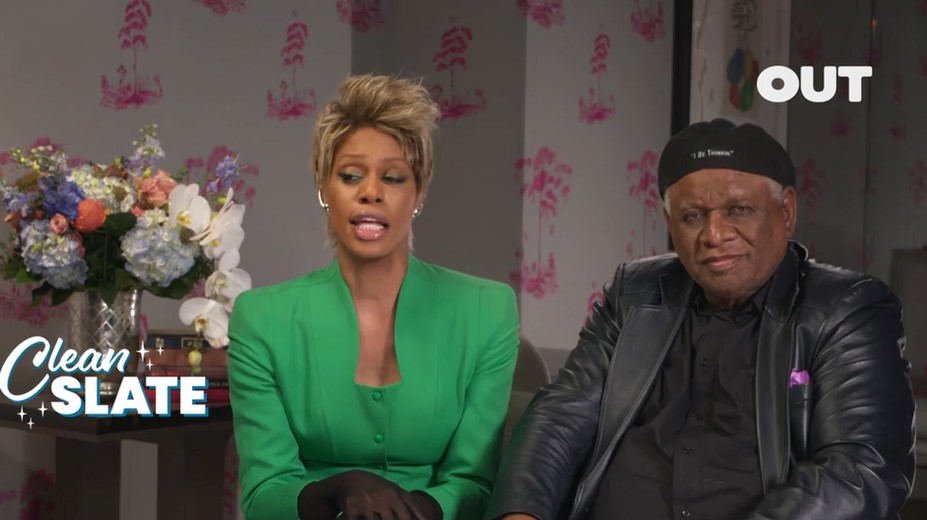
Laverne Cox believes the timing of her new Prime Video series Clean Slate is “divine.”

In this lighthearted yet poignant show, the Emmy winner portrays Desiree, a trans woman who returns to her hometown of Mobile, Alabama, to reconnect with her estranged father, Harry, after 23 years of no contact. In addition to her starring role, Cox is credited as the series creator alongside George Wallace and Dan Ewen.

The series, executive produced by the late legendary television producer Norman Lear, faced numerous challenges before making it to the airwaves. Reflecting on her journey, Cox expressed her gratitude for the opportunity.

“I’m so humbled because we got no’s from every place. We pitched this everywhere. We sent the script out everywhere, and it was a ‘no’ from everywhere. And it was really Brent Miller and Norman Lear, and their tenacity and pushing, that got us asked to Amazon Prime.”

The development process for Clean Slate spanned seven years, during which Cox and her team encountered considerable resistance from Hollywood.

“I think getting a show on the air period is insanely difficult. There was a time when I was pitching this alongside two other projects with really established, Oscar-winning people, wonderful stories with trans characters, and none of them went through. They weren’t buying trans stories.”

Cox believes that the significance of this show is heightened in today’s political climate.

“And I think this show happening at this particular political moment feels, not like an accident. It feels divine because we are in a space culturally where trans people have been dehumanized to such an extent that taking away our rights and denying our legitimacy is something that people take for granted. And it’s happening on a federal level.”

She hopes that the series will encourage viewers to empathize with trans individuals.

“And so that is my hope that people will have empathy for the trans character that I play and hopefully be inspired to have empathy for trans people in real life and hopefully get to know us,” Cox says.

“We’re not a theory. We’re not an ideology. We’re human beings walking around, living with these experiences. We’re human, and the rehumanization process is what needs to happen. If we’re interested in love and justice for trans people, as well as for immigrants and for those who think differently from us, we need to counter a culture that dehumanizes. We need to engage in a process of humanizing each other across the board.”

The first season of Clean Slate will feature eight episodes and is now streaming exclusively on Prime Video.

Trump Bans Gender-Affirming Care for Minors 

*This was first published by The Hill

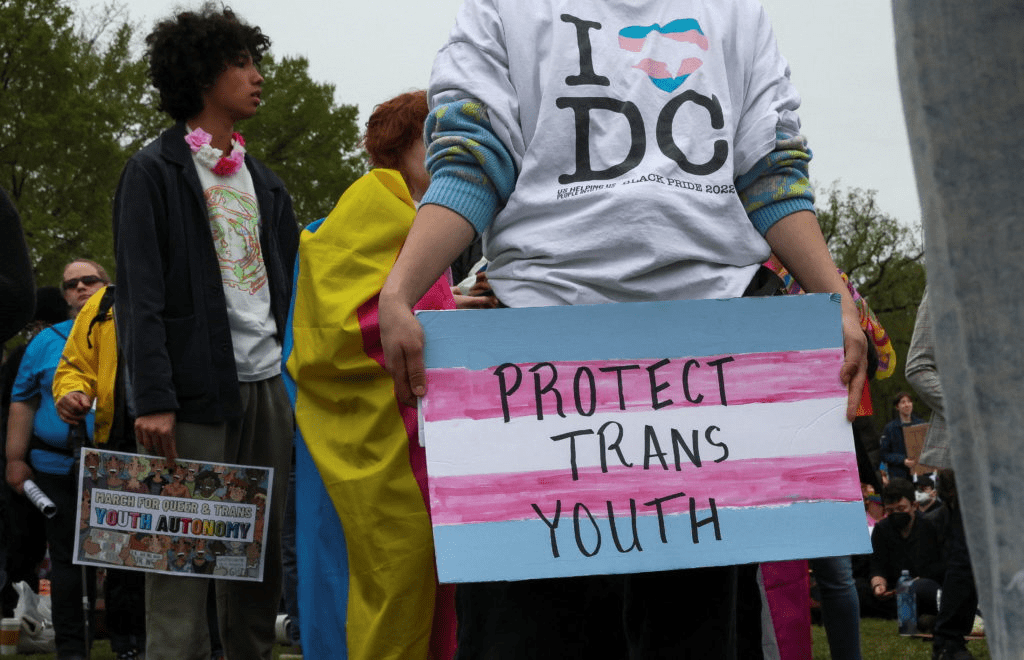
President Trump on Tuesday signed a sweeping executive order meant to broadly restrict access to gender-affirming care for transgender children and teenagers younger than 19, inching closer to fulfilling a key campaign promise to ban treatments that he and his administration have cast as experimental and dangerous, in conflict with major medical associations and transgender health experts. 

“Across the country today, medical professionals are maiming and sterilizing a growing number of impressionable children under the radical and false claim that adults can change a child’s sex through a series of irreversible medical interventions,” Tuesday’s order states. “This dangerous trend will be a stain on our Nation’s history, and it must end.” 

“Accordingly, it is the policy of the United States that it will not fund, sponsor, promote, assist, or support the so-called ‘transition’ of a child from one sex to another, and it will rigorously enforce all laws that prohibit or limit these destructive and life-altering procedures,” the order states. 

Every major medical organization supports gender-affirming care for transgender adults and minors, although not every trans person chooses to medically transition or has access to care. 

Trump’s executive order, titled “Protecting Children from Chemical and Surgical Mutilation,” tasks federal agencies with rescinding or amending policies that rely on guidance from the World Professional Association for Transgender Health (WPATH), including the organization’s latest standards of care, released in 2022. 

WPATH, a nonprofit professional organization devoted to transgender health care, did not immediately return a request for comment. 

Trump’s order tasks the incoming Secretary of Health and Human Services (HHS) with publishing a review of existing literature on best practices “for promoting the health of children who assert gender dysphoria, rapid-onset gender dysphoria, or other identity-based confusion.”  

Rapid-onset gender dysphoria, which claims that adolescents identify as transgender because of influence from friends or social media, is not recognized as a valid medical diagnosis by major professional medical organizations. In 2021, 61 professional health care organizations, including the American Psychological Association, signed a letter stating the condition lacks “rigorous empirical support for its existence.” 

According to Tuesday’s order, heads of executive departments and agencies that provide research and education grants to medical institutions, including medical schools and hospitals, should take immediate steps to block funding for institutions that continue providing gender-affirming care to minors. 

Meredithe McNamara, an assistant professor of pediatrics at Yale University specializing in adolescent medicine, said the provision amounts to “an immediate de facto ban on medical care” for trans youth who receive care at academic medical centers. 

“It basically defunds those medical centers if they continue to provide that care,” McNamara said of the order. 

“This is a stunning example of how all health care is tied together, and how the most effective way to attack gender-affirming care is to attack the entire health care apparatus as a whole,” she added in an interview. “They’re holding everyone hostage and saying, ‘We’re going to take away everyone’s healthcare unless you systematically deprive just these people.’” 

Trump’s executive order additionally directs the HHS Secretary — a position he wants for Robert F. Kennedy, Jr. — to bar access to gender-affirming care for transgender minors through federal programs like Medicaid and Medicare and withdraw the department’s 2022 guidance supporting gender-affirming care. The secretary should issue new guidance, in consultation with the incoming attorney general, “protecting whistleblowers who take action related to ensuring compliance with this order,” according to Tuesday’s order. 

The executive order also directs Defense Secretary Pete Hegseth to draft a rule to exclude coverage for gender-affirming care for minors from TRICARE, the military’s health program. Former President Biden in December signed a $895 billion defense policy bill barring TRICARE from covering transition-related care for transgender children of active-duty service members, a provision that military families with transgender kids called a “slap in the face.” 

Tuesday’s order similarly tasks the director of the Office of Personnel Management with taking steps to remove coverage for gender-affirming care for trans youth from federal health plans. 

It also asks the attorney general to prioritize enforcement of existing federal laws against female genital mutilation, which carry a penalty of up to 10 years in prison. The attorney general should also “prioritize investigations and take appropriate action to end deception of consumers, fraud, and violations of the Food, Drug, and Cosmetic Act” by entities that may be “misleading the public” about the long-term side effects of transition-related care. 

Republican state attorneys general have, in recent years, used consumer protection laws to investigate individuals and organizations that provide gender-affirming care to minors. A Senate Finance Committee report released in April claimed that at least four GOP attorneys general — Ken Paxton of Texas, Todd Rokita of Indiana, Jonathan Skrmetti of Tennessee and Andrew Bailey of Missouri — abused their oversight authorities to “further ideological and political goals.” 

Trump’s executive order additionally directs the attorney general to work with Congress to “draft, propose, and promote legislation” to enact a private right of action for children, as well as their parents, “whose healthy body parts have been damaged” by medical professionals practicing transgender health care. 

The attorney general should also take “appropriate action,” the order states, “to end child-abusive practices by so-called sanctuary States,” including through the potential application of the Parental Kidnapping Prevention Act, a federal law preventing one parent from interfering with another parent’s custody rights. 

Conservative organizations celebrated Trump’s executive order Tuesday evening. In a joint statement, Independent Women’s Forum and Independent Women’s Voice said the move restores the “true meaning of ‘care’ for America’s youngest generation.” 

Kristina Rasmussen, executive director of Do No Harm, a health policy group that opposes gender-affirming care for minors, said Trump’s order prioritizes “safety, scientific integrity, and family autonomy.” 

Omar Gonzalez-Pagan, senior counsel and health care strategist at the LGBTQ civil rights organization Lambda Legal, called the order “morally reprehensible and patently unlawful” and said the group would sue. 

“The federal government — particularly, this administration — has no right to insert itself into conversations and decision-making that rightly belongs only to parents, their adolescent children, and their medical providers,” he said. 

The executive order comes after Trump signed separate orders declaring that the federal government recognizes only two sexes, male and female, and barring transgender people from serving openly in the military. 

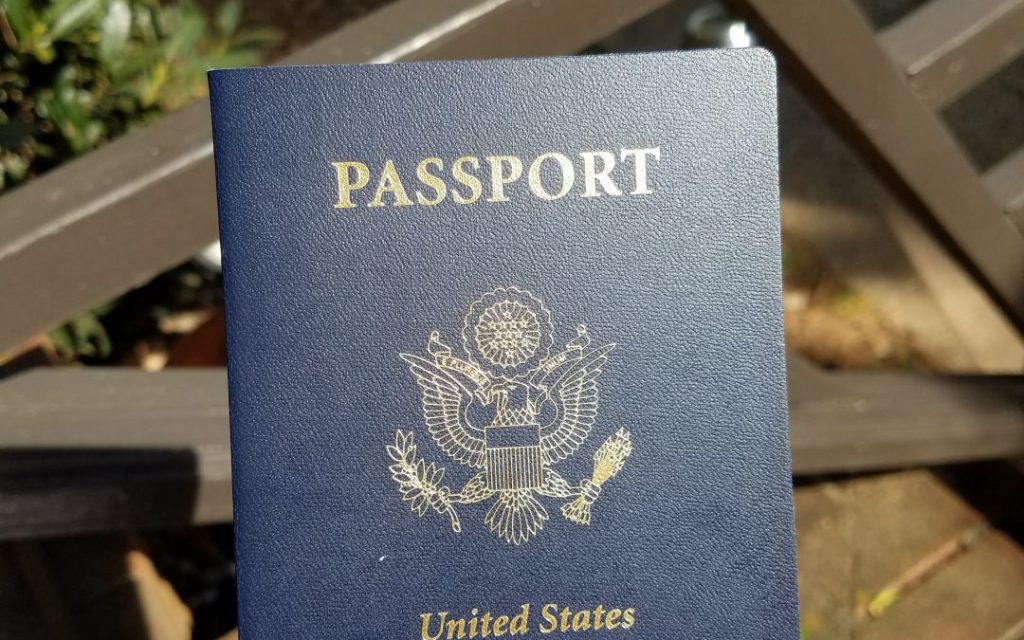
Trump two-gender edict would upend “X” identity on passports

This article first appeared on CNN.com

The federal government is set to only recognize two sexes, male and female, under an executive order that President Donald Trump is soon expected to sign.

The order would reverse efforts by the Biden administration to broaden gender identity designations, including on passports.

“As of today, it will henceforth be the official policy of the United States government that there are only two genders, male and female,” Trump said during his inaugural address Monday, taking an early step to fulfill one of his culture war campaign promises.

The order, a Trump administration official told reporters Monday, is aimed at “defending women from gender ideology extremism and restoring biological truths to the federal government.” Male and female “are sexes that are not changeable, and they are grounded in fundamental and incontrovertible reality,” the official said.

The federal government would also shift from using the term “gender” to “sex,” and that sex would be “an individual’s immutable biological classification,” the official said.

All government agencies would ensure that official documents, including passports and visas, “reflect sex accurately,” the official said. Also, departments running federal prisons, migrant shelters, rape shelters and other “intimate spaces” would be directed to protect single-sex spaces for privacy. And employee records would also adhere to the executive order, as would federal departments’ messaging.

“Agencies are no longer going to promote gender ideology through communication forms and other messages,” the official said, adding that grants and contracts would be reviewed to ensure that “federal funds shall not be used to promote gender ideology.”

Reversing Biden expansion

Trump’s executive order would dismantle efforts by the Biden administration to be more inclusive of Americans’ gender identification.

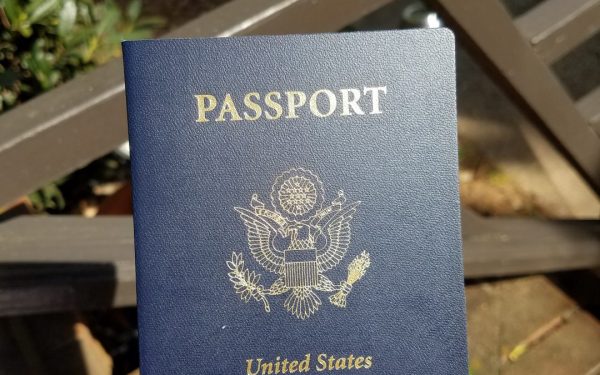
As of 2022, US citizens have been able to select “X” as their gender marker on passports. One’s marker does not need to match the gender on citizenship documents or photo ID, nor is medical documentation needed to change one’s gender, according to the State Department.

“We promote the freedom, dignity, and equality of all people – including LGBTQI+ individuals,” the department’s website says. “We are demonstrating this commitment to better serve all U.S. citizens, regardless of gender identity.”

Later that year, Americans were able to start changing their sex identification with the Social Security Administration without needing to provide medical certification. However, Social Security’s record systems still require a designation of male or female, though the administration said it was exploring policy and systems updates to support an “X” designation.

“The Social Security Administration’s Equity Action Plan includes a commitment to decrease administrative burdens and ensure people who identify as gender diverse or transgender have options in the Social Security number card application process,” said Kilolo Kijakazi, the administration’s acting commissioner at the time.

Federal appeals court rules that there is no inherent right to alter one’s sex on a birth certificate.

This blog originally appeared at ABC NEWS.

A federal appeals court panel has ruled that Tennessee does not unconstitutionally discriminate against transgender people by not allowing them to change the sex designation on their birth certificates.

National headlines from ABC News

Catch up on the developing stories making headlines.

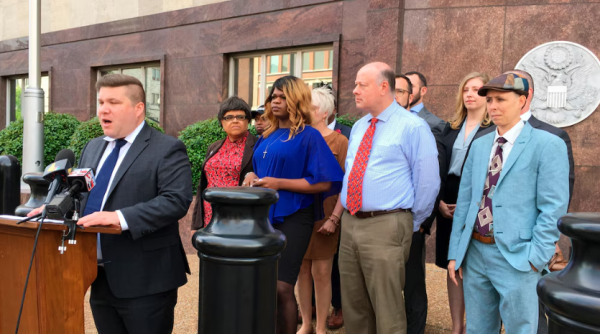
NASHVILLE, Tenn. — A federal appeals court panel ruled 2-1 on Friday that Tennessee does not unconstitutionally discriminate against transgender people by not allowing them to change the sex designation on their birth certificates.

“There is no fundamental right to a birth certificate recording gender identity instead of biological sex,” 6th U.S. Circuit Court of Appeals Judge Jeffrey Sutton wrote for the majority in the decision upholding a 2023 district court ruling. The plaintiffs could not show that Tennessee’s policy was created out of animus against transgender people as it has been in place for more than half a century and “long predates medical diagnoses of gender dysphoria,” Sutton wrote.

He noted that “States’ practices are all over the map.” Some allow changes to the birth certificate with medical evidence of surgery. Others require lesser medical evidence. Only 11 states currently allow a change to a birth certificate based solely on a person’s declaration of their gender identity, which is what the plaintiffs are seeking in Tennessee.

Tennessee birth certificates reflect the sex assigned at birth, and that information is used for statistical and epidemiological activities that inform the provision of health services throughout the country, Sutton wrote. “How, it’s worth asking, could a government keep uniform records of any sort if the disparate views of its citizens about shifting norms in society controlled the government’s choices of language and of what information to collect?”

The plaintiffs — four transgender women born in Tennessee — argued in court filings that sex is properly determined not by external genitalia but by gender identity, which they define in their brief as “a person’s core internal sense of their own gender.” The lawsuit, first filed in federal court in Nashville in 2019, claims Tennessee’s prohibition serves no legitimate government interest while it subjects transgender people to discrimination, harassment and even violence when they have to produce a birth certificate for identification that clashes with their gender identity.

In a dissenting opinion, Judge Helene White agreed with the plaintiffs, represented by Lambda Legal.

“Forcing a transgender individual to use a birth certificate indicating sex assigned at birth causes others to question whether the individual is indeed the person stated on the birth certificate,” she wrote. “This inconsistency also invites harm and discrimination.”

Lambda Legal did not immediately respond to emails requesting comment on Friday.

Tennessee Attorney General Jonathan Skrmetti said in a statement that the question of changing the sex designation on a birth certificate should be left to the states.

“While other states have taken different approaches, for decades Tennessee has consistently recognized that a birth certificate records a biological fact of a child being male or female and has never addressed gender identity,” he said.

Read more

Blog at WordPress.com.

Up ↑