The European Parliament agreed to a resolution that says that trans women are women last Wednesday.
The resolution was to adopt recommendations concerning the European Union’s priorities for the 70th session of the U.N. Commission on the Status of Women, which is set to take place next month in New York. The U.N. Commission on the Status of Women is charged with promoting gender equality across the globe.
Citing the U.N. Convention on the Elimination of All Forms of Discrimination against Women, as well as several other international proclamations, the council set a list of recommendations for the E.U. to pursue at the convention, including: “emphasize the importance of the full recognition of trans women as women, noting that their inclusion is essential for the effectiveness of any gender-equality and anti-violence policies; call for recognition of and equal access for trans women to protection and support services.”
The resolution also mentioned LGBTQ+ people in several other places, including in the statement about needing a “comprehensive tool to monitor and counter democratic backsliding and backsliding in women’s rights” and citing “attacks by anti-gender and anti-rights movements” that “undermine democracy and target women’s and LGBTIQ+ rights.”
The section on funding cuts to non-governmental organizations included “LGBTIQ+ organizations” as needing support. The section on sexual and reproductive health and rights (SRHR) mentioned “access to gender-sensitive mental health services for young women and LGBTIQ+ people.” And a section about the E.U. commitment to foreign policy stressed the need to prioritize “the needs of women and LGBTIQ+ human rights defenders.”
The resolution was adopted in a 340-141 vote, with 68 abstentions.
Independent journalist Erin Reen notes that this now puts the E.U. “on a direct collision course with the United States,” which will also be at the session, a reference to the current presidential administration’s stated policy that trans people’s existence must be denied by the federal government.
While the European Parliament’s recommendations aren’t binding, they are expected to have significant influence on the E.U.’s positions at the forum.
Kansas Gov. Laura Kelly has vetoed what LGBTQ+ advocates are calling an anti-transgender “bathroom bounty” bill.
Kelly, a Democrat in a heavily Republican state, Friday vetoed Senate Bill 244, passed by legislators in January along party lines, Republicans for, Democrats against. It would have required trans people to restrooms and other single-sex facilities in government buildings according to their sex assigned at birth, not their gender identity. It further would have required the state to reissue any driver’s licenses or birth certificates that reflected a trans person’s gender identity, replacing that gender marker with one for the sex assigned at birth. It further would have banned multi-occupancy gender-neutral restrooms in government buildings.
It would have imposed a fine on individuals of $1,000 for a second violation of the law and would allow those “aggrieved” by the presence of a trans person to sue for damages of $1,000 or the amount of actual damages. The government entity would be fined $25,000 for the first violation and $125,000 for any subsequent violation. The lawsuit provision is not limited to government buildings.
In her veto message, Kelly called the bill “poorly drafted.”
“This poorly drafted bill will have numerous and significant consequences far beyond the intent to limit the right for trans people to use the appropriate bathroom,” she wrote. “Under this bill: If your grandfather is in a nursing home in a shared room, as a granddaughter, you would not be able to visit him. If your wife is in a shared hospital room, as a husband, you would not be able to visit her. If your sister is living in a dorm at K-State, as a brother, you would not be able to visit her in her room. … I believe the Legislature should stay out of the business of telling Kansans how to go to the bathroom and instead stay focused on how to make life more affordable for Kansans.”
The legislation is known as a “gut and go” bill because it started out with an altogether different purpose. SB 244 originated as a bill to regulate bail bond companies. A House committee deleted those contents and replaced them with the anti-trans language. The gender marker provisions had a public hearing, but not the bathroom provisions.
“Procedurally, it is the absolute worst bill I have ever heard in the Kansas legislature,” Democratic Rep. Dan Osman said during debate on the measure, according to the Kansas Reflector. “It was done with one purpose and one purpose only — to ensure that the absolute least number of people were available as opponents to this bill and that they were unaware that there would even be a hearing.”
Rep. Abi Boatman, the only trans person currently serving in the legislature, said she felt the bill was aimed at her, the Reflector reports. “I have sat here for five and a half hours and listened to this entire room debate my humanity and my ability to participate in the most basic functions of society,” Boatman, a Democrat who was appointed in January to fill a vacancy, said as the debate ended. “From the bottom of my heart, I hope none of you have to ever sit through something like that.” Another Democrat, Rep. Susan Ruiz, said the legislation “spits on basic human decency.”
Democratic Rep. Alexis Simmons said it’s sexism, not trans women, that is a threat to women’s safety. “Here in this building, as an intern, as a committee assistant, as staff and as a legislator, I have been sexually harassed more than you would believe,” she said, according to the Reflector. “If we’re going to talk about women’s safety, we should address the real trauma, which is how women are treated, not putting the spotlight on one new member of our legislature.”
House Minority Leader Brandon Woodard predicted that if the bill became law, it would be struck down in court. Attorney General Kris Kobach, a Republican, lost a court case dealing with gender markers, he noted. “As long as Kris Kobach’s our attorney general, I think he’s going to continue to lose in court,” Woodard said.
The legislation “would cut directly against the inclusive workplace policies many Kansas cities have already adopted,” a Human Rights Campaignpress release notes, and its “broad restrictions across public buildings, including schools, universities, airports, and government offices, would affect large numbers of public-sector employees and contribute to a chilling effect at work.”
Senate President Ty Masterson and House Speaker Dan Hawkins, both Republicans, vowed overrides, The Topeka Capital-Journalreports. “I never thought I’d see the day when our state’s own governor would turn her back on women by forcing them to use bathrooms in public buildings with biological men,” said a statement from Masterson. “Sadly, our governor has decided she will side with they/them over simple, scientific truth. Kansans need not worry — the Kansas Senate will restore sanity and override her veto.”
LGBTQ+ groups, meanwhile, are praising Kelly’s veto. HRC President Kelley Robinson issued this statement: “The length that Republican lawmakers will go in attacking the transgender community instead of solving real issues facing Kansans is appalling. SB244 is about invading privacy, forcing people into the wrong bathrooms, stripping transgender Kansans of accurate IDs, and inviting government-sanctioned harassment — all pushed through using cynical procedural tricks to silence public opposition. Shameful policies like this are part and parcel of a national right-wing anti-LGBTQ+ campaign, and they don’t make anyone safer. They green light harassment and violence targeting transgender people while opening the door to invasive gender policing that affects everyone.
“We’re grateful to Governor Laura Kelly and Kansas State Rep. Abi Boatman for continuing to stand up for transgender Kansans. They have been consistent, courageous defenders of dignity, privacy, and freedom for all. HRC will work to ensure the legislature sustains the Governor’s veto and gets back to work on policies that support all Kansas families, instead of discriminating against them.”
“It is impossible to overstate the harms this extremist legislation would visit on transgender Kansans and many others if allowed to take effect,” Omar Gonzalez-Pagan, senior counsel and health care strategist at Lambda Legal, added in a press release. “ SB244 would require transgender Kansans to use public facilities that do not align with who they are and to carry inaccurate and conflicting identity documents that cause confusion and expose them to harassment and abuse, and would put a target on their backs through a bounty system that will encourage extreme violations of their privacy by those seeking financial gain. Make no mistake, the unprecedented and unlawful bounty system in this legislation would expose all Kansans — not just those who are transgender — to intrusive and abusive violations of their privacy.”
Trans women in Massachusetts may be suffering the effects of the Trump administration’s campaign to erase transgender identity from American society, but their hospital won’t confirm or deny it.
Several trans women scheduled for vaginoplasties with a highly regarded doctor specializing in the gender-affirming procedure were informed over the last few weeks that their surgeries had been cancelled and they wouldn’t be able to reschedule them, WGBH reports.
“I’m crushed. I can’t stop crying,” said one patient identified as Avery, who used a pseudonym. “This surgery was life-changing because it finally gives me the body that’s right for me. It has been ripped away with no explanation or follow-up plan.”
Avery’s hospital is UMass Memorial Health in Worcester, Massachusetts, and her surgeon is Dr. Ashley Alford, who introduced an innovative vaginoplasty technique never before used in New England. The surgery involves utilizing abdominal tissue and robotic technology to create a more realistic and functional vagina than other common procedures produce.
Avery had spent months preparing for the surgery, including a switch to a more expensive insurance plan that would cover the procedure.
Then it was cancelled. Avery said she pressed hospital staff for answers and learned that all of Dr. Alford’s appointments had been cancelled. She received no other explanation.
Among the six patients of Dr. Alford’s that were interviewed, all said they’ve received calls in the last two weeks canceling their appointments at UMass; more are identified in a subreddit devoted to the situation, which one describes as “unbelievably confusing.”
Despite the abrupt cancellations, the UMass health system says it’s not curtailing gender-affirming care.
“Although appointments may at times need to be canceled or rescheduled due to the availability of a specific provider, nothing has changed in UMass Memorial Health’s commitment to providing comprehensive, evidence-based health care, including gender affirming care, to all members of our community,” the statement read.
Dr. Alford had no comment on the nixed appointments and procedures.
The second Trump administration has issued a wave of orders curtailing the rights of transgender people, including attempts to end gender-affirming care for minors (early with his executive order addressing so-called “Child Mutilation”) and later, in December, an announcement from Health Secretary Robert F. Kennedy Jr. that any hospital providing gender affirming care for minors would lose Medicare and Medicaid funding.
UMass’s abrupt cancellations of surgeries for trans adults conjure a nightmare scenario for older patients reliant on gender-affirming care.
Chrissi Bates, an advocate for transgender healthcare and Alford’s first patient to undergo the advanced vaginoplasty procedure, sees a hidden hand behind Alford’s sudden unavailability.
“We all love Dr. Alford. We all doubt that it’s her that wants to leave,” said Bates, who planned on seeing Alford for post-op appointments. “It’s really disheartening to hear that UMass is just caving to this unjust kind of healthcare agenda that’s being pushed by the Trump administration.”
Most of all, the UMass patients in Worcester want answers.
“If it is Dr. Alford being pushed out due to concerns from the Trump administration, who’s to say that’s not going to happen in Boston?” said Kara Earp, a North Carolina transplant who moved to Massachusetts just for the gender-affirming care. Her appointment with Alford was cancelled, as well.
“I probably won’t actually be happy until I wake up from surgery and it’s all over with,” she said.
The state of Indiana just banned trans people from updating the gender markers on their driver’s licenses.
Advocate reports that the state’s Bureau of Motor Vehicles added a small statement to its website on Monday saying that it will no longer allow people to change their gender on state IDs, even if they have a court order.
The notice can be found by clicking through several webpages on the state’s BMV website:
Gender Change Rule Update
Effective Feb. 12, 2026, the BMV will no longer provide customers with the option to change their gender on their Indiana credential by using a court ordered gender change or physician statement per Amended Rule 140 Indiana Administrative Code section 7-1.1-3.
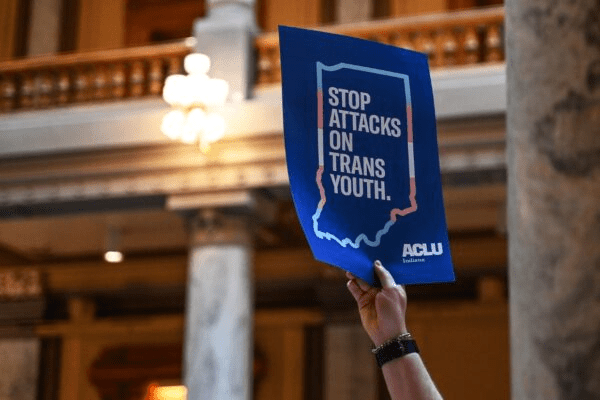
Indiana has been rolling back transgender people’s rights for the past few years. In 2014, trans people were allowed to update the gender marker on their birth certificates with a court order. In March 2025, Gov. Mike Braun (R) signed an executive order banning the practice. The ACLU sued to stop the executive order.
In January 2020, the Indiana BMV stopped allowing people to choose an “X” gender marker on their driver’s licenses, after about a year of allowing it. Then-Attorney General Curtis Hill said that the BMV had overstepped its authority in allowing the nonbinary gender markers and said that “only the General Assembly” has the power to decide if nonbinary gender markers are allowed.
In 2023, then-Gov. Eric Holcomb (R) signed a ban on gender-affirming care for trans minors that also forced trans youth in the state to detransition if they were already receiving hormone therapy.
The Movement Advancement Project says that only three states – Texas, Tennessee, and Florida – completely ban trans people from updating the gender marker on state IDs.
Indiana Youth Group, an LGBTQ+ organization in the state, denounced the rule change.
“Denying people the ability to update the gender marker on their identification is not only discriminatory; it is dangerous,” they said in a statement. “In an increasingly hostile climate, mismatched identification can expose individuals to harassment, threats, and violence. It can also create serious barriers to employment, housing, and access to essential services.”
In 2020, a study from Drexel University found that transgender adults with gender-affirming IDs have better mental health than those whose IDs do not match their gender identity.
The study examined data provided by 22,286 trans adults in the 2015 U.S. Transgender Survey and found that those with gender-affirming identification — such as passports and driver’s licenses — were 32% less likely to be classified as seriously psychologically distressed. They were also 22% less likely to have seriously considered suicide within the last year and 25% likely to have made a suicide plan within the last year.
“Having IDs that don’t reflect how you see yourself, and how you present yourself to the world, can be upsetting,” said lead researcher Ayden Scheim. “It can also potentially expose people to harassment, violence, and denial of service.”
“Having accurate identification should be a fundamental human right. While many of us take it for granted, obtaining IDs can be very difficult for trans people. This is an area where tangible and relatively simple policy changes could aid public health.”
If you or someone you know is struggling or in crisis, help is available. Call or text 988 or chat at 988lifeline.org. The Trans Lifeline (1-877-565-8860) is staffed by trans people and will not contact law enforcement. The Trevor Project provides a safe, judgement-free place to talk for youth via chat, text (678-678), or phone (1-866-488-7386). Help is available at all three resources in English and Spanish.
New Hampshire Gov. Kelly Ayotte (R) vetoed an anti-transgender bathroom and sports bill last Friday. Republicans in the state legislature won’t likely have enough votes to override her veto.
The bill, S.B. 268, sought to carve out exceptions to the state’s 2018 anti-discrimination laws (which protect people from discrimination on the basis of “gender identity”) and ban trans people from accessing any restrooms, locker rooms, prisons, detention centers, and non-voluntary treatment centers that match their gender identity. Furthermore, the bill sought to ban trans women from any “athletic or sporting events or competitions” in which “biological males” have physical advantages.
“There are certain limited circumstances in which classification of persons based on biological sex is proper because such classification serves the compelling state interests of protecting the privacy rights and physical safety of such persons and others,” the bill stated, echoing right-wing rhetoric about trans people being a risk to other people’s safety, especially in locker rooms and toilets.
The broadly written bill neither explained how the law would be enforced nor provided any special penalties for violating it. As such, enforcement would have likely depended on individuals filing complaints if they shared a facility with a trans person, leaving state legal authorities to investigate and prosecute such claims.
“I vetoed a nearly identical bill to this one last year,” said Gov. Ayotte, according to The New Hampshire Bulletin. “I made it clear this issue needed to be addressed in a thoughtful, narrow way that protects the privacy, safety, and rights of all Granite Staters. Unfortunately, there is minimal difference between Senate Bill 268 and the bill I vetoed last year, which [Republican] Governor [Chris] Sununu vetoed the year prior.”
When Gov. Ayotte vetoed a similar bill last year, she said, “I believe there are important and legitimate privacy and safety concerns raised by biological males using places such as female locker rooms and being placed in female correctional facilities. At the same time, I see that [this bill] is overly broad and impractical to enforce, potentially creating an exclusionary environment for some of our citizens.”
It’s unlikely that Republican state legislators will have the votes they need to override Gov. Ayotte’s veto in both chambers. New Hampshire state law requires a two-thirds majority vote in both the House of Representatives and the Senate to override a governor’s veto. While the 16 Republicans in the state’s 24-member Senate could reach that threshold, the 222 Republican legislators in the state’s 400-member House could not.
“This is a huge relief for every transgender or gender nonconforming person in New Hampshire,” said Aimee Terravechia, executive director of the statewide LGBTQ+ organization 603 Equality. “In a time of unrelenting legislative attacks and misinformation campaigns around transgender people and their rights, Gov. Ayotte’s veto affirms the basic rights and dignity for all Granite Staters. Transgender and gender nonconforming people deserve safe access to public spaces as they go about living, working, and contributing to our communities. Bathroom bans simply have no place in New Hampshire.”
Heidi Carrington Heath, executive director of NH Outright, said, “This veto is a win for the Granite State, and sends a much-needed message to LGBTQ+ youth and families that they are welcomed and valued members of our communities. Today, Governor Ayotte stood in a long tradition of New Hampshire values protecting freedom and individual liberty. Like all youth, our LGBTQ+ young people deserve access to all of the spaces and places they need to thrive, and this veto helps ensure they can continue to do just that.”
Chris Erchull, senior staff attorney at GLAD Law, said,“We’re pleased with Governor Ayotte’s veto of S.B. 268, which keeps the bipartisan nondiscrimination law passed in 2018 intact and ensures all Granite Staters – including our transgender friends, neighbors, and co-workers – continue to have fair and safe access to our public spaces. Though S.B. 268 will not be the last politically motivated attack on LGBTQ+ people we have to confront in this legislative session, this is a moment worth celebrating – and an opportunity for more Granite Staters to come together in support of fairness, dignity, and freedom for all.”
A woman who sued her doctors over a breast removal surgery she received when she was 16 and identified as transgender has been awarded $2 million in damages, marking the first time a detransitioner has won a medical malpractice lawsuit over the care they received as part of their transition.
Multiple right-wing news outlets are calling the decision “historic,” but even the woman’s lawyer is downplaying its significance, insisting the case was never about “the legitimacy of gender-affirming care.”
As The Free Press first reported, on Friday, a jury in New York State sided with 22-year-old Fox Varian, who sued her psychologist and a plastic surgeon, accusing them of failing to adhere to standards of care around gender-affirming care for minors. According to the New York Times, Varian claimed that her doctors did not obtain adequate consent or adequately inform her of the risks associated with a double mastectomy she received in 2019 and came to regret.
As multiple outlets have reported, Varian suffered from depression, anxiety, social phobia, eating disorders, and body-image issues as an adolescent, and was diagnosed with autism at 14. Court documents reportedly show she began questioning her gender at 15. She changed her name multiple times, used he/him pronouns, began binding her breasts, and told her psychologist, Kenneth Einhorn, that she wanted to transition.
According to both the New York Times and the Epoch Times, Einhorn, who has no formal training in treating transgender patients, claimed in court that Varian insisted she needed top surgery. In October 19, nine months after Varian expressed a desire to transition, Einhorn referred her to plastic surgeon Simon Chin.
Crucially, however, Einhorn referred to Varian’s diagnosis as “body dysmorphia” rather than gender dysphoria in his letter to Chin. He also reportedly referred her to an LGBTQ+ nonprofit center for additional counseling, where Varian continued to express uncertainty about her gender. However, Einhorn never followed up with the center. According to the Epoch Times, both Einhorn and Chin admitted in court that had they known about Varian’s continued uncertainty, they would not have referred her for the surgery or performed it.
As both the Epoch Times and the New Republic noted, the jury was not asked to issue a verdict on whether minors should receive gender-affirming surgeries — such procedures are already exceptionally rare — but whether Einhorn and Chin had adhered to accepted standards of care.
Dr. Loren Schechter, president-elect of the World Professional Association for Transgender Health (WPATH), which sets medical standards for gender-related care, even testified as an expert witness on behalf of Varian. Schechter testified that he believed the Einhorn and Chin’s decision to approve the surgery was based on “assumption and inference,” according to the New York Times.
“This case was a medical malpractice case, not a referendum on gender-affirming care,” WPATH said in a statement following the verdict. “When care is delivered ethically and responsibly within these guidelines, the integrity of the field is strengthened.”
Similarly, Varian’s lawyer, Adam Deutsch, issued a statement echoing arguments he’d made in court. “This was never a debate over the legitimacy of gender-affirming care,” he said, according to the Times. “It was about whether medical professionals met the standards that covered their own profession.”
Einhorn and Chin “just didn’t have the experience to deal with someone questioning their gender identity,” Deutsch added. “At the bottom of all of this was a lack of collaboration between the two of them, and lack of communication to follow through.”
At the same time, Benjamin Ryan, an independent journalist who covered the case for The Free Press and who has been critical of gender-affirming care for minors, suggested in a video promoting his reporting that the verdict “could help reshape the legal landscape around youth gender medicine.”
Describing the jury’s verdict as “decisive and historic,” Ryan said that Varian’s case “marks a turning point” and “could contribute to a reckoning over lax assessment standards by care providers when they consider whether irreversible medical interventions should be offered or given to minors with gender dysphoria.”
He said the case “signals a growing wave of detransitioners turning to the courts” and noted that by his count, nearly 30 similar civil cases are currently working their way through courts across the U.S. But as the Times noted, it remains unclear what impact Varian’s case will have on other cases.
Following Friday’s verdict, the American Society of Plastic Surgeons (ASPS) released a statement advising against conducting “gender-related breast/chest, genital, and facial surgery” on people under the age of 19. While the February 3 statement does not mention the Varian case, as the Times notes, it marks the first time a major American medical association has shifted its guidance on gender-affirming care for minors.
Two of Wisconsin’s largest pediatric hospitals have stopped providing gender-affirming care for transgender youth, Wisconsin Public Radio reports.
Children’s Wisconsin and University of Wisconsin (UW) Health have ended the treatment for minors, after pressure from the Trump administration. Advocates say the end of gender-affirming medical care will lead to negative mental health effects for trans youth.
In a statement, Children’s Wisconsin cited “escalating legal and federal regulatory risk” facing providers across the nation as the reason it is “currently unable to provide gender-affirming pharmacologic care.” The hospital added that LGBTQ+ children should be treated with “support, respect, dignity, and compassion.”
The hospital will continue to offer mental health services for patients and families.
In December, the Department of Health and Human Services, under the direction of Secretary Robert F. Kennedy Jr., announced plans to end all Medicaid and Medicare funding for hospitals that provide gender-affirming care to minors.
“Under my leadership, and answering President Trump’s call to action, the federal government will do everything in its power to stop unsafe, irreversible practices that put our children at risk,” Kennedy said, announcing the funding threat. “This administration will protect America’s most vulnerable. Our children deserve better — and we are delivering on that promise.”
In reality, gender-affirming medications for young people are considered by every major American medical association to be safe, reversible, and essential to the well-being of trans youth.
UW Health said its hospital system will pause prescribing puberty blockers and hormone therapy for patients under 18 years old “due to recent federal actions.” The hospital remains committed to providing “high-quality, compassionate” care to LGBTQ+ patients, officials said in a statement.
“We recognize the uncertainty faced by our impacted patients and families seeking this gender-affirming care and will continue to support their health and well-being,” they said.
Steve Starkey, executive director for OutReach LGBTQ+ Community Center in Madison, said the consequences of ending the care will be grave.
“It will definitely have a negative impact on the rates of suicide, and the mental health of the trans community” in general, he said. “It affects trans adults as well, because it’s like an attack on all trans people.”
Starkey pointed to rates of suicide and suicidal ideation, which are already high for the trans community.
A 2023 study by the Williams Institute at the UCLA School of Law found that more than 80% of trans adults had suicidal thoughts, while more than 40% had attempted suicide.
“For trans people of all ages, being able to express themselves in the gender that they feel that they are is important for their mental and physical health,” Starkey said. “By not allowing trans people to do that, to have the support, it just means that they are not able to be wholly who they are.”
In the last week alone, hospitals and clinics in Orange County, Riverside, and San Diego, California — and in Tacoma, Washington too — announced plans to shutter gender-affirming care programs for trans youth.
A year ago this week, Trump issued an executive order vowing to end what he called the “chemical and surgical mutilation” of children with gender-affirming care. Republicans have used these terms to outrage people and vilify medical providers of the care, but puberty blockers and hormone replacement therapies don’t “mutilate” kids, and gender-affirming surgeries are rarely (if ever) conducted on minors.
A protester at Children’s Hospital of Orange County this week described the same care as life-saving.
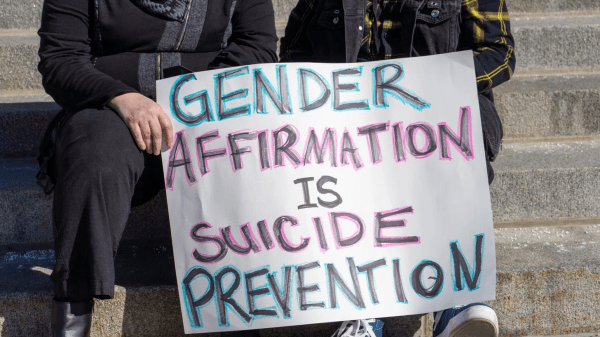
“I’m a transgender woman, and I’m here to tell you that denying people this gender-affirming care doesn’t make gender dysphoria go away,” Stephanie Wade, chair of Lavender Democrats of Orange County, told LAist. “All it does is make it metastasize into suicidal depression. And I’ve been there. I dealt with this as a child. We can’t take this away from kids.”
If you or someone you know is struggling or in crisis, help is available. Call or text 988 or chat at 988lifeline.org. The Trans Lifeline (1-877-565-8860) is staffed by trans people and will not contact law enforcement. The Trevor Project provides a safe, judgement-free place to talk for youth via chat, text (678-678), or phone (1-866-488-7386). Help is available at all three resources in English and Spanish.
Missouri’s Supreme Court upheld the state’s ban on gender-affirming care for minors this week, along with a prohibition on Medicaid coverage of gender-affirming care for anyone in the state.
As the Missouri Independent reports, the court’s unanimous decision upholds a 2024 circuit court ruling in a case challenging Senate Bill 49. The law, signed by Gov. Mike Parson (R) in 2023, bans minors from accessing any form of gender-affirming care, including puberty blockers, hormone replacement therapy, and surgeries. It also bans the state’s Medicaid program from covering gender-affirming care for people of all ages.
The challenge against the law was brought by Lambda Legal and the ACLU of Missouri on behalf of three families of transgender young people, medical providers, and LGBTQ+ advocacy organizations, who argued that the law should be subject to heightened scrutiny, a more rigorous legal standard applied to cases involving the classification of individuals by specific characteristics like gender.
According to the Missouri Independent, the state Supreme Court rejected that argument, as had the lower court. While plaintiffs had argued that the law discriminates on the basis of sex and transgender status, Judge Kelly Broniec wrote in the court’s decision that S.B. 49 “classifies only based on medical use and age.”
The court’s reasoning echoes that in the U.S. Supreme Court’s ruling last year in United States v. Skrmetti, which held that Tennessee’s ban on gender-affirming care for trans youth does not discriminate on the basis of sex or transgender status.
As the Missouri Independent notes, Supreme Court precedent allows lawmakers broad discretion when it comes to issues “fraught with medical and scientific uncertainty.”
While for decades there has been broad scientific consensus — including among all major American medical associations — that gender-affirming care is safe, evidence-based, and often lifesaving for minors experiencing gender dysphoria, conservative organizations and some American media outlets have made massive strides in recent years in sowing doubt about that consensus.
In September, Lambda Legal attorney Nora Huppert argued that the lower court’s decision upholding S.B. 49 included “legal and factual errors.” But writing for the Missouri Supreme Court this week, Broniec nonetheless said that the state had “demonstrated the ongoing debate among medical and ethical experts regarding the risks and benefits associated with the treatments at issue.”
The court also rejected arguments that the Medicaid ban violates Missouri’s constitution, with Broniec noting that adults in the state can still pay out-of-pocket to receive gender-affirming care.
Gillian Wilcox, director of litigation at the ACLU of Missouri, responded to the decision saying that it “not only allows the state to target transgender Missourians access to health care but also leaves everyone’s health care options at the whims of politicians, should certain care ever fall into the political arena.”
Two bills in Florida advanced out of committee last week that would give the state attorney general more power to investigate and press felony charges against health care professionals who provide gender-affirming care in the state, including against therapists who discuss gender issues with minor patients and pharmacists who fill prescriptions that may be used as gender-affirming care.
Last week, the Criminal Justice Subcommittee passed H.B. 743 in a 12-5 vote, Florida Politics reports. The bill would allow state Attorney General James Uthmeier to sue health care practitioners for up to $100,000 per violation for providing gender-affirming care to minors. Mainstream medical organizations support gender-affirming care for trans kids because it has been shown to be life-saving and safe.
S.B. 1010 would make it a felony for doctors, school counselors, or psychologists to advise minors on gender-affirming care or “aid or abet” another health care professional in helping minors get gender-affirming care. The bill gained near-unanimous support from the state senate’s Committee on Children, Families, and Elder Affairs, according to the Florida Phoenix.
If that version of the bill passes, medical professionals could get a $100,000 fine per violation and up to five years in prison.
“We have to uphold the principles and standards that made this country great, biblical, constitutional law, and order at all costs. And sometimes that stings,” state Rep. Taylor Yarkowsky said at last week’s hearing.
The bill’s sponsor, state Rep. Lauren Melo (R), stressed that pharmacists would be punished under her bill, something she says is necessary because, she claimed, health care professionals are “committing fraud” by prescribing gender-affirming care medications but recording the purpose of the medications as something other than gender-affirming care.
“What we’re seeing is there’s coding that’s actually being used that is becoming the problem, and hundreds of thousands of dollars is spent per child for them to transition and codes are being misrepresented where they are saying that it’s an indoctrination disorder instead of saying it’s a gender identity disorder,” she said.
Democrats stressed that the bill could have unintentional side effects. State Rep. Kelly Skidmore (D) said that the bill is not about gender-affirming care but is being pushed by state Attorney General Uthmeier to expand his power.
“It is about giving one individual and maybe his successors authority that they don’t deserve and they cannot manage,” she said, referring to Uthmeier’s involvement in the Hope Florida scandal, where state Republicans are accused of laundering money and committing fraud. “They’ve proven that they cannot be trusted. This is a terrible bill.”
State Rep. Mike Gottlieb (D) said that doctors might be scared from prescribing hormonal medications to people with severe menstrual symptoms lest a pharmacist misinterpret the reason for the prescription.
“You’re going to see doctors not wanting to prescribe those kinds of medications because they’re now subject to a $100,000 penalty,” he said. “We’re really not considering what we’re doing and some of the collateral harms that it’s having.”
Behavioral health care professional Savannah Thompson told WUSF that the bill would make it more difficult for doctors to even talk to trans patients.
“This could increase the feelings of fear from my clients who are under 18, but it also can increase the likelihood that these professionals won’t be able to talk with their clients, honestly and openly, to give them the care and the support that they deserve and need,” she said.
For LGBTQ+ people, safety has never been an abstract idea. Concerns for our community show up in legislation, healthcare and how the government treats its citizens. In the United States, where LGBTQ+ rights are being rolled back at both the state and federal level following President Donald Trump’s reelection, many people are quietly asking the same question: where, if anywhere, does stability still exist, and what does real safety actually look like?
That question shapes real decisions. Not just about travel, but about long-term plans, family, work, medical care and whether it is possible to build a future without constant political uncertainty. International data from organizations including ILGA-Europe and Equaldex, alongside migration analysis and residency reporting from Get Golden Visa, points to a widening global divide. Some countries are strengthening legal protections and expanding access to care. Others are narrowing definitions of who is protected under the law, often by targeting transgender people first and testing how much rollback the public will tolerate.
The countries highlighted here represent a snapshot of places that currently offer strong legal protections and relative social stability for LGBTQ+ people. This is by no means an exhaustive list, and conditions can change quickly as governments shift and political climates evolve. Still, these examples help illustrate what safety looks like when it is embedded into legal systems, healthcare infrastructure, and public accountability, rather than left to cultural goodwill or temporary leadership.
One country that consistently ranks at the top is Malta. It has held the number one position on ILGA-Europe’s Rainbow Index for multiple consecutive years, a reflection of both legal protections and enforcement. Same-sex marriage has been legal since 2017, conversion therapy is banned nationwide, and gender identity is explicitly protected under the constitution. Legal gender recognition is based on self-determination, without medical or psychiatric requirements, and those protections extend into healthcare, employment, education, and family law, creating long-term security rather than symbolic inclusion.
Iceland also continues to stand out for both legal protections and social acceptance. Same-sex marriage has been legal since 2010, non-binary gender markers are recognized, and gender-affirming care is available through the public healthcare system. Comprehensive anti-discrimination laws are paired with high levels of public trust in institutions, which means LGBTQ+ protections are not constantly relitigated or politicized, but treated as settled rights reflected in daily life.
.Finland has taken meaningful steps in recent years, particularly for transgender people. A 2023 update to its law allows transgender adults to change their gender through self-determination, removing medical gatekeeping that had long been criticized by advocacy groups. While non-binary recognition remains limited, Finland’s strong social safety net and political consensus around equality have kept LGBTQ+ rights largely outside culture war framing, offering stability rather than constant legal vulnerability.
Spain has long been viewed as one of Europe’s most LGBTQ+-affirming countries, and recent legislation has reinforced that reputation. Same-sex marriage has been legal since 2005, and a 2023 gender self-identification law allows people to change legal gender without medical or psychological evaluations. Conversion therapy is banned, and public opinion surveys consistently show strong support for LGBTQ+ equality, particularly in major cities where protections are paired with visible community infrastructure.
In North America, Canada has become a focal point for LGBTQ+ Americans seeking stability. Same-sex marriage has been legal since 2005, non-binary gender markers are available on federal identification, and conversion therapy was banned nationwide in 2022. Advocacy organizations and international reporting have documented a rise in inquiries from U.S. LGBTQ+ residents since the 2024 election, especially among transgender people weighing whether legal protections at home will continue to erode.
The Netherlands remains one of the most legally secure environments for LGBTQ+ people. As the first country to legalize same-sex marriage, it continues to offer robust anti-discrimination protections and publicly funded gender-affirming healthcare. For some U.S. citizens, the Dutch-American Friendship Treaty has made relocation more feasible, a trend that has accelerated since the 2024 US presidential election.
None of these countries are immune to political change, and none represent a perfect solution. But in 2026, they show what becomes possible when LGBTQ+ safety is treated as a structural commitment rather than a cultural preference. As rights erode in some places, the countries that choose to protect them are defining where dignity, stability, and the possibility of a future still exist.











 fleeredstates.blog
You must be logged in to post a comment.