‘Where am I safe?’: U.K. court ruling leaves trans people’s lives in turmoil

Read more at NBC News.

Nate Rae had always felt secure living openly since coming out as a transgender man in his late 20s — until a recent U.K. Supreme Court ruling on the legal definition of biological sex changed everything.

Now, Rae — a PhD student and science communicator who grew up in a small Scottish town before moving to London — says he finds himself constantly weighing risks and assessing where it is safe — or unsafe — for him to be.

In April, the court affirmed that under equality laws, the term “sex” refers to biological sex, meaning a transgender woman is legally considered male, and a transgender man is considered female.

Equality watchdog EHRC stated in its interim guidance on the ruling’s practical implications that transgender people should be barred from facilities and services, from toilets to hospital wards and refuges, designed for the gender they live as.

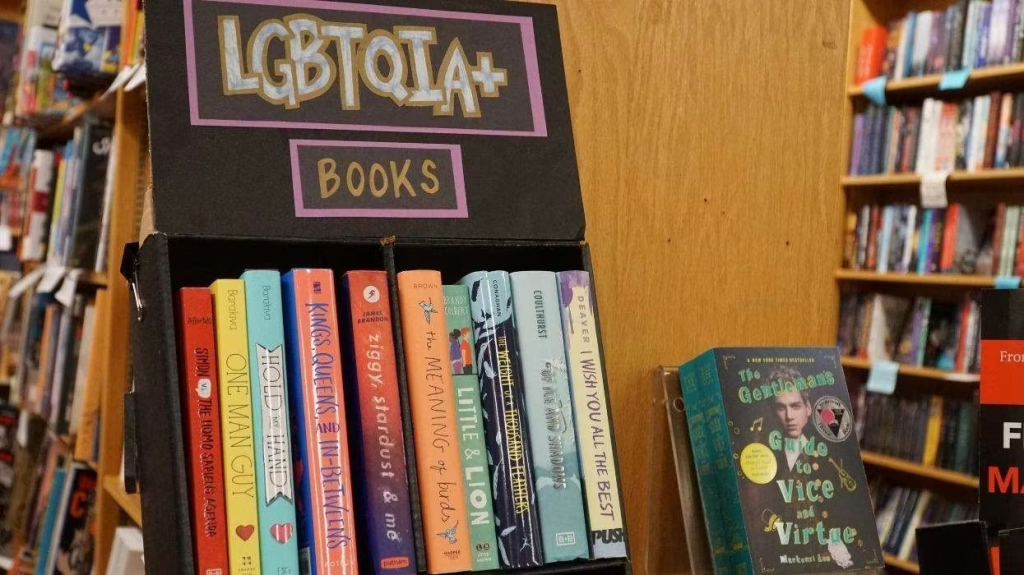
“It’s almost like it’s been made legal to harass trans people,” Rae, 33, told Reuters in an interview at Gay’s The Word, Britain’s oldest LGBTQ bookshop, saying he was now “hyper aware” of people noticing him.

“I’ve got to factor in things that I’d never had to factor in before,” he said. “Where can I go? Where am I safe?”

Transgender rights flashpoint

Rae, who only started to medically transition last year, often uses the women’s bathroom as he feels he is still largely perceived as female.

Since the ruling, Rae has been told several times that he cannot use a certain bathroom and has been called “disgusting” when using a female toilet. On one occasion, someone approached him to ask: “Do you know there are kids here?”

Transgender rights have become a political flashpoint in Britain and elsewhere. In the U.S., President Donald Trump has targeted the rights of transgender people in a series of executive orders.

Some critics of the policies say the conservative right has weaponized identity politics to attack minority groups.

But others argue that support for transgender people has infringed on the rights of biological women and their safety in spaces such as hospitals, prisons and domestic violence refuges.

Britain’s government said the judgement brought clarity and a clear position to underpin gender policies, but for many transgender people, including Rae, it has left them feeling excluded from parts of society.

A report released in August by transgender rights group TransActual highlighted how, since the ruling, some trans people have planned to leave the country, concealed their identities, avoided public spaces like hospitals, felt outed at work, or have withdrawn from social life altogether.

Asked about the detrimental impacts of the ruling cited by transgender people, a government spokesperson said laws were in place to protect trans individuals from discrimination and harassment.

Young trans people ‘terrified’

Following a consultation, the EHRC, which is responsible for enforcing equality laws, submitted its updated draft guidance to the government at the start of September and parliament is expected to consider it by the end of the year.

Keyne Walker, strategy director for TransActual, said the interim guidance is already having a “dire effect” and said the EHRC’s interpretation of the judgement could have been far less “extreme”.

Some organizations have already updated their transgender policies. The Football Association has barred transgender women from competing in women’s soccer in England, and the British Transport Police now requires same-sex searches in custody to be conducted according to a detainee’s biological sex.

A spokesperson for the EHRC said everything they had done since the judgement was grounded in the law, and the guidance shared with the government was both legally accurate and clear.

Rae fears the court’s decision will discourage people from living freely in their chosen gender and threatens their safety if they do, as it has shifted public perceptions of transgender people.

“Every young trans person I’ve spoken to is terrified,” said Rae, who teaches science to young people as part of his job, adding that many were now questioning: “Am I going to be able to live the life I want to live as the person I want to be?”

Judge ends Arizona’s “irrational” policy requiring surgery for updating gender markers

Read more at LGBTQ Nation.

A federal judge in Arizona has ruled that transgender people are no longer required to get gender-affirming surgeries in order to update their birth certificates to align with their gender identity. The Arizona Department of Health Services has 120 days to comply with the ruling.

“We are grateful that the Court ruled in Plaintiffs’ favor and found that this outdated requirement violated Plaintiffs’ constitutional rights,” said Rachel Berg, a staff attorney for the National Center for LGBTQ Rights (NCLR), which filed the case on behalf of four trans youths. “We are thrilled that the Arizona Department of Health Services will be permanently enjoined from enforcing this irrational and overly burdensome requirement, and Plaintiffs will be able to amend their birth certificates to reflect who they are.”

The ruling instructs the Arizona Department of Health Services to ignore the state’s law that requires proof of surgery to be able to amend gender markers on a birth certificate. A correction of one’s gender marker on the document still requires a doctor to attest that the patient is living as a different gender from the one assigned at birth.

The Arizona Attorney General’s Office represented the state health department. The office told the Arizona Daily Star that they are studying the ruling while deciding whether to launch an appeal on the matter.

In August last year, the same federal judge, James Soto (who was appointed by former President Barack Obama), made a similar ruling recommending that the Department of Health Services reconsider the surgical requirement for amending a birth certificate.

Soto highlighted that the requirement risked forcing trans people into unnecessary surgeries in order to live authentically or risk outing themselves in potentially dangerous situations. After a failure to act from the Department of Health Services, this week’s ruling from Judge Soto takes the matter out of their hands.

Earlier this year, Arizona Republicans tried to pass legislation to ban gender marker changes on trans people’s birth certificates entirely. While that bill passed both the state’s House and Senate, it was vetoed by Democratic Gov. Katie Hobbs.

The governor upheld her promise to veto any anti-trans bills that made it to her desk, saying the legislature should “focus on real issues that matter and impact people’s everyday lives.”

If the Arizona ruling withstands an appeal, it’ll leave only 10 states that require proof of surgery for trans people to correct their birth certificate gender markers. However, several states still refuse to allow trans people to update their gender markers in any way.

The requirement for trans people to receive surgery to update their gender markers is discriminatory, can force people to have surgeries they don’t want, and can cause particular issues for minors who cannot access gender-affirming care.

As Soto noted in his 2024 ruling, “Not every transgender person needs surgery to complete a gender transition. Starting social transitioning and other recommended therapy may eliminate the need for any potential surgical intervention.”

These requirements can mean that minors, regardless of whether they wish to pursue gender-affirming surgeries later in life, are stuck for many years with documentation that includes an incorrect marker. That can lead to situations where a trans person is forced to out themselves, which — aside from being mentally damaging — can also put them at risk for physical harm, given the current climate towards trans people.

In a statement, NCLR noted, “For young people, their birth certificate impacts everything from school records to camp registration. ”

Finally, in most cases the surgeries required for a trans person to update their birth certificate in these states result in sterilization. That forces them to either give up on having biological kids one day, go through expensive processes to preserve their sperm or eggs, or requires them to put off updating their documents until after having children.

LGBTQ advocates warn of FBI plan to label trans people as ‘violent extremists’

Read more at the Washington Blade.

The nation’s leading LGBTQ advocacy groups are sounding the alarm over reports that the FBI may soon classify transgender people as a threat group — a move advocates say would be unconstitutional, dangerous, and rooted in political retribution.

At a joint press briefing held over Zoom last week, the heads of the Human Rights Campaign, Transgender Law Center, Equality Federation, GLAAD, PFLAG, and the Southern Poverty Law Center condemned the possibility that the FBI, in coordination with the Heritage Foundation, is working to designate transgender people as “violent extremists.”

The warning comes after a story earlier this month by independent journalist Ken Klippenstein, who reported that two anonymous national security officials said the FBI is considering treating trans subjects as a subset of its new threat category. That classification — originally created under the Biden administration as “Anti-Authority and Anti-Government Violent Extremists” (AGAAVE) — was first applied to Jan. 6 rioters and other right-wing extremists.

After pardoning all of the Jan. 6 insurrectionists, the Trump administration shifted the FBI’s terminology, replacing AGAAVE with “Nihilistic Violent Extremists (NVEs),” or, in some cases, “Transgender Ideology-Inspired Violent Extremism (TIVE).” The possibility of such a label follows several high-profile media errors in which reporters incorrectly linked Charlie Kirk’s shooter to the transgender community, fueling anti-trans rhetoric on the far-right.

For more than an hour last Wednesday, LGBTQ leaders denounced the reported FBI proposal and warned of the consequences of targeting one of the country’s most vulnerable communities. They emphasized that such a move would represent a violation of basic human rights, further fuel misinformation, and give legitimacy to political attacks already directed at transgender people.

Kelley Robinson, president of the Human Rights Campaign, warned of the broader danger for the LGBTQ community if this happens.

“Americans can no longer count on the right to life, liberty, and the pursuit of happiness, not when political violence runs rampant, not when political retribution goes unchecked, not when hate is being incited by our president.”

Robinson argued that claims of “Transgender Ideology-Inspired Violent Extremism” are not rooted in reality. For example, Gun Violence Archive Executive Director Mark Bryant has said that out of 5,000 mass shootings tracked by the archive, the number of trans or LGBTQ+ suspects is in “the single digit numbers.”

“Trans Americans are more likely to be the victim of a violent crime than a perpetrator of one… violence committed by trans Americans is a lie, a lie that only begets more violence.”

Shelby Chestnut of the Transgender Law Center warned that the federal government’s posture would escalate attacks on the community.

“Bullying communities and manufacturing chaos will never erase the truth that we are far more connected than divided,” Chestnut said. “In the coming days and weeks, you will see increased targeting of our organizations and our communities and mis and disinformation being weaponized at the highest level of government.”

Fran Hutchins of the Equality Federation described the move as a direct assault on trans people, echoing Chestnut’s points — but made it clear that this will not stop organizations supporting transgender people from continuing their work.

“This is a campaign that weaponizes fear and misinformation to isolate and harm our communities,” she said. “Let’s call it what it is. It’s political violence… We will not be erased.”

Sarah Kate Ellis, president of GLAAD, the LGBTQ media watchdog organization, urged the press not to fall into false equivalencies, reminding reporters that transgender people face the highest risk of violence, contrary to the narratives pushed by some MAGA Republicans.

“Trans people exist. They always existed, and they will continue to exist,” she said. “The truth is the real trans terrorism… is the terror experienced by trans people in this country.”

Ellis also emphasized that this is an issue of civil and human rights, not something abstract — with real consequences.

“Do not treat civil rights as a both sides issue.”

Brian Bond of PFLAG (Parents, Families, and Friends of Lesbians and Gays) framed the FBI’s proposal as a betrayal of American values, calling it “un-American” and “despicable,” while warning that even if it doesn’t immediately affect everyone, it represents a slippery slope.

“Every child in their family, every family member, every neighbor, transgender or not, is affected.”

He added: “PFLAG parents… will not back down.”

Beth Littrell of the Southern Poverty Law Center underscored the constitutional implications of these potential actions, their consequences for other marginalized groups, and the role of the media in calling out the Trump administration’s tactics.

“The real threat is when the government targets a group of people and those who support them for unequal treatment based only on who they are or what they believe,” Littrell said. “It should go without saying, but I say it anyway, transgender children do not threaten anyone’s ability to safely live and thrive in our nation or anywhere else.”

“What is being reported is unconstitutional. What is happening is dangerous,” she added. “We have seen this playbook before… We fought alongside the communities then, we will continue to do so now.”

Advocates closed the call with a unified demand: that political leaders, the media, and the public reject any attempt to label transgender people as extremists and instead hold accountable those responsible for spreading violence and misinformation.

Slovakia Enshrines Only Two Sexes in Constitution, Restricting Adoption and Surrogacy for LGBTQ People

Read more at Gayety.

Slovakia’s parliament, has approved a sweeping constitutional amendment that legally recognizes only two sexes—male and female, and imposes new limits on adoption and surrogacy, sparking alarm from human rights groups and LGBTQ+ advocates.

The amendment, passed in a narrow 90‑vote majority in the 150‑seat National Council, also restricts adoption to married heterosexual couples and bans surrogate pregnancies. It was framed by Prime Minister Robert Fico’s government as a defense of “sovereignty in cultural and ethical matters” and traditional values. Fico heralded the vote as “a great dam against progressivism.”

The constitutional change marks one of the most significant curbs yet on LGBTQ+ and reproductive rights in the country, critics say, aligning Slovakia more closely with Hungary’s conservative trajectory, and raising concerns about violations of international commitments and human rights.

What the Law Does

  • Defining Sex and Gender: The amendment states explicitly that only two sexes—male and female—are recognized under Slovak law. Legal definitions of gender identity beyond that framework are excluded.
  • Adoption Restrictions: Only married heterosexual couples will now be able to adopt children. Same‑sex couples are excluded from adoption rights under the new wording.
  • Ban on Surrogacy: The law prohibits surrogate pregnancies.
  • Assertion of “National Identity”: The amendment declares that Slovakia retains sovereignty over issues of national identity, culture, and state ethics, even potentially above European Union law in certain areas.

Passage and Political Dynamics

The vote was precariously close. Fico’s coalition controls fewer than the 90 votes required for constitutional amendments, but 12 opposition lawmakers from conservative parties defected last minute, providing the margin required for passage.

Some opposition figures expressed outrage, describing defectors as traitors, alleging the vote was a political maneuver to distract from declining public approval and other unpopular measures.

President Peter Pellegrini said he would sign the amendment into law, framing the constitutional majority as a signal of political consensus in deeply polarized times.

Responses and Broader Implications

Human rights organizations were quick to condemn the change. Critics warn it will lengthen the legal limbo for trans, non‑binary, and intersex people, reduce access to gender recognition, and further institutionalize discrimination.

There are also worries it will lead to clashes with EU law, which guarantees certain protections for minority and LGBTQ+ populations. Legal scholars suggest the amendments may violate international treaties and could become the subject of legal challenges.

For Slovak LGBTQ+ individuals, the change is deeply personal. It removes recognition for anyone who doesn’t fit neatly into “male” or “female,” and restricts family formation for non‑heterosexual parents.

California lawmakers approve measure protecting medical data of transgender people 

Read more at The Hill.

California lawmakers passed legislation this week to prevent health providers from releasing transgender patients’ confidential medical records in investigations of gender-affirming care in states that ban treatment for minors. 

Senate Bill 497, introduced in February by Sen. Scott Wiener, a Democrat representing San Francisco, builds upon a 2022 state law that established California as a state of refuge for transgender people. That law, also authored by Wiener, prevents states that have banned gender-affirming care for minors from taking legal action against trans youth, their families and their doctors over treatment administered in California. 

The latest bill would require law enforcement requesting health information about transgender people in California to provide a warrant, according to Wiener’s office. It would also bar medical providers from complying with out-of-state requests, including subpoenas, for information related to gender-affirming care. 

“California must do everything in our power to protect the transgender community, and I’m confident that the Governor will continue his longstanding leadership on trans issues,” Wiener said in a statement on Thursday after the bill passed. 

The California Senate voted 30-10 on Wednesday to pass Wiener’s bill, which the state Assembly passed earlier this week. A spokesperson for California Gov. Gavin Newsom (D) declined to comment, saying the governor’s office does not typically remark on pending legislation. 

Newsom must sign or veto the measure by Oct. 13. 

The vote on Wiener’s bill comes after the Justice Department announced in June that it had sent more than 20 subpoenas to doctors and clinics “involved in performing transgender medical procedures on children” in investigations of alleged health care fraud and false statements. A subpoena sent to the Children’s Hospital of Philadelphia that was made public in a court filing last month requested patients’ birth dates, Social Security numbers and home addresses, as well as “every writing or record of whatever type” from doctors related to the provision of gender-affirming care to adolescents younger than 19 years. 

The subpoena requested information dating back to January 2020, more than a year before transition-related care was banned anywhere in the U.S. 

On Tuesday, a federal judge blocked an effort by the Trump administration to subpoena medical records of transgender patients who received gender-affirming care at Boston Children’s Hospital, calling the Justice Department’s investigation improper and “motivated only by bad faith.” 

In an email on Friday, a spokesperson for Wiener said Senate Bill 497, if signed, would “strengthen the case for any medical provider who wishes to fight Trump’s vicious assault on the transgender community.” 

President Trump and administration officials have broadly sought to ban gender-affirming care for minors. A Jan. 28 executive order states that the U.S. “will rigorously enforce” laws that ban transition-related care for anyone younger than 19. 

Federal judges have blocked parts of the order threatening funding for hospitals. 

Laws adopted by more than half the nation since 2021 ban gender-affirming care for minors, which major professional medical groups say is medically necessary and often lifesaving for transgender youth and adults. In June, the Supreme Court ruled that states can ban treatment for minors, finding that Tennessee’s prohibition on puberty blockers, hormones and rare surgeries for adolescents does not constitute sex discrimination. 

Texas drops lawsuit against doctor accused of providing gender-affirming care to youth

Read more at LGBTQ Nation.

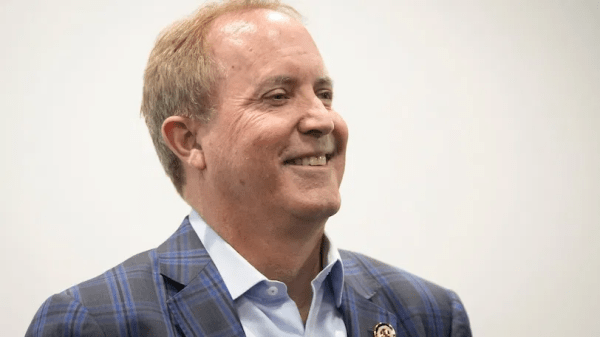
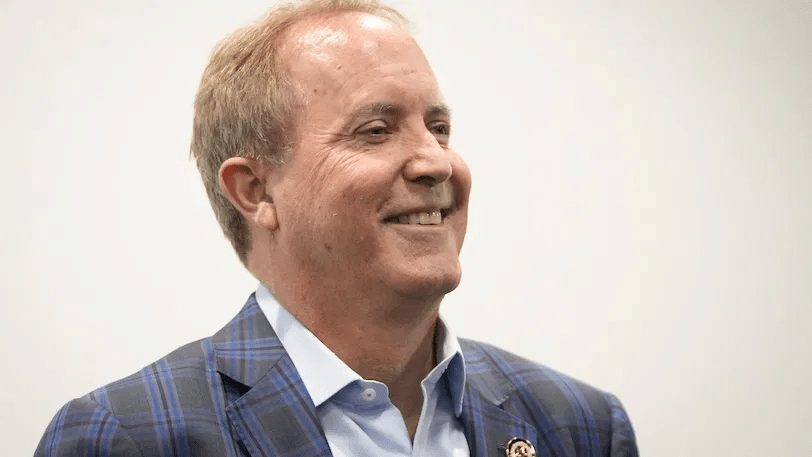
Texas Attorney General Ken Paxton withdrew the state’s lawsuit against pediatric endocrinologist Dr. Hector Granados on Thursday after finding no evidence that he violated the state’s ban on gender affirming care for trans youth.

Paxton sued Granados in October 2024, accusing him of providing puberty blockers and hormones to patients as young as 12 in treatment for gender dysphoria. Paxton accused Granados of falsifying medical and billing records to mislead pharmacies and insurance providers into covering the care.

Paxton initially called Granados a “scofflaw who is harming the health and safety of Texas children,” and Granados wasn’t notified before the lawsuit’s filing, in worries that he might try to destroy relevant records, The Hill reported.

However, Granados said he stopped providing gender-affirming care in May 2023, after the state’s legislature passed the law. Now that Paxton’s office has dropped its charges against him, Paxton’s office will now “focus on other ongoing cases against doctors who illegally provided harmful ‘transition’ treatments and drugs to children,” an attorney general spokesperson said, according to The Hill.

The state has also sued May Lau and M. Brett Cooper, two medical providers from the University of Texas’ Southwestern Medical Center in Dallas. If found guilty, both could possibly lose their medical licenses and face hundreds of thousands of dollars in fines.

Despite Paxton’s claim about gender-affirming care being “harmful,” the medications used in such care have been used safely in children for decades for the purposes of gender transition and to treat other medical issues in cisgender children as well. In fact, Texas’ law stands in opposition to the best care practices for treating gender dysphoria recommended by every major American medical association. These associations agree that such care is safe, effective, and essential for the overall well-being of trans people.

Creator of the trans flag is fleeing U.S. due to LGBTQ+ persecution

Read more at The Advocate.

Monica Helms, the Navy veteran and creator of the original transgender pride flag, is fleeing the country due to anti-LGBTQ persecution.

She and her wife, Darlene Wagner, launched a GoFundMe earlier this year to facilitate their move abroad.

“We are worried there’s a possibility something could happen where we end up getting arrested just for being who we are,” Helms said in an interview with the Bay Area Reporter when the fundraiser first kicked off.

The couple currently lives in Georgia, which Erin in the Morning’s newest risk assessment map labeled as a “high risk” area for transgender people. Helms is by no means the only transgender refugee fleeing the United States. In May, a Williams Institute poll found that nearly half of all trans adult respondents had considered moving out of state or out of the country.

Since 2023, almost three dozen anti-trans bills have been introduced in Georgia, four of which have passed, according to the Trans Legislation Tracker. There was a ban on trans girls playing on scholastic women’s sports teams, a ban on using state funds to provide transition-related health care to incarcerated people, a ban on providing evidence-based medical treatment for minors with gender dysphoria, and the Georgia Religious Freedom Restoration Act—which does not explicitly target trans people, but is likely to make it easier to discriminate against them using religion as a legal defense. (Thankfully, there have been some successful and ongoing legal challenges to many of these policies.)

However, “even blue states are starting to see problems,” Helms told the Bay Area Reporter. California’s governor reportedly moved to kill pro-LGBTQ bills behind the scenes; New Jersey school boards have engaged in a coordinated effort to forcibly out trans students to hostile parents; and hospitals located within Democratic strongholds across the country are violating state equal protections laws to deny trans kids access to health care, capitulating to Trumpian threats.

NBC’s Jo Yurcaba profiled families of trans kids moving to places like Australia and New Zealand. Hannah Kreager, a 22-year-old trans woman from Arizona, filed a groundbreaking asylum claim in Canada earlier this year; if granted, it would mark the first time a trans person from the United States would be given asylum in another country due to their LGBT status.

Of course, all of these stories come with the presumption of privilege. Trans people in these scenarios may have had familial support and/or a source of income or wealth that enabled them to uproot their lives to a safer place. Others resort to bouncing from state to state to receive care, uprooting their lives to live in a more tolerant community or traveling across state or international lines periodically to access health care.

As for Helms, she vowed to continue to fight for trans people no matter where she lives. “We will not abandon our activism,” she wrote in her GoFundMe.

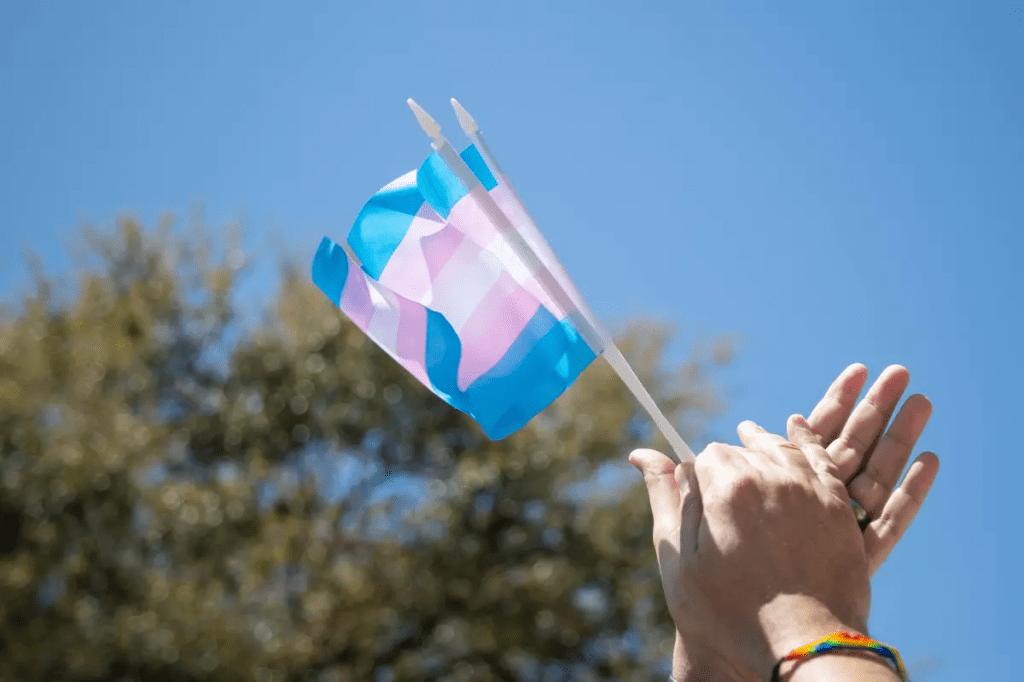
Helms designed the transgender pride flag after having a conversation with the creator of the bisexual pride flag in 1999, she told the Bay Area Reporter. She has said it is important to her that it remains open and free to use for the public. The pink, white, and blue flag has become a household symbol for trans people and their loved ones.

“No matter how you fly it, it’s always correct, which signifies finding correctness in our own lives,” Helms said.

DOJ mulling rule that could restrict transgender individuals from owning guns

Read more at ABC News.

Senior Justice Department officials have held internal deliberations in recent days over potentially issuing a rule that could restrict transgender individuals from being able to own firearms, two officials familiar with the discussions confirmed Thursday to ABC News.

The policy discussions, which are believed to be in their early stages and driven in part by chatter in right-wing media, follow last week’s Minneapolis Catholic church shooting that the FBI has said was carried out by a transgender woman.

Such a proposal could face significant pushback not only from civil rights groups but from gun rights organizations, which have historically been resistant to the issuance of any regulations restricting people’s access to firearms.

There is no evidence to suggest transgender people are more likely to be violent than the general population. However, transgender people are far more likely than average to be the victim of a violent crime.

Still, the discussions have percolated in recent days among top officials in the Justice Department, including in the Office of Legal Counsel, which provides legal advice to all executive branch agencies.

The American Psychiatric Association (APA) and other major medical associations do not consider being transgender a mental illness and recognize transgender and gender diverse identities as normal variations in human expression. The APA distinguishes gender dysphoria — which is defined as “clinically significant distress or impairment” that transgender individuals may experience when they feel a difference between their assigned sex at birth and their gender identity — as a separate diagnosis, and supports gender-affirming care while opposing practices that try to change a person’s gender identity.

DOJ officials have debated whether having a diagnoses of gender dysphoria could disqualify someone under a federal law that restricts people who are “adjudicated as mental defective” from owning guns, sources said.

The possible move would be the latest escalation in an ongoing push by the Trump Administration to restrict the rights of transgender individuals — and would appear to conflict with other moves by the Justice Department to lift what it has argued are unfair burdens restricting Americans’ Second Amendment rights to bear arms.

Among its efforts, the DOJ has proposed a new rule that could restore gun ownership rights to certain people with felony convictions, and has said it would pursue civil rights investigations into cities that it says engage in a pattern or practice of depriving local citizens of their Second Amendment rights.

Laurel Powell, director of communications at the Human Rights Campaign, told ABC News in a statement, “The Constitution isn’t a privilege reserved for the few; it guarantees basic rights to all. Transgender people are your neighbors, classmates, family members, and friends — and we deserve the full protection of our nation’s laws, not anti-American nonsense from the White House.”

“If rights can be stripped from one group simply because of who they are, they can be stripped from anyone,” Powell said.

A Justice Department spokesperson told ABC News, “The DOJ is actively evaluating options to prevent the pattern of violence we have seen from individuals with specific mental health challenges and substance abuse disorders. No specific criminal justice proposals have been advanced at this time.”

Texas uses special session to push “discriminatory & harmful” anti-trans & anti-abortion bills

Read more at LGBTQ Nation.

Despite mounting public protest, Texas lawmakers are fast-tracking two anti-trans and anti-abortion bills. Both measures are being advanced during a special legislative session convened by Governor Greg Abbott (R), who has made restricting transgender rights and reproductive freedom central to his agenda.

Senate Bill 8, an anti-trans “bathroom bill,” would require government buildings —including public universities — to designate restrooms, locker rooms, and other facilities strictly by “biological sex,” instead of gender identity. SB 8 penalizes institutions, not individuals: a first violation carries a $5,000 fine, with repeat violations rising to $25,000 each. It also empowers the state attorney general to investigate complaints.

“I will say it again: SB 8 does NOT protect women.  It is an unconstitutional and a direct attack on the rights of the Trans community,” state Rep. Jessica González (D), who represents District 104 and chairs the Texas House LGBTQ Caucus, wrote on X. “This bill is nothing less than discriminatory and harmful, and it has no place in Texas.”

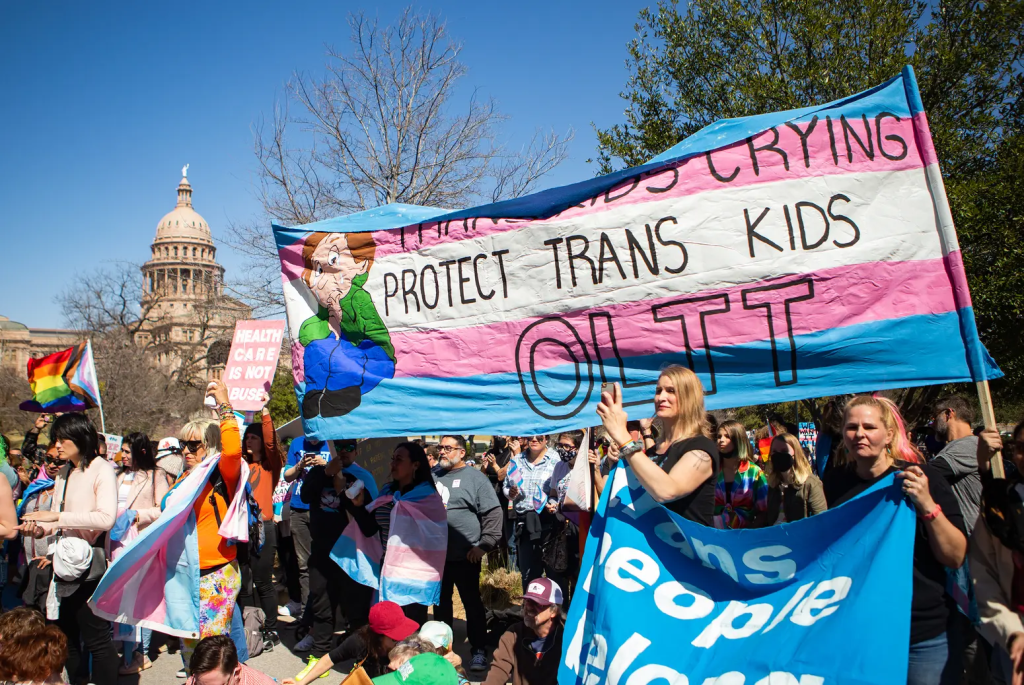
The state Senate approved SB 8 earlier this month, and it was subsequently greenlighted by the House State Affairs Committee on August 22, despite about 100 activists gathering at the Texas Capitol to protest it, with nearly half of the protesters participating in a sit-in.

Cameron Samuels, an incoming student at the Lyndon B. Johnson School of Public Affairs, told The Daily Texan that bills like SB 8 are designed to erase trans lives. “We are the experts of our lived experiences and this hate and bigotry relies on our inability to tell our stories,” Samuels said.

“They are seeking to silence and erase our narratives. But when we are telling our stories and demonstrating a more accurate reflection of what it means to be a transgender Texan, then we bust those myths and we challenge those narratives.”

According to Equality Texas, testimony on the bill was halted after just two hours, leaving nearly 100 people who had signed up to speak without the chance to testify. After Republicans ended the testimony early, Democratic Representatives Jessica González and Donna Howard held a “people’s hearing” in the Texas Capitol auditorium. SB 8 is now awaiting a final vote and debate on the House floor.

Protesters also rallied against House Bill 7, a sweeping measure that seeks to sharply restrict access to abortion medication. HB 7 would allow private citizens to sue anyone who manufactures, mails, prescribes, or provides abortion pills in Texas, with damages starting at $100,000 per violation.

The measure mirrors earlier “bounty” laws but expands them by targeting the most common method of abortion in the United States. On August 25, the House State Affairs Committee passed a revised version of the bill.

“Despite already having a total abortion ban on the books—one that is wreaking havoc on the state’s health care infrastructure and tragically taking the lives of pregnant people—the Texas legislature is voting on SB 7, another horrifying bounty hunter bill,” the Center for Reproductive Rights said on X. “If enacted, one of the very last avenues for Texans to access critical reproductive care will be closed off.”

Lawmakers have until September 13 to pass the bills during the special session. If approved, SB 8 and HB 7 would add to Texas’s growing slate of anti-trans and anti-abortion laws.

Transgender people in Kenya just won a major court victory

Read more at LGBTQ Nation.

A trans woman’s court victory in Kenya could have wide-ranging implications for trans rights in the East African nation, after a judge agreed she suffered inhuman and degrading treatment at the hands of government authorities and directed Parliament to enact protections and recognition in law for trans Kenyans.

The plaintiff, Shieys Chepkosgei, was detained in 2019 and charged with “impersonation,” despite the fact that she had held official documents, including a birth certificate and passport with female sex markers, while living in another country where she had also competed in women’s athletics.

Chepkosgei was arrested by Kenyan police while visiting a teaching hospital, Q News reports.

She was remanded to a women’s facility, strip-searched, and ordered by a court to undergo “gender determination,” which included a genital examination, hormone testing, blood sampling, and radiological testing.

Chepkosgei challenged her detention and the nonconsensual medical examinations in court, arguing they were unconstitutional, violated her inherent dignity, and highlighted a legislative gap in the treatment of transgender persons in custody in Kenya.

Justice R. Nyakundi of the Eldoret High Court agreed that Chepkosgei’s rights to dignity, privacy, and freedom from inhuman and degrading treatment had been violated, according to Jinsiangu, a Kenyan intersex, transgender, and gender non-conforming rights group. She was awarded the equivalent of about $8000.

But the judge went a step further, directing the Kenyan government to initiate legislation in Parliament addressing the rights of transgender Kenyans, either with new protections or by amending current legislation on the rights of intersex people currently moving through Parliament.

“This is the first time a Kenyan court has explicitly ordered the State to create legislation on transgender rights, and a first on the African continent,” Jinsiangu’s Lolyne Ongeri told Mamba Online.

“If implemented, it could address decades of legal invisibility and discrimination faced by transgender persons by establishing clear legal recognition of gender identity, protections against discrimination in employment, housing, healthcare, and education, and access to public services without bias or harassment.”

Kenya has a fraught history with LGBTQ+ rights, with colonial-era penalties for same-sex behavior still in effect, and discriminatory legislation modeled on Uganda’s notorious Anti-Homosexuality Act – which allows for the death penalty for homosexuality – introduced in Parliament.

Same-sex relations remain criminalized, with “carnal knowledge against the order of nature” and “gross indecency” punishable by up to 14 years in prison.

Transgender people in Kenya face widespread stigma, discrimination, and violence. Current law bars trans Kenyans from legally changing their gender identity from the one assigned at birth.

While LGBTQ+ people have found relief in the courts, homophobia pervades Kenyan society and the legislature.

In 2023, Kenya’s Supreme Court affirmed a decision granting an LGBTQ+ rights group official status and legal recognition as a non-governmental organization (NGO). The decision ignited protests in the country’s second-largest city, led by clerics and homophobic politicians.

Blog at WordPress.com.

Up ↑