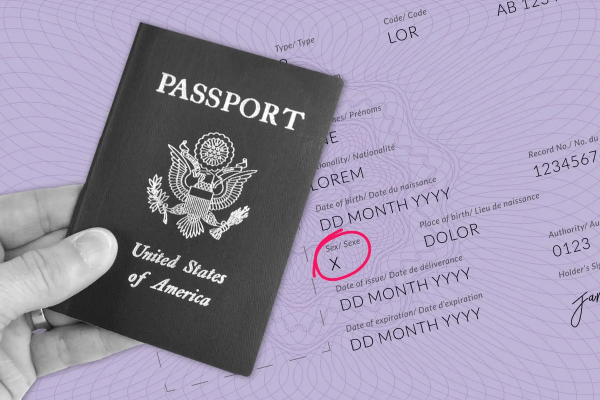
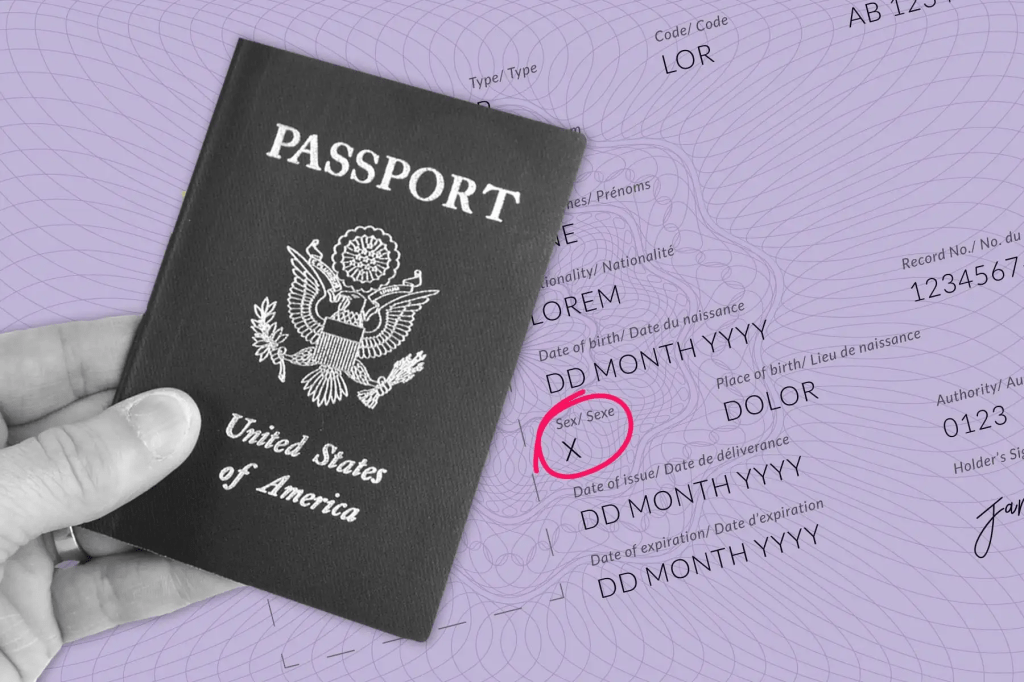
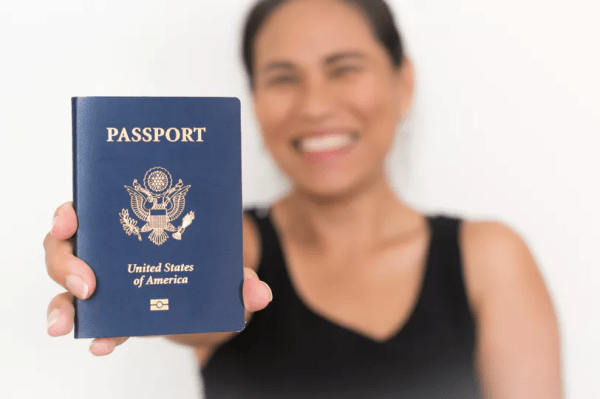
A federal judge on Tuesday blocked President Donald Trump’s administration from refusing to issue passports to transgender and nonbinary Americans nationwide that reflect their gender identities.
U.S. District Judge Julia Kobick in Boston expanded, opens new tab a preliminary injunction she issued in April that allowed six transgender and nonbinary individuals who challenged the policy to obtain passports consistent with their gender identities or with an “X” sex designation while the lawsuit moves forward.
Kobick did so after concluding the policy the U.S. Department of State adopted pursuant to an executive order Trump signed likely discriminated on the basis of sex and was rooted in an irrational prejudice toward transgender Americans that violated the U.S. Constitution’s Fifth Amendment.
While Kobick’s April ruling was limited in its scope, the judge, an appointee of Democratic President Joe Biden, on Tuesday granted the case class action status and halted the policy’s enforcement against transgender, nonbinary and intersex passport holders.
Kobick said granting class action status to two categories of passport holders was appropriate given that the administration’s actions affected them uniformly “by preventing them from obtaining passports with a sex marker consistent with their gender identity.”
Li Nowlin-Sohl, a lawyer for the plaintiffs at the American Civil Liberties Union, called the ruling “a critical victory against discrimination and for equal justice under the law.”
White House spokeswoman Anna Kelly in a statement called the decision “yet another attempt by a rogue judge to thwart President Trump’s agenda and push radical gender ideology that defies biological truth.”
The case is one of several concerning an executive order Trump signed after returning to office on January 20 directing the government to recognize only two biologically distinct sexes, male and female.
The order also directed the State Department to change its policies to only issue passports that “accurately reflect the holder’s sex.”
The State Department subsequently changed its passport policy to “request the applicant’s biological sex at birth,” rather than permit applicants to self-identify their sex, and to only allow them to be listed as male or female.
Prior to Trump, the State Department for more than three decades allowed people to update the sex designation on their passports.
In 2022, the Biden administration allowed passport applicants to choose “X” as a neutral sex marker on their passport applications, as well as being able to self-select “M” or “F” for male or female.
As Oklahoman legislators push to restrict trans rights and overturn the 2015 Supreme Court decision legalizing gay marriage, Zane Eaves says his identity as a transgender man has put a target on his back in his home state.
One of 18,900 trans adults in Oklahoma, Eaves has received death threats as has his wife of 10 years and their two children.
“All the hatred and political stuff going on” are driving this Oklahoma lifer from the place he was born and raised, Eaves, 35, said. He has only crossed the state line three times in his life, but in recent weeks, he made the difficult decision to move his family to North Carolina to be closer to friends and allies.
“I am just trying to stay alive and keep my marriage,” Eaves said.
Oklahoma ranks 44th in the nation on a list released Monday of the most and least welcoming states for lesbian, gay, bisexual, transgender and queer Americans.
LGBTQ+ equality fell across the board for the third straight year, according to Out Leadership’s State LGBTQ+ Business Climate Index shared exclusively with USA TODAY. But the sharpest declines came in Republican-led states.
While progressive strongholds championed supportive policies and protections, conservative states elected a slate of leaders who openly oppose gay and trans rights and sponsored an unprecedented wave of anti-LGBTQ+ legislation, Out Leadership CEO and founder Todd Sears said.
So-called “Don’t Say Gay” bills, religious exemptions and other legislation tanked the rankings of 19 red states in the Out Leadership index, according to Sears.
Today, the divide between states that roll out the welcome mat and less hospitable parts of the country is wider than ever, he said.
The least and most welcoming LGBTQ+ states
Each year for the last seven, Out Leadership has released the State LGBTQ+ Business Climate Index to gauge the overall climate for gay and transgender people state by state, mapping out where they will face the most and the least discrimination and hardship.
Out Leadership’s index measures the impact of state government policies and prevalent attitudes about the LGBTQ+ community, weighing factors such as support for young people and families, health access and safety, political and religious attitudes, work environment and employment and nondiscrimination protections.
The Northeast had six of the 10 highest-ranked states, while the Southeast had six of the lowest-ranked.
Massachusetts, led by the nation’s first openly lesbian governor, Democrat Maura Healey and New York, which guaranteed gender-affirming care and LGBTQ+ refugee protections, tied for first place in this year’s index, with Connecticut and New Jersey close behind.
The least LGBTQ+ friendly state was Arkansas, which ranked last for the third straight year. South Carolina, Louisiana, South Dakota and Alabama also received low scores.
The states that had the largest gains in the index were Kentucky and Michigan, which Out Leadership attributed to “pro-equality” leadership from governors Andy Beshear and Gretchen Whitmer, both Democrats. The steepest declines were in Ohio, Florida and Utah, all led by Republican governors.
Where are the safest places to live?
The Out Leadership index was created as a LGBTQ+ inclusion reference guide for business leaders. But gay and trans people soon began using it to figure out where they should – and should not – live and work, never more so than now as rights rollbacks from the Trump administration and red statehouses hit close to home.
Opposition to transgender rights was a central plank in Trump’s presidential campaign and since taking office he has signed a series of executive orders recognizing only male and female genders, keeping trans athletes out of women’s sports, banning trans people from serving in the military and restricting federal funding for gender-affirming care for trans people under age 19.
Even states seen as safer for LGBTQ+ people have been navigating these edicts around trans athletes. Trump threatened to cut federal funding to California if a trans girl competed in a state track and field event held Saturday.
AB Hernandez, a junior from Jurupa Valley High School in Riverside County, shared first place in the high jump and triple jump and second in the long jump. She shared the awards podium with her cisgender competitors under a new rule drafted by state athletics officials days before the event to mollify critics.
Republican-led states have been in the vanguard of anti-trans legislation, causing greater geographic polarization and prompting fears among LGBTQ+ residents, even those who live in liberal cities.
Jordan McGuire, a 27-year-old gay man in North Dakota, said the years he spent living in the Deep South taught him about the repressive discrimination routinely faced by gay and genderqueer people.
At the same time, socially progressive cities in conservative states like Fargo and Grand Forks are no longer the safe havens they once were, he said.
Now that his fiancee is transitioning to female, the couple is exploring a move to a “sanctuary” state that will be safer for them.
“It feels like five or 10 years ago, trans people were not under the same microscope they are now and that has definitely influenced our move,” McGuire said. “Yeah, people were prejudiced but it wasn’t a witch hunt. They weren’t looking for people in bathrooms and schools. But now things are so polarized.”
That rising anxiety was captured in a post-election survey from UCLA’s Williams Institute which found that nearly half of transgender people had already fled unsupportive communities and nearly 1 in 4 were considering uprooting their lives.
The most frequently cited reasons for wanting to move were concerns about LGBTQ+ rights – 76% – the sociopolitical climate – 71% – anti-trans rhetoric and climate – 60% – and anti-trans laws and policies – 47%.
LGBTQ+ Americans on the move
Interest in relocating to friendlier states is even higher today than it was after Trump’s reelection, say nonprofit workers who aid trans and gender-diverse people relocate to more liberal states with broader protections.
So far in 2025, Rainbow Railroad in Canada has received more than 3,000 requests from LGBTQ+ people living in the United States, up more than 1,000% from the same time last year, according to communications director Timothy Chan.
Nearly all requested international relocation support. For now, Rainbow Railroad can’t aid Americans with resettlement services because of immigration restrictions, Chan said.
TRACTION has heard from a record number of people from states as far away as Texas, Oklahoma and Arkansas with many of them reporting being threatened or feeling unsafe in their homes and neighborhoods, said Michael Woodward, the executive director of the trans-led organization in Washington state.
Trans and gender-diverse people historically face financial hardship due to systemic oppression and discrimination, and need assistance finding jobs and housing as well as with interstate moving expenses that can run tens of thousands, Woodward said.
TRACTION used to get a few applications a week until Trump won a second term. In the two weeks following the election, “we received as many requests for assistance as we’d received in the entire life of the project thus far,” he said.
After the inauguration, TRACTION started getting three to five applications every day. With one employee and a handful of volunteers, his organization is struggling to keep up with demand, Woodward said.
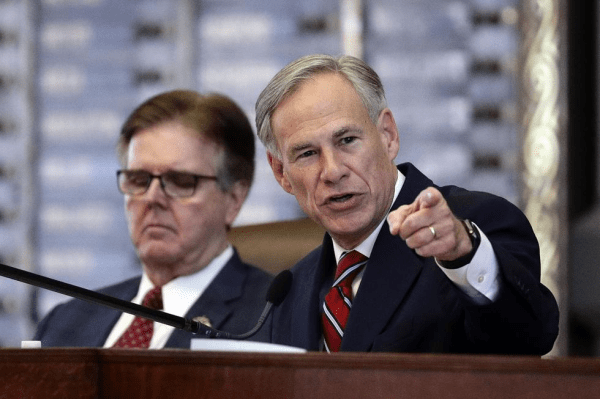
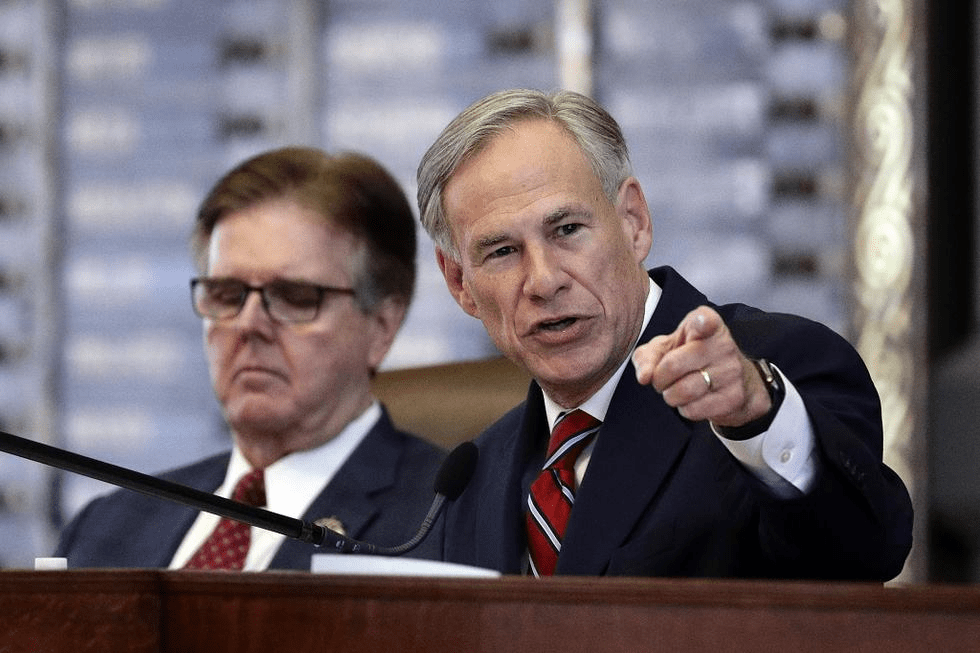
The Texas Senate has sent legislation to Gov. Greg Abbott (R) that would strictly define genders across state law based on male and female reproductive organs — potentially creating new hurdles for transgender and intersex Texans whose gender identity would revert to the sex they were assigned at birth in state records.
Abbott spokesman Andrew Mahaleris confirmed to The Hill on Wednesday that the governor plans to approve the measure.
“The State of Texas recognizes only two sexes — male and female,” Mahaleris said. “Governor Abbott looks forward to reaffirming this universal truth and signing HB 229 into law.”
Supporters of the legislation said that it follows a directive Abbot issued earlier this year that state government in “Texas recognizes only two sexes — male and female.”
Abbott cited in the directive an executive order that President Trump signed shortly after his January inauguration that designates male and female as the only sexes recognized by the federal government and on a biological basis.
“All Texas agencies must ensure that agency rules, internal policies, employment practices, and other actions comply with the law and the biological reality that there are only two sexes—male and female,” Abbott wrote in his January letter to state agencies.
The latest Senate-approved bill, dubbed the “Women’s Bill of Rights,” defines sex as “an individual’s biological sex, either male or female.” Under the legislation, a woman or female is an “individual whose biological reproductive system is developed to produce ova” and a male or man is “someone whose reproductive system is developed to fertilize the ova of a female.”
Additionally, it defines “mother” as “a parent of the female sex.”
Critics of the measure argue that the bill oversimplifies sex, gender and a broad spectrum of personal experiences.
“If a law forces non-binary Texans, who are real people, into categories that don’t reflect their lived experiences or identities … that would actually become discrimination in practice,” state Sen. José Menéndez (D) said during the floor debate on the bill before its passage. “That’s a concern that I have.”
State Sen. Mayes Middleton (R), who sponsored the bill, said that it would preserve women’s designated spaces, like restrooms and prisons, based on “biological reality.” He noted that it carries no criminal or civil penalties.
“For our entire history we never had to define this because common sense dictated we didn’t, but unfortunately, that seems to have changed,” he said in the floor debate.
Abbott has previously pushed back against past criticism for signing laws that target LGBTQ people. He approved legislation in 2023 and 2021 to bar transgender athletes from competing in women’s and girls sports in Texas schools and colleges.
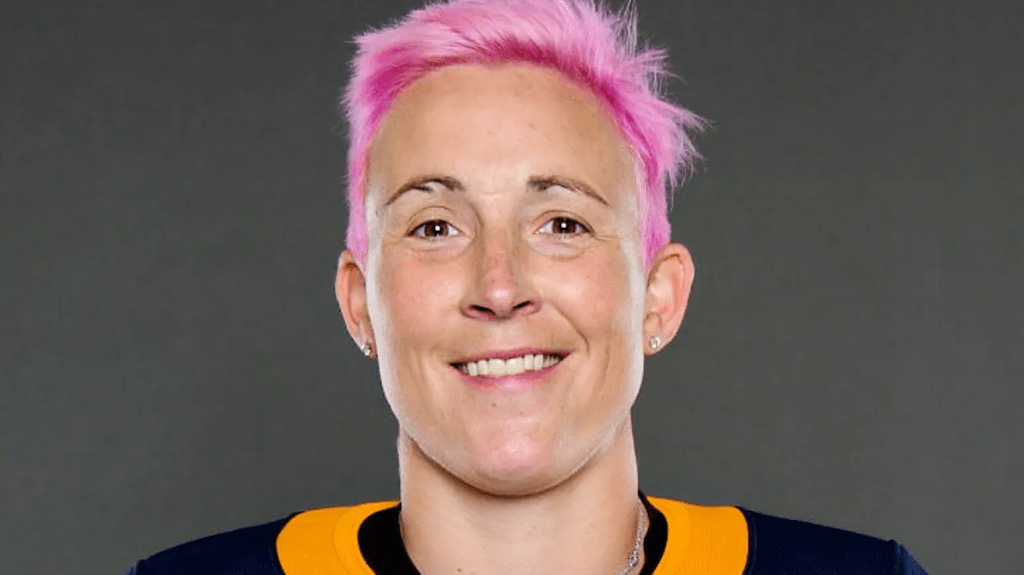
Hockey star Madison Packer played in five All-Star Games and is the second-highest goalscorer in the history of the Premier Hockey Federation, which was the forerunner to the National Women’s Hockey League.
Packer is widely recognized as an icon of women’s sports. Yet not for the first time, Packer recently found herself being misgendered as a result of gender policing she believes is escalating in line with heightened anti-trans rhetoric.
Two weeks ago, the 33-year-old posted an Instagram story to say that in late April she had been “forcibly removed” from a women’s bathroom stall in a Florida nightclub.
Packer, who spent eight seasons with the Metropolitan Riveters in the NWHL and PHF, wrote “sounds familiar” when sharing an article about the incident on social media.
She describes her own experience in Florida as “humiliating” and connects it directly to the ongoing discourse in society that suggests trans people pose a threat in women’s spaces.
“The entire bathroom situation is absurd,” Packer tells Outsports.
“The fear-mongering and outright propaganda we have perpetuated against the trans community in this country is pathetic.”
Packer says she had been with her wife and their friends at the club in Naples, Fla., when she left them to visit the restroom.
“Upon walking in, the female bathroom attendant several times said, ‘Sir sir,’ as to get my attention,” recalled Packer. “I am a cis female. I don’t respond to ‘sir.’”
During her playing days, the former power forward was a vocal leader on and off the ice, partnering with You Can Play on the organization’s LGBTQ advocacy initiatives.
She ignored the attendant and headed into a stall.
It was then that Packer felt the attendant pulling her backwards by the shoulder.
“Again, she addressed me as ‘sir’ and told me I was in the wrong bathroom. We proceeded to argue over the bathroom I was in until I showed her my driver’s license.”
In Florida, trans people are prohibited by law from using public bathrooms and gendered facilities that align with their gender identity in all government-owned buildings, including K-12 schools and colleges.
The law applies only to facilities run by the state, but there have been several reports of trans, nonbinary and gender nonconforming people being challenged when using restrooms inside private businesses.
The Movement Advancement Project lists five other states — Arkansas, Montana, South Dakota, Utah and Wyoming — as having passed bathroom bills similar to that of Florida.
For women like Packer, who in her own words is “masculine presenting,” the chances of being confronted in a restroom are by no means limited to certain states.
She says that a few years ago, she was also involved in a physical altercation with a male bouncer in the bathroom of a bar in Connecticut.
It’s natural for her to speak out about the damage done by gender policing. After announcing her retirement from hockey last November, Packer and her wife, Anya Battaglino, started a podcast called “These Packs Puck” in which they discuss queer parenthood and navigating life after pro sports.
On the latest episode, they talk about how being challenged in Florida left Packer “very upset” on what was, by coincidence, Lesbian Visibility Day. The couple had posted to Instagram to mark that awareness day, using an old photo taken in a Palm Springs restroom to make a point.
Anya wrote the caption: “Minding mine. (Wish the government would do the same).”
A little over a week later, Packer shared more details of her confrontation after reading online about what had happened in the Boston hotel.
In its reporting of that incident, CBS News quoted the executive director of PFLAG Greater Boston, Nina Selvaggio, who said: “For gender nonconforming lesbians, women in general, being harassed in public restrooms is a tale as old as time.
“I do think the surge in national anti-trans rhetoric is contributing to an increased policing of women’s bodies and their expression of gender.”
Packer told Outsports she agrees “wholeheartedly” with Selvaggio’s comments.
“I find it infuriating that we’re now going as far as to dictate or try to regulate what ‘female’ looks like.
“I’ve shared locker rooms and bathrooms with straight men, gay men, gay women, straight women, trans men, and trans women… I’ve never once had an altercation or inappropriate exchange with a trans person.
“I think we’re concerning ourselves with the wrong groups when it comes to restroom safety.”
Transgender woman Michelle Rosenblum, of Ventura, California, has been planning a family vacation to Hawaii, but recent law changes regarding identification documents have made her wary of travel.
After President Donald Trump’s election to a second term last November, Rosenblum had been rushing to get her identification in order as a safety precaution.
According to Rosenblum, she updated her California birth certificate to show she had transitioned and renewed her passport.
Rosenblum was shocked to receive a letter from the State Department telling her she needed to correct her information on her passport application to show her biological sex at birth.
As Rosenblum prepares to fly, she fears that the discrepancies between her California Real ID and her passport will create problems when traveling. While the federal government requires Real ID for air travelers, states oversee the gender marker listed on the IDs.
Rosenblum is now debating traveling with a stack of documents, such as her birth certificate, Social Security card, and a court order showing her gender change.
Rosenblum tells The Los Angeles Times, “In the 10 years that I’ve been transitioned, I have never felt like, ‘Whoa, I need to get all my papers together.’ I was never concerned about traveling.”
Rosenblum’s experience echoes similar concerns that trans people have about traveling, as noted in a recent survey conducted by the Williams Institute at the UCLA School of Law. In the survey, 302 trans, nonbinary, and other gender non-conforming American adults were surveyed — nearly a third said they were travelling less frequently as a result of the 2024 election.
Though the survey was conducted a month before Trump’s official inauguration. Trump’s campaign focused heavily on attacking the rights of trans people. On the day of his inauguration, President Trump issued an executive order directing the federal government to no longer acknowledge the existence of trans people in any capacity. This led the State Department, which issues passports to U.S. citizens, to announce they no longer accept gender markers that do not align with a person’s sex assigned at birth.
Trump’s continual attacks on the trans community in his official capacity as president have emboldened many GOP members to begin proposing anti-trans legislation in their home states, making travel even less desirable.
In the survey, nearly 70% of respondents said they’d be less willing to vacation in states they viewed as more hostile to trans people, particularly states that hold a GOP majority.
The survey also showed that 48% of respondents were considering moving to or had already moved to states they viewed as safer, particularly states with a liberal majority, such as Washington, California, New York, and Minnesota.
Lead author of the survey, Abbie Goldberg, wrote, “When you feel that you need to consider moving, you’ve been pushed to a certain point…. If you’re a trans person living in the U.S., particularly in a state with not a lot of protections and some explicitly anti-trans legislation, you’re thinking about your physical safety, your children’s safety at school, the possibility you could be fired from your job, and no way to push back.”
Rosenblum said she is grateful to live in California, where she is protected by anti-discrimination laws but as she gets ready for vacation, she said, “It feels like people are trying to shove me back into the closet.”
*This is reported by New Republic Opinion via Yahoo News.
A MAGA judge in Texas has issued a sweeping ruling that destroys workplace discrimination protections for LGBTQ+ people in the United States.
Judge Matthew Kacsmaryk, who holds a reputation for being a far-right activist judge, declared that while Title VII of the Civil Rights Act does not protect LGBTQ people from workplace harassment based on their sexual or gender orientation. The case was brought forth by the Heritage Foundation, a far-right, culturally conservative organization that heavily influenced the writings and goals of Project 2025.
Kacsmaryk, a Trump appointee, specifically targeted transgender people in his ruling, stating that they had to simply deal with any kind of discriminatory treatment in their workplace. He deduced that “a male employee must use male facilities like other males,” an assertion that completely invalidates transgender identity in its entirety rather than actually acknowledging the issues they face at work. Kacsmaryk even went so far as to order federal employment policy to remove“all language defining ‘sex’ in Title VII to include ‘sexual orientation’ and ‘gender identity.”.
This all directly contradicts the Supreme Court’s 2020 Bostock v. Clayton County ruling, which stated plainly that Title VII protects LGBTQ workers from identity-based firing and harassment.
Kacsmaryk is not new to this. He has been referred to as the “go-to jurist” for right wingers looking for judicial validation for cruel, oppressive, and deeply culturally conservative policy. He attacked LGBTQ protections in the Affordable Care Act, suspended FDA approval of the live-saving abortion pill mifepristone, and tried (and failed) to make Planned Parenthood pay $2 billion to Texas and Louisiana on the grounds that they were “defrauding” Medicaid. This is yet another coordinated attack from the right intended to erode hard fought social justice victories.
The military has been ordered to identify troops who either have or may have gender dysphoria, the psychological term for the distress caused by one’s gender identity and sex assigned at birth not being the same. The goal is to get started on forcing transgender people out of the military ahead of the June 6 date set by Defense Secretary Pete Hegseth to start the purge.
Earlier this month, the Supreme Court ruled that the administration could start forcing transgender people out of the military, while several legal challenges to the trans military ban are being heard by lower courts. Hegseth then said that transgender service members would have until June 6 (or July 7 for those in the reserves) to voluntarily leave the military and have a chance to keep some of the benefits they accrued in their time in the armed services.
Orders issued yesterday, Advocate reports, will have each branch of the military start identifying transgender people to kick out after June 6. It tells each branch to identify people who have a diagnosis of gender dysphoria or “symptoms consistent with gender dysphoria” and review their medical records.
“Commanders who are aware of service members in their units with gender dysphoria, a history of gender dysphoria, or symptoms consistent with gender dysphoria will direct individualized medical record reviews,” the directive says. It also reaffirms that gender-affirming care is banned for transgender active-duty members of the military.
Stars and Stripes reports that an unnamed senior Defense Department official explained that commanders can now start medical screenings for servicemembers who don’t identify as transgender but who they suspect may have gender dysphoria.
“[This] is also consistent with what we expect and require of commanders generally, to ensure that their service members are fit and capable for duty — whether it’s under this policy or any other qualification where they may have concern that that service member requires medical intervention or is not able to perform their duties,” they said.
“The implementation requires some steps to ensure that those who go forward in service remain eligible to meet the high standards of the department. The department requires high standards to ensure that the force is ready to fight and win the nation’s wars as called upon.”
On May 8, Hegseth issued a memo saying that transgender servicemembers would have until June 6 to voluntarily start the process of leaving the military and get an honorable discharge, which would make them eligible for voluntary separation pay, as well as some health care and employment assistance benefits.
“There’s no guarantee to access to your pension or severance or an honorable discharge,” said Rae Timberlake of the trans service member organization Sparta Pride. They are one of the estimated 1000 transgender service members choosing to leave the military voluntarily now in order to get some of the benefits they have been earning throughout their career that might not be available if the military forces them out for being transgender after June 6.
“This is not voluntary,” they said. “This is a decision that folks are coming to under duress.”
National Center for Lesbian Rights attorney Shannon Minter told Advocate that the May 15 memo is “disturbing.”
“From the beginning this policy has been implemented in a rushed and chaotic manner that is completely unnecessary and deeply disrespectful to these service members, who deserve at the very least clear information and an orderly process so that they can make informed decisions that will have such a profound effect on their lives and their families,” he said.
“It is also deeply concerning that the separation codes that this guidance indicates will appear on the records of officers who are involuntarily separated will create the false impression that they are some sort of risk to national security. This is grossly untrue and will needlessly limit their civilian employment opportunities.”
The purge stems from an executive order issued in January that said that trans people can’t lead “an honorable, truthful, and disciplined lifestyle and that not using pronouns associated with a person’s sex assigned at birth violates the military’s “high standards for troop readiness, lethality, cohesion, honesty, humility, uniformity, and integrity.” This runs counter to actual studies of transgender people in the military that have found that they can serve without issue.
The executive order led to several lawsuits challenging it, including a lawsuit filed in Washington state brought by seven transgender servicemembers and one trans person who wants to join the military. A federal judge in that case issued a temporary injunction, blocking the Department of Defense from implementing the ban while the court heard the case.
Trump’s Department of Justice (DOJ) appealed the injunction, but the U.S. Court of Appeals for the Ninth Circuit refused to lift it. So, the DOJ appealed to the Supreme Court, which lifted the injunction earlier this month.
Stars and Stripes reports that there are around 4200 service members with a diagnosis of gender dysphoria.
The Rainbow Map and Index has been published annually since 2009 and ranks all 49 European countries on legal and policy practices for LGBTQ+ people.
The latest rankings, published on Wednesday (14 May), show that the UK had dropped to 22nd, with an overall score of 46 per cent, making it now the second-worst country for LGBTQ+ laws in western Europe and Scandinavia – above only Italy.
The UK was named the best place in Europe for LGBTQ+ rights, with an 86 per cent rating, in 2015. But it has been falling ever since and dropped seven places from last year’s position, mainly because of the recent Supreme Court ruling which deemed that the protected characteristic of “sex” in the 2010 Equality Act was based on “biology” and excluded trans people.
For laws that relate to the recognition of trans people’s gender identity, the UK is now ranked 45th. ILGA-Europe said that the Supreme Court’s verdict constituted a legal block on effective recognition of trans people’s identities. The only other European nations in a similar position are Bulgaria, Georgia, Hungary and Russia.
While Scotland had had introduced the Hate Crime and Public Order (Scotland) Act, which came into effect last year, the legislation only applies to the devolved nation so had only a minimal effect on the UK’s overall score.
Malta tops the new list, with a score of 89 per cent, followed by Belgium (85 per cent), Iceland (84 per cent), Denmark (80 per cent) and Spain (78 per cent).
Other nations above the UK include Finland (70 per cent), Ireland (63 per cent), Austria (54 per cent), Croatia (49 per cent) and Estonia (46 per cent).
‘The UK must do better’
Commenting on the rankings, ILGA-Europe’s executive director, Chaber, said: “The time to push back is now, before the targeted attacks we’re seeing in countries like Hungary, the UK and Georgia become the norm rather than the exception. Political leaders must lead by example and turn their words into action.”
A spokesperson for TGEU, the European transgender rights network, claimed that while the UK was once a “frontrunner on equality”, it now has a Supreme Court, prime minister and equality watchdog “singing from the same hymn sheet as anti-trans campaigners”.
They went on to say: “The UK Supreme Court’s decision, which defined a ‘woman’ for the anti-discrimination law, has severely undermined legal certainty for trans people. Furthermore, it has reinforced privacy risks and exclusion from essential services such as hospital wards, public toilets, changing rooms and refuges, as well as reception centres for asylum seekers.”
Meanwhile, Equality Network chief executive Rebecca Don Kennedy said: “It is shameful that having been ranked best in Europe for LGBTI+ laws 10 years ago, we have fallen so far. For our treatment of trans people after the Supreme Court ruling, we are now known as one of the worst countries in Europe. The UK must do better.
“Scotland, when analysed separately, has in the past been considered progressive and a beacon of LGBTI+ equality and human rights. That seems to be quickly deteriorating. We ask the Scottish government to act now and do everything they can to improve the lives of LGBTI+ people and to not submit to growing anti-LGBTI+ narratives both globally and right here in Scotland.
And Vic Valentine, the manager of Scottish Trans, said: “That the UK has slipped so far down the rankings for LGBTI+ equality in Europe is an important reminder that we can’t take progress for granted.
“From the outside, the UK is viewed as a cautionary tale of how things can go backwards rather than forwards. But none of this is inevitable.
“Governments and parliaments can – and should be – forced to protect and promote the rights of everyone. Yet politicians across the UK are quietly watching on as last month’s Supreme Court ruling seems to have set back trans people’s rights by two decades. It is very much in their power to put us back on the right path.
‘We call on the UK government to urgently take whatever action is needed to ensure that trans people can live safely and freely, and [to] reverse this decade of decline in the rights of LGBTI+ people.”
Dozens of trans people and their allies gathered in the outdoor Capitol rotunda Friday, chanting at the top of their lungs.
They will not erase us.
The next day, the Texas House of Representatives preliminarily passed a bill that aims to do just that.
House Bill 229 strictly defines men and women based on the reproductive organs they were born with, and orders state records to reflect this binary. The bill, titled the “Women’s Bill of Rights,” lays out the “biological truth for anybody who is confused,” said author Rep. Ellen Troxclair, an Austin Republican.
The bill passed on second reading 86-36 after an at times tense debate, and is expected to be finally approved next week before going to the Senate, which has already passed several bills with a similar focus.
Surrounded by a cadre of Republican women, Troxclair said the goal of the bill was to ensure women’s rights aren’t “eroded by activists” as more people come out as trans and nonbinary. Democrats argued against the bill for almost three hours with Rep. Jessica González, D-Dallas, saying “it is harmful, it is dangerous, and it is really freaking insulting.”
If this bill becomes law, more than 120,000 trans Texans would be forced to be defined in state records by the sex they were assigned at birth, rather than the gender they identify as, even if they’ve already legally changed their birth certificates and driver’s licenses.
This year, the proposals that have gained the most traction reflect a more fundamental question: what is a woman?
For conservative lawmakers, the answer is simple, and best defined by reproductive organs. For trans people and their allies, the answer is simple, and best left to an individual’s assertion of their gender identity.
Only one of those groups controls the Texas Capitol.
“We’re a state that believes in truth, and we’re a state that honors the hard-won achievements of women, the women who fought for the right to vote, to compete in sports and to be safe in public spaces, to be treated equally under the law,” Troxclair said on the floor. “But if we can no longer define what a woman is, we cannot defend what women have won. We cannot protect what we cannot define.”
In the bill, a woman is defined as “an individual whose biological reproductive system is developed to produce ova,” and a man is “an individual whose biological reproductive system is developed to fertilize the ova of a female.” Democrats criticized this as overly simplistic, excluding trans people, but also intersex people and those who can’t conceive children.
“Any biologist knows there are variations in sex chromosomes, hormone levels and other traits … where an individual’s biological characteristics don’t align with typical male or female categorization,” said Rep. Jon Rosenthal, a Democrat from Houston. “The real question is, do you believe that all people have the basic rights of life, liberty and the pursuit of their own personal happiness?”
This bill aligns with an executive order from Gov. Greg Abbott, who declared in January that Texas only recognizes two sexes, male and female, and a non-binding legal opinion from Attorney General Ken Paxton, who said state agencies should not honor court opinions to change someone’s sex listed on official documents.
At the Capitol rally on Friday, Lambda Legal senior attorney Shelly Skeen said revoking these changed documents, and preventing people from changing them in the future, “affects every aspect of our daily lives.” Having a birth certificate or drivers’ license that reflects a different sex than their physical presentation, or that doesn’t align with their passport or other documents, could leave trans people in a legal limbo and potentially open them up to violence, she said.
It could impact the state facilities, like prisons, they are sorted into, the bathrooms and locker rooms they are supposed to use and the discrimination protections they are entitled to, Skeen said. Unlike other bills, like the so-called “bathroom bill,” this legislation does not have civil or criminal penalties for using a facility that doesn’t align with one’s sex.
Troxclair did accept one amendment, by El Paso Democrat Rep. Mary González, to clarify how intersex people, who are born with both sets of reproductive organs, fit into these definitions.
The chamber also preliminarily approved Senate Bill 1257, which would require health insurers that cover gender-affirming care also cover any adverse consequences and costs of detransitioning. The bill, authored by Sen. Bryan Hughes and sponsored by Rep. Jeff Leach, passed 82-37.
Leach said he brought this bill on behalf of people who were left with tens and hundreds of thousands of dollars of medical bills because their health insurance wouldn’t cover the costs of detransitioning.
“The illustration that I think best describes this is, if you take somebody to the dance and they want to go home, then you have to take them home,” Leach said during the debate on Saturday.
The bill says that any insurance company that covers gender-affirming care must cover all detransition-related costs for its members, even if that person wasn’t on the health insurance plan at the time they transitioned. Democrats filed more than half a dozen amendments to narrow the scope of the bill, critiquing the bill as a health insurance mandate. None of the amendments passed.
Last session, Texas lawmakers outlawed gender-affirming care for minors. Trans advocates worry that raising the cost of covering gender-affirming care will result in health insurers not covering the treatments for adults, either.
“If you can make it painful enough for providers and insurers, health care is gone,” said Emmett Schelling, the executive director of the Transgender Education Network of Texas. “It doesn’t just feed into gender-affirming care. It bleeds into health care that we all need, that we all deserve.”
Speaking on the floor Saturday, Rep. Ann Johnson, a Houston Democrat, said the Legislature was telling insurance companies not to cover gender-affirming care.
“The reality is this bill, however you couch it, is about eliminating the existence of trans individuals in Texas,” Johnson said. “Stop pretending that you’re for freedom. Stop pretending that this is about the kids.”
The City Council of Spokane, Washington, has passed an ordinance enhancing protections for LGBTQ+ people, with a focus on protecting trans folks.
Council members voted 5-2 to implement the ordinance, which updates the city’s human rights code to define gender-affirming care and ensure equal protections for LGBTQ+ people.
A press release explained that both Spokane Municipal Code and state law already provide protections for LGBTQ+ people, but the ordinance adds language to “acknowledge the inherent risks faced by the LGBTQIA2S+ community in Spokane, particularly due to federal policies and interjurisdictional legal processes from states that do not recognize LGBTQIA2S+ rights or are working to deny such individuals access to essential medical care, including gender-affirming care.”
The policy “prohibits the city from collecting or disseminating information about anyone’s sex assigned at birth, unless it’s related to a criminal investigation.”
The ordinance also adds a definition of gender-affirming care to the human rights code’s glossary of terms and adds a section requiring city-provided healthcare to cover it. It also requires the Spokane Police Department to keep an LGBTQ+ liaison officer on staff.
“LGBTQIA2S+ people deserve the freedom to make their own health care decisions and deserve to feel safe in our community,” Council Member Zack Zappone said in a statement. “That freedom and safety are under threat across the country. This ordinance ensures the City continues to protect LGBTQIA2S+ people and that they know that in Spokane, we all belong.”
“I want to thank all the powerful and heartfelt testimony in support of this ordinance that is about supporting safety, freedom, and dignity,” added Council Member Paul Dillon. “Spokane is a city where diversity is not just accepted but celebrated, and this ordinance shows our commitment to our city motto that in Spokane, we all belong, especially in a time of targeting and discrimination…”
Councilmembers Jonathan Bingle and Michael Cathcart voted against the ordinance, with Bingle attempting to add five amendments, including measures to ban trans people from using the bathrooms and playing on sports teams that align with their genders and to ban those under 18 from receiving gender-affirming care through city insurance. None of the amendments passed.
During the city council meeting, Bingle defended his position, claiming he doesn’t want anyone in the city to be discriminated against, including those “who have sincerely held religious, moral, or ethical objections to this.”
“It’s a live and let live situation that I’m totally cool with,” he said. “I think that’s a great idea.”
Dozens of people showed up at the meeting to advocate for passing the ordinance.
One mother of an adult trans son said she fled to Spokane from Idaho with her son and his wife after her son experienced horrific mistreatment by doctors in Idaho.
In Spokane, she said, they found support, dignity, and a “welcoming spirit.” But she said hostility has been growing in the city in the wake of the federal government’s anti-trans policies. “We are feeling the fear and stress we thought we left behind,” she said.
The ordinance, she said, “is not just about symbolism; it’s about real protections, real care, real safety for people who are just trying to live their lives.”





 fleeredstates.blog
You must be logged in to post a comment.