This week, England’s National Health Service (NHS) threw up yet another roadblock to gender-affirming care for transgender youth in the UK.
On Monday, the NHS announced it was pausing new referrals for feminizing and masculinizing hormones for 16- and 17-year-olds suffering from gender dysphoria, citing a collection of studies commissioned by the health service after publication of the controversial Cass Report in 2024, the Guardian reports.
That study recommended “extreme caution” initiating hormone treatments, including estrogen and testosterone, and a “clear clinical rationale for providing hormones at this stage rather than waiting until an individual reaches 18.”
The new NHS report comes to a similar conclusion.
“Following the Cass review, NHS England commissioned an in-depth review of all available clinical evidence for using estrogen or testosterone either alone or with other medications to treat gender incongruence and dysphoria,” the report states. “This review has established that the available evidence does not support the continued use of masculinizing or feminizing hormones to treat gender incongruence or dysphoria for young people under 18.”
The Cass Review, which contradicted long-established guidance around the efficacy of gender-affirming care for trans youth, has already prompted the health service to halt prescriptions of puberty-suppressing drugs for trans youth, with an indefinite ban for trans minors enacted by the UK government in December 2024.
The UK’s Health Secretary cited an “unacceptable safety risk” for halting new prescriptions of the drugs, though puberty blockers are still prescribed for early onset puberty and other conditions for children not suffering from gender dysphoria.
Puberty blockers, or GnRH analogues, slow down or halt the onset of puberty in young people taking them, and have preceded and been accompanied by the use of estrogen or testosterone for gender transition.
The positive effects of that combination therapy were all but ignored in the new NHS review, say critics of the decision to halt new prescriptions.
The Dutch Protocol, the “gold standard” for transition care, “involves prescribing GnRH analogues (puberty blockers) first to suppress puberty, then adding hormones later,” writes trans journalist Erin Reed in a story questioning the report’s findings.
“When hormones are introduced, the GnRH analogues are sometimes continued alongside them — the blocker keeps suppressing the body’s natural hormones while the prescribed estrogen or testosterone does its work. This overlap period means patients are on both GnRH analogues and hormones at the same time. That is the ‘combination therapy’ the reviews claim to examine.”
But the reviews “inexplicably excluded every study” where GnRH analogues and feminising and masculinising hormones were taken in succession or combination. The review tossed out hundreds of such studies in favour of a “salami slicing” approach that examined the hormones in isolation.
NHS was explicit in its methodology.
“Any reference to GnRH analogues in the context of puberty suppression or used as puberty-suppressing hormones must be excluded,” the report states.
“NHS England’s own data, cited in the reviews themselves, confirms that 98% of its patients followed the very pathway every review was designed to exclude,” Reed writes.
She called the NHS evidence reviews “an extreme example of politically-manufactured science.”
Gender Plus, a leading private trans healthcare and education service in the UK, accused NHS England of ignoring clinical expertise and evidence provided by leaders in the field, including the Endocrine Society, which recommends introducing the hormones for trans youth once “persistence of gender incongruence has been confirmed and the young person has sufficient capacity to consent.”
“NHS England’s interpretation of the evidence is in contrast to every reputable expert body in the field of transgender healthcare,” said a spokesperson for the health group.
NHS said patients currently receiving hormone treatments can continue the therapy, “but this will need to be reviewed individually with their clinical team.”
“Banning new prescriptions of gender-affirming hormones for 16- and 17-year-olds is a profound attack on young people’s bodily autonomy,” said Tammy Hymas, policy lead at British advocacy organization TransActual, “with trans people yet again cruelly singled out by this government.”
States across the U.S. have either implemented or are considering measures that limit access to life-saving medications for tens of thousands of low-income people living with HIV. The moves, experts warn, are likely to lead to economic and public health crises.
According to new data published this week by the National Alliance of State and Territorial AIDS Directors (NASTAD), 17 states and D.C. have already taken steps to cut costs for their AIDS Drug Assistance Programs (ADAP), while five others are considering similar measures.
Since 1996, federally funded ADAPs have helped low-income, uninsured, and underinsured people afford HIV and AIDS medication, primarily through federal grants via the Ryan White Comprehensive AIDS Resources Emergency Act of 1990.
But as NASTAD’s report notes, “Federal funding for ADAPs has remained relatively unchanged over the last decade, while client enrollment and healthcare costs, including prescription drug, insurance premium, and cost-sharing expenditures, have continued to increase.” According to nonprofit health policy research group KFF, congressionally allocated funding for ADAPs “has not kept pace with inflation, even before accounting for enrollment growth and increased costs.”
According to both NASTAD and KFF, the expiration of enhanced premium tax credits for the purchase of insurance through the Affordable Care Act marketplaces is another key factor driving up costs for ADAPs.
“Effectively, programs are being asked to do more with less federal funding,” Lindsey Dawson, associate director of HIV policy at KFF, told the New York Times.
That has led to 10 state ADAPs reporting budget deficits for the current fiscal year, while 19 ADAPs expect to face deficits in the upcoming fiscal year, according to NASTAD.
NASTAD reports that five states — including Pennsylvania, Kansas, Delaware, and Rhode Island — have already lowered income eligibility for the ADAP.
By far the most drastic change took effect in Florida on Sunday. The state’s move to reduce income eligibility for its ADAP from 400% of the federal poverty level to 130%. That means people living with HIV in Florida who make more than approximately $20,500 annually — down from around $64,000 prior to the change — are now ineligible to receive ADAP assistance for medication that can cost more than $5,000 per month. By one estimate, 16,000 people living with HIV in Florida are now at risk of losing access to HIV/AIDS medications.
Other states, including Arkansas, Louisiana, New Jersey, Virginia, and Washington, are similarly considering changes to financial eligibility criteria. Others have or are considering other measures, including reducing formularies (the list of drugs covered), annual spending caps, restricting or ending health insurance assistance, and implementing recertification requirements that will likely lead to disenrollment, according to KFF. NASTAD reports that Arkansas, Louisiana, and New Jersey are also considering implementing waitlists for assistance.
Such cost-cutting measures “could leave growing numbers of people with HIV ineligible for safety-net services,” according to KFF.
Esteban Wood, director of AIDS Healthcare Foundation, which is suing to block Florida’s ADAP changes, warned the New York Times this week that the changes represented not only a “moral disaster,” but would likely lead to both public health and economic disasters. HIV medications not only keep people living with the virus healthy, they also make it essentially impossible to transmit it, and cutting off access to those meds will inevitably lead to an increase in new infections. The Times also notes that if people begin rationing their pills, the likelihood that the virus becomes resistant to medication increases.
The untold costs of such outcomes will have to be absorbed by other parts of the U.S. public health system, according to the Times.
Two bills in Florida advanced out of committee last week that would give the state attorney general more power to investigate and press felony charges against health care professionals who provide gender-affirming care in the state, including against therapists who discuss gender issues with minor patients and pharmacists who fill prescriptions that may be used as gender-affirming care.
Last week, the Criminal Justice Subcommittee passed H.B. 743 in a 12-5 vote, Florida Politics reports. The bill would allow state Attorney General James Uthmeier to sue health care practitioners for up to $100,000 per violation for providing gender-affirming care to minors. Mainstream medical organizations support gender-affirming care for trans kids because it has been shown to be life-saving and safe.
S.B. 1010 would make it a felony for doctors, school counselors, or psychologists to advise minors on gender-affirming care or “aid or abet” another health care professional in helping minors get gender-affirming care. The bill gained near-unanimous support from the state senate’s Committee on Children, Families, and Elder Affairs, according to the Florida Phoenix.
If that version of the bill passes, medical professionals could get a $100,000 fine per violation and up to five years in prison.
“We have to uphold the principles and standards that made this country great, biblical, constitutional law, and order at all costs. And sometimes that stings,” state Rep. Taylor Yarkowsky said at last week’s hearing.
The bill’s sponsor, state Rep. Lauren Melo (R), stressed that pharmacists would be punished under her bill, something she says is necessary because, she claimed, health care professionals are “committing fraud” by prescribing gender-affirming care medications but recording the purpose of the medications as something other than gender-affirming care.
“What we’re seeing is there’s coding that’s actually being used that is becoming the problem, and hundreds of thousands of dollars is spent per child for them to transition and codes are being misrepresented where they are saying that it’s an indoctrination disorder instead of saying it’s a gender identity disorder,” she said.
Democrats stressed that the bill could have unintentional side effects. State Rep. Kelly Skidmore (D) said that the bill is not about gender-affirming care but is being pushed by state Attorney General Uthmeier to expand his power.
“It is about giving one individual and maybe his successors authority that they don’t deserve and they cannot manage,” she said, referring to Uthmeier’s involvement in the Hope Florida scandal, where state Republicans are accused of laundering money and committing fraud. “They’ve proven that they cannot be trusted. This is a terrible bill.”
State Rep. Mike Gottlieb (D) said that doctors might be scared from prescribing hormonal medications to people with severe menstrual symptoms lest a pharmacist misinterpret the reason for the prescription.
“You’re going to see doctors not wanting to prescribe those kinds of medications because they’re now subject to a $100,000 penalty,” he said. “We’re really not considering what we’re doing and some of the collateral harms that it’s having.”
Behavioral health care professional Savannah Thompson told WUSF that the bill would make it more difficult for doctors to even talk to trans patients.
“This could increase the feelings of fear from my clients who are under 18, but it also can increase the likelihood that these professionals won’t be able to talk with their clients, honestly and openly, to give them the care and the support that they deserve and need,” she said.
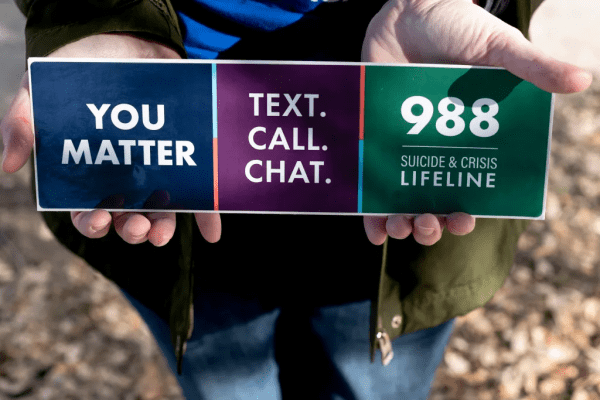
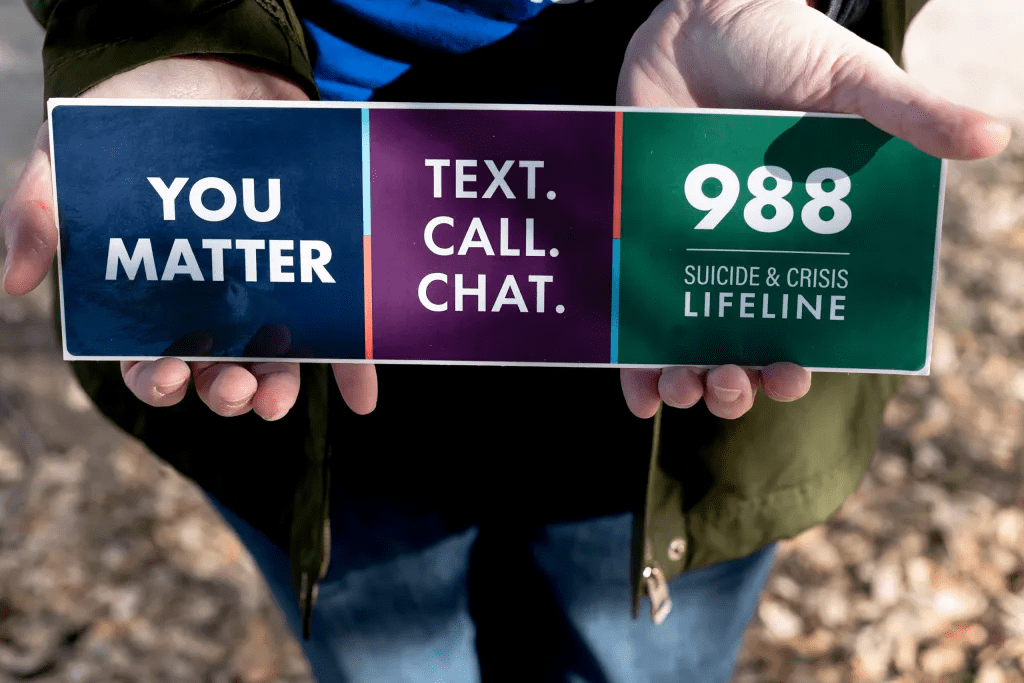
For Julia Hewitt, the removal of LGBTQ+ services from the 988 Suicide and Crisis Lifeline and potential funding freezes and cuts are a personal and professional issue.
As a suicide prevention leader with the American Foundation for Suicide Prevention, a lived experience adviser with Vibrant Emotional Health, which oversees the crisis line in Texas, and a parent of an LGBTQ child raised in Texas, Hewitt, who as a child witnessed her mother struggle with suicidal ideation, has spent decades putting her energy into providing reliable crisis services for everyone who needs them.
But now, she’s watching the foundation she and others created crumble.
“It was a punch to the gut because if you work or volunteer in this space, you know the families who are impacted by this; it can be hard to reconcile when you know how much good this does,” Hewitt said. “When access narrows for those at highest risk, the system becomes less protective overall.”
The 988 Lifeline was created through bipartisan legislation signed into law by President Donald Trump during his first term. This nationwide network of locally based crisis centers offers one-on-one support for mental health, suicide, and substance use-related problems for anyone 24/7.
When someone called 988 in the past, they would hear a greeting message, followed by a menu of choices offering access to specially trained counselors for veterans, Spanish speakers, and LGBTQ+ youth, or sometimes a local crisis counselor.
But last summer, the Trump administration announced in a press release that it will no longer silo LGBTQ+ youth services, which had been the “Press 3 option” for 988 callers, to focus on serving “all help seekers,” saying that these specific LGBTQ+ services had become too expensive.
The Trump administration and theSubstance Abuse and Mental Health Services Administration, the federal agency that provides the majority of the funding for the 988 Lifeline, said the specialized LGBTQ subnetwork’s initial pilot budget of $33 million had been exceeded and unifying services for all callers was a better option.
After the change, only veterans and Spanish speakers still received a tailored option through the 988 call line.
The call line had received nearly 1.3 million contacts nationally from LGBTQ+ people since its launch in 2022 — leaving a void that Texas crisis care centers, already operating at a $7 million funding deficit, are expected to fill.
In Texas, calls made to the line have increased over the years. In December 2025, the Texas 988 system received 25,511. A year prior, that figure was 18,916 and in December 2023, it was 14,961. It’s not clear from publicly available data how many calls are rerouted to LGBTQ+ subnetworks.
Texas Health and Human Services officials said the agency doesn’t have data on how many calls are rerouted to a subnetwork.
Veterans and LGBTQ+ youth have a higher risk of suicide compared to the general population, and canceling specialized services for only one group has mental health experts questioning the administration’s true intent.
“The program was created with overwhelming bipartisan support because, despite our political differences, we should all agree that every young person’s life is worth saving,” Jaymes Black, CEO of the Trevor Project, an organization that helped create option 3, said in a statement. “I am heartbroken that this administration has decided to say, loudly and clearly, that they believe some young people’s lives are not worth saving.”
This comes at a time when some federal funding for the hotline is set to expire, and budget freezes and cuts are wreaking havoc on the network of local crisis centers that the entire 988 infrastructure depends on.
“Currently, Texas’s 988 system faces a convergence of challenges,” said Christine Busse, a peer policy fellow for the Texas branch of the National Alliance on Mental Illness, a nonprofit mental health organization that provides education and peer-to-peer support. “Without additional investment, meeting current demand — let alone absorbing the additional contacts previously handled by specialized services — will remain difficult.”
The removal of option 3
For many LGBTQ+ youth, the hotline was a safe space to be themselves, where they could be transferred to specialists within the LGBTQ+ Youth Subnetwork who usually had the lived experience to relate to them and help them talk through problems like drug and alcohol abuse, bullying, relationship troubles and suicidal thoughts.
Busse said the hotline handled up to 70,000 contacts per month nationwide, and her organization is troubled by its sudden removal because those young people are more than four times as likely to attempt suicide as their peers.
Specialized services are still offered by the Trevor Project and other organizations, but advocates say including them in 988 made it easy for people in crisis to get help by remembering just three numbers.
Now that options have been removed, LGBTQ+ youth are left with 988 dispatchers who are trained to handle a crisis, but might not have the lived experience or training needed to make someone feel safe during an emergency.
“While all callers can still reach trained counselors through 988, the loss of Option 3 eliminates a service designed to address the specific needs of a higher-risk population,” Busse said.
Some states like California have decided to address this issue by having experts from the Trevor Project train their operators. However, Texas lawmakers have not committed any additional resources to this effort.
“LGBTQ+ young people need more resources to end suicide, not fewer,” said Mark Henson, vice president of advocacy and government affairs at The Trevor Project.
Hewitt said she is confident that local operators will receive the specialized LGBTQ+ training to provide the needed care, but the issue is why they need to do it at all.
“There was an entire network that was created just for this, and that is the difference,” she said. “But this means additional training, and that equates to time, experience, people, and hours.”
Busse said another advantage of option 3 was that it routed calls from LGBTQ youth out of the 988 system to other organizations, and its cancellation means a heavier workload for everyone in the system.
The month-to-month data on the crisis hotline shows a steady increase in calls to Texas crisis centers that were already overburdened before the removal of the LGBTQ+ subnetworks.
“Texas’s 988 system was already strained before the removal of Option 3,” Busse said. “Without additional investment, meeting current demand — let alone absorbing the additional contacts previously handled by specialized services — will remain difficult.”
The cost of saving a life
The Texas 988 system currently receives $19 million in funding from two federal grants: the Mental Health Block Grant and the 988 State and Territory Improvement Award. The latter is set to expire in September, and it’s unclear whether Congress will extend it or whether the Trump administration will establish new funding streams.
This comes at a time when local crisis care centers, where many of the 988 call centers operate out of or partner with for their resources, are seeing investment in their services disappear and reappear at the whims of the federal government.
In a span of 24 hours earlier this month, the Trump administration announced wide-ranging budget cuts that many in health care warned would cripple mental health and crisis services across the nation. Amid a national outcry, the administration reversed its decision before the end of the day.
“People got letters, and everyone was panicking, and then it got reversed,” Hewitt said. “A great outcome, but this terminal uncertainty is creating a really poor experience for not only the client but also the person answering the calls.”
The 988 system wasn’t meant to be supported by the federal government forever, and Texas lawmakers like state Sen. José Menéndez have attempted to create a safety net for it.
Last year, lawmakers established the 988 Trust Fund through House Bill 5342 and required a study on sustainable funding mechanisms, including a potential state telecommunications fee, due by December. However, no state dollars have been appropriated to the trust.
Menéndez, who authored the bill that created the trust fund, said the idea of using a telecommunications fee, similar to the fee that supports 911, was quickly shot down at the Capitol.
“I’m concerned that if we don’t have any state funds, 988 is going to have to get reliant on philanthropy, fundraising, and other methods, and we have already started reaching out about how people can make contributions because this year some funds run out,” he said.
As federal funds continue to dwindle and the state shows little interest in propping up the service, the future of 988 in Texas might depend on donations from Texans.
“That uncertainty is precisely why legislative action is imperative,” Busse said. “The infrastructure exists; what is needed now is the commitment to fund it. Without dedicated funding mechanisms, such as a telecommunications fee, Texans risk facing a mental health crisis without the community support network that took years to build.”
For mental health support for LGBTQ youth, call the Trevor Project’s 24/7 toll-free support line at 866-488-7386. For trans peer support, call the Trans Lifeline at 877-565-8860. You can also reach a trained crisis counselor through the Suicide and Crisis Lifeline by calling or texting 988.
When Mara Berton and June Higginbotham imagined their future, it always included children. What they did not imagine was a $45,000 bill standing between them and the family they dreamed of building.
The Santa Clara County couple, both lesbians, discovered that while their heterosexual colleagues’ fertility treatments were largely covered by insurance, they were excluded from the same benefits. To conceive, they were forced to pay entirely out of pocket, a financial burden that reshaped their timeline, their choices and their emotional well-being.
Last week, that inequity cracked open.
In a landmark national settlement approved by U.S. District Judge Haywood Gilliam Jr., Aetna agreed to cover fertility treatments such as artificial insemination and in vitro fertilization for same-sex couples on the same terms as heterosexual couples. The agreement applies nationwide across all Aetna plans, making it the first case to require a major insurer to implement such a policy uniformly.
An estimated 2.8 million LGBTQ members will benefit, including about 91,000 Californians. The settlement also requires Aetna to pay at least $2 million in damages to eligible California-based members, who must submit claims by June 29, 2026.
“We knew it wasn’t right,” Berton said in an interview with CalMatters. “What we’re fighting for is about family building and having kids. It was really important to both of us that other couples not have to do this.”
Before the settlement, Aetna’s policy required enrollees to engage in six to 12 months of “unprotected heterosexual sexual intercourse” before qualifying for fertility benefits, according to the class action complaint. Women without male partners could only access coverage after undergoing six to 12 unsuccessful cycles of artificial insemination, depending on age, a requirement medical experts say is excessive and clinically unnecessary.
The policy, attorneys argued, treated LGBTQ members fundamentally differently and effectively denied them a benefit that can be prohibitively expensive.
“This was an issue of inequality,” said Alison Tanner, senior litigation counsel for reproductive rights and health at the National Women’s Law Center, which supported the litigation. “Folks in same-sex relationships were being treated differently.”
In an email, Aetna spokesperson Phillip Blando said the insurer is committed to equal access to infertility and reproductive health coverage and will continue working to improve access for all members.
For Berton, the policy felt personal and dehumanizing. After consulting with a fertility clinic and deciding to move forward with donor sperm, she was told by Aetna that she did not meet the definition of infertility. Multiple appeals were denied. Insurance required her to attempt 12 rounds of artificial insemination,even though her doctors recommended no more than four.
Sean Tipton, chief advocacy and policy director for the American Society for Reproductive Medicine, said policies like that are designed to discourage people from using their benefits. While many doctors recommend three to four cycles of insemination before IVF, studies also show it can be more efficient and cost-effective to move directly to IVF.
In 2023, the society updated its medical definition of infertility to explicitly include LGBTQ people and individuals without partners, a shift aimed at preventing insurers from denying claims like Berton’s.
“It takes two kinds of gametes to have kids,” Tipton said. “Regardless of the cause of that absence, you have to have access to care.”
The settlement comes as California prepares to expand fertility coverage further. A new state law taking effect in January will require most state-regulated health plans to cover fertility care for same-sex couples and single people by broadening the definition of infertility. While that law does not apply to Aetna’s national plans, advocates say the momentum is unmistakable.
And it could not come at a more urgent time.
As LGBTQ rights are increasingly rolled back across the country, from bans on gender-affirming care to restrictions on queer families in schools and public life, access to reproductive health care has become another contested frontier. Who is allowed to build a family, and under what conditions, is no longer just a medical question but a political one. This settlement affirms that queer families are not exceptions to be managed but lives to be supported.
Berton and Higginbotham ultimately moved forward without coverage, pulling together money from family and enduring the physical and emotional toll of fertility treatments, including a miscarriage. Today, they are raising twin girls who love the swings and pulling every book off the shelf for story time.
They built their family before the lawsuit concluded. Still, Higginbotham said the victory matters deeply.
“I know people who don’t have children because this isn’t covered,” she said. “The settlement is such a huge step forward that is really righting a huge wrong.”
In a moment when so much is being taken, the ruling stands as a reminder; equality is not abstract. Sometimes, it looks like a family finally being allowed to exist.
On Friday, the Trump administration began massive layoffs throughout the Department of Health and Human Services (HHS). As part of that, they completely removed the Office of Population Affairs, which was responsible for a wealth of public health programs, including specific initiatives for the LGBTQ+ community.
“This wasn’t a budget decision — it was ideological,” a former member of the Biden administration told The Advocate. “These are the programs that centered reproductive and queer health, and now they’re gone.”
Donald Trump has welcomed the government shutdown as an opportunity to cut what he has called “Democrat Agencies” to shrink the government. The process is being led by Russ Vought, the head of the Office of Management and Budget (OMB) and key author of Project 2025, which advocated for such cuts. However, he has also tried to blame those government cuts on the Democrats.
Vought took to X/Twitter on Friday to announce the start of the “Reduction in Force,” or RIF. His office confirmed via Politico that federal employees were being permanently fired, not temporarily furloughed for the duration of the shutdown: “Can confirm RIFs have begun and they are substantial. These are RIFs, not furloughs.”
Adrian Shanker, who served as deputy assistant secretary for Health Policy during the Biden administration, told The Advocate that while the Office of Population Affairs often had its programs politicized, this is “the first time that the office itself is being cut.”
The Office of Population Affairs manages a huge range of public health initiatives. Those include Title X family planning services and grants; programs for adolescents that cover issues such as pregnancy prevention, mental health, and substance abuse; the Embryo Adoption Awareness and Services program; screenings and treatment for sexually transmitted infections and information on preventing the spread of HIV; and LGBTQ+ health initiatives, including information on gender-affirming care.
As well as restricting programming targeted specifically at the LGBTQ+ community, these cuts will restrict access to family planning programs that LGBTQ+ people are more likely to make use of to grow their families.
The cuts to the Office of Population Affairs will leave us lacking when it comes to sex education and with less support for LGBTQ+ youth, Shanker noted, saying it “leaves us more vulnerable to health inequities and worsened health outcomes.”
Wider cuts to the HHS will have broader effects as the CDC is losing over a thousand employees, including the elimination of entire departments. “CDC is over. It was killed,” said Dr. Demetre Daskalakis, the out gay former director of the CDC’s National Center on Immunization and Respiratory Diseases, after 1000 scientists, doctors, and public health officials were fired from HHS on Friday. Daskalakis, an infectious diseases expert, resigned in protest of the administration’s war on science-based public health earlier this year.
“This administration only knows how to break things. They have made America at risk for outbreaks and attacks by nefarious players. People should be scared.”
Previous federal layoffs have been litigated in court, with some resulting in court rulings that the people cannot be fired, while other courts have allowed the dismissals to proceed. That process, if it occurs here, will take time, during which public health will suffer a setback.
“Without these people in place, it’s unlikely that a lot of these programs will be able to continue even after the government reopens,” predicted Shanker.
Texas Attorney General Ken Paxton withdrew the state’s lawsuit against pediatric endocrinologist Dr. Hector Granados on Thursday after finding no evidence that he violated the state’s ban on gender affirming care for trans youth.
Paxton sued Granados in October 2024, accusing him of providing puberty blockers and hormones to patients as young as 12 in treatment for gender dysphoria. Paxton accused Granados of falsifying medical and billing records to mislead pharmacies and insurance providers into covering the care.
Paxton initially called Granados a “scofflaw who is harming the health and safety of Texas children,” and Granados wasn’t notified before the lawsuit’s filing, in worries that he might try to destroy relevant records, The Hill reported.
However, Granados said he stopped providing gender-affirming care in May 2023, after the state’s legislature passed the law. Now that Paxton’s office has dropped its charges against him, Paxton’s office will now “focus on other ongoing cases against doctors who illegally provided harmful ‘transition’ treatments and drugs to children,” an attorney general spokesperson said, according to The Hill.
The state has also sued May Lau and M. Brett Cooper, two medical providers from the University of Texas’ Southwestern Medical Center in Dallas. If found guilty, both could possibly lose their medical licenses and face hundreds of thousands of dollars in fines.
Despite Paxton’s claim about gender-affirming care being “harmful,” the medications used in such care have been used safely in children for decades for the purposes of gender transition and to treat other medical issues in cisgender children as well. In fact, Texas’ law stands in opposition to the best care practices for treating gender dysphoria recommended by every major American medical association. These associations agree that such care is safe, effective, and essential for the overall well-being of trans people.
Senior Justice Department officials have held internal deliberations in recent days over potentially issuing a rule that could restrict transgender individuals from being able to own firearms, two officials familiar with the discussions confirmed Thursday to ABC News.
The policy discussions, which are believed to be in their early stages and driven in part by chatter in right-wing media, follow last week’s Minneapolis Catholic church shooting that the FBI has said was carried out by a transgender woman.
Such a proposal could face significant pushback not only from civil rights groups but from gun rights organizations, which have historically been resistant to the issuance of any regulations restricting people’s access to firearms.
There is no evidence to suggest transgender people are more likely to be violent than the general population. However, transgender people are far more likely than average to be the victim of a violent crime.
Still, the discussions have percolated in recent days among top officials in the Justice Department, including in the Office of Legal Counsel, which provides legal advice to all executive branch agencies.
The American Psychiatric Association (APA) and other major medical associations do not consider being transgender a mental illness and recognize transgender and gender diverse identities as normal variations in human expression. The APA distinguishes gender dysphoria — which is defined as “clinically significant distress or impairment” that transgender individuals may experience when they feel a difference between their assigned sex at birth and their gender identity — as a separate diagnosis, and supports gender-affirming care while opposing practices that try to change a person’s gender identity.
DOJ officials have debated whether having a diagnoses of gender dysphoria could disqualify someone under a federal law that restricts people who are “adjudicated as mental defective” from owning guns, sources said.
The possible move would be the latest escalation in an ongoing push by the Trump Administration to restrict the rights of transgender individuals — and would appear to conflict with other moves by the Justice Department to lift what it has argued are unfair burdens restricting Americans’ Second Amendment rights to bear arms.
Among its efforts, the DOJ has proposed a new rule that could restore gun ownership rights to certain people with felony convictions, and has said it would pursue civil rights investigations into cities that it says engage in a pattern or practice of depriving local citizens of their Second Amendment rights.
Laurel Powell, director of communications at the Human Rights Campaign, told ABC News in a statement, “The Constitution isn’t a privilege reserved for the few; it guarantees basic rights to all. Transgender people are your neighbors, classmates, family members, and friends — and we deserve the full protection of our nation’s laws, not anti-American nonsense from the White House.”
“If rights can be stripped from one group simply because of who they are, they can be stripped from anyone,” Powell said.
A Justice Department spokesperson told ABC News, “The DOJ is actively evaluating options to prevent the pattern of violence we have seen from individuals with specific mental health challenges and substance abuse disorders. No specific criminal justice proposals have been advanced at this time.”
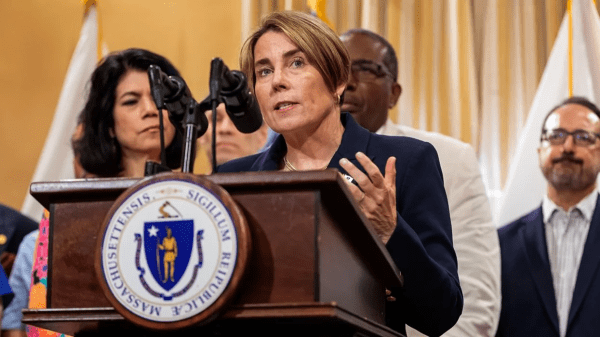
Democratic Gov. Maura Healey, the first out lesbian governor in the U.S., signed the Shield Act 2.0 into law Thursday. The bill further strengthens protections for patients and providers of reproductive healthcare, while explicitly mandating that abortions be performed when deemed medically necessary.
“Massachusetts will always be a state where patients can access high-quality health care and providers are able to do their jobs without government interference,” Healey said in a statement. “From the moment Roe was overturned, we stepped up to pass strong protections for patients and providers, and with President Trump and his allies continuing their assaults on health care, we’re taking those protections to the next level. No one is going to prevent the people of Massachusetts from getting the health care they need.”
The state’s original shield law, enacted by Democratic Gov. Charlie Baker in July, 2022, prohibits states that have banned the life-saving treatment from punishing those who travel to Massachusetts to receive it by preventing the release of information or the arrest and extradition of someone based on another state’s court orders.
The new law further prevents the disclosure of sensitive data, such as a physician’s name, and prohibits local law enforcement from cooperating with other jurisdictions in their investigations. It also directs the Department of Public Health to create an advisory group to help guide businesses as they implement privacy protections for storing or managing electronic medical records.
“Massachusetts is home to the best health care providers in the country, and we aren’t going to let them be intimidated or punished for providing lifesaving care,” said Lieutenant Governor Kim Driscoll. “Together with the Legislature, we are reminding the entire country yet again that Massachusetts is a place where everyone can safely access the health care they need and deserve.”
The Senate Appropriations Committee on Thursday rejected the presidential administration’s proposed termination of the CDC’s HIV prevention and surveillance efforts as well as massive proposed funding cuts to the National Institutes of Health (NIH), advancing a measure that would increase the agency’s budget by $400 million.
The White House budget called for slashing NIH funding by $18 billion, a decrease of 40 percent. The committee rejected those cuts and others addressing HIV prevention, treatment and care, advancing the bill with overwhelming bipartisan support on a 26-3 vote.
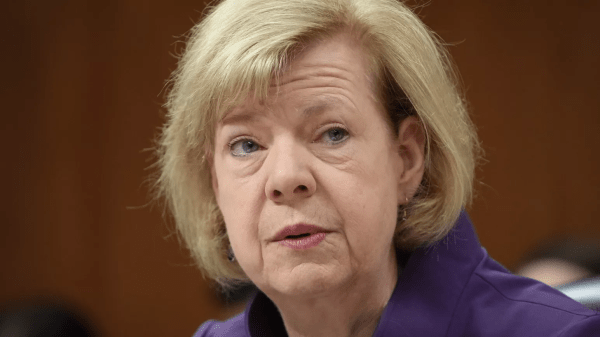
“This committee has had multiple hearings over the last several months and heard from patients, families and researchers about the importance of NIH funding,” said out Sen. Tammy Baldwin (D-WI) in remarks after the vote, The Hill reported. “This committee has, in a bipartisan manner, prioritized NIH and the research it supports to develop life-saving treatments and cures for devastating diseases.”
Earlier this month, both the House and Senate Appropriations Committees rejected the presidential administration’s proposal to eliminate the Department of Housing and Urban Development’s Housing Opportunities for Persons with AIDS program. While the House proposed maintaining the current $505 million budget, the Senate proposed to increase it by $24 million.
The committee also rejected funding cuts and block grants to states for prevention efforts focused on hepatitis and other STIs.
Senate appropriators preserved those parts of the administration’s budget that had maintained funding addressing HIV and PrEP programs, including $542 million for the Ending the HIV Epidemic initiative launched by the president in his first term. The initiative’s funding includes PrEP in community health centers and enhanced HIV prevention and treatment programs.
Most of the Ryan White HIV/AIDS Program was preserved, as well.
The committee also rejected the administration’s plan to revamp the way the NIH pays universities, medical schools and other research centers.
“To the scientists wondering if there will even be an NIH by the end of this administration: this committee’s resounding message is yes,” said Sen. Patty Murray (D-WA), the committee’s vice chair.
“Congress has your back — we’re not going to give up the fight against cancer, Alzheimer’s, or rare diseases,” Murray said.
Carl Schmid, executive director of the HIV+Hepatitis Policy Institute, was cautiously optimistic following the committee’s bipartisan rebuke of the president’s funding priorities.
“We are pleased that senators of both parties recognize the critical importance of preventing HIV in the United States and the value of nationwide surveillance, testing, education, and PrEP programs,” he said in a statement.
“The president’s proposed elimination of HIV prevention and surveillance programs, along with on and off staff and grant cuts and delays, have left HIV prevention in disarray. We hope the Senate’s vote of confidence for HIV prevention will start to bring the stability we need so that state and local health departments, other grantees, and staff can get back to doing their work.”







 fleeredstates.blog
You must be logged in to post a comment.