LGBTQ Americans aren’t just fleeing red states like Texas for blue enclaves. They are also building lives in cheaper, fast-growing metros where jobs, housing and politics collide.
Why it matters: The “red-state exodus” narrative misses a quieter reality.
Affordability and work are keeping some LGBTQ+ people in — and drawing others to — places that may be politically complicated but economically viable.
The big picture: LGBTQ Americans have lower homeownership rates than non-LGBTQ Americans, according to the Williams Institute.
And, LGBTQ-friendly cities with stronger LGBTQ protections — such as San Francisco and Boston — often come with significantly higher housing costs, creating a tension between safety and affordability.
By the numbers: Homebuyers needed to earn $150,364 annually to afford the median-priced home in states with LGBTQ housing protections as of 2024, per an Axios analysis of real estate company Redfin data.
That’s 46.8% more income needed than in states, like Texas, without such protections.
Zoom in: Around 4% of adults in North Texas identify as LGBTQ, according to Williams Institute data.
Same-sex married households in North Texas almost doubled from 2019-24, increasing from around 11,000 couples to roughly 21,600, per a Dallas Morning News analysis of Census Bureau data.
Between the lines: 9% of the region’s homes for sale were affordable for someone earning the local median household income, according to Redfin.
By contrast, less than 2% of homes for sale were considered affordable in San Diego and Los Angeles, which have larger percentages of adults who identify as LGBTQ.
Caveat: Researchers caution that LGBTQ migration data remains limited because federal surveys have historically failed to consistently collect sexual orientation and gender identity data.
What they’re doing: Oak Lawn United Methodist Church painted its steps in rainbow colors after Gov. Greg Abbott ordered the removal of rainbow crosswalks statewide last year.
“This is our way of speaking to our community of sharing a message of boldness and courage that who you are is beloved and worthy of dignity and belonging,” Rev. Rachel Griffin-Allison, the church’s senior pastor, told NBC5 in January.
The bottom line: The tension between affordability, opportunity and rights is quietly reshaping the map of LGBTQ America.
The Senegalese Constitution previously had been rather vague on the subject, although same-sex intimacy has been criminalized in Senegal since 1965. The country is in the midst of an anti-gay crackdown that has produced 100s of arrests. In March, the penalty for same-sex intercourse was doubled, to a maximum prison sentence to 10 years, and gay rights advocacy was banned.
Passage of the constitutional amendment is related to the anti-LGBT crackdown, according to a Senegalese political observer.
Dakar-based Sadio (a pseudonym), told Erasing 76 Crimes “there is little doubt that [the ruling PASTEF party] is placing great emphasis on this aspect of constitutional change in order to reassure the Senegalese people that it will pursue an anti-LGBT agenda, following the tightening of the Criminal Code in the spring so ‘unnatural acts’ are now punishable by 5 to 10 years’ imprisonment and a fine of 10 million CFA francs (about 15,000 euros or US $17,460)”.
In addition, Sadio says, the amendment “helps to rally the ranks within the ruling party following the rifts that led to the dismissal of former Prime Minister Ousmane Sonko”.
The constitutional amendment was inspired by an opinion piece published on March 8 in the state-owned daily newspaper Le Soleil entitled “A scientific approach to the eradication of homosexuality in Senegal”.
Before the amendment, Article 17 of the Senegalese Constitution defined marriage as follows: “Marriage and the family constitute the natural and moral foundation of human society, and are placed under the protection of the State”.
This addendum has now been included: “Marriage is the union between a man and a woman”.
The amendment provides no definition of what constitutes a man or a woman in biological, chromosomal or anatomical terms. Nevertheless, it establishes a binary system that effectively marginalises intersex people in Senegal.
Following the recent criminalisation of homosexuality in Niger, this marks a further setback for LGBT+ rights in French-speaking Africa.
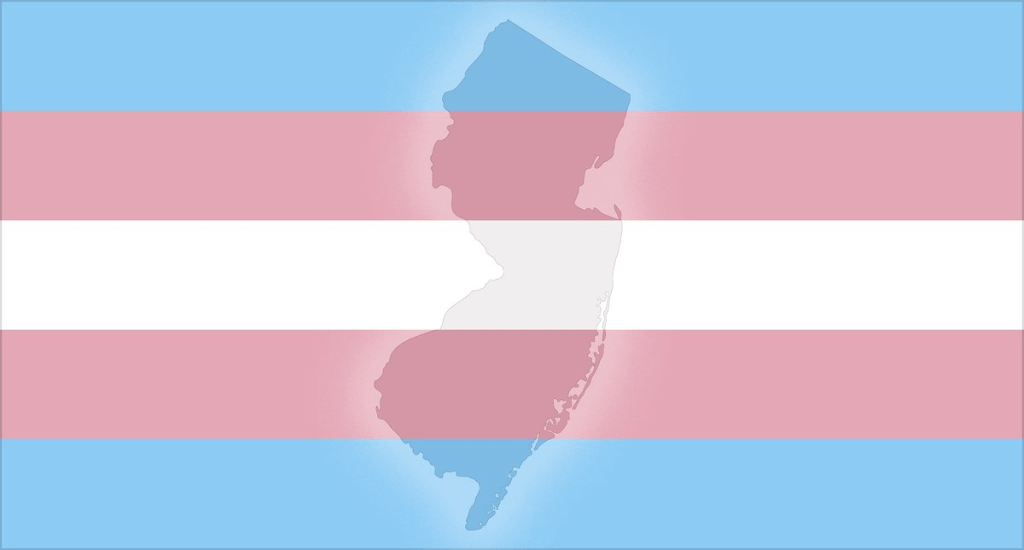
The New Jersey General Assembly passed new legislation on Tuesday, the last day of Pride Month, that strengthens the protections around gender-affirming health care, reproductive care, including abortion and IVF, and more. The bill now sits on Gov. Mikie Sherrill’s (D) desk awaiting her signature, which it is expected to receive.
The passage is a win for the trans community. The bill passed the same day the Supreme Court dealt a blow to trans rights with its West Virginia v. B.P.J. ruling.
Speaking with the New Jersey Monitorafter the vote, Jennifer Williams, a Trenton city council member who is trans, said, “New Jersey is a great, liberty-loving state that will remain a safe haven for those who want to live happy, productive lives while accessing medically necessary and proven medical care.”
The bill’s passage comes after a long battle from LGBTQ+ advocacy groups, including Garden State Equality. In a statement, Lauren Albrecht, the organization’s senior director of advocacy & organizing, said, “By passing this bill, the Legislature has sent the message that bodily autonomy and access to medically necessary, best-practice healthcare are New Jersey values. As other states and the federal government attack reproductive and trans healthcare, we have made it clear that the Garden State will protect both the lifesaving care itself and the people who provide it. Our priorities now will be to ensure Governor Sherrill swiftly signs this legislation and, afterwards, to educate healthcare providers on these new and bolstered protections.”
The new legislation makes no changes to what medical care is or isn’t available in the state, but protects access for all to the services that are already provided.
A major aspect of the bill protects providers and patients from being prosecuted by other states, affirming that those who receive or provide care in New Jersey are solely subject to the state laws of New Jersey and to federal law.
That applies not just to citizens of New Jersey, but to “those who travel to [New Jersey] for health care services,” with the bill noting that all “deserve the ability to safely access health care facilities in this State and the critical reproductive health and gender-affirming care services that they provide.”
This prevents states from prosecuting their residents who have crossed state lines to receive healthcare that is banned in their state but legally protected in New Jersey. The authors of the bill point to the fact that since Roe v. Wade was overturned in 2022, 21 states have either banned or restricted abortion access. Since then, New Jersey has seen a 30% increase in out-of-state patients.
They also highlighted Alabama’s ruling that embryos are “extrauterine children” and the threat that sort of ruling could pose to IVF fertility treatments, which are often used by same-sex couples to build their families. New Jersey has legally protected the right to access IVF treatment.
While New Jersey is the latest blue state to pass such a bill, theirs includes an aspect that hasn’t been seen in other legislation. The bill includes prohibitions on “interference with reproductive or gender-affirming health care services.” That includes inflicting injury, physically obstructing them, defacing property, recording people accessing care within 100 feet of the entrance to a clinic, or distributing such recordings.
The legislators cite the fact that since Roe was overturned, there has been a 538% increase in obstructions to reproductive health facilities, and in 2023, there were 23 reported violent incidents and threats made to gender-affirming care providers. The legislation states, “This act is intended to ensure that anti-abortion and anti-LGBTQ+ persons cannot harm patients or providers.”
Mirroring a proposed shield law in California, the bill also requires the written consent of a patient or their guardian for any of their medical records to be provided to an out-of-state authority. A similar shield law in New York was the reason that patients were informed when NYU Langone Health received a criminal subpoena, insisting that they hand over the medical records for minors who received gender-affirming care at the institution.
Senate Substitute 2 for Senate Bill 100 (SB-100) passed with 28 ‘yes’ votes, meeting the two-thirds threshold required for the bill to pass. Tuesday was the last day of the 153rd General Assembly.
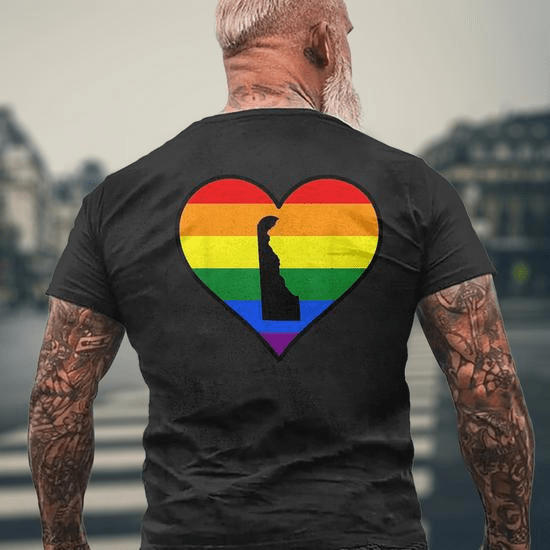
The amendment would enshrine the right to same-sex and interracial marriage in the Delaware Constitution.
SB-100 was rescinded last week after it did not receive enough votes to pass. Democrats were short by three votes, with two Democratic members missing from the vote.
Additionally, Republican Assemblyman Michael Smith (R-22) joined the Democrats with a ‘yes’ vote after voting ‘no’ on SB-100 last week.
In order for SB 100 to be enshrined into the state Constitution, it must be passed by two consecutive General Assemblies. Thus, the amendment will not be officially added to the Constitution unless it passes in the 154th General Assembly next year.
Rep. Snyder-Hall introduced the measure earlier this week.
“Just one week ago, we failed to pass this legislation. We failed the people of Delaware. But today, on the final day of the legislative session, the 153rd General Assembly affirmed that every Delawarean has the fundamental right to marry the person they love, regardless of race or gender,” said Snyder-Hall.
“Thank you to my colleagues for recognizing that the right to marry is a right worthy of protection and for voting yes on this important constitutional amendment.”
A “witch-hunt” is under way in Niger, where dozens of people have been arrested for homosexuality in the west African state following the introduction of a new penal code earlier this year.
Up to 40 people have been arrested and 16 men, including high-ranking military officials, have been imprisoned across the country, according to local media.
Organisations providing HIV services to men who have sex with men have had to stop working, according to a source who asked to remain anonymous.
“With the recent witch-hunt, and these arrests that are taking place, the climate here is truly toxic,” they said.
“LGBTQ+ populations are keeping a low profile and have gone into hiding because they are at risk. We have lost contact with many and the recent arrests have exacerbated tensions.”
Niger’s new penal code, enacted in February, dictates that “indecent or unnatural acts” and “sexual relations with a person of the same sex” are punishable by imprisonment of up to 10 years and a fine of up to 100m West African CFA francs (£130,000).
It is the first time in the country’s history that homosexuality has been criminalised and follows the introduction of similar laws and penal codes in neighbouring Mali and Burkina Faso within the past two years.
Gen Abdourahamane Tchiani, the head of the military government, seized power in a coup d’état in July 2023 and was sworn in as president in 2025 for a term of five years, dissolving all political parties in the country.
The former UN peacekeeper has pushed anti-imperialist rhetoric and formed the Alliance of Sahel States with Burkina Faso and Mali, breaking away from the Economic Community of West African States (Ecowas).
Larissa Kojoué, a political scientist and pan-African activist, dismissed the idea of homosexuality being somehow linked to western culture. “Political leaders are using this to advance their own political agenda,” she said. “They claim ‘African values’, sovereignty and culture, all the while happily undermining human rights for people.”
She added: “There is no culture that encourages violence against innocent people, or that doesn’t hold perpetrators of violence accountable. But on the [African] continent you can do whatever you want with LGBTQ+ people and get away with it.”
The changes to the penal code started under Niger’s previous civilian president, Mohamed Bazoum. But in March 2025, Tchiani’s regime promulgated the Charter of the Refoundation to replace Niger’s 2010 constitution.
Although the charter prohibits LGBTQ+ relations, criminal penalties related to these measures were only introduced with the new penal code in February.
As well as harsh punishments for same-sex relations, it also mandates prison terms of up to 20 years for those participating in, witnessing or organising a gay marriage. Any person or organisation involved with clubs, societies or organisations for LGBTQ+ people, either directly or indirectly, is liable to be imprisoned for up to 20 years and face a fine of up to 500m CFA.
Men who have sex with men no longer have access to condoms, testing services or PrEP (medication protecting against HIV).
The anonymous source warned of the risk of HIV infections spreading, saying: “When people go into hiding, we won’t see them and they won’t be able to protect themselves. So you see the impact [this penal code] has. We are truly saddened by it.”
Last week, Niger was among eight countries that voted against the UN’s political declaration on HIV/Aids, which was adopted by 149 votes. HIV infections increased between 2010 and 2025 in the Middle East, north Africa, Latin America, eastern Europe and Central Asia, according to the declaration.
The reform of Niger’s penal code is part of a trend across sub-Saharan Africa towards more punitive legislation against LGBTQ+ people. In recent years several African states have introduced or strengthened laws criminalising same-sex relations.
In a statement, the international human rights group Front Line Defenders said it was “deeply concerned” about developments in Niger, and called on authorities “to repeal all provisions that criminalise individuals on the basis of their sexual orientation or gender identity, as well as the individuals supporting and defending them”.
The government of Malaysia is urging the public to discontinue use of the term “LGBT” to avoid “normalizing” LGBTQ+ people and the broader community.
In its place, the Deputy Minister for Religious Affairs, Marhamah Rosli, says the public should now use the term “budaya songsang,” or “perverted/deviant culture,” to describe all things LGBTQ+.
“The more we utter, write, or state it, the more ‘pop-out’ content related to it will appear,” Marhamah said at a Parliament session in February, referring to social media specifically. “Without realizing it, we are promoting the culture unknowingly.”
This week, the government announced they’re making that change official, Pink News reports.
Replacing “LGBT” with the new, derogatory term will influence online algorithms away from displaying LGBTQ+ content in the country, and therefore prevent the “promotion” of queer culture, Marhamah said.
The move follows a record crackdown on members of the LGBTQ+ community in the Muslim-majority nation in recent years. Malaysian LGBTQ+ advocacy group Justice for Sisters reported that 307 queer people were arrested in the country under both federal and state laws in 2025 alone.
The organization has also documented an increase in public complaints against LGBTQ people, leading to surveillance, raids, and cancellation of events due to safety concerns.
In May, fifty-one men attending a “gay party” at a Kuala Lumpur hotel were detained. Over 200 men were arrested in a raid on a “gay spa” in Kuala Lumpur late last year, including 103 Muslim men who were investigated separately by the nation’s religious courts for violations of Sharia law. In February, Malaysia blocked the use of gay dating apps Grindr and Blued in the country.
And in January, an LGBTQ+ event planned at a retreat site in Hulu Langat, Selangor, faced heavy backlash from locals. The organizer was forced to cancel the gathering amid “rising hostilities,” including alleged death threats, according to Malaysian outlet The Rakyat Post.
That site’s reporting included use of the “budaya songsang” descriptor in place of “LGBT.”
Justice for Sisters condemned the adoption of the “LGBT” alternative.
“The term ‘budaya songsang’ dehumanizes LGBT people, fuels misinformation, and reinforces the dangerous belief that LGBT people should be ‘corrected,’” a statement from the group read.
“It contributes directly to violence, discrimination, and violations of dignity and equality under Articles 5 and 8 of the Federal Constitution.”
Amnesty International Malaysia also weighed in on the discriminatory term.
“We strongly condemn this appalling decision by the government,” said Amnesty campaigner Qistina Johari.
“When public officials label LGBTI people as ‘deviant’, they are not upholding morality — they are legitimizing hate and discrimination against a highly vulnerable group. Words from those in power carry weight and real-world consequences.”
Under Section 377 of Malaysia’s Penal Code, “Carnal knowledge against the order of nature” is punishable by up to 20 years in prison with whipping. A subsection of the law also criminalizes “gross indecency with another person” with up to two years in prison. The law was extended to women in 1989.
Penalties under Sharia law in most Malaysian states can increase the punishment to include fines, caning, and concurrent or additional imprisonment.
On Sunday, just hours before he marched in the Chicago Pride Parade, Illinois Gov. JB Pritzker (D) signed three trans rights bills into law.
HB 5095 solidifies the process for trans people to correct the gender marker on their IDs to male, female, or X. HB 5492 mandates that insurance companies cover up to a 6-month supply of prescribed hormone therapy, as well as “the necessary supplies for self-administration.” Both laws take effect on January 1, 2027.
HB 4834 updates the Illinois Prescription Monitoring Program (ILPMP) to remove testosterone and prohibit the addition of estrogen, mifepristone, and misoprostol. The law, effective immediately, will prevent the database, which is used to prevent certain drugs from being overprescribed, from being abused to prevent folks from obtaining gender-affirming and reproductive health care.
“Today, I’m proud to sign landmark legislation expanding on my administration’s work to make Illinois a safe, empowering, and inclusive place for the LGBTQ+ community,” Pritzker wrote on social media. “With my signature, we are a few steps closer to a state where all can live their lives without fear of hate.”
Pritzker then posted a video of himself touting the bills as he prepared to march in Chicago’s Pride Parade. “It’s very important to me that we have a state that stands up and protects the people who live here,” he said. “So I’m very happy, very proud, frankly, to live in the state of Illinois. I hope you are, too.”
Pritzker has been fighting for LGBTQ+ rights long before it was popular, as evidenced by a photo of him that often makes the rounds on social media, in which he is marching in the 1993 Pride parade.
As Governor, he has staunchly defended LGBTQ+ rights and has been especially outspoken for trans youth. He told then-Late Show host Stephen Colbert last year that his late mother was a huge activist who took him to protests when she was young. Her life, he said, inspired the work he does.
At a March 2025 Human Rights Campaign dinner, Pritzker vowed to stand up to anti-LGBTQ+ “bullies” and spoke directly to transgender youth to tell them they are not alone.
“And in the midst of this existential fight, this battle that seems to consume everything, well, let’s not take the soul-sucking path of sacrificing the most persecuted for that which we deem to be most popular,” he said.
“I know that there are transgender children right now looking out at this world and wondering if anyone is going to stand up for them and for their simple right to exist. Well, I am. We are. We will.”
In April of last year, he criticized “do-nothing” Democratic politicians who “want to blame our [election] losses on our defense of Black people, of trans kids, of immigrants instead of their own lack of guts and gumption.” He encouraged Democrats to “fight” the current presidential administration “everywhere and all at once,” even endorsing “mass protests, for mobilization, for disruption.” Last summer, he also announced a landmark free hotline for LGBTQ+ people in the state.
In 2023, he signed a landmark bill making Illinois the first state to bar libraries from banning books. “Here in Illinois, we don’t hide from the truth, we embrace it,” he said in a statement. “Young people shouldn’t be kept from learning about the realities of our world; I want them to become critical thinkers, exposed to ideas that they disagree with, proud of what our nation has overcome, and thoughtful about what comes next.”
The Trump administration is moving to restart the specialized LGBTQ+ option for youth who contact the 988 crisis intervention hotline – but the group that helped pioneer the idea is being shut out.
The Trevor Project, the New York-based leading non-profit for suicide prevention in LGBTQ+ young people in the US, may not be allowed to offer the service it had helped develop for the 988 Lifeline just a few years ago.
The 988 hotline, which has been dubbed the 911 for mental health emergencies, is credited with reducing teen and young adult suicide deaths. It offers specialized options for certain groups within minority communities, such as military veterans and Spanish speakers, but last July the Trump administration stopped offering the “press 3” option for LGBTQ+ youth, with a month’s notice.
The administration said it ended the service because the funding ran out. It is now working to bring it back by the end of the year because Congress directed officials to allocate $33m toward LGBTQ+ specific interventions for youth.
However, the Trevor Project might not be allowed to offer the services it developed and specializes in.
Dr Christine Yu Moutier, chief medical officer for the American Foundation for Suicide Prevention, said it “would not make sense” to keep the Trevor Project ineligible to help and it is a “longstanding, high-quality and trusted resource” to LGBTQ+ people.
The development is the latest in what has become a chaotic chapter for the service for LGBTQ+ youth, who attempt suicide at higher rates than the general population. Leaving the Trevor Project out is raising concerns about the relaunched service, especially given the Trump administration’s broader attempt to unravel protections for transgender and non-binary Americans at a time when more of them are reaching out in crisis.
“The Trump administration never should have shut down the ‘press 3’ option and put young Americans at further risk,” said Tammy Baldwin, a Democratic Wisconsin senator, and long one of the most prominent lesbian lawmakers in Washington DC. She was the first out gay person elected to the US Senate, in 2012, and she has led a bipartisan push to restore the service.
Baldwin called on Donald Trump to restore the service “without needless limitations and with the most qualified, experienced people answering the phone calls and text messages from these vulnerable young people”.
The lifeline’s specialized service allowed people to press 3, text “PRIDE” or use online chat to reach counselors who were specially trained to work with LGBTQ+ young people.
The umbrella of services broadly called the “press 3” option fielded 1.6m contacts while it was in operation, according to data from the Substance Abuse and Mental Health Services Administration. The Trevor Project handled about half of the program’s traffic.
When it cancelled the “press 3” option, federal officials said LGBTQ+ youth could still get help through 988’s general services, but it would “no longer silo” the services, instead “to focus on serving all help seekers”, including LGBTQ+ youth.
Now, the non-profit that administers the 988 service, Vibrant Emotional Health, has called for applications to manage the return of the “press 3” lines.
But applications are limited to crisis centers that are “current and active” members of the 988 network. The Trevor Project is not currently active in the program – only because the administration cancelled the service it specialized in.
The six other crisis centers that worked on the LGBTQ+ youth program are active in the 988 network. They work with the general population as well as LGBTQ+ people. Only the Trevor Project had a specific mission to serve LGBTQ+ youth.
“This troubling development indicates a dangerous step toward degrading the clinical standards to serve high risk groups that the ‘press 3’ specialized services were founded on,” said Jaymes Black, CEO of the Trevor Project, in a statement to the Associated Press.
Black worries that the next iteration of 988’s LGBTQ+ youth services “may exclude transgender and non-binary youth entirely”. The organization still independently runs its own 24/7 crisis line for LGBTQ+ young people.
A spokesperson for the Department of Health and Human Services did not directly respond to questions about the Trevor Project’s eligibility.
In the US, you can call or text the 988 Suicide & Crisis Lifeline at 988 or chat at 988lifeline.org. In the UK, the youth suicide charity Papyrus can be contacted on 0800 068 4141 or email pat@papyrus-uk.org, and in the UK and Ireland Samaritans can be contacted on freephone 116 123. In Australia, the crisis support service Lifeline is 13 11 14. Other international helplines can be found at befrienders.org
Since Elliot Hefty came out as a trans man in 2020, he has lost his job, been evicted, and received KKK flyers at his front door – all because of his gender identity. He was also a victim of sexual assault in a men’s bathroom and thinks his gender identity is what caused the perpetrator to act.
After the 2024 presidential election, a person shoved him on the street and began yelling anti-trans slurs. “I’m laying in the street bleeding. Not one person stopped to help me or see if I was okay. And I got up, and I’m bleeding. My hands are bleeding, my knees are bleeding, my face is bleeding.” It was then that he decided he had to leave the country.
“I have to get out or I’m going to die,” he said.
In a conversation with WABE, Atlanta’s public radio station, Hefty opened up about his decision to move to the Netherlands, along with his brother, Koda. The pair share a bedroom in a refugee center in Limburg, where Hefty said he enjoys support from the other LGBTQ+ asylum seekers from around the world who share a kitchen and common dining area with them.
Hefty is part of the record number of LGBTQ+ people in the U.S. fleeing the president’s anti-transgender policies by seeking asylum in other countries, according to a report released last Saturday by the LGBTQ+ asylum relocation assistance group Rainbow Railroad.
Simultaneously, fewer LGBTQ+ refugees from other anti-LGBTQ+ countries are seeking asylum in the U.S., a result of the president’s anti-immigration policies, according to the group’s report, Understanding the State of Global LGBTQI+ Persecution, which was released on World Refugee Day.
Last year, Rainbow Railroad received 20,215 direct requests for relocation assistance from queer and trans people, a 51% increase over 2024 and the highest number of requests the group has received since its founding in 2006.
Approximately 31% of last year’s requests came from people living in the U.S. The previous year, that percentage was about 13%. While past requests to leave the U.S. had in the past predominantly come from queer immigrants who had been resettled in the states, about 88% of the requests in 2025 came from American citizens who said they were fleeing the current administration’s anti-LGBTQ+ policies.
Exactly 1,177 U.S. residents reached out to Rainbow Railroad for support the day after the president was re-elected, Rainbow Railroad’s Chief Programs Officer Devon Matthews told The Los Angeles Blade.
“That single day generated more than twice the number of requests for help we had received from across the United States during the previous 10 months combined,” Matthews said.
Matthews also told WABE that the United States has joined the likes of Uganda, Egypt, Afghanistan, Pakistan, Iraq, Russia, Canada, Turkey, and Kenya when it comes to the number of LGBTQ+ people seeking refuge outside of their home countries.
Hefty, whose lawyer is currently working on an appeal regarding his refugee status, said he has no plans to reenter the United States, not even to visit for a sibling’s wedding.
Trans people in the United States are also fleeing anti-trans red states and moving to blue states, some of which have declared themselves sanctuaries for trans rights.
An October 2025 survey by the Movement Advancement Project (MAP) found that between November 2024 and June 2025, roughly 9% of trans people in the United States moved to another state, with 43% considering a move.
But blue states are struggling to meet the demand. In May, for example, the Seattle LGBTQ Commission petitioned the city’s mayor to declare a civil state of emergency to accommodate the massive influx of LGBTQ+ people, which has strained the resources of community-based organizations that weren’t set up to handle this volume. Those organizations are responsible for a range of services, the letter explained, including “emergency financial assistance, transportation, housing navigation, legal support, safety planning, community connections, and access to gender-affirming healthcare.”
Doctors have also begged blue state legislators for more funding to accommodate the rise in demand for gender-affirming care services.
A proposed amendment to enshrine same-sex and interracial marriage protections into the Delaware Constitution failed in the state House on Tuesday.
The amendment had passed the state Senate earlier this month, but lost by four votes in the House, where a 2/3 majority of 28 votes was needed. Two Democrats did not vote in favor of the bill. State Rep. Josue Ortega (D) voted no, while state Rep. Madinah Wilson-Anton (D) did not vote.
Gay state Rep. Eric Morrison (D) told the Washington Blade that an anonymous Republican had agreed to vote yes, which would have secured the 28 votes needed if all 27 Democrats also voted yes, but the GOP lawmaker did not keep his word.
Ortega, the Democrat who voted no, told WHYY it was his “duty as an elected representative… to listen to the concerns of the people I serve.”
“After carefully considering the feedback I received,” he continued, “I concluded that I will be voting no, because it was the best decision that best represented the majority of my constituents.”
Rep. Claire Snyder-Hall (D), who sponsored the measure, also ended up voting no, but she explained she did so as a strategic decision once she realized the amendment did not have enough votes to pass.
“That’s a maneuver that allows me to bring this bill back up,” she explained in a video, “because I’m still hopeful that we’re going to be able to get the votes we need to pass this basic bill.”
“Today, the General Assembly turned its back on the people of this state,” Snyder-Hall wrote in the caption of her post. “Every Delawarean deserves the right to marry the person they love, regardless of race or gender. But today, when we had the chance to add an extra layer of protection from attempts to turn back the clock and strip our constituents of the rights that Democrats fought for decades to secure, we failed.”
She emphasized that she will keep fighting. “The groups most affected by this egregious vote are no strangers to setbacks,” she said. “There are still three legislative days left in the 153rd General Assembly and I am hopeful that we will be able to get the votes required to pass this incredibly basic – but important – bill.”
The Blade explained that the bill must pass before July 1, when the two-year-long session ends, or else another attempt to pass it will take at least three years.
State Rep. Mike Smith (R) defended his no vote and the lack of support from his party in a statement to WHYY: “This is just restating rights that have already been protected under Delaware law. It’s important for constituents to know that.”
State Rep. Kamela Smith (D), on the other hand, said she voted yes despite her own religious beliefs due to her “responsibility here as a legislator, and that responsibility is to uphold the constitution.”
“My job is to make sure that the law works fairly for everyone,” she continued, “even when people don’t all believe the same things I do.”
Delaware Attorney General Kathy Jennings (D) called the assembly’s failure to pass the amendment “shocking and upsetting” and a failure “to advance a basic, core tenant of equality.”
“Failing to permanently enshrine those protections in our state’s Constitution is an appalling abdication of the state government’s duty to guarantee the rights of every Delawarean,” she added. “It adds insult to injury that this vote was cast in the closing days of Pride Month.”








You must be logged in to post a comment.