Marriage Equality at 10 and Already in Danger.

*This is the opinion of the author.

June 26, 2015 was a milestone day in the United States when the SCOTUS decision was announced in the case of Obergefell v Hodges. A narrow 5-4 ruling brought nationwide marriage equality for LGBTQ people much sooner than many expected it. I certainly did not even think it would occur in my lifetime. The nation was split down the middle on the topic. A piecemeal approach was commonplace, with some states making it legal before the ruling, and others staunchly opposed to it in their state constitutions. Yet, a conservative justice saw fit to challenge the status quo and actually base a ruling on the US Constitution for a change, rather than political ideology.

We had already been married for almost 4 years at that point. We were living in Texas in July 2011 and my boyfriend at the time decided to ask me to marry him (now her, but that is another story for another day). We had been living together nearly 10 years. Going to Canada was floated as an idea. I had family in New Jersey and Andrew Cuomo in New York had just its own marriage equality law June 24 that year to take effect in July. So, New York it was! I had become an internet wedding planner of my own wedding by then to be wed on October 09, 2011, one day difference from our “10th anniversary”. It was tedious. It was stressful. It was fun. It was one of the best days of my life. I will never do it again. Sorry boys and girls.

While our own wedding anniversary of 14 years is coming this fall, I sit here writing this and worried that we will have to go through even more bullshit to not only keep our marriage legally intact, but to ensure future generations maintain their right to due process and equality under the law. We have a Supreme Court who has already shown it has the balls to revisit and repeal established forward thinking case law precedent. See, Roe v Wade’s death as a result of Dobbs v. Jackson Women’s Health Organization. Chief Justice Roberts and Justices Thomas, and Alito, who each wrote a dissenting opinion in Obergefell v Hodges are still proudly part of the conservative super majority on the bench. Yes, there is a Respect for Marriage Act that was finally passed in 2022 to help reaffirm O v H.

But we also have a President and House who are willing to turn back time. We have state legislators, who are now firing the opening salvo towards repeal of marriage equality. House reps in 9 states in 2025 proposed resolutions urging SCOTUS to repeal O v H. Those resolutions were passed in North Dakota and Idaho. 4 other states introduced bills, which failed, to introduce covenant marriage to their books, which would have created an exclusive category for opposite sex couples.

I hope everyone enjoys their anniversary, whether you were married today or at another point in time. But please remain vigilant and pay fucking attention to what is going on around you. Your rights can always be removed with the stroke of a pen. And sometimes that pen needs to be shoved into an uncomfortable place.

This is us. Climate change was on full display.

John Turner-McClelland is the editor of several blogs including FleeRedStates. He is a licensed real estate agent in Texas and North Carolina. He was on a Vice News panel once and was allowed to speak for 5 seconds on air. He has been a proud liberal LGBTQ activist and former elected official for a few decades or so. Yes, he is still married.

Ohio Republicans introduce ‘Natural Family Month’ bill, excluding LGBTQ families

*This is reported by NBC News

More than two dozen Ohio lawmakers are supporting a bill that would designate the weeks between Mother’s Day and Father’s Day “Natural Family Month.”

Though the bill, introduced by Republican state Reps. Josh Williams and Beth Lear, doesn’t define “natural family” in its text, critics say it is intended to exclude LGBTQ families and promote marriage and childrearing between heterosexual, monogamous couples only.

When asked whether “Natural Family Month” will also recognize gay couples and parents with adopted children, Williams said in an emailed statement to NBC News that “the purpose of the month is to promote natural families—meaning a man, a woman, and their children—as a way to encourage higher birth rates.” 

He added, “This is not about discriminating against other family structures, but about supporting the one most directly tied to the creation and raising of children.”

Lear did not return a request for comment. 

After introducing the bill earlier this week, Williams and Lear said in joint statements that the initiative is intended to promote child rearing. 

“At a time when marriage is trending downward and young couples are often choosing to remain childless, it’s important for the State of Ohio to make a statement that marriage and families are the cornerstone of civil society, and absolutely imperative if we want to maintain a healthy and stable Republic,” Lear said. 

As of Friday, the bill had 26 additional Republican co-sponsors.

Dwayne Steward, the director of statewide LGBTQ advocacy group Equality Ohio, told a local queer news site that the bill is both bad policy and a “calculated act of strategic erasure.” 

“It not only invalidates the existence of single parents and countless other caregivers, but it takes direct aim at LGBTQ+ families across our state,” Steward told the Buckeye Flame. “The so-called ‘Natural Family Foundation,’ the group pushing this legislation, has made their ideology clear: if you’re not a heterosexual, monogamous couple with children, you don’t count as a family at all.” 

Steward, who did not immediately return NBC News’ request for comment, added, “As an adoptive parent, myself, I feel this erasure personally. This bill is not just offensive; it’s dangerous.”

Several local news websites, including the Buckeye Flame, reported that the Natural Family Foundation, a conservative advocacy group that is against same-sex marriage and promotes families with a “clear male leader,” was involved in lobbying for the bill. The foundation did not immediately return a request for comment. 

Last year, Ohio considered eight bills targeting LGBTQ people, according to a tally by the American Civil Liberties Union. Two of those — a provision that requires school personnel to notify parents of “any request by a student to identify as a gender that does not align with the student’s” birth sex, and a measure that prohibits certain transition-related medical care for minors — became law.

Oklahoma GOP legislators ask Supreme Court to overturn same-sex marriage

*This is reported by LGBTQ Nation.

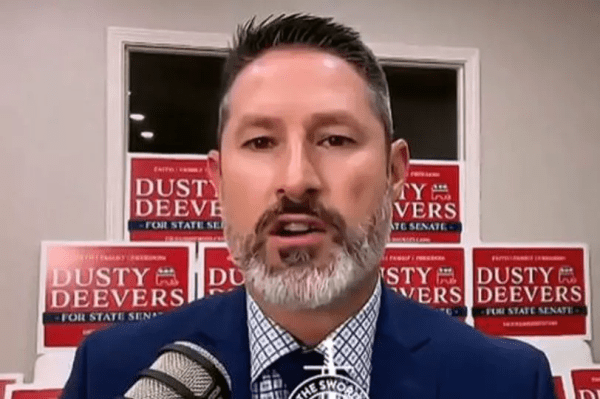
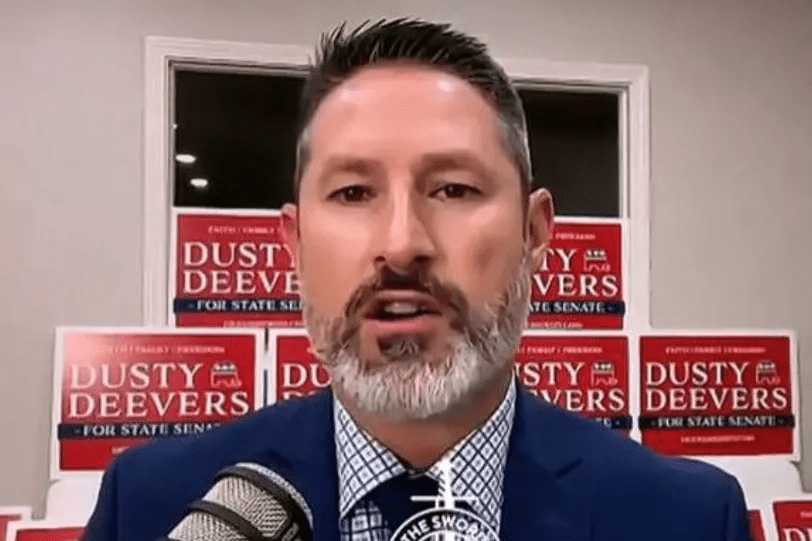
Christian nationalist Oklahoma state Sen. Dusty Deevers (R) and state Rep. Jim Olsen (R) have filed a resolution asking the U.S. Supreme Court to overturn Obergefell v. Hodges, the 2015 U.S. Supreme Court decision that legalized same-sex marriage nationwide. Republican lawmakers in at least five other states have introduced similar resolutions, all of which are largely symbolic and non-binding.

Senate Concurrent Resolution 8 claims that the 2015 high court ruling conflicts with the original meaning of the U.S. Constitution, the country’s founding principles, and “the deeply rooted history and tradition” regarding state regulation of marriage rights. It also notes that 75% of Oklahoma voters supported banning any recognition of same-sex unions in a 2004 ballot measure.

The resolution refers to the Supreme Court decision as an “unwarranted governmental intrusion,” accuses the high court of abusing “the Fourteenth Amendment’s Due Process Clause to fabricate substantive rights,” and says the 2015 decision is “undermining the civil liberties” of states “without any valid constitutional warrant for doing so.”

“For millennia marriage has been understood, both in biblical teaching and in the Anglo-American common-law tradition, as the lifelong covenant union of one man and one woman,” the resolution states. “Obergefell arbitrarily and unjustly rejected and prohibited states from recognizing this definition of marriage in favor of its own definition of marriage and a novel, flawed interpretation” of the U.S. Constitution.

It also notes that both Democratic Justices Ruth Bader Ginsburg and Elena Kagan had previously officiated same-sex weddings before the ruling and “should have recused themselves” from the Obergefell case. It further states that the decision has resulted in litigation directly targeting Christian business owners who refuse to accommodate same-sex couples and has resulted in Christians being vilified as “bigoted.”

Obergefell played a role in erasing biological distinctions in other arenas, threatening women’s privacy, safety, and athletic opportunities,” the resolution adds, drawing a dubious connection between same-sex marriage and transgender people’s civil rights.

If the resolution is approved by state lawmakers, copies of it will be distributed to the Supreme Court, the president of the U.S. Senate, the Speaker of the House of Representatives, members of the Oklahoma congressional delegation and the Oklahoma attorney general, the resolution states.

Similar resolutions have been introduced in at least five other states: Michigan, Idaho, Montana, North Dakota, and South Dakota.

Deevers & Olsen’s resolution relies on legal misinterpretations

The court’s 2015 decision relied partially on the 1967 high court ruling in Loving v. Virginia, which granted marriage rights to heterosexual couples consisting of individuals from different racial ethnicities.

“If rights were defined by who exercised them in the past, then received practices could serve as their own continued justification and new groups could not invoke rights once denied,” the Supreme Court wrote in its 2015 decision.

The court’s majority opinion also ruled that governmental refusal to recognize same-sex marriages denies them numerous benefits of marriage, including the ability to care for children and family members. State bans on same-sex marriages also restricted same-sex couples’ and their families’ ability to move freely around the country, since their rights could vary greatly if they moved to an anti-marriage state, the court ruling said.

As such, the court ruled that same-sex marriage bans violate both the Due Process Clause and the Equal Protection Clause by needlessly introducing instability into same-sex relationships for no justifiable or compelling government interest.

While some Christian businesses have been sued for refusing to serve LGBTQ+ people and same-sex couples based on “sincerely held religious beliefs,” these lawsuits have focused on how such refusals violate public accommodations protections in state anti-discrimination laws, which require businesses to treat citizens equally, regardless of sexual orientation.

Deevers has long opposed same-sex marriages

Speaking last month to Tony Perkins, president of the Family Research Council (FRC) — which has been certified as a hate group by the Southern Poverty Research Center — Deevers said, “The fact is, Obergefell is fundamentally antithetical to all of these, and there is just no right to gay marriage in the Constitution.”

Despite this claim, the Supreme Court believes that the Constitution’s equal protection and due process provisions require the government to treat all individuals equally under the law unless there’s a compelling government interest to do otherwise.

“Ultimately, marriage is not the state’s institution, it’s God’s institution,” Deevers said. “No Supreme Court ruling that redefines a God-ordained institution is ever truly settled: not morally or culturally, and even constitutionally. The rogue court will stand in judgment before God for their decision.”

Deevers’s campaign website also clearly states his anti-LGBTQ+ beliefs.

“It is outrageous that drag queens are permitted to dance and twerk for children at pride parades and story hours in our state,” his website states. “It is outrageous that … public schools have exposed elementary and middle school children to… LGBTQ+ propaganda…. It is outrageous that Critical Race Theory and Queer Theory dominate in many of our public institutions. I promise to support legislation to put a stop to all of this.”

Couple planning Puerto Vallarta wedding claims discrimination

*This is reported on LGBTQNation.

A Canadian couple planning a destination wedding in gay mecca Puerto Vallarta says they’ve been discriminated against by the beachside hotel where they’d hoped to tie the knot.

Jeremy Alexander and Ryan Sheepwash shared their experience in now-viral videos on Instagram and TikTok.

“Soooo disappointed that my fiancée and I got discriminated against for our wedding plans in Puerto Vallarta by #Sheraton!! Worst of all, they’ve probably done this to countless other same-sex couples.”

The pair had been planning their wedding for months, including a trip to PV to check out prospective venues. They say a tour of the Sheraton Buganvilias Resort won them over, with hospitable staff and a price within their range.

But the couple’s experience with the hotel’s wedding planner deteriorated over a succession of efforts to lock the wedding in. When a quote finally arrived after three months, Alexander and Sheepwash were provided with an outrageous estimate of the bill.

The invoice said 25 deluxe, all-inclusive ocean view rooms would set guests back $970 each; the hotel demanded a $36,000 deposit for half of the rooms.

“It’s not reasonable,” Alexander said. “No one can afford that.”

It was also much more than the hotel had initially quoted the couple. The Sheraton also said they couldn’t accommodate the couple until March of 2027.

Alexander and Sheepwash got engaged in Puerto Vallarta in February 2024.

Shocked at the estimate, the couple decided to ask a straight friend to “request a quote just to see apples to apples what it looks like.”

That inquiry for a hypothetical wedding, planned for the same dates Alexander and Sheepwash wanted, came with a different outcome: a “deluxe package” for 50 people was $8,500, or $254 per person per night, and required a deposit of just $1,700 — on the same dates Alexander and Sheepwash had requested.

“We just feel defeated,” said Sheepwash in the TikTok video. “It’s not fair because we love each other and we really want to get married, and we want to make it special and we want to make it perfect.”

“We felt we’d be indirectly complicit to the system if we’re aware of it and we’re not combating it,” Alexander told NBC News. “That was the major driving factor in us wanting to put the story out there.”

The hotel is a “third-party franchisee” of the Marriott corporation and declined to comment.

Marriott International said in a statement that the company has reached out to the couple “to learn more about their experience and are working with the property to offer a solution.”

“The Sheraton Buganvilias has been active in the LGBTQ community in Puerto Vallarta for years, not only hosting LGBTQ+ weddings and groups but also supporting Pride events in Puerto Vallarta,” the spokesperson said. “Marriott remains steadfast in our commitment to ensure guests are treated with respect and understanding.” 

“It’s very clear there’s an issue all the way to the top at this particular Sheraton of homophobia,” Alexander said. Marriott “would need to make some seriously impactful change before I’d be entertaining what they have to say there. They are part of a lot of queer travel alliances, and the actions have to line up with reality, and right now it doesn’t.”

Alexander and Sheepwash aren’t the first to experience the hotel’s discriminatory treatment. “Just Google it,” Alexander advises on Insta.

In 2019, Josh Rimer, a television host and Mr. Gay Canada 2019, and his then-fiancé were turned away from the hotel after choosing it to host their own wedding.  

And while researching the hotel, Sheepwash uncovered a TikTok video posted by Daniel Galecio, a wedding planner in Puerto Vallarta, who said the same Sheraton staff member who provided the couple’s inflated estimate told him the resort is currently unable to host same-sex weddings. 

“That hotel has a history of years of discrimination, and all the city knows — all the gays know,” Galecio said.

Marriage equality became legal nationally in Mexico in 2022.

‘Colorado is for everyone’: Polis signs bill repealing same-sex marriage ban

*This is reported by KDVR.

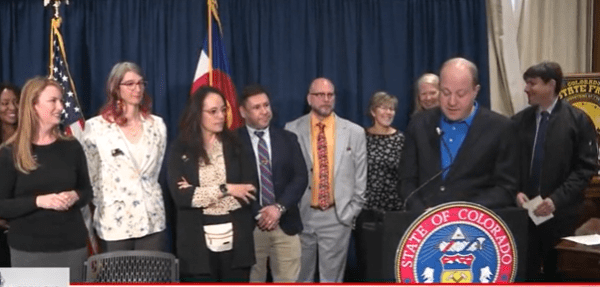
 Colorado Gov. Jared Polis signed the “Protecting the Freedom to Marry Act” on Monday, repealing the state’s same-sex marriage ban from Colorado law.

The bill removes language that says marriage is only between a man and woman and aligns statute with the Colorado Constitution after voters in November decided to repeal that ban. The state House passed the bill in March after the Senate passed it in early February.

“Colorado is for everyone, no matter who you are or who you love,” Polis said in a press release. “Last November, the voters got rid of outdated language in our constitution that banned same-sex marriage. This is a long overdue step in the right direction and today’s law I’m signing ensures that Coloradans can marry who they love in our Colorado for all.”

First Gentleman Marlon Reis, in the press release, said this bill defends the progress made for LGBTQ+ rights.

“I am personally grateful to Senator Danielson, Representatives Garcia and Titone, and the countless community leaders and advocates whose hard work has made today possible,” Reis said. “This landmark legislation fulfills the hopes and dreams of so many across our LGBTQ+ and allied communities, and affirms that progress hard won is always worth defending, and in the end, love triumphs over all.”

Colorado’s previous same-sex marriage ban had been unenforceable since the U.S. Supreme Court’s 2015 Obergefell v. Hodges decision.

Japan Osaka court holds same-sex marriage ban unconstitutional

The Osaka High Court held that Japan’s lack of recognition of same-sex marriage is unconstitutional on Tuesday. The Osaka High Court is the fifth court to rule that the ban on same-sex marriage is unconstitutional after similar rulings in the high courts of SapporoTokyoFukuoka and Nagoya.

While Presiding Judge Kumiko Honda upheld the Osaka District Court’s decision not to award damages, Honda ruled that Japan’s Civil Code and Family Register Act that do not allow same-sex marriage violates the right to equality as set out in Article 14 of the Constitution of Japan, which states: “All of the people are equal under the law and there shall be no discrimination in political, economic or social relations because of race, creed, sex, social status or family origin.” The court also ruled that the marriage ban breaches Article 24, where laws involving marriage and family “shall be enacted from the standpoint of individual dignity and the essential equality of the sexes.”

In 2019, three same-sex couples filed a lawsuit against the Japanese government, requesting 1 million yen (about $7,400) in damages per person from the state. They were among 14 couples who filed lawsuits in Sapporo, Tokyo, Nagoya, Fukuoka and Osaka. The plaintiffs had appealed to the High Court after the Osaka District Court in June of 2022 ruled that the lack of same-sex marriage recognition was constitutional under the 1947 constitution as marriage was for heterosexual unions only, making the same-sex marriage ban lawful.

Japan is the only International Group of Seven (G7) country that does not recognise same-sex marriage. Human Rights Watch put out a dispatch highlighting how the other G7 countries are encouraging Japan to enact laws to allow same-sex marriage, counter discrimination and uphold protections for sexual and gender minorities. Prior to the May summit in 2023, LGBTQ groups called for Japan’s government to legalise same-sex marriage and while support for the LGBTQ community grows and the Japanese Diet, Japan’s national legislature, passed the Act on Promotion of Public Understanding of Diversity of Sexual Orientation and Gender Identity, promoting understanding of the LGBTQ.

Amnesty International indicated in a report that protections for sexual and gender minorities are still absent. Currently, in Japan, same-sex couples have some recognition from local governments, such as “partnership certificates,” offering some rights, but these do not give rights such as inheritance, spousal visits or parental recognition.

North Dakota Senate rejects resolution asking Supreme Court to overturn gay marriage ruling

*This is being reported by NBC.

The North Dakota Senate on Thursday rejected a measure that would have asked the U.S. Supreme Court to overturn its landmark 2015 ruling that legalized same-sex marriage nationwide.

A vote to approve would have made North Dakota the first state to make such an overture to the high court, after the state House passed the measure last month.

The resolution failed in a 16-31 Senate vote after about 10 minutes of debate.

Democratic Sen. Josh Boschee said in opposition, “I understand that this puts us all in a tough spot, but I ask you to think about who’s put in the toughest position with this resolution: the people of North Dakota who are the subject of the resolution … the gay and lesbian North Dakotans who did not ask to be the subject of this conversation, but the conversation was brought to us.”

Republican Sen. David Clemens supported the measure, saying that while the U.S. Constitution does not mention marriage, the North Dakota Constitution recognizes marriage as between a man and a woman. Clemens said he took an oath to uphold that document.

Several people in the gallery applauded when the measure’s defeat was announced.

Massachusetts-based MassResistance pushed the measure and ones in other states. The group called itself an “international pro-family group.” But it has been labeled an “anti-LGBTQ hate group” by the LGBTQ advocacy organization GLAAD.

Lawmakers in at least nine states have recently introduced measures to try to chip away at same-sex couples’ right to marry. Five of them, including North Dakota’s failed resolution, urge the Supreme Court to overturn its 2015 landmark same-sex marriage ruling.

North Dakota Legislature close to asking Supreme Court to undo landmark gay marriage ruling

*This is reported by NBC.

North Dakota lawmakers are on the verge of making their state the first to tell the U.S. Supreme Court to overturn its decade-old ruling that legalized same-sex marriage nationwide.

Similar efforts — which would not have any direct sway with the nation’s top courts — have been introduced in a handful of states this year. North Dakota’s resolution passed the Republican-led House in February but still requires Senate approval, which is not assured.

“The original Supreme Court ruling in 2015 went totally against the Tenth Amendment, went totally against the North Dakota Constitution and North Dakota Century Code (state laws),” sponsor Republican Rep. Bill Tveit said. “Why did I introduce it? Every one of us in this building took an oath to uphold the Constitution of the United States and the state.”

When the Legislature considers such resolutions, attorney and North Dakota National Guard member Laura Balliet said she wonders why she stays in her home state. The measure makes her feel unwanted, unwelcome and judged because of who she is, she said. She married her wife in 2020.

“I don’t know what this resolution does other than to tell people like myself, my friends and my family that we’re not welcome here, and I’m angry about that because I want to be welcome here. This is my home,” Balliet told the Senate panel that heard the measure on Wednesday — one in a stream of opponents who testified against it.

A push across states

Massachusetts-based MassResistance, which describes itself as an “international pro-family group” but has been labeled “anti-LGBTQ hate group” by the LGBTQ advocacy organization GLAAD, is pushing the resolution across the country.

Massachusetts became the first state to recognize same-sex marriage, in 2004. Over the next 11 years, most states began to recognize it through laws, ballot measures or court decisions before the Supreme Court made it legal nationwide.

Outside of Idaho and North Dakota, the measures have not progressed far, according to an analysis of legislation collected by the bill-tracking service Plural.

By contrast, there have been additional protections for same-sex marriage over the years, including a federal law in 2022. Since 2020, California, Colorado, Hawaii and Nevada have repealed old constitutional amendments that defined marriage as being allowed only between a man and a woman, and Virginia lawmakers advanced a similar measure this year. It could be on the ballot there in 2026.

Differing views

The North Dakota measure states that the Legislature “rejects” the 2015 Obergefell v. Hodges decision and urges the U.S. Supreme Court “to overturn the decision and leave unaddressed the natural definition of marriage as a union between one man, a biological male, and one woman, a biological female.”

In the court’s 2022 ruling that overturned the constitutional right to an abortion, Justice Clarence Thomas said the court should reconsider its precedents in the marriage decision and other past cases.

Soon after the measure passed the North Dakota House last month, several Republican state reps who voted for it stated they meant to vote no or regretted voting yes.

Republican Rep. Matt Ruby said he wished he had voted against the measure, saying his yes vote was for a different intent he realized wasn’t going to happen. The vote sent a bad message “that your marriage isn’t valid and you’re not welcome,” Ruby said. He said he supports the right for same-sex couples to be married.

Republican Rep. Dwight Kiefert said he voted for the resolution because of his Christian faith and that the institution of marriage was established in the Bible in the Garden of Eden between Adam and Eve.

‘Slap in the face’

The measure is a slap in the face to North Dakotans who are happily married and invested in their state, said Democratic Sen. Ryan Braunberger, who is gay and sits on the Senate panel that heard the resolution. The measure sends a dangerous message as North Dakota wants to grow its population and expand economically, he said.

“We want to make sure that we bring everybody in the best of the crop, and that runs the gamut of all sorts of different races, ethnicities, sexual orientations through that,” Braunberger said.

The measure is a declaration, if passed, that lawmakers would want to define marriage through what is arguably a religious lens, which dangerously gets close to infringing upon the Establishment Clause of the U.S. Constitution, said Cody Schuler, advocacy manager for the American Civil Liberties Union’s North Dakota chapter.

“Marriage defined as ‘one man, one woman’ is a particular religious view. It is not held by all religions, all societies or by nonreligious people, and so therefore it is dangerous to be making that kind of statement because it puts legislators on record as to how they might vote on law, on a binding law versus this nonbinding resolution,” Schuler said.

10 Unique And Safe Places To Get Married If You’re Gay

Check out this slideshow put together and posted to MSN.

While some places still make same-sex marriage complicated (or even illegal), others celebrate it fully, offering welcoming venues and stunning locations for your big day. If you’re looking for somewhere unique, safe, and unforgettable to say “I do,” these destinations offer the perfect mix of charm, romance, and friendliness toward the queer community.

The cities mentioned in the slideshow are:

Amsterdam Netherlands

Queenstown New Zealand

Toronto Canada

Cape Town South Africa

Reykjavik Iceland

Barcelona Spain

Valleta Malta

Sydney Australia

Mexico City Mexico

Copenhagen Denmark

Each town on the slide deck has a short excerpt about why the author included them. Be sure to read it.

Also be sure to check out our world map for more info on moving to various countries.

Marriage equality bills filed to protect same-sex marriage in North Carolina

*Reported by WWAY News

North Carolina State Representative Deb Butler (D–New Hanover), one of the first openly gay members of the state House, has filed two bills aimed at securing marriage equality and protecting LGBTQ+ families in the state.

The proposals – H174 and H175 – come as lawmakers brace for potential challenges to same-sex marriage rights amid a shifting federal judiciary.

H174 seeks to repeal North Carolina’s outdated ban on same-sex marriage, a statute that remains on the books despite being rendered unenforceable by the U.S. Supreme Court’s 2015 ruling in Obergefell v. Hodges. If enacted, the bill would affirm the federal protections of all married couples, regardless of gender.

H175 would introduce a constitutional amendment explicitly safeguarding marriage equality in North Carolina. The amendment is designed as a long-term shield, ensuring that even if the Supreme Court revisits Obergefell, LGBTQ+ families will remain protected from discriminatory state-level policies.

“In North Carolina, we must defend the rights of our LGBTQ+ citizens,” Rep. Butler said. “Marriage equality is a settled issue for the vast majority of Americans, and our state should reflect that reality. These bills are about ensuring dignity, security and legal protection for all families in the face of uncertainty at the federal level.”

According to a news release, Butler’s initiative is part of a broader effort to fortify civil rights protections across North Carolina. Advocates, legal experts and LGBTQ+ organizations have voiced strong support for the bills, emphasizing the urgent need for state-level safeguards amid a volatile national political climate.

The legislation now heads to the North Carolina General Assembly.

Blog at WordPress.com.

Up ↑