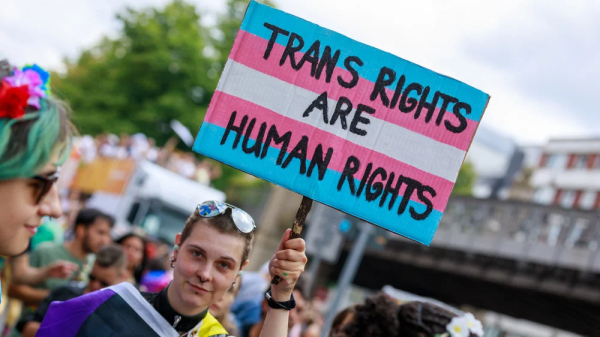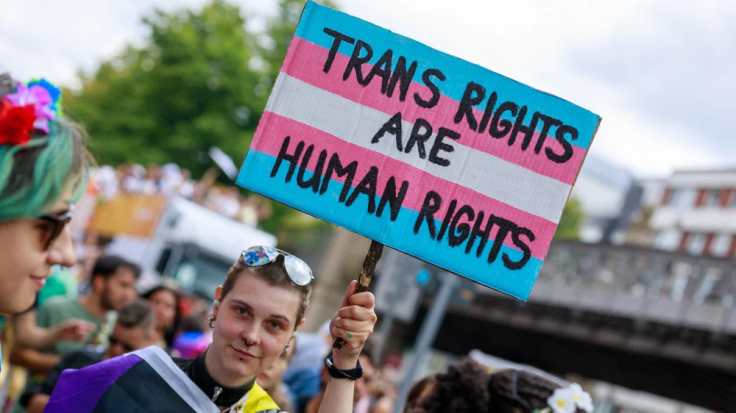
Ohio Republicans are trying to strip transgender adults of health insurance coverage

Read more at the Advocate.

Ohio Rep. Josh Williams (R-Sylvania Twp.) has introduced his latest bill in his crusade against transgender Ohioans.

Williams introduced HB 838 last Thursday. The bill would prohibit Medicaid from covering most gender-affirming surgeries and procedures for transgender Ohioans and ban state and local municipalities from providing a contract to their employees that includes “coverage, benefits, or services for gender reassignment surgery.”

The legislation also stipulates that if these benefits are offered, the cost would then be subtracted from the local authority’s “local government fund payments,” the revenue-sharing portion of the state’s General Revenue Fund.

The bill has not yet been assigned to a committee.

Williams has broken a record, introducing more than 100 bills in a single General Assembly as he runs for a spot in the U.S. House of Representatives.

Six of those bills are explicitly anti-LGBTQ+, complementing his public statements that it would be “harmful to society” to affirm trans identity.

  • HB 249 (“The Indecent Exposure Modernization Act”), which would ban drag and gender performance in public spaces where minors are present. (Status: The bill passed the Ohio House and now moves to the Ohio Senate.)
  • HB 262, to designate “Natural Family Month,” to celebrate only heterosexual married couples with children. (Status: The bill is sitting in a House committee; three hearings have been held.)
  • HB 693 (“The Affirming Families First Act”), to grant protections to parents who reject their trans children. (Status: The bill is sitting in a House committee; two hearings have been held.)
  • HB 796 to ensure that all incarcerated people in state custody are housed according to the state’s definition of “biological sex.” (Status: The bill has been introduced, but not assigned to a committee.)
  • HB 798 (“The Privacy Protection Act”) that would limit trans Ohioans’ access to public bathrooms and ban Ohioans from being able to change the sex marker on birth and death certificates. (Status: The bill has been introduced, but not assigned to a committee.)

In the Cleveland suburb of Lakewood, the city’s robust “Gender Freedom Policy” would protect LGBTQ+ employees from the effects of HB 838.

The policy was introduced by Council President Sarah Kepple and out LGBTQ+ Councilmember Cindy Strebig, and will allow the city to provide medical coverage for transgender employees and covered family members who seek gender-affirming care, “even if such care must legally be provided outside the State of Ohio.”

“This is another attempt by the Republican led and out of touch state government to draw attention away from their continued failure to serve Ohioans,” Strebig told The Buckeye Flame. “I will continue to fight for my community and the dignity and respect of all people.”

Dara Adkison, executive director of TransOhio, said that HB 838 is just the latest bill in an “exhausting pattern of a single politician repeatedly targeting transgender Ohioans instead of addressing the real challenges facing our state.”

“Continued increasing of restrictions and limitations to healthcare undermines the safety, health and wellbeing of not only trans Ohioans but everyone,” Adkison said.

Adkison called HB 838 “reprehensible,” but reminded Ohioans that the bill was just introduced and is not law.

“Everyone deserves the ability to make informed decisions about their own healthcare, and every municipality deserves to maintain the authority over what will be covered by city employee insurance plans,” Adkison said.

European Parliament adopts measure to ban conversion therapy

Read more at LGBTQ Nation.

The European Parliament voted in favor of a ban on conversion therapy this Wednesday. The demand is now being sent to the European Commission for a response.

The move comes after the European Citizens’ Initiative successfully petitioned the European Parliament to take up the issue. Starting in 2024, the ECI gathered over 1.2 million signatures from EU citizens to ban conversion therapy.

The European Economic and Social Committee (EESC) held a debate on the matter earlier this week, which resulted in the committee adopting two opinions, one calling for stronger enforcement of the EU’s LGBTIQ+ Equality Strategy 2026–2030 and the other calling for a ban on conversion therapy throughout the EU.

While seven member states ban conversion therapy, including France, Portugal, and Spain, speakers at the EESC pointed out that conversion therapy is still practiced in parts of the EU.

“These so-called conversion practices or therapies are not only harmful, they are a profound violation of human dignity and fundamental rights,” said EESC President Séamus Boland during the debate, according to an EESC release. “Let us be absolutely clear: there is nothing to fix or cure. What needs to change is not people, but the systems, attitudes, and structures that deny them their dignity.”

Graeme Reid, the United Nations independent expert on sexual orientation and gender identity, also spoke during the debate, saying that banning conversion therapy is key to the EU meeting its human rights obligations and that “every person has the right to live free from coercion, fear and shame.”

Then, in a vote on Wednesday, the European Parliament adopted an opinion demanding a ban on conversion therapy practices.

The demand will be sent to the European Commission, the only body that can introduce binding legislation, which will then send it back to Parliament.

New HUD Proposal Targets Trans Housing Protections

Read more at Truthout.

A newly proposed rule within the Department of Housing and Urban Development (HUD) would target transgender people, allowing federally funded shelters and housing providers receiving funds from the government to discriminate on the basis of gender.

The HUD proposal purportedly “harmonizes” the department’s existing Equal Access regulations with President Donald Trump’s anti-transgender executive order he issued on the first day of his second term. That order errantly equates gender with sex, and has been challenged in other realms of the federal government for its discriminatory nature.

The rule change would remove terms like “gender” and “gender identity,” replacing them instead with the word “sex.” Gender is generally understood as “a social construct expressed and reinforced by norms, behaviors, and roles assigned to people based on their perceived sex,” and is understood by scientists as not being binary, whereas sex is based on an individual’s arrangement of chromosomes.

The HUD proposal would allow housing partners of the federal government to resume discrimination against people seeking housing based on gender, rolling back standards that were implemented during the Obama administration.

The change appears to be religiously motivated, as HUD Secretary Scott Turner — a noted Christian nationalist — announced the proposed rule by citing his personal beliefs.

“God created two sexes: male and female,” Turner said. “The Left’s war on biological reality through radical gender ideology will no longer take precedence.”

Notably, Turner had already directed the department to stop enforcing current rules protecting people from discrimination based on gender last year. The rule change formalizes that action.

Research demonstrates that transgender people face enormous difficulties in securing housing, with one study from 2022 demonstrating that nearly one-third of trans people have been unhoused in their lifetimes.

Deborah Thrope, chief program officer for the National Housing Law Project, decried the new HUD proposal, stating that it is a “baseless assault by the Trump administration” against LGBTQ people.

Describing the rule as a “cruel proposal,” Thrope added:

Not only will the proposed policies directly harm families and communities, they will increase costs for state and local governments, hospital systems, and social services agencies by forcing more housing insecure people to live on the street rather than in shelter.

“Our country has the resources to ensure that all of us have a roof over our heads, and we are steadfast in our commitment to fight alongside LGBTQ+ tenants and neighbors until we’re all stably housed,” Thrope said.

Botswana officially removed its anti-sodomy law from its Penal Code

Read more at LGBTQ Nation.

Botswana’s anti-sodomy law has been officially repealed.

Section 164 of the Southern African nation’s Penal Code used to ban sodomy and carried a possible seven-year sentence with it. But in 2019, the country’s High Court ruled unanimously that the law was unconstitutional.

“Human dignity is harmed when minority groups are marginalized,” wrote Judge Michael Leburu for the court at the time. “Sexual orientation is not a fashion statement. It is an important attribute of one’s personality.”

“Personal autonomy on matters of sexual preference and choice must, therefore, be respected. Any criminalization of love or finding fulfillment in love dilutes compassion and tolerance.”

The government appealed, but the appeal was refused in 2021, leaving Section 164 unenforceable.

But the South African LGBTQ+ outlet Mamba Online now reports that Botswana’s government amended its Penal Code to remove paragraphs a and c of Section 164. The only part of the section that remains bans bestiality. The change was carried out by Botswana Attorney General Dick Bayford.

The Botswanan LGBTQ+ organization LeGaBiBo hailed the change, saying it sends “a clear message that LGBTIQ+ persons are not criminals, and that their lives and relationships deserve protection, not punishment.”

“For many, these provisions were not just words on paper – they were lived realities,” the group said. “They affected access to healthcare, safety, employment, and the freedom to love and exist openly.”

LGBTQ+ people in Botswana have some rights and protections that they aren’t granted in other countries in the region. LGBTQ+ people are able to serve in the military, and the country has banned job discrimination on the basis of sexual orientation since 2010. Trans people have been able to correct gender markers on government paperwork since a High Court ruling in 2017.

There is currently a gay couple suing the government for marriage rights, according to Mamba Online.

State Department bans trans employees from using the appropriate restrooms at work

Read more at LGBTQ Nation.

The State Department announced on Monday a new policy that will ban trans employees from using the restroom that matches their gender identity.

Right-wing news site, The Daily Signal, reports that they obtained a memo from the State Department titled “Updates Regarding Biological Sex and Intimate Spaces, Including Restrooms.” The memo says, “ACTION: Post must abide by the President’s directive in E.O. 14168, ensuring intimate spaces are designated by biological sex.”

The memo is designed to update the State Department’s policies in line with Donald Trump’s January 2024 anti-trans executive order, which declared that there were only “two sexes” and that they were immutable. While not a legal action in its own right, an executive order instructs the federal government on how Trump would like laws to be implemented.

Several federal agencies had already implemented an anti-trans bathroom ban, but the State Department had not previously made its own policy.

In July of 2025, the acting director of the Office of Personnel Management (OPM) sent out a memo instructing all federal agencies to bring themselves in line with the executive order, with the stated goal of “Ending Gender Ideology in the Federal Workplace and Protecting Women.”

That order included a note that all agencies should have “ensured that intimate spaces (such as bathrooms, locker rooms, and lactation rooms) at Federal worksites designated for women, girls, or females (or for men, boys, or males) are designated by biological sex and not gender identity.”

The State Department’s delay in implementing a bathroom ban likely doesn’t stem from Secretary of State Marco Rubio having empathy for the trans community, but rather from a case before the Equal Employment Opportunity Commission (EEOC).

Last summer, a transgender person filed a complaint with the EEOC after being denied access to the appropriate restrooms and “intimate spaces.” A decision was reached by the commission in February, which upheld that “Title VII permits a federal agency employer to maintain single-sex bathrooms and similar intimate spaces,” and “permits a federal agency employer to exclude employees, including trans-identifying employees, from opposite-sex facilities.”

Title VII is the federal law that bans job discrimination on the basis of sex. In 2020, the Supreme Court ruled in Bostock v. Clayton Co. that Title VII’s ban on sex-based discrimination also bans anti-LGBTQ+ discrimination, since it’s impossible to discriminate against trans or queer people without taking their sex assigned at birth into account.

The guidance goes against previous recommendations from OSHA, which stated: “The core belief underlying these policies is that all employees should be permitted to use the facilities that correspond with their gender identity. For example, a person who identifies as a man should be permitted to use men’s restrooms, and a person who identifies as a woman should be permitted to use women’s restrooms.”

Those guidelines were removed from the Department of Labor’s website at some point between January 15, 2025, and February 1, 2025.

The Daily Signal touted the new policy under the headline “Rubio Cracks Down on Men in Women’s Restrooms.” That can be added to his resume, alongside defunding USAID so that thousands will suffer from HIV and changing the State Department’s default font because the old typeface was too “woke.”

“Banning transgender people from using facilities in alignment with their gender identity deprives them of the ability to participate in public life,” Advocates for Trans Equality’s website notes. “Without the ability to use a public restroom, trans people are less able to live their lives and travel outside their home. Trans employees need to be able to use the restroom at work to keep their jobs without risking their health and safety.”

“Transgender people cannot safely use the bathroom of the gender they were assigned at birth just because the law requires them to. Trans people are routinely subjected to harassment and assault in bathrooms. Sixty-eight percent of trans people have been verbally harassed, and 9% have been physically assaulted when using a public restroom in the past 12 months. And sadly, 8% of trans people have faced a kidney or urinary tract infection from having to avoid restrooms for their safety.”

Ron DeSantis signs law that could strip Florida of Pride celebrations

Read more at the Advocate.

Florida has already largely derailed the promotion of diversity by the state, and a new law now threatens Pride events across the state.

Florida Gov. Ron DeSantis signed legislation that prohibits any local government in Florida from making diversity, equity, and inclusion efforts. That’s part of a long battle against so-called DEI in the state, which has already banned the values in higher education. He deployed significant white grievance language as he signed legislation at a ceremony in Central Florida.

“I would think with DEI ⁠the disfavored groups, number one obviously, would be white males and I think they’ve been discriminated against,” DeSantis said.

The bill allows individuals to sue local governments that implement DEI programs.

The legislation, according to Florida Politics, defines DEI as efforts to “manipulate or otherwise influence the composition of employees with reference to race, color, sex, ethnicity, gender identity, or sexual orientation other than to ensure that hiring is conducted in accordance with state and federal anti-discrimination laws.”

But LGBTQ+ advocates have specifically voiced concern that this could shut down Pride events.

“It threatens nondiscrimination ordinances, specialized community health programs, recognizing culturally significant events like Pride Month or Black History Month, and more,” reads an opposition statement from Equality Florida.

Florida Rep. Fabian Basabe, a Republican representing Miami Beach, has suggested otherwise.

“Pride is not under threat, and it definitely isn’t going anywhere,” he said. “If anything, this moment presents an opportunity to both strengthen and expand the event and ensure it continues to thrive for decades to come as a cultural festival that celebrates community, supports local businesses, and contributes to the vitality of Miami Beach.”

Critics say the new law still allows equal opportunity programs and for cultural events to take place in Florida cities. But it doesn’t allow cities to run programs promoting diversity.

“The bill is necessary because cities and counties have been funding and promoting divisive activities under the guise of DEI,” said Florida Sen. Clay Yarborough.

The law goes into effect on January 1.

Equality Florida did convince lawmakers to make carve-outs in the law to allow preservation of the Pulse memorial in Orlando and for states to issue permits, but not promote Pride. But the law remains an existential threat, the group’s leadership said.

“This law is deeply concerning and deliberately vague, sending a clear message that celebrating diversity and supporting LGBTQ Floridians can carry legal and political risk. It targets not only local governments but every community that works to create inclusive, welcoming spaces. Our communities have faced unjust laws before, and responded with resilience, strength, and solidarity,” said Jon Harris Maurer, Equality Florida’s Public Policy Director.

“Equality Florida will continue to stand with local leaders, community organizations, and residents to ensure that LGBTQ people remain visible, celebrated, and supported. Pride will continue, programs that support inclusion will continue, and our communities will remain strong despite attempts to intimidate or silence them.”

Colorado Dems pass “profound” law to protect trans kids who change their names

Read more at LGBTQ Nation.

Colorado Governor Jared Polis (D) has signed a law to protect trans children by sealing name changes for those who are under 18 when they file for one. The legislation will protect trans children

“Passing this bill is simple, but its impact is profound,” Colorado state Senator Katie Wallace (D), a sponsor of the bill, said in February. “It gives children the safety and dignity they deserve, and it treats their private life with the same care we afford in other sensitive cases.”

Colorado’s Senate Bill 18, “Legal Protections for Dignity of Minors,” simply makes it so that starting July 1, when anyone who is under 18 years old petitions for a name change, the court is required to suppress the record. That means the petition will not be part of the public record and cannot be collected through searches or data harvesting.

The only exception to the process is if the petitioner was previously convicted of a felony.

While the court will keep a record for administrative purposes, it cannot publish the petitioners’ names or their deadnames. The record can only be accessed by the petitioner or by someone who has obtained the petitioner’s verbal consent and submitted an affidavit to that effect.

The bill will easily benefit anyone who might want to change their name as a child, whether to have a name they feel more connected to or to distance themselves from a family name. While the language of the bill itself does not mention trans people, it will have a huge impact for trans kids, which has always been the mission of the legislation.

At a senate committee hearing in February, Z Williams, co-director of Bread and Roses Legal Center, spoke of how a parent thought someone in their child’s class might be trans and was able to search for their name change document online and out the second grader to the school, Colorado Newsline reported.

Williams said the parent “exposed that child is transgender in second grade to the entire school community through flyers and through her own children, not only practicing hate herself, but teaching others how to. That is why we asked the senators and representatives to run this bill.”

At the same hearing, Elsie Fierro, the political and policy director at LGBTQ+ advocacy organization One Colorado, shared the story of a Colorado family who had petitioned for a name change on behalf of their trans child. But when they searched the new name online, a search engine returned results that included the child’s deadname along with identifying information that had been scraped from public court documents. “That family spent months trying to remove it and protect their minor child in an increasingly hostile political climate. This is the reality some families are navigating,” Fierro told the committee.

In the face of Republican opposition, state Sen. Wallace said, “This bill will protect children from AI data-scraping of those public records, the potential of bullying if they should be found and from hostile individuals in the wider world.”

The bill was originally intended to do even more good, but had a section stripped from it in February. It originally sought to instruct family court judges to consider acceptance of a child’s gender identity when determining custody cases. Several studies, including one by The Trevor Project, have linked trans children being connected to accepting adults to lower risk for depression and suicide attempts.

The custody clauses had originally been included in an earlier bill, HB 1312, which passed last year and introduced legal protections for trans people against deadnaming, misgendering, and more. However, they were removed before it passed after LGBTQ+ groups raised concerns that the language could erode existing protections.

For SB 18, the clauses had been reworked, but Polis threatened to veto the bill unless the clauses were removed, claiming to have received word of similar concerns once again. However, state Sen. Wallace and Williams both suggested that Polis’ view of the provisions being “substantially the same” was incorrect and that they had been amended to assuage concerns.

Colorado Republicans have opposed this bill and other pro-trans legislation, pushing anti-trans bills in their place. However, Democrats currently hold a supermajority in the state and have been defending trans rights with new protections.

Texas Tech System leader cancels academic programs “centered on” sexual orientation, gender identity

Read more at Texas Tribune.

Texas Tech University System’s chancellor on Friday ordered campuses to phase out academic programs “centered on” sexual orientation and gender identity — a dramatically expanded policy that also places limits on what can be researched and which faculty can be hired.

Chancellor Brandon Creighton’s memo gives provosts until June 15 to identify targeted programs and requires the system’s five universities to freeze admissions and halt students from declaring majors in the phased out programs. Students already enrolled can finish their degrees.

Offerings that appear most likely to be affected include Texas Tech University’s women’s and gender studies undergraduate minor and graduate certificate, as well as women’s and gender studies minors at Midwestern State University and Angelo State University. 

The memo also says graduate theses and dissertations may center on gender identity and sexual orientation only as a temporary exception for currently enrolled students and that future faculty hiring will “prioritize recruitment in alignment with this memorandum.”

Faculty, it says, must recognize only “two human sexes” and not teach  gender identity as a spectrum or more than two genders as fact — policies Creighton introduced last year. 

In core and lower-level undergraduate courses, the memo says instructors generally cannot assign materials that are “centered on” or “include” sexual orientation or gender identity and defined the concepts:

  • “Centered on” is when course content, readings, assignments or lectures that have sexual orientation or gender identity “as the primary subject, main theoretical framework, central narrative or driving pedagogical purpose.” 
  • “Includes” means “these themes are present, but serve only as secondary background context, demographic data points, or minor components of a broader academic subject.” 

If an industry-standard textbook contains such content, the memo says faculty do not have to redact it, but they cannot highlight it, test students on it or spend class time on it. 

The memo makes some exceptions for upper-level undergraduate and graduate courses, including analysis of active public policy and legal disputes, historical subjects such as the AIDS epidemic where sexual orientation or gender identity is inseparable from the topic, datasets that include those variables and some clinical, counseling or psychology instruction.

The memo also says “currently employed faculty members may continue to research and publish topics of their choosing,” but future faculty will be recruited and hired in accordance with the memo’s priorities. 

Jen Shelton, an associate professor of English who has taught at Texas Tech for 25 years, said the provost’s office had repeatedly assured faculty that their research would not be affected. She said this feels like a “betrayal.”

“The good news is I think the whole university has been betrayed. I think even the provost did not expect it to look like this because it’s people from the provost’s office who have been coming to us and saying, ‘Don’t worry. This part is all going to be fine,’” Shelton said in an interview with The Texas Tribune.

Cailyn Green, a Texas Tech junior studying human development with a minor in community, family and addiction science, said the memo left her feeling that the university can no longer provide “an honest education.”

Green said one of her professors would not answer in class whether material about racial disparities in pregnancy outcomes would still be taught, instead asking to discuss it privately. 

“At the rate that we’re going, I’m not going to be able to continue learning everything that I need to know in my degree, and I won’t be able to help people,” said Green, who works in Section 8 housing, helping low-income residents connect with food, health care and other assistance.

Paul Ingram, a Texas Tech associate professor of psychological sciences, said students had been calling him all day, some saying they regretted coming to Texas Tech. He said a graduate student had already dropped out because of the earlier memos and another graduate student is writing a dissertation on gender that, under the new policy, could not be proposed again. 

He said faculty across the university are openly discussing looking for other jobs. 

“Everyone sees that the grass isn’t always greener on the other side, but this grass is looking pretty dead,” Ingram said.

Antonio Ingram, a senior counsel at the NAACP Legal Defense Fund, said the memo appears to target perspectives involving gender identity and sexual orientation for political reasons, not academic purposes, raising serious constitutional concerns because public universities cannot discriminate based on viewpoint. 

Antonio Ingram also questioned the memo’s prohibition against teaching “as absolute truth” that people are inherently racist, sexist or oppressive and that “individuals bear responsibility or guilt for actions of others of the same race or sex.” Ingram said there is no definition of “absolute truth,” creating vagueness that may deter teaching about systemic racism, reparations and the history of enslavement.

“I think in many ways, this is a doubling down on a political project that is not meant to help students. It is really meant to uphold a political worldview that, you know, Chancellor Creighton couldn’t enact legislatively and is now doing through his role as chancellor,” Ingram said.

In a statement, Creighton said he and the system’s regents are “focused on ensuring our academic programs are rigorous, relevant, and produce degrees of value.”

“That focus is matched by our unwavering support for the First Amendment and the open exchange of ideas that define a public university. Texas Tech will continue to be a national leader on both fronts,” he said.

Some students have supported the system limiting classroom discussion of sex and gender. In an October interview with the Tribune, Preston Parsons, president of the campus Turning Point USA chapter, said he believed the policy protected students and that professors who disagree should speak up outside the classroom.

“There’s a right and a wrong way to do everything, and I don’t believe the classroom is the right place to do that,” said Parsons, who wasn’t available to comment on Friday’s memo. 

Creighton served nearly two decades as a Republican state lawmaker and authored major higher education reforms before he became chancellor in November. In December, he ordered faculty to submit for review course content touching on race, sex, gender identity and sexual orientation. If campus leaders wanted to keep the information in a course and it was not required for professional licensure, certification or patient care, they had to forward it to the Board of Regents for final review. Regents were expected to take up the issue publicly at their Feb. 26 meeting but did not, leaving professors in limbo.

Speaking at the Texas Public Policy Foundation’s summit in Austin on Thursday, Creighton said Texas Tech had “built an AI algorithm” to help review courses and would release findings within days.

At the summit, Creighton said what some faculty call “academic drift” had left “quite a bit of garbage in curriculum” on university campuses across the country. He said the Texas Tech University System has “a very good plan in place” to address that.

“I believe it will produce the best curriculum in America, and I believe it will be a national model once we’re finished,” he said.

In a news release Friday, the system said that of the 1,403 courses initially identified, only 92 were reviewed by the board of regent’s Academic, Clinical and Student Affairs Committee and fewer than 60 were recommended for modification. Another 299 were “proactively modified” before reaching the committee.

Creighton has framed the push at Texas Tech as a way to steer the university toward degrees that lead to high-paying jobs in high-demand fields. He made the same arguments for bills he wrote in 2023 to ban diversity, equity and inclusion in higher education and in 2025 to expand regents’ control over curriculum.

Shelton said that view misses a central role of college, which is to teach students how to interpret the world around them, ask hard questions and think through unfamiliar problems. This memo, she said, “impoverishes” students “not just as future workers, but as human beings.” 

Unprecedented ruling finds Hungary’s anti-LGBTQ laws in breach of EU values

Read more at BBC.

The European Union’s top court has ruled that Hungarian anti-LGBTQ laws violate EU rules and infringe its values of equality and minority rights.

The laws were brought in by Viktor Orbán’s government in 2021 and banned so-called promotion of homosexuality or gender change to under-18s, arguing it violated child protection laws.

The European Court of Justice ruled that the Orbán reforms breached EU rules on a number of levels, and significantly that it also broke the founding values of Article 2 of the EU Treaty – an unprecedented finding.

The ruling comes nine days after Hungarians voted to end Orbán’s 16-year era of continuous rule.

The ECJ ruled that the Hungarian law interfered with rights such as a ban on discrimination based on sex and sexual orientation, respect for private and family life and freedom of expression and information.

The law also stigmatised and marginalised people who were transgender or not heterosexual and associated them with people convicted of paedophilia, the court found.

The Hungarian law was “contrary to the very identity of the Union as a common legal order in a society in which pluralism prevails”, it ruled.

John Morijn, professor of law and politics in international relations at the University of Groningen in the Netherlands, said the Court’s ruling was historic in its symbolism, in that it meant the rights of a group in society could not be negotiated away.

“You cannot equate what is totally natural – that 10% of the population loves the same sex – with egregious crime,” he told the BBC.

Orbán’s Fidesz party was able to push through the legislation with the help of a supermajority – with control of two-thirds of parliament.

Last year, it passed a further amendment that enabled a ban on public events involving the LGBTQ community such as Budapest’s popular Pride march, which went ahead despite the ban, prompting prosecutors to file charges against Mayor Gergely Karácsony.

The European Commission said the anti-LGBTQ law would be one of the issues it would be taking up with the new government once it was in place.

“It’s up to the… Hungarian government to abide by the ruling and once that is done the issue is solved,” said spokeswoman Paula Pinho.

The man whose Tisza party defeated Orbán on 12 April, Péter Magyar, has not said much about the laws related to Hungary’s LGBTQ community.

However, in his victory speech, he spelt out his vision for Hungary as a country “where no-one is stigmatised for thinking differently than the majority, or loving differently than the majority”.

Magyar has promised to adopt a far more pro-European approach to Hungary’s relations with the EU and it will be the responsibility of his government to reverse the legislation. His Tisza party has a two-thirds majority of 141 seats in the 199-seat National Assembly.

He has also promised to unlock billions of euros in EU funding for Hungary, part of which was blocked because of issues surrounding the rule of law.

Katja Štefanec Gärtner of LGBTQ rights group Ilga-Europe said there was now no excuse for the European Commission not to require Hungary to scrap its law fast.

“If Péter Magyar truly aims to be pro-EU, he must place this at the top of his agenda for his first 100 days in office,” Štefanec Gärtner said.

Prof Morijn told the BBC the ECJ ruling could have wider legal implications regarding other EU member states, as it meant that the Commission could in future go to a member state over the rule of law with a similar warning.

“You are basically violating EU law in such a fundamental way we are not only holding you to account for violating the letter of the law but also violating the spirit of that law, laid down in Article 2, which lists all the values of pluralism, equality and rule of law,” Morijn said.

A transgender teen’s case in Ecuador opens path for others seeking legal recognition

Read more at AP News.

Her name translates from Spanish as “beloved.”

“We decided to call her ‘Amada’ because she came into our home to be cherished,” said Lorena Bonilla, whose transgender daughter was recently authorized to change her identity documents under a ruling by Ecuador’s Constitutional Court.

Her case — alongside another decided in March — has opened the door for Ecuadorian adolescents seeking to modify their name and sex in official records. Adults gained that right after years of advocacy efforts culminating in a 2024 reform.

The court’s rulings were welcomed by supporters of LGBTQ+ rights in a region where conservative movements have gained ground in recent months. Yet they also warn of the legal and social hurdles that transgender people continue to face.

“In Ecuador there are still political, religious and social sectors that portray gender recognition for adolescents as a threat,” said Cristian González Cabrera, an LGBTQ+ rights researcher at Human Rights Watch. “That climate can translate into institutional hostility, delays and unjustified denials.”

Bonilla and her daughter, 17, experienced that firsthand in 2018. Their legal battle began when Amada was 9 and school authorities refused to admit her because her legal documents did not match her gender identity.

“We went through 14 schools and none would take her in,” Bonilla said. “We then knew we needed to change her name.”

A court initially granted Amada the right to modify her identity documents. But the civil registry appealed the decision and a higher court later ruled that her passport and ID card should reflect her birth name and sex.

“It was a step backward for our rights,” Bonilla said.

LGBTQ+ rights in Ecuador have largely been shaped by court rulings rather than by lawmakers or government officials. A similar dynamic has unfolded in other Andean countries such as Colombia and Peru.

“The legislative and executive branches represent the country’s broad majorities, yet LGBTQ people are often overlooked,” said Christian Paula, president of the Pakta Foundation, which provides legal support in cases like Amada’s. “Turning to the courts reflects a lack of openness and sensitivity within our institutions.”

Among Ecuador’s most important advances in LGBTQ+ rights, three have come through the courts. They include the decriminalization of homosexuality in 1997, a 2009 ruling that allowed an Ecuadorian transgender woman to change her name, and the legalization of same-sex marriage in 2019.

Those court decisions sparked a backlash from right-wing and religious groups.

In a post on X following the Constitutional Court’s 2026 rulings, André Santos, president of one of Ecuador’s most vocal conservative groups, said the court had overstepped its authority. He has also spoken against school protocols allowing students to use uniforms and bathrooms that align with their gender identity.

The country’s Catholic bishops conference also expressed concern over the court’s action. “Allowing adolescents to make decisions of this nature poses serious risks to their overall development,” it said.

President Daniel Noboa has not been as outspoken against transgender causes as some other conservative leaders in Latin America, but his administration has shown little support for LGBTQ+ rights.

As a candidate, he pledged to defend the traditional family. Since taking office, violence and economic instability have overshadowed gender and diversity issues in his political agenda.

“What worries us are his ministers,” said Diane Rodríguez, a lawyer and president of Ecuadorian LGBTQ+ organization Silueta X.

Rodríguez, a trans woman, pointed to officials in the Education Ministry, including current minister Gilda Alcívar, who has rejected the inclusion of what she calls “gender ideology” in education. That climate, Rodríguez said, is reflected in her daily interactions.

From Guayaquil, where she raises a 4-year-old daughter with her partner, a trans man, Rodríguez has faced difficulties at her child’s school.

“We had trouble enrolling her because people see me and assume I’m going to turn children transgender because of how I look,” Rodríguez said.

Throughout her career, she has provided legal support for people facing sex-based discrimination and backed a program providing hormone treatment for trans people. Her work has also focused on raising awareness about violence against her community.

Silueta X publishes an annual record of killings of LGBTQ+ people. Its first report in 2013 documented two killings and the numbers have risen every year. The 2025 publication reported 30 deaths, 21 of them trans women.

Amada told her parents that she was a girl at age 3. She asked for a princess-themed birthday party. But Bonilla and her husband — both raised Catholic — assumed she was confused and dressed her as a prince instead.

It took them a few years to understand their daughter and dismiss psychologists who said something was wrong with her or that they had done a poor parenting job.

“Comments can be ruthless and people have no idea what families like ours go through,” said Mauricio Caviedes, Amada’s father. “I hope education on this issue changes so people can understand.”

As they learned more about the trans community, their fight to modify Amada’s identity documents evolved into a broader cause. Bonilla and Caviedes became activists, bringing their kids with them to protests and conferences. They supported other LGBTQ+ causes such as same-sex marriage and founded an organization for families of trans children like their own.

“That became the only way we could fight the state,” Bonilla said. “We were 25 families with transgender children of different ages, the oldest being 12.”

Her family moved to Canada during the COVID-19 pandemic. And while she treasures how welcoming their new home has been for her daughter, she keeps advocating for LGBTQ+ rights in Ecuador.

Amada, now a strong student who dreams of becoming a nurse, was shaped by years of watching her parents support trans friends and community members struggling to access health care without discrimination. She has never appeared publicly on camera, but the visibility of her case feels like a lifelong legacy for Bonilla.

“People think the destiny of transgender people is to become sex workers or live in hiding,” Bonilla said. “But we want every parent to know that one day their child can become whatever they want to be.”

Blog at WordPress.com.

Up ↑