The parents of a young trans woman in Idaho say that they’re leaving their state after it passed a law to criminalize trans people who use the restroom.
“Obviously, this law is a disaster for families like ours,” Michael Devitt, the father of 20-year-old Eve, wrote in a letter notifying his patients that his physical therapy practice would be shutting down. “We can no longer take a road trip across our beloved state, or even enjoy a family night out at a restaurant, or a movie, without running the risk of Eve being charged and sent to a prison merely for using the facilities.”
The law he’s referring to is H.B. 752, which Gov. Brad Little (R) signed into law on March 31, the Trans Day of Visibility. The hostile law makes it a criminal offense for trans people to use the restroom that aligns with their gender identity, even in private businesses. Multiple offenses could get a trans person life in prison.
While several states have passed bathroom bills, Idaho is one of only four states – along with Florida, Kansas, and Utah – to introduce criminal penalties for using the restroom.
Eve Devitt, who is attending college in New York, testified against a different transphobic bill several years ago.
“Since I started estrogen almost three whole years ago, my mental health has gotten significantly better,” she told the Idaho House Judiciary, Rules, and Administration committee in 2023. “I’ve been able to get myself off of a cliff that I wasn’t sure if I would ever find myself off of. I feel so much better and more complete with myself.”
But today the Devitts say they’ve had enough, comparing their state to an abusive partner.
“We say ‘We’re in an abusive relationship with the state of Idaho’ — all people with transgender relatives, or all transgender people. And you always think, ‘Oh, they’ll stop hitting me.’ But they’re not gonna,” Michael Devitt told the Idaho Capital-Sun. He said that H.B. 752’s penalties for multiple offenses are more than the prison sentence someone in the state could get for manslaughter.
“I mean, there are all kinds of things you can do in Idaho that will get you prison time that are less than the second offense for using the bathroom that aligns with your gender identity.”
He said that even though his daughter is in New York at the moment, he worries about how she’ll be treated when she comes home to Boise. For example, he’s worried she’ll be forced to undergo a physical exam in public.
“Every single day when I’m out in public, I have to decide: Do I feel like going to jail today, or do I feel like being attacked?” said Nikson Mathews, a trans man and the chair of the Idaho Democratic Queer Caucus, about the new law.
Eve’s mother, Dr. Angie Devitt, said that she would continue to see patients in Idaho even after the family moves to another state.
H.B. 752 is one of three anti-LGBTQ+ laws passed in Idaho this year. H.B. 561, which was also signed on the Trans Day of Visibility, bans local governments from flying Pride flags. The state passed a similar ban last year that had an exemption for official city flags, so the city of Boise made the Pride flag one of its official flags. The GOP-controlled legislature responded this year by passing another flag ban that said flags had to be officially adopted before 2023 to count, just to keep Boise from flying the Pride flag.
And last Friday, Gov. Little signed the “Pediatric Secretive Transitions Parental Rights Act,” which requires doctors and teachers to report gender non-conforming kids to their parents without investigating whether those children will face abuse if outed.
The Idaho Capital-Sun reports that a fourth anti-LGBTQ+ bill could still be passed by the legislature. House Bill 557, which would ban local governments from enacting LGBTQ+ anti-discrimination protections, passed the Idaho House of Representatives but has stalled in the state Senate. Twelve local governments have passed ordinances that would be repealed by this bill if it passes.
Belarus President Alexander Lukashenko signed legislation on Wednesday that outlaws the “propaganda of homosexual relations, gender change, refusal to have children, and pedophilia,” providing new tools for Belarusian authorities to continue their ongoing crackdown on the national LGBTQ+ community.
“By conflating human rights advocacy and information about sexual orientation, gender identity, and reproductive autonomy with administrative offenses, the authorities are fueling prejudice and legitimizing discrimination,” the panel said.
“Persecution against already marginalized groups and defenders of their rights” will be legitimized with the new law, the panel added.
Human Rights Watch said the legislation “furthers the legal and political alignment between Belarus and Russia, which both seek to stigmatize minority groups, control public discourse, and suppress dissent.”
Lukashenko, known among European Union (EU) democracies as “Europe’s last dictator,” has been working in lockstep with authoritarian Russian President Vladimir Putin to advance anti-democratic policies along Europe’s eastern frontier, including mocking the LGBTQ+ community as an example of “degenerate” Western values.
Belarus decriminalized homosexuality in 1994 after the fall of the Soviet Union, but under Lukashenko’s decades-long reign, LGBTQ+ people have come under increasing threat. Belarus lacks any basic protections for LGBTQ+ rights.
Human rights organizations in Belarus, including the transgender advocacy group TG House, say the community is routinely targeted by the country’s security forces, with raids on nightclubs, private parties, and blackmail schemes forcing LGBTQ+ people into cooperation.
In 2022, a gay couple reported they were attacked in their own home by security forces unleashed by Lukashenko after Russia’s invasion of Ukraine, which was staged in part through Belarus. Police demanded the couple unlock their phones and reveal the names of “gays in Minsk and Moscow.”
“They wanted to expose an ‘underground network’ of gay people in Belarus, following the example of Russia,” the couple said of the raid. “They openly told us that if it is banned in Russia, then it should be banned in Belarus, too.”
Earlier this month, following passage of the bill through the Belarus Parliament, the EU condemned the legislation, saying “the Belarusian regime’s increasing cooperation with Russian security services heightens the risk of coordinated repression, surveillance and hybrid threats in EU territory.”
Like Russia’s recent conjuring of a coordinated and non-existent “international LGBT movement,” the Belarus government’s conflation of gay sex, transgender people, pedophilia, and “childlessness” just duplicates “Russia’s sad experience,” said TG House’s Alisa Sarmant.
“The Belarusian authorities have lumped together gays, lesbians, transgender people, and pedophiles, creating additional grounds for social rejection and stigmatization,” she said, creating “unbearable conditions for LGBT+ people.”
The 32-year-old trans high school English teacher has had enough of the state’s Don’t Say Gay vibes and the bigotry and silence they’ve inspired.
Ron DeSantis‘ discriminatory laws have instilled paranoia among the school system’s LGBTQ+ faculty, staff, students, and allies, Stone says.
Florida’s first Parental Rights in Education Act, passed in 2022, banned classroom discussion and “instruction” about sexual orientation or gender identity from kindergarten through 3rd grade. A subsequent bill in 2023 extended the policy through 12th grade, while new restrictions on LGBTQ+ content in libraries set off a book-banning frenzy. Rules around pronoun use have effectively banned free speech for all gender-nonconforming people in Florida schools.
A settlement between the state and groups challenging the laws in 2024 did little to allay LGBTQ+ faculty concerns about teaching while gay. Stone was the only Florida teacher who would go on the record with LGBTQ Nation.
She said she has nothing left to lose.
The Orlando-area English teacher is a Florida native. She earned a law degree from William & Mary in Virginia and started her teaching career six years ago as the Covid pandemic unfolded. She’s been at the same high school ever since.
Stone says that for the most part, she has the support of her colleagues and students — it’s pressure from those higher up in power that’s inspired her to leave her job at the end of this school year. She plans on moving to Maryland with her wife this summer.
Stone spoke with LGBTQ Nation at the end of her school day.
LGBTQ Nation: What made you decide to go into teaching?
Saoirse Stone: There’s a thing that made me decide to go into teaching, and there’s a thing that made me decide to stay in teaching.
I decided to go into teaching because I was out of work during COVID, and both my parents are teachers, and both my maternal grandparents were teachers. So I knew a lot about the profession, and I knew I could probably do a pretty good job. So I got my temporary teaching certificate and took a job teaching high school.
I stayed because it turned out I both really liked it and was rather good at it, and I found a lot of value in ways that I had not found in other jobs… like a feeling that I was doing something worthwhile.
How did your teaching work line up with your transition?
I had been teaching for two years when I transitioned. I had intended to come out fully publicly and had already begun to do that with faculty and staff on campus when all of the various and assorted anti-LGBTQ pieces of legislation passed in the spring of 2023.
And then I was cautioned by my school administration, who had gotten direction from my district’s legal department. For my own safety and well-being professionally, I was strongly encouraged to not come out and not tell my students.
So just to clarify, you had already started transitioning socially before this became a question?
Yes, but I present rather butch. I’m very much a dyke, you know, to use a preferred term. So I can fly under the radar if I want to, or at least at the time I could. Not so much now that I’m four years into this. But, you know, dressing a bit more masc, I could at the time still sort of pass [as a man]. At the time, that was what I felt I had to do.
And you were advised not to articulate anything having to do with your gender after legislation had passed and been signed by DeSantis?
Yes.
And you were still presenting as a man?
Yes.
Then what happened?
Essentially, radio silence. No one says anything more to me specifically about it, from the district or from the school-based administration – really, to this day.
Now, there are plenty of school and county-level trainings after all of this stuff had fully gone into effect. This was also in the midst of all that anti-critical race theory stuff, the book ban stuff. So we had to sit through all of these policy changes.
But I had been pretty careful to mostly keep anything about me out of writing – any official stuff – because while I wanted to move towards a more authentic presentation in life, I also knew the law well enough that I didn’t want there to be anything that was going to put me on a list.
And just for context, at this point, DeSantis is campaigning for president, as well, and a lot of this stuff was part of his platform, correct?
Yes. And whether it was going to be him or whether it was going to be another candidate at the time, there was a risk of stuff at the federal level.
I wasn’t at a point where I could go truly stealth at any level. That would have put me at risk of getting my teaching certificate revoked. That’s part of what’s so insidious about these things. My school-based administration, they don’t care. They would not fire me for being trans. But if the state gets an inkling of it, the state can revoke my teaching certificate.
Why would the state revoke your certificate?
So there’s no explicit prohibition on being trans, but there is on wanting to use pronouns that align with your new gender identity and not one from your sex assigned at birth. If I use honorifics or pronouns that don’t comport with my sex assigned at birth, that’s grounds to potentially have my teaching certificate revoked. And there’s nothing about a three-strike system, or getting a warning, or anything like that.
And as any teacher will tell you, a lot of students are going to just call you Mr. or Miss. And that’s particularly frequent at our school, which has a very high Hispanic population, and it’s a manner of address that’s seen as respectful. And I don’t get to dictate what that honorific is.
What honorific were your students using?
Well, that’s where I got a little creative that fall. The district was looking to expand an E-sports program – you know, video games – across all the high schools, and I volunteered. Both because I do play video games, and I know a fair bit about several, and also because I could be called “Coach.”
Excellent.
So I did that. I got my name plate, and everything on my door changed, and that’s kind of been the way I try to navigate around this.
How has Don’t Say Gay affected your ability to teach? Can you mention Harvey Milk?
That’s part of the insidious nature of these laws. There’s not clear guidance, just a very vague standard of what’s “developmentally appropriate.”
When the book ban stuff was going on, we had this whole system set up where we had to catalog every book in our classrooms, and then we got a list back of which of those books we had to remove from our classroom library. I lost almost every book by a Black author, almost every book by a queer author, every single book I had from a native author, most of the books I had from Hispanic authors, and probably half the books by women. I had to fight to keep The Scarlet Letter.
I had to remove, for instance, James Baldwin, because certainly the powers that be in Tallahassee don’t want kids learning about James Baldwin. Shockingly, Sappho, of all authors, somehow slipped through. No one challenged that one. I have to imagine that whoever was going over it somehow didn’t know.
Let’s talk about the reaction among your colleagues to these rules. Are there any other LGBTQ+ faculty at your school?
Yeah, there are. And look, in the schools, there are so many gay and bisexual teachers. I would not be shocked if some schools cleared 30 or 40% among the faculty. I don’t have statistics to back that up, but it’s certainly a large number.
Is there a sense of solidarity among that group? Are you trading war stories?
There’s certainly solidarity. There certainly are war stories, both about this and about the general struggles of public education. My relationships with my colleagues have been very positive, both among those who I’ve had conversations with and those I haven’t. I would describe myself as rather well respected among the faculty at my school. If anyone has had a serious problem with me among the faculty or staff, they have kept it to themselves. You know, there’s always a couple outliers that I’ve heard of, but none that really crossed my path in a meaningful way.
This is really a problem from the top. This is a problem from the state. It’s an enforced, hierarchical issue. It’s not one that would be a day-to-day problem in my life, if not for the state-level laws.
Who are you talking about when you say “outliers”?
There was buzz about one particular teacher in one of the sciences that had said some fairly overtly transphobic stuff. I think they just retired, and that’s the thing: Retirement is wiping away a lot of the old guard that might have felt strongly about enforcing a lot of this stuff on fellow staff and students.
Also, there are lots of trans students, and there always have been. Your average public school teacher in 2023 already had a trans student, or two, or three, or more. We all just got used to it. So it’s not that much different to see, I imagine, a member of the faculty identifying in the same way. It’s not news.
Have you encountered any hostility from students over the fact that your gender presentation isn’t super binary?
I’ve had to have students written up, and in a couple cases, removed from my class roster for calling me slurs in the classroom.
Like what?
F***ot, specifically.
Right in front of the other kids?
Yes. In one case, multiple times.
Did this kid have other behavioral issues, or was it just really directed at you?
It was my understanding that the discipline issues did not start or end with my classroom. But the targeted nature of the term was specific to me.
Do any other incidents like that stand out?
Nothing that severe. They’re not issues with most of the students, you know? Again, that was very much an outlier. And part of the reason it got resolved and the student got removed from my room was that other students reported that student. It didn’t require me making a thing out of it. They were appalled.
The general attitude among our current crop of high school students is either general apathy, in every real sense, or acceptance. Anything beyond that is very unusual.
You say you want to leave the state at this point, but you’re describing what sounds like a fairly supportive environment, at least on the local level. Why do you want to leave Florida?
So, two big reasons.
One, it’s supportive for now. It’s supportive because I have good relationships with fellow faculty, fellow staff, and because the laws haven’t changed that much over the last few years.
However, I started wanting to move because in the past few months, the machine of transphobic legislation at the federal and state levels has started spinning again, pretty seriously. Florida has been spared the worst of it so far, but I don’t know if I trust that, and that’s a big part of it. There were some very scary things up for votes in this legislative cycle. So there’s that, as far as the civil rights element.
And what’s the other reason?
So, while we might be in something of a state of detente, as far as those policies go, the economic situation here in Florida is getting a lot worse. My wife was out of work for months this year. We were having to get by on a single teacher salary, and that was very, very hard, and we barely managed that. We had to take some debt on to handle that. It kind of wiped out most of our savings. She’s got a job now, fortunately.
Another problem is that one of the bills that did pass the legislature was a bill that is undercutting the teachers’ unions. It’s very obviously meant as a union-breaking law. And if the teachers’ union dissolves, we would all be taking pretty substantial pay cuts. On top of that, the district is bargaining over an increase of thousands of dollars to our healthcare.
So as much as I love Florida, as much as I love Orlando, as much as I love my students, and as much as I like my school, I have to kind of balance and ask, can I do this without it ruining us financially or preventing us from accomplishing things we really want to accomplish financially?
You described a kind of detente when it comes to your civil rights. Do you worry that could change?
There’s the possibility of changes in the school board, which could very much mean big shifts for how safe I am at my school. There’s the possibility of school-based administrators changing. All it takes is an administrator suddenly becoming someone who’s not super cool with trans people, and I go from a pretty good job to a deeply hostile workplace, because there is no protection for me there.
And truthfully, all it would take is one false allegation that I requested that certain pronouns be used for me, and that could be it, you know – something deeply impossible to prove or disprove. And I don’t trust the state of Florida to give me due process.
It must be tough carrying the weight of those possibilities around, while all you want is just to do your job and be yourself.
There is a mental and emotional cost to going into work for seven and a half hours every day, having everyone treat you like someone you’re not, even in spite of the relatively supportive environment. You still feel like there’s something off.
Even people who work here that are generally supportive and that I have a good relationship with, they do not call me by preferred pronouns, because, frankly, they’re afraid. They’re afraid about drawing a target on their own back. So even if under other circumstances they might try and be supportive, they don’t feel like they can be.
Idaho Gov. Brad Little (R) signed a severe anti-trans bill into law last Friday that will require child care providers, health care providers, and educational institutions to out trans kids to their parents if they express any desire to act in a way perceived as discordant with their sex assigned at birth.
The Pediatric Secretive Transitions Parental Rights Act, which will take effect in July, bans folks who care for minors “from facilitating a pediatric sex transition or social transition without informing and obtaining informed consent from a minor child’s parents or guardians.”
The bill aims to close a “loophole” in the state’s anti-trans laws, as cosponsor state Sen. Ben Toews (R) reportedly put it during the state Senate’s debate on the legislation. That loophole, Toews said, is the fact that the state’s gender-affirming care ban does not cover social transitions, which he referred to as “the process by which vulnerable children are led into the pipeline.”
The legislation defines social transition as “the process by which an individual goes from identifying with and living as a gender that corresponds to the individual’s sex to identifying with and living as a gender different from the individual’s sex and may involve social, legal, or physical changes, including adopting a name, pronouns, appearance, or dress that does not correspond to the individual’s sex.”
The covered entities, then, must notify a student’s parents within 72 hours if they request to be referred to using new pronouns or a different name than their legal name; if they ask to use facilities like bathrooms and locker rooms that don’t correspond with their sex assigned at birth; or if they ask to join a sports team that does not align with their birth sex.
Not doing so, the bill says, means “aiding and abetting” a child’s transition before parental consent is obtained. Parents will also be allowed to sue entities for violating the bill, and the attorney general will be authorized to seek civil penalties of up to $100,000.
Democrats argued against the bill for its vague language and the possibility that it would put children with unaccepting families in unsafe situations.
“When we write these bills, we write these statutes, we’re writing them for all families,” argued state Sen. James Ruchti (D), according to the Idaho Statesman. “And so when nurses, when doctors, when educators, tell us we need a little room to be able to handle these situations carefully… and being required to report this within 72 hours takes that out of our hands, and it means that we have to possibly go to a family… and tell them something that that family may not be in a great place to hear.”
State Sen. Melissa Wintrow (D) called the bill “one more that’s just overcontrolling overreach and just goes far beyond what’s necessary.”
“Life isn’t that black and white,” she said.
A lone Republican, state Sen. Jim Guthrie, spoke out against the bill, saying it will “force our teachers to be tattletales” and “put additional stress on teachers that are already stressed… already overworked, and more and more they have to deal with laws like this that are going to force them within 72 hours to make a judgment.”
After the legislature passed the bill, ACLU of Idaho spokesperson Rebecca De León called it an “example of unconstitutional, big government overreach into our private lives.”
“HB 822 threatens to undermine bedrock free speech protections for students, teachers, and health care professionals and is clearly unconstitutional,” she said. “Politicians who stand for small government and personal liberties should not regulate how people dress or express themselves.”
Jane Migliara Brigham, a writer for trans news publication The Needle, slammed the bill for turning doctors, teachers, and the like into “a kind of gender secret police.”
“The language is written such that there is no clear limit on what does not constitute social transition,” Brigham explained. “As a result, whether or not some behavior which is not listed here actually constitutes social transition will be in the eye of the beholder, or more accurately, in the eye of whoever is reporting the behavior to the child’s parents. This ambiguity leaves room for personal judgment, especially where that judgment is informed by anti-trans bigotry.”
Brigham questioned whether a boy wearing pink could count as evidence of a social transition and whether the legislation does not make clear where such an act would fall.
“Most casual observers cannot reliably tell the difference between a child who is trans, gay, gender non-conforming, or one who is simply socially awkward. As a result, what does and does not get reported to parents will, in all likelihood, be determined by bigotry and stereotypes, rather than any clear guidelines.”
At the end of March, Little also signed the nation’s most extreme bathroom ban. The law is the fourth in the U.S. to criminalize trans people’s use of bathrooms and other sex segregated spaces that don’t match the sex they were assigned at birth — similar laws have been enacted in Florida, Kansas, and Utah.
Guthrie was again the lone Republican against the bill. “If [a trans woman goes] in the bathroom of their biological sex, they’re going to upset a lot of people and freak people out,” he told the Associated Press. “If they go in the bathroom that is consistent with their looks — they are knowingly and willingly going into the bathroom — that is breaking the law.”
“They’re human beings,” he said, “just like us, and what are they supposed to do?”
In February 2026, Tennessee State Representative Bo Mitchell (D-Nashville) strongly opposed legislation proposed by Republican Representative Gino Bulso that aimed to ban the display of Pride flags and other LGBTQ+ symbols in school buildings and other government properties.
The Debate and Arguments
Bo Mitchell’s Position: Mitchell criticized the proposal as “hateful” and part of a series of “anti-LGBTQ bills” targeting specific groups, rather than addressing broader issues like education or infrastructure. He expressed frustration at what he viewed as a focus on “culture wars and discrimination” rather than helping people.
Gino Bulso’s Position: Bulso defended the bill, arguing that pride flags represent political ideologies and that their display in schools contributes to the “indoctrination” of children. He aimed to limit the display of such items in public institutions.
Legislative Status: The bill, referred to as the “No Pride Flag or Month Act,” was intensely debated but stalled in a Senate committee in March 2026 after a 3-3 vote, though it was noted it could be brought back in future sessions.
Context and Reaction
“Poke in the Eye” Commentary: Mitchell gained attention for his passionate statement, saying, “I chose to run for office to help people. I didn’t come here to say who can I poke in the eye today”.
Community Response: The debate highlighted intense political divisions in Tennessee, with many supporting Mitchell’s stand against what they described as bullying and hateful legislation.
The proposed ban was part of a larger push by some Tennessee lawmakers to modify policies around LGBTQ+ protections and governmental neutrality in public spaces.
LGBTQ advocates in Georgia are celebrating a milestone after 15 bills targeting the LGBTQ community introduced during the 2026 legislative session failed to pass before the session ended on April 2.
“This session, we stopped every bill targeting LGBTQ Georgians, even in spite of underhanded political maneuvers,” Jeff Graham, executive director of Georgia Equality, said in a statement. “Thousands of Georgians from over 60 counties came together to successfully defeat every last one.”
The organization said it mobilized 2,500 Georgia residents to contact their legislators, with 400 traveling to the Georgia State Capitol in Atlanta in recent weeks to lobby lawmakers, testify against the measures, and, in some cases, protest efforts to advance policies targeting LGBTQ rights or visibility.
“Despite state leadership fixating on restricting LGBTQ+ rights as their core priority over the past years, we made it clear that scapegoating LGBTQ+ Georgians is not a winning political strategy,” Graham continued. “We believe that the tide is turning not just here in Georgia, but across the country.”
As reported by journalist Erin Reed on her Erin in the Morning Substack, the defeated measures included a bill — originally focused on home health care workers — that Republicans altered to push through a ban on puberty blockers; a bill to bar transgender students from using changing rooms or locker rooms that match their gender identity; and a bill that would have criminalized librarians who allow minors to check out books with LGBTQ characters or content.
Other bills that failed to pass this session included measures to further restrict access to gender-affirming care for transgender youth; to prevent state employee health plans from covering transition-related care, even for adults; and to force teachers to out LGBTQ students to their parents.
Additional measures included multiple bills further restricting transgender participation in sports; legislation to ban drag performances in public or places where minors might be present; and a bill to protect parents who do not wish to affirm their child’s gender identity from losing custody, while also allowing them to enroll their children in conversion therapy.
As Reed noted, the Georgia Constitution prohibits the legislature from meeting for more than 40 legislative days each year, meaning it will not resume for a regular session until 2027. While Republican Gov. Brian Kemp could call an emergency legislative session — a move other governors have used to push through anti-LGBTQ legislation on an “emergency” basis — he has not indicated any intention to do so.
The city of Boise won’t take “no” for an answer. Republicans said no Pride flags, so the mayor responded with Pride “wraps.”
Just days after Idaho Gov. Brad Little (R) signed an updated law that finally banished the Pride standard from flying at City Hall, Boise unveiled vinyl wraps featuring the Progress Pride flag colors on the building’s three flagpoles, reaching nearly all the way up to the flags themselves.
The flags on those poles don’t include a Pride flag.
Last Tuesday, following Little’s signature — not so coincidentally, on the Trans Day of Visibility — Boise Mayor Lauren McLean (D) ordered the city’s Pride flag lowered after more than a decade.
After an earlier law first banned all flags that aren’t official government flags, the City Council made the Pride flag an official city flag. Republicans responded with an update to that law, adding language and fines that the city couldn’t circumvent.
On the day Gov. Little signed the new bill, Mayor McLean stood with council members and about 60 supporters at a special City Council meeting, where they proclaimed March 31 as Transgender Day of Visibility in the state capital.
“Many people in this state and around this country are seeking to divide us. They’re seeking to divide us by targeting the most vulnerable among us,” McLean said as she choked back tears, according to the Idaho Statesman. “I want the people in this room to know that I see you. We see you. You are wanted, important, and unique members of our community.”
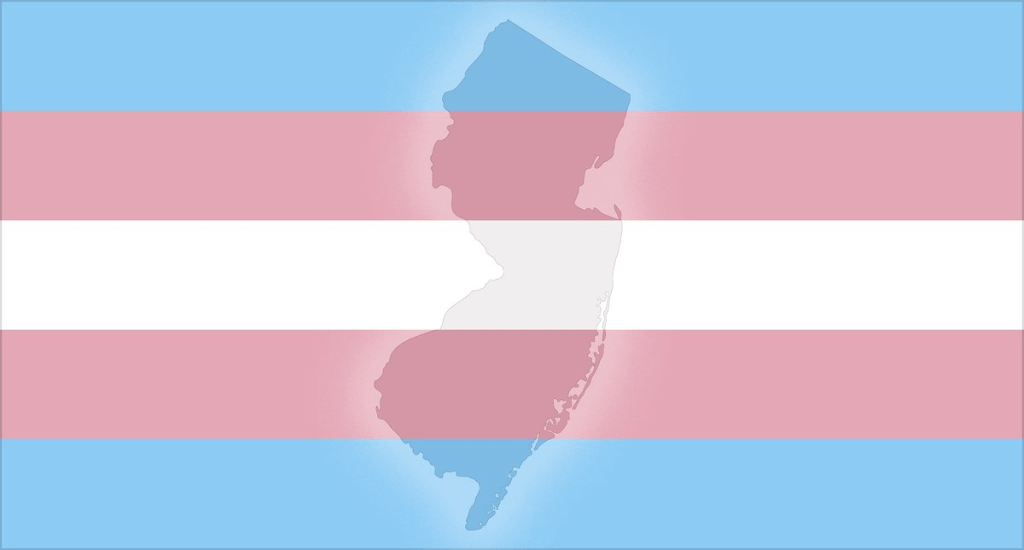
That night, McLean lit City Hall in the colors of the transgender flag: pink, white, and baby blue.
Now Boise has added the wraps, and a massive sign hung in the building’s glass facade that declares, “Creating a city for everyone,” alongside a Progress Pride rainbow.
“Well, the law pertained to flags, and we are in full compliance with the law,” Mayor McLean told Boise State Public Radio on Tuesday.
“We have a rich history of an arts and culture scene here,” she added. “So because it’s allowed, we have installed art that demonstrates our values of being a safe and welcoming city for everyone.”
State Rep. Ted Hill (R), who brought the two bills to address Republicans’ displeasure with the Pride flag, told the Statesman he was expecting some kind of response, though he’d guessed it would be a mural.
It was too early to tell whether lawmakers would bring a bill to address the mayor’s workaround, Hill said.
“She’s insulting everyone else,” he complained. “Is that City Hall or some activist Pride Hall?”
After refusing years earlier to acknowledge the gender of a Romanian citizen who transitioned in another European Union (EU) country, Romanian courts ruled on Tuesday that the government must recognize the man’s identity, reported Romanian news outlet Spot.
Advocates say it’s a landmark victory for transgender Europeans.
The case concerned Arian Mirzarafie-Ahi, a transgender man with Romanian and British citizenship. He was born in Romania and moved to the United Kingdom in 2008, where he began his transition several years later. After obtaining legal documentation in the UK in 2020, the Romanian government declined to recognize Mirzarafie-Ahi’s gender identity, citing a disparity with documents he used earlier in Romania.
“This put him in the position of having two sets of documents with two different identities,” said ACCEPT, the Romanian advocacy group that helped shepherd Mirzarafie-Ahi’s case through the courts. In the UK, he was recognized “as a man, in Romania, as a ‘woman’.”
Mirzarafie-Ahi sued, and the Romanian court that heard his case advanced it to the Court of Justice of the European Union (CJEU) to settle the interstate argument. That court said in 2024 that the effect of Romania’s refusal to recognize Mirzarafie-Ahi’s gender identity impeded his freedom of movement among member states and was, effectively, a fundamental form of discrimination.
The court ruled, therefore, that all EU member states are obligated to recognize the identity documents of transgender individuals who have earned legal gender recognition in another EU state. (The UK left the EU in 2020.)
However, Romania, one of the most illiberal members in the EU when it comes to LGBTQ+ rights — it sits at the bottom of ILGA’s EU state rankings — resisted the order, with two different government agencies refusing to recognize Mirzarafie-Ahi’s identity.
Once again, Mirzarafie-Ahi took the Romanian government to court, but this time he won in his home country, with the same Romanian courts that sent his case to the CJEU now bound by its decision.
“Today, March 31, we celebrate Trans Visibility Day, and I am happy to use this opportunity to turn to the people in my community with good news,” Mirzarafie-Ahi said in a statement after his victory. “I have finally won in the courts of Romania! It is not only my victory, but also ours — of those who are still waiting to be seen, heard and recognized.”
Mirzarafie-Ahi’s case mirrors a similar one decide in March in Poland and Germany.
An administrative court in Poland found itself in a nearly identical situation, addressing the marriage of two men who had wed in Berlin years earlier. Government officials in Poland refused to recognize the marriage. That court, too, sent the interstate dispute to the CJEU, which decided in the men’s favor based on their right to freedom of movement throughout the European Union.
As the Trump administration continues to curtail federal education protections – with particular cruelty aimed at LGBTQ+ students – lawmakers in Maryland have advanced a sweeping bill to protect marginalized students against discrimination in virtually all educational institutions in the state.
H.B. 649, named the Advancing Equal Educational Opportunities for All Students in Maryland Act, creates stronger enforcement mechanisms against “discrimination and retaliation” based on “race, color, national origin, ethnicity, ancestry, religion, sex, pregnancy, sexual orientation, gender identity, disability, age, or marital status.”
The legislation allows students and families to report discrimination to either the state superintendent or the Maryland Commission on Civil Rights to investigate. It also gives students and families the right to sue an educational institution directly. It broadly defines an educational institution as any pre-K program, elementary school, secondary school, institution of postsecondary education, institution of higher education, or any other program that culminates in a certificate, diploma, or degree.
The bill also says that the state may withhold funding from a school in violation of the anti-discrimination protections and may also withhold funding if a school does not remedy the problem once it’s found.
Cleveland Horton II, the executive director of the Maryland Commission on Civil Rights, told Fox Baltimorethat the bill is “about making sure that when Maryland students experience discrimination, there is a clear, reliable, and timely place to turn at the state level.”
“This bill addresses a state-level enforcement gap in education discrimination, particularly in higher education. This bill is not intended to replace the Office of Civil Rights, but again, to provide a state-level parallel safeguard, and to reduce the over-reliance on the federal capacity.”
In written testimony in favor of the bill, the ACLU of Maryland emphasized that passage is “urgent.”
“When the current president was inaugurated in January 2026, there were over 270 pending complaints from Maryland residents through OCR [The federal Office for Civil Rights]. Many or perhaps most of these cases have already been dismissed without an investigation. With the dismantling of USDE and OCR, Maryland must fill the gap to ensure that the civil rights of all Maryland students are protected and upheld.”
The ACLU also pointed out that current Maryland anti-discrimination law does not cover students in higher education: “These students must rely on federal anti-discrimination laws. And with the aforementioned changes at the federal level, Maryland families have fewer practical options for filing complaints with the OCR.”
Religious institutions, on the other hand, have expressed concern.
“We are deeply concerned that H.B. 649 proposes that religious and faith-based schools would have their decisions judged by a State commission that will not respect or consider the sincerely held religious beliefs of the school or, accordingly, their constitutional rights,” the Maryland Catholic Conference said in written testimony, according to Fox Baltimore. “Allowing a commission that is unrelated to educational practices and procedures to literally police faith-based schools regarding broad terms of discrimination, potentially resulting in a cause of action which could result in compensatory or punitive monetary damages, is clearly unconstitutional and an overreach.”
Nevertheless, the bill passed the state House of Delegates 100-35 and is now being considered in the state Senate.
Republican lawmakers in South Carolina are trying to pass a resolution to demand the Supreme Court overturn its 2015 Obergefell v. Hodges ruling that legalized marriage equality in all the states that hadn’t yet done so, including South Carolina.
A group of 12 Republicans in the South Carolina House of Representatives introduced H-5501, a concurrent resolution that calls on the state to “reject the Supreme Court of the United States’ Obergefell decision and to call on the Supreme Court to reverse Obergefell and restore the natural law definition of marriage, a union of one man and one woman and to insist on restoring the issue of marriage and enforcement of all laws pertaining to marriage back to the several states and the people.”
The local TV news station WACH notes that concurrent resolutions have no legal force in South Carolina. Still, progressive advocates called out the resolution.
“Lawmakers in South Carolina cannot undo marriage for all committed couples in this country,” ACLU of South Carolina executive director Jce Woodrum said. “These lawmakers are fringe extremists.”
South Carolina passed a state constitutional amendment banning same-sex couples from getting married in 2006. In 2025, a PRRI poll found that 54% of people in South Carolina now support marriage rights for same-sex couples.
The resolution is part of a trend started last year, as far-right Republicans in state legislatures across the country started introducing resolutions demanding the Supreme Court overturn marriage equality. Other states that have seen such resolutions include Idaho, Michigan, Montana, North Dakota, and South Dakota.
Several red states have also considered bills that would give extra rights to opposite-sex couples who get married.
You must be logged in to post a comment.