Musk, who is said to have spent over $130 million supporting Trump’s election campaign, misgendered his daughter on X and attributed her transition to the “woke mind virus.”
Vivian Jenna Wilson, the estranged trans daughter of billionaire Elon Musk, has opened up about her consideration of leaving the U.S. following Donald Trump’s election victory. She also set the record straight once more after Musk falsely claimed she had been “killed by the woke mind virus” due to her transition.
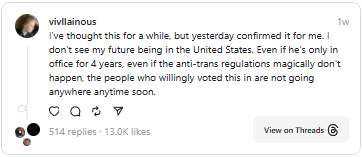
On November 6, the day after the U.S. presidential election, Wilson took to the Meta-owned platform Threads, writing, “I’ve thought this for a while, but yesterday confirmed it for me. I don’t see my future being in the United States.”
She continued, “Even if [Trump] is only in office for 4 years, even if the anti-trans regulations magically don’t happen, the people who willingly voted for this are not going anywhere anytime soon.”
A second Trump presidency could have a devastating impact on LGBTQ+ Americans. On his 2024 campaign website, Trump pledged to enact a federal ban on gender-affirming care for minors and to redefine gender at the federal level, recognizing only male and female as assigned at birth. These promises come amid the Republican party’s ongoing use of anti-trans rhetoric. According to data from Ad Impact, cited by Washington Post reporter Casey Parks on November 5, Republicans spent nearly $215 million on anti-trans TV ads during the 2024 election cycle.
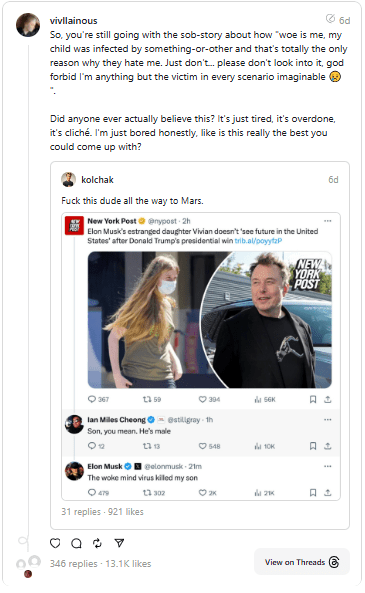
Meanwhile, Musk’s post-election comments included a response to a New York Post tweet about Wilson’s desire to leave the U.S., where he misgendered her and wrote, “The woke mind virus killed my son.”
The billionaire has spent much of this year aligning himself with Trump. According to CNBC, Musk has invested at least $130 million in pro-Trump campaign efforts, in addition to his frequent endorsements of the convicted felon on X. In his personal time, Musk has become notorious for lashing out against the existence of trans people, often dragging his daughter, Wilson, into his recent anti-trans rants.
Musk previously revived the claim that Wilson was “killed by the woke mind virus” during a July 22 appearance on Jordan B. Peterson’s podcast (and in subsequent X posts), attributing her transition to the so-called virus.
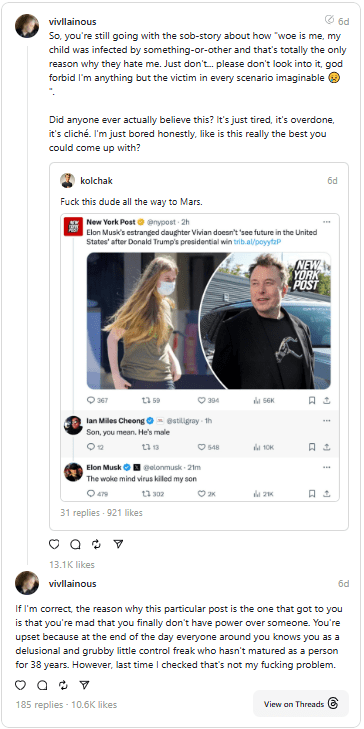
Wilson responded to Musk’s latest claim on November 8 via Threads, writing, “So you’re still going with the sob-story about how ‘woe is me, my child was infected by something-or-other and that’s totally the only reason why they hate me. Just don’t… please don’t look into it, god forbid I’m anything but the victim in every scenario imaginable 😥.”
She continued, “Did anyone actually believe this? It’s just tired, it’s overdone, it’s cliché. I’m just bored, honestly, like is this really the best you could come up with?”
Wilson went on to theorize that the reason Musk’s post struck a nerve was that “you’re mad that you finally don’t have power over someone.”
“You’re just upset because at the end of the day everyone around you knows you as a delusional and grubby little control freak who hasn’t matured as a person for 38 years,” she added. “However, last time I checked that’s not my fucking problem.”
Wilson previously filed a name and gender change petition in 2022, citing both her gender identity and the fact that she “no longer live[d] or wish[ed] to be related to [her] biological father in any way, shape, or form.” In a July interview with NBC News, she described Musk as an absent father who harassed her as a child for being feminine.
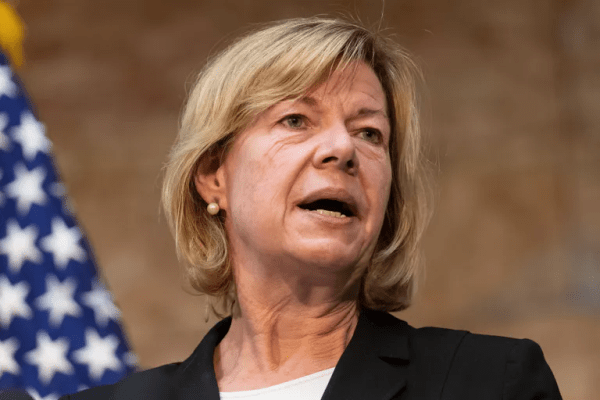
In a closely contested Senate race in Wisconsin, Republican candidate Eric Hovde is heavily investing in ads targeting incumbent Sen. Tammy Baldwin (D-WI) and her longtime partner.
When asked by CNN if she believes Hovde aims to remind voters of her sexual orientation, Baldwin responded, “I think he is.”
The ads feature Baldwin’s partner, Maria Brisbane, who heads a private wealth management division at Morgan Stanley, questioning Baldwin’s ethics while subtly highlighting her sexual orientation.
One ad shows a woman in her kitchen stating, “Baldwin’s in bed with Wall Street,” referencing the senator’s relationship with Brisbane. In other instances, Brisbane is labeled Baldwin’s “girlfriend.”
All these ads convey a similar dual message, funded by a significant influx of cash from Republican sources and Hovde’s own wealth.
While Democrats are expected to outspend Republicans overall in the Senate race, Hovde and his supporters have reserved $51 million for advertising from October 1 through Election Day, compared to $39 million for the Democrats.
Hovde’s latest advertisement twists Baldwin’s previous statements against her, featuring a 2009 Senate hearing where she discussed domestic partner benefits.
“Married members must disclose important information about their spouse’s income, investments, gifts, and debts. Surely the public interest would require that these obligations apply to partners of gay and lesbian officeholders,” Baldwin states in a C-SPAN clip.
The ad’s narrator then contrasts this with a recent debate where Baldwin, addressing Hovde, said, “Stay out of my personal life,” highlighting that she and Brisbane are not married.
Baldwin further asserted, “And I think I speak for most Wisconsin women that he should stay out of all of our personal lives.”
Despite Baldwin’s arguments, she faces challenges regarding financial disclosures related to her partner. She clarified to CNN that, unlike a previous domestic partnership, she is not required to disclose Brisbane’s clients due to a lack of a legally recognized relationship. The couple does own a $1.3 million condominium in Washington together.
Baldwin condemned Hovde’s tactics as a dog whistle, designed to distract from his own financial conflicts tied to owning a $3 billion bank.
“I disclose everything I’m required to,” she stated. “I think he’s trying to divert attention from his own questionable judgments.”
“Imagine him on the Banking Committee, regulating banks,” she added. “This is a serious conflict of interest he wants to deflect from.”
Hovde’s ad campaign also targets the transgender community, linking Baldwin to claims about allowing men to compete in women’s sports and supporting a clinic that allegedly provides transgender therapy to minors without parental consent, which has been proven false.
For the latest headlines affecting LGBTQ+ communities worldwide, subscribe to the LGBTQ Nation newsletter.
On a scorching hot day in Las Vegas, George Escarero was on a water break from knocking on doors in one of the city’s sprawling gated communities.
The gay, longtime banquet server at the Mirage, whose first language is Spanish, estimated the temperature at 105 but said, “That’s how we go, just walk and walk and walk and sweat and drink water, and if they cuss us out, kind of ignore it. We’re just there to open up, you know, so people can open up their eyes and just see it.”
“In Michigan, it really does feel like democracy is on the line,” says Progress Michigan’s Denzel McCampbell.
Escarero is one of an “army” of canvassers deployed by the Culinary Workers Union in Nevada and was adamant that “it’s time for a big change.”
Your LGBTQ+ guide to Election 2024
Stay ahead of the 2024 Election with our newsletter that covers candidates, issues, and perspectives that matter.DailyWeeklyGood News
“Instead of taking stuff away and making the rich richer,” Escarero shared from his pitch, “Kamala is there to help out, and she knows what we’re going through because she was one of us.”
“Kamala Harris was middle class, like all of us,” he said. “She was a hard worker, started from the bottom, worked her way up. They cannot, like, say, ‘Well, you know what, Kamala, you got juiced in.’ No, she worked from the bottom.”
Escarero said his experience meeting with voters was “probably like 50% are really nice, and 50%” the ones who cuss him out.
Culinary UnionGeorge Escarero, banquet server at The Mirage, canvasses on a hot summer day in Las Vegas. | Culinary Union
Those numbers track with election polls in Nevada, which show an electorate evenly divided between Vice President Kamala Harris and former President Donald Trump supporters in a swing state that could determine the outcome of a dead-heat presidential election.
Nevadans have an unpredictable history at the polls. Out of the last 12 national elections, the state split six to six voting for a Democratic or Republican presidential candidate, while the margin for Democrats has narrowed in every election since Obama won in 2008. President Joe Biden carried the state by just 2 points in 2020.
Share Your Opinion
What are you feeling as we approach Election Day?
Anxiety
Excitement
Sadness
Relief
JoyResultsVote
While Democrats hold majorities in the State House and Senate, Nevadans chose conservative Republican Joe Lombardo for governor over Democratic incumbent Sisolak in 2022. However, U.S. Sen. Jackie Rosen, a Democrat running for her second term this year, holds a narrow lead over Trump-endorsed Republican Sam Brown.
Adding to the voter volatility: an electorate where unaffiliated voters outnumber both Democrats and Republicans in the state.
In 2018, Nevada voters approved a new Automatic Voter Registration system, mandating the Department of Motor Vehicles register new voters or those with lapsed party registration as “unaffiliated” unless they opt out or choose a party.
AVR created 142,484 new Nevada voters in 2020; less than a third chose to call themselves Democrats or Republicans.
It’s a new, mostly young pool of voters open to persuasion and put off by the status quo, said Nevada state Rep. Cecelia González (D), who identifies as queer and bisexual and is running for a second term in the Nevada Assembly.
“Younger voters and people of color really feel alienated by this two-party system, and they really connect with candidates that meet voters on a more personal level, right?” she said. “The shift reflects a growing frustration with traditional party politics and a desire for candidates who speak to the real issues, and not just these partisan talking points.”
The 32-year-old, of Mexican and Thai descent, says she feels the same frustrations. ” Because I’m younger, that’s where I focus on to try to get out the vote.”
Cecelia GonzálezNevada State Rep. Cecelia González (D) speaks with a student in her district in Las Vegas | Cecelia González
18 to 34 year olds make up a whopping 30% of registered voters in Nevada and are the largest block after those over 55, who are historically less persuadable but more inclined to vote than their younger peers. Less than half of the youngest cohort claim Democratic or Republican party allegiance.
While she’s running as a Democrat, González says she knows where those voters are coming from when they meet on the campaign trail.
“They identify with me not just because I’m a woman, not just because I’m Mexican or Latino or Asian. It’s the fact that I resonate with these lived experiences because I come from the same backgrounds.”
“Young people, Latinos, and Asian communities are really what’s going to get the vice president and Walz across the finish line,” she said.
As for canvassing the day we spoke, González said door-knocking was off the table.
“It’s so hot. It’s literally 114 today,” she gasped.
Even before the large influx of unaffiliated voters, party loyalty was on the decline in Nevada. The state’s libertarian “live and let live” ethos has further blurred the distinction between Democrats and Republicans.
That’s reflected in some of the most progressive LGBTQ+ policies and legislation in the country, and it’s one reason the Human Rights Campaign, the country’s largest LGBTQ+ advocacy group, is targeting “equality voters” in Nevada, hoping to appeal to Democrats, Republicans and unaffiliated voters alike in their swing state efforts to get voters to the polls.
But no constituency is a monolith, including the fast-growing Latino population, whose rapid growth has helped transform Nevada into a majority-minority swing state.
The minority share of the population in Nevada rose to just over 54% with the last U.S. Census. Meanwhile, the percentage of the non-Hispanic white population in the state continues its historical decline, dropping from over 83% in 1980 to just 46.4% in 2022.
Those facts haven’t translated, however, to guaranteed loyalty to Democrats, who in years past — as defenders of civil rights and the working class — could count on Latino voters. Their once-uniform support has narrowed and fractured.
The shift is even greater among young Latino men in Nevada: 53% of male Latino voters ages 18 to 34 support Trump while just 40% support Harris. Similar numbers among Latino men ages 35 to 49 add up to a major deficit in a key constituency that could tip the election.
It’s why getting face-to-face with those voters before Election Day is the “number one priority” for both González and George Pappageorge, Secretary-Treasurer of the Culinary Union and lead organizer of what he proudly calls “the largest walk program in the state of Nevada.”
“They come and work for the union,” Pappageorge said of the hundreds of canvassers on leave of absence from their day and night jobs, including guest room attendants, cocktail and food servers, porters, bellmen, cooks, bartenders, and laundry and kitchen workers from the union’s membership.
“They work six days a week. They have Friday off and they’re out in the heat, getting chased by dogs and knocking on doors to turn out the vote,” he said.
The Culinary Union and its affiliates represent more than 60,000 workers in the state, with members from 178 countries. Estimates put the number of LGBTQ+ hospitality workers at one in five, and the union is one of the largest healthcare consumers in the state, with coverage provided for more than 145,000 Nevadans.
Who is elected in any election — locally, statewide, or nationally — has a direct bearing on the union’s ability to thrive, or survive.
A second Trump administration, Pappageorge said, would be “a threat to our existence.”
“This is a guy that jokes with his billionaire buddies about firing striking workers, who brags about crossing picket lines and really has a lot of promises, a lot of promises. But the problem with Trump is that he lies, and he lies a lot.”
Ted Pappageorge, Secretary-Treasurer of the Culinary Union, speaks with a fellow member at a get-out-the-vote meeting in Las Vegas.
“Look, if the election was today, we think Trump would win,” Pappageorge said, “but the election is not today, and our job is to make sure that here in Las Vegas we are contesting every single vote. We’re knocking on every single door. We’re talking to every single person in that household, to union members and their family members, and we’re driving the votes.”
“When you have those kinds of conversations” with voters, Pappageorge said, “you have an opportunity to drive votes and persuade folks. And we think these votes are winnable.”
“But we’ve got to do the work,” he added. “It’s going to be extremely close.”
Escarero, the banquet worker, agreed, sharing, “I even get goosebumps. But I feel, even though it’s going to be a tight, I know she’s going to win.”
Asked what Harris’ pledge to fight for “the freedom to love who you love” meant to him, the longtime union member paused and asked, “To me?”
Then he started to cry.
“I was living the life that it wasn’t,” Escarero said through tears. “I had to fake — I had to fake who I was, and now we have a freedom. Now we can get married. No discrimination. Do the military.”
“That’s why I get very emotional, because I had a tough life, because I had to act like somebody that I wasn’t. You know what I mean?”
With people cursing and dogs chasing him, Escarero shared what kept him going through the hot days canvassing.
He remembered “a knock not too long ago” when he asked a middle-aged white woman, “‘If you don’t mind,’ I said, ‘What side are you on?’ I said, ‘Do you have a plan? Are you on the Trump side or…?”
“‘Oh no, no, no, no, honey,’” she interrupted, pointing to a small Harris-Walz sign in her car. “‘You see my sign out there in the window?’ She goes, ‘Give me a big one and I’ll put it in the front yard.’”
“Let’s fight for our rights,” Escarero said, before heading back out into the heat.
Subscribe to the LGBTQ Nation newsletter and be the first to know about the latest headlines shaping LGBTQ+ communities worldwide.
LGBTQ+ ballot initiatives have long served as a wedge issue, mobilizing conservative voters and influencing the rights and freedoms typically protected by law. The 2024 election follows this tradition, with LGBTQ+ civil rights once again being subjected to public debate.
In New York, voters will decide whether to include sexual orientation, gender identity, and gender expression in the state’s anti-discrimination amendment. Meanwhile, reproductive rights will also be up for a vote in 10 other states.
California, Colorado, and Hawaii voters will decide this November whether to repeal their states’ constitutional bans on same-sex marriage.
Since 1998, same-sex unions have consistently been the top issue on state referendums. In that time, 34 states have put the question to voters, with many passing constitutional amendments that prohibited same-sex marriage. These amendments were often used as a political tool to mobilize conservative voters, particularly in the 2004 election when 11 states approved such bans, helping to boost George W. Bush’s campaign.
Marriage equality consistently lost at the ballot box until 2012, when voters in Maine, Maryland, Minnesota, and Washington approved same-sex marriage, signaling a shift in public opinion that had been building since around 2009, when support for same-sex marriage crossed the 50% threshold in national polls.
In 2015, the Supreme Court’s landmark Obergefell v. Hodges decision struck down all state constitutional amendments banning same-sex marriage, declaring such bans unconstitutional. However, these amendments remain in place in several state constitutions. Activists are now pushing to repeal them, especially in light of concerns that the conservative-leaning Supreme Court could overturn Obergefell, as Justice Clarence Thomas hinted after the court struck down Roe v. Wade.
The Origins of Ballot Initiatives on LGBTQ+ Rights
California’s 1978 election introduced the first state ballot initiative related to LGBTQ+ rights—Proposition 6, also known as the Briggs Initiative. Sponsored by Orange County legislator John Briggs, the initiative sought to ban anyone who engaged in “public homosexual activity” from working in California public schools. The proposal was part of a broader wave of anti-gay activism spurred by Anita Bryant’s 1977 “Save Our Children” campaign in Florida, which successfully repealed Dade County’s anti-discrimination ordinance based on sexual orientation. Harvey Milk played a pivotal role in organizing the opposition to Prop 6, which was defeated by a 16-point margin.
Since then, other states have introduced ballot initiatives aimed at legalizing or banning discrimination based on sexual orientation or gender identity. Over time, voters have increasingly supported anti-discrimination measures. In 1988, Oregon voters overturned the governor’s authority to ban discrimination based on sexual orientation. In 2018, Massachusetts voters upheld a law prohibiting discrimination based on gender identity.
Maine and Oregon: Key States in the Fight for LGBTQ+ Rights
Maine and Oregon have consistently put LGBTQ+ rights to a vote. In Maine, voters initially blocked same-sex marriage in 2009, but then approved it by the same 53% margin in 2012. Maine also rejected anti-LGBTQ+ discrimination protections in 1998 and 2000, only to approve them in 2005. In Oregon, voters defeated a “don’t say gay” measure in 2000 by a narrow 5.7% margin.
Many states also used ballot measures to resist the inclusion of sexual orientation as a protected identity in anti-discrimination laws. In the 1990s, voters in Oregon, Idaho, and Maine approved such measures, protecting sexual orientation as a legally recognized identity.
The Impact of Other Ballot Measures on LGBTQ+ Rights
It’s not just LGBTQ+-specific ballot measures that impact the community. Other laws, such as voter ID requirements in Arkansas and North Carolina, disproportionately affect trans individuals and other marginalized LGBTQ+ people, limiting their ability to vote.
In addition to these referendums, the candidates voters elect at the state level will play a critical role in shaping LGBTQ+ rights. Republican-led legislatures have introduced or passed hundreds of bills targeting LGBTQ+ individuals, particularly in areas such as gender-affirming health care, bathroom access, inclusive education, and sports participation. Supporting state-level and local candidates who champion LGBTQ+ rights will have long-term implications, even if certain issues are not directly decided by referendum.
Civil Rights and Public Opinion
The fight for civil rights has a long history of being put to public referendum. Since 1868, issues related to race, sex, and disability have often been decided by voters, with initial support for discrimination gradually giving way to support for equality. While women’s rights gained public approval in the 1970s, LGBTQ+ rights did not see widespread support until the 2000s.
The question of whether civil rights should be determined by public opinion, rather than by courts or legislatures, has allowed forms of discrimination—such as racism, sexism, and homophobia—to become entrenched in law. Although public opinion on LGBTQ+ rights is often divided and fluid, most polls now show a majority in favor of anti-discrimination laws for LGBTQ+ individuals.
The Importance of Voting
With LGBTQ+ rights on the ballot this November, it’s more crucial than ever to vote. In addition to ballot measures, the elected officials who hold office at the state and local levels will have the power to pass or block pro-equality legislation, impacting LGBTQ+ rights for years to come. Whether through referendums or legislative action, LGBTQ+ rights remain at stake, and your vote matters.
Make your voice heard—not just on ballot measures, but by choosing candidates who will protect and advance equality for all.
Florida’s 12 public universities are eliminating courses that may “distort significant historical events” or “teach identity politics” to comply with S.B. 266, a law passed by the state legislature in 2023. This law restricts schools from using state or federal funds for initiatives advocating diversity, equity, and inclusion (DEI), or promoting political and social activism. In addition, it has led to the closure of LGBTQ+ student centers and the dismantling of cultural support programs on campuses.
As a result, universities are scrapping classes such as Anthropology of Race & Ethnicity, Introduction to LGBTQ+ Studies, Sociology of Gender, Women in Literature, Chinese Calligraphy, The History of Food and Eating, Humanities Perspectives on Gender and Sexuality, Social Geography, and a course on Magic, Witchcraft, and Religion. A class examining racial and gender inequality and crime, titled Social Problems, is also being impacted, according to a Politico report.
Some of these courses have been removed entirely, while others have lost their “general education” designation, meaning they will only be available as electives for upper-level students in certain disciplines, rather than as part of the broader general education curriculum. Additionally, some course descriptions and student outcomes have been revised to ensure compliance with the law.
The Board of Governors will review each institution’s proposed course offerings for the 2025-26 academic year and may suggest changes. Schools that refuse to comply could risk losing vital state funding or face other penalties from Governor Ron DeSantis and the Board.
Critics argue that this law undermines academic freedom, enforces government-approved viewpoints, and could drive talented students and educators away from Florida’s universities. Some also warn that the law could jeopardize the accreditation of certain schools that are required by national accreditation bodies to have DEI programs as a core component of their education. Others have expressed concern about the vague language of the law, which leaves many unsure about what is permitted and what is not.
Historically, decisions about course content have been left to individual universities. However, this law is part of Governor DeSantis’ broader effort to challenge DEI policies and shift the state’s educational institutions toward a more conservative ideology.
While signing the law in May 2023, DeSantis said, “DEI has basically been used as a veneer to impose an ideological agenda, and that is wrong. If you want to do things like gender ideology, go to Berkeley, go to some of these other places… You don’t just get to take taxpayer dollars and do whatever the heck you want to do and think that’s somehow OK.”
This law follows DeSantis’ 2022 signing of the so-called Stop WOKE Act, which bans educational programs on racism and gender-based discrimination in schools and businesses. That law is currently on hold as courts review its constitutionality.
Federal Judge Mark E. Walker, who blocked the Stop WOKE Act in 2022, described the law as “positively dystopian,” saying it “officially bans professors from expressing disfavored viewpoints in university classrooms while permitting unfettered expression of the opposite viewpoints.” He emphasized that academic freedom should allow professors to express their perspectives, as long as they do not only align with state-approved views.
A recent mailer from the Texas GOP is facing backlash for misrepresenting the story of a trans man and former high school wrestler, Mack Beggs.
The mailer targets Rep. Colin Allred (D-TX), who is challenging Ted Cruz (R-TX) for his Senate seat. It features a blurred image of Beggs when he was an out trans boy competing in girls’ sports, with the text: “Colin Allred failed to protect women’s sports, supporting boys competing with girls.”
At the time, the Texas University Interscholastic League (UIL), which governs public school sports, had prohibited Beggs from joining boys’ teams due to the gender marker on his birth certificate. While transitioning and taking testosterone, Beggs wrestled on the girls’ teams, becoming the center of controversy, particularly after winning state championships in 2017 and 2018.
Rep. Allred has consistently supported trans inclusion in sports, voting against bills that would have barred trans women from participating in women’s sports.
Beggs, now speaking out, expressed concern for his and his family’s safety due to the mailer’s misleading use of his image. “How they’re using my photo, it’s just very misleading. It’s not OK,” he told the Houston Chronicle. He is now seeking legal advice from the American Civil Liberties Union.
On Instagram, Beggs condemned the Texas GOP’s use of his story. “The Republican State of Texas Government has decided to USE my image for yet again one of their political campaigns,” he wrote. “I have already had a few people let me know about this campaign ad paid for and by the Republican Party in TX. NOT COOL. 🚫”
He added: “The fact they are STILL using my story and FACE for their political agendas. It’s sickening at this point.”
In a major win for LGBTQ+ rights, Thailand has become the first Southeast Asian country to legalize same-sex marriage.
The bill, passed by Parliament earlier this year, was signed into law by King Maha Vajiralongkorn on Tuesday through Royal Assent. The law will take effect in 120 days, with the first same-sex weddings anticipated in January.
Siritata Ninlapruek, an LGBTQ+ activist, expressed, “We are all delighted and excited. We’ve been fighting for our rights for over ten years, and now it’s finally happening.”
With this historic change, marriage laws in Thailand will no longer use gendered terms like “husband” and “wife,” replacing them with inclusive, gender-neutral terms like “partner.” Same-sex couples now enjoy the same legal rights as their heterosexual counterparts, including adoption and inheritance rights.
Waaddao Chumaporn, another LGBTQ+ rights advocate, told AFP, “The law is a monumental step towards equal rights in Thailand.”
Chumaporn is planning a mass wedding for over a thousand LGBTQ+ couples in Bangkok on January 22, the first day same-sex couples can legally marry.
Though Thailand is known for being more accepting of LGBTQ+ individuals compared to neighboring countries, the legalization of same-sex marriage comes after years of political challenges. LGBTQ+ advocates like Apiwat Apiwatsayree have been waiting for this moment for over a decade.
“We’ve been waiting for a long time,” said Apiwat, who plans to marry his partner of 17 years.
Human rights and LGBTQ+ organizations worldwide celebrated this achievement. Amnesty International’s Thailand Researcher, Chanatip Tatiyakaroonwong, remarked, “Thailand has taken a historic step towards becoming the first country in Southeast Asia to legalize marriage for LGBTI couples. This landmark moment is a reward for the tireless work of activists, civil society organizations, and lawmakers who have fought for this victory.”
Thai Prime Minister Srettha Thavisin made marriage equality a key issue during his tenure, driving the law forward.
Srettha shared on X, “Another important step for Thailand. The same-sex marriage law passes. Equality is concrete here in Thailand.”
For more updates on LGBTQ+ issues worldwide, subscribe to the LGBTQ Nation newsletter to stay informed about the latest headlines shaping LGBTQ+ communities globally.
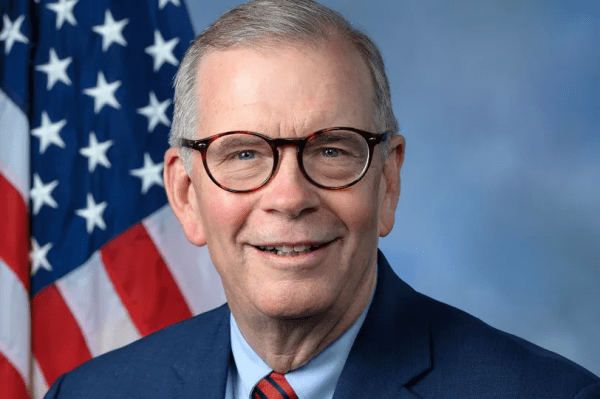
A House committee has advanced a controversial bill, H.R. 736, known as the “PROTECT Kids Act,” which would require schools to disclose transgender students’ identities to their parents if the students request to use different pronouns, a new name, or facilities aligned with their gender identity. The bill, introduced by Rep. Tim Walberg (R-MI) and Sen. Tim Scott (R-SC), would enforce this policy on all elementary and middle schools that receive federal funding, threatening to withhold funds from any school that does not comply.
Rep. Walberg, who has a history of supporting Uganda’s anti-LGBTQ+ laws, stated that parents should be informed of all decisions affecting their children. He argues that the bill would “safeguard parental rights by requiring parental consent and will help mitigate under-the-radar activism in our schools.” However, critics, including Rep. Mark Pocan (D-WI), chair of the Congressional Equality Caucus, have condemned the bill as an attack on transgender students, warning that it could put vulnerable kids at risk, particularly those without supportive families.
The bill passed the House Committee on Education and the Workforce with a 22-12 vote and will now proceed to the House floor for consideration. While it may pass the Republican-controlled House, it faces significant opposition in the Democratic Senate, and President Joe Biden is unlikely to sign it into law, as it contradicts his administration’s policies on LGBTQ+ rights.
Christopher Cole and his husband, longtime residents of the predominantly Republican and predominantly white town of Watertown, Connecticut, received a racist and homophobic letter last Friday afternoon. The letter, referencing their Democratic yard signs and the rainbow flag displayed in their front yard, was typed and anonymous. Later that same night, a group of men trespassed onto their property, stealing both the signs and the flag.
Although police say the perpetrators may never be caught, Cole—a vocal community activist—told LGBTQ Nation that he refuses to be intimidated. He and his husband have already replaced the stolen items and have been met with overwhelming support from the community, local news outlets, and even their congresswoman.
The letter, signed by someone identifying as “Americans that care,” specifically targeted the yard signs supporting the Democratic presidential ticket, Vice President Kamala Harris and Minnesota Gov. Tim Walz, as well as Black Congressional candidate Jahana Hayes. The entire hateful incident was caught on camera.
Related:
Vandals cowardly defaced a queer family’s Pride flag by urinating on it before fleeing the scene. The entire disturbing act was captured on camera.
The letter sent to Christopher Cole and his husband, signed by someone calling themselves “Americans that care,” specifically mentioned the Democratic yard signs they had displayed in support of Vice President Kamala Harris, Minnesota Gov. Tim Walz, and Black Congressional candidate Jahana Hayes.
“If you knew how goddamn foolish your rah-rah for Karmonkey and Tennessee Waltz look on your house, you’d take it down along with your Nobodywana Hayes sign and especially the Prideless flag on your front door you could use for toilet paper,” the letter said. “All I can think of you is you must be a Dumbocrat. So I feel sorry for you.”
Around 10:38 p.m., roughly seven hours after receiving a hateful letter, Christopher Cole’s security camera captured footage of a white individual wearing a dark hoodie and facemask vandalizing the rainbow flag that had flown from his home for the past 14 years. The person tore the flag down and fled, while the camera’s audio picked up the sound of him and other men shouting indistinctly.
Cole and his husband were awake in their home at the time but didn’t realize what had occurred until the following morning when Cole’s husband let their dog outside and discovered the missing flag and signs.
Cole shared images of the letter and video footage of the vandal on his Facebook page. By the next evening, he had replaced the stolen signs and flag, posting images of the new ones alongside a Bible verse from Matthew 5:39: “But I say to you: Do not resist an evildoer. But if anyone strikes you on the right cheek, turn the other also.”
“Even though we’re in Connecticut, this is a very red town, and there are Trump signs everywhere,” Cole told LGBTQ Nation. He noted that the flag had been flying for 14 years, though it had often attracted hostile reactions. People driving by would shout, “Are you f**king kidding me?” or “What the hell is wrong with you?” On one occasion, a truck driver revved its engine and spun its wheels near their yard, filling it with smoke, and during that incident, someone stole three of their signs.
Despite such incidents, Cole had dismissed these individuals as “immature, crazy people.” However, he found the racist, homophobic, and misogynistic language in the letter “really concerning.”
“It’s one thing to yell obscenities from the street, but to come onto someone’s property, rip down something that represents them, and steal their political signs is crossing a line. We felt violated, unsafe, and intimidated, so we called the police.”
Cole provided the authorities with the letter and security footage, but officers informed him that without further evidence, identifying the perpetrator would be difficult. Watertown Police Chief Joshua Bernegger told local news station WTNH that, “There’s no indication within the letter that it was motivated by hate or against any protected class of individual,” despite the clear threats.
In a statement, the Watertown Police Department emphasized, “We take this crime very seriously. No citizen should be subject to fear and intimidation tactics based on their political affiliation.”
Cole shared that, for the most part, the rainbow flag has inspired positive responses, including a crayon drawing from a six-year-old depicting Cole and his husband with the flag, and an eight-page letter from a 15-year-old high school student who wrote that seeing the flag every day gave her the courage to come out. Over the years, he has seen other rainbow flags appear in his neighborhood, inspired by his own.
In the wake of the vandalism, Cole and his husband were moved by the support from their community. Neighbors brought over replacement signs and banners, and their next-door neighbor even put up a larger Pride flag than the one that was torn down. Four news stations covered the incident, and Cole and his husband replaced the stolen signs with even bigger ones.
On Sunday morning, as news of the vandalism spread, Congresswoman Jahana Hayes, whose campaign sign had been in Cole’s yard, called him directly at 8:45 a.m. She expressed her support for Cole and his husband and apologized that their backing of her campaign had resulted in their home being targeted.
She joined Cole and his husband at their local church that morning, offering her admiration for their courage and refusal to be intimidated. Cole is active in the United Church of Christ, a progressive Christian church, where he has helped make the congregation more inclusive of LGBTQ+ people. The process was contentious, with some members leaving and others posting hateful comments on social media.
Cole also serves as the executive director of APNH (A Place to Nourish Your Health), an LGBTQ+-inclusive community health center in nearby New Haven that supports people affected by HIV, substance use, and mental health conditions. Having experienced severe bullying as a child, Cole refuses to back down now in the face of harassment.
“Especially in a very conservative town, I am committed to being an activist and speaking out. It makes a bigger impact here than in places like West Hollywood or the Upper West Side of Manhattan, where there are thousands of Pride flags. It’s a different story when you’re the only one flying a flag in a place like this, and the only church that does that.”
“I’m committed to not being silenced, to standing strong and shining light where there is darkness. In this political climate, where some think it’s okay to intimidate and spread hate, I won’t shrink back—and no one else should either.”
Shortly after announcing that his company, X, would be moving out of California due to the state’s newly enacted law that protects trans students, Elon Musk went on a demeaning rant about his own transgender daughter on a right-wing podcast, repeatedly misgendering her and saying that she had been “killed by the woke mind virus.”
The billionaire was a guest on Monday’s episode of The Jordan B. Peterson Podcast, which found the titular conservative influencer interviewing Musk at Gigafactory Texas, where Tesla is headquartered. Toward the end of the podcast, Peterson asked Musk about “one of things that [he’s] been relatively vocal about,” namely gender-affirming care. Peterson referred to trans minors’ access to medical care “the worst medical and psychological malpractice I’ve ever seen anywhere,” adding, “At least the bloody Nazis knew it was wrong and tried to hide it.”
(Peterson was likely referring to the Institute for Sexual Research in Berlin, which performed the world’s first gender-affirming surgeries, and which was a noted target of one of the first and largest of the Nazi book burnings.)
Although trans advocates have been sounding the alarm about Musk since he bought the platform formerly known as Twitter in 2022, the CEO has tilted even further into more full-throated endorsement of transphobic talking points in recent years. In his interview with Peterson, he agreed with the psychologist, calling the term gender-affirming care “a terrible euphemism” and referring to it as “child mutilation and sterilization,” per The Daily Beast.
“You’re taking kids who are obviously often far below the age of consent — almost every child goes through some kind of identity crisis, it’s just part of growing up — so it’s very possible for adults to manipulate children who have are having a natural identity crisis into believing that they are the wrong gender and that they need to be the other gender,” Musk said. Though it is a common right-wing talking point that transness naturally desists in most young people, studies have found that trans youth are actually extremely unlikely to detransition.
But the issue is personal for Musk, as he explained to Peterson, claiming that he was “essentially tricked into signing documents for one of my older [children]… before I had really any understanding of what was going on” — a reference to his daughter Vivian Jenna Wilson, who in 2022 filed a petition to change her name in part because, as she stated, “I no longer live with or wish to be related to my biological father in any way, shape or form.”












 fleeredstates.blog
You must be logged in to post a comment.