A federal appeals court panel has ruled that Tennessee does not unconstitutionally discriminate against transgender people by not allowing them to change the sex designation on their birth certificates.
National headlines from ABC News
Catch up on the developing stories making headlines.
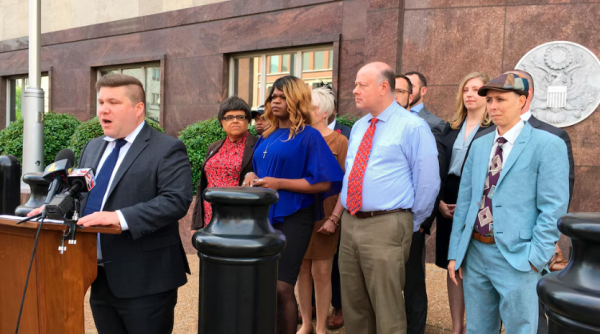
NASHVILLE, Tenn. — A federal appeals court panel ruled 2-1 on Friday that Tennessee does not unconstitutionally discriminate against transgender people by not allowing them to change the sex designation on their birth certificates.
“There is no fundamental right to a birth certificate recording gender identity instead of biological sex,” 6th U.S. Circuit Court of Appeals Judge Jeffrey Sutton wrote for the majority in the decision upholding a 2023 district court ruling. The plaintiffs could not show that Tennessee’s policy was created out of animus against transgender people as it has been in place for more than half a century and “long predates medical diagnoses of gender dysphoria,” Sutton wrote.
He noted that “States’ practices are all over the map.” Some allow changes to the birth certificate with medical evidence of surgery. Others require lesser medical evidence. Only 11 states currently allow a change to a birth certificate based solely on a person’s declaration of their gender identity, which is what the plaintiffs are seeking in Tennessee.
Tennessee birth certificates reflect the sex assigned at birth, and that information is used for statistical and epidemiological activities that inform the provision of health services throughout the country, Sutton wrote. “How, it’s worth asking, could a government keep uniform records of any sort if the disparate views of its citizens about shifting norms in society controlled the government’s choices of language and of what information to collect?”
The plaintiffs — four transgender women born in Tennessee — argued in court filings that sex is properly determined not by external genitalia but by gender identity, which they define in their brief as “a person’s core internal sense of their own gender.” The lawsuit, first filed in federal court in Nashville in 2019, claims Tennessee’s prohibition serves no legitimate government interest while it subjects transgender people to discrimination, harassment and even violence when they have to produce a birth certificate for identification that clashes with their gender identity.
In a dissenting opinion, Judge Helene White agreed with the plaintiffs, represented by Lambda Legal.
“Forcing a transgender individual to use a birth certificate indicating sex assigned at birth causes others to question whether the individual is indeed the person stated on the birth certificate,” she wrote. “This inconsistency also invites harm and discrimination.”
Lambda Legal did not immediately respond to emails requesting comment on Friday.
Tennessee Attorney General Jonathan Skrmetti said in a statement that the question of changing the sex designation on a birth certificate should be left to the states.
“While other states have taken different approaches, for decades Tennessee has consistently recognized that a birth certificate records a biological fact of a child being male or female and has never addressed gender identity,” he said.
The justices will decide whether to impose new restrictions on the abortion pill mifepristone, and whether a federal law requiring emergency room treatment conflicts with a state abortion ban.
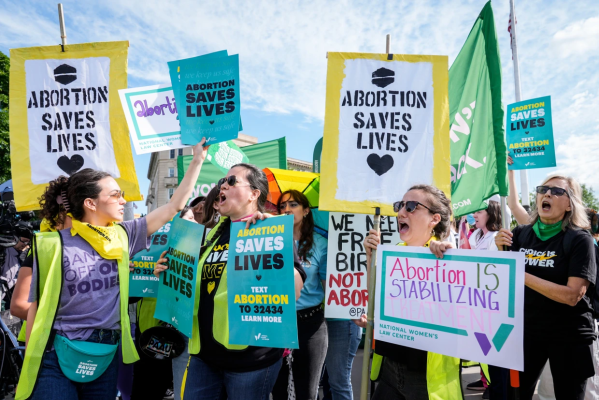
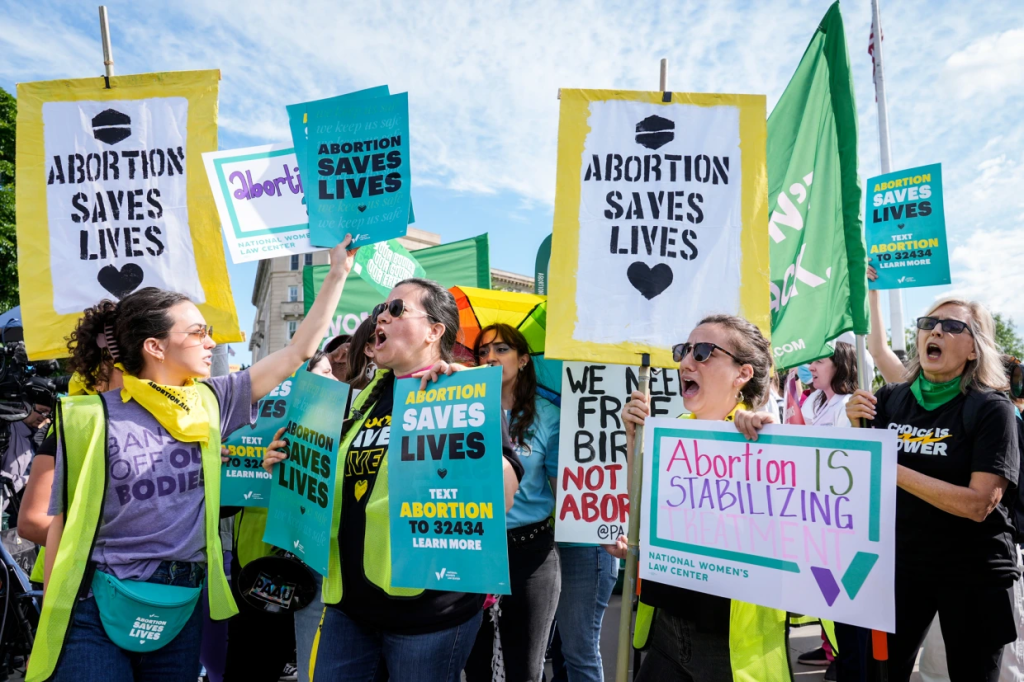
WASHINGTON — The Supreme Court is poised to rule this month on two significant abortion cases that could have nationwide repercussions. This marks the first time the justices are revisiting the issue since overturning Roe v. Wade.
The 2022 decision to revoke the right to obtain an abortion caused widespread upheaval, prompting a wave of new state-level abortion restrictions and encouraging anti-abortion activists to seek further limitations.
The most closely watched case involves the court deliberating whether to implement new restrictions on the widely used abortion pill mifepristone, including tighter regulations on mail-order access.
In a less publicized yet potentially impactful case, the justices are examining whether Idaho’s near-total abortion ban conflicts with a federal law mandating emergency medical care for patients, including pregnant women.
Rabia Muqaddam, a lawyer at the Center for Reproductive Rights, which supports abortion rights, referenced the 2022 ruling in Dobbs v. Jackson Women’s Health Organization “set off a chain reaction that we are seeing in all sorts of ways,” including the two cases now before the court.
Theories that were previously considered “the fringe of the fringe” are now “sufficiently mainstream to make it to the Supreme Court,” she added.
The new cases show that the court’s stated aim of getting out of the business of deciding what conservative Justice Brett Kavanaugh called “difficult moral and policy questions” was easier said than done. As such, the upcoming rulings will provide further evidence of how far the court, which has a 6-3 conservative majority, is willing to go in curbing abortion access.
In the mifepristone case, the court is weighing whether to impose new restrictions on the pills’ availability, including access by mail. Such a move would dramatically decrease the ability of women to obtain the pills, especially in states with new abortion restrictions.
The legal question in the Idaho case is whether a federal law that requires stabilizing treatment for patients in emergency rooms trumps the state restrictions in certain circumstances when doctors believe an abortion is required to protect the health of a pregnant woman.
Jim Campbell, chief legal counsel of Alliance Defending Freedom, the conservative Christian legal group that is representing anti-abortion interests in both cases, said the legal issues in each of them reflect overreach by the Biden administration in response to Roe being overturned.
“They’re both instances where the federal government is doing things, whether directly or indirectly, to interfere with state pro-life laws,” he added.
Based on oral arguments earlier this year, it seems likely that anti-abortion groups will lose in the mifepristone case, leaving the status quo unchanged. That means the Idaho case could have a bigger practical impact if the court backs the state, which seems possible based on questions asked by the justices.
Rulings are expected by the end of the month when the court traditionally concludes its nine-month term that begins in October. The court will also be issuing a slew of other rulings on hot-button issues, including former President Donald Trump’s claim of immunity from prosecution in his election interference case.
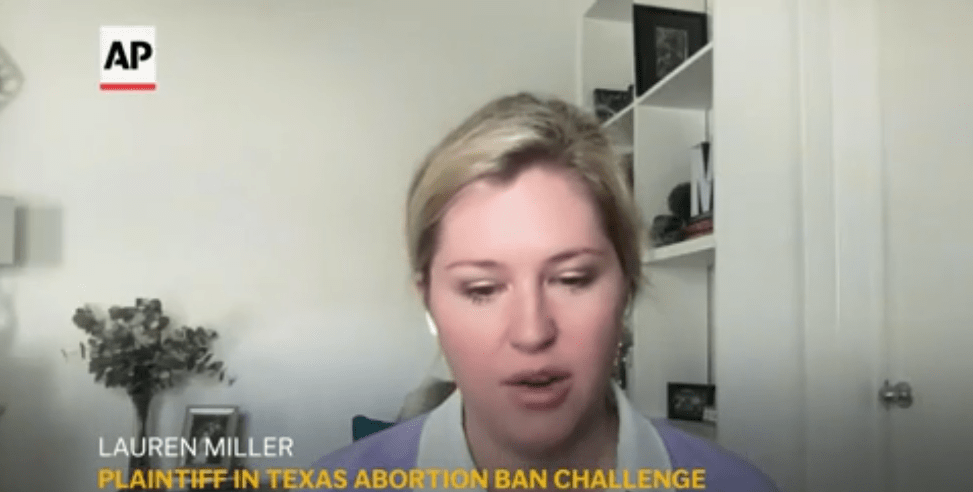
AUSTIN, Texas (AP) — The Texas Supreme Court on Friday rejected a closely watched challenge to the state’s restrictive abortion ban, ruling against a group of women who had serious pregnancy complications and became the first in the U.S. to testify in court about being denied abortions since Roe v. Wade was overturned.
In a unanimous ruling, the all-Republican court upheld the Texas law that opponents say is too vague when it comes to when medically necessary exceptions are allowed. The same issue was at the center of a separate lawsuit brought last year by Kate Cox, a mother of two from Dallas, who sought court permission to obtain an abortion after her fetus developed a fatal condition during a pregnancy that resulted in multiple trips to an emergency room.
Abortion rights activists have struggled to stem the tide of restrictions that have taken effect in most Republican-led states since the U.S. Supreme Court in 2022 overturned Roe vs Wade, which for nearly 50 years had affirmed the constitutional right to an abortion.
The court said the law’s exceptions, as written, are broad enough and that doctors would be misinterpreting the law if they declined to perform an abortion when the mother’s life is in danger.
“Texas law permits a life-saving abortion,” the court wrote in the order signed by Justice Jane Bland.
The decision appeared to close, at least for now, another pathway for opponents who have sought to force the state to provide more clarity about when exceptions are allowed. Last year, plaintiffs in the lawsuit gave emotional accounts in an Austin courtroom over how they carried babies they knew would not survive and continued pregnancies that put their health in worsening danger.
“Now we know the courthouse doors are closed to them,” said Molly Duane, a staff attorney for the Center for Reproductive Rights, which represented the Texas women. “It seems Texans have nowhere to go but the voting booth, in terms of what comes next.”
The Kansas Supreme Court delivered a mixed ruling on Friday regarding multiple challenges to a 2021 election law. The court sided with state officials on one provision, revived challenges to others, and suggested that at least one challenge could be resolved before this year’s general election.
However, the most contentious part of the ruling was the majority opinion on the ballot signature verification measure, which stated that the Kansas Constitution’s Bill of Rights does not guarantee the right to vote. This opinion sparked strong dissent from three of the court’s seven justices.
The ballot signature verification measure mandates that election officials compare the signatures on advance mail ballots with those in voter registration records. While the state Supreme Court overturned a lower court’s dismissal of the lawsuit challenging this measure, the majority rejected arguments from voting rights groups that it violates state constitutional voting rights.
In fact, Justice Caleb Stegall, writing for the majority, said that the dissenting justices wrongly accused the majority of ignoring past precedent, holding that the court has not identified a “fundamental right to vote” within the state constitution.
Justice Eric Rosen, one of the three who dissented, shot back: “It staggers my imagination to conclude Kansas citizens have no fundamental right to vote under their state constitution.”
“I cannot and will not condone this betrayal of our constitutional duty to safeguard the foundational rights of Kansans,” Rosen added.
Conversely, the high court unanimously sided with the challengers of a different provision that makes it a crime for someone to give the appearance of being an election official. Voting rights groups, including Kansas League of Women Voters and the nonprofit Loud Light, argued the measure suppresses free speech and their ability to register voters as some might wrongly assume volunteers are election workers, putting them at risk of criminal prosecution.
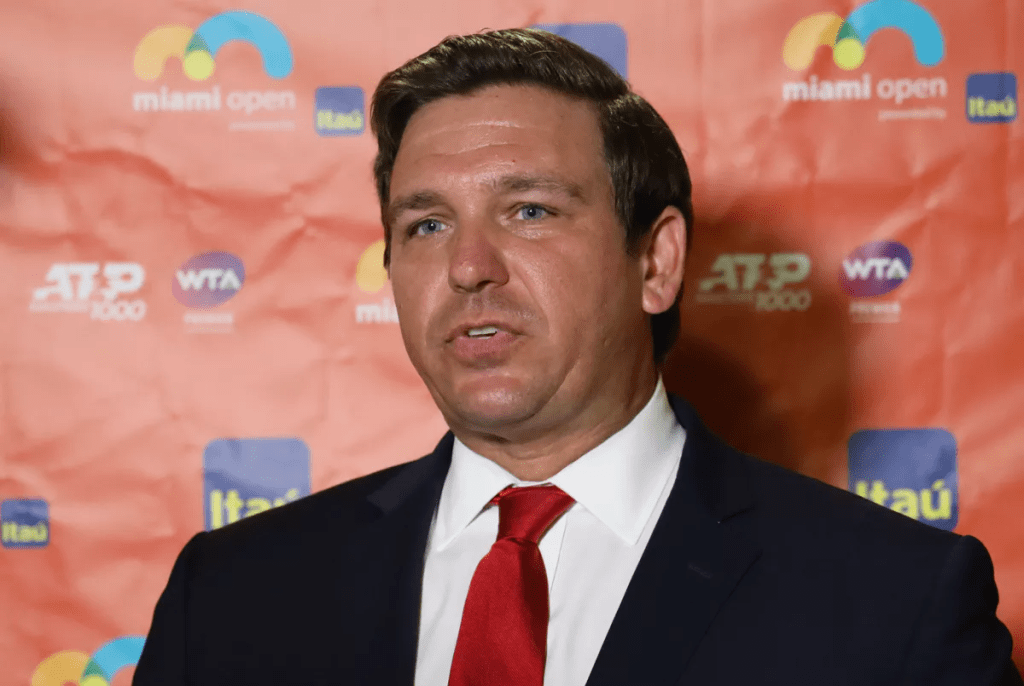
A federal judge has determined that Ron DeSantis was disseminating falsehoods when he referred to gender-affirming care as “mutilation.”
This year has been a series of setbacks for Florida Gov. Ron DeSantis. His presidential ambitions are dwindling due to his lack of charisma and campaign missteps. His conflict with Disney is draining millions from Florida taxpayers. Additionally, a federal court has strongly suggested that DeSantis was dishonest in justifying his prohibition on medical care for transgender youth.
DeSantis consistently argued that the law was essential to prevent the “mutilation” of young individuals. For instance, he criticized a reporter who challenged him on this when he signed the bill in May.
“And when you talk to people—I know people in your industry will dress it up with a euphemism—and they’ll say it’s health care to cut off the private parts of a 14 or 15-year-old,” DeSantis stated. “That is not health care. That is mutilation.”
Inform that to U.S. District Judge Robert Hinkle.
“When assessing the governor’s motives, how should I interpret these statements? It appears to be more than mere exaggeration.”
Hinkle is overseeing a legal challenge to the law brought by three Florida families with transgender children. He has implemented a stay against the measure from being enforced during the legal proceedings and has consistently shown skepticism toward the state’s arguments. In a ruling that invalidated Florida’s ban on Medicaid coverage for gender-affirming care, Hinkle emphasized, “Gender identity is real.”
Hinkle conceded that he cannot completely discern DeSantis’ intentions. He raised the question of whether the plaintiffs could demonstrate that DeSantis endorsed the law “because he hates transgender people.” The families’ attorney argued that the law is inherently unconstitutional, making DeSantis’ motivations less pivotal to the case.
Hinkle indicated his belief that the law’s purpose isn’t truly to prevent mutilation but rather to obstruct transgender youth from accessing healthcare. This strongly suggests that DeSantis might face an unfavorable ruling from the court.
This development also signals that DeSantis might have based his campaign on an unsuccessful concept. Relying heavily on anti-trans stances to perform well in the Iowa presidential caucus, he finds himself facing challenges with Nikki Haley gaining popularity and his campaign in disarray. The outlook for him in Iowa appears uncertain, making the end of 2023 potentially regrettable for DeSantis, with the prospect of 2024 being even more challenging.
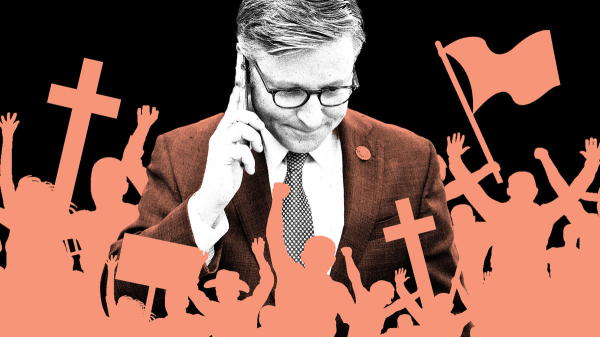
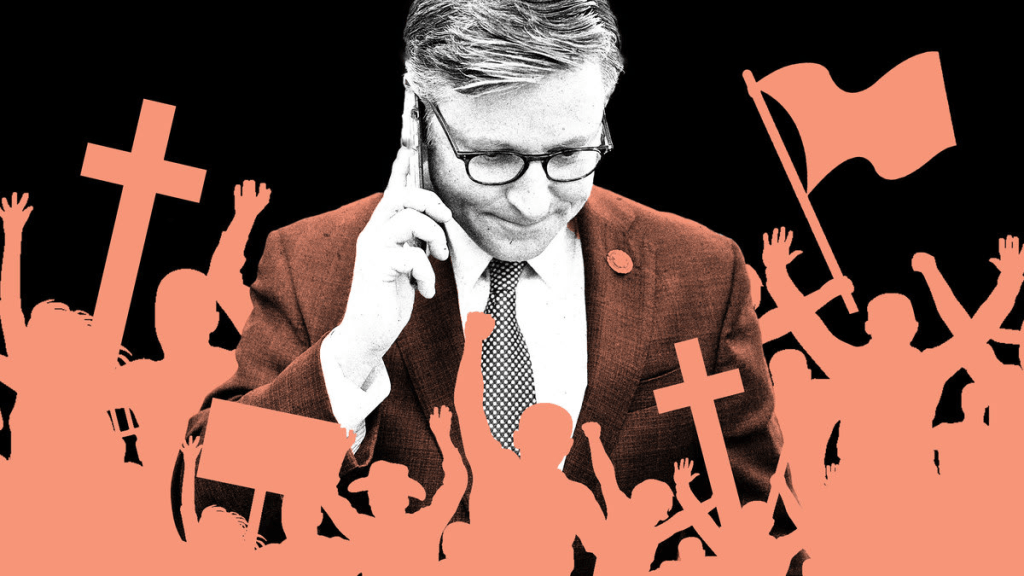
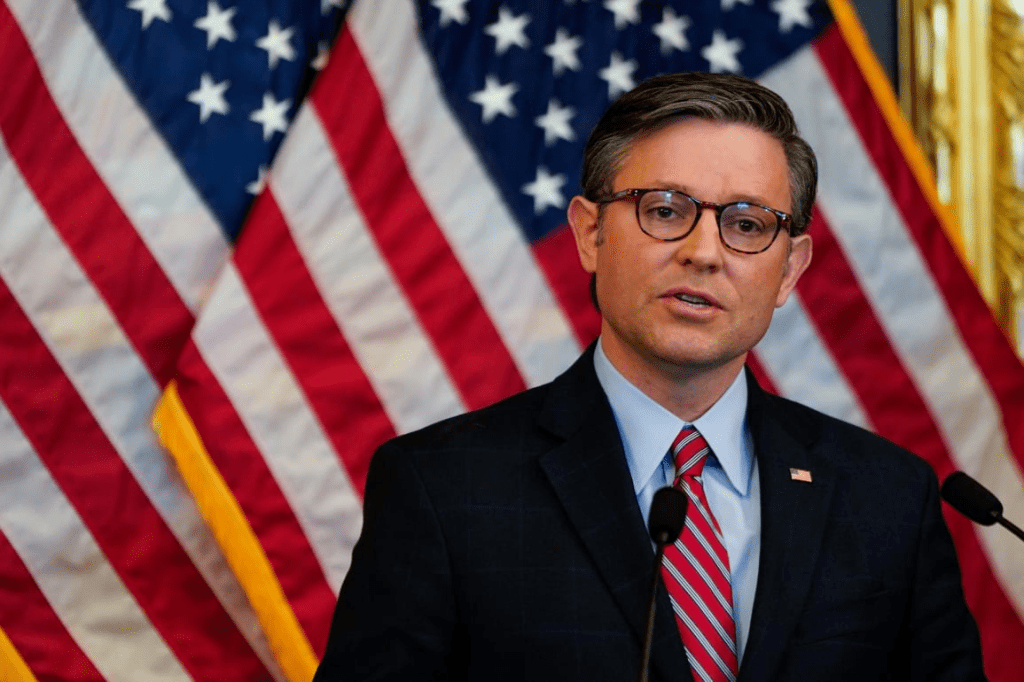
Speaker Mike Johnson has previously represented individuals with troubling views, including one who expressed support for killing gay people and another who advocated for the government to be a terror to the LGBTQ community.
Speaker Mike Johnson has downplayed his pre-Congress career, presenting himself as a modest constitutional lawyer advocating for conservative Christian causes.
“I’m deeply thankful for the ministry and your steadfastness,” Johnson expressed in August, responding to the commendations from evangelical figure Jim Garlow. “It provides tremendous encouragement for me and others laboring in these occasionally challenging areas of the Lord’s vineyard.”
While Johnson might have been expressing dissatisfaction with Congress, an examination of the new speaker’s past clients sheds light on the challenging nature of some of those corners in his legal career.
Johnson’s fervent religious convictions and Christian nationalist ideology led him to offer his legal services, frequently pro bono, to clients associated with some of the country’s most radical anti-abortion and anti-LGBTQ organizations, including individuals linked to militant movements with a tendency for violent expression.
A scrutiny by The Daily Beast uncovered one of Johnson’s past clients who advocated that the government “should be a terror” to abortion providers and the LGBTQ community. Another client opposed condemning domestic terrorist attacks on abortion clinics, while yet another client recorded himself endorsing the hanging of government officials during the January 6 attack on the U.S. Capitol.
The said former client currently heads a militant organization associated with a notorious incident in the anti-abortion movement, involving the 2009 murder of a Kansas abortion doctor. Moreover, this plaintiff’s father sought Johnson’s assistance in 2003 to obtain a permit for an anti-LGBTQ protest, which eventually resulted in the attempted stabbing of a gay man.
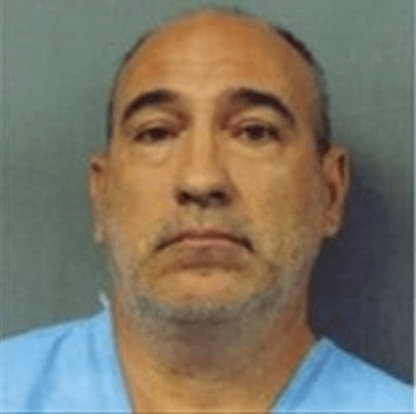
In that instance, Johnson’s client, Grant E. Storms, an anti-gay activist and former radical Christian preacher, gained national attention in 2012 when he admitted to engaging in inappropriate behavior in his van near a playground in Metairie, Louisiana. Storms faced charges of indecent exposure and received a three-year probation sentence.
While Johnson didn’t handle Storms’ criminal case, Storms revealed in an interview with The Daily Beast that Johnson had provided extensive legal services for him during the early to mid-2000s, and all of these services were offered pro bono. Storms considered Johnson a friend.
“We were comrades on the journey,” Storms said. “He consistently supported us.”
In all instances, Johnson indeed supported them. Though his fervent anti-abortion and anti-LGBTQ positions remained largely unnoticed nationally for years, they gained attention after he assumed the speaker’s position in October. Johnson has referred to abortion as “a holocaust,” expressed support for criminalizing gay sex, and openly emphasized his Christian nationalist affiliations, stating on Fox News that his beliefs on “any issue under the sun” are guided by the Bible.
The Daily Beast submitted a comprehensive comment request to Johnson’s office, seeking clarification on his perspectives regarding specific former clients and their actions or affiliations. In response, a spokesperson from the speaker’s office provided a statement underscoring a fundamental aspect of the attorney-client relationship.
“After practicing law for more than 20 years, Johnson has defended the First Amendment rights of numerous clients. It’s essential to recognize that representing a client in a First Amendment dispute doesn’t imply an endorsement of everything the client has said or done before or after a case,” stated the spokesperson in response to The Daily Beast’s inquiry.
“Attorneys are not held responsible for their clients’ actions or choices, especially after their legal relationship ends. However, Johnson consistently chose to represent clients and causes, often pro bono, that aligned with his ideological stance. While he could argue these cases on a First Amendment basis, Johnson frequently took on clients with anti-gay and anti-abortion positions, similar to his openly held views. His clients’ use of violent rhetoric didn’t seem to deter Johnson at the time, and he has not taken the opportunity to condemn their actions, words, or involvement in the insurrection,” responded the spokesperson.
The spokesperson did not respond to a follow-up inquiry about whether Johnson would provide comments on the specific details in this report.
This examination of Johnson’s legal career highlights the need for further exploration into his past and the extent of his involvement with some of the nation’s most militant religious movements.
Grant Storms informed The Daily Beast that his initial connection with Johnson occurred in the early 2000s through Alliance Defending Freedom, a prominent activist group striving to institutionalize conservative Christian principles in legislation.
ADF presents itself as a charitable organization committed to safeguarding religious freedom; however, it has embarked on a worldwide campaign to undermine LGBTQ and abortion rights. Following law school, Johnson joined ADF and served there for almost a decade as a lawyer and spokesperson.
Storms remembered reaching out to Johnson to seek assistance in removing what he deemed “indecent” imagery from an advertisement he saw at a bus station, claiming it depicted men engaging in sexual activity. At that time, Storms was a prominent figure in Louisiana, known for his fervent Christian activism. Johnson offered his pro bono support for various legal issues Storms faced, one of which gained national attention and resulted in a hate crime.
Storms claimed that Johnson played a key role in securing a permit for his 2003 protest against the Southern Decadence festival, an annual celebration of gay culture in New Orleans. Storms, known for influencing the passage of stricter decency laws in Louisiana, gained national attention for providing lawmakers with videos he personally recorded of men engaging in public sex. He asserted that both local officials and the Department of Homeland Security were initially opposed to his demonstration, but Johnson helped overcome these objections.
The Associated Press extensively reported on the protest, which unfortunately turned violent when an assailant, unrelated to Christian Conservatives for Reform, attempted to murder a man with a five-inch steak knife. Storms faced charges of battery in a separate incident that weekend, involving a pushing match with a nightclub security guard who denied him permission to record video inside the establishment.
In a recorded confession, the assailant confirmed his intent to attend Storms’ event with the purpose of killing a gay man, as stated by the police. However, it remained unclear whether the victim he targeted was actually gay. The assailant faced charges of attempted first-degree murder and a felony hate crime but passed away before the trial.
In an interview with The Daily Beast, Storms consistently condemned the attack and expressed opposition to any violence against LGBTQ and abortion rights communities. Reflecting on his past, Storms acknowledged that his passionate rhetoric at the time, often featured on his five-day-per-week radio show (which he believes included Johnson on several occasions), might have inadvertently contributed to an atmosphere that incited harmful actions by certain individuals.
“When things were at their peak, always in the news, and everyone talking about it—right in the midst of our protest, a gay person got stabbed,” he acknowledged, conceding that some of his rhetoric around the event “didn’t come out right.”
“Every public figure has to be careful with their rhetoric, and as you get older you have to be more and more careful,” Storms expressed, reiterating his view of the LGBTQ lifestyle as “a perversion.”
However, Johnson did not distance himself from Storms after the violence of the protest. In fact, he became more closely associated with the preacher. Eight months later, Johnson represented Storms in another legal case concerning permits, this time for anti-abortion rallies in Jefferson Parish.
In the interim, Storms made headlines again when he seemingly endorsed the mass killing of gay people at a religious fundamentalist conference in Wisconsin.
During the event, known as the “International Conference on Homo-Fascism,” hosted in Milwaukee by a group called Wisconsin Christians United, Storms delivered an hour-long address filled with fiery rhetoric. He extensively discussed his perceived “battle” against the Southern Decadence Festival, where a stabbing had occurred weeks earlier, claiming it was a “great breakthrough” from the Lord. Storms repeatedly used violent imagery, cautioning his Christian audience that gay individuals “want to kill you” and “have to eliminate us,” drawing parallels between his crusade and Jonathan’s biblical battle against the Philistine army.
Storms, according to a transcript of the speech, enthusiastically recounted the biblical story, stating, “That first slaughter which Jonathan and his armor bearer made was about 20 men. Wheeeww! Come on. Let’s go. God has delivered them all into our hands. Hallelujah!” He then accompanied his words with sounds imitating explosions: “boom, boom, boom, boom, boom.”
“There are 20. Whew. Ca-Ching. Yes. Glory. Glory to God. Let’s go through the drive-thru at McDonald’s and come back and get the rest,” Storms remarked, according to the transcript.
After the occasion, the LGBTQ rights organization Fair Wisconsin accused Storms of mimicking ‘sounds like gunfire as if he were shooting gay people’ and ‘seemingly endorsing the murder’ of gay individuals. Subsequently, Storms filed a defamation lawsuit against Fair Wisconsin. The Wisconsin Supreme Court later deemed the suit frivolous, affirming $87,000 in sanctions against his attorney—distinct from Johnson.
In a conversation with The Daily Beast, Storms initially characterized these incidents as ‘hilarious,’ emphasizing that they were symbolic gestures aimed at opposing the LGBTQ+ agenda rather than advocating literal harm to gay individuals. The means of opposition mentioned included legal avenues and protests.
When passages from his statements, such as ‘It’s us or them. There’s no in between. There’s no having this peaceful co-existence,’ were quoted by The Daily Beast, Storms acknowledged that he might have been ‘a little bit over-the-top.’ Over time, he expressed understanding as to why an external group could have ‘misinterpreted’ his remarks as endorsing mass murder.
“I must grapple with my words and how they’re perceived, but I remain committed to advocating for everyone’s right to life, liberty, and the pursuit of happiness.”
However extreme Storms’ language might have been, Johnson still chose to represent him.
Several months after Storms sued Action Wisconsin, Johnson assisted him in suing Jefferson Parish. Concurrently, he drew a parallel between another religious case he was involved in and “spiritual warfare.”
“The ultimate objective of the adversary is to stifle the gospel,” Johnson asserted in an interview with the Shreveport Times in April 2004. “This is a form of spiritual warfare.”
Storms informed The Daily Beast that the two individuals lost contact sometime after Hurricane Katrina in 2005, which was several years before the playground incident involving masturbation that thrust him back into the national spotlight.
Despite Storms’ confession, he attempted to contest the witness account of the exposure charge, which he again disputed in his interview with The Daily Beast. Nevertheless, the judge sentenced him to three years of probation, considering his admission that it was the third time he had engaged in the act in the park that week.
If Johnson did indeed lose contact with Storms in 2005, he somehow found a connection to Storms’ son, Jason Storms. Johnson and the ADF represented Jason Storms in another Milwaukee case in 2009.
In that case, Johnson contended that his plaintiffs, a group of anti-abortion extremists, had been hindered in the exercise of their free speech rights by a federal court injunction in the Eastern District of Wisconsin against protests at abortion clinics.
That ominous word—intimidation—is a concept Johnson’s clients may understand well.
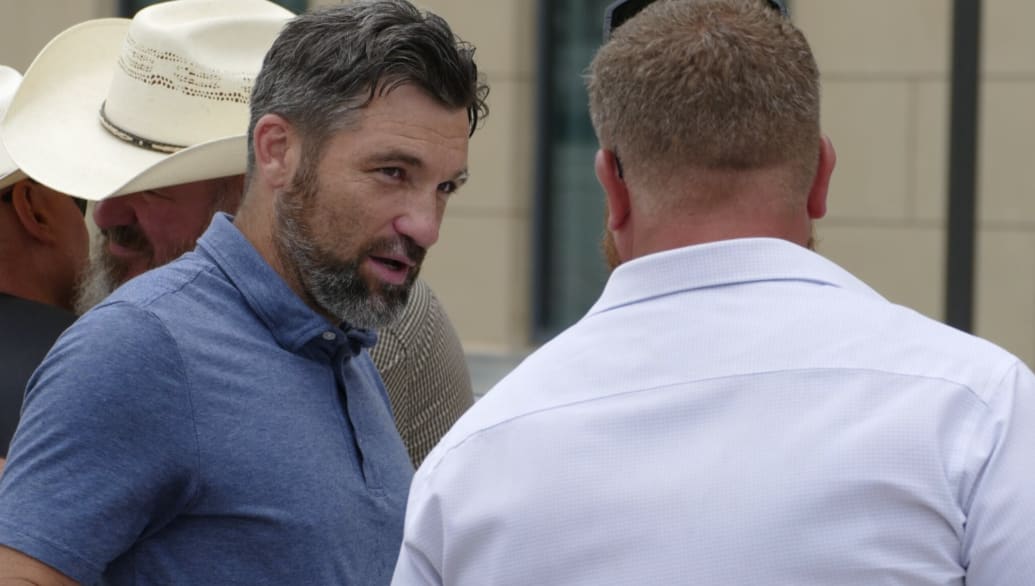
Jason Storms is the leader of Operation Save America, formerly Operation Rescue, which has been called the nation’s largest militant anti-abortion group. Jason Storms also partook in the Jan. 6 insurrection at the U.S. Capitol, posting a social media video of himself on the building’s scaffolding shortly after the breach.
Jason Storms at an anti-abortion gathering.
Operation Rescue shot to infamy when it was tied to the slaying of a Kansas abortion provider in 2009—the same year Johnson filed the lawsuit. Today, OSA and its militant allies still believe women who get abortions should be charged with murder—a step up from more mainstream anti-abortionists who would only place that burden on the doctor.
This summer, Storms said abortion might only be ended in the U.S. through civil war. He routinely drawswidespreadmediacoverage for camping outside of abortion clinics and urging women against ending their pregnancies, frequently alongside his wife and their 10 children.
Earlier this year, a member of OSA was charged in connection with a bomb scare at a Milwaukee-area Pride event, the Milwaukee Journal Sentinel reported. In October, the Sixth Circuit of Federal Appeals upheld a 2022 restraining order against the group, after unruly demonstrations in Tennessee.
But in 2009, Johnson—on behalf of the ADF—represented Jason Storms alongside a group of virulent anti-abortion extremists when they sued the city of Milwaukee over a court injunction at abortion protests. That crew included anti-LGBTQ activist Robert Breaud and Jim Soderna, both of whom have their own storied past.
In 1999, Soderna entered his name in the public record as opposing a Milwaukee city council resolution “against domestic terrorism in the form of violence against health-care providers, especially those providing family planning services.” Meanwhile, Breaud—a self-described former “homosexual”—ran a 1999 failed campaign for the Louisiana state House as a Republican. Per an article from The Times-Picayune, which is not publicly available online but accessible through the Lexis Nexis publication database, Breaud said the government “should be a terror to the evildoer”—quoting the apostle Paul in the Bible—further specifying, as Paul did not, that the evildoers were gay men, lesbians, and abortion providers.
Breaud, a nurse and musician, spread his homophobic message via an original song called “It’s Not OK to be Gay.” A 2007 video of Breaud shows him strumming a guitar and singing, “It’s not OK to be gay. It’s not OK to be perverted. It’s not in your DNA. What you need is to be converted.” A spoken-word interlude describes Breaud’s former lifestyle as “unholy, unnatural, unsatisfying, unfulfilling.”
But in the 2009 abortion case, Johnson represented Breaud regarding a different piece: an anti-abortion composition called “Baby Song,” which Breaud had rendered at a “disturbing” volume outside of a clinic, drawing a police citation.
Breaud also went on to publicly boycott Starbucks over CEO Howard Schultz’ 2013 support of gay marriage, saying in a Christian News Network interview that he would tell Schultz, “You’re promoting sin. You’re helping destroy young people’s lives.”
Johnson’s Milwaukee lawsuit was bolstered by affidavits from Jason Storms’ father-in-law, militant anti-abortionist Rev. Matthew Trewhella. Trewhella—who two years prior was represented by ADF in a separate matter in Ohio—previously defended the murder of abortion doctors as “justifiable homicide.” And in 1994, Trewhella was recorded urging parents to give their children firearms training and advocating for religious congregations to launch militias, The New York Timesreported.
By 2009, Trewhella had served 14 months in prison for obstructing clinics. He ran an Operation Rescue splinter group, called Missionaries to the Pre-Born, which also featured Jason Storms. Missionaries to the Pre-Born has been described as “one of the most dangerous and violent of the direct action anti-abortion groups active in the United States.”
The city settled the Milwaukee suit. Johnson’s co-counsel, Fintan Dooley, told The Daily Beast that he was happy with the settlement at the time, though they didn’t win fees. Dooley, a Democrat, also pleaded ignorance about any ties to violent groups among the plaintiffs and Trewhella.
But the year of that lawsuit, Operation Rescue was tied to the murder of Kansas abortion provider Dr. George Tiller. The killer had been in touch with a group official about Tiller’s whereabouts, and claimed to be a member. While the group denounced the slaying and the attacker’s claims to membership, Tiller was a top target of Operation Rescue’s ire for years—in 2002, they relocated their headquarters to Wichita specifically to pressure his clinic—and its leader at the time had previously called the murder of abortion providers a “justifiable defensive action.”
Twelve years later, Jason Storms was part of another siege. On Jan. 6, 2021, Storms and two other OSA members “set up the Lord’s beachhead” at Trump’s rally in Washington, D.C., according to an OSA blog post two days after the attack. The post marveled that “many saints were encouraged by the bold and plain declarations of the Law/Word of God,” declaring that it was “a great and exhausting time.”
What the post did not mention, however, was that Storms participated in the sacking of the Capitol. He posted a social media video of himself on the scaffolding shortly after the building was breached, admiring the insurrection as “Revolution 2.0” and crowing, “Yeah, baby!” in reply to a bullhorned call to “Hang ’em high!”
Dooley, Johnson’s co-counsel, told The Daily Beast that he was “disappointed but not surprised” to learn about Jason Storms’ involvement in the attack.
Grant Storms told The Daily Beast that he “supported” his son attending the rally, but, like Dooley, he condemned Trump and the Republicans who still support him—specifically including Johnson.
“Trump went nuts,” Grant Storms told The Daily Beast. “Anyone can see he tried to overturn the election. He belongs in jail.”
Like Grant Storms, Dooley spoke admirably about Johnson, noting his intellect and the influence he had on his own legal work.
But asked what he would say to Johnson regarding the speaker’s own unrepentant efforts to overturn the 2020 election and his continued support of Trump, Dooley soured.


 fleeredstates.blog
You must be logged in to post a comment.