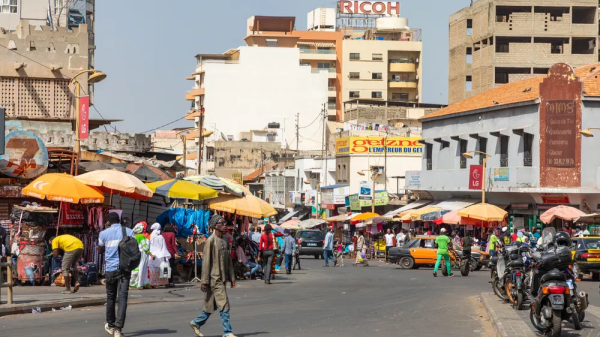
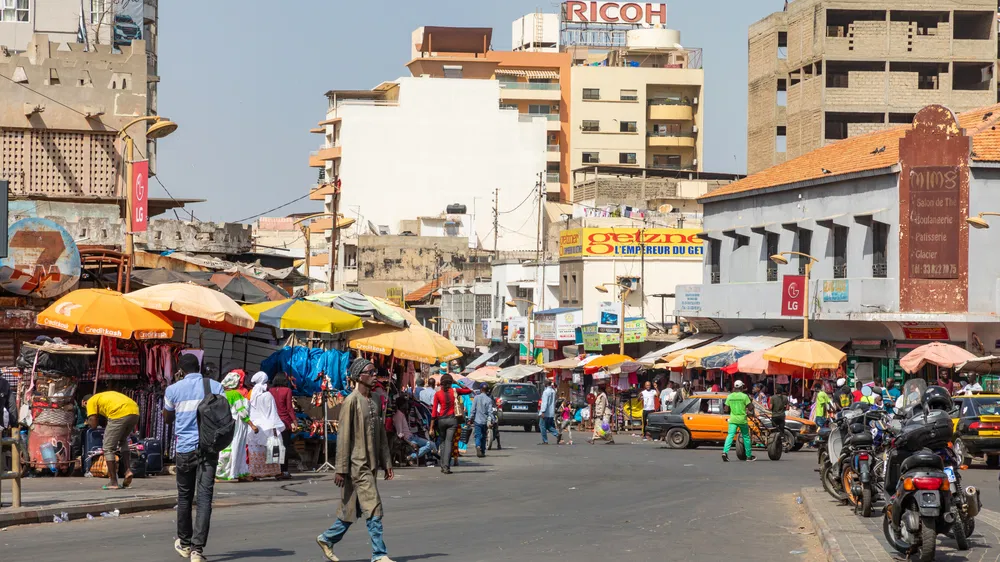
Following campaign pledges from both the president and prime minister in Senegal’s latest elections, the country’s Parliament on Wednesday passed a bill doubling penalties in the far West African nation for homosexuality, described in the measure as “acts against nature.”
The revised law is just the latest attack on “degenerate” Western values by government and religious officials.
Same-sex acts in Senegal will now earn 5-10 years in prison. Acts committed with a minor are subject to the maximum penalty, France 24 reports.
“Homosexuals will no longer breathe in this country. Homosexuals will no longer have freedom of expression in this country,” lawmaker Diaraye Ba told colleagues in the National Assembly to applause.
The bill, passed overwhelmingly with three abstentions and no opposing votes, awaits President Bassirou Diomaye Faye’s signature.
In addition to doubling prison terms and fines for homosexual acts, the measure includes criminal penalties for those found guilty of promoting or financing same-sex relationships.
Passage of the bill comes amid a veritable gay panic in Senegal, with a wave of arrests and anti-LGBTQ+ protests by religious groups in the Muslim-majority country demanding tougher penalties.
Social media has been flooded with homophobic messages outing gay people, and the media has fixated on the government arrests with headlines like “Big homo clean-up” and “Bisexuals, walking dangers.”
Adding to the hysteria, the gay sweep has been conflated with a child sex ring investigation that detained gang members accused of sexual violence against minors.
“The majority of Senegalese do not accept homosexuality. Our culture rejects it, and we are firmly opposed to it,” said Amadou Moustapha Ndieck Sarré, the government’s Minister of Employment.
Over 90% of Senegalese oppose acceptance of gay people, according to Equaldex, the LGBTQ+ collaborative knowledge base. The country ranks 4 out of 100 on the site’s Equality Index. More than half of the 53 countries in Africa impose penalties for homosexuality, from caning and fines to death.
Charles Dotou, head of the Senegal LGBTQ Association, has resigned over the new legislation.
“Most of the same-sex relationships were hidden anyway. There are even people who are married in the society and who are still entertaining a same-sex relationship because of the norm and the cultural norm in that society,” Dotou told the BBC.
“People will be hiding more, it will create more fear, and people will be scared to live normally in that community. So there will be an exodus of people, particularly people who were already exposed, so that that creates a bit of chaos in society,” he added.
Two people have been sentenced to jail time for attacking and robbing two gay men in Kenya, a ruling that has been hailed as a breakthrough moment for queer people in the east African nation.
The convicted individuals, known as Abel Meli & Another, were handed a 15-year prison sentence for robbery with violence at Milimani law courts in Nairobi on 3 March.
The victims in the case were two men, both in their mid-20s, who experienced hours of violence after they met up with a man they had been speaking to on Facebook.
After they arrived at the man’s home, three other men arrived at the property and the victims were beaten, with their phones, wallets and clothes were taken.
During the attack, the men were made to call family and friends to get them to transfer as much money as possible to the blackmailers’ accounts. They were threatened with being outed to their families and killed if they did not comply.
“I tried to resist and I wanted to fight back,” one of the victims – named as Anyango – told The Guardian. “That’s when one of them took a knife, held it at me and said: ‘If you don’t cooperate now, I will stab you and throw you out the window.’”
In the end, 100,000 Kenyan shillings (£576) was sent to the blackmailers’ accounts by friends and family of the victims.
After the incident, the men were supported in reporting the matter to the police and subsequently the attackers were arrested.
Also speaking to the outlet, a paralegal from Ishtar – an organisation providing health and wellbeing services to gay men – who went with the victims to the police said how when LGBTQ+ people go to the police they are often “harassed and discriminated against”.
“They tell you that you are not a normal citizen and they throw away your case,” they admitted.
Kenya is not a friendly country to members of the LGBTQ+ community.
The east African nation is one of 31 countries in Africa which still criminalise homosexuality, with consensual same-sex acts in the country being punishable by up to 21 years in prison with hard labor and fines.
More widely, LGBTQ+ rights are thin on the ground in the country with censorship of LGBTQ+ topics state enforced, access to gender-affirming care is often denied by doctors and no protections from discrimination in housing or employment contexts.
Njeri Gateru, executive director of the National Gay and Lesbian Human Rights Commission – which supports LGBTQ+ people in Kenya – said the attackers were part of a larger criminal organisation which prey on queer men across Kenya.
She told The Guardian: “There’s always that fear of self-incrimination. If I say that I met with a man on Grindr and I was hoping to engage in a romantic or an intimate relationship with this man, then obviously I’m evidence against myself. So the blackmailers rely on that.
“They also rely on the pervasive homophobia and homophobic attitudes within public institutions and also within the general public. And so this creates a situation that makes it possible for them to operate with quite a bit of impunity.”
“We had so many files against them,” Gateru said of the group. “We’ve had cases where these two men were arrested for other cases and later released.
“This can now serve as a deterrent to other gang members who have seen that the law has finally caught up.”
Gateru noted the queer community in the country faces great prejudice but “some of us still trust that we can find justice, so this case encourages us”.
The second victim in the case, named as Ochieng, said he has been “emotionally and physically damaged” by the ordeal.
However, they urged others who experience similar attacks to come forward and seek justice.
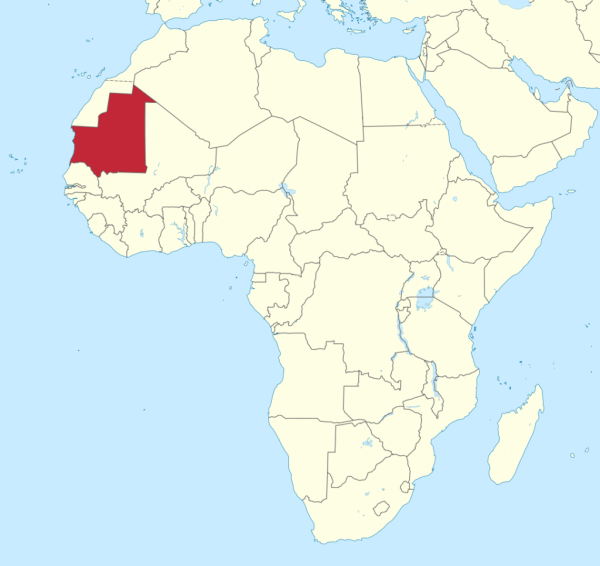
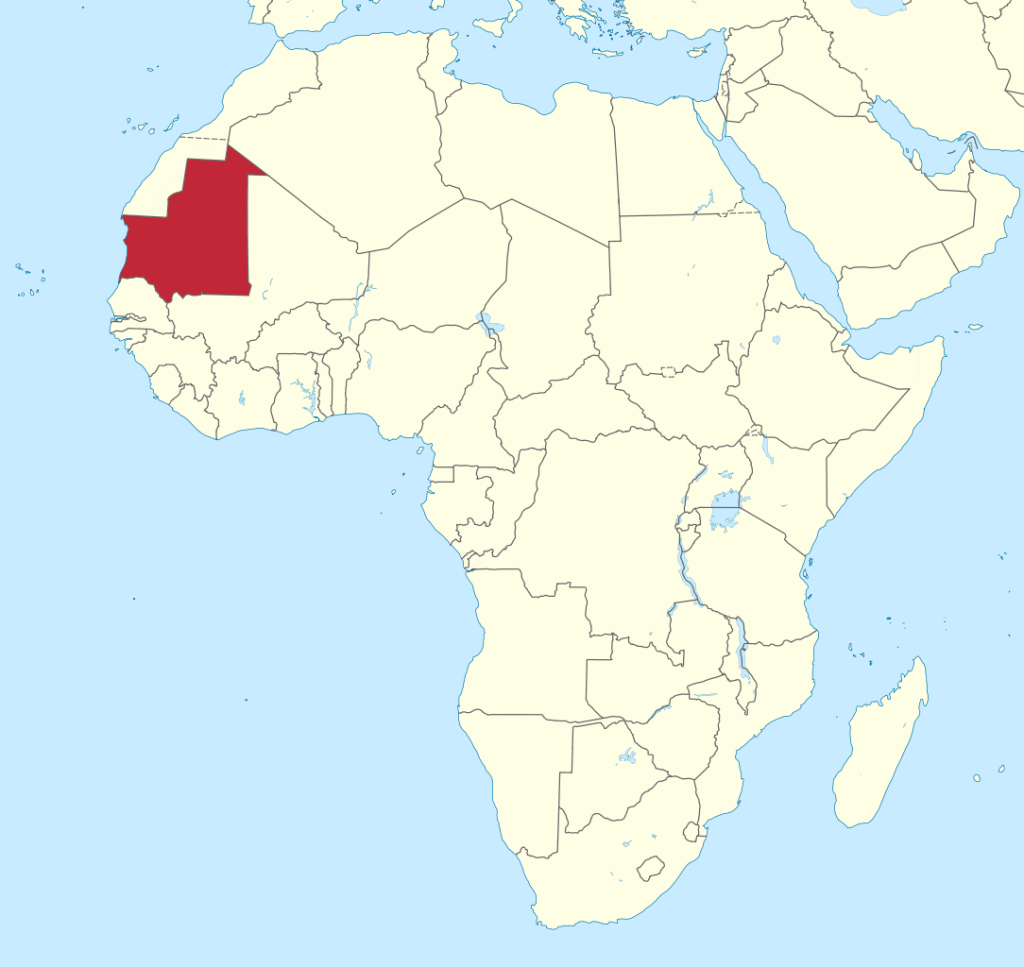
Mauritania criminalizes same-sex sexual activity under its Penal Code, which provides a maximum possible sentence of death by stoning for men. However, in 2021, the government confirmed its de facto moratorium on the death penalty.
There have been reports of people being arrested and detained for these charges in recent years, as well as LGBTIQ people being harassed.
LGBTIQ visibility is fairly low in Mauritania, which contributes to social stigma. Due to the fear of discrimination and rejection, many LGBTIQ people remain private about their identities.
The country became a refuge for Senegalese LGBTIQ people after 2008, when homosexuality became the subject of recurrent public controversies in Senegal. Some Senegalese LGBTIQ people have been granted refugee status by the United Nations High Commissioner for Refugees (UNHCR) but face serious legal dangers, health risks, and social rejection, making it difficult for them to get the help and protection they need.
[Mauritania’s anti-homosexuality law] specifically applies to Muslim men, though it is not clear if it applies equally to non-Muslim men.
There is some evidence of the law being enforced in recent years, with LGBT people being occasionally subject to arrest. A high-profile incident in 2020 saw ten people arrested and detained on same-sex activity charges, with eight of them being prosecuted and sentenced. There have been limited reports of discrimination and violence being committed against LGBT people in recent years, and the lack of reporting is attributed to social stigma.
In January, ten people were arrested and detained after video footage emerged on social media of what was alleged to be a same-sex wedding. [In the capital,] Nouakchott Police Commissioner, Mohamed Ould Nejib, subsequently acknowledged in a television interview that the event had not been a same-sex wedding but was simply a birthday celebration. He indicated that the men had been arrested for “imitating women”. According to the police report, the eight men “confessed that they are homosexuals” during police interrogations, at which they had no legal representation, but these confessions were subsequently refuted during the trial.
Eight of those arrested were subsequently convicted and sentenced to two years’ imprisonment for ‘indecency’ and ‘inciting debauchery’ under Articles 264 and 306 of the Penal Code respectively. One woman received a one-year suspended sentence for participating in ‘inciting debauchery’ by being present at the event. The restaurant owner was acquitted.
The U.S. Department of State evaluated LGBT rights in Mauritania in 2022: The US Department of State found that LGBT persons are reportedly harassed and subjected to violence from the National Police, the General Group for Road Safety, neighbours, and family members. No laws protect LGBT persons from discrimination based on sexual orientation, gender identity or expression, or sex characteristics. LGBT identity is rarely publicly identified or discussed, which observers attributed to the severity of the stigma and the legal penalties attached to it.
Morocco: Morocco has been under a long-term project to revise its legal system, and this year published reforms to the code of criminal procedure that ought to at least make the justice system more fair and limit pre-trial detention. Then again, we’ve also heard reports this year of continued crackdowns on queer people for pro-LGBT expression on the internet. [See “Coalition demands release of Morocco LGBT activist after 100 days in prison” (November 2025)]
Morocco also intends to revise its penal code, and some campaigners have been pushing to delete its sodomy and extramarital sex provisions when that happens, but no progress was made this year. I think the likelihood Morocco actually deletes its sodomy law is very slim.
Meanwhile, in October, the UN Security Council backed Morocco’s plan to resolve the dispute over the Western Sahara/Sahrawi Arab Democratic Republic, which would make it autonomous under Moroccan rule. The UN called on both sides to negotiate an actual settlement, but this seems like a big step toward eliminating an entire country from the map (which would decrease by one the number of states that criminalize homosexuality).
Chad: The government launched a commission on reinstating the death penalty, which was abolished in 2020.
West Africa
Burkina Faso, Mali and Niger: These three states run by military juntas following coups over the past half-decade took steps to deepen their integration into the Alliance of Sahel States (yes, the ASS), which is something between a supranational organization and a proto-state in its own right. They all withdrew from the Economic Community of West African States (ECOWAS), and they announced their intention to withdraw from the International Criminal Court. The states are motivated in part by antipathy to France and the West, Islamic faith, and support for and from Russia, all of which is exemplified in their pursuit of anti-LGBT policies.
Burkina Faso is also considering reinstating the death penalty as it overhauls its penal code, which ought to be a worrying sign. The new code also includes a crime of “promotion of homosexual practices and similar acts.”
Niger held a national conference that voted to extend the junta’s rule by five years and also to oppose any effort to legalize same-sex marriage.
Worryingly, some other neighbors, Chad and Togo (which both criminalize gay sex) have publicly mused about joined the ASS and have even taken some steps to integrate with them.
Of course, if the ASS ever does replace these three to five states, it would at least reduce the number of criminalizing states on the chart.
Ghana: A draconian anti-LGBTQ bill modelled after Uganda’s Anti-Homosexuality Act was reintroduced to parliament after a previous version lapsed without the president’s signature before the end of the term. This one is sponsored by a group of opposition MPs, but the government has said it intends to introduce its own version at some point. The current president has strongly suggested he will sign it.
Ghana also ratified the Treaty on the Prohibition of Nuclear Weapons.
The Trump administration used Ghana and Togo as places to deport asylum seekers, including at least one who was seeking asylum due to his sexual orientation.
The constitution review committee proposed an amendment to specifically bar the use of the death penalty. Ghana abolished the penalty in 2023 for ordinary crimes only, and the repeal was not retroactive, so those on death row still face execution.
Liberia: The government undertook a review of its laws for gender discriminatory effects – particularly around marriage, citizenship, rape, and children’s rights – but the review did not take sexual orientation or gender identity into account. I haven’t heard of further action being taken on this file.
The government intervened in the United Methodist Church over its support of same-sex marriage, including a senate investigation and even police detention. The local church has made clear its opposition to same-sex marriage.
A lawmaker was removed from a session of parliament after he disruptively attempted to introduce an anti-LGBT bill that would have imposed criminal penalties on same-sex marriage. Watch out for this to come back.
Nigeria: In a climate of regular violence against queer people, the governor of Kano state submitted a bill to the legislature to criminalize same-sex marriage. It’s already criminalized federally.
The senate was also considering a bill to expand the use of the death penalty.
Gabon: A constitutional ban on same-sex marriage, passed in 2024, took effect in 2025.
Eastern Africa
Kenya: In August, the high court directed the government to protect transgender peoples’ rights, including recognition of their chosen gender and dignified treatment in government custody. The court ordered the government enact a specific Transgender Protection Rights Act or add amendments to that effect to the Intersex Persons Act.
Meanwhile, an MP vowed to bring forward a bill to criminalize LGBTQ advocacy, but he hasn’t done so yet. Parliament was also considering a bill to abolish the death penalty.
Uganda: The World Bank has ended its suspension of lending to Uganda, which was imposed in 2023 after the passage of the Anti-Homosexuality Act. The Bank now claims it has put in place mitigation measures to ensure its funds won’t be used to discriminate, which, frankly doesn’t make a lot of sense.
Tanzania: The government has announced it is moving forward with toughening existing criminal laws banning same-sex intercourse to further ban same-sex relationships and marriages, but I haven’t actually seen legislation come forward yet.
Rwanda: Parliament passed a new health care law that specifically excludes same-sex couples from accessing surrogacy and assisted reproduction.
Mauritius: The UK and Mauritius finalized and published a treaty on the handover of the British Indian Ocean Territory, with the UK maintaining sovereignty over the military base on Diego Garcia. While the treaty hasn’t yet been ratified, once it does the BIOT will cease to exist as a separate jurisdiction where same-sex marriage is legal – unless the UK recreates it in some form to cover Diego Garcia only.
Comoros: Joined the Biological Weapons Convention.
Eritrea: Ratified the Convention on the Rights of Persons with Disabilities.
Southern Africa
Botswana: A lesbian couple filed a constitutional challenge seeking the right to marry, saying the current ban violates various sections of the constitution guaranteeing the right to equality. The high court struck down Botswana’s sodomy law in 2019, in part after finding that the constitutional prohibition on sex discrimination included sexual orientation discrimination, a decision that was upheld by the court of appeal in 2021.
Namibia: We’re still waiting on a ruling from the supreme court on the government’s appeal of 2024’s lower court decision decriminalizing sodomy.
The former president officially vetoed a bill that aimed to criminalize same-sex marriage and LGBT advocacy before leaving office (he signed a different bill late in 2024 that banned same-sex marriage, however). His successor – the country’s first female president – says she’ll fight for equality for everyone but has avoided saying anything about LGBT people. Meanwhile, Equal Namibia was seeking couples who want to challenge the country’s ban on same-sex marriage.
South Africa: The government continued to work on a unified marriage act which will combine several marriage laws for different religious communities and the same-sex Civil Union Act into a single law. It has not yet cleared parliament.
Eswatini: The leading LGBT advocacy group Eswatini Sexual and Gender Minorities went back to court to challenge the government’s decision to deny them a company registration. The supreme court had ordered the government to reconsider their application back in 2023, but the minister’s decision remained the same.
Malawi: The Minister of Justice said the country is committed to abolishing the death penalty, having already completed public consultations, but no bill has been brought forward yet.
Zambia: The constitutional court dismissed a challenge to the country’s sodomy laws, ruling that the court lacked jurisdiction as the challenge needed to be filed before the country’s high court first. The Zambia Civil Liberties Union says they will refile the case.
Zimbabwe: In July, the government launched a legal reform process to recognize the rights of intersex people. We’ll see what comes of this.
The ruling party’s national conference also vowed to intensify and enforce laws banning homosexuality in late 2024, though no new legislation has been put forward.
In Chow Kit, a crowded district of Kuala Lumpur forever caught between progress and prejudice, Amy* moves quietly through narrow alleys – a transgender outreach worker tending to lives the city prefers not to see.
Her evenings begin with small rituals: a backpack filled with condoms, test kits and pamphlets; a quick text to let her friends know that she is safe.
Then, when she steps out, much of her work happens in passing conversations – careful not to draw too much attention.
“The girls know they’re high-risk,” Amy said of the transgender sex workers she visits. “They want to stay healthy. But also … they just want to live.”
Yet even basic healthcare work can feel dangerous when you’re constantly looking over your shoulder. And furtiveness comes naturally if your very existence can be construed as a crime. Some of the women worry about being seen entering clinics for fear of who might recognise them.
“When people are scared to be seen, they stop showing up,” Amy told This Week in Asia. “Fear doesn’t just affect our lives; it affects public health.”
Malaysia does not legally recognise LGBTQ identities. Same-sex relations are federally banned under colonial-era anti-sodomy legislation, while parallel Islamic laws in Muslim-majority states prohibit cross-dressing and “posing” as another gender.
Such laws are often used not to intimidate as much as to prosecute. Over the years, Amy has watched how enforcement ebbs and flows – and how it always seemingly comes back stronger.
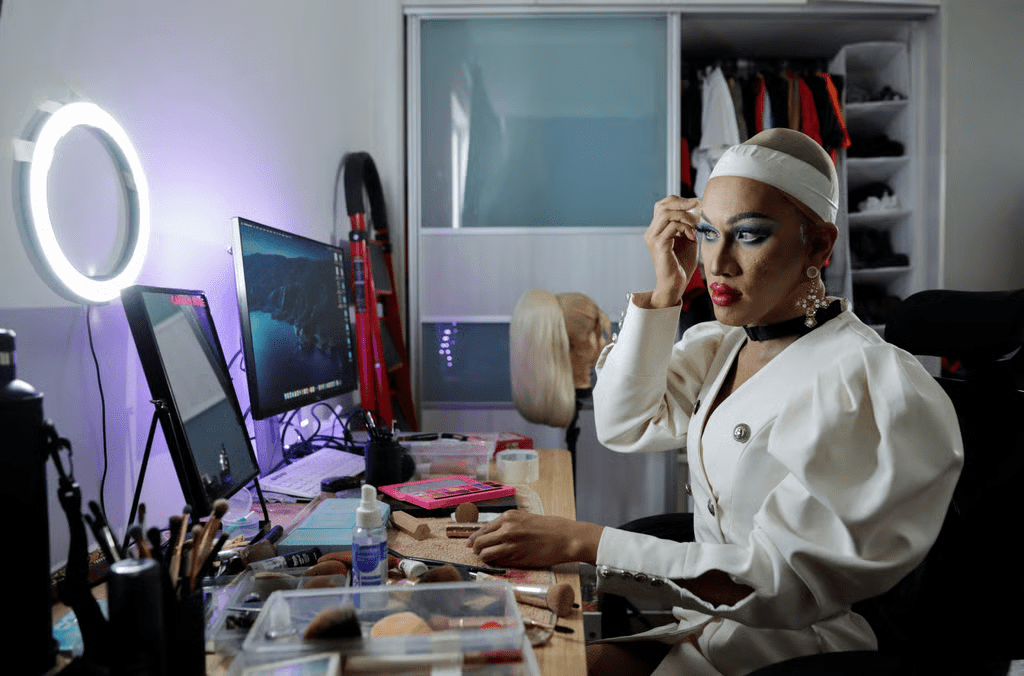
Few know that cycle better than Erina*, 55, a transwoman who spent decades performing in Kuala Lumpur’s drag circuit. She remembers when the scene was small but defiant, when glitter and high heels meant joy instead of danger.
“There was a time when we could perform without constantly looking over our shoulders,” she said. “It wasn’t easy, but there was space. That space has shrunk.”
The contraction feels literal now. Venues where she once worked have closed. Others stopped booking drag performers, terrified of raids. The most recent ones, on November 28 and 29, still ripple through the LGBTQ community. Police and religious officers stormed two men-only spas in Chow Kit and Penang, detaining hundreds.
It was the largest crackdown on queer spaces since a Halloween-themed party raid in 2022, activists say.
‘Shells of people’
Police later released the men who were rounded up in Kuala Lumpur, saying they had found no evidence of exploitation, coercion or “abnormal sexual activity”. Muslim detainees remained under investigation by Islamic authorities, however.
In Penang, the spa owner was fined 8,000 ringgit (US$1,960) after pleading guilty to owning obscene material and exposing others to HIV. Several other men were charged with offences ranging from gross indecency to possessing pornography.
For the community, the raids came as a shock. “People are now more afraid to go out,” Erina said. “Honestly, we’re not asking for special treatment … we’re asking to live without fear.”
Community groups rallied in support of the detainees. Members of Jejaka – a network supporting gay and bisexual men in Malaysia – gathered outside the police station in Kuala Lumpur where the men were being held, joined by volunteers, lawyers and family members calling for their release. They also pooled resources to provide legal aid, food and temporary housing.
In a statement, the group condemned the raids, arguing that the law used to justify them was “a relic of colonial morality” wielded to “target, stigmatise and endanger LGBTQ communities”.
“People are hiding,” said Pang Khee Teik, co-founder of LGBTQ organisation Seksualiti Merdeka (Sexuality Independence). Discriminatory laws had reduced members of the community to “shells” of people who “are navigating life with constant vigilance”, he said.
“It’s very sad to see that this is what we have done to our fellow Malaysians in the name of protecting ‘morality’.”
Amir*, a gay man in his twenties, remembers the brief sense of liberation he felt dancing in a club before what he called “the infamous raid”.
“It felt empowering,” he told This Week in Asia. “For a moment, I forgot I was in Malaysia. That’s how free it felt.”
Now, such gatherings are invite-only, with locations shared selectively through personal networks, often at the last minute. Amir says he has stopped going after the raids.
“This is Malaysia,” he said. “Hatred towards the LGBTQ community isn’t just normalised, it’s encouraged.”
Upholding morality
Authorities insist enforcement actions are necessary to uphold public morality. Days after the raids, members of the Malay nationalist group Pekida gathered outside one spa, plastering stickers and planting banners describing the venues as “immoral”.
Home Minister Saifuddin Nasution Ismail later said Malaysia might “revisit” certain provisions of its Penal Code, but only in ways consistent with “religious and moral values”.
Prime Minister Anwar Ibrahim has ruled out legal recognition of LGBTQ rights during his tenure.
Advocates say the result of the crackdown has been a deepening atmosphere of fear. In June, police raided what NGOs said was an HIV awareness event in Kelantan, calling it a “gay sex party”. Authorities have also cracked down on cultural symbols, seizing rainbow-themed Swatch watches and banning books deemed to “promote” LGBTQ lifestyles.
Through it all, Amy keeps walking her route through Chow Kit, never knowing when the next knock on a clinic door might provoke suspicion, or when a familiar face might vanish for weeks.
South Korea made a quiet but meaningful policy change in October. For the first time, the national census now allows same-sex couples living together to identify each other as “spouse” in official records.
While this adjustment does not confer any legal rights, it marks a symbolic step in recognizing LGBTQ+ households in the state’s demographic data.
But as same-sex couples slowly appear in national statistics, legal marriage still remains out of reach. And public support for it is not growing. In fact, it is recently shrinking.
Two major opinion surveys in 2025 have confirmed the trend. In a Hankook Research poll, 31 percent of South Koreans said they supported the legalization of same-sex marriage, down from 36 percent in 2021. In a separate survey by Gallup Korea, 34 percent backed legalization while 58 percent opposed it, a reversal that returns the numbers to where they stood nearly a decade ago.
Although many advocates have long assumed that rising visibility and generational change would drive progress, the latest data presents a different picture. The Korea Herald consulted two advocates who argue that it may be time to ask a different question: Does same-sex marriage need broad public support to move forward, or can the law lead the way?
Public may seem unsure until ‘law decides for them’
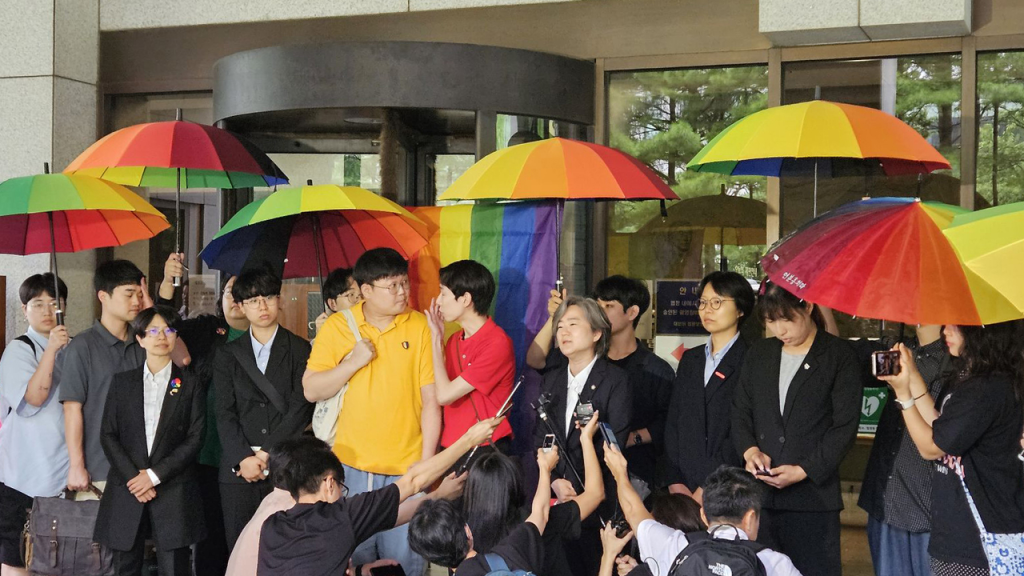
Yi Ho-rim, executive director of Marriage for All Korea, a leading local LGBTQ+ advocacy group, sees this moment as a reminder that legal change is not always a popularity contest. “The support for legalization has declined somewhat, but that doesn’t mean the conversation is stagnant,” Yi said.
“In fact, we see the current moment as a result of political polarization, not public apathy.”
Yi links the decline to the broader social climate. “Far-right mobilization earlier this year, combined with heightened political tension and increased online radicalization among young men, likely influenced the shift,” she noted. “When public discourse is overwhelmed by noise and fear, minority issues like same-sex marriage naturally become sidelined.”
Yi has argued that laws can reshape public perception. “In Taiwan, support for same-sex marriage was limited before legalization in 2019. But once the law passed, social attitudes evolved quickly. That pattern is not unique to Taiwan. We’ve seen similar changes in many countries.”
This pattern is not just anecdotal. Yi points to a notable case in South Korea’s own polling history. “There’s no way to prove causality,” she said, “but it’s hard to see it as a coincidence that Gallup Korea’s support numbers jumped by 10 percentage points between 2013 and 2014, exactly when countries like New Zealand, France and several US states made headlines by legalizing same-sex marriage.”
Park Dae-seung, a political philosopher at Seoul National University and director of the Institute for Inequality and Citizenship in Seoul, agrees. “Constitutional democracies are designed to protect minority rights, even when those rights are unpopular,” Park said.
“Laws that affirm dignity and equality are rarely embraced by a majority at first. But they send a powerful social signal. They tell people what is ‘normal’. In other words, it’s the law that decides for them what’s acceptable.”
“Korean politicians routinely cite ‘lack of public consensus’ as a reason to delay bills like the Life Partnership Act or Marriage Equality Act, both of which remain stalled in the National Assembly for years,” he added. “But it’s an excuse.”
While younger South Koreans have historically been more supportive of LGBTQ+ rights, the generational divide is showing unexpected shifts. The latest Gallup Korea poll revealed that support for same-sex marriage among people in their 20s dropped by 15 percentage points between 2023 and 2025. At the same time, support among those over 70 nearly doubled, from 10 percent to 19 percent.
Yi sees this as a sign that older generations are not immovable. “These are people who still get most of their information from legacy media. When the 2024 Supreme Court ruling recognized same-sex cohabiting partners as eligible for health insurance benefits, it was widely reported. That may have helped normalize the issue.”
Groups like the Coalition Against Homosexuality and Same-Sex Marriage, backed by conservative Christian organizations, have actively resisted even symbolic shifts. In October, the group filed a criminal complaint against government officials who authorized same-sex partner recognition in the 2025 census. They claimed it violated the law by creating “false public records” and warned of a wider moral collapse.
Yi has contended that public discomfort should not be used to delay basic rights. “Many of these objections rely on the idea that LGBTQ+ people do not value love, care or long-term commitment,” she said.
“But that is only because most people have never met a same-sex couple in their daily lives. We are still largely invisible, and the numbers show it. In the 2025 Hankook Research survey, people who personally know an LGBTQ+ person were nearly twice as likely to support same-sex marriage. Visibility alone makes a real difference.”
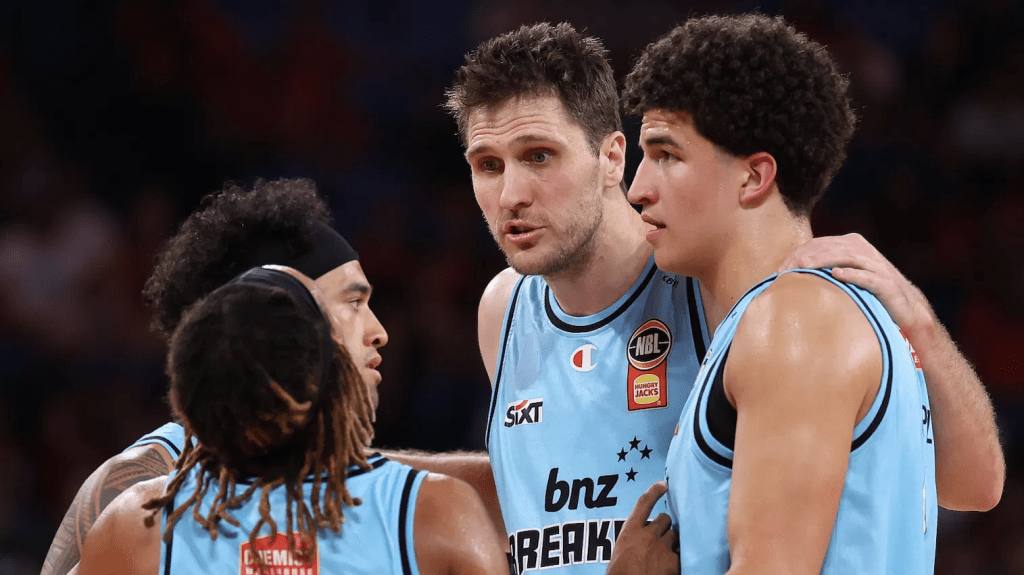
If you are an LGBTQ fan of the New Zealand Breakers of Australia’s National Basketball League, your favorite team won’t be wearing a Pride rainbow in 2026.
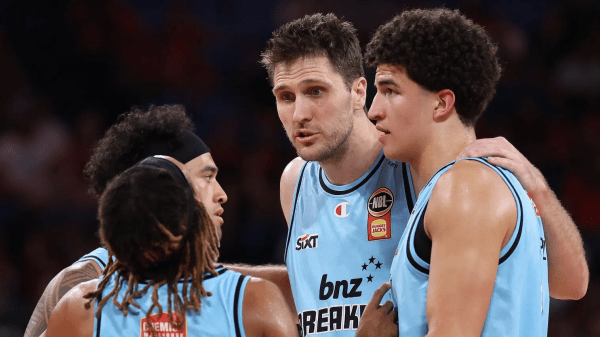
The NBL holds a Pride Round annually to celebrate the diversity of LGBTQ basketball fans worldwide, but the Breakers decided as a team to forgo wearing any Pride symbols, rainbows or colors this season that could be construed as supporting the gay community.
“In line with the league’s voluntary participation policy to wear the patch, the players discussed the matter as a team,” a team source said. “Some players raised religious and cultural concerns about wearing the insignia.”
The NBL’s Pride Round is from January 21 to February 1, 2026. The Breakers appear to be the only team that decided to skip honoring LGBTQ fans; the resulting uproar has spilled over to social media platforms like Instagram.
Many people have shared their disappointment with the players on the team in the comments section of any post involving the Breakers.
“Long-term member, won’t be anymore. Disgusted at the team, not supporting inclusion. Should all be ashamed,” someone wrote.
Another fan resounded the sentiment: “Been with the Breakers through thick and thin, but you’ve lost me on this one.”
It’s refreshing to see people stand with LGBTQ fans during a Pride controversy, as a handful of homophobes are often quick to complain anytime a pro sports franchise celebrates Pride.
Statistical analysis suggests that Australia is very supportive of gay people, with a study in 2023 reporting that seven percent more people in Australia support gay couples having children than an average of the rest of the world.
What makes the Breakers’ boycott of Pride even more disappointing is the fact that the team will be playing against the only openly gay player in the NBL during the Pride Round.
Isaac Humphries plays for the Adelaide 36ers, and he will face the Breakers in January during what could have been their Pride Night. Humphries went viral in 2022 when he came out in front of his teammates and talked about the difficulties of his journey.
Keeping the gay away from the Breakers certainly hasn’t given the team any sort of ability to win games this season. They are currently ninth in the NBL standings as of this writing. May their lack of support continue to deliver bad mojo for the rest of the year and beyond!
In 1980, Cuban police detained Fidel Armando Toboso-Alfonso without charge, encouraged co-workers to publicly shame him, and warned he faced four years in prison unless he fled the country. His “crime” was being gay. Having previously faced 60 days in a labor camp, Toboso-Alfonso chose exile. When he reached the United States, an immigration judge made a historic ruling: He granted Toboso-Alfonso refuge. That decision became a lifeline for countless LGBTQ people.
The United States was once considered a place where LGBTQ people could claim asylum. Today, under a harsher immigration system shaped by Trump-era judges, this image is slipping away.
In June, U.S. Citizenship and Immigration Services issued an alert reminding officers that marriages must be legally valid where celebrated to qualify for immigration benefits. For queer couples from countries that criminalize or refuse to recognize same-sex marriage, that’s an impossible standard. They must present a marriage certificate that, in their home country, they could be jailed or killed for attempting to obtain.
This is just one part of the Trump Administration’s broader rollback of protections for immigrants and LGBTQ people.
Under Presidents Barack Obama and Joe Biden, the United States resettled tens of thousands of refugees annually, including LGBTQ people fleeing persecution, arrest, torture, or death. Today, that number has been slashed to just 7,500—a fraction of its former scale and overwhelmingly skewed toward white applicants from South Africa.
The Trump Administration has also ordered federal agencies to remove recognition of transgender and nonbinary identities from official documents. Because the asylum process demands consistency across forms, nonbinary refugees now face an impossible choice: misrepresent themselves on paper or risk rejection for “inconsistency.”
These bureaucratic changes to passports, marriage certificates, and federal forms carry devastating consequences. By narrowing who counts as married or whose gender “exists” on paper, the White House has effectively barred countless queer individuals from asylum protections. Bureaucracy has become a new border wall, keeping the most vulnerable people out.
The United States does not jail or execute people for being LGBTQ. But the government is asking queer people to erase themselves to remain here—a quieter, procedural form of violence. A nation cannot call itself a refuge while demanding that those seeking safety deny who they are.
Last week, the Supreme Court allowed the Trump Administration to require that U.S. passports list only the sex assigned at birth. The decision halts lower-court efforts to block the policy, meaning the State Department may now refuse to process passports reflecting a person’s self-identified gender. The change may seem technical, but it signals something larger: When combined with other anti-LGBTQ measures, it threatens not only the rights of citizens, but also the safety of queer immigrants and refugees.
Meanwhile, some lawmakers are pushing to overturn Obergefell v. Hodges, the 2015 Supreme Court decision that recognized same-sex marriage as a constitutional right. The Court recently declined to hear one such challenge, but its mere consideration shows how precarious equality has become.
For queer asylum seekers already in the United States, the situation remains perilous. Claims based on sexual orientation or gender identity are often met with skepticism, as adjudicators demand “proof” of identity—an impossible expectation when visibility itself can be a death sentence. Instead of offering protection, the system pressures applicants to conform to stereotypes of what being “gay enough” looks like.
Worse still, immigration judges may now deny asylum applications without hearings, silencing stories that could save lives. Bureaucracy, once again, has become a weapon.
The next generation must do more than defend LGBTQ people—they must reclaim the promise of this country. A true refuge is defined not by paperwork or policy, but by the belief that every person deserves to live in truth and safety.
Music superstar Chappell Roan has announced the launch of her organization devoted to supporting trans youth.
The Midwest Princess Project — a nod to her album, The Rise and Fall of a Midwest Princess — has already raised more than $400,000 through fundraising efforts at Roan’s recent pop-up shows.
“Those funds will be donated to incredible organizations making a positive impact for trans youth in their communities,” Roan wrote on social media when launching the project in late October.
The post named six organizations to which it has already donated: The Ali Forney Center and The Center in New York City, the GLO Center and The Center Project in Missouri, and the TransLatin@ Coalition and Trans Wellness Center in Los Angeles.
The TransLatin@ Coalition and The Ali Forney Center are some of the first beneficiaries. The project’s website says its goal is to “uplift trans youth and LGBTQ+ communities through action, care, and connection.”
The project’s launch is in keeping with Roan’s pledge to donate a portion of ticket sales from her tour to trans organizations. During a red-carpet interview at the Grammy Awards in early February, Roan acknowledged the state of transgender rights in the U.S. in just the first month of the current presidential administration.
“It’s brutal right now,” Roan said, “but trans people have always existed, and they will forever exist, and they will never, no matter what happens, take trans joy away, and that has to be protected more than anything.”
“I would not be here without trans girls,” she added. “So, just know that pop music is thinking about you and cares about you. And I’m trying my best to stand up for you in every way that I can.”
During a live show in October, she also opened up about how she struggles with fame but that it’s all worth it to be able to spread queer joy.
She said she has questioned why she continues in her career when it makes her feel so “left out in public” and “so awkward all the time,” but that the tour helped her realize exactly why she keeps going.
“I always felt, actually, ‘Why am I putting myself through this? If this is taking so much away from me, what is this for?’ Then I started doing shows again and it all made sense, it was to literally bring queer people joy,” she said.
“There [are] so many things in the world that are so ‘F**k you’,” she continued, “and then there is this. It’s the only thing that matters is joy anymore to me, and protecting that, and peace and safety. So, I hope you know that when you are here, you are safe, and I want you here. You can be whoever you are tonight. You’re cherished for everything that you are.”
She said protecting that joy is one of the most important things, and “even if you’re not queer, I hope you know that I include you.”
Not content with holding title to one of the harshest anti-LGBTQ+ laws in the world, Uganda’s parliament is considering a bill that would outlaw identifying as lesbian, gay, bisexual, transgender, or queer.
The country’s Anti-Homosexuality Act, passed in 2023, already provides a sentence of life in prison for gay men who have sexual relations, and in extenuating circumstances, even death.
The new measure would criminalize Ugandans for simply saying they’re anything but straight.
Among more than 30 African nations that ban same-sex relations, the proposed law would be the first to criminalize just identifying as LGBTQ+, according to Human Rights Watch.
The proposed law was introduced with the goal of combating “threats to the traditional, heterosexual family,” according to a copy shared with Reuters.
In an awkward mashup of identifying prohibitions, language in the bill echoes executive orders issued by the U.S. president in his crusade against the transgender community.
The measure mandates punishment of up to 10 years in prison for any person who “holds out as a lesbian, gay, transgender, a queer or any other sexual or gender identity that is contrary to the binary categories of male and female.”
The bill also criminalizes the “promotion” of homosexuality and “abetting” and “conspiring” to engage in same-sex relations.
Much of the bill’s content is revived from the original “Kill the Gays” law, passed in 2013 but overturned by Uganda’s high court on technical grounds.
That law criminalized lesbianism.
“One of the most extreme features of this new bill is that it criminalizes people simply for being who they are as well as further infringing on the rights to privacy, and freedoms of expression and association that are already compromised in Uganda,” said Oryem Nyeko, Uganda researcher at Human Rights Watch.
Speaker of the Parliament Anita Among, the rabidly homophobic lawmaker who helped usher the Anti-Homosexuality Act into law, sent the new bill to committee for debate and public hearings after it was read to legislators.
Among urged fellow lawmakers to reject intimidation, referencing threats by Western countries to impose travel bans on those responsible for the legislation.
“This business of intimidating that ‘you will not go to America,’ what is America?” she asked.
Ugandan lawmakers, the speaker prominent among them, have for years warned of “degenerate Western values” threatening Ugandan families and sovereignty.
Among was urged on in her anti-Western pose by Russia’s ambassador to Uganda, who encouraged her to fast-track the “Kill the Gays” law through parliament in 2023. It passed overwhelmingly and was cheered by lawmakers.
“This is the time you are going to show us whether you’re a homo or you’re not,” Among told the packed chamber.





 fleeredstates.blog
You must be logged in to post a comment.