In 1980, Cuban police detained Fidel Armando Toboso-Alfonso without charge, encouraged co-workers to publicly shame him, and warned he faced four years in prison unless he fled the country. His “crime” was being gay. Having previously faced 60 days in a labor camp, Toboso-Alfonso chose exile. When he reached the United States, an immigration judge made a historic ruling: He granted Toboso-Alfonso refuge. That decision became a lifeline for countless LGBTQ people.
The United States was once considered a place where LGBTQ people could claim asylum. Today, under a harsher immigration system shaped by Trump-era judges, this image is slipping away.
In June, U.S. Citizenship and Immigration Services issued an alert reminding officers that marriages must be legally valid where celebrated to qualify for immigration benefits. For queer couples from countries that criminalize or refuse to recognize same-sex marriage, that’s an impossible standard. They must present a marriage certificate that, in their home country, they could be jailed or killed for attempting to obtain.
This is just one part of the Trump Administration’s broader rollback of protections for immigrants and LGBTQ people.
Under Presidents Barack Obama and Joe Biden, the United States resettled tens of thousands of refugees annually, including LGBTQ people fleeing persecution, arrest, torture, or death. Today, that number has been slashed to just 7,500—a fraction of its former scale and overwhelmingly skewed toward white applicants from South Africa.
The Trump Administration has also ordered federal agencies to remove recognition of transgender and nonbinary identities from official documents. Because the asylum process demands consistency across forms, nonbinary refugees now face an impossible choice: misrepresent themselves on paper or risk rejection for “inconsistency.”
These bureaucratic changes to passports, marriage certificates, and federal forms carry devastating consequences. By narrowing who counts as married or whose gender “exists” on paper, the White House has effectively barred countless queer individuals from asylum protections. Bureaucracy has become a new border wall, keeping the most vulnerable people out.
The United States does not jail or execute people for being LGBTQ. But the government is asking queer people to erase themselves to remain here—a quieter, procedural form of violence. A nation cannot call itself a refuge while demanding that those seeking safety deny who they are.
Last week, the Supreme Court allowed the Trump Administration to require that U.S. passports list only the sex assigned at birth. The decision halts lower-court efforts to block the policy, meaning the State Department may now refuse to process passports reflecting a person’s self-identified gender. The change may seem technical, but it signals something larger: When combined with other anti-LGBTQ measures, it threatens not only the rights of citizens, but also the safety of queer immigrants and refugees.
Meanwhile, some lawmakers are pushing to overturn Obergefell v. Hodges, the 2015 Supreme Court decision that recognized same-sex marriage as a constitutional right. The Court recently declined to hear one such challenge, but its mere consideration shows how precarious equality has become.
For queer asylum seekers already in the United States, the situation remains perilous. Claims based on sexual orientation or gender identity are often met with skepticism, as adjudicators demand “proof” of identity—an impossible expectation when visibility itself can be a death sentence. Instead of offering protection, the system pressures applicants to conform to stereotypes of what being “gay enough” looks like.
Worse still, immigration judges may now deny asylum applications without hearings, silencing stories that could save lives. Bureaucracy, once again, has become a weapon.
The next generation must do more than defend LGBTQ people—they must reclaim the promise of this country. A true refuge is defined not by paperwork or policy, but by the belief that every person deserves to live in truth and safety.
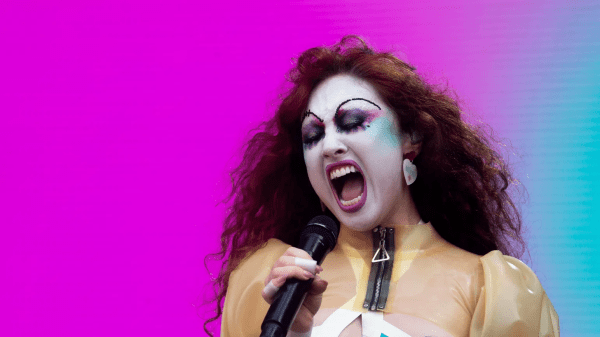
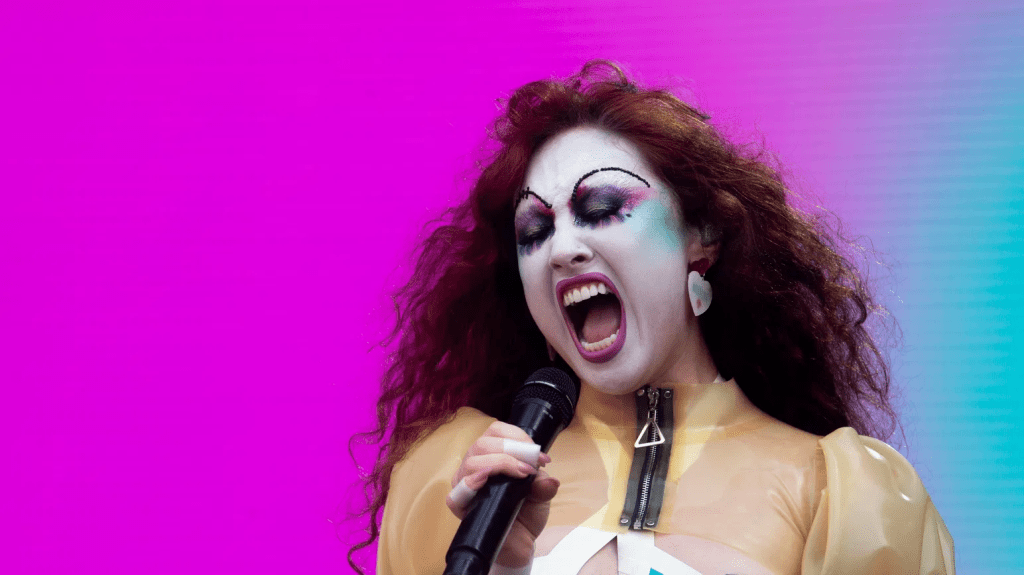
Music superstar Chappell Roan has announced the launch of her organization devoted to supporting trans youth.
The Midwest Princess Project — a nod to her album, The Rise and Fall of a Midwest Princess — has already raised more than $400,000 through fundraising efforts at Roan’s recent pop-up shows.
“Those funds will be donated to incredible organizations making a positive impact for trans youth in their communities,” Roan wrote on social media when launching the project in late October.
The post named six organizations to which it has already donated: The Ali Forney Center and The Center in New York City, the GLO Center and The Center Project in Missouri, and the TransLatin@ Coalition and Trans Wellness Center in Los Angeles.
The TransLatin@ Coalition and The Ali Forney Center are some of the first beneficiaries. The project’s website says its goal is to “uplift trans youth and LGBTQ+ communities through action, care, and connection.”
The project’s launch is in keeping with Roan’s pledge to donate a portion of ticket sales from her tour to trans organizations. During a red-carpet interview at the Grammy Awards in early February, Roan acknowledged the state of transgender rights in the U.S. in just the first month of the current presidential administration.
“It’s brutal right now,” Roan said, “but trans people have always existed, and they will forever exist, and they will never, no matter what happens, take trans joy away, and that has to be protected more than anything.”
“I would not be here without trans girls,” she added. “So, just know that pop music is thinking about you and cares about you. And I’m trying my best to stand up for you in every way that I can.”
During a live show in October, she also opened up about how she struggles with fame but that it’s all worth it to be able to spread queer joy.
She said she has questioned why she continues in her career when it makes her feel so “left out in public” and “so awkward all the time,” but that the tour helped her realize exactly why she keeps going.
“I always felt, actually, ‘Why am I putting myself through this? If this is taking so much away from me, what is this for?’ Then I started doing shows again and it all made sense, it was to literally bring queer people joy,” she said.
“There [are] so many things in the world that are so ‘F**k you’,” she continued, “and then there is this. It’s the only thing that matters is joy anymore to me, and protecting that, and peace and safety. So, I hope you know that when you are here, you are safe, and I want you here. You can be whoever you are tonight. You’re cherished for everything that you are.”
She said protecting that joy is one of the most important things, and “even if you’re not queer, I hope you know that I include you.”
Not content with holding title to one of the harshest anti-LGBTQ+ laws in the world, Uganda’s parliament is considering a bill that would outlaw identifying as lesbian, gay, bisexual, transgender, or queer.
The country’s Anti-Homosexuality Act, passed in 2023, already provides a sentence of life in prison for gay men who have sexual relations, and in extenuating circumstances, even death.
The new measure would criminalize Ugandans for simply saying they’re anything but straight.
Among more than 30 African nations that ban same-sex relations, the proposed law would be the first to criminalize just identifying as LGBTQ+, according to Human Rights Watch.
The proposed law was introduced with the goal of combating “threats to the traditional, heterosexual family,” according to a copy shared with Reuters.
In an awkward mashup of identifying prohibitions, language in the bill echoes executive orders issued by the U.S. president in his crusade against the transgender community.
The measure mandates punishment of up to 10 years in prison for any person who “holds out as a lesbian, gay, transgender, a queer or any other sexual or gender identity that is contrary to the binary categories of male and female.”
The bill also criminalizes the “promotion” of homosexuality and “abetting” and “conspiring” to engage in same-sex relations.
Much of the bill’s content is revived from the original “Kill the Gays” law, passed in 2013 but overturned by Uganda’s high court on technical grounds.
That law criminalized lesbianism.
“One of the most extreme features of this new bill is that it criminalizes people simply for being who they are as well as further infringing on the rights to privacy, and freedoms of expression and association that are already compromised in Uganda,” said Oryem Nyeko, Uganda researcher at Human Rights Watch.
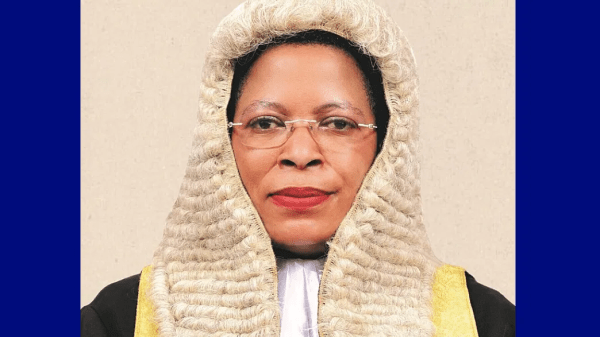
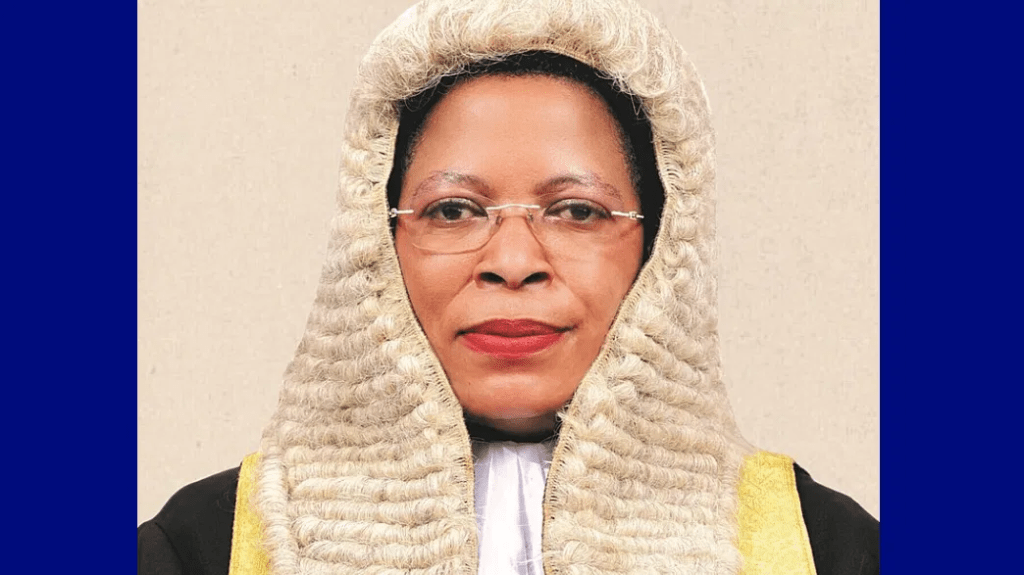
Speaker of the Parliament Anita Among, the rabidly homophobic lawmaker who helped usher the Anti-Homosexuality Act into law, sent the new bill to committee for debate and public hearings after it was read to legislators.
Among urged fellow lawmakers to reject intimidation, referencing threats by Western countries to impose travel bans on those responsible for the legislation.
“This business of intimidating that ‘you will not go to America,’ what is America?” she asked.
Ugandan lawmakers, the speaker prominent among them, have for years warned of “degenerate Western values” threatening Ugandan families and sovereignty.
Among was urged on in her anti-Western pose by Russia’s ambassador to Uganda, who encouraged her to fast-track the “Kill the Gays” law through parliament in 2023. It passed overwhelmingly and was cheered by lawmakers.
“This is the time you are going to show us whether you’re a homo or you’re not,” Among told the packed chamber.
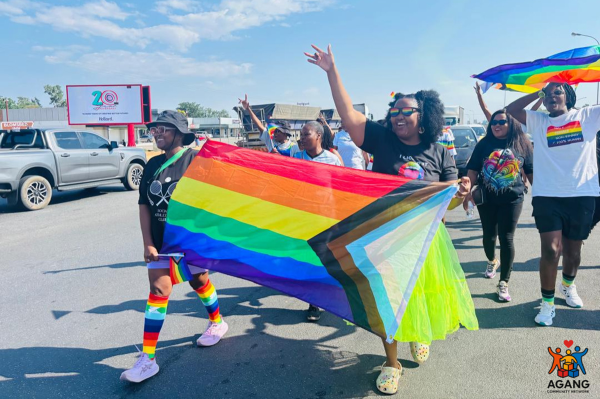
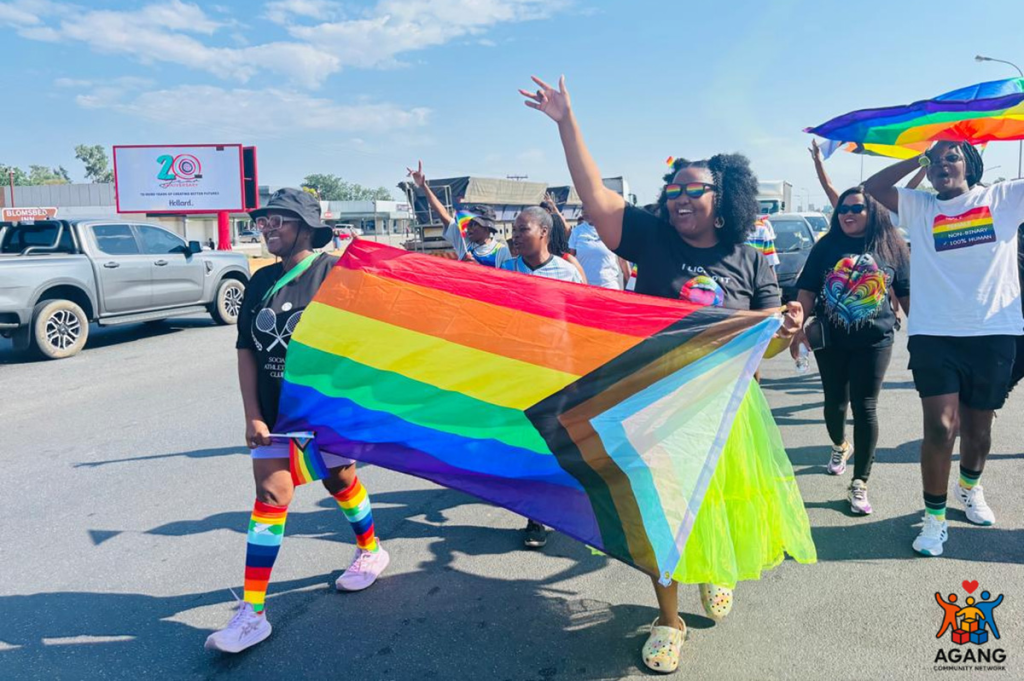
“When the sun rose on 1 Nov., 2025, Pride morning in Palapye, the open space where the march was scheduled to begin was empty. I stood there trying to look calm, but inside, my chest felt tight. I was worried that no one would come. It was the first-ever Pride in Palapye, a semi-urban village where cultural norms, religious beliefs, and tradition are deeply woven into everyday life.
I kept asking myself if we were being naive. Maybe people weren’t ready. Perhaps fear was going to win. For the first 30 minutes, it was me, a couple of religious leaders and a handful of parents. That was it. The silence was loud, and every second felt like it stretched into hours. I expected to see the queer community showing up in numbers, draped in color and excitement. Instead, only the wind was moving.
But slowly, gently, just like courage often arrives, people started to show up with a rainbow flag appearing from behind a tree and a hesitant wave from someone standing at a distance.
That’s when I understood that people weren’t late, just that they were afraid. And their fear made sense. Showing up openly in a small community like Palapye is a radical act. It disrupts silence. It challenges norms. It forces visibility. Visibility is powerful, but it is never easy. We marched with courage, pulling from the deepest parts of ourselves. We marched with laughter that cracked through the tension. We marched not because it was easy, but because it was necessary,” narrates activist Seipone Boitshwarelo from AGANG Community Network, which focuses on families and friends of LGBTIQ+ people in Botswana. She is also a BW PRIDE Awards nominee for the Healing and Justice Award, a category which acknowledges contributions to wellness, mental health, and healing for the LGBTIQ+ community across Botswana.
Queer Pride is Botswana Pride!
Pride is both a celebration and a political statement. It came about as a response to systemic oppression, particularly the criminalization and marginalization of LGBTIQ+ people globally, including in Botswana at some point. It is part of the recognition, equality, and assertion of human rights. It also reminds us that liberation and equality are not automatically universal, and continued activism is necessary. A reminder of the famous saying by Fannie Lou Hamer, “Nobody is free until everybody’s free.”
The 2023 Constitutional Review process made one thing evident, which is that Botswana still struggles to acknowledge the existence of LGBTIQ+ people as full citizens. Instead of creating a democratic space for every voice, the process sidelined and erased an entire community. In Bradley Fortuin’s analysis of the Constitutional review and its final report, he highlighted how this erasure directly contradicts past court decisions that explicitly affirmed the right of LGBTIQ+ people to participate fully and openly in civic life. When the state chooses to ignore court orders and ignore communities, it becomes clear that visibility must be reclaimed through alternative means. This is why AGANG Community Network embarked on Palapye Pride. It is a radical insistence on belonging, rooted in community and strengthened through intersectionality with families, friends, and allies who refuse to let our stories be erased.
Motho ke motho ka batho!
One of the most strategic decisions made by the AGANG Community Network was to engage parents, religious leaders, and local community members, recognizing their value in inclusion and support. Thus, their presence in the march was not symbolic, but it was intentional.
Funding for human rights and LGBTIQ+ advocacy has been negatively impacted since January 2025, and current funding is highly competitive, uneven and scarce, especially for grassroots organizations in Botswana. The Palapye Pride event was not funded, but community members still showed up and donated water, a sound system, and someone even printed materials. This event happened because individuals believed in its value and essence. It was a reminder that activism is not always measured in budgets but in willingness and that “motho ke motho ka batho!” (“A person is a person because of other people!”).
Freedom of association for all
In March 2016, in the the Attorney General of Botswana v. Rammoge and 19 Others case, also known as the LEGABIBO registration case, the Botswana Court of Appeal stated that “members of the gay, lesbian, and transgender community, although no doubt a small minority, and unacceptable to some on religious or other grounds, form part of the rich diversity of any nation and are fully entitled in Botswana, as in any other progressive state, to the constitutional protection of their dignity.” Freedom of association, assembly, and expression is a foundation for civic and democratic participation, as it allows all citizens to organize around shared interests, raise their collective voice, and influence societal and cultural change, as well as legislative reform.
The Botswana courts, shortly after in 2021, declared that criminalizing same-sex sexual relations is unconstitutional because they violated rights to privacy, liberty, dignity, equality, and nondiscrimination. Despite these legal wins, social stigma, cultural, and religious opposition continue to affect the daily lived experience of LGBTIQ+ people in Botswana.
The continuation of a declaration
AGANG Community Network is committed to continuing this work and creating safe and supportive spaces for LGBTIQ+ people, their families, friend, and allies. Pride is not just a day of fun. It is a movement, a declaration of queer existence and recognition of allyship. It is healing and reconciliation while amplifying queer joy.
Nearly three dozen men were arrested in Indonesia this week for allegedly organizing and attending a gay sex party.
Police in Surabaya reportedly raided a private gathering at the Midtown Hotel in the city’s Wonokromo district sometime between 11 p.m. local time on October 18 and the early hours of October 19. According to both the Daily Mailand News Ghana, police were responding to reports of unusual activity on one of the hotel’s floors.
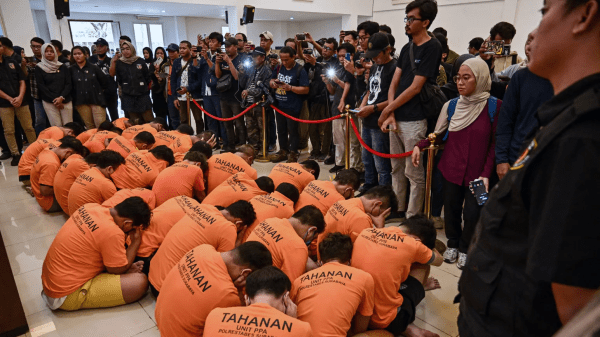
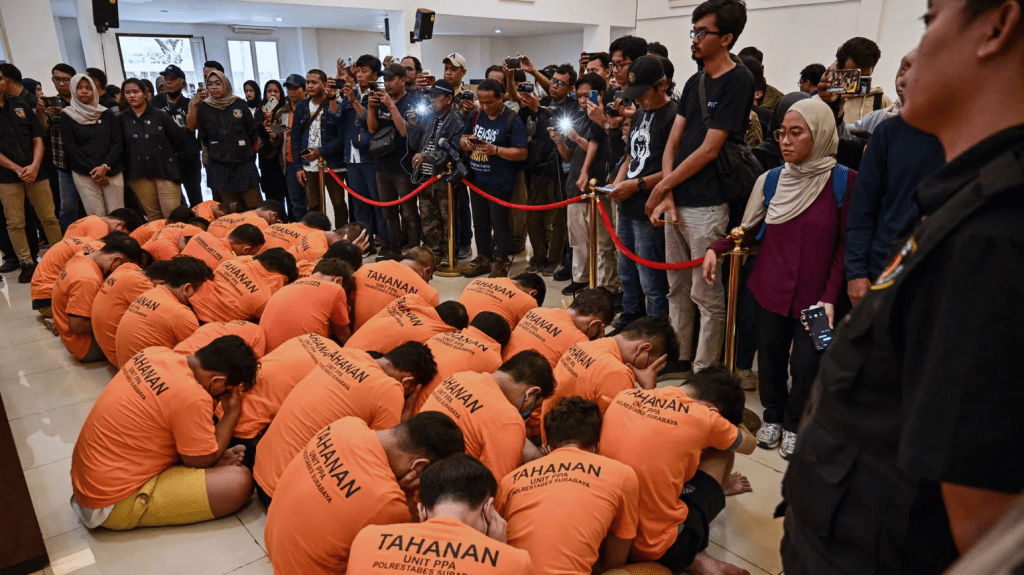
Police arrested 34 men and collected evidence from the scene, including contraceptives, cell phones, and other electronic devices. The men were taken to Surabaya Police Headquarters for questioning, and on Tuesday afternoon, AKBP Edy Herwiyanto, head of the Surabaya Police Criminal Investigation Unit, identified all 34 men as suspects, with some accused of organizing and financing the alleged sex party.
Photos show the suspects barefoot and bound together at the wrists by zip ties being paraded in front of a press scrum on October 22.
The hotel’s management reportedly told local media that they were unaware of the alleged event at the time, describing the hotel’s rooms as private areas, according to the Daily Mail.
While formal charges have not been announced yet, News Ghana notes that the case is similar to several others in which suspects have been prosecuted under Indonesia’s controversial anti-pornography law. The 2008 law defines pornography broadly as encompassing material that contravenes “norms of community morality.” The law bans activities as well as explicit material, specifically “deviant sexual intercourse,” which includes, News Ghana notes, consensual same-sex activity between adults.
In 2022, Indonesia’s government also revised its criminal code to ban sex outside of marriage. Unmarried couples caught having sex can be jailed for up to a year. While same-sex relationships are not explicitly criminalized under Indonesia’s national criminal code, same-sex marriage is illegal in the country, meaning that all same-sex sexual acts fall outside the law.
As News Ghana notes, Indonesian police have increasingly used the country’s anti-pornography law as a pretext for raids on LGBTQ+ gatherings. In June, police arrested 74 men and one woman in Jakarta who they accused of attending a “gay party.” Police detained nine people following a raid on a “gay sex party” at a hotel in South Jakarta in late May, and in February, 56 individuals were detained for participating in “a gay party” at a different hotel in South Jakarta.
Following the June raid in Jakarta, Amnesty International called on Indonesian authorities to end “these hate-based and humiliating raids” and to release those who have been arrested.
Human Rights Watch senior LGBT rights researcher Kyle Knight said Indonesia’s pornography law has been used as “a weapon to target LGBT people,” according to News Ghana.
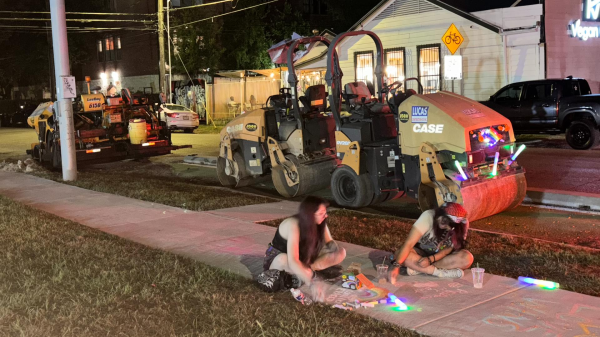
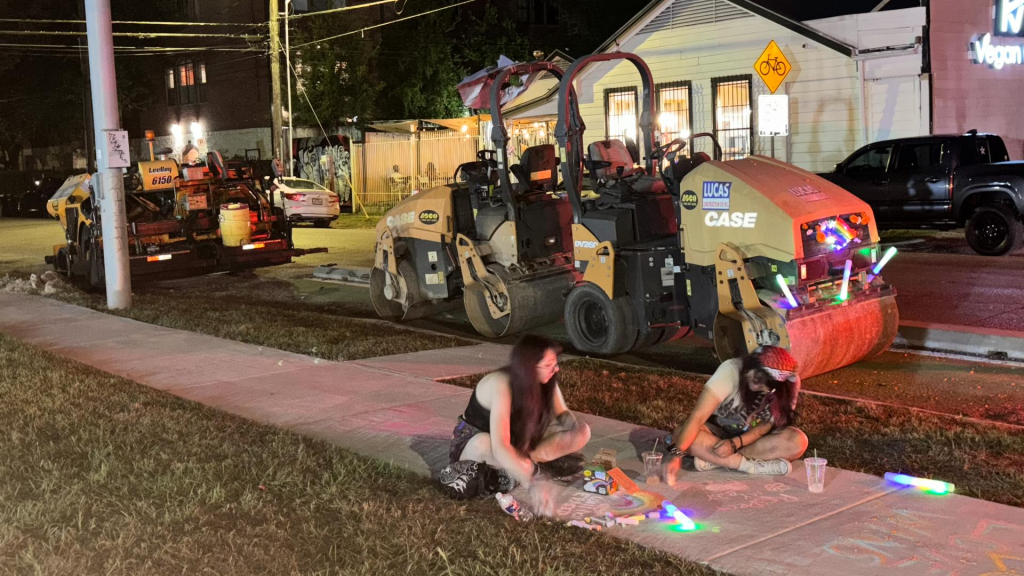
Major changes are underway in Houston’s Montrose neighborhood, where crews have removed the city’s rainbow crosswalks — long considered a symbol of Pride, remembrance, and unity.
By sunrise Monday, the bright colors at Westheimer and Taft were gone, replaced with fresh asphalt. Crews began work around 2:30 a.m., and by late morning, the intersection had reopened.
The removal follows a directive from Governor Greg Abbott calling on transportation departments statewide to eliminate what he described as “political ideologies” from roadways. That guidance traces back to a federal directive from the Trump administration earlier this year.
Tense overnight protests
As work began, dozens of protesters gathered near the intersection. Several were arrested just after 4 a.m. after standing in the street to block crews from starting the removal process.
“This is a memorial for someone who was killed in a hit-and-run,” said protester Ethan Hale. “This is more than just the LGBT community.”
Community members have long said the rainbow crosswalks were originally painted in honor of a person killed in that intersection years ago, giving them special meaning beyond Pride symbolism.
Another protester, Andy Escobar, said the directive was a distraction from real issues.
“We know we have some of the worst air quality, we have people disappearing in the bayous, we have urgent matters that need to be attended to, and we are wasting time on a distraction and a vilification of lesbian, gay, bisexual, trans people,” Escobar said.
Brenda Franco, another community advocate, echoed that frustration.
“This is just a distraction. We are wasting time and money,” Franco said. “We should be elevating our communities and amplifying the work that we’re doing here.”
City, METRO, and state responses
City officials confirmed the equipment used in the removal was provided by METRO, but as of Monday, the transit agency had not yet responded to KHOU 11’s request for comment.
Houston Mayor John Whitmire said the city was informed that the Texas Department of Transportation threatened to withhold federal funding if the crosswalks weren’t removed — a factor that likely accelerated the timeline.
The city councilmember representing the district, Abbie Kamin, said she was supposed to be notified before the work began but instead learned about it from residents who spotted the heavy equipment Sunday night.
Community reaction and history
This marks the second time in less than two months that the Montrose crosswalks have been removed. METRO previously stripped the paint for road repairs before it was repainted weeks later.
Many residents spent the night leaving Pride flags, flowers, and chalk art along the sidewalks — acts of defiance and remembrance for what they describe as a safe-space symbol that connected the Montrose community.
“Even losing the crosswalk doesn’t mean that the work we do ends,” said Kevin Strickland with Walk and Roll Houston. “It’s a beginning for us, not an end.”
What’s next
As of Monday afternoon, no official timeline has been shared for whether the intersection will remain asphalt or be repainted with a different design.
KHOU 11 has reached out to METRO and the Texas Department of Transportation for further comment.
Philadelphia’s tourism agencies are planning to have a queer-friendly information center that will highlight LGBTQ+ events, restaurants and businesses to visitors coming to the city during a busy 2026.
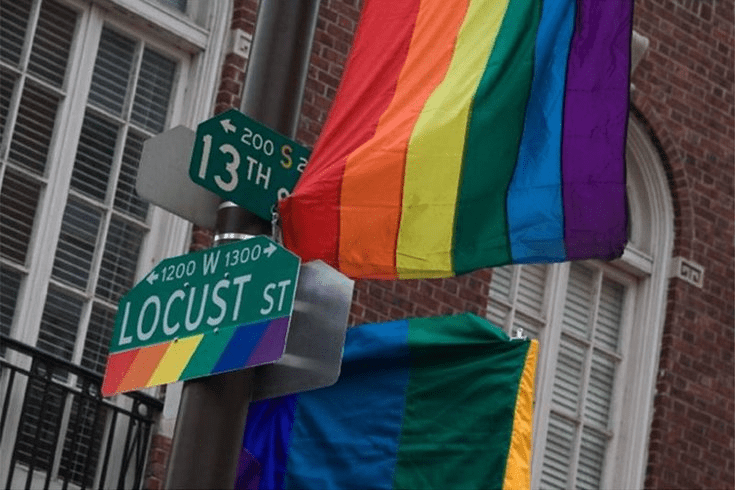
The Philly Pride Visitor Center, operated by the Philadelphia Visitor Center and Visit Philadelphia, will open at 12th and Locust streets in the Gayborhood in January. Organizers said it will help travelers who are here for the World Cup, MLB All-Star Game and numerous celebrations for the 250th anniversary of the signing of the Declaration of Independence.
The center will offer itinerary planning, ticketing, travel advice and souvenirs from queer-owned businesses. It will also feature exhibits on some of the city’s queer history, including the first LGBTQ+ sit-in at Dewey’s restaurant in 1965 and the Annual Reminders demonstrations outside Independence Hall from 1965 to 1969. The historical content was curated with community input in partnership with Mark Segal, founder of Philadelphia Gay News.
“Our city helped launch the fight for representation in media, shaped national policy, and created safe, visible spaces for our community,” Segal said in a statement. “Now, with the opening of the Philly Pride Visitor Center, Philadelphia proudly honors that legacy and reaffirms its commitment to those who call this community home.”
Visit Philadelphia said it was one of the first supporters for creating the Stonewall National Monument Visitor Center in New York City, which was the first queer institution of its kind in the National Park System. Leaders said they’re eager to bring this support back home.
“For more than 20 years, Visit Philadelphia has worked to show LGBTQ+ travelers that they belong here,” said Angela Val, president and CEO of Visit Philadelphia. “This new center gives visitors and residents a place to connect with Philadelphia’s LGBTQ+ history, discover affirming businesses and see how this city helped shape a national movement. It is both a resource hub and a testament to Philadelphia’s role in advancing LGBTQ+ rights.”
Visit Philadelphia and the Visitor Center said that the move is both an investment in its values and reflective of the strong support from queer tourists.
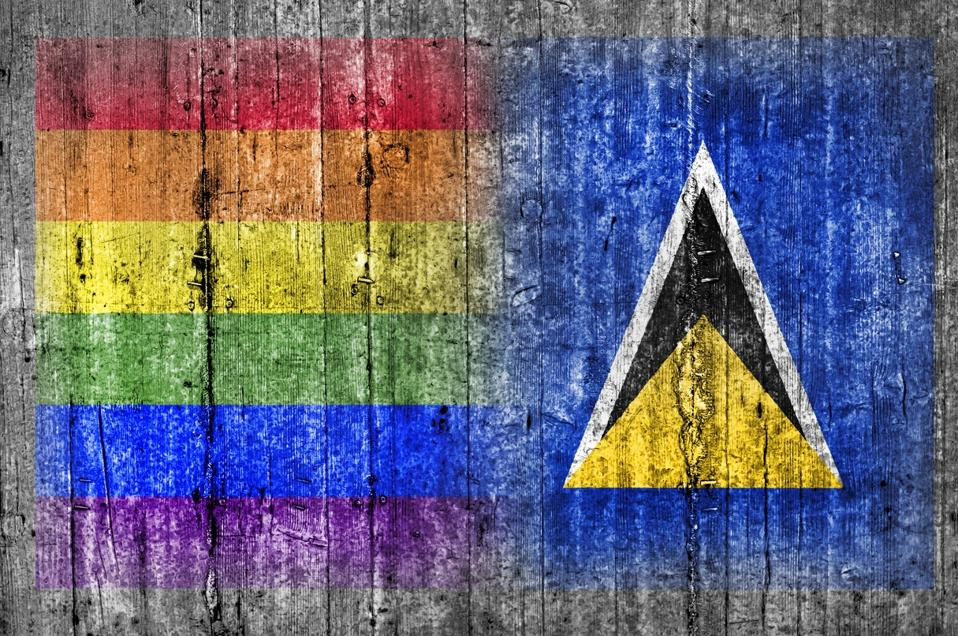
“These provisions… exacerbate, if not condone, the stigmatisation of homosexual persons in civil society and engender feelings of hostility fueled by persons who are inclined to take the moral high ground,” stated Eastern Caribbean Supreme Court Judge Shawn Innocent in his late July ruling striking down St. Lucia’s ban on same-sex intimacy.
The ruling coming down from the Heraldine Rock Building sparked swift, though not unanimous, reaction. The Caribbean’s LGBTQIA community celebrated the long-overdue victory, while religious conservatives issued dire warnings.
As Judge Innocent explained on the bench, many islanders and Caribbean citizens continue to navigate the fault lines between a dated colonial inheritance and a modern identity.
“It is the law itself which violates their constitutional rights,” Innocent’s ruling said. “They do not have to await prosecution under those sections to experience a violation. Without any equivocation, his liberty has been emasculated and abridged.”
The ruling made St. Lucia the latest in a growing list of Caribbean nations—including Barbados, Dominica, Antigua and Barbuda, and St. Kitts and Nevis—to decriminalize consensual same-sex relations through the courts. In doing so, it affirms what many legal scholars and LGBTQIA activists have long argued: that the region’s colonial-era sodomy laws are not just outdated, they are unconstitutional.
The win in St. Lucia comes at a time when the Caribbean LGBTQIA movement appears to not only be making progress in changing laws, but changing attitudes. This stands in contrast to the United States, where movement workers are fighting back against regressive measures, state-based legislation, and attempts by the Trump administration to gut federal civil rights protections.
For Glenroy Murray, St. Lucia’s policy change, part of a nearly decade-long strategy led by the Eastern Caribbean Alliance for Diversity and Equality (ECADE) and other local organizing groups, is the product of years of sustained advocacy.
“In the Caribbean, queer activists are saying: we deserve space, and we’re going to claim it—despite prevailing attitudes that have existed in this region for a long time,” said Murray, the Caribbean lead for Human Dignity, a legal advocacy organization that provides technical, legal, and communications support to queer organizations and governments worldwide.
What began as a debate among legal scholars, researchers, and grassroots LGBTQIA activists about the countries most ripe for a legal challenge to colonial-era sodomy laws has since evolved into a broad-based movement to decriminalize sexuality and fight for human rights across the region.
For the Caribbean movement, the struggle has been twofold: first, dismantling outdated “saving law clauses” that shield colonial-era statutes from constitutional challenge. Found in several post-independence constitutions, these clauses preserve pre-existing laws—even if they conflict with modern human-rights protections. In practice, they’ve made it far more difficult to overturn criminal statutes against same-sex intimacy. Activists argue that true equality cannot be achieved without dismantling these legal shields.
Compounding this are well-funded, transnational conservative movements determined to make LGBTQIA rights in the Caribbean harder to secure. Angelique Nixon, senior lecturer and researcher at University of the West Indies, St. Augustine Campus’ Institute for Gender and Development Studies, said that these actors, backed by U.S.-based evangelical and faith-based groups, frame equality as a Western imposition and deploy religious and moral rhetoric to stir cultural resistance.
“Globally, we’re seeing the rise of well-funded, transnational anti-rights movements that actively export homophobic and transphobic ideologies across borders, often under the guise of protecting traditional values or religious freedoms,” Nixon said.
“This transnational dimension makes our struggle particularly challenging,” she emphasized.
The American religious right has directly targeted the Caribbean: groups affiliated with the American Center for Law and Justice (ACLJ) have conducted legal training in Belize, while Alliance Defending Freedom (ADF) and other U.S. advocacy networks have bolstered local opposition to reform.
Meanwhile, Family Watch International—designated a hate group by the Southern Poverty Law Center—has expanded its regional influence, launching campaigns in Africa and elsewhere.
“Without strong political leadership, these laws will stay in place and continue to justify stigma, discrimination, and violence—even if they’re not enforced,” Nixon said. “The mere existence of these laws creates a chilling effect. Legal ambiguity and inaction can silence LGBTQI+ people and make them more vulnerable.”
Murray underscored that these laws are rooted in colonial imposition. “Many of the laws against sodomy, buggery, and so-called ‘unnatural offenses’—in other words, laws criminalizing sexuality—were imposed across the Caribbean by the British,” he said. “In Jamaica, the law criminalizing intimacy between men dates back to 1864, and it remains in effect today.”
Quick not to lay all the blame on colonial powers, Murray added: “I won’t let Caribbean governments off the hook. They could have changed these laws a long time ago—there have been repeated calls to repeal them. In some cases, governments have not only retained these provisions but made them worse. And at times, there’s been a clear intentionality to keeps them in place.”
While legal reform remains paramount, organizers have also worked diligently to change hearts and minds—advancing broader issues like health equity, education, and housing.
In its fight against liberal American misconceptions about Caribbean homophobia, the movement’s organizing strategy has centered on balancing the region’s often-professed anti-LGBTQIA identity with lived experiences that are far more varied. Murray explained that this nuance does not discount the violence, displacement, and harm faced by LGBTQIA people, but it has remained front of mind for organizers.
“For a time, much of our culture was not pro-gay, but it still allowed for a type of existence,” Murray said. “Over time, as queer people became more visible, violence escalated—and that’s when the region became known for being homophobic.”
Despite stigma, advocates have advanced regional efforts like the Pan-Caribbean Partnership Against HIV/AIDS, housing access expansion, and educational equity.
“In general, our leadership across the region is clear: they don’t support discrimination,” Murray said “When we talk about housing, we make it inclusive. When we talk about healthcare, we make it inclusive. And that matters.”
Murray’s analysis came with a caveat.
“But on hot-button issues like discrimination protections or relationship recognition, leaders tend to be far more cautious—often because of misperceptions about voters,” he said.
Beyond policy and legal reform, organizers recognize that shifting public opinion is essential. A 2023 survey by the Equality for All Foundation/J-FLAG, Jamaica’s leading LGBTQIA rights group, found that 50 percent of Jamaicans support changing laws to ensure equal rights, a dramatic shift from 2018, when 69 percent predicted strong resistance.
This change, advocates say, stems from grassroots organizing, increased visibility of LGBTQIA people, and the political engagement of younger voters. Nixon believes the movement could benefit from even greater international support.
“We need solidarity rooted in care, justice, and long-term commitment,” Nixon said. “Effective support must go beyond symbolic gestures to include sustained material and strategic assistance. That means funding community-led initiatives, creating safe spaces for healing and organizing, and backing the grassroots work that makes all this possible.”
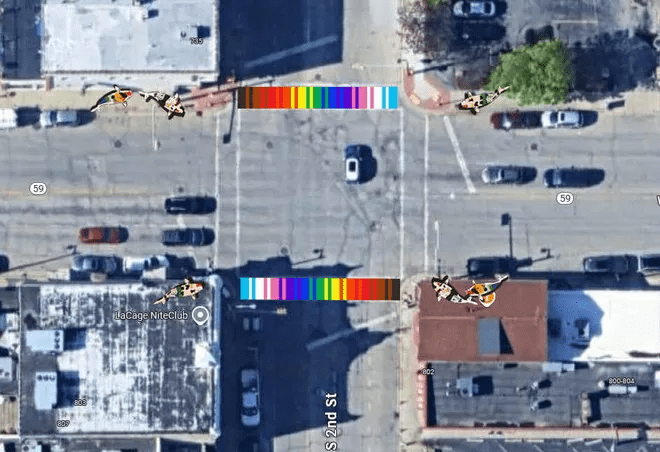
A Walker’s Point intersection will soon be bursting with color — new rainbow crosswalks.
The Wisconsin LGBTQ History Project announced Aug. 1 that the City of Milwaukee’s Paint the Pavement program has approved the crosswalks at the corner of South Second Street and West National Avenue.
They’ll be installed by Oct. 1. in honor of National LGBTQ History Month.
The crosswalks honor “the changemakers who’ve been creating safe spaces for our community for over eight decades,” a Wisconsin LGBTQ History Project news release said.
The project is entirely funded by donors, sponsors and grants. Artist Jeremy Novy, who has been decorating Milwaukee streets with his koi fish since 2006, will design the crosswalks. The koi fish will be part of the design, too.
Novy’s design includes all the colors associated with the LGBTQ community and conveys the message that Walker’s Point is everyone’s neighborhood.
“This is a place of belonging, and if you’re coming here, you have to be respectful,” said Michail Takach, the Wisconsin LGBTQ History Project’s president and chair.
The Friendly Bar, Walker Point’s first known gay bar, opened in 1944. Fluid Milwaukee is located where the Friendly Bar once was, at 819 S. Second St.
“I think that a lot of people are shocked when we tell them that there have been places for gay people to go in Walker’s Point since 1944,” Takach said.
Now, Walker’s Point is home to the seven surviving queer spaces in the city, according to the History Project.
“I’m very excited by this, and I think it’s been a long time coming,” said Dave Wolz, owner of La Cage Nite Club, 801 S. Second St., which has been open since 1984.
The crosswalks are meant to show that Walker’s Point is a safe space for LGBTQ people.
“The neighborhood will have this new symbol of acceptance, belonging, inclusion and safety,” Takach said.
The tree-lined neighborhood near Nollendorfplatz square in central Berlinis as gay today as it was a century ago.
It’s where Christopher Isherwood wrote novels chronicling the rise of the Nazis amid the city’s rich queer nightlife that inspired the musical Cabaret.
Every summer, the neighborhood throws its own smaller-scale LGBTQ+ Pride event separate from the city’s main annual parade taking place this weekend.
It’s just one of more than 200 Pride events taking place in Germany this year. But with far-right extremist groups staging anti-Pride protests, many Pride attendees fear for their safety.
Sipping on a cocktail as the street party gets underway, 62-year-old Georg Schmidt says he’s relieved that this event is a relaxed affair. He says he attended a different local pride parade last month across town in the district of Marzahn and the mood there was tense.
“There was a massive police presence to shield us from anti-Pride protests. We only felt safe because the police kept us apart,” Schmidt says.
Sabine Volk, a researcher at the Institute for Research on Far Right Extremism at the University of Tübingen,says these groups attract young men who promote what they call traditional family values — a kind of pride that has little to do with rainbow flags.
“The key slogan is that the German flag and Germany itself is already colorful enough,” Volk says. “And the overall message is that queer life does not have a place in Germany.”
But it’s not just far-right extremists who are exacting about flags.
Speaking on public broadcaster ARD, Merz signaled his support for the rule at Germany’s parliament, the Bundestag, with the words, “the Bundestag is not a circus tent” — a remark to which many have taken umbrage.
Merz backs his colleague’s argument that the lower house must maintain neutrality and cannot support events with a political agenda.
Opposition Green Party lawmaker Nyke Slawik criticized the move. “Declaring the rainbow a political symbol is highly problematic” stressing that “queer people are not an ideology; they are people!” Slawik told public broadcaster ZDF.
Slawik argues they are people increasingly in need of protection. Germany’s federal police report an almost tenfold increase in reported queerphobic hate crimes since 2010 and they believe the majority of cases go unreported.
The issue is not divided by party political lines; criticism of Merz’s choice of words has come from within his own party. Sönke Siegmann, the chair of the Christian Democrats’ LGBTQ+ Association, says some within his party are still catching up on terminology.
“If you say queer in my party, most people take a deep breath and say: ‘Oh, that’s a left-wing term,’ ” Siegmann observes. He says he has spoken with Merz since he made his “circus tent” comments.
“We explained to him what queer really means and two days later when asked in Parliament about LBGTQ+ hate crimes and what his government will do about them, Merz actually used the term queer,” Siegmann says.
Back inthe Nollendorfplatz area, rainbow flags fly every month of the year. But local resident Chris Kelly says the mood here is not as “live and let live” as it once was. He recently opened a boutique that sells high-end garments made from industrial strength rubber. He says business is good and he has a broad customer base, but it was almost impossible trying to find premises for the boutique.
“We found plenty of suitable spaces to rent and our finances are solid, but a lot of landlords rejected us, saying they didn’t want people like us,” Kelly remembers. “Real estate agents had warned us, but I was flabbergasted to encounter such prejudice in Berlin’s queerest, gayest neighborhood.”
Kelly’s store is located just down the street from Romeo and Romeo, a gay bar whose owner was attacked last month. Kelly says he too gets more verbal abuse than he used to and he hears again and again of attacks on members of the LGBTQ+ community.
“I’m almost 40 and have seen so much progress like equal marriage,” Kelly says. “But something is changing. Hatred towards people like me is becoming mainstream again.”
Kelly points out that a few doors down in the other direction is where the legendary nightclub Eldorado stood until the Nazis closed it down in 1933, eventually sending its queer clientele to concentration camps.
As preparations for Berlin’s main Pride parade get underway, the city police say they’ve received a permit request for a counterdemonstration protesting “against Pride terror and identity disorders.”
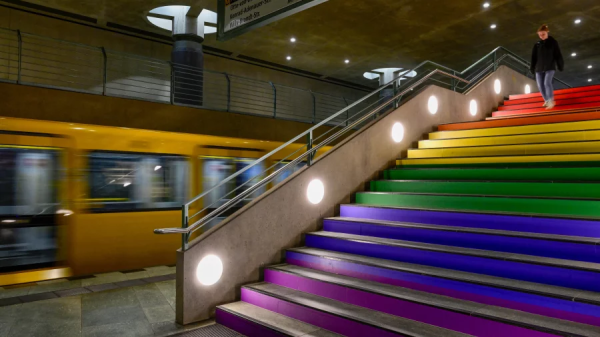
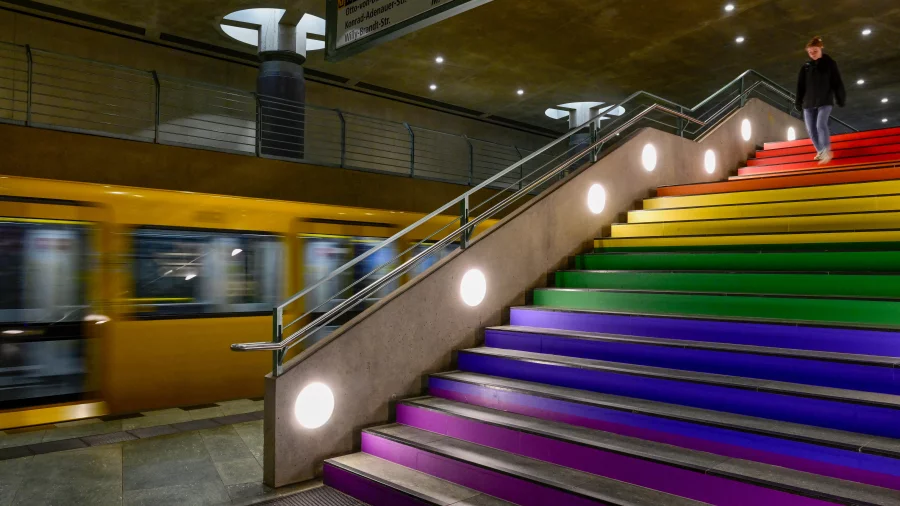
In reaction to the Bundestag president’s decision not to fly the rainbow flag on top of parliament this year, Berlin’s transport authority has decorated its Bundestag subway station stop in rainbow colors, writing on Instagram: “So our Bundestag is ready for Pride.”
Kelly urges people to attend Pride and stand up to a new generation of the far-right. He has no desire to say Goodbye to Berlin and the neighborhood around Nollendorfplatz, as Isherwood was forced to do.







You must be logged in to post a comment.