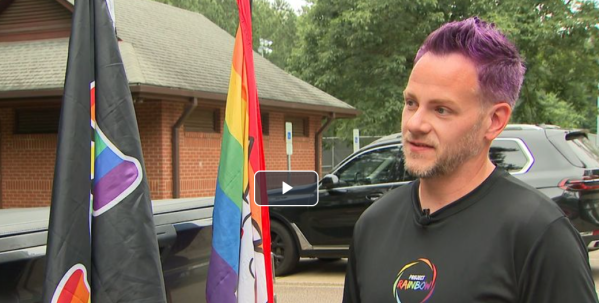
An LGBTQIA+ fitness group in Apex claimed their pride flag was vandalized several times in the last few weeks, most recently on Wednesday, June 4.
The Apex Police Department is now involved.
Project Rainbow is a fitness and wellness group based in Apex that holds weekly community walks around the area, specifically in Apex Community Park.
On May 28, the group recorded and confronted a man who deliberately removed and destroyed a pride flag that serves as a marker for the group to identify the gathering location at the park. The flag was then discarded into the surrounding woods.
Initially believed to be an isolated incident, the group returned to Apex Park for their walk Wednesday. This time, the group had a larger turnout and additional flags were added to show “unity and resilience.”
Project Rainbow said the same man came back and repeated the same act of vandalism.
The group said the actions from this person have caused “concern among participants” and highlights “the need for increased community awareness and support for safe, inclusive spaces.”
Tom Voss, the lead of Project Rainbow, said when the vandalism was happening, it was “unreal.”
“I was like, ‘wow this is actually happening in our backyard here in Apex.’ It was disheartening too,” said Voss. “This is an inclusive community and, we feel great coming here and will continue to be here but when it happened again, it was kind of mind blowing.”
Voss said they have added more safety protocols to the group and will continue to host walks in the park.
WRAL News reached out to Apex Police to ask if they’re planning to investigate the person and figure out their motivation. No charges have been announced.
This incident occurred during an important month for the LGBTQIA+ community, as June is Pride Month, which WRAL News recognizes by highlighting LGBTQIA+ history, local leaders and events happening around the Triangle for Pride Month.
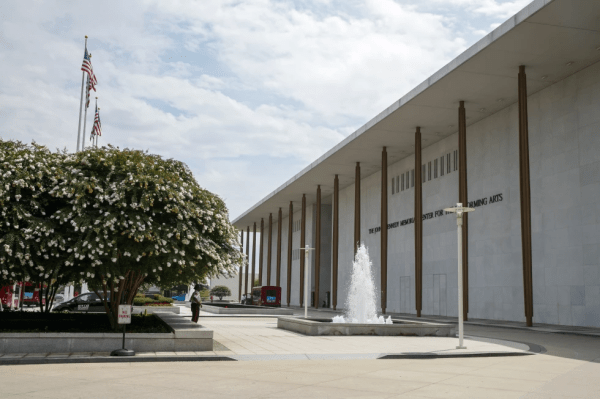
Organizers and the Kennedy Center have canceled a week’s worth of events celebrating LGBTQ+ rights for this summer’s World Pride festival in Washington, D.C., amid a shift in priorities and the ousting of leadership at one of the nation’s premier cultural institutions.
Multiple artists and producers involved in the center’s Tapestry of Pride schedule, which had been planned for June 5 to 8, told The Associated Press that their events had been quietly canceled or moved to other venues. And in the wake of the cancellations, Washington’s Capital Pride Alliance has disassociated itself from the Kennedy Center.
“We are a resilient community, and we have found other avenues to celebrate,” said June Crenshaw, deputy director of the alliance. “We are finding another path to the celebration … but the fact that we have to maneuver in this way is disappointing.”
The Kennedy Center’s website still lists Tapestry of Pride on its website with a general description and a link to the World Pride site. There are no other details.
The Kennedy Center did not respond to a request from the AP for comment.
The move comes on the heels of massive changes at the Kennedy Center, with President Donald Trump firing both the president and chairman in early February. Trump replaced most of the board with loyalists, who then elected him the new Kennedy Center chairman.
The World Pride event, held every two years, starts in just under a month — running from May 17 through June 8 with performances and celebrations planned across the capital city. But Trump administration policies on transgender rights and comments about Kennedy Center drag performances have sparked concern about what kind of reception attendees will receive.
“I know that D.C. as a community will be very excited to be hosting World Pride, but I know the community is a little bit different than the government,” said Michael Roest, founder and director of the International Pride Orchestra, which had its June 5 performance at the Kennedy Center abruptly canceled within days of Trump’s takeover.
Roest told the AP he was in the final stages of planning the Kennedy Center performance after months of emails and Zoom calls. He was waiting on a final contract when Trump posted on social media Feb. 7 of the leadership changes and his intention to transform the Kennedy Center’s programming.
Immediately the Kennedy Center became nonresponsive, Roest said. On Feb. 12, he said, he received a one-sentence email from a Kennedy Center staffer stating, “We are no longer able to advance your contract at this time.”
“They went from very eager to host to nothing,” he said. “We have not since heard a word from anybody at the Kennedy Center, but that’s not going to stop us.”
In the wake of the cancellation, Roest said he managed to move the International Pride Orchestra performance to the Strathmore theater in nearby Bethesda, Maryland.
Crenshaw said some other events, including a drag story time and a display of parts of the AIDS Memorial Quilt, would be moved to the World Pride welcome center in Chinatown.
Monica Alford, a veteran arts and culture journalist and event planner, was scheduled to organize an event June 8 as part of Tapestry of Pride, but said she also saw communication abruptly end within days of Trump’s takeover.
Alford has a long history with the Kennedy Center and organized the first-ever drag brunch on the Kennedy Center rooftop in 2024, and said she regarded the institution — and its recent expansion known as The Reach — as “my home base” and “a safe space for the queer community”
She said she was still finalizing the details of her event, which she described as “meant to be family-friendly, just like the drag brunch was family-friendly and classy and sophisticated.”
She said she mourns the loss of the partnership she nurtured with the Kennedy Center.
“We’re doing our community a disservice — not just the queer community but the entire community,” she said.
Roest said he never received an explanation as to why the performance was canceled so late in the planning stages. He said his orchestra would no longer consider performing at the Kennedy Center, and he believes most queer artists would make the same choice.
“There would need to be a very, very public statement of inclusivity from the administration, from that board, for us to consider that,” he said. “Otherwise it is a hostile performance space.”
Several men tore down Pride flags and threatened to stab several attendees of a transgender picnic event last Thursday — one man even burned one of the flags. Event organizers reported the incident to police but said that they didn’t expect a positive outcome.
The group behind the event, Trans Mutual Aid Manchester, held a “Trans Picnic in the Park” event in Platts Field Park from 4 p.m. to 8 p.m. last Thursday. Though the organizers said the picnic featured “sunshine and lovely food,” they also said a group of men tried to violently harass and intimidate picnic goers.
“The first pair tore down a Progress Pride flag we had raised to show where we were to people coming to the event, and after threatening to violently assault one of our members with a knife, had his partner burn the flag in front of our group, before leaving,” Trans Mutual Aid Manchester wrote in an Instagram post.
In a second incident, three men approached the picnic while “shouting abuse, then tore down the remaining trans and nonbinary pride flags before running off with them, the organization added.
“Whilst thankfully no one in our community was physically harmed, thanks in part to the intervention of several of our members, this blatant attack on our right to feel safe as a community is a disgusting display of the impunity and hatred with which parts of our society treat their trans siblings,” the Instagram post continued.
While organizers reported the incidents to police, they said that they “do not expect any positive outcome from this” and added, “This was an obvious attack on our community, perpetrated by those who know they will face no repercussions for their attack.”
“We hope this can be something of a wake-up call to know the kind of rampant abuse we face by those who know they can attack us freely.”
The organization said it would take additional safety and security measures for future events and asked for allies outside of the community to help defend trans and nonbinary individuals.
Anti-trans sentiment in the U.K. has increased over the last year following the release of The Cass Review, a report claiming that gender-affirming care has no benefits for trans youth. The report has been widely criticized for excluding the experiences of trans people and trans-affirming medical studies. Nevertheless, government officials have repeatedly cited the report while restricting access to gender-affirming care for trans kids.
Karma Yoakum had been part of a community of political activists in Texas for years. However, as the relentless tide of anti-trans legislation kept rising, it became clear that it was time for them to relocate, recover their energies, and take on a different role in the larger fight.
Finding a new home in the Pacific Northwest, Karma was able to do just that. But the road wasn’t without its challenges, and finding their new community required intention and perseverance once they had recovered a little bit of who they were by living in a state that wasn’t trying to persecute them for their existence.
As anti-trans sentiment and legislation have been on the rise across the United States in recent years, many trans and nonbinary people have made the difficult decision to flee red states. In moving to a bluer state, trans people are making a choice based on safety, but that doesn’t make it an easy choice. It means leaving behind a home and community you have built over years or your whole life because of the machinations of people who hate you. While a new state can fix a lot of problems, building a new community doesn’t happen overnight. The president’s re-election and the introduction of federal anti-trans bills have created a flashpoint for even more trans people to seek safer pastures in states that might protect them.
I wanted to understand the challenges and opportunities that trans people face when starting over and building a new community in a blue state. I spoke with four trans and nonbinary people who have relocated in the last six to twelve months. They shared the challenges, the successes, and advice for others who are considering relocating to a sanctuary state.
Why trans people are leaving their red state communities
Major relocations often happen around an institution, such as going to college or starting a new job. But moves like those come with some built-in community-building support.
Relocating as a refugee from a red state can be a more lonely affair. Most of the people I spoke with found that building a new community felt like work exacerbated by not having the same connections and support systems they had in the communities they left behind.
Clark Roman had been well-established in St. Louis. Both Clark and his boyfriend had owned their own houses and had a strong community of friends and chosen family in the city. But he says he saw the writing on the wall in 2023 when the Missouri attorney general enacted a de facto ban on trans hormones and trans healthcare that included adults. While his emergency rule was blocked by a judge and then withdrawn, the legislature went on to pass a gender-affirming care ban for trans youth. It was clear where things were headed, and Clark moved to Minneapolis a few months later.
Leaving behind a large community, both queer-centric and otherwise, Clark has found it hard to make more connections in his new city. At the center of it is the challenge of the modern age: balancing work and social life. “The honest truth is I have a very, very stressful job and I have not had the space in my life to build community the way I want.” He noted that it felt like he had to “treat building a new community as a second job.”
Karma also struggled to make connections when they first relocated from Texas to Washington state. After living in Texas for years, they reached a point where they found themselves saying, “I’m feeling scared and trapped and there’s absolutely nothing keeping me in Texas anymore.”
Karma moved 2,000 miles to Seattle but found a problem when they arrived. While their new home was more welcoming to the gender diverse, there was still culture shock to get over. “Where is everybody? I heard it was this wonderful panacea, a place where I would be welcomed. So, I looked around and I learned what the Seattle chill was. And it’s not a horrible thing, it’s just a difference in culture, because I’m used to southern culture.”
Chris (his name has been changed to protect his privacy) echoed Karma’s frustrations over Washington state’s laid-back attitude to building community. Like Clark, Chris was living in St. Louis, saw the anti-trans legislation in Missouri in 2023, and concluded that “living in Missouri as a trans human, [he] was at risk.” He made the move to Washington state in 2024 while watching the coming election without much hope.
While St. Louis had its flaws, Chris was leaving behind a lot of queer community and resources. He had worked with the St. Louis Metro Trans Umbrella Group for nearly 20 years, enjoyed events and meetups, and collected queer friends through meets at clubs, bars, and drag shows. But the same culture shock that Karma experienced has made it hard to build new connections: “It’s been honestly a huge struggle, much more than I anticipated.”
While it’s important to know that people are struggling with finding new communities in their new states, it’s not all doom and gloom. Clark and Chris have both been able to stay in touch with parts of their communities from before their moves through travel and online communication. While that’s not always the same, it’s a nice option to have. I also spoke with Mira Lazine – an LGBTQ Nation contributor – who relocated from Cincinnati to Minneapolis and had a different sort of experience.
While the Ohio governor vetoed HB 68, which banned gender-affirming care for minors, he then introduced care guidelines for the state. “These rules were basically going to amount to a total care ban for all adults in Ohio,” explained Mira. “And it even would include some aspects of conversion therapy and mental health treatment.”
It was time to relocate, and someone recommended Minneapolis. For Mira, finding a new community in this queer-friendly space came a lot easier.
“Within the first week of moving here, I went to a few coffee shops, and everyone, like the baristas, were trans, and they were recommending me support groups to join, discord servers I can join, like the whole nine yards. And it’s just been way easier to meet people and meet other queer people and form connections here.”
While Karma and Chris suffered from culture shock, Mira found herself among other transplants to the state who had their relocation in common: “Probably like 80% of the queer people I’ve met aren’t originally from Minnesota, so we’re all like, yeah, we need community, let’s build one.”
Finding new communities in blue states
All of the people that I spoke with had been in their new homes for less than a year. While there have been struggles, they have been able to find resources and spaces to start that community-building process and are in different places in their journeys.
Clark noted that his struggle to find community in Minneapolis is probably the biggest dissatisfaction in his life right now. But he can see a light at the end of the tunnel through some of the community spaces that he is attending. “The synagogue I go to is very open and trans-friendly. So that was helpful.” Clark is also looking at getting more involved with Transplants, a group for LGBTQ+ people who have relocated to Minneapolis and St. Paul.
Chris has found that his work at a university in Washington provides some space for community building. “Their DEI office held a holiday event for, I guess, everyone, but the folks who showed up to that event were primarily queer folks and persons of color. And that was fantastic.”
Chris still faces challenges, even at the events. He told me that he has been going to meet-up groups, Portland Pride, the Ingersoll Gender Center, and more, but he wasn’t satisfied with the results. Chris suggested that part of that problem might be visibility: “I am stealth, so at my workplace, I’m not fully out [as trans]. Where I landed is sort of a purple city in a blue state. I’m typically able to pass as male and not be questioned at all, which is, is nice, but at the same time, it’s hard because I think visibility might help me connect with more queer people.”
For Karma, their initial struggles with community-building in Seattle began to bear fruit around the one-year mark. “I did the things that I’ve tried before, and I figured, if they’ve worked everywhere else, they ought to work here. Maybe it just takes a little longer. And yeah, that was it. It takes a little longer.”
Karma found that organizations were the key. They found like-minded people when they returned to playing music with the local band that is part of the LGBTQ+ band organization, Pride Bands Alliance, an international group that Karma has worked with since the 1990s. Similarly, local chapters of a national support network have provided success in community building: “PFLAG, all you have to do is show up to a meeting. There are people there that if you need a hug, they are instant family. And people that aren’t instant family are there because they want support.”
Karma also reached into her past in political activism and found that, post-move, they had the energy to continue in their new home. “The third place that I decided to get involved was the Gender Justice League. Dealing with legislation, dealing with victims of violence here in the Seattle area. So, supporting our community, advocating like crazy.” After months of struggling to find their people, Karma now finds that barely a day on their calendar doesn’t include a community event, a catch-up, or a coffee meet.
No regrets
Everyone’s experience with relocating to a bluer state will be unique. However, there was one ringing agreement amongst all the people that I spoke with: no regrets. When asked what advice they had for someone considering a move, Clark, Chris, Mira, and Karma all urged people to relocate if they felt it might help.
Clark grieves what he left behind but recognizes that it was the right call for him, and he’s going to keep trying to find his new community. “I think it’s dissatisfying at first. But it’s important to [show] up repeatedly because I think that repeated showing up [is] how I made my community originally in St. Louis.”
Chris echoed those sentiments, noting that he has no regrets and that it has been “completely worth it.” Watching recent election results come in wouldn’t have been fun anywhere, but he was glad to be in a safe space for it all “despite challenges and some loneliness.”
Karma isn’t even considering going back. “I would say do it. The relief that I felt by at least being in a community where I know that I’d no longer have to deal with local politics.”
“In Texas, the local politics were against me,” they said. “At least here, I know locally and statewide, my representatives really do represent everybody, and they have my back. And that has made so much a difference in my life.”
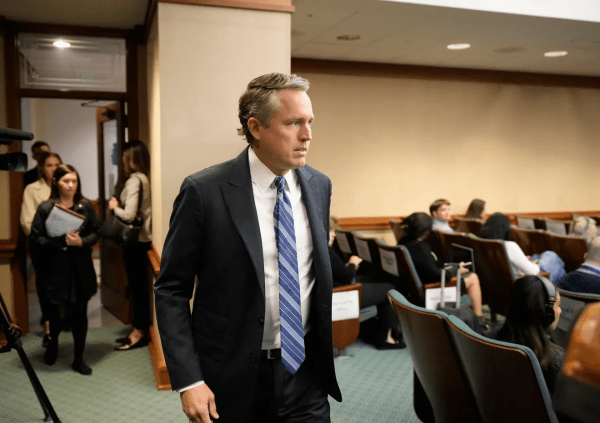
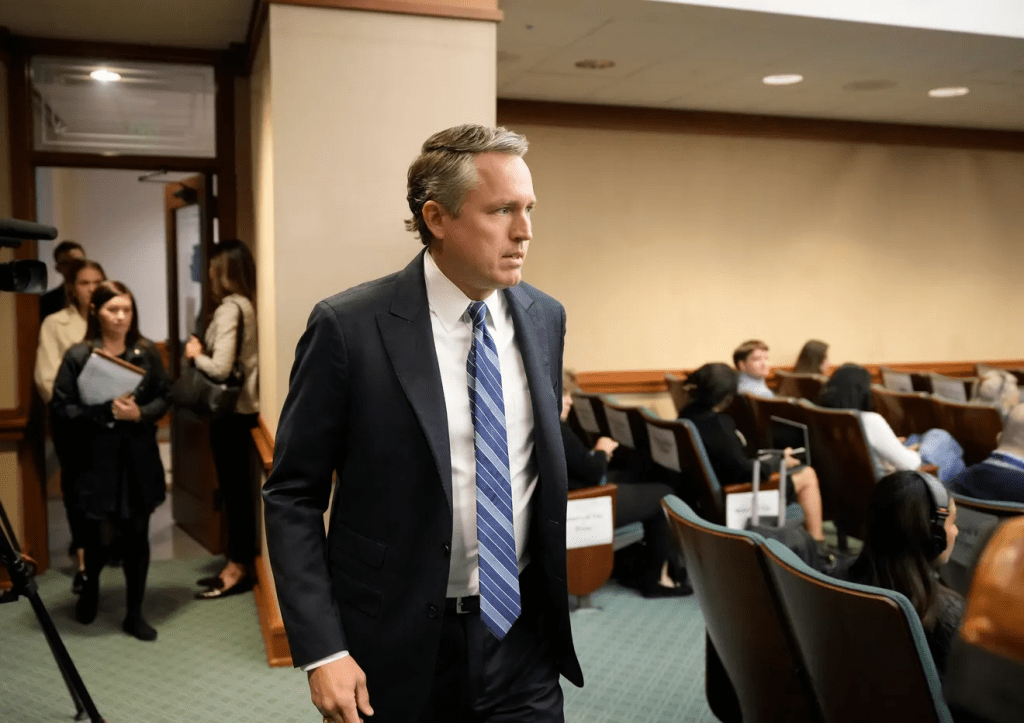
A state lawmaker is calling on the Legislature to “completely” defund the University of Texas if it doesn’t shutter its Women’s, Gender and Sexuality Studies Department and LGBTQ studies program, which he has decried as liberal indoctrination that taxpayers should not fund.
The demand by Rep. Brian Harrison on Wednesday comes after a barrage of posts on X from the Republican lawmaker from Midlothian that draw attention to public universities’ LGBTQ+ and gender-related course offerings, despite no law barring such curriculum.
After an “undercover” visit to the UT campus Tuesday, Harrison criticized the university’s exhibit on “Black queer ecstasy,” which showcases art that has often been excluded from historical representation; Pride flags flying around campus; books on gender, transgender issues and queerness; and event flyers for roundtables on Black feminism, transgender people’s well-being and multiple resource posters for LGBTQ+ people.
In doing so, Harrison has amassed 45,500 followers on X whom he calls “liberty bots” — more than triple the followers Texas House Speaker Dustin Burrows has accumulated.
In its recently approved budget proposal, the Senate does not call to defund UT.
In an interview Wednesday, Harrison told the American-Statesman that his impromptu visit to UT was spurred by an event hosted by the Department of Women’s Gender and Sexuality Studies on disparities in health outcomes and gender-affirming care for transgender and nonbinary people of color.
“The voters of Texas do not want their money spent on gender ideology,” Harrison said. “It’s a very visible embarrassment. The state of Texas is supposedly run by all the Republicans down here. We can’t do the basics.”
UT and the head of the LGBTQ studies program declined to comment. The chair of the Women’s and Gender Studies Department did not return Statesman requests for comment.
But queer organizations doubt Harrison’s threat has standing.
Brad Pritchett, interim CEO of Equality Texas, the largest LGBTQ+ advocacy organization in the state, said government intervention in what universities can teach could constitute viewpoint discrimination, a violation of the First Amendment. It would also infringe on the academic freedom that makes UT “top of their class,” he said.
“Freedom requires that we allow ideas that are different from our own, ideas that might even make us uncomfortable,” Pritchett said in a statement to the Statesman. “Harrison wants conformity, but Texans believe in Freedom at all costs.”
Harrison said painting his demands as government censorship is “absurd,” saying anyone can study anything as long as taxpayers aren’t funding the material.
“This is scary for my community, absolutely, but for the Republican Party because they’re showing their hand,” Adeeko said. “It’s telling us that state officials, people who are passing laws, don’t understand who we are, and they’re using that lack of understanding as their primary basis to deny us the right to have well-being and our needs” met.
Harrison and other lawmakers should talk to queer students and organizing groups if they want to understand what being transgender and being queer in Texas means, Adeeko said. Until then, LGBTQ+ people will continue fighting against legislative threats.
“This isn’t like the power boss (go) girl slay he thinks it is. It’s worn out,” Adeeko said of Harrison’s crusade. “It’s really just trying to dog pile all this hopelessness onto the people they go after, and it’s not working.”
Adeeko said Harrison has a duty to serve queer and transgender Texans as a state representative, and the queer community will continue supporting one another until then.
Harrison: ‘Past time the Republican Government of Texas grows a backbone’
Harrison’s visit to UT, according to his X thread, included entering inside buildings, sneaking into a conference and stealing a pamphlet on nonmedical gender transition resources that he called “one of the most disturbing things I’ve ever read.”
UT is a public university, but there are rules on who can access its buildings for security purposes. According to the university’s emergency management website, “with few exceptions such as museums, libraries and during certain events, university-owned buildings and facilities are not considered open to the public.”
When asked if he had legislative support to cut UT’s budget if the programs remain, Harrison criticized state elected members from the Republican Party for not publicly supporting his demands and said that many lawmakers privately agree with him. He said he will continue demanding that public money not be used to fund LGBTQ+ studies and will look to find support.
“The voters of Texas do not want their money spent on DEI, they do not want their money spent on liberal gender ideology,” Harrison said. “It’s past time the Republican government of Texas grows a backbone.”
If you have a well-founded fear of being persecuted because of your sexual orientation, gender, gender expression, gender identity or other membership in a certain social group, you may be a refugee and have the right to protection in Sweden. This is stated in the Refugee Convention, Swedish law and EU rules.
Asylum application and rules
Persecution can be threats or violence against your life or health. It can also be about laws and regulations or people’s views that mean that you are subjected to serious violations because of your sexual orientation. It can be, for example, punishment or extensive discrimination such as not being able to go to school, choose a job or receive healthcare.
The right to express yourself and engage politically without fear of persecution regardless of ethnicity, religion, gender or sexual orientation are also examples of what can give you the right to stay in Sweden.
It does not matter whether the persecution comes from the authorities of your home country or if your family or other people threaten you. The Swedish Migration Board will then investigate what could happen to you if you return to your home country in the future and whether the authorities there are unable or unwilling to protect you against the persecution that you say you are at risk of.
The Swedish Migration Board will register you as an asylum seeker with the name, date of birth and legal gender that appears on your identity documents. Swedish law does not allow us to register you with a different name, but if you wish to use a different address or pronoun, you should tell us so that we can make a note of this.
Investigation
When the Swedish Migration Board decides whether you need protection and can therefore be granted a residence permit in Sweden, an investigation will be carried out with you to understand what your life has been like and why you are afraid of returning to your home country. If the reason is your sexual orientation, gender expression or gender identity, it is important that you tell us as early as possible.
The Swedish Migration Board knows that it can be difficult to tell someone you have never met about such things. It may even be the first time you have talked about it with someone and the boundaries of what feels personal and private are different for everyone. It is important that you still tell us as much as possible about all your reasons for asylum. The more details you can talk about, the better basis the Swedish Migration Board has for its decision. The investigator will also ask questions about your sexual orientation, your gender expression or gender identity, the thoughts and feelings you have had about it and your relationships with family, friends and the society you have lived in. We are bound by confidentiality and do not tell people who are not working on your case about what you tell us.
If you feel that the officer conducting your investigation does not understand what you are saying, or if you have information that the officer does not ask for, you must tell them as soon as possible. Do not wait until you have received a decision on your case.
You have the opportunity to express your gender preferences for the interpreter, caseworker and assistant so that you feel safe during the asylum process, and the Swedish Migration Board will then try to help you with your preferences. If you are over 18 years of age, you will meet your assistant and your caseworker alone without other co-applicants. You can request an assistant with special knowledge of the situation of LGBTQ people if you know of, or receive help in finding, such an assistant.
If you are under 18 years old
The Swedish Migration Board must listen to all children seeking asylum and find out whether the children need protection here. It is therefore important that you tell the Swedish Migration Board about your life in your home country and what you think would happen to you if you went back there. If you are under 18 and have guardians with you in Sweden, the Swedish Migration Board must ask them if we can talk to you without them being in the room. If you do not have your parents with you in Sweden, it is your guardian who decides whether we can talk to you alone. If you want to talk to your case officer without your parents or guardian, it is important that you say so.
The interpreter
Words and concepts in Swedish and your own language can mean different things. The most important thing is that you describe your own feelings and experiences and explain how they relate to why you are afraid.
If you do not understand the interpreter or if you think the interpreter may not be translating everything you say impartially, you should speak up. Also, keep in mind that the interpreter may not always know the specific words used to talk about sexual orientation, gender identity or gender expression. It may therefore be a good idea to also explain to the interpreter what the words you are using mean to you.
Accommodation
In most of the Swedish Migration Board’s accommodation, two or more people of the same gender share a room. The wait during the asylum process can make the accommodation situation stressful and conflicts can arise in the accommodation.
It is important that you tell us as soon as possible about what you need or if you feel unsafe where you live. If there are problems in the accommodation that you need help solving, you must tell us. Speak to the caseworker at the reception unit or the staff at the accommodation where you are registered.
Health
In some cities there are clinics for, for example, sexual health and counselling for specific target groups. Examples of target groups could be women, young people or LGBTQ people. Ask your caseworker for more information.
Voluntary organizations
You always have the right to contact voluntary organisations during the asylum process for advice and support. The more information you have about your rights and possible options, the better prepared you are for the different stages of the asylum process. RFSL is one such voluntary organisation that works for LGBTQ rights, providing special support and social meeting places for LGBTQ asylum seekers.
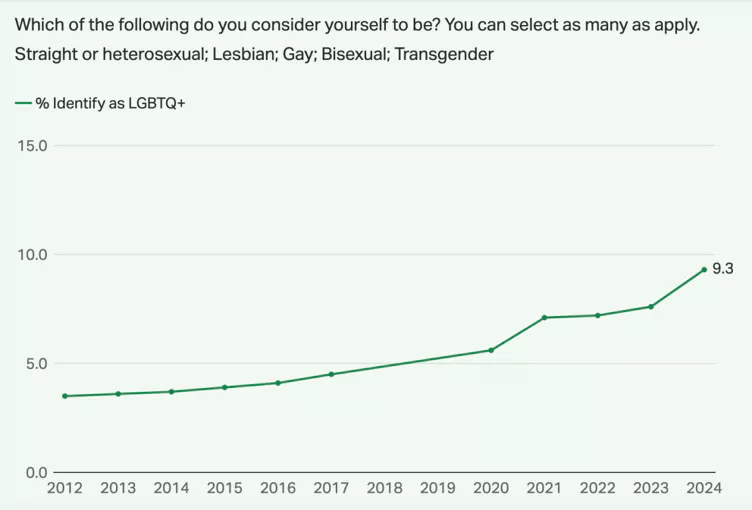
The number of Americans identifying as LGBTQ+ continued to rise, according to the latest Gallup poll.
In 2024, 9.3% of U.S. adults identified as lesbian, gay, bisexual, transgender, or something other than heterosexual.
That’s an increase of more than one point since a 2023 survey, double the number from 2020, and up from 3.5% when Gallup first asked about sexual identity in 2012.
14,000 respondents in a phone survey were asked, “Which of the following do you consider yourself to be? You can select as many as apply. Straight or heterosexual; Lesbian; Gay; Bisexual; Transgender.”
Overall, 85.7% say they are straight, 5.2% are bisexual, 2.0% are gay, 1.4% are lesbian, and 1.3% are transgender. Just under 1% mention another LGBTQ+ identity, such as pansexual, asexual, or queer. Five percent of respondents declined to answer the question.
The survey found LGBTQ+ identification is increasing as younger generations of Americans enter adulthood. Younger people are much more likely than older generations to say they are something other than heterosexual.
Both Gen Z and millennials came of age with the expansion of LGBTQ+ rights, marriage equality, and greater representation in the culture.
More than one in five Gen Z adults — those born between 1997 and 2006, who were between the ages of 18 and 27 in 2024 — identify as LGBTQ+. Each older generation of adults, from millennials to the Silent Generation, has successively lower rates of identification, down to 1.8% among the oldest Americans, those born before 1946.
The largest increase was among younger people identifying as bisexual. 59% of LGBTQ+ Gen Z Americans (ages 18-27) called themselves bisexual, along with more than half (52%) of LGBTQ+ millennials (ages 28-43).
Among the nearly 900 LGBTQ+ individuals Gallup interviewed last year, more than half, 56%, said they were bisexual. Twenty-one percent said they were gay, 15% lesbian, 14% transgender, and 6% something else. These figures total more than 100% because the survey allows respondents to report multiple LGBTQ+ identities.
The overall estimate of 9.3% of U.S. adults who identify as LGBTQ+ counts each respondent only once, even if they have multiple identities.
The survey broke down LGBTQ+ identification associated with sex, politics, and geography, as well.
Democrats (14%) and independents (11%) are far more likely than Republicans (3%) to identify as LGBTQ+.
21% of liberals, compared with 8% of moderates and 3% of conservatives, say they are lesbian, gay, bisexual, or transgender.
LGBTQ+ identification is higher among people living in cities (11%) and suburbs (10%) than in rural areas (7%).
College graduates (9%) and nongraduates (10%) are about equally likely to identify as LGBTQ+, while 10% of women versus 6% of men say they are LGBTQ+. That gender gap is most pronounced in younger generations.
31% of Gen Z women versus 12% of Gen Z men identify as LGBTQ+, with most of those younger women saying they are bisexual.
With increasing attacks on LGBTQ+ rights over the past few years, it is no surprise that LGBTQ+ adults are struggling with their mental health. A new study from the Human Rights Campaign (HRC) Foundation details how these struggles can adversely affect state economies and serves to remind lawmakers that when LGBTQ+ people suffer, the country follows.
In the HRC Foundation’s 2024 LGBTQ+ Climate Survey, 71.5% of adults reported that anti-LGBTQ+ legislation has negatively impacted their health or well-being in the past year.
44.3% of LGBTQ+ adults and 63.5% of trans adults also said anti-LGBTQ+ legislation has harmed their mental health or the mental health of their loved ones, and 66.1% of LGBTQ+ adults, along with 83.4% of trans adults, said anti-LGBTQ+ legislation has made them feel less safe.
The report found that as a result of these fears, one in five LGBTQ+ adults are considering moving to a new state and one in 20 are trying to change jobs. Half of LGBTQ+ adults said anti-LGBTQ+ legislation has already impacted their choices of where to live and work in the last year, and one in five said they’ve refused a job or home in states with anti-LGBTQ+ legislation. 4% say they have already left their state or have taken steps to leave, and one in 20 are trying to change jobs due to anti-LGBTQ+ legislation.
“It is mentally exhausting to live in a state where the legislature and governor bully communities of color and LGBTQ+ communities,” said one cisgender lesbian woman who participated in the study. “It takes a toll. We will be moving from this state.”
A gender-questioning person from New York added, “I purposely turned down a dream job in a state where these laws were passed. Also, the laws affect my work, as I am a physician and cannot practice the full spectrum medicine I would like to.”
One cis queer woman stated that the laws “have radically impacted my queer & trans household” and that they are “actively shopping to relocate to MI or ME, leaving behind a business, a gorgeous home & property, a high-income career, and a non-profit we run in the queer community.”
Shoshana Goldberg, public education and research program director at the HRC Foundation, told The Advocate that this will no doubt hurt the economics of the states and businesses being abandoned.
“I think states stand to lose economically by continuing to support these laws. They risk losing the tourism and business travel dollars, such as those from the 30 percent of LGBTQ+ adults, in the last year alone, who have avoided, canceled, and/or refused to travel to states with anti-LGBTQ+ legislation,” she says. “They risk losing the taxable income from LGBTQ+ adults, and families of LGBTQ+ youth, who are looking to move to a new state where they and their children can live openly and freely … and companies headquartered in these states risk losing customers.”
She added, “The LGBTQ+ Community holds $1.4 trillion in purchasing power, and unsupportive companies stand to lose us as customers — as well as lose allies, particularly Millennials and Gen Z, who data shows are looking to spend their money on those companies that support their values of equality.”
She also warned that companies who halt DEI practices risk not only losing customers but also top talent.







 fleeredstates.blog
You must be logged in to post a comment.