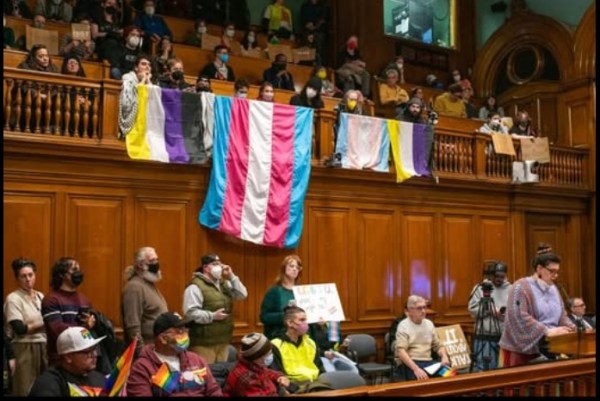
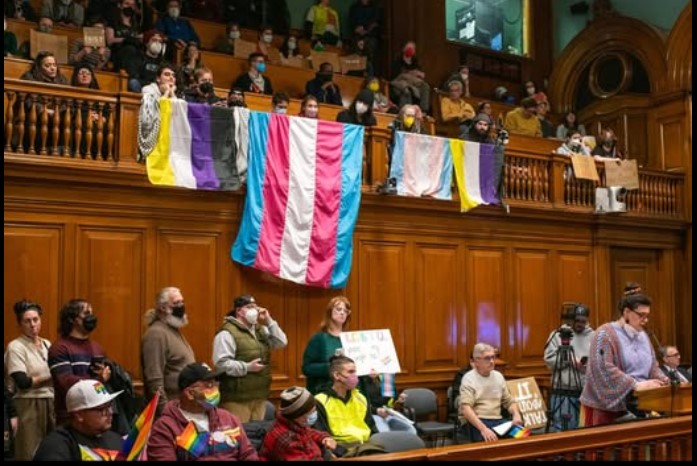
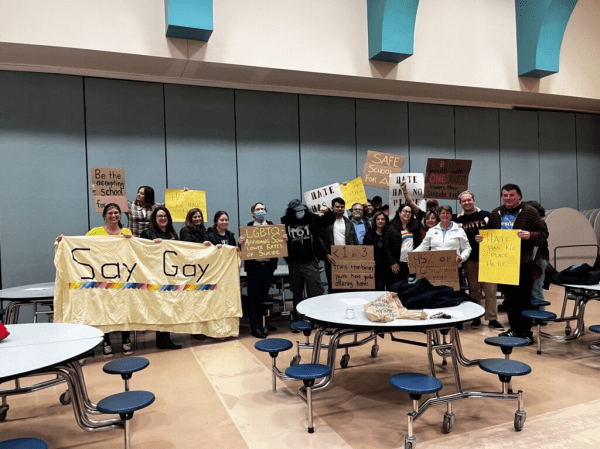
This meeting lasted about five hours and there were about 200 people who showed up to voice their support.
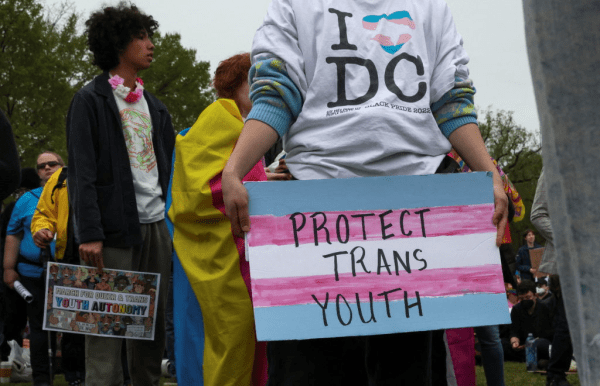
It was standing room only inside council chambers – as dozens of residents spoke before the city council in favor of making Worcester a sanctuary city for those who identify as transgender or of other diverse genders.
This campaign comes on the heels of the first openly nonbinary member elected to the council — Worcester City Councilor-at-Large Thu Nguyen — taking a hiatus from the council, after they say the environment was transphobic.
Local organization Queer Residents of Worcester and Our Allies filed the petition asking councilors to make Worcester a sanctuary city for transgender and gender diverse people.
The petition specifically asks the city to not cooperate with federal and state policies aimed at harming transgender and gender diverse people, and to ensure that the LGBTQ+ community here has access to healthcare, housing, education, and employment without fear of discrimination.
“You have an incredible opportunity as a community to support our children, you have an opportunity to decrease the rates of depression and suicide by showing our children that their safety and dignity are a priority,” one meeting attendee said.
“It is your responsibility to stand up and fight for our people, for your people, for the people,” another added.
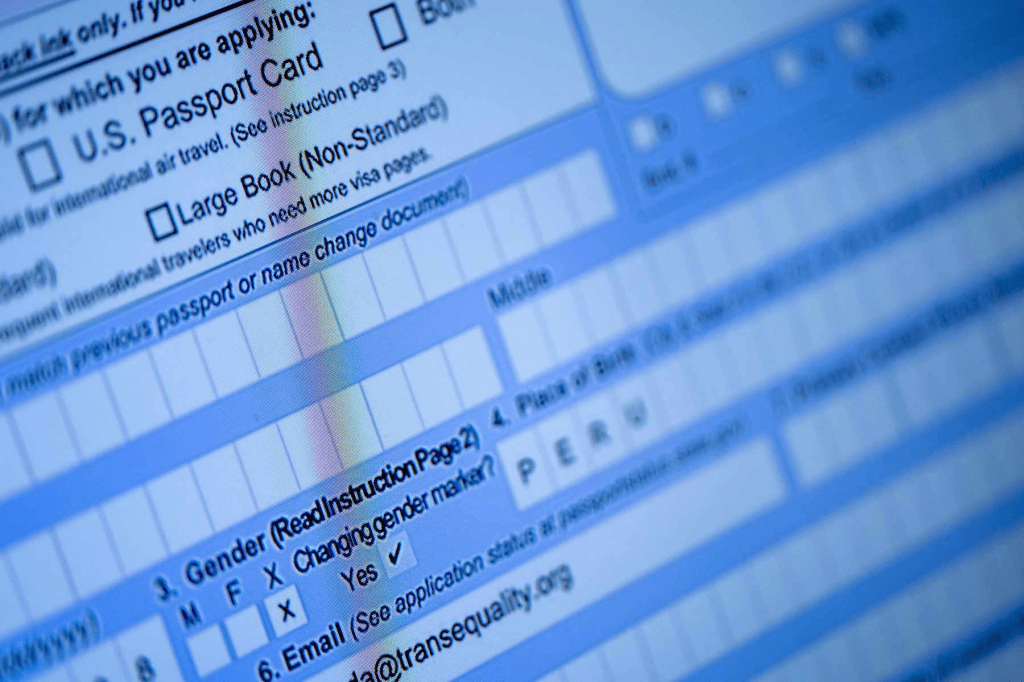
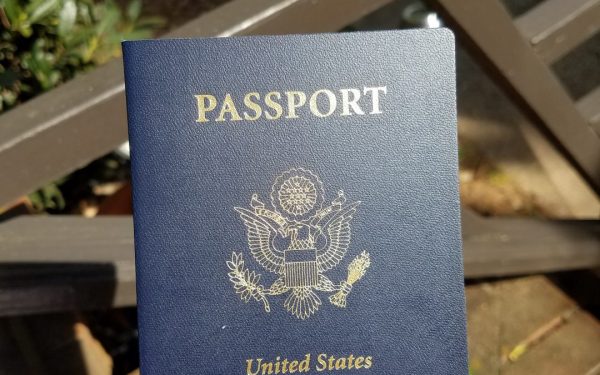
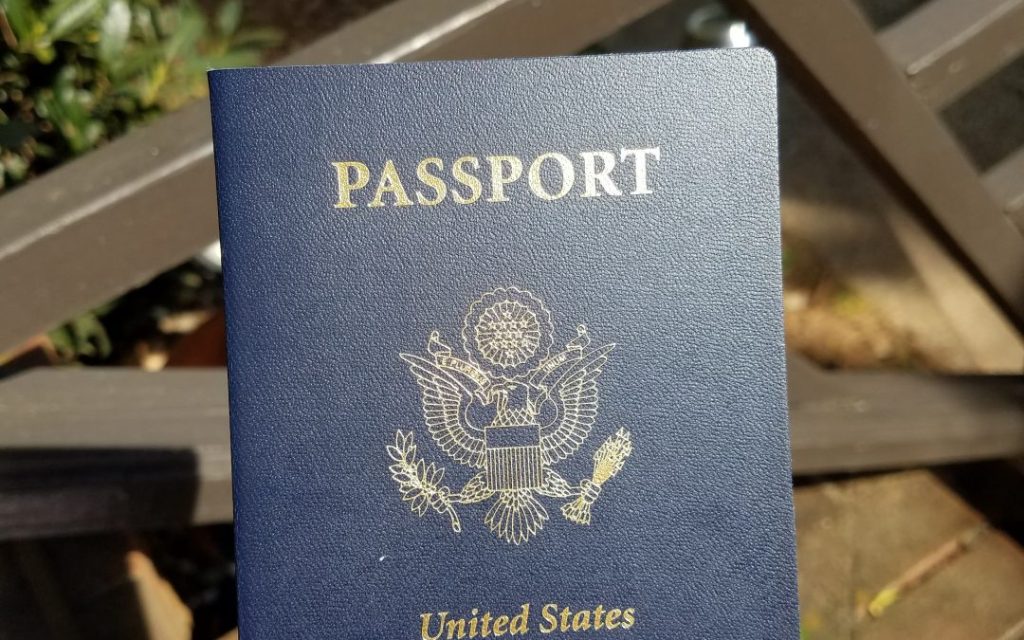
The State Department is no longer issuing U.S. passports with “X” gender markers and has suspended processing all applications from Americans seeking to update their passports with a new gender marker. This suspension, made in response to President Donald Trump’s executive order signaling his administration’s opposition to gender diversity, affects all transgender and nonbinary Americans, including those currently traveling or overseas.
The agency says that it will issue guidance on previously issued passports with an “X” marker and that more information will be available on its travel website. However, no formal policy has been released, which is fueling confusion among trans and nonbinary people trying to update their documents.
That includes Ash Lazarus Orr, a trans activist living in West Virginia. Orr applied to update their name and gender marker on their passport on January 16 — days before Trump was sworn into office.He paid $300 for expedited service, but his paperwork wasn’t processed until January 22. When Orr called the agency’s hotline for Americans waiting on passports who have upcoming international travel, they were told that the agency had no guidance to offer and that their documents had been “set aside.”
Now Orr is without his passport, without his birth certificate and without his marriage license. Over the phone, he was told that his documents are being held in San Francisco, where they were originally being processed.
“They have my documentation that is very personal to me, and they cannot tell me if I’m going to be getting that back,” they said.
The American Civil Liberties Union has warned trans and nonbinary Americans that if they submit a new application to change the gender marker on their passport, they risk losing access to their passport and supporting documents while their application is being processed. An ACLU spokesperson attributed this information to reports of discrimination received through the organization’s online intake form, as well as direct conversations with people who have described this happening to them.
Trump’s executive order directed federal agencies to require that government-issued identification documents, including passports and visas, reflect sex assigned at birth. Since this order states that it is the policy of the United States to recognize two sexes, male and female, and that these sexes are not changeable, “the department’s issuance of U.S. passports will reflect the individual’s biological sex,” an agency spokesperson said in an emailed statement on Friday evening. Under Trump’s executive order, “sex” explicitly excludes gender identity.
Secretary of State Marco Rubio reportedly instructed agency staff on Thursday to implement that executive order as it pertains to passports immediately, as first reported by The Guardian and The Intercept.Now, Orr is without his personal identity documents six weeks before pre-planned international travel and in the middle of planning a move out of West Virginia.
The Biden administration made it easier for trans and nonbinary people to update their federal identity documents. Accurate and consistent gender markers on identity documents dramatically reduces the risk that trans people will face violence, harassment and discrimination, according to the Movement Advancement Project, which tracks LGBTQ+ policy.
The dismantling of this policy has radical consequences, said a former State Department official who spoke on condition of anonymity due to fear of lingering retaliation from the agency under the Trump administration. Not only does it force transgender people to carry identity documents that don’t accurately reflect their identity, this move also signals globally that U.S. policy on trans rights is moving backward, they said.
“The confusion that this decision creates is intentional. It is designed to make things harder for trans and nonbinary people,” they said.
When The 19th called the National Passport Information Center on January 23 to ask for more information, an employee on the technical support desk said that the State Department is aware of Trump’s executive order and that guidance will be posted online once information is available.
Erin Ryan Heyneman, a nonbinary person living in Massachusetts, called that same hotline. They don’t need to renew their passport; they said they just wanted to find out what was going on. Although they feel safe in their state, which has nondiscrimination protections in place for LGBTQ+ people, they still felt the need to act because of the way confusion can endanger their wider community.
“People just really don’t know who to believe or what to believe,” they said. More LGBTQ+ people need to seek information from trusted sources, they said. But when trying to seek that information from an official source, Heyneman was met with more uncertainty. The employee on the phone was sympathetic, but they had no information about passports being confiscated.
As Orr waits to learn whether they will get their passport back due to federal anti-trans policies, they are facing down the prospect of leaving their home because of transphobia within the state.
West Virginia has become increasingly hostile to trans and nonbinary people like himself amid a surge in anti-trans rhetoric across the country, and Orr expects a surge in state anti-trans bills introduced in West Virginia’s next legislative session. After receiving death threats and recently being attacked inside a men’s bathroom, he doesn’t leave the house without his spouse.
“I can’t stay in the state. And it’s heartbreaking, because I love it here. I love the people, but it is truly, at this point in time, it’s either I leave or I die,” they said.
*This commentary by Matt Keeley was originally published by LGBTNation.
Some cisgender people think the recent Republican fad of banning of transgender people from sports and bathrooms won’t affect them, and that if people just conform closely to gender stereotypes, they won’t have trouble. But these don’t realize that random nuts have confronted cis women in the ladies’ room just for wearing pants and having short hair.
Gender policing goes from controlling how we look to controlling how we behave. And cis people who have never been misgendered may not realize just how much it can hurt… but as a cis man who has been misgendered, I do.
As a kid, I had gynecomastia, a condition where prominent breasts develop on a boy or man. And my breasts were indeed prominent — probably a C- or D-cup in bra size. It started around when I was 10 or so. While we never figured out the reason, it doesn’t really matter when you’re in middle school and kids confront you in the bathroom, calling you “titty boy.”
Even friends would make the occasional crack to my chagrin. I remember once talking about how my uncle’s internal organs were backwards; one of my friends immediately joked, “And you’ve got two hearts: here and here,” gesturing at each breast. It didn’t feel great!
I hated my breasts. I often fantasized about chopping them off. It was never gory or gross in my mind — it usually was more like picking off a scab — a little bit of pain at first, but then perfectly fine with a normal chest just like every other boy.
The teasing changed my relationship with my body. My nipples usually inverted into my areolas by nature. But whenever they weren’t, I’d push them back in because, in my weird kid mind, women’s breasts had outward-facing nipples for babies to feed. If mine pointed inward, then that meant they weren’t breasts like what women had, and were…. something different.
I didn’t know the word “dysmorphia” at the time, but looking back, it seems like a manifestation of that. Most of all, I wanted to ignore that my breasts even existed. I hated even using the word “breast” in any context. While taking swimming lessons, I’d refer to the breaststroke as the “whip-kick stroke” based on the leg movements. When I wore collared shirts, they had chest pockets — men had chests, women had breasts.
While the teasing and bullying was bad, unintentional cruelty was somehow even worse. One expects bullies to be mean and to focus on one’s flaws. But if someone unintentionally misgendered me, it felt like they couldn’t help but hurt me, based solely on my appearance, infringing on my misguided attempts to ignore and feel indifferent to my own body.
One moment that’s seared in my brain (and will be for the rest of my life) happened around age 11 one afternoon at an office supply store. I needed a new graphing calculator for math class. I approached a worker kneeling on the floor, re-stocking the bottom shelf.
“Pardon me, do you know where the graphing calculators are?” I asked.
“Oh, sure, sir,” he said, turning and seeing my shoes.
His eyes raised to my chest and said, “…ma’am…”
His eyes then hit my face and he quickly went back to “sir,” before telling me where they were located.
I could tell he wasn’t being mean, he was just processing the visual stimuli in the order presented. I could tell he was embarrassed and neither of us wanted to call attention to his error, so I thanked him, and went to pick up the TI-85 calculator I needed.
I have no idea if he remembers that day at all. Probably not. But it’s a moment I relive over and over. I was wearing my standard uniform of jeans and a loose-fitting green/yellow Hypercolor T-shirt — it was the early ‘90s after all.
It’s hard to explain why it hurt so much to be mistaken for a woman. It wasn’t merely that it proved I was “different” from other boys. It wasn’t shame at being seen as a woman or less than “manly” — in fact, I don’t think real-or-perceived misogyny played a part in what happened or how I felt. I’ve always had various “feminine”-coded interests even as a kid: In first grade, I loved The Baby-Sitter’s Club book series (which features mostly girl characters) and I’d often pretend to be the magical Mrs. Piggle-Wiggle from the classic children’s novels.
The misgendering bothered me more so because it just wasn’t me — I wasn’t being perceived correctly. I couldn’t put it into words; I wasn’t necessarily “manly” and had no real desire to be seen as such, but I was a man (or at least, I would be one day when I grew up).
I was lucky; I was able to get a breast reduction — top surgery in trans masc parlance — the summer I turned 13. My surgeon, Dr. Kropp — whose name somewhat matched his surgical specialty — was excellent, and confirmed that I had excess breast tissue, not just fat.
That fall, I came into a new school as a high school freshman, and no one ever commented on my chest again; I was thankfully average. Friends even seemingly forgot about it, and no one asked about the change.
It took me a very long time to get over it — my chest was the one thing I was sensitive about. I’m pushing 45 now; it’s been 30 years, and the wounds have finally scabbed over. (The figurative ones, I mean. As for the actual surgical scars, those healed very nicely and relatively quickly after the procedure.)
But it took decades for me to get over the misgendering. And I immediately “passed as male” otherwise, if you wanted to call it that. It was just: one day boobs, one day none. So I can only imagine the pain that accumulates over when a trans person gets misidentified for so long, sometimes even after transitioning.
Misgendering can lead to depression and psychological distress. (It certainly did for me.) It can also create a sense of emotional exhaustion. I know that when I came home from a particularly bad day at school, I just wanted to shove everything out of my mind, and just veg in front of the TV. But the teasing made me think about self-obliteration. I never attempted suicide — but the idea of just not existing for a while definitely appealed to me.
Truthfully, these days, when I start feeling very anxious, stressed, or depressed, the idea of not existing for a while still appeals to me. And I can’t help but think that this desire to disappear first began when people mocked and mistook me for having “female” body parts.
I have just a glimpse of how cruel Trump and his transphobic followers have been in their constant crusade to demonize and misgender trans people. I can’t imagine feeling the full force from a lifetime of this meanness — the years I endured it was enough for me.
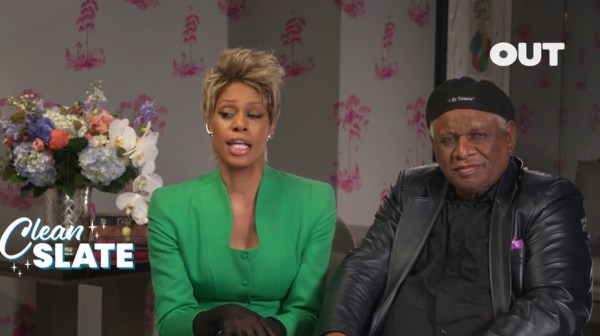
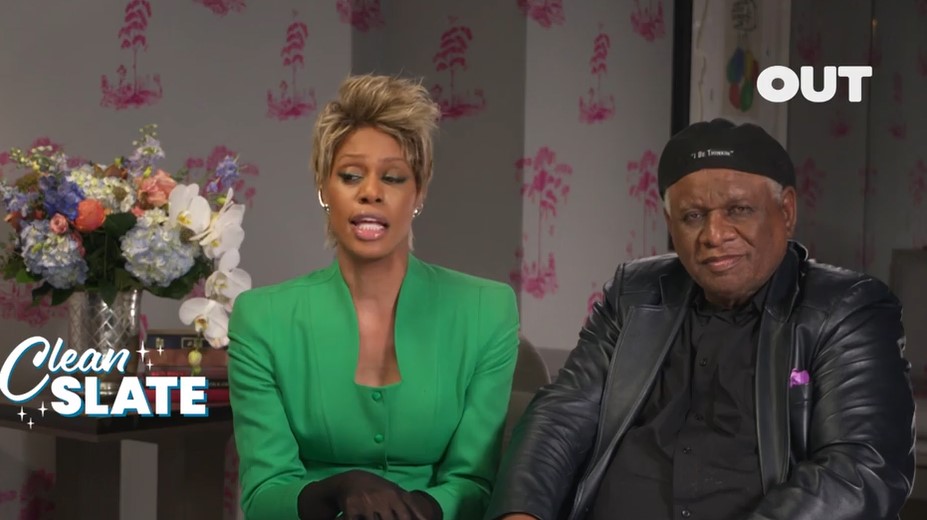
In this lighthearted yet poignant show, the Emmy winner portrays Desiree, a trans woman who returns to her hometown of Mobile, Alabama, to reconnect with her estranged father, Harry, after 23 years of no contact. In addition to her starring role, Cox is credited as the series creator alongside George Wallace and Dan Ewen.
The series, executive produced by the late legendary television producer Norman Lear, faced numerous challenges before making it to the airwaves. Reflecting on her journey, Cox expressed her gratitude for the opportunity.
“I’m so humbled because we got no’s from every place. We pitched this everywhere. We sent the script out everywhere, and it was a ‘no’ from everywhere. And it was really Brent Miller and Norman Lear, and their tenacity and pushing, that got us asked to Amazon Prime.”
The development process for Clean Slate spanned seven years, during which Cox and her team encountered considerable resistance from Hollywood.
“I think getting a show on the air period is insanely difficult. There was a time when I was pitching this alongside two other projects with really established, Oscar-winning people, wonderful stories with trans characters, and none of them went through. They weren’t buying trans stories.”
Cox believes that the significance of this show is heightened in today’s political climate.
“And I think this show happening at this particular political moment feels, not like an accident. It feels divine because we are in a space culturally where trans people have been dehumanized to such an extent that taking away our rights and denying our legitimacy is something that people take for granted. And it’s happening on a federal level.”
She hopes that the series will encourage viewers to empathize with trans individuals.
“And so that is my hope that people will have empathy for the trans character that I play and hopefully be inspired to have empathy for trans people in real life and hopefully get to know us,” Cox says.
“We’re not a theory. We’re not an ideology. We’re human beings walking around, living with these experiences. We’re human, and the rehumanization process is what needs to happen. If we’re interested in love and justice for trans people, as well as for immigrants and for those who think differently from us, we need to counter a culture that dehumanizes. We need to engage in a process of humanizing each other across the board.”
The first season of Clean Slate will feature eight episodes and is now streaming exclusively on Prime Video.
Jan 31 (Reuters) – The U.S. Centers for Disease Control and Prevention and other federal health agencies on Friday took down webpages with information on HIV statistics and other data to comply with Trump administration orders on gender identity and diversity, raising concerns among physicians and patient advocates.
CDC webpages that appear to have been removed include statistics on HIV,among transgender people and data on health disparities, among gay, lesbian, bisexual and transgender youth. A database tracking behaviors,that increase health risks for youth was offline.
The Office of Personnel Management gave agencies more specific guidance on how to comply with the orders in a Jan. 29 memo,saying they were to be completed by 5 p.m. ET (2200 GMT) on Jan. 31.
It specified that agencies must end all programs that promote or reflect “gender ideology extremism” by recognizing a self-determined gender identity rather than biological sex. The measures include removing references to gender identity online.
A spokesperson for the Health and Human Services Department, which oversees the CDC, said any changes to websites follow this guidance.
“There’s a lot of work going on at the agency to comply,” said a source who was not authorized to speak publicly, adding that the CDC is “taking down anything on the website that doesn’t support this executive order.”
Deletions from the CDC’s site include pages with data on HIV in the United States in general, as well as pages with statistics on HIV in Hispanic/Latino people, women, by age, and by race and ethnicity.
The elimination of such data “creates a dangerous gap in scientific information and data to monitor and respond to disease outbreaks,” the Infectious Diseases Society of America and the HIV Medicine Association said in a joint statement.
For example, a page with information about how people can get HIV tests was offline on Friday, according to the Internet Archive, as was a page for doctors with information about testing for HIV and treating patients.
“This is very alarming,” said John Peller, head of the AIDS Foundation Chicago. “In many cases, basic health information is going dark.”
Timothy Jackson, senior director of policy and advocacy at the group, said they are going through the CDC website and printing out information used to educate people about HIV that may not be accessible after Friday.
Also missing from the CDC’s website was the Youth Risk Behavior Surveillance System, which tracks trends in tobacco use, teen pregnancy, unsafe sexual behavior and other aspects of teen health.
At the National Institutes of Health, a senior employee this week urged agency leaders to refuse to implement the Trump administration’s guidance in an email to acting NIH Director Matthew Memoli and other top officials that was seen by Reuters.
The employee, Nate Brought, director of the NIH executive office, said Trump’s orders ran contrary to years of NIH research and findings about sexuality and gender.
“By complying with these orders, we will be denigrating the contributions made to the NIH mission by trans and intersex members of our staff, and the contributions of trans and intersex citizens to our society,” he wrote.
“These policies will lead to mental health crises or worse for tens of thousands of Americans who contribute productively to our communities.”
Reporting by Julie Steenhuysen in Chicago and Ted Hesson in Washington; Additional reporting by Jaimi Dowdell in Los Angeles and Brad Heath in Washington; Editing by Leslie Adler and Bill Berkrot.
President Trump on Tuesday signed a sweeping executive order meant to broadly restrict access to gender-affirming care for transgender children and teenagers younger than 19, inching closer to fulfilling a key campaign promise to ban treatments that he and his administration have cast as experimental and dangerous, in conflict with major medical associations and transgender health experts.
“Across the country today, medical professionals are maiming and sterilizing a growing number of impressionable children under the radical and false claim that adults can change a child’s sex through a series of irreversible medical interventions,” Tuesday’s order states. “This dangerous trend will be a stain on our Nation’s history, and it must end.”
“Accordingly, it is the policy of the United States that it will not fund, sponsor, promote, assist, or support the so-called ‘transition’ of a child from one sex to another, and it will rigorously enforce all laws that prohibit or limit these destructive and life-altering procedures,” the order states.
Every major medical organization supports gender-affirming care for transgender adults and minors, although not every trans person chooses to medically transition or has access to care.
Trump’s executive order, titled “Protecting Children from Chemical and Surgical Mutilation,” tasks federal agencies with rescinding or amending policies that rely on guidance from the World Professional Association for Transgender Health (WPATH), including the organization’s latest standards of care, released in 2022.
WPATH, a nonprofit professional organization devoted to transgender health care, did not immediately return a request for comment.
Trump’s order tasks the incoming Secretary of Health and Human Services (HHS) with publishing a review of existing literature on best practices “for promoting the health of children who assert gender dysphoria, rapid-onset gender dysphoria, or other identity-based confusion.”
Rapid-onset gender dysphoria, which claims that adolescents identify as transgender because of influence from friends or social media, is not recognized as a valid medical diagnosis by major professional medical organizations. In 2021, 61 professional health care organizations, including the American Psychological Association, signed a letter stating the condition lacks “rigorous empirical support for its existence.”
According to Tuesday’s order, heads of executive departments and agencies that provide research and education grants to medical institutions, including medical schools and hospitals, should take immediate steps to block funding for institutions that continue providing gender-affirming care to minors.
Meredithe McNamara, an assistant professor of pediatrics at Yale University specializing in adolescent medicine, said the provision amounts to “an immediate de facto ban on medical care” for trans youth who receive care at academic medical centers.
“It basically defunds those medical centers if they continue to provide that care,” McNamara said of the order.
“This is a stunning example of how all health care is tied together, and how the most effective way to attack gender-affirming care is to attack the entire health care apparatus as a whole,” she added in an interview. “They’re holding everyone hostage and saying, ‘We’re going to take away everyone’s healthcare unless you systematically deprive just these people.’”
Trump’s executive order additionally directs the HHS Secretary — a position he wants for Robert F. Kennedy, Jr. — to bar access to gender-affirming care for transgender minors through federal programs like Medicaid and Medicare and withdraw the department’s 2022 guidance supporting gender-affirming care. The secretary should issue new guidance, in consultation with the incoming attorney general, “protecting whistleblowers who take action related to ensuring compliance with this order,” according to Tuesday’s order.
The executive order also directs Defense Secretary Pete Hegseth to draft a rule to exclude coverage for gender-affirming care for minors from TRICARE, the military’s health program. Former President Biden in December signed a $895 billion defense policy bill barring TRICARE from covering transition-related care for transgender children of active-duty service members, a provision that military families with transgender kids called a “slap in the face.”
Tuesday’s order similarly tasks the director of the Office of Personnel Management with taking steps to remove coverage for gender-affirming care for trans youth from federal health plans.
It also asks the attorney general to prioritize enforcement of existing federal laws against female genital mutilation, which carry a penalty of up to 10 years in prison. The attorney general should also “prioritize investigations and take appropriate action to end deception of consumers, fraud, and violations of the Food, Drug, and Cosmetic Act” by entities that may be “misleading the public” about the long-term side effects of transition-related care.
Republican state attorneys general have, in recent years, used consumer protection laws to investigate individuals and organizations that provide gender-affirming care to minors. A Senate Finance Committee report released in April claimed that at least four GOP attorneys general — Ken Paxton of Texas, Todd Rokita of Indiana, Jonathan Skrmetti of Tennessee and Andrew Bailey of Missouri — abused their oversight authorities to “further ideological and political goals.”
Trump’s executive order additionally directs the attorney general to work with Congress to “draft, propose, and promote legislation” to enact a private right of action for children, as well as their parents, “whose healthy body parts have been damaged” by medical professionals practicing transgender health care.
The attorney general should also take “appropriate action,” the order states, “to end child-abusive practices by so-called sanctuary States,” including through the potential application of the Parental Kidnapping Prevention Act, a federal law preventing one parent from interfering with another parent’s custody rights.
Conservative organizations celebrated Trump’s executive order Tuesday evening. In a joint statement, Independent Women’s Forum and Independent Women’s Voice said the move restores the “true meaning of ‘care’ for America’s youngest generation.”
Kristina Rasmussen, executive director of Do No Harm, a health policy group that opposes gender-affirming care for minors, said Trump’s order prioritizes “safety, scientific integrity, and family autonomy.”
Omar Gonzalez-Pagan, senior counsel and health care strategist at the LGBTQ civil rights organization Lambda Legal, called the order “morally reprehensible and patently unlawful” and said the group would sue.
“The federal government — particularly, this administration — has no right to insert itself into conversations and decision-making that rightly belongs only to parents, their adolescent children, and their medical providers,” he said.
The executive order comes after Trump signed separate orders declaring that the federal government recognizes only two sexes, male and female, and barring transgender people from serving openly in the military.
LGBTQ activists in New Jersey say they’re fortunate to live in New Jersey as the new administration kicks-off its term by attacking the transgender community and diversity initiatives. Advocates at Garden State Equality say New Jersey sets a standard for legal equality that can inspire states throughout the country.
As part of its education and advocacy “Going Local” programming across the country, the GLAAD Media Institute (GMI) – GLAAD’s training, research and consulting division – convened meetings with local leaders and community advocates at Garden State Equality and throughout the nation. Attendees who complete a program or session with the GLAAD Media Institute are immediately deemed GLAAD Media Institute Alumni, who are equipped to maximize community impact by leveraging their own story for culture change.
The state is known for its tough pro-equality laws like New Jersey Law Against Discrimination (LAD), which is considered one of the most comprehensive anti-discrimination laws in the country. Yet, new laws in the state legislature help combat a rise of LGBTQ disinformation and hate speech, straight out of Project 2025. The anti-LGBTQ hate machine has affected dozens of Jersey school board’s policies on book bans, critical race theory, and sex education.
Since Garden State Equality’s founding in 2004, over “230 LGBTQ civil rights laws” have been enacted at the state, county, and local levels. According to the organization’s website, that’s “more laws in less time than in any other state in American history.”
On a federal level, President Trump began his second term signing executive orders to dispute the fact that transgender and gender diverse people exist. On Trump’s first days in office he signed an executive order titled Defending Women From Gender Ideology Extremism and Restoring Biological Truth to the Federal Government. The order is used to delegitimize trans truth, history, and science, which promptly raised concerns over a federal ban of the “x” gender marker for people of nonbinary, trans or gender nonconforming experience in the United States.
“As of today, it will henceforth be the official policy of the United States government that there are only two genders, male and female,” President Trump incorrectly said upon signing the order.
Garden State Equality says they’re ready to resist these efforts by the current administration, and continue to encourage diversity, equity, and inclusion (DEI) programs, while uplifting best practices for LGBTQ youth and adult community members as they have within their state government, says advocates.
“We want our youth to understand that they don’t just live in a bubble here in New Jersey, that the work that they are doing to be activists here in our state is going to influence other states and other students across the nation,” Natalie Hernandez told GLAAD.
Natalie Hernandez, camp director and project manager & trainer; Screenshot by Lana Leonard
Hernandez is the Camp Director of Garden State Equality’s Changemakers Youth Leadership summer program. Empowering youth leaders helps inform the work of other departments and so forth, it’s a collaborative effort to fight for legal equality for the state organization.
Hime Sarah Thomas, project manager and trainer with the Education and Youth Development Department, grew up in a queer family who introduced Thomas to Garden State Equality through the Changemakers Youth Leadership summer program. Thomas works to encourage youth to become “changemakers” by giving them an outlet to express their frustrations, and amplify their voices.
Only a small number of youth actually transition: less than one-tenth of one percent of teenagers with private insurance in the United States are transgender and receive gender-related medicine, according to a study by JAMA Pediatrics.
“These youth need a space where they can talk about all the things that are happening in the news and the world because they don’t have the autonomy to be able to vote and make those choices on who is representing them,” Thomas said.
For Aisling MacDonald, a project manager for the organization’s Training and Trans Resiliency Program, which advocates for the wellness of transgender and gender nonconforming adults and families moving into New Jersey for their LGBTQ protections.
“Our world is ever evolving. There are some very legitimate anxieties, and also… we are really, really fortunate to live here,” MacDonald said.
MacDonald spends much of her day building coalition relationships and legal resources for name changes and documents for trans people who have been under attack on social media, through legislation, and the news.
Hime Sarah Thomas, project manager & trainer; Screenshot by Lana Leonard
“My experience as a woman of trans experience who is from some very particular demographics, and a very particular flavor of multiple marginalizations, is that we do not have a lot of trust for systems, institutions and legislators, especially,” MacDonald said. “And I think more than anything else in 2025 we have an opportunity to build a different kind of community.”
These insights into the LGBTQ community of Asbury Park lead into a larger narrative about community needs in New Jersey and beyond. Even still, Garden State Equality recognizes that there are hurdles that must still be overcome.
More about the GLAAD Media Institute: The GLAAD Media Institute provides training, consultation, and actionable research to develop an army of social justice ambassadors for all marginalized communities to champion acceptance and amplify media impact. Using the best practices, tools, and techniques we’ve perfected over the past 30 years, the GLAAD Media Institute turns education into armor for today’s culture war—transforming individuals into compelling storytellers, media-savvy navigators, and mighty ambassadors whose voices break through the noise and incite real change. Activate with the GLAAD Media Institute now at glaad.org/institute
More than a quarter million LGBTQ+ young people and family members in the U.S. have relocated to other states because of LGBTQ+-related politics or laws, according to estimates outlined in a new report exploring the population’s response to hostile policy environments.
According to the brief compiled by The Trevor Project and Movement Advancement Project, 9 in 10 LGBTQ+ young people say politics have impacted their well-being, while 4 in 10 say they’ve thought about moving to another state because of unfriendly LGBTQ+ politics or laws at home.
The portion was even higher for transgender and nonbinary youth, 94% of whom said politics had affected their well-being and nearly half (45%) who said they’d considered relocating.
“For many LGBTQ+ young people in the U.S., the steady stream of anti-LGBTQ+ news may feel overwhelming right now,” said Steven Hobaica, a research scientist for the Trevor Project, a national LGBTQ+ youth advocacy group focused on suicide prevention. “It’s heartbreaking to see that nearly half of transgender and nonbinary youth have considered moving due to anti-LGBTQ+ policies.”
While just 4% of LGBTQ+ young people ages 13 to 24 reported uprooting because of anti-LGBTQ+ policies, that translates to roughly 266,000 young people and family members based on LGBTQ+ youth population estimates, the groups said.
Trump administration presents new threats
The report comes as President Donald Trump returns to the White House after making gender identity issues a focal point of his campaign. On Monday, after being sworn in, Trump issued a spate of executive orders that included seeking to remove legal protections for transgender people in federal spaces, laying the groundwork to potentially bar transgender individuals from military service and declaring that the U.S. government will only recognize two sexes, male and female.
“No matter a person’s political beliefs, we know, from our research and from what LGBTQ+ young people tell us, that policies like these take a damaging toll on LGBTQ+ young people’s mental health,” said Janson Wu, The Trevor Project’s senior director of state advocacy and government affairs.
The organization said its crisis services saw a 33% increase on Inauguration Day compared to typical volume. But that still paled, it noted, to the sevenfold increase in crisis services experienced the day after the 2024 election.
“No matter your political beliefs or how you feel about the current administration, one thing must be made clear to all of us living in the United States: Real young people’s lives are at risk,” said Trevor Project CEO Jaymes Black.
Recent years have already seen increasing numbers of state laws and proposed legislation targeting the LGBTQ+ community, especially measures aimed at curbing the rights of transgender youth.
“It’s critical that we not only call attention to the negative impact of these divisive political attacks but also highlight that this research supports the idea that more inclusive policy environments lead to better outcomes for LGBTQ young people across a range of measures,” said Logan Casey, director of policy research for Movement Advancement Project.
Hostile climates raise mental, emotional health risk
The organizations said they compiled the report given a lack of research into how LGBTQ+ young people respond to hostile policy environments, despite studies showing that those youths experience greater mental health challenges and higher suicide risk in such environments.
“By gaining more knowledge of how LGBTQ+ young people respond to their policy environment, advocates and policymakers can create or modify policy to better support LGBTQ+ young people and their families,” the report said.
Their joint report is based on data gleaned from The Trevor Project’s 2024 U.S. National Survey on the Mental Health of LGBTQ+ Young People, which collected responses from more than 18,600 LGBTQ+ individuals between the ages of 13 and 24. It also incorporates data from Movement Advancement Project, a Boulder, Colorado-based group that tracks LGBTQ+-related laws and policies throughout the U.S. and its territories and assigns each a negative or positive policy index.
More than a quarter (27%) of respondents lived in states with negative policy indexes, the report said. Those individuals were more likely than their counterparts to consider moving to other states and also likelier to travel to other states to receive health care.
The report noted that not all LGBTQ+ young people and their families desiring to relocate have the resources to do so.
“Notably, the same factors that might preclude the ability of LGBTQ+ young people and their families from moving, such as poverty, housing discrimination, and employment access, are the same ones that disproportionately affect LGBTQ+ people of color and increase their risk of mental health and suicide,” the report said.
BANGKOK (AP) — They have been in a committed relationship for more than 13 years, and even had a wedding in 2019. Since then, Danaya Phonphayung and Sunma Piamboon, both women, have considered themselves a married couple, even if same-sex marriages were not legally recognized.
The walls of their home in suburban Bangkok are decorated with faded photos from their happy union, filled with joy and love from their families and friends. Come this Thursday, their wedded status will be recognized by the nation as well, when a law that allows members of the LGBTQ+ community in Thailand to get married and have the same legal rights as heterosexual couples takes effect.
The couple said they can’t wait to formalize their union. They plan to register their marriage at a district office near their home on the very first day that the law allows.
“I think I’ll cry,” Danaya, an office worker, said with a big smile, thinking about the moment that they will sign the paper. “I’m so happy. It’s something that was more than I could’ve dreamed of, that suddenly this day is happening.”
“We live together. We bought a house. We bought a car. But we cannot share these things together like a married couple. When this is happening, we feel that it’s our rights that we need to secure as quickly as possible,” she said.
The marriage equality bill, which sailed through both the House of Representatives and the Senate, amended the Civil and Commercial Code to change the words “men and women” and “husband and wife” to “individuals” and “marriage partners.” It would open up access to full legal, financial and medical rights for LGBTQ+ couples.
Sunma, who owns a travel agency, said that she had realized how crucial being legally married was when Danaya was hospitalized with dengue fever, as they don’t live close to her parents.
“The doctors asked me who I was, and I said I was the girlfriend, and they were like, ‘so what’?’ I couldn’t make any decision until her condition became quite serious,” she said. “I was so upset, like, if I had lost her … there would be nothing that could’ve made up for it. So, I think this is very important for both of us.”
How marriage equality became law
Thailand has a reputation for acceptance and inclusivity, but struggled for decades to pass a marriage equality law. Thai society largely holds conservative values. Members of the LGBTQ+ community say they face discrimination in everyday life, although they note that things have improved greatly in recent years.
The government led by the Pheu Thai party made marriage equality one of its main goals. It made a major effort to identify itself with the annual Bangkok Pride parade in June, in which thousands of people celebrated in one of Bangkok’s busiest commercial districts.
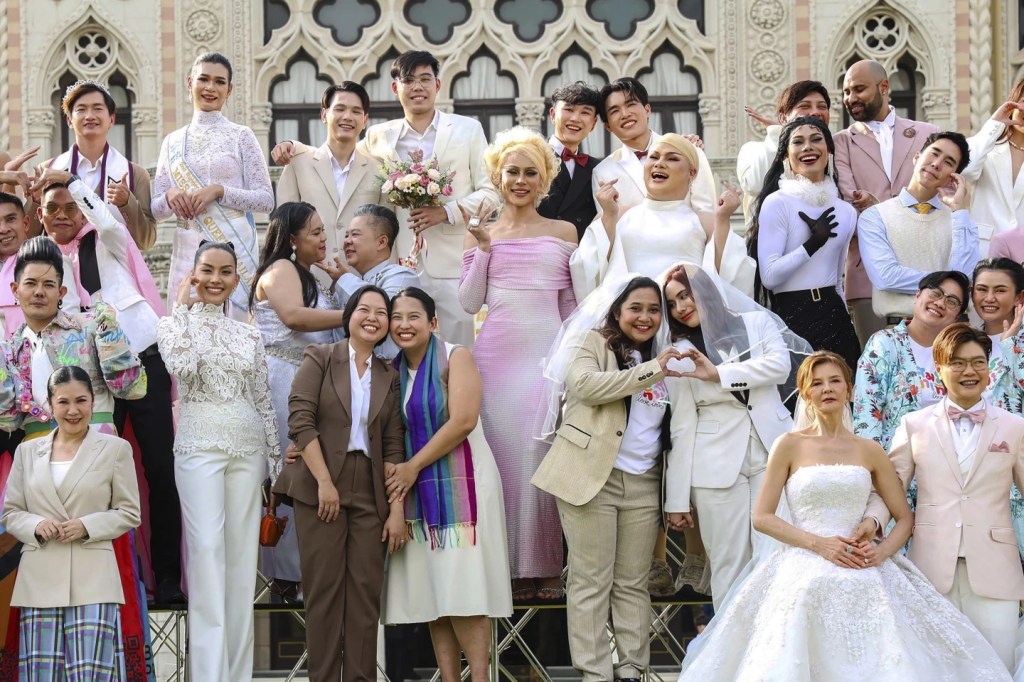
Last week, Government House invited dozens of LGBTQ+ couples and activists for a photo op and a meeting with Prime Minister Paetongtarn Shinawatra and several high ranking officials to celebrate the law coming into effect, making Thailand the first in Southeast Asia and the third place in Asia, after Taiwan and Nepal, to legalize same-sex marriage.
“It is almost like a dream, but it’s not. So, congratulations to all,” Paetongtarn said. “I think it’s very important that the world notice us, and know that in this small country we have this kind of thought. We have this kind of support for our people. So, we all should be proud.”
The organizers of Bangkok Pride have collaborated with relevant government agencies to hold a grand celebration in central Bangkok and facilitate couples who wish to register their marriage on the very first day. They said that more than 300 couples have registered to officially tie the knot on Thursday at the event.
“(The law) is about returning our dignity, and confirming that we also have dignity as a human being,” said Ann “Waaddao” Chumaporn, a gender equality activist and the lead organizer of Bangkok Pride. “That day is going to be meaningful to all the couples that have gone through this journey together. I’d like to thank everyone, every love, that has faithfully struggled so that today would finally happen.”
How the law will be implemented
The government and state agencies in Thailand are historically traditional in outlook. To prepare them for change, the Bangkok Metropolitan Administration said that it has organized workshops for staff of all Bangkok district offices who are in charge of handling marriage registration. They included lectures raising awareness about gender diversity and guidance on how to properly communicate with those who come for the service.
“It’s like a missing piece of the jigsaw,” Bangkok Deputy Gov. Sanon Wangsrangboon said at one of the workshops earlier this month. “Society is ready. The law is getting ready. But the last piece of the jigsaw is the understanding from officials.”
He acknowledged there that would be problems in the beginning, but said that he hoped they would gradually improve over time.
After they register their marriage, Sunma said that she’s looking forward to having a “real marriage celebration” with her and Danaya’s families.
“It’s not just the two of us that are happy, but both of our families feel it is a big deal, and it is what everyone has been waiting for. Everyone said they are waiting for Jan. 23,” she said.
The federal government is set to only recognize two sexes, male and female, under an executive order that President Donald Trump is soon expected to sign.
The order would reverse efforts by the Biden administration to broaden gender identity designations, including on passports.
“As of today, it will henceforth be the official policy of the United States government that there are only two genders, male and female,” Trump said during his inaugural address Monday, taking an early step to fulfill one of his culture war campaign promises.
The order, a Trump administration official told reporters Monday, is aimed at “defending women from gender ideology extremism and restoring biological truths to the federal government.” Male and female “are sexes that are not changeable, and they are grounded in fundamental and incontrovertible reality,” the official said.
The federal government would also shift from using the term “gender” to “sex,” and that sex would be “an individual’s immutable biological classification,” the official said.
All government agencies would ensure that official documents, including passports and visas, “reflect sex accurately,” the official said. Also, departments running federal prisons, migrant shelters, rape shelters and other “intimate spaces” would be directed to protect single-sex spaces for privacy. And employee records would also adhere to the executive order, as would federal departments’ messaging.
“Agencies are no longer going to promote gender ideology through communication forms and other messages,” the official said, adding that grants and contracts would be reviewed to ensure that “federal funds shall not be used to promote gender ideology.”
Reversing Biden expansion
Trump’s executive order would dismantle efforts by the Biden administration to be more inclusive of Americans’ gender identification.
As of 2022, US citizens have been able to select “X” as their gender marker on passports. One’s marker does not need to match the gender on citizenship documents or photo ID, nor is medical documentation needed to change one’s gender, according to the State Department.
“We promote the freedom, dignity, and equality of all people – including LGBTQI+ individuals,” the department’s website says. “We are demonstrating this commitment to better serve all U.S. citizens, regardless of gender identity.”
Later that year, Americans were able to start changing their sex identification with the Social Security Administration without needing to provide medical certification. However, Social Security’s record systems still require a designation of male or female, though the administration said it was exploring policy and systems updates to support an “X” designation.
“The Social Security Administration’s Equity Action Plan includes a commitment to decrease administrative burdens and ensure people who identify as gender diverse or transgender have options in the Social Security number card application process,” said Kilolo Kijakazi, the administration’s acting commissioner at the time.









You must be logged in to post a comment.