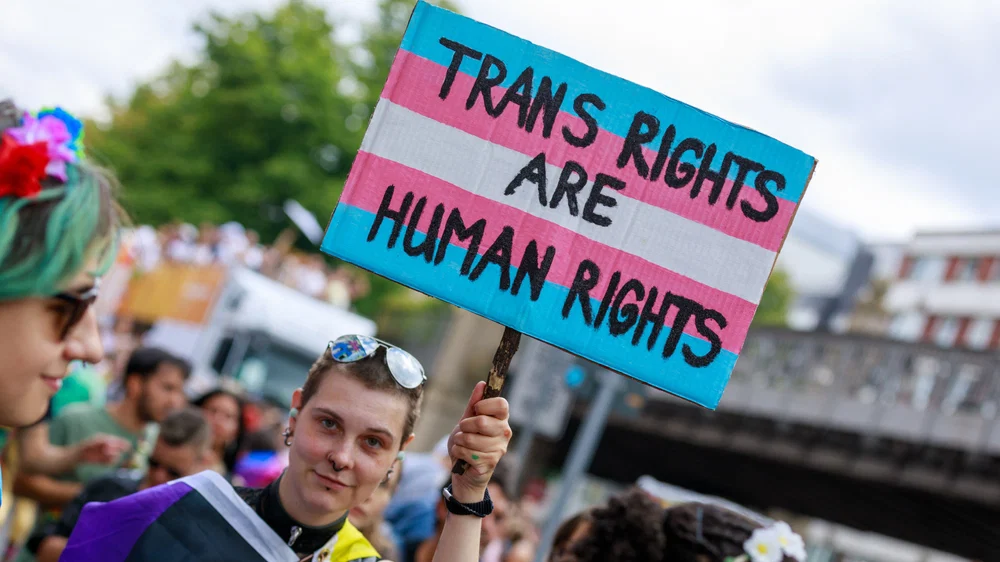
New Jersey becomes latest blue state to pass health care shield law for trans care & IVF

Read more at LGBTQ Nation.

The New Jersey General Assembly passed new legislation on Tuesday, the last day of Pride Month, that strengthens the protections around gender-affirming health care, reproductive care, including abortion and IVF, and more. The bill now sits on Gov. Mikie Sherrill’s (D) desk awaiting her signature, which it is expected to receive.

The passage is a win for the trans community. The bill passed the same day the Supreme Court dealt a blow to trans rights with its West Virginia v. B.P.J. ruling.

Speaking with the New Jersey Monitor after the vote, Jennifer Williams, a Trenton city council member who is trans, said, “New Jersey is a great, liberty-loving state that will remain a safe haven for those who want to live happy, productive lives while accessing medically necessary and proven medical care.”

The bill’s passage comes after a long battle from LGBTQ+ advocacy groups, including Garden State Equality. In a statement, Lauren Albrecht, the organization’s senior director of advocacy & organizing, said, “By passing this bill, the Legislature has sent the message that bodily autonomy and access to medically necessary, best-practice healthcare are New Jersey values. As other states and the federal government attack reproductive and trans healthcare, we have made it clear that the Garden State will protect both the lifesaving care itself and the people who provide it. Our priorities now will be to ensure Governor Sherrill swiftly signs this legislation and, afterwards, to educate healthcare providers on these new and bolstered protections.”

The new legislation makes no changes to what medical care is or isn’t available in the state, but protects access for all to the services that are already provided.

A major aspect of the bill protects providers and patients from being prosecuted by other states, affirming that those who receive or provide care in New Jersey are solely subject to the state laws of New Jersey and to federal law.

That applies not just to citizens of New Jersey, but to “those who travel to [New Jersey] for health care services,” with the bill noting that all “deserve the ability to safely access health care facilities in this State and the critical reproductive health and gender-affirming care services that they provide.”

This prevents states from prosecuting their residents who have crossed state lines to receive healthcare that is banned in their state but legally protected in New Jersey. The authors of the bill point to the fact that since Roe v. Wade was overturned in 2022, 21 states have either banned or restricted abortion access. Since then, New Jersey has seen a 30% increase in out-of-state patients.

They also highlighted Alabama’s ruling that embryos are “extrauterine children” and the threat that sort of ruling could pose to IVF fertility treatments, which are often used by same-sex couples to build their families. New Jersey has legally protected the right to access IVF treatment.

While New Jersey is the latest blue state to pass such a bill, theirs includes an aspect that hasn’t been seen in other legislation. The bill includes prohibitions on “interference with reproductive or gender-affirming health care services.” That includes inflicting injury, physically obstructing them, defacing property, recording people accessing care within 100 feet of the entrance to a clinic, or distributing such recordings.

The legislators cite the fact that since Roe was overturned, there has been a 538% increase in obstructions to reproductive health facilities, and in 2023, there were 23 reported violent incidents and threats made to gender-affirming care providers. The legislation states, “This act is intended to ensure that anti-abortion and anti-LGBTQ+ persons cannot harm patients or providers.”

Mirroring a proposed shield law in California, the bill also requires the written consent of a patient or their guardian for any of their medical records to be provided to an out-of-state authority. A similar shield law in New York was the reason that patients were informed when NYU Langone Health received a criminal subpoena, insisting that they hand over the medical records for minors who received gender-affirming care at the institution.
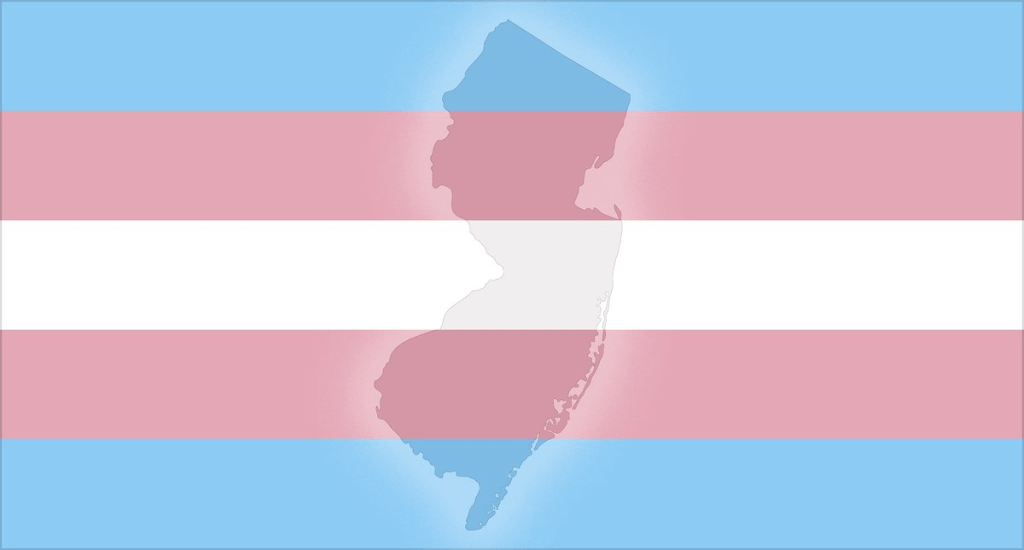
Gov. signs 3 trans rights bills into law & then marches in Pride parade that afternoon

Read more at LGBTQ Nation.

On Sunday, just hours before he marched in the Chicago Pride Parade, Illinois Gov. JB Pritzker (D) signed three trans rights bills into law.

HB 5095 solidifies the process for trans people to correct the gender marker on their IDs to male, female, or X. HB 5492 mandates that insurance companies cover up to a 6-month supply of prescribed hormone therapy, as well as “the necessary supplies for self-administration.” Both laws take effect on January 1, 2027.

HB 4834 updates the Illinois Prescription Monitoring Program (ILPMP) to remove testosterone and prohibit the addition of estrogen, mifepristone, and misoprostol. The law, effective immediately, will prevent the database, which is used to prevent certain drugs from being overprescribed, from being abused to prevent folks from obtaining gender-affirming and reproductive health care.

“Today, I’m proud to sign landmark legislation expanding on my administration’s work to make Illinois a safe, empowering, and inclusive place for the LGBTQ+ community,” Pritzker wrote on social media. “With my signature, we are a few steps closer to a state where all can live their lives without fear of hate.”

Pritzker then posted a video of himself touting the bills as he prepared to march in Chicago’s Pride Parade. “It’s very important to me that we have a state that stands up and protects the people who live here,” he said. “So I’m very happy, very proud, frankly, to live in the state of Illinois. I hope you are, too.”

Pritzker has been fighting for LGBTQ+ rights long before it was popular, as evidenced by a photo of him that often makes the rounds on social media, in which he is marching in the 1993 Pride parade.

As Governor, he has staunchly defended LGBTQ+ rights and has been especially outspoken for trans youth. He told then-Late Show host Stephen Colbert last year that his late mother was a huge activist who took him to protests when she was young. Her life, he said, inspired the work he does.

At a March 2025 Human Rights Campaign dinner, Pritzker vowed to stand up to anti-LGBTQ+ “bullies” and spoke directly to transgender youth to tell them they are not alone.

“And in the midst of this existential fight, this battle that seems to consume everything, well, let’s not take the soul-sucking path of sacrificing the most persecuted for that which we deem to be most popular,” he said.

“I know that there are transgender children right now looking out at this world and wondering if anyone is going to stand up for them and for their simple right to exist. Well, I am. We are. We will.”

In April of last year, he criticized “do-nothing” Democratic politicians who “want to blame our [election] losses on our defense of Black people, of trans kids, of immigrants instead of their own lack of guts and gumption.” He encouraged Democrats to “fight” the current presidential administration “everywhere and all at once,” even endorsing “mass protests, for mobilization, for disruption.” Last summer, he also announced a landmark free hotline for LGBTQ+ people in the state.

In 2023, he signed a landmark bill making Illinois the first state to bar libraries from banning books. “Here in Illinois, we don’t hide from the truth, we embrace it,” he said in a statement. “Young people shouldn’t be kept from learning about the realities of our world; I want them to become critical thinkers, exposed to ideas that they disagree with, proud of what our nation has overcome, and thoughtful about what comes next.”

Trans man flees US after unending discrimination & violence: “I have to get out or I’m going to die”

Read more at LGBTQ Nation.

Since Elliot Hefty came out as a trans man in 2020, he has lost his job, been evicted, and received KKK flyers at his front door – all because of his gender identity. He was also a victim of sexual assault in a men’s bathroom and thinks his gender identity is what caused the perpetrator to act.

After the 2024 presidential election, a person shoved him on the street and began yelling anti-trans slurs. “I’m laying in the street bleeding. Not one person stopped to help me or see if I was okay. And I got up, and I’m bleeding. My hands are bleeding, my knees are bleeding, my face is bleeding.” It was then that he decided he had to leave the country.

“I have to get out or I’m going to die,” he said.

In a conversation with WABE, Atlanta’s public radio station, Hefty opened up about his decision to move to the Netherlands, along with his brother, Koda. The pair share a bedroom in a refugee center in Limburg, where Hefty said he enjoys support from the other LGBTQ+ asylum seekers from around the world who share a kitchen and common dining area with them.

Hefty is part of the record number of LGBTQ+ people in the U.S. fleeing the president’s anti-transgender policies by seeking asylum in other countries, according to a report released last Saturday by the LGBTQ+ asylum relocation assistance group Rainbow Railroad.

Simultaneously, fewer LGBTQ+ refugees from other anti-LGBTQ+ countries are seeking asylum in the U.S., a result of the president’s anti-immigration policies, according to the group’s report, Understanding the State of Global LGBTQI+ Persecution, which was released on World Refugee Day.

Last year, Rainbow Railroad received 20,215 direct requests for relocation assistance from queer and trans people, a 51% increase over 2024 and the highest number of requests the group has received since its founding in 2006.

Approximately 31% of last year’s requests came from people living in the U.S. The previous year, that percentage was about 13%. While past requests to leave the U.S. had in the past predominantly come from queer immigrants who had been resettled in the states, about 88% of the requests in 2025 came from American citizens who said they were fleeing the current administration’s anti-LGBTQ+ policies.

Exactly 1,177 U.S. residents reached out to Rainbow Railroad for support the day after the president was re-elected, Rainbow Railroad’s Chief Programs Officer Devon Matthews told The Los Angeles Blade.

“That single day generated more than twice the number of requests for help we had received from across the United States during the previous 10 months combined,” Matthews said.

Matthews also told WABE that the United States has joined the likes of Uganda, Egypt, Afghanistan, Pakistan, Iraq, Russia, Canada, Turkey, and Kenya when it comes to the number of LGBTQ+ people seeking refuge outside of their home countries.

Hefty, whose lawyer is currently working on an appeal regarding his refugee status, said he has no plans to reenter the United States, not even to visit for a sibling’s wedding.

Trans people in the United States are also fleeing anti-trans red states and moving to blue states, some of which have declared themselves sanctuaries for trans rights.

An October 2025 survey by the Movement Advancement Project (MAP) found that between November 2024 and June 2025, roughly 9% of trans people in the United States moved to another state, with 43% considering a move.

Gallup estimates there are roughly 4.5 million trans people in the country, meaning over 400,000 people (and their families) have relocated. As anti-trans legislation has only ramped up since June 2025, it’s safe to assume that the number of people relocating has increased as well.

But blue states are struggling to meet the demand. In May, for example, the Seattle LGBTQ Commission petitioned the city’s mayor to declare a civil state of emergency to accommodate the massive influx of LGBTQ+ people, which has strained the resources of community-based organizations that weren’t set up to handle this volume. Those organizations are responsible for a range of services, the letter explained, including “emergency financial assistance, transportation, housing navigation, legal support, safety planning, community connections, and access to gender-affirming healthcare.”

Doctors have also begged blue state legislators for more funding to accommodate the rise in demand for gender-affirming care services.

Wanna pee in Idaho? First, get a forced DNA test to prove your gender, state GOP lawyer suggests

Read more at LGBTQ Nation.

A recent court hearing on a lawsuit brought by six transgender Idahoans against the state’s latest bathroom bill has revealed just how unworkable the draconian new law would be. In fact, to enforce it, an attorney for the red state said restroom users might need to undergo forced DNA testing.

House Bill 752, which passed the Legislature this year with only Republican votes, prohibits trans people from using public restrooms that match their gender identity, both in government-owned buildings and private businesses that serve the public.

The law is set to take effect July 1.

The suit says the Idaho law — one of three recently passed by Republican legislatures that impose criminal penalties on offenders — violates the plaintiffs’ constitutional rights to due process, equal protection, and privacy. The challenge was brought by the American Civil Liberties Union (ACLU), the ACLU of Idaho, and Lambda Legal.

At the hearing, the judge in the case — Chief U.S. District Judge for the District of Idaho, Amanda K. Brailsford — questioned the state over how exactly they would determine the sex at birth of an individual accused of violating the law, The Idaho Capital Sun reports.

Kell Olson, a trans attorney for Lambda Legal, told the judge that if police confronted him and asked for his ID, officers would find that his ID lists him as male. Brailsford noted, for the record, that most of the plaintiffs suing the state also have state-issued IDs with gender markers that are aligned with their gender identity. 

Idaho Solicitor General Michael Zarian suggested the solution was simple: “There is DNA testing.”

Pressed on whether DNA testing required consent, Zarian hedged, saying that wasn’t necessarily the case and that he doubted the accused would be asked to undergo DNA testing on the spot.

Lambda’s Olson told the court that DNA testing usually requires a warrant. 

Both the Idaho Sheriffs’ Association and the Idaho Fraternal Order of Police called the proposed law impractical and unworkable.

There is no “clear or reasonable way” to determine a person’s sex at birth during a field contact without engaging in “invasive and inappropriate” questioning or searches, said one police group president.

Following the hearing, ACLU of Idaho attorney Emily Croston said the state didn’t help itself on the issue of enforcement.

“I don’t think the state has an answer for how you identify someone’s biological sex,” Croston told reporters. “Are we just going to look at folks as they enter a restroom and determine whether we think they look enough like a man or a woman? That’s ridiculous.”

The hearing only reinforced the plaintiffs’ argument that the law is unconstitutionally vague, and police organizations’ earlier doubts that it’s practically unenforceable.

Proving the former claim, Solicitor General Zarian tried using an exemption in the law to demonstrate how reasonable the ban is. The law allows individuals to use restrooms that don’t align with their sex if they are in “dire need” of going to the bathroom, he pointed out.

Pressed by Judge Brailsford, Zarian acknowledged that it “might be difficult to prove someone had a dire need,” but that vagueness, he claimed, doesn’t mean that the law itself is unconstitutionally vague.

Idaho law enforcement didn’t have to similarly tie themselves in knots when they formally opposed the ban during debate in the Legislature earlier this year. Both the Idaho Sheriffs’ Association and the Idaho Fraternal Order of Police called the proposed law impractical and unworkable.

There is no “clear or reasonable way” to determine a person’s sex at birth during a field contact without engaging in “invasive and inappropriate” questioning or searches, said one police group president.

The ACLU notes that analyses of public safety data have found policies inclusive of transgender people’s access to public accommodations have no impact on rates of harassment or violence, while policies that restrict access actually increase the risk of harassment and violence. Trans people are four times as likely as their cisgender peers to be the victims of violence.

Nine bathroom bans have passed by red state legislatures in recent years, but Idaho’s is the only one to cover private businesses as well as government buildings. A first offense is a misdemeanor, with up to one year in prison; a second offense jumps to a felony, with up to five years in prison.

A fourth violation would constitute a third felony conviction, punishable under Idaho’s persistent violator statute by a mandatory minimum of five years and up to life in prison. 

10 Overlooked Affordable LGBTQ Friendly Cities

As seen originally on Facebook Reels of Queer Money Podcast.

Can’t retire fabulously in the US? Try these👇

You don’t need a Silicon Valley paycheck or a Fire Island inheritance to retire fabulously.

Some of the gayest, prettiest, most “wait, I can live THERE?” cities are more affordable than you think.

And no, affordable does not mean cheap.

For this list, affordable means meaningfully less expensive than Chicago, using Numbeo’s cost of living including rent, while still offering LGBTQ+ safety, healthcare access, livability, and real retirement potential.

We also factored in Equaldex, ILGA-Europe where applicable, Williams Institute Global Acceptance Index, and our Queer Money Retirement Rating.

The updated winners?

10. Montpellier, France ~30% cheaper than Chicago Equaldex: 74 | ILGA: 60% | Williams GAI: 7.73 QMRR: 7/10

9. Leipzig, Germany ~25–35% cheaper Equaldex: 80 | ILGA: 70% | Williams GAI: 7.73 QMRR: 8/10

8. Ljubljana, Slovenia ~34% cheaper Equaldex: 65 | ILGA: 54% | Williams GAI: 6.21 QMRR: 8/10

7. Valletta/Sliema, Malta ~20–25% cheaper Equaldex: 80 | ILGA: 88% | Williams GAI: 8.01 QMRR: 8/10

6. Ghent, Belgium ~20–25% cheaper Equaldex: 78 | ILGA: 85% | Williams GAI: 7.95 QMRR: 8.5/10

5. Santiago, Chile ~50–55% cheaper Equaldex: 80 | Williams GAI: 6.83 QMRR: 8.5/10

4. Montréal, Canada ~32% cheaper Equaldex: 92 | Williams GAI: 9.02 QMRR: 8.5/10

3. Mérida, Mexico ~55% cheaper Equaldex: 48 | Williams GAI: 6.50 QMRR: 9/10

2. Valencia, Spain ~37% cheaper Equaldex: 100 | ILGA: 89% | Williams GAI: 8.77 QMRR: 9/10

1. Cascais, Portugal ~20–30% cheaper Equaldex: 77 | ILGA: 67% | Williams GAI: 6.87 QMRR: 10/10

America’s best and worst places to be gay and trans? Check your ZIP code

Read more at Yahoo.

Where is the best place to be gay in America? Increasingly, it’s a question of ZIP code.

While Massachusetts and California are known for championing supportive policies and rolling out the welcome mat to lesbian, gay, bisexual, transgender and queer residents, other areas like Arkansas and Tennessee that have unfurled a wave of LGBTQ+ rollbacks have a less hospitable reputation.

Today, that divide is wider than ever, according to the latest State LGBTQ+ Business Climate Index from Out Leadership shared exclusively with USA TODAY.

The index suggests America’s acceptance of gay people has continued a steep decline, reversing many of the civil rights advances that increased the well-being and safety of the LGBTQ+ population, Out Leadership’s founder and CEO, Todd Sears, told USA TODAY.

The national average score in the index has fallen for four straight years. The 10 highest-ranked states have held steady or improved, but the lowest-ranked have dipped more, and the middle ground is quickly disappearing, according to Sears.

On the index’s 100-point scale, the typical state scores just 53.1 and 26 states fall below 60, he said.

“When we started this index eight years ago, the goal was to show Americans the issues that were still live but invisible − HIV criminalization, conversion therapy, where state legislators actually stood − because once marriage equality passed, a lot of people assumed the work was done. It wasn’t,” Sears said. “What we’ve documented since is a genuine regression.”

4-year slide in gay and trans equality

Each year for the last eight, Out Leadership has released the index to map out where the 9% of U.S. adults who identify as lesbian, gay, bisexual, transgender, or something other than heterosexual are least and most welcome. Created as an inclusion reference guide for business leaders, LGBTQ+ people soon began consulting it to figure out where they should – and should not – live and work.

For years, the index has measured such factors as the impact of state government policies and prevalent attitudes, from support for young people and families to health access and safety to nondiscrimination protections.

This year, Out Leadership added 12 new indicators to gauge the impact of anti-LGBTQ+ policies such as bathroom access restrictions, pronoun and name-use prohibitions and restrictions on adult gender-affirming care, Sears said.

Out Leadership decided to make the additions after the Supreme Court struck down state conversion therapy bans.

“For the last several years, we simply weren’t capturing forces that were already hitting LGBTQ+ citizens and their families,” Sears said.

As a result, the national average score fell five points to 60.87 out of 100. And the index shows even greater geographic polarization.

The gap between the most welcoming state – Massachusetts at 93.23 – and the least – Arkansas, 28.06 – widened from 55 points in 2019 to 65 points.

“Something Americans had come to take for granted, that LGBTQ+ people exist and deserve civil rights, has been thrown back into question,” Sears said.

From California to Arkansas, how states rank

Out Leadership’s new criteria boosted some states. California rose in the rankings for its leadership in pro-LGBTQ+ policy while Illinois gained ground for providing protections for access to gender-affirming care, among other measures.

Consideration of these additional factors tanked the rankings of some states. Bathroom bans, health care restrictions and other state measures pummeled Florida while Texas slipped because of anti-trans legislation.

Even LGBTQ+ friendly states fell in the rankings.

Maine, for example, declined, not because it passed unfriendly laws, but because the new indicators rewarded states that enacted protections that it had not. South Dakota, on the other hand, gained five positions because it has not adopted much of the anti-LGBTQ+ legislation that other states have.

Bottom line, half of America is increasingly unfriendly to the LGBTQ+ population, Sears said. “The math shows it,” he said.

Surge in anti-LGBTQ+ sentiment

From Pride parades to the federal legalization of same-sex marriage, for decades, America’s acceptance of gay people was on a steady march.

Bias against gay people declined from 2007 to 2020 and was on track to disappear altogether, according to a 2022 study by Tessa Charlesworth, an assistant professor of management and organizations at Northwestern University’s Kellogg School of Management and Harvard psychologist Mahzarin Banaji.

Then in the early 2020s, the trend reversed. Anti-gay bias jumped 10 points from 2021 to 2024.

By Gallup’s measure, acceptance of LGBTQ people – at an all-time high four years ago – has fallen every year since as public approval of LGBTQ+ legal protections recedes and transgender rights become a culture-war flashpoint.

The political shift has spilled over into the broadly supportive corporate world, which – despite a track record of backing the nation’s LGBTQ+  population – shrank Pride Month budgets, flashed fewer rainbow flags and downplayed solidarity amid the “go woke go broke” backlash against Target and Bud Light and pressure from activists to roll back LGBTQ+ commitments.

They’re out, their employers were proud. Then came the DEI backlash.

According to Charlesworth’s research, bias has been rising in most states since 2020.

Nearly two-thirds of states have seen an increase in implicit bias towards gay people – automatic judgments made about others based on sexual orientation – and three-quarters have seen an increase in explicit bias – the attitudes, prejudices, or stereotypes toward a person or group on a conscious level, she said.

“Geography certainly plays a role in the overall amount of bias toward gay, lesbian and trans people,” Charlesworth told USA TODAY. “There are systematic patterns across places that shape where is more tolerant and accepting versus more hostile.”

Even socially progressive cities in conservative states are no longer as safe or welcoming, Sears said. Surveys show many LGBTQ+ residents in red states have considered uprooting their lives or have already fled.

“Over the next 12 to 18 months, companies are going to feel this, and many already are,” he said. “There’s a talent flight underway. LGBTQ people are leaving anti-LGBTQ states, families of trans, nonbinary, and gay young people are relocating, and employees are going back into the closet. Whatever someone is hiding at work, they’re not bringing their full self, and they’re not bringing everything they could to the company. That’s why the economic impact will be felt for a long time.”

5 highest-ranking states for LGBTQ+

1. Massachusetts

2. New York

3. Connecticut

4. New Jersey

5. Illinois

5 lowest-ranking states for LGBTQ+

50. Arkansas

49. Tennessee

48. Idaho

47. South Carolina

46. Florida

Corrections & Clarifications: Out Leadership updated its methodology which resulted in some score and ranking changes for states in the index.

This article originally appeared on USA TODAY: The best and worst places for gay people? See where your state ranks

Maine kills anti-trans ballot measure over forged & invalid petition signatures

Read more at LGBTQ Nation.

Maine’s Secretary of State Shenna Bellows (D) ruled on Tuesday that Protect Girls’ Sports in Maine, an anti-transgender campaign, submitted invalid and forged signatures in its bid for a November ballot measure that sought to ban trans students from school sports and restrooms. As a result, the measure will not appear on the voting ballot this November, Erin in the Morning reported.

The campaign, bankrolled by out-of-state billionaire Richard Uihlein, submitted 79,692 signatures — well over the 67,682 required to qualify. However, a court review of the campaign’s petitions in May invalidated 12,542 of the signatures, leaving the campaign 532 signatures short of the required number.

Some of the signatures were thrown out because the collectors didn’t witness the signing (as required by state law). Others were invalidated because the signatures did not match the voters’ signatures on voter registries, because the signatories signed more than once, because the signers weren’t registered voters, or because the signatures were forgeries. Collectors were paid $3 to $4 per signature.

Though Bellows approved the signed petitions as valid in March, following a court evidentiary review, she ruled on Tuesday that the petitions fell short of the required number of signatures to get the measure on the November ballot.

The ballot measure would’ve defined a student’s sex as “a biological status as male or female recorded at birth on the person’s original birth certificate,” effectively ending any legal recognition of trans students, not just in the cases of restrooms and sports. It also would’ve carved trans students out of legal protections enshrined in the Maine Human Rights Act (a statewide anti-discrimination law), and would’ve allowed cisgender students to sue any school that allowed trans students to use sex-segregated school spaces alongside them.

In a statement celebrating Bellows’ ruling, David Farmer, campaign manager for the Campaign for Free and Fair Schools coalition, said, “The paid, out-of-state signature gatherers and the billionaire who paid to try to put this question on the ballot failed to follow the rules. We believe that the appeals process and the reviews by the Secretary of State are working as the law intends. They are protecting the integrity of our elections.”

Even if voters had approved the measure in November, it would likely have faced legal challenges, since it would’ve resulted in trans students and their families facing harassment and discrimination.

Transgender journalist Erin Reed noted that Uihlein is a major funder of the American Principles Project, a right-wing conservative organization that has spent tens of millions on anti-trans election ads. Reed also noted that an independent analysis published by Atmos and HEATED found that 80% of the nation’s 45 major anti-trans organizations have gotten funding from billionaires or fossil fuel companies. 

Reed also noted that anti-trans ballot measures will go in front of voters in both Washington and Colorado.

“Both efforts are also funded by conservative megadonors,” she wrote, “and both are part of the same strategy that produced the Maine initiative: Use ballot initiatives to roll back trans rights in states whose elected legislatures have refused to do so.”

Uihlein and Protect Girls Sports in Maine’s efforts came after Maine Gov. Janet Mills (D) repeatedly refused to comply with the president’s extortive attempts to withhold federal education funding in retaliation for the state’s trans-inclusive school policies.

The U.S. Department of Justice has sued Maine, challenging the state’s trans-inclusive interpretation of Title IX. That legal battle is currently ongoing.

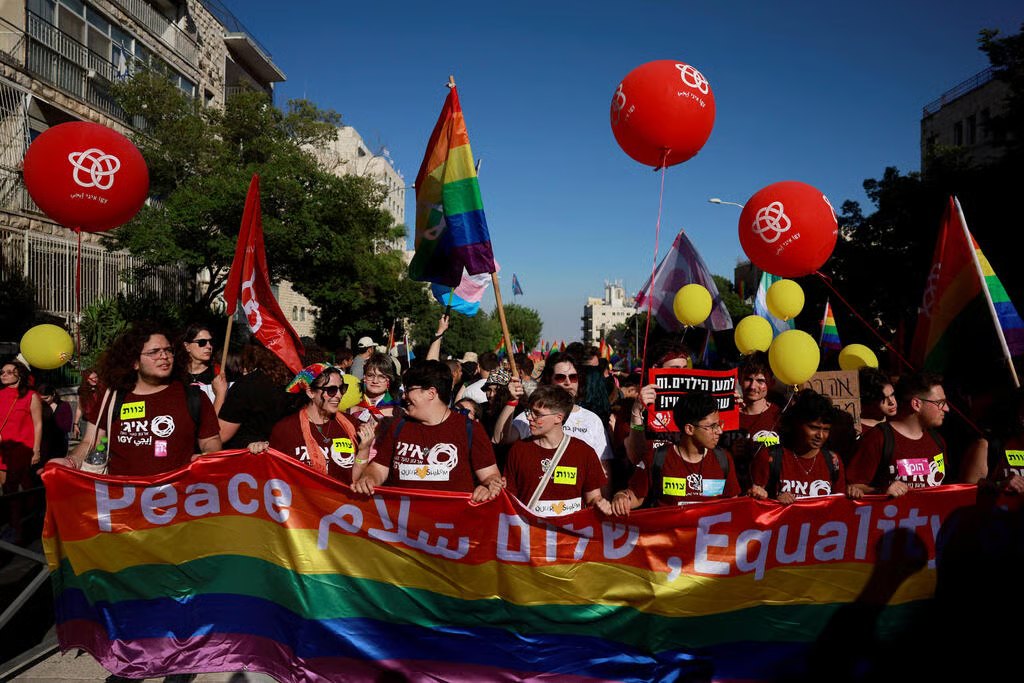
Israel’s top LGBTQ-friendly cities named in 2025 Pride Index

Read more at YNet Global.

The Aguda – The Association for LGBTQ+ Equality in Israel published its 2025 Pride Index for local authorities on Thursday, with Ramat Gan, Rishon Lezion and Tel Aviv-Yafo taking first place with a perfect score of 110 points. Jerusalem, Ashkelon and Nahariya joined the index for the first time this year. The findings point to wide gaps between authorities: while some have implemented broad policies and permanent services for the LGBTQ+ community, others have taken little action in the field.

The Pride Index, published for the seventh year, was presented at the President’s Residence to President Isaac Herzog, with representatives of local authorities and the association in attendance. The index evaluates municipal policy toward the LGBTQ+ community in areas including education, welfare, public visibility, culture and organizational infrastructure. This year, 46 local authorities were assessed, with a maximum possible score of 110 points, including bonus questions.

According to the index, culture — including Pride events and year-round community activities — is the area receiving the greatest municipal investment, while education saw the lowest level of investment.

In the large-authority category (more than 100,000 residents), Ramat Gan, Rishon Lezion and Tel Aviv-Yafo ranked first with full scores of 110 points. They were followed by Haifa with 106 points and Herzliya with 104.

Netanya, which scored 99 points, received a special distinction for a “significant leap,” partly due to expanded activity in education, welfare and community services. In the medium-sized authority category, Givatayim and Ra’anana shared first place with 108 points, followed by Kiryat Bialik with 105 points and Ramat Hasharon with 104.

Among smaller authorities, Hof HaCarmel ranked first with 101 points, followed by Drom HaSharon with 98 points and Binyamina-Giv’at Ada with 86. Eight authorities joined the index for the first time this year: Azor, Ashkelon, Bnei Shimon, Tirat Carmel, Jerusalem, Nahariya, Katzrin and Kiryat Ono. The Aguda said participation itself marks “an important step in building a path and laying the foundations for community action.”

The data show the average municipal score this year stood at about 72.5 points. Alongside authorities that achieved especially high scores, others received very low marks, underscoring significant disparities in policy and services for the LGBTQ+ community across Israel.

Notably, despite the 46 authorities assessed this year, many municipalities in Israel still do not participate in the index at all — a fact the Aguda views as evidence that major gaps in attitudes toward the LGBTQ+ community remain between different local authorities nationwide.

Speaking at the ceremony, President Isaac Herzog said, “The Pride Index reflects the growing commitment of local authorities in Israel to the values of equality and human dignity.” Referring to Jerusalem’s inclusion in the index, he said it carried “special importance,” because “even amid complexity, it is possible and necessary to strengthen every person’s sense of belonging, security and dignity.”

Aguda chairperson attorney Nimrod Gorenstein said, “Local authorities are the community’s first line of defense.” He added: “Every authority has its own character, but all share a common responsibility to lead, set an example and show that it is possible to build a diverse, vibrant and safe society here.”

A surprising country just topped Europe’s trans rights rankings

Read more at LGBTQ Nation.

Transgender Europe (TGEU) has released its annual Trans Rights Index and Map, which ranks countries by the protections and opportunities that they offer for trans and nonbinary people. While there have been net positives across Europe, TGEU notes that the gains have not been caused by larger political and climate shifts.

The report “reveals a year of change on paper across Europe and Central Asia but not sustained political progress,” TGEU writes. “While more developments have been recorded than in recent years, many of these hard-won shifts are driven by activists and courts rather than proactive government action.”

The map is co-funded by the European Union and is done in partnership with ILGA Europe’s Rainbow Map. For the Trans Rights Index, they measure each country against 32 indicators across six categories: Legal Gender Recognition, Asylum, Hate Crime/Speech, Non-Discrimination, Health, and Family.

Coming in at the top of the rankings as a clear winner this year was Iceland, which met 30 out of the 32 indicators. It missed one point under Asylum. While gender identity is supported by its laws and it has legal gender recognition for refugees, it does not expressly include gender identity in other asylum policies. Similarly, under Hate Crime/Speech, it got points for having legislation against hate crimes and hate speech targeted at trans people, but it doesn’t have a policy tackling hatred, which can be important to understanding potential threats to trans people in a country.

After Iceland, several runners-up are in close proximity, with Malta fulfilling 28 of the 32 indicators, Spain at 27.18, Belgium and Norway both at 25.5, and Germany at 24.57.

Across the 54 countries studied for the Trans Rights Index, there’s a wide margin in how they treat trans people. Austria, Germany, Iceland, and Malta are the only four countries that have fully met the criteria for nonbinary gender recognition. Meanwhile, Bulgaria, Georgia, Hungary, Russia, and Slovakia still have frameworks in place that make legal gender recognition impossible for trans people. Russia is at the bottom of the ranking, meeting zero of the 32 criteria.

TGEU also provides commentary on how the political climate has shaped the rankings compared to previous years. Notably, they point to “targeted and deliberate regressions” in what they call “rollback as a political strategy.” Belarus introduced an “anti-propaganda law” in April, which criminalized the promotion of trans rights and representation. The country also reinstated compulsory medical requirements for legal gender recognition. Slovakia also introduced a block on legal gender recognition. And the United Kingdom gets a special mention for the “ambiguity” around the nation’s Gender Recognition Certificates after last year’s Supreme Court ruling.

The organization also highlights that progress across Europe and Central Asia over the last year is due to the tireless work of activist groups and court responses. For example, Czechia brought in new legal gender recognition guidelines that no longer include forced sterilization and surgical requirements after a Constitutional Court ruling. TGEU explained, “These guidelines followed years of advocacy and litigation by trans activists and represent one of the most significant shifts in the region this year. However, as these changes are not fully enshrined in legislation, they remain vulnerable to rollback.”

Of course, TGEU also makes the point that while these positive legal moves are a great sign, they’re not the full story. Laws on paper don’t always translate to “safety, dignity, or the ability to access human rights for trans people.” With that in mind, TGEU calls on governments to do their part to secure trans rights in these countries and to support efforts to establish stronger protections.

“Regional and national leaders must now step up,” the report states, “put court rulings and laws into practice, and hold those accountable who treat human rights like an a la carte menu.”

The ultimate guide to getting the most out of traveling with joy and safety while trans

Read more at GayCities.

Since Trump took office last year, traveling as a trans person has felt terrifying.  

I used to travel by plane frequently. As a consultant, I was in a new state at least quarterly for client visits and onsite training. But last year, things changed for me, as they did for many others.

When I changed my name (over 10 years ago), I did not change my gender marker. The name on my ID is “Rex” while my gender marker shows “F”. The reasoning on my name change petition marks “the petitioner seeks to conform their name to their gender identity.”

I’ve heard stories from friends and community members whose passports were reissued with their name or gender marker unconsensually reverted to their assigned sex at birth. 

In Kansas, transgender individuals received letters from the state informing them that their driver’s licenses were no longer valid due to the passing of SB 244. TSA has also removed its “Guidance for Transgender, Non-binary, and Gender Non-conforming Passengers” page.

These actions don’t just invalidate and dehumanize transgender, nonbinary, and gender-expansive (TGX+) people. They also increase the risk of harassment and violence by forcibly outing us.

Last year, I traveled out of state for work only one time. I took the one hour flight from Los Angeles to Las Vegas for a conference. As I went through security, I wondered, “When they check my ID, will they look at my gender marker this time?” “Will it flag an additional security check?” “What will happen if they find out that I’m trans?”

Last year, Lambda Legal held a Know Your Rights: Passports webinar in response to over 1,000 requests from TGX+ folks seeking information on passports and travel. This webinar helped demystify some of the fears circling in the TGX+ community (such as clarifying that current non-expired passports with an “X” gender marker remain valid until replaced or expired).

It also encouraged deeper consideration of traveling while TGX+.

As I consider travel this year and beyond, I’ve developed some personal travel guidelines to help keep me safe. Organizations can adopt these to support the safety of their TGX+ employees, too.

Here are some considerations for TGX+ individuals while traveling…

1. Always travel together.

There is safety in numbers. Travel with a trusted friend or colleague and use the buddy system at crucial checkpoints (security, restrooms, etc.).

2. Consider all options.

What is the best mode of transportation for you? Car? Train? Plane? For me, traveling by plane feels the most precarious, and I am not willing to do it without support from a trusted source. Take time to consider which travel options are the safest and most suitable for your needs.

3. Make a safety plan.

Ensure you create a safety plan that includes considerations for where you are traveling, a point person who knows all your travel details, and an emergency contact who is available if necessary (this can be a person or a reputable organization such as Lambda Legal). For planning support, check out the Travel While Trans database.

4. Always bring documents.

When traveling, carry your identification (e.g., passport) and court-ordered official documents stating any name and gender marker changes. Before traveling, make copies of all documents and forms of identification. Keep one copy at home, and give another to a trusted confidant in case your documents get lost or confiscated. Contact Lambda Legal if any issues arise during travel.

While I’ve heard plenty of stories from other trans, nonbinary, and gender expansive folks who have traveled nationally and internationally without issues over the past year, I feel the need to be prepared to support my safety in the worst-case scenario.

We shouldn’t have to make these considerations, but they are important steps to take for the safety and well-being of TGX folks. Trans people deserve to exist without fear. The more equipped we are, and the more support we have to navigate the current climate, the more we can create a future that centers our joy, which is what traveling should truly be about.

Blog at WordPress.com.

Up ↑