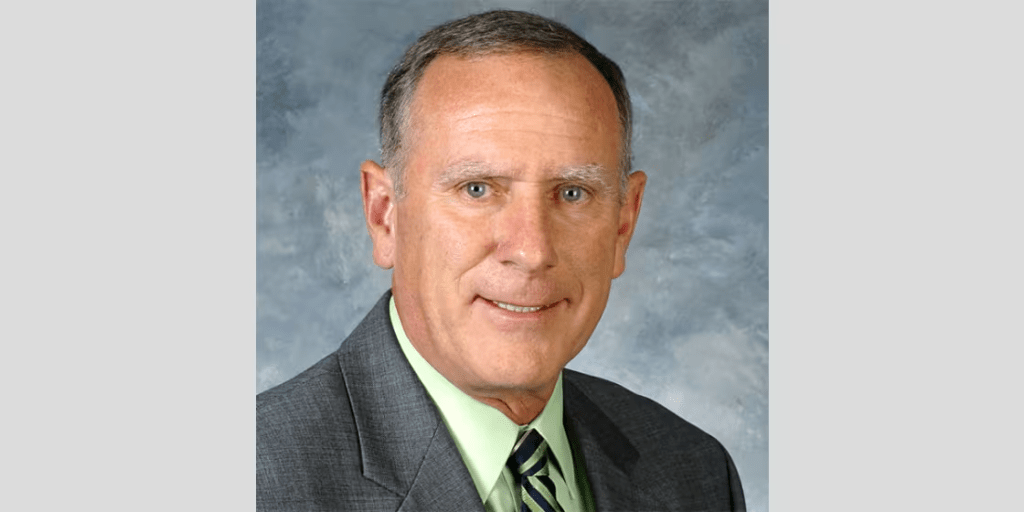
A House committee has advanced a controversial bill, H.R. 736, known as the “PROTECT Kids Act,” which would require schools to disclose transgender students’ identities to their parents if the students request to use different pronouns, a new name, or facilities aligned with their gender identity. The bill, introduced by Rep. Tim Walberg (R-MI) and Sen. Tim Scott (R-SC), would enforce this policy on all elementary and middle schools that receive federal funding, threatening to withhold funds from any school that does not comply.
Rep. Walberg, who has a history of supporting Uganda’s anti-LGBTQ+ laws, stated that parents should be informed of all decisions affecting their children. He argues that the bill would “safeguard parental rights by requiring parental consent and will help mitigate under-the-radar activism in our schools.” However, critics, including Rep. Mark Pocan (D-WI), chair of the Congressional Equality Caucus, have condemned the bill as an attack on transgender students, warning that it could put vulnerable kids at risk, particularly those without supportive families.
The bill passed the House Committee on Education and the Workforce with a 22-12 vote and will now proceed to the House floor for consideration. While it may pass the Republican-controlled House, it faces significant opposition in the Democratic Senate, and President Joe Biden is unlikely to sign it into law, as it contradicts his administration’s policies on LGBTQ+ rights.
Shortly after announcing that his company, X, would be moving out of California due to the state’s newly enacted law that protects trans students, Elon Musk went on a demeaning rant about his own transgender daughter on a right-wing podcast, repeatedly misgendering her and saying that she had been “killed by the woke mind virus.”
The billionaire was a guest on Monday’s episode of The Jordan B. Peterson Podcast, which found the titular conservative influencer interviewing Musk at Gigafactory Texas, where Tesla is headquartered. Toward the end of the podcast, Peterson asked Musk about “one of things that [he’s] been relatively vocal about,” namely gender-affirming care. Peterson referred to trans minors’ access to medical care “the worst medical and psychological malpractice I’ve ever seen anywhere,” adding, “At least the bloody Nazis knew it was wrong and tried to hide it.”
(Peterson was likely referring to the Institute for Sexual Research in Berlin, which performed the world’s first gender-affirming surgeries, and which was a noted target of one of the first and largest of the Nazi book burnings.)
Although trans advocates have been sounding the alarm about Musk since he bought the platform formerly known as Twitter in 2022, the CEO has tilted even further into more full-throated endorsement of transphobic talking points in recent years. In his interview with Peterson, he agreed with the psychologist, calling the term gender-affirming care “a terrible euphemism” and referring to it as “child mutilation and sterilization,” per The Daily Beast.
“You’re taking kids who are obviously often far below the age of consent — almost every child goes through some kind of identity crisis, it’s just part of growing up — so it’s very possible for adults to manipulate children who have are having a natural identity crisis into believing that they are the wrong gender and that they need to be the other gender,” Musk said. Though it is a common right-wing talking point that transness naturally desists in most young people, studies have found that trans youth are actually extremely unlikely to detransition.
But the issue is personal for Musk, as he explained to Peterson, claiming that he was “essentially tricked into signing documents for one of my older [children]… before I had really any understanding of what was going on” — a reference to his daughter Vivian Jenna Wilson, who in 2022 filed a petition to change her name in part because, as she stated, “I no longer live with or wish to be related to my biological father in any way, shape or form.”
A federal appeals court panel has ruled that Tennessee does not unconstitutionally discriminate against transgender people by not allowing them to change the sex designation on their birth certificates.
National headlines from ABC News
Catch up on the developing stories making headlines.
NASHVILLE, Tenn. — A federal appeals court panel ruled 2-1 on Friday that Tennessee does not unconstitutionally discriminate against transgender people by not allowing them to change the sex designation on their birth certificates.
“There is no fundamental right to a birth certificate recording gender identity instead of biological sex,” 6th U.S. Circuit Court of Appeals Judge Jeffrey Sutton wrote for the majority in the decision upholding a 2023 district court ruling. The plaintiffs could not show that Tennessee’s policy was created out of animus against transgender people as it has been in place for more than half a century and “long predates medical diagnoses of gender dysphoria,” Sutton wrote.
He noted that “States’ practices are all over the map.” Some allow changes to the birth certificate with medical evidence of surgery. Others require lesser medical evidence. Only 11 states currently allow a change to a birth certificate based solely on a person’s declaration of their gender identity, which is what the plaintiffs are seeking in Tennessee.
Tennessee birth certificates reflect the sex assigned at birth, and that information is used for statistical and epidemiological activities that inform the provision of health services throughout the country, Sutton wrote. “How, it’s worth asking, could a government keep uniform records of any sort if the disparate views of its citizens about shifting norms in society controlled the government’s choices of language and of what information to collect?”
The plaintiffs — four transgender women born in Tennessee — argued in court filings that sex is properly determined not by external genitalia but by gender identity, which they define in their brief as “a person’s core internal sense of their own gender.” The lawsuit, first filed in federal court in Nashville in 2019, claims Tennessee’s prohibition serves no legitimate government interest while it subjects transgender people to discrimination, harassment and even violence when they have to produce a birth certificate for identification that clashes with their gender identity.
In a dissenting opinion, Judge Helene White agreed with the plaintiffs, represented by Lambda Legal.
“Forcing a transgender individual to use a birth certificate indicating sex assigned at birth causes others to question whether the individual is indeed the person stated on the birth certificate,” she wrote. “This inconsistency also invites harm and discrimination.”
Lambda Legal did not immediately respond to emails requesting comment on Friday.
Tennessee Attorney General Jonathan Skrmetti said in a statement that the question of changing the sex designation on a birth certificate should be left to the states.
“While other states have taken different approaches, for decades Tennessee has consistently recognized that a birth certificate records a biological fact of a child being male or female and has never addressed gender identity,” he said.
A federal judge has determined that Ron DeSantis was disseminating falsehoods when he referred to gender-affirming care as “mutilation.”
This year has been a series of setbacks for Florida Gov. Ron DeSantis. His presidential ambitions are dwindling due to his lack of charisma and campaign missteps. His conflict with Disney is draining millions from Florida taxpayers. Additionally, a federal court has strongly suggested that DeSantis was dishonest in justifying his prohibition on medical care for transgender youth.
DeSantis consistently argued that the law was essential to prevent the “mutilation” of young individuals. For instance, he criticized a reporter who challenged him on this when he signed the bill in May.
“And when you talk to people—I know people in your industry will dress it up with a euphemism—and they’ll say it’s health care to cut off the private parts of a 14 or 15-year-old,” DeSantis stated. “That is not health care. That is mutilation.”
Inform that to U.S. District Judge Robert Hinkle.
“When assessing the governor’s motives, how should I interpret these statements? It appears to be more than mere exaggeration.”
Hinkle is overseeing a legal challenge to the law brought by three Florida families with transgender children. He has implemented a stay against the measure from being enforced during the legal proceedings and has consistently shown skepticism toward the state’s arguments. In a ruling that invalidated Florida’s ban on Medicaid coverage for gender-affirming care, Hinkle emphasized, “Gender identity is real.”
Hinkle conceded that he cannot completely discern DeSantis’ intentions. He raised the question of whether the plaintiffs could demonstrate that DeSantis endorsed the law “because he hates transgender people.” The families’ attorney argued that the law is inherently unconstitutional, making DeSantis’ motivations less pivotal to the case.
Hinkle indicated his belief that the law’s purpose isn’t truly to prevent mutilation but rather to obstruct transgender youth from accessing healthcare. This strongly suggests that DeSantis might face an unfavorable ruling from the court.
This development also signals that DeSantis might have based his campaign on an unsuccessful concept. Relying heavily on anti-trans stances to perform well in the Iowa presidential caucus, he finds himself facing challenges with Nikki Haley gaining popularity and his campaign in disarray. The outlook for him in Iowa appears uncertain, making the end of 2023 potentially regrettable for DeSantis, with the prospect of 2024 being even more challenging.
The U.S. Court of Appeals for the Eighth Circuit, located in Little Rock, has approved Arkansas Attorney General Tim Griffin’s request for a comprehensive review by the entire court (known as an en banc review). This review pertains to a prior court order that had prevented the enforcement of the Save Adolescents From Experimentation Act (SAFE Act).
A federal court will review a lower court’s block of Arkansas’ SAFE Act, which bans transgender treatments for minors in the state.
The SAFE Act, a law in Arkansas, restricts doctors from administering transgender treatments, including hormone therapy, puberty blockers, or surgery, to minors.
Arkansas stands as the first state to make such an attempt to implement such a ban.
In August 2022, a three-judge panel from the Eighth U.S. Circuit Court of Appeals upheld a judge’s decision to temporarily halt the enforcement of the 2021 law.
In June 2023, U.S. District Judge Jay Moody issued a permanent injunction against the Arkansas law, deeming it unconstitutional.
In a historic decision recognizing the importance of the defense of the SAFE Act, the Eighth Circuit has granted initial en banc review. I am very pleased with today’s order as it allows my office to continue fighting to protect our state’s children from dangerous medical experimentation,” Griffin said in a press release.
Dylan Brandt speaks at a news conference outside the federal courthouse in Little Rock, Ark., July 21, 2021. Brandt, a teenager, is among several transgender youth and families who are plaintiffs challenging a state law banning gender-confirming care for trans minors. The nation’s first trial over a state’s ban on gender-confirming care for children begins in Arkansas on Monday, Oct. 17, 2022, the latest fight over restrictions on transgender youth championed by Republican leaders and widely condemned by medical experts.
Two other federal courts of appeal have already allowed similar laws protecting children from experimental gender-transition procedures in Tennessee, Kentucky and Alabama to go into effect. I thank Solicitor General Nicholas Bronni, Deputy Solicitor General Dylan Jacobs and their team for the great work to secure this order for initial en banc review,” Griffin said.
You must be logged in to post a comment.