An LGBTQ+ nightclub burnt down over the weekend in England. A suspect was just arrested.

Read more at LGBTQ Nation.

Police have arrested a suspect in connection with a fire at an LGBTQ+ nightclub in England.

The 51-year-old man was taken into custody and, as of Monday, was being held on suspicion of arson with intent to endanger life, according to both The Guardian and the BBC. Police have not determined a motive for the fire, which broke out in the early hours of Sunday morning at Pink Punters, and have urged the public not to speculate. Pink Punters is located in Milton Keynes, a city in Buckinghamshire, about 50 miles northwest of London.

“This was a significant fire in which a large number of people had to be evacuated,” Milton Keynes chief superintendent Emma Baillie said. “Thankfully, no one was injured, and staff at the venue worked quickly and effectively to safely evacuate everyone. At this time, it would be too early to comment on any particular motivation for this incident, and we would respectfully ask for people not to speculate.”

According to the BBC, Buckinghamshire Fire and Rescue Service was called to the scene around 2 a.m. Sunday morning. Molly Firman, who was at Pink Punters with friends, said that around 2 a.m., the club’s fire alarm started going off.

“Out of nowhere, all staff and security were screaming, ‘you need to get out now,’” she told the BBC. “Then [we were] all out onto the road and from the road looking over it felt like in minutes — it wasn’t a small fire — but that fire expanded greatly.”

In a statement, Frank McMahon, whose family has run the club for decades, said that the building had been “completely destroyed” by the fire. But, he said, “I am deeply relieved, grateful, and proud to confirm that no staff or customers were harmed, and everybody went home safely.”

“Pink Punters has always been about people, not just bricks and mortar. The building may be gone, but the family, the memories, the spirit, and the love remain,” McMahon said. “And let me say this clearly: Pink Punters will be back.”

Even so, patrons, staff, and neighbors noted what the loss of the venue, even temporarily, would mean for the community.

“It’s truly devastating to say the least,” Firman told the BBC. “When I think of going on a night out, that’s pretty much the only place I will think of going. If Pink’s was not to be here anymore, I think it would affect a lot of people.”

Aaron Harding, who works at Pink Punters alongside his partner, said the venue “welcomes everyone in no matter your gender, race, ethnicity, all of it,” and that the fire is “devastating.”

“It’s horrendous,” Colin Ruggles, a neighbor who witnessed the fire from his home, told the BBC. “So many people go to Pinks, so many people work at Pinks. The LGBT community are going to be devastated, where else can they go within Milton Keynes to feel safe?”

Callum Anderson, Labour MP for Buckingham and Bletchley, told the BBC he was “deeply concerned” by the fire and that anyone involved should “feel the full force of the law.” Anderson added that his team would work closely with police and Pink Punters’ owners to ensure that “the community is properly supported.”

First puberty blockers, now hormones: England’s NHS bans more gender-affirming drugs

Read more at LGBTQ Nation.

This week, England’s National Health Service (NHS) threw up yet another roadblock to gender-affirming care for transgender youth in the UK.

On Monday, the NHS announced it was pausing new referrals for feminizing and masculinizing hormones for 16- and 17-year-olds suffering from gender dysphoria, citing a collection of studies commissioned by the health service after publication of the controversial Cass Report in 2024, the Guardian reports.

That study recommended “extreme caution” initiating hormone treatments, including estrogen and testosterone, and a “clear clinical rationale for providing hormones at this stage rather than waiting until an individual reaches 18.”

The new NHS report comes to a similar conclusion.

“Following the Cass review, NHS England commissioned an in-depth review of all available clinical evidence for using estrogen or testosterone either alone or with other medications to treat gender incongruence and dysphoria,” the report states. “This review has established that the available evidence does not support the continued use of masculinizing or feminizing hormones to treat gender incongruence or dysphoria for young people under 18.”

The Cass Review, which contradicted long-established guidance around the efficacy of gender-affirming care for trans youth, has already prompted the health service to halt prescriptions of puberty-suppressing drugs for trans youth, with an indefinite ban for trans minors enacted by the UK government in December 2024.

The UK’s Health Secretary cited an “unacceptable safety risk” for halting new prescriptions of the drugs, though puberty blockers are still prescribed for early onset puberty and other conditions for children not suffering from gender dysphoria.

Puberty blockers, or GnRH analogues, slow down or halt the onset of puberty in young people taking them, and have preceded and been accompanied by the use of estrogen or testosterone for gender transition.

The positive effects of that combination therapy were all but ignored in the new NHS review, say critics of the decision to halt new prescriptions.

The Dutch Protocol, the “gold standard” for transition care, “involves prescribing GnRH analogues (puberty blockers) first to suppress puberty, then adding hormones later,” writes trans journalist Erin Reed in a story questioning the report’s findings.

“When hormones are introduced, the GnRH analogues are sometimes continued alongside them — the blocker keeps suppressing the body’s natural hormones while the prescribed estrogen or testosterone does its work. This overlap period means patients are on both GnRH analogues and hormones at the same time. That is the ‘combination therapy’ the reviews claim to examine.”  

But the reviews “inexplicably excluded every study” where GnRH analogues and feminising and masculinising hormones were taken in succession or combination. The review tossed out hundreds of such studies in favour of a “salami slicing” approach that examined the hormones in isolation.

NHS was explicit in its methodology.

“Any reference to GnRH analogues in the context of puberty suppression or used as puberty-suppressing hormones must be excluded,” the report states.

“NHS England’s own data, cited in the reviews themselves, confirms that 98% of its patients followed the very pathway every review was designed to exclude,” Reed writes.

She called the NHS evidence reviews “an extreme example of politically-manufactured science.”

Gender Plus, a leading private trans healthcare and education service in the UK, accused NHS England of ignoring clinical expertise and evidence provided by leaders in the field, including the Endocrine Society, which recommends introducing the hormones for trans youth once “persistence of gender incongruence has been confirmed and the young person has sufficient capacity to consent.”

“NHS England’s interpretation of the evidence is in contrast to every reputable expert body in the field of transgender healthcare,” said a spokesperson for the health group.

NHS said patients currently receiving hormone treatments can continue the therapy, “but this will need to be reviewed individually with their clinical team.”

“Banning new prescriptions of gender-affirming hormones for 16- and 17-year-olds is a profound attack on young people’s bodily autonomy,” said Tammy Hymas, policy lead at British advocacy organization TransActual, “with trans people yet again cruelly singled out by this government.”

“Catastrophic” potential as ‘Brit Card’ Digital IDs could out Trans+ people, campaigners warn

Read more at We Are Queer AF.

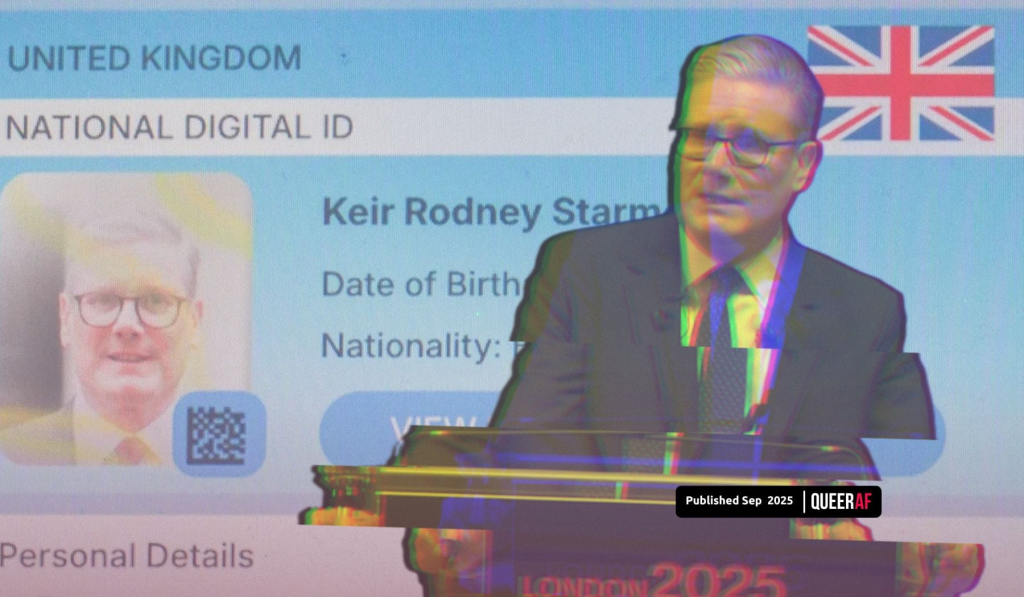
New digital IDs in the UK could be “catastrophic” for Trans+ people, who could be forced to out themselves when showing their ID – even if they don’t include a sex marker on them.

Keir Starmer announced the new scheme at a gathering of centre-left parties at the Global Progress Action conference. He said the move was designed to ‘crack down’ on people who don’t have the right to work in the UK getting jobs.

If the UK implements these IDs, it would join countries including Bosnia and Herzegovina, United Arab Emirates, China, Greece, France and Afghanistan.

However, within just hours of the announcement, he faced massive opposition to his ‘Brit Card’ system, with over a million people signing a parliamentary petition not to proceed. While we were monitoring the form, it was rising by around 200-300 new signatures every ten seconds.

The mock-ups shared do not include a sex marker, and only require name, date of birth, nationality or residency status, and a photo. So far, Ministers have stressed there will never be a reason to carry IDs around or to produce them other than for work.

Implications of mandatory ID for LGBTQIA+ people

Keyne Walker, TransActual strategy director, tells QueerAF that even before the plans were announced anti-trans groups have already been lobbying ministers, civil servants and right-wing parliamentarians “to ensure that the single governmental record held lists trans people as their ‘birth sex'”. 

Walker believes this scheme could easily be weaponised and hijacked by MPs who are already trying to push anti-trans policies through Parliament. “It could provide the answer to the fundamental unworkability of bathroom bans… you don’t need to ask people to show their birth certificate if instead they have to scan an ID card to take a pee.”  

Trans legal researcher, Jess O’Thomson, warns that the policy could have a “catastrophic” potential even just with the risk that it outs Trans+ people who haven’t yet got the legal recognition they need ahead of applying for a job:

“We know that anti-trans campaigning groups are looking for any opportunity to strip back trans people’s rights even further. I have no doubt that these groups will push for digital ID to record “biological sex”, forcibly outing trans people, and pushing them further out of public life.

“The real worry is that our government might go along with them, or else an amendment to the legislation could be forced through. These IDs could be catastrophic for the queer community.”

The UK’s history of ID cards

The UK hasn’t had a nationwide mandatory ID scheme since WWII, which ended after Lord Chief Justice Goddard said in a high court that the continuation of the wartime ID card scheme was an “annoyance” to much of the public and “tended to turn law-abiding subjects into law breakers”. Winston Churchill’s government scrapped them following the ruling and wider criticism over costs and police misuse – BBC

In more recent years, Tony Blair’s Labour government legislated for voluntary ID cards in the early 2000s, but the scheme was scrapped in 2011 by the Conservative-led coalition, which argued it was too costly and intrusive.

Analysis: Lists of queer people are incredibly vulnerable to being weaponised against us

“It is a big red flag when authoritarian governments that keep talking about putting people in camps start making lists of queer people,” Keyne Walker from Trans Actual remarked to QueerAF.

That, of course, is a big-picture view of this story – and we should be careful to see the news in its context at this stage, given there are scarce details on the scheme.

But the warnings from legal and privacy campaigners come amid a wider slide into authoritarian policies the UK has been adopting in recent years, including plans to make it possible to criminalise wearing a mask at Pride events.

Indeed, from reporting on queer news for the best part of a decade now, I know well that the privacy concerns about the danger lists of queer people can create, which we’re already hearing from campaigners are far from new. 

Privacy campaigner and founding member of QueerAF Kyle Taylor, says on the surface, digital ID cards may seem innocuous enough – but you need only look to history to see how easily marginalised groups become victims of state-sponsored discrimination or violence:

“The last thing you want is for the government to know who you are and where you are when they decide to, for example, make conversion therapy mandatory. Make no mistake, privacy is power and this puts everyone at risk. Especially our community.”

There has always been a present danger of bad actors weaponising central lists; it’s one of the reasons the Covid Track and Trace app was eventually decentralised amid opposition to how it could create a list of disabled people.

This is a development we should watch carefully, especially amid a growing focus and battleground on the right to privacy amid potential segregation of Trans+ people in public life.

To beat misinformation we need a well resourced queer led newsroom that can cut through the noise and get to the facts.

Our publisher is small, but mighty, and that’s because of some key principles in the way we produce news for you:

  • Our newsletter always has been, and always will be, free of adverts. That keeps us focused on what counts, not what drives clicks
  • Readers and members drive our news agenda, because that’s what our community deserves: news told both by and for us
  • Investing in a new generation of queer journalists, and packing the media full of us, is the best way to address the issue in the sector. Meanwhile, we’ll model the change we want to see and prove it’s possible to do justice to our community’s stories

Journalism is an expensive craft. It takes all week to put together this newsletter, so you can catch up on the queer world in five minutes. And we do that alongside mentoring creatives and lobbying the media sector.

If you believe in our unique model and the change we’re bringing to the queer news sector, please upgrade today if you can – and help us continue to grow.

Children given ‘discriminatory and offensive’ anti-LGBTQ+ leaflets while trick or treating

Read more at Pink News.

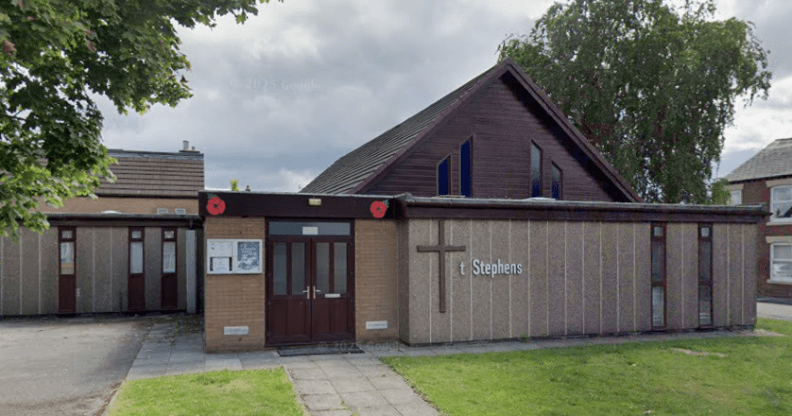
As first reported by Manchester Evening News, at least two children were given leaflets that featured the logo of Grace Fellowship Manchester, a group “dedicated to Biblical Christianity” and based at St Stephen’s Church in the town of Middleton, which is five miles northeast of Manchester. Its website shows that it appears to be linked to Grace Community Church in San Antonio, Texas.

The one leaflet, a photograph of which was shared by a parent on social media, was headlined “ARE YOU A GOOD PERSON?”

Underneath the header was a graphic of a mobile phone with a mimic text exchange.

“Hey, I’ve got a question for you. Are you a good person?” the first mock text message reads.

“YES! I’m good! Not perfect… but I’ve never done anything that bad!” the reply reads.

In response, the next text states: “The Bible says; Do not be deceived: neither the sexually immoral, nor idolaters, nor adulterers, nor homosexuals, nor thieves, nor the greedy, nor drunkards, nor revilers, no swindlers will inherit the Kingdom of God.”

“Is that really in the Bible?”

“Yes!” the text confirms. “It’s 1 Corinthians 6:9-10. But keep reading to find out how you can be forgiven and have eternal life.”

Surrounding the text exchange were the words including “Homosexuals”, “Drunkards”, “Idolators” and “Swindlers”.

“God designed marriage to be between one man and one woman”

Another leaflet including the statements: “God designed marriage to be between one man and one woman. And anyone who indulges in sex outside of marriage…. no such person will inherit the Kingdom of God. BE NOT DECEIVED!

“God isn’t being cruel in warning us. He shows us we’re in trouble so that we’ll realise how desperately we need his help to fix us.”

In Grace Fellowship Manchester’s Statement of Faith – which lists several pages of scripture from the Bible – whilst there are verses from Corinthians included, there is no direct citation from Corinthians 6:9-10.

The church says that its Statement of Faith was “written by the elders” of Grace Community Church in San Antonio, Texas, which does cite Corinthians 6:9-10 in its own Statement of Faith. A slightly differently worded version reads: “Or do you not know that the unrighteous will not inherit the kingdom of God? Do not be deceived: neither the sexually immoral, nor idolaters, nor adulterers, nor men who practice homosexuality, 10 nor thieves, nor the greedy, nor drunkards, nor revilers, nor swindlers will inherit the kingdom of God.”

Grace Community Church’s views on LGBTQ+ issues are not particularly inclusive, stating that God only created male and female, “God intends for sexual intimacy to occur only between a man and a woman who are so married to one another” and the “only acceptable alternative to marriage between one man and one woman is the faithful single life of celibacy”.

“Discriminatory and offensive”

Speaking to the Reach PLC outlet, mum Victoria Loop said she was “angry” with the content of the leaflets, saying it is “just not appropriate for young children”.

” I am not against people expressing their opinions for the most part but when it becomes discriminatory and offensive it is just wrong,” Loop said.

“There were other leaflets amongst the other children’s treats however they were more appropriately worded and not on this level. My views on the matter is that there was quite some degree of misjudgement when deciding to include this particular leaflet in treats to young children.

She added: “I have many friends and family that this would hurt very deeply and I am angry on their behalf as much as for my daughter having to ask questions as why some people haven’t yet got the message in this age that homophobia, no matter how benign this may seem to some, is not acceptable. Let alone giving this opinion to children with no consideration of their innocence or family circumstance.

“I am aware that this may be an unpopular stance from many different religious groups, however the method of delivery of their rhetoric and beliefs in this case needs questioning and scrutinising. We have age restrictions on many things such as films and television and restrictions on products and publications for the protection of children.”

“Blatantly homophobic literature”

Local councillor Dylan Williams, who is a gay man that attends church, criticised the leaflets for both their homophobic and sexually explicit content.

“I believe most Christians will be upset by this blatantly homophobic literature and would condemn it. I am also concerned that people think it acceptable to give literature on it with adult words and sexually explicit language to Children as young as six,” Williams told Manchester Evening News.

“Homophobia seems to be becoming more and more prevalent leading some members of the community to feel unsafe and this is and should not be acceptable in our society. We must say no to hate.”

PinkNews has approached Grace Fellowship Manchester for comment.

‘Where am I safe?’: U.K. court ruling leaves trans people’s lives in turmoil

Read more at NBC News.

Nate Rae had always felt secure living openly since coming out as a transgender man in his late 20s — until a recent U.K. Supreme Court ruling on the legal definition of biological sex changed everything.

Now, Rae — a PhD student and science communicator who grew up in a small Scottish town before moving to London — says he finds himself constantly weighing risks and assessing where it is safe — or unsafe — for him to be.

In April, the court affirmed that under equality laws, the term “sex” refers to biological sex, meaning a transgender woman is legally considered male, and a transgender man is considered female.

Equality watchdog EHRC stated in its interim guidance on the ruling’s practical implications that transgender people should be barred from facilities and services, from toilets to hospital wards and refuges, designed for the gender they live as.

“It’s almost like it’s been made legal to harass trans people,” Rae, 33, told Reuters in an interview at Gay’s The Word, Britain’s oldest LGBTQ bookshop, saying he was now “hyper aware” of people noticing him.

“I’ve got to factor in things that I’d never had to factor in before,” he said. “Where can I go? Where am I safe?”

Transgender rights flashpoint

Rae, who only started to medically transition last year, often uses the women’s bathroom as he feels he is still largely perceived as female.

Since the ruling, Rae has been told several times that he cannot use a certain bathroom and has been called “disgusting” when using a female toilet. On one occasion, someone approached him to ask: “Do you know there are kids here?”

Transgender rights have become a political flashpoint in Britain and elsewhere. In the U.S., President Donald Trump has targeted the rights of transgender people in a series of executive orders.

Some critics of the policies say the conservative right has weaponized identity politics to attack minority groups.

But others argue that support for transgender people has infringed on the rights of biological women and their safety in spaces such as hospitals, prisons and domestic violence refuges.

Britain’s government said the judgement brought clarity and a clear position to underpin gender policies, but for many transgender people, including Rae, it has left them feeling excluded from parts of society.

A report released in August by transgender rights group TransActual highlighted how, since the ruling, some trans people have planned to leave the country, concealed their identities, avoided public spaces like hospitals, felt outed at work, or have withdrawn from social life altogether.

Asked about the detrimental impacts of the ruling cited by transgender people, a government spokesperson said laws were in place to protect trans individuals from discrimination and harassment.

Young trans people ‘terrified’

Following a consultation, the EHRC, which is responsible for enforcing equality laws, submitted its updated draft guidance to the government at the start of September and parliament is expected to consider it by the end of the year.

Keyne Walker, strategy director for TransActual, said the interim guidance is already having a “dire effect” and said the EHRC’s interpretation of the judgement could have been far less “extreme”.

Some organizations have already updated their transgender policies. The Football Association has barred transgender women from competing in women’s soccer in England, and the British Transport Police now requires same-sex searches in custody to be conducted according to a detainee’s biological sex.

A spokesperson for the EHRC said everything they had done since the judgement was grounded in the law, and the guidance shared with the government was both legally accurate and clear.

Rae fears the court’s decision will discourage people from living freely in their chosen gender and threatens their safety if they do, as it has shifted public perceptions of transgender people.

“Every young trans person I’ve spoken to is terrified,” said Rae, who teaches science to young people as part of his job, adding that many were now questioning: “Am I going to be able to live the life I want to live as the person I want to be?”

Over 100,000 people march in biggest trans Pride event in history

Read more at LGBTQ Nation.

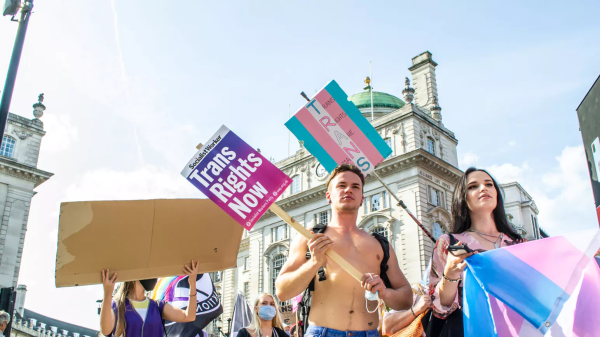
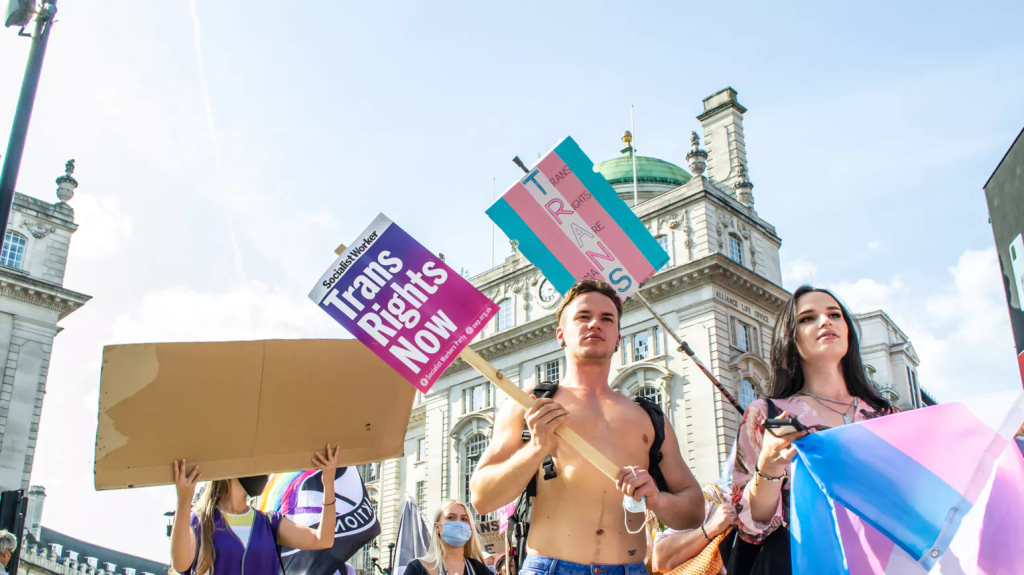
Over 100,000 people marched in London’s Trans+ Pride event on Saturday, making it the biggest trans Pride march in the world, according to The Guardian. The event’s theme, “Existence and Resistance,” was developed in response to the recent U.K. Supreme Court ruling that the legal definition of a woman in non-discrimination law is based on biological sex rather than gender identity.

“It was an emotional and powerful day,” the event’s co-founder Lewis G. Burton told the aforementioned publication. “At a time when the Supreme Court is making sweeping decisions about trans people without consulting a single trans person or organisation, and when a small, well-funded lobby of anti-trans campaigners continues to dominate headlines and waste public resources, our community came together to show what real strength, solidarity and care looks like.”

The march began at 1 p.m. local time on Saturday and proceeded for just under two miles, from near the BBC Broadcasting House to the Parliament Square Gardens. The event’s speakers included Heartstopper actress Yasmin Finney and activist Caroline Litman, whose trans daughter took her life in 2022 after waiting nearly three years for gender-affirming healthcare, the BBC reported.

London Trans+ Pride began in 2019 as an alternative to the city’s more commercial Pride march. This year’s event gained over 40,000 additional participants, compared to last year’s crowd of 60,000, the BBC noted.

“The message was clear: We will not be erased,” Burton said. “Our existence is natural, historic and enduring. You can try to take away our rights, but you will never remove us from society. We are a part of humanity – and the public will not stand by while harm is done to our community.”

The event occurred in the aftermath of a recent Supreme Court case in which For Women Scotland (FWS), an anti-trans organization, mounted a legal challenge over the definition of a woman under the country’s 2010 Equality Act. After the court ruled that the law’s definition of a woman is based on “biological sex,” the U.K.’s Equality and Human Rights Commission (EHRC) said trans women and men “should not be permitted to use” the public restroom facilities that align with their gender.

Alex Parmar-Yee, from Trans+ Solidarity Alliance — one of the groups that marched in the weekend event — said the EHRC’s guidance “has not provided any additional clarity, and actually is going to devastate the lives of trans people [who] will lose access to essential services and spaces.”

“The main concern really here is that it feels like there’s not been a consideration of trans members of the community, and that this guidance will pass behind closed doors, without the scrutiny, and without visibility, and without democracy,” Parmar-Yee added, saying that she and other trans organizations are pushing for the government to provide greater transparency around trans-related policies and guidances.

Speaking with Attitude magazine, activist Litman expressed concern over The Online Safety Act, a newly enacted U.K. law that requires websites with explicit adult material to conduct user age checks. Critics of the law worry it’ll be used to block age-appropriate LGBTQ+ resources for minors.

“It’s really scary,” Litman said. “[My late daughter] Alice got a lot of help and support online, whilst feeling very isolated in her own lived experience world that didn’t really have anything for her. Her online world really protected her – and so both these legislations are really concerning and need to be seriously looked at for reversal.”

When asked what she would tell her daughter now, Litman said, “Find your community. That’s what I’d say – find your community. Because they’ll save you, they’ll look after you, they’ll nurture you and support you and get you through this. To do this together. That’s what I’d say to her. And I love her. Love. I love, I love, love, love, I love.”

Judge bizarrely rules that police at a Pride parade threatened the safety of transphobes

Read more at LGBTQ Nation.

Just days before this weekend’s Pride parade in Northumbria in Northern England, a judge ruled that the local police department’s chief constable wrongfully allowed uniformed officers to march under a Progress Pride flag at last year’s celebration.

In a controversial decision critics say is riven with bias, the judge claimed officers marching with the flag breached their duty to impartiality and endangered imagined protesters with “gender critical” views.

The judicial review was brought by a female event participant who objected to police officers “associating with messaging which was supportive of the cause of gender ideology,” The Times of London reported.

In her challenge, plaintiff Lindsey Smith highlighted a decision to allow officers to station a police van decorated in colors “indicative of support for the cause of gender ideology… namely the colors of the Progress flag.”

The “messaging which was supportive of the cause of gender ideology, including in the form of placards, chanting, imagery or flags,” was a threat to her personal safety, she said.

The judge in the case, Mr. Justice Linden, agreed, ruling it was “contrary to the uniformed officers’ duties of impartiality”, as well as the chief constable’s “own duty of impartiality, to participate in the 2024 march in the way that they did.”

“The fact that they wore their uniforms, marched as a contingent and carried the Police Pride and other flags demonstrated their support for the cause as police officers,” the judge said, and by extension indicated hostility to those with “gender critical” views.

“It is not hard to imagine circumstances in which officers in question might be called on to deal with a clash between gender critical people and supporters of gender ideology, and therefore situations where the former had cause for concern as to whether they were being dealt with impartially,” the judge wrote.

The judge implied this “perceived” bias would influence officers’ decisions to permit “gender critical” people to demonstrate at all and could result in attempts to “eject a gender critical person from the march.”

Smith’s lawyer, Paul Conrathe, said the ruling was of “national importance.”

Referring to so-called “gender ideology,” Smith said British police “must be above the fray and avoid taking sides” on what he called “contested issues.”

Northumbria police responded that their “primary aim” during last year’s march was “to keep people safe.” The event also provided the force “with an opportunity to engage with people including those who may have less confidence in policing,” they said following the ruling.

The department added that senior Northumbria officers would “work through the ruling to understand the implications.” They did not clarify whether officers would be allowed to march in the Pride parade this weekend.

Trans woman swims topless at meet to protest being forced to compete against cis men

*This is reported by LGBTQ Nation

Anne Isabella Coombes, a 67-year-old transgender female swimmer, swam topless with her breasts exposed at the Cornwall County Masters swim meet as a protest to being forced to compete with cisgender men by Swim England, the UK’s governing body overseeing the country’s competitive swimming.

Swim England told Coombes she was no longer eligible to compete in the women’s category, despite her doing so in 2022 and 2023. So the organization placed her in a new “open” category where trans female and nonbinary competitors swim against cis men. Swim England replaced its men’s category with its open category starting in September 2023, to “negate… post-puberty transgender females[‘]… biological level of performance advantage post-transition,” the organization wrote.

“It is widely recognised that fairness of competition must be protected and Swim England believes the creation of open and female categories is the best way to achieve this,” the organization said upon announcing the new policy. “The updated policy ensures there are entry-level competitive opportunities for transgender people to participate in the majority of our disciplines within their gender identity.”

When Coombes asked what she’d be required to wear during swim meets in the “open” category, Swim England informed her that she would “need to wear a female swimming costume despite having to compete with the men, which ‘outs’ me as a woman who is transgender,” she told The Reading Chronicle.

“I explained to the person on the phone that they are not allowed to do that, and he didn’t have an answer,” she added, saying that the swimsuit requirement compelled her to stop competitively swimming until 2025. She only resumed in order to protest Swim England’s policies, which say that competitors’ swimwear must be in “good moral taste.”

She said the organization told her that she can swim in a men’s swimsuit without having to ask in advance for a referee’s permission, but that the referee can disqualify her if they choose.

“Deciding on whether exposing my breasts is in ‘good moral taste’ or whether I need to cover them up so that ‘those involved in competitive swimming are appropriately safeguarded’ is an entirely subjective decision of the referee,” she told the aforementioned company.

“In other words, I could turn up to the competition and run the risk of not being able to compete in whichever costume I intend to wear,” she continued. “No other swimmer has this concern. These regulations also mean that Swim England is treating me as a male by default.”

The Reading Chronicle didn’t say whether the referee disqualified her for her protest.

“I’m trying to show the world that this policy isn’t thought through, and it’s meant to hit trans people and nobody else,” she said. “I want to make it clear through this protest that trans people are not a threat when it comes to sport. We aren’t winning everything, and if we started to, then I would be first in line to discuss other options. Right now, it is a non-issue.”

Numerous competitive sports’ governing bodies have recently changed their policies to ban trans women from competing against cis women in the name of fairness — despite previously having policies that allowed trans athletes using hormone therapy to compete with members of their own gender identity.

Critics of these policies say that they mostly harm female athletes who could be subjected to invasive medical investigations in order to prove their gender. Critics also say that these policy changes add to social stigma that vilifies trans female athletes as a threat to women’s rights and do nothing to address the sexism, abuse, and lack of funding that actually harm cis female athletes.

Coombes said she has been protesting against the recent UK high court ruling that the legal definition of a woman under the country’s 2010 Equality Act is based on “biological sex.” Though the court has said that trans women still have anti-discrimination protections under the law, the UK Human Rights Commission said in a confusing “guidance” that trans women can be excluded from “women-only” spaces in hospitals, shops, and restaurants, and trans men can be excluded from “men-only” spaces.

Coombes has spoken at protests against the ruling and told the aforementioned publication, “Most trans people just want to get on with their lives and be treated as the gender they are. But unfortunately, given what the Supreme Court has done, we need to stand up and say ‘I’m trans, I exist, and you’re not going to silence me.’ Existence is resistance.”

Starmer told UK must repeal hate speech laws to protect LGBT+ people or lose Trump trade deal

*This is being reported by The Independent on MSN.

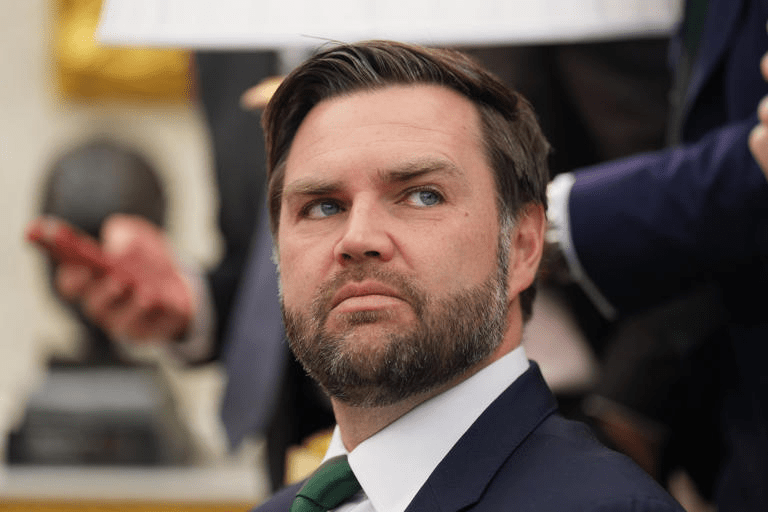
Sir Keir Starmer must embrace Donald Trump’s agenda by repealing hate speech laws in order to get a trade deal over the line, sources close to JD Vance have told The Independent.

The warning came after the US vice-president suggested a UK-US agreement may be close, with the White House “working very hard” on it.

He told UnHerd: “I think there’s a good chance that, yes, we’ll come to a great agreement that’s in the best interest of both countries.”

But allies of Mr Vance say he is “obsessed by the fall of Western civilisation” – including his view that free speech is being eroded in Britain – and that he will demand the Labour government rolls back laws against hateful comments, including abuse targeting LGBT+ groups or other minorities, as a condition of any deal.

The Independent was told: “The vice-president expressing optimism [on a trade deal] is a way of putting further pressure on the UK over free speech. If a deal does not go through, it makes Labour look bad.”

Mr Vance’s recent speech to the right-wing Heritage Foundation think tank was cited as an example of his views on Western culture and free speech being linked to securing an agreement.

“No free speech, no deal. It is as simple as that,” the source close to the vice-president said.

It is understood that Britain has already offered to drop its proposed digital services tax as a means of getting a trade deal through. But the US wants to see laws on hate speech repealed as well as plans for a new online safety law dropped.

Labour has made it clear it is not prepared to go that far. A Downing Street source said the subject “is not a feature of the talks”.

However, the issue seems to be one of the main sticking points from the White House’s perspective.

Talks began last month after Sir Keir visited Mr Trump in the White House and intensified earlier this month with the tariffs announcement. While tariffs have been suspended for 90 days, the hope is that a deal can be done before they are brought into force.

Downing Street is aiming not for a traditional trade deal, but one focused on growth industries of the future, such as biotech and artificial intelligence.

Ministers insist this will not mean Britain has to accept imports of chlorinated chicken or beef with hormones, which have long been cited as concerns. However, they hope it will see most, if not all, tariffs removed between the two countries.

While Mr Trump’s trade secretary Howard Lutnick has taken a leading role in the talks with UK business secretary Jonathan Reynolds, the president announced at the start that Mr Vance would take the overall lead in the negotiations. UK sources have said he has been at the forefront of the tech side of the talks.

This has put the issue of free speech front and centre for Mr Vance and his allies in getting a deal with the UK.

The issue has become a central problem in UK-US relations since the summer riots when Mr Trump ally and X (Twitter) owner Elon Musk launched a vitriolic social media campaign against Sir Keir and his government, with people arrested over tweets.

It continued when Sir Keir visited the White House for the first time since Mr Trump took power and clashed with Mr Vance in front of the TV cameras in the Oval Office. The vice-president claimed that free speech was being undermined and also claimed that laws being brought in for online safety were an attack on US tech giants.

Most recently, the trial of Isabel Vaughan-Spruce for silently praying outside an abortion clinic has become a major issue in the US, with Mr Vance criticising the UK legal system over the case.

In his interview with UnHerd, the vice-president expressed optimism about the talks.

He said: “We’re certainly working very hard with Keir Starmer’s government.

“The president really loves the United Kingdom. He loved the Queen. He admires and loves the King. It is a very important relationship. And he’s a businessman and has a number of important business relationships in [Britain]. But I think it’s much deeper than that.

“There’s a real cultural affinity. And, of course, fundamentally, America is an Anglo country.”

Meanwhile, Mr Reynolds on Tuesday said he had been clear with US counterparts that he did not support Mr Trump’s approach on tariffs.

But he said there is a need in some instances to look at how to rebalance world trade to ensure greater fairness.

He said: “I don’t support the kind of approach to unilateral tariffs that the US has pursued. We’ve made that very clear to our US friends and colleagues, but there are issues as to how parts of trading works around the word, and there is a need to look at how we can do that fairly: how we can consider where in some cases countries are not operating to the same rules that we might expect here in the UK?”

The Independent is the world’s most free-thinking news brand, providing global news, commentary and analysis for the independently-minded. We have grown a huge, global readership of independently minded individuals, who value our trusted voice and commitment to positive change. Our mission, making change happen, has never been as important as it is today.

Blog at WordPress.com.

Up ↑