Legal definition of woman is based on biological sex, UK supreme court rules

*This is being reported by The Guardian

The UK supreme court has issued a historic and definitive ruling that the terms “woman” and “sex” in the Equality Act refer only to a biological woman and to biological sex.

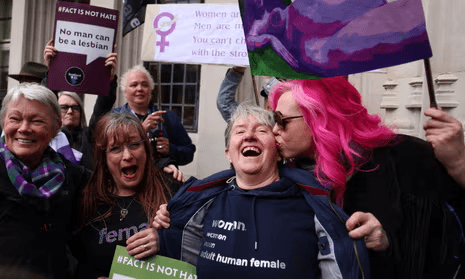
In a decision that delighted gender-critical activists, five judges ruled unanimously that the legal definition of a woman in the Equality Act 2010 did not include transgender women who hold gender recognition certificates (GRCs).

The judgment could have far-reaching ramifications and lead to greater restrictions on the access for trans women to services and spaces reserved for women. It prompted calls for the UK’s laws on gender recognition to be rewritten.

The UK government said the ruling brought “clarity and confidence” for women and those who run hospitals, sports clubs and women’s refuges.

A spokesperson said: “We have always supported the protection of single-sex spaces based on biological sex. Single-sex spaces are protected in law and will always be protected by this government.”

The case was brought to the supreme court by the gender-critical campaign group For Women Scotland, which is backed financially by JK Rowling, after two Scottish courts rejected its arguments that the Equality Act’s definition of a woman was limited to people born biologically female.

Lord Hodge, the deputy president of the court, said the Equality Act was very clear that its provisions dealt with biological sex at birth, and not with a person’s acquired gender, regardless of whether they held a gender recognition certificate.

That affected policymaking on gender in sports and the armed services, hospitals, as well as women-only charities, and access to changing rooms and women-only spaces, he said. However, trans women still have equal pay rights as women, and could have the right to be treated as women in some situations.

In its 88-page judgment, the court said that while the word “biological” did not appear in the definition of man or woman in the Equality Act, “the ordinary meaning of those plain and unambiguous words corresponds with the biological characteristics that make an individual a man or a woman”.

If “sex” did not only mean biological sex in the 2010 legislation, providers of single-sex spaces including changing rooms, homeless hostels and medical services would face “practical difficulties”, it said.

The justices added: “Read fairly and in context, the provisions relating to single-sex services can only be interpreted by reference to biological sex.”

The ruling represents a significant defeat for the Scottish government. For Women Scotland had initially challenged legislation that allowed trans women with a GRC to sit on public boards in posts reserved for women.

Scotland’s first minister, John Swinney, said his government accepted the court’s judgment. He said it clarified the limits of the Gender Recognition Act 2004, which introduced gender recognition certificates for trans people.

“We will now engage on the implications of the ruling,” he said. “Protecting the rights of all will underpin our actions.”

The Scottish government defended its actions in the case, which it said were always guided by the Equality and Human Rights Commission’s advice. It said it would now engage with UK ministers and with the EHRC to look at the ruling’s implications, since the legislation involved was passed by Westminster.

Trans rights campaigners urged trans people and their supporters to remain calm about the decision.

The campaign group Scottish Trans said: “We are really shocked by today’s supreme court decision, which reverses 20 years of understanding of how the law recognises trans men and women with gender recognition certificates.

“We will continue working for a world in which trans people can get on with their lives with privacy, dignity and safety. That is something we all deserve.”

Sacha Deshmukh, the chief executive of the human rights group Amnesty International UK, which joined with the Scottish government in the supreme court case, said the decision was “clearly disappointing”.

“There are potentially concerning consequences for trans people, but it is important to stress that the court has been clear that trans people are protected under the Equality Act against discrimination and harassment,” he said.

“The ruling does not change the protection trans people are afforded under the protected characteristic of ‘gender reassignment’, as well as other provisions under the Equality Act.”

Susan Smith, a co-founder of For Women Scotland, said the legal action had been “a really, really long road”. “Today the judges have said what we always believed to be the case, that women are protected by their biological sex,” she said.

“Sex is real and women can now feel safe that services and spaces designated for women are for women and we are enormously grateful to the supreme court for this ruling.”

In a social media post, JK Rowling said: “It took three extraordinary, tenacious Scottish women with an army behind them to get this case heard by the supreme court,” adding: “I’m so proud to know you.”

Hodge, the deputy president of the court, said it believed the position taken by the Scottish government and the EHRC that people with gender recognition certificates did qualify as women, while those without did not, created “two sub-groups”.

This would confuse any organisations they were involved with. A public body could not know whether a trans woman did or did not have that certificate because the information was private and confidential.

And allowing trans women the same legal status as biological women could also affect spaces and services designed specifically for lesbians, who had also suffered historical discrimination and abuse.

Kishwer Falkner, the chair of the EHRC, said it was pleased the ruling had dealt with its concerns about the lack of clarity around single-sex and lesbian-only spaces, but would need time to fully understand its implications.

“We are pleased that this judgment addresses several of the difficulties we highlighted in our submission to the court, including the challenges faced by those seeking to maintain single-sex spaces, and the rights of same-sex attracted persons to form associations.”
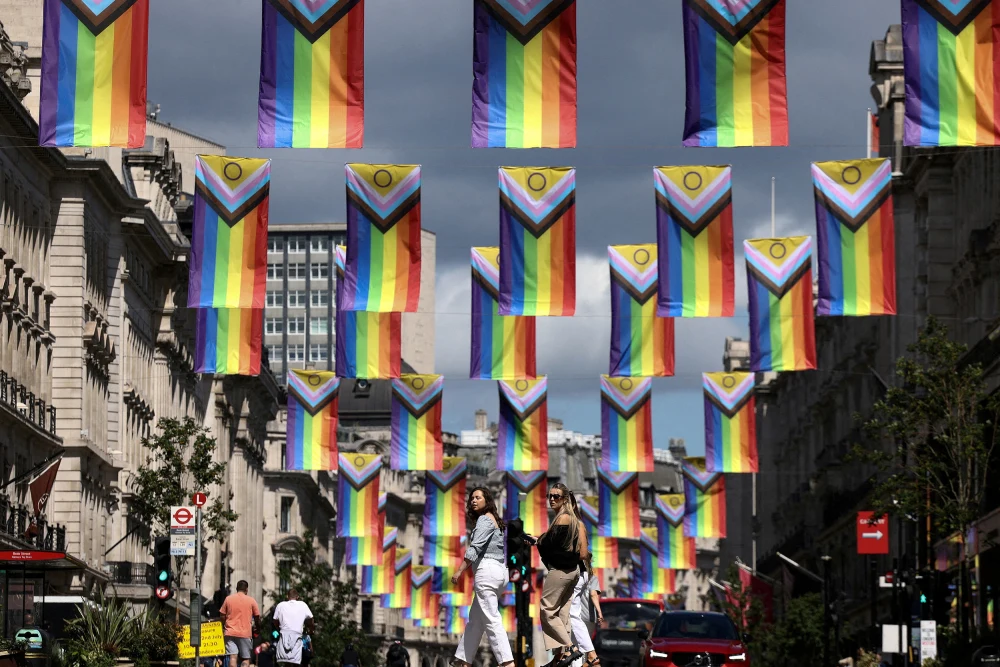
U.K.’s LGBTQ workers still feel pressured to ‘be less gay,’ report says

*This is reported by NBC News

LGBTQ professionals in Britain still feel pressured to downplay their identity at work, with some changing their appearance, voice or behavior to avoid discrimination or to be taken seriously, a new report said on Thursday.

Pride in Leadership, a network of LGBTQ business leaders, called for stronger rights protecting members of the community and urged companies to do more to stamp out homophobia and transphobia disguised as “banter.”

The not-for-profit, which surveyed 1,000 LGBTQ professionals between June and November of last year in its first such report, said 85% of respondents encountered career obstacles due to their identity.

It found that 34% of respondents said their identity negatively affected their earlier education, with some still feeling like they have to “be less gay” after being encouraged to suppress their sexuality when they were younger.

Over half said it influenced their career choices, prompting them to avoid certain sectors or roles due to fears of discrimination or lack of support.

“This research reflects what I’ve seen as a gay leader,” Matt Haworth, co-founder of Pride in Leadership, said. “From homophobia in meetings to being invited on trade missions to a country where I could be sentenced to death just for being me… the playing field is far from level.”

Haworth added, “Everyone deserves a fair chance to succeed — regardless of who they love or how they identify.”

Official data from the 2021 Census showed that around 1.5 million people in England and Wales identified as gay, lesbian, bisexual or another sexual orientation.

Scottish MP calls for visa for Americans fleeing Trump administration

*This is reported by The National.

Christine Jardine said she wanted to see a potential “fast lane” for skilled US citizens.

She presented a motion on “Trump and the UK’s place in the world” to the Scottish LibDem conference in Inverness, which was backed by party members.

It called for a new customs union with the EU and a summit of Commonwealth nations to respond to US tariffs.

Her motion also called for a “visa route to allow highly skilled Americans who wish to flee the Trump presidency to come to the UK”.

Speaking to the PA news agency about her motion, the Edinburgh West MP said: “I think if there are people in America who are unhappy with a lot of the things [Trump] is talking about domestically – the LGBT community for example, a lot of minorities – they have skills, we could welcome them here.

“And I think we would be a much more welcoming society for an awful lot of people who are finding America, at the minute, difficult.”

While visas are already available for US citizens, she said the Government should encourage Americans to take up a skilled visa route.

Jardine said: “Americans could do it at the moment, they could apply, we could create a special fast lane if you like for the Americans to do it.”

On Donald Trump’s trade tariffs, she said: “We need to stand up to him, we need to say we’re not going to be dictated to.”

Angry UK mob rampages trans picnic, burning Pride flag & threatening to stab people

*This is being reported by LGBTQNation.

Several men tore down Pride flags and threatened to stab several attendees of a transgender picnic event last Thursday — one man even burned one of the flags. Event organizers reported the incident to police but said that they didn’t expect a positive outcome.

The group behind the event, Trans Mutual Aid Manchester, held a “Trans Picnic in the Park” event in Platts Field Park from 4 p.m. to 8 p.m. last Thursday. Though the organizers said the picnic featured “sunshine and lovely food,” they also said a group of men tried to violently harass and intimidate picnic goers.

“The first pair tore down a Progress Pride flag we had raised to show where we were to people coming to the event, and after threatening to violently assault one of our members with a knife, had his partner burn the flag in front of our group, before leaving,” Trans Mutual Aid Manchester wrote in an Instagram post.

In a second incident, three men approached the picnic while “shouting abuse, then tore down the remaining trans and nonbinary pride flags before running off with them, the organization added.

“Whilst thankfully no one in our community was physically harmed, thanks in part to the intervention of several of our members, this blatant attack on our right to feel safe as a community is a disgusting display of the impunity and hatred with which parts of our society treat their trans siblings,” the Instagram post continued.

While organizers reported the incidents to police, they said that they “do not expect any positive outcome from this” and added, “This was an obvious attack on our community, perpetrated by those who know they will face no repercussions for their attack.”

“We hope this can be something of a wake-up call to know the kind of rampant abuse we face by those who know they can attack us freely.”

The organization said it would take additional safety and security measures for future events and asked for allies outside of the community to help defend trans and nonbinary individuals.

Anti-trans sentiment in the U.K. has increased over the last year following the release of The Cass Review, a report claiming that gender-affirming care has no benefits for trans youth. The report has been widely criticized for excluding the experiences of trans people and trans-affirming medical studies. Nevertheless, government officials have repeatedly cited the report while restricting access to gender-affirming care for trans kids.

Several European allies update travel advisories for LGBTQ travelers entering U.S.

*This is reported by Yahoo News.

Several European countries have updated their travel guidance for citizens visiting the U.S., including recent guidance for transgender and nonbinary travelers.

It’s common for countries to issue travel advisories or warnings for things like crime levels, terrorism threats, current conflicts, health concerns or natural disasters.

The U.S. issues its own travel advisories for Americans traveling abroad, but a number of other countries are doing the same for the U.S. These new advisories come as the Trump administration is tightening U.S. borders, cracking down on undocumented migrants and implementing a new federal policy to recognize male and female, rather than gender identity, as the only legitimate sexes.

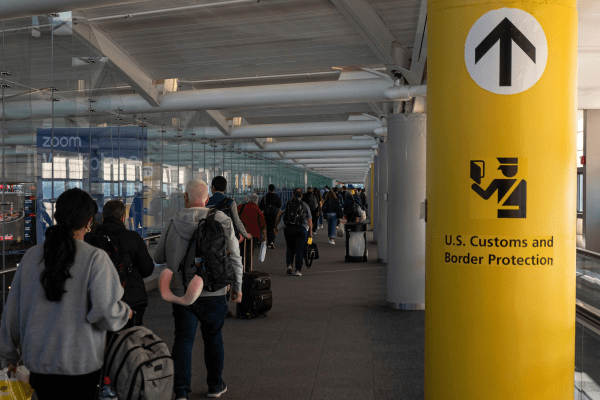
Canada, the United Kingdom and Germany have also updated their travel guidance for their citizens planning to travel to the United States after several tourists were detained by U.S. immigration authorities in recent months.

Travelers from many European countries and the U.K. can travel to the U.S. for business or tourism and stay for up to 90 days without a visa under the Department of Homeland Security’s Visa Waiver Program. But several travelers from countries within the program — like Canada, Germany, the U.K. and France — have been stopped and detained by U.S. immigration authorities within recent months.

Here’s what has transpired.

Nations with LGBTQ advisories for the U.S.

President Trump signed an executive order in January that says the federal government only recognizes two biological sexes: male and female. Per that order, a visitor applying for a visa or an Electronic System for Travel Authorization (ESTA) must declare their sex assigned at birth on the application forms.

European allies, including DenmarkFinlandGermanyIrelandthe Netherlands and Portugal, issued guidance that advises transgender and nonbinary travelers to contact the U.S. Embassy in their respective countries for more information on how to proceed if they wish to travel to the U.S.

Nations with other travel advisories for the U.S.

Canada

Recent tensions between the U.S. and Canada have risen over Trump’s trade war, not to mention his musings that he would make the northern ally the U.S.’s 51st state. Canada added new information under its U.S. travel advice page regarding the requirements for foreign nationals visiting for more than 30 days.

“Canadians and other foreign nationals visiting the United States for periods longer than 30 days must be registered with the United States Government. Failure to comply with the registration requirement could result in penalties, fines, and misdemeanor prosecution,” according to the Canadian government’s website.

The rule, enforced starting April 11, comes as part of an executive order signed by Trump, which requires all visitors staying for 30 days or longer to register with the U.S. government.

Germany

Last month, Germany updated its guidelines for its citizens looking to travel to the U.S. The European nation is investigating the cases of three of its citizens being denied entry and placed into detention by U.S. immigration authorities.

“Neither a valid [ESTA] authorization nor a valid U.S. visa constitutes a right to entry into the USA,” according to a translation of the German Foreign Office website. “The final decision regarding entry is made by the U.S. border official. It is recommended that you bring proof of your return journey (e.g., flight booking) upon entry.”

The office also warns of potential legal consequences. “Criminal records in the United States, false information about the purpose of their stay, or even a slight overstay of their visa upon entry or exit can lead to arrest, detention, and deportation.”

Two German nationals were detained in January as they were separately trying to cross the San Ysidro border between San Diego and Tijuana, Mexico, the New York Times reported. They have since returned to Germany with their cases resolved. A third remaining case involves a German national — who is a legal permanent U.S. resident who received a green card residency permit in 2008 — who was detained by ICE at Boston International Airport on March 7. He is now being held at the Wyatt Detention Center in Central Falls, R.I., NBC News reported.

The United Kingdom

The U.K. Foreign Office has updated guidance on its website in recent weeks for its citizens traveling to the U.S. It currently states, “You should comply with all entry, visa and other conditions of entry. The authorities in the U.S. set and enforce entry rules strictly. You may be liable to arrest or detention if you break the rules.”

Archived versions of the same website did not include potential legal consequences at the beginning of February and only stated, “The authorities in the U.S. set and enforce entry rules,” Reuters reported.

The Foreign, Commonwealth and Development Office did not explain the reason for the change.

The update comes around the same time a British tourist said she was held for more than two weeks in Washington state. Becky Burke, a 28-year-old from Wales, was backpacking through North America when she was allegedly denied entry into Canada on Feb. 26 “due to an incorrect visa,” according to a Facebook post by her father, Paul Burke. She was subsequently denied reentry into the U.S. and was detained at a facility in Tacoma, Wash.

Burke had stayed with a host family in Oregon, where she performed chores in exchange for food and lodging. She was told she violated her visa even though she was never paid. Travelers using a temporary visitor visa cannot accept work or employment in the country. Burke was repatriated back to the U.K. on March 18, according to U.S. Immigration and Customs Enforcement.

New Zealand

Last November, New Zealand updated its travel guidelines to the U.S. to “Exercise increased caution in the United States of America (US) due to the threat of terrorism (level 2 of 4).” The nation’s government travel website points to higher active shooter incidents and violent crime in the U.S. compared to New Zealand.

Blog at WordPress.com.

Up ↑