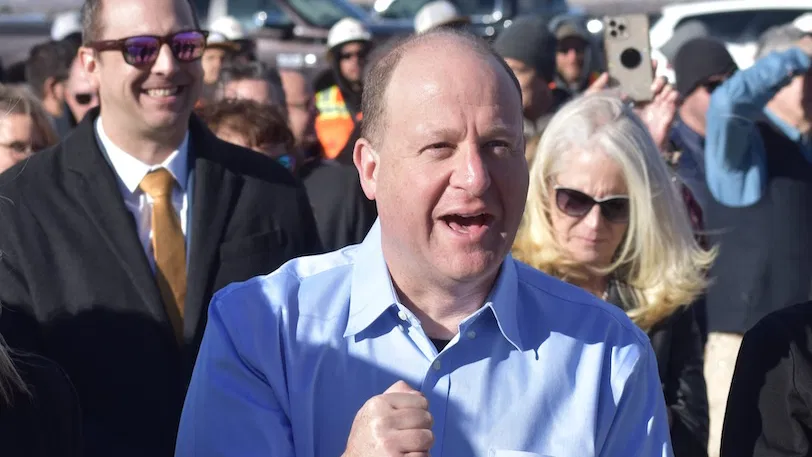
Colorado’s legislature has just passed a bill to curtail conversion therapy in the state. It now goes to Gov. Jared Polis‘ (D) desk. Polis is gay, has been supportive of LGBTQ+ rights in the past, and is expected to sign it.
The bill, H.B. 26-1322, or the Civil Actions for Conversion Therapy Survivors Act, would allow conversion therapy survivors to sue therapists for damages if they tried to change their sexual orientation or gender identity.
The bill defines conversion therapy as treatment provided by a licensed mental health professional with the “predetermined outcome” of changing someone’s gender identity or sexual orientation. This effectively keeps the bill from applying to members of the clergy or lay ministries – most conversion therapy in the U.S. is performed by religious organizations, not licensed therapists – and creates an exemption for discussions of LGBTQ+ identities that come up in therapy, a matter of contention in a recent Supreme Court case.
The legislation passed the state senate last week in a party-line vote after already passing the Colorado House of Representatives. The state senate amended the bill so it had to pass the state house again, which happened late last week, the Colorado Daily Camera reports.
The bill was introduced as the Supreme Court considered a challenge to Colorado’s previous ban on conversion therapy, passed in 2019. That ban on conversion therapy has never been enforced in the state, but a Christian therapist sued, saying that it violated her freedom of speech. She argued that it would ban her from even discussing LGBTQ+ identities with her clients, even though the state said repeatedly that it would not.
The Court ultimately ruled against the ban in Chiles v. Salazar, saying that it violated therapists’ First Amendment rights, and sent the case back to a lower court to reevaluate the law under a higher legal standard. Experts believe this means that Colorado’s 2019 conversion therapy ban – and bans like it passed in 26 other states and hundreds of municipalities – will likely eventually be overturned by courts.
The new bill is an attempt to circumvent the Court’s decision by treating it as a civil matter. The bill was introduced by state Reps. Alex Valdez (D) and Karen McCormick (D), and in the Colorado Senate by state Sens. Lisa Cutter (D) and Kyle Mullica (D).
LGBTQ+ rights advocates supported the bill, including trans National Center for LGBTQ Rights Legal Director Shannon Minter, who referred to the Supreme Court’s decision in Chiles as “specific guidance about how to amend conversion therapy laws to be viewpoint-neutral.”
“Given the urgency of this issue and the danger that conversion therapy poses to youth, Colorado moved swiftly,” he said. “Today this legislation is moving to the desk of Governor Polis and will protect Colorado’s youth and families from this discredited practice.”
“Colorado’s story is still being written, and today we took another step toward becoming a state where LGBTQIA+ people can live openly, safely, and fully as themselves,” said One Colorado executive director Nadine Bridges in a statement. “This victory belongs to the survivors, advocates, and community members who refused to let this issue be forgotten.”
Conversion therapy is a harmful practice based on the idea that LGBTQ+ identities are the result of trauma and that LGBTQ+ people need to fundamentally change who they are in order to be a good person. The practice has been linked to several harmful results, including anxiety, depression, eating disorders, and suicidality.
The Acceptance Academy Community School, a private, nonprofit middle school serving LGBTQ+ students, bullied youth, and those who struggle to thrive in traditional school environments, is now accepting applications for the August 2026 semester at its Boca Raton campus.
Serving students in grades 6 through 8, The Acceptance Academy is the first school of its kind in Florida and participates in the Step Up for Students scholarship (voucher) program.
“Students at The Acceptance Academy Community School will receive a strong academic foundation in a safe, inclusive, and welcoming environment,” said Stephen Gaskill, co-founder and president of The Acceptance Academy Foundation, the 501(c)(3) organization that operates the school. “We focus not only on academic excellence but also on character development, giving students the opportunity to learn and grow alongside peers who share similar experiences.”
The need for specialized, supportive educational environments is increasing. According to a recent report from the Gay, Lesbian, and Straight Education Network (GLSEN), many students reported a more hostile school climate during the 2024–2025 academic year amid heightened anti-LGBTQ+ rhetoric. Key findings include:
Two in three students reported feeling unsafe due to their sexual orientation, gender identity, or gender expression
Only one in three LGBTQ+ students frequently look forward to attending school
More than half (53%) experienced LGBTQ+-related discrimination, including restricted access to facilities aligned with their gender identity
“Students succeed when they feel supported—by both their peers and the adults around them,” said Dr. Mindy Koch, Ed.D., co-founder and principal of The Acceptance Academy Community School. “Our classrooms emphasize critical thinking, problem-solving, and real-world application, preparing students to navigate life with confidence.”
The school is located in the heart of Boca Raton and offers access to a state-of-the-art gym, music room, library, extracurricular programs, and after-school activities.
Applications are now open for the August semester. Small class sizes ensure personalized, hands-on learning, allowing every student to actively participate and excel. Students from Palm Beach and Broward Counties are welcome, whether transitioning from public school, private school, or homeschooling.
“There’s a real demand for a safe space for kids to learn and to be themselves and middle school years are particularly the time when kids are starting to grow. That’s why we’re focusing on that age area,” Gaskill said.
“Hopefully a school like this gives them the opportunity to figure out how to negotiate and work together with other people who are not totally like them and be successful in the world,” Dr. Koch explained.
But the idea of a school focused on LGBTQ+ students is also raising questions, including concerns about safety.
“What kind of security measures do you plan to have around the school? Because there may be people who would, you hate to say it, may want to act out against the LGBTQ community if they know a number of students are here,” we asked Gaskill. “Well, certainly we hope that that’s not the case, but we have significant security and the building is secure and I just want to leave it that,” he said.
We also asked people in the community what they think.
“The kids want it then I want it. But realistically speaking, I’m not sure that’s such a good idea. If you’re ridiculed in school, I think you have to learn with it when you’re that age,” said Richard Young, a Boca Raton resident.
“I think we need to support it as a community,” said Sal Cohen, a Wellington resident.
“I think it’s a wonderful idea and very needed,” said Donna Traum, a Boca Raton resident.
Tuition is approximately half the cost of many private schools in Palm Beach County. Tuition is $20,000 a year. With an $8,000 state voucher, families would pay about $12,000. The first day of classes for the 2026–2027 school year is Monday, August 10, 2026.
The Acceptance Academy Foundation also welcomes tax-deductible contributions from individuals and organizations to support its mission.
The Acceptance Academy Foundation was founded by Dr. Mindy Koch and Stephen Gaskill, both of whom bring decades of experience in education and public service and share a commitment to the school’s long-term success.
Dr. Mindy Koch has served in Florida’s education system for more than 40 years as a teacher, department chair, administrator, and principal across elementary, middle, and high school levels in Broward and Palm Beach Counties. An award-winning educator, she has developed curricula, managed faculty, and overseen institutional budgets. She also founded Educational Extra, Inc., a SACS-accredited nonprofit providing summer academic programs. Dr. Koch serves as principal of The Acceptance Academy Community School.
The European Parliament voted in favor of a ban on conversion therapy this Wednesday. The demand is now being sent to the European Commission for a response.
The move comes after the European Citizens’ Initiative successfully petitioned the European Parliament to take up the issue. Starting in 2024, the ECI gathered over 1.2 million signatures from EU citizens to ban conversion therapy.
The European Economic and Social Committee (EESC) held a debate on the matter earlier this week, which resulted in the committee adopting two opinions, one calling for stronger enforcement of the EU’s LGBTIQ+ Equality Strategy 2026–2030 and the other calling for a ban on conversion therapy throughout the EU.
While seven member states ban conversion therapy, including France, Portugal, and Spain, speakers at the EESC pointed out that conversion therapy is still practiced in parts of the EU.
“These so-called conversion practices or therapies are not only harmful, they are a profound violation of human dignity and fundamental rights,” said EESC President Séamus Boland during the debate, according to an EESC release. “Let us be absolutely clear: there is nothing to fix or cure. What needs to change is not people, but the systems, attitudes, and structures that deny them their dignity.”
Graeme Reid, the United Nations independent expert on sexual orientation and gender identity, also spoke during the debate, saying that banning conversion therapy is key to the EU meeting its human rights obligations and that “every person has the right to live free from coercion, fear and shame.”
Colorado Governor Jared Polis (D) has signed a law to protect trans children by sealing name changes for those who are under 18 when they file for one. The legislation will protect trans children
“Passing this bill is simple, but its impact is profound,” Colorado state Senator Katie Wallace (D), a sponsor of the bill, said in February. “It gives children the safety and dignity they deserve, and it treats their private life with the same care we afford in other sensitive cases.”
Colorado’s Senate Bill 18, “Legal Protections for Dignity of Minors,” simply makes it so that starting July 1, when anyone who is under 18 years old petitions for a name change, the court is required to suppress the record. That means the petition will not be part of the public record and cannot be collected through searches or data harvesting.
The only exception to the process is if the petitioner was previously convicted of a felony.
While the court will keep a record for administrative purposes, it cannot publish the petitioners’ names or their deadnames. The record can only be accessed by the petitioner or by someone who has obtained the petitioner’s verbal consent and submitted an affidavit to that effect.
The bill will easily benefit anyone who might want to change their name as a child, whether to have a name they feel more connected to or to distance themselves from a family name. While the language of the bill itself does not mention trans people, it will have a huge impact for trans kids, which has always been the mission of the legislation.
At a senate committee hearing in February, Z Williams, co-director of Bread and Roses Legal Center, spoke of how a parent thought someone in their child’s class might be trans and was able to search for their name change document online and out the second grader to the school, Colorado Newslinereported.
Williams said the parent “exposed that child is transgender in second grade to the entire school community through flyers and through her own children, not only practicing hate herself, but teaching others how to. That is why we asked the senators and representatives to run this bill.”
At the same hearing, Elsie Fierro, the political and policy director at LGBTQ+ advocacy organization One Colorado, shared the story of a Colorado family who had petitioned for a name change on behalf of their trans child. But when they searched the new name online, a search engine returned results that included the child’s deadname along with identifying information that had been scraped from public court documents. “That family spent months trying to remove it and protect their minor child in an increasingly hostile political climate. This is the reality some families are navigating,” Fierro told the committee.
In the face of Republican opposition, state Sen. Wallace said, “This bill will protect children from AI data-scraping of those public records, the potential of bullying if they should be found and from hostile individuals in the wider world.”
The bill was originally intended to do even more good, but had a section stripped from it in February. It originally sought to instruct family court judges to consider acceptance of a child’s gender identity when determining custody cases. Several studies, including one by The Trevor Project, have linked trans children being connected to accepting adults to lower risk for depression and suicide attempts.
The custody clauses had originally been included in an earlier bill, HB 1312, which passed last year and introduced legal protections for trans people against deadnaming, misgendering, and more. However, they were removed before it passed after LGBTQ+ groups raised concerns that the language could erode existing protections.
For SB 18, the clauses had been reworked, but Polis threatened to veto the bill unless the clauses were removed, claiming to have received word of similar concerns once again. However, state Sen. Wallace and Williams both suggested that Polis’ view of the provisions being “substantially the same” was incorrect and that they had been amended to assuage concerns.
Colorado Republicans have opposed this bill and other pro-trans legislation, pushing anti-trans bills in their place. However, Democrats currently hold a supermajority in the state and have been defending trans rights with new protections.
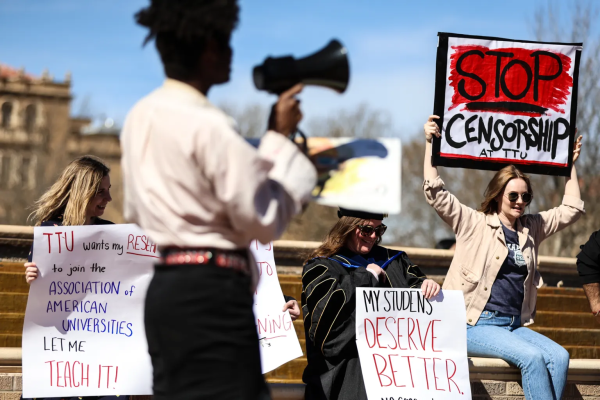
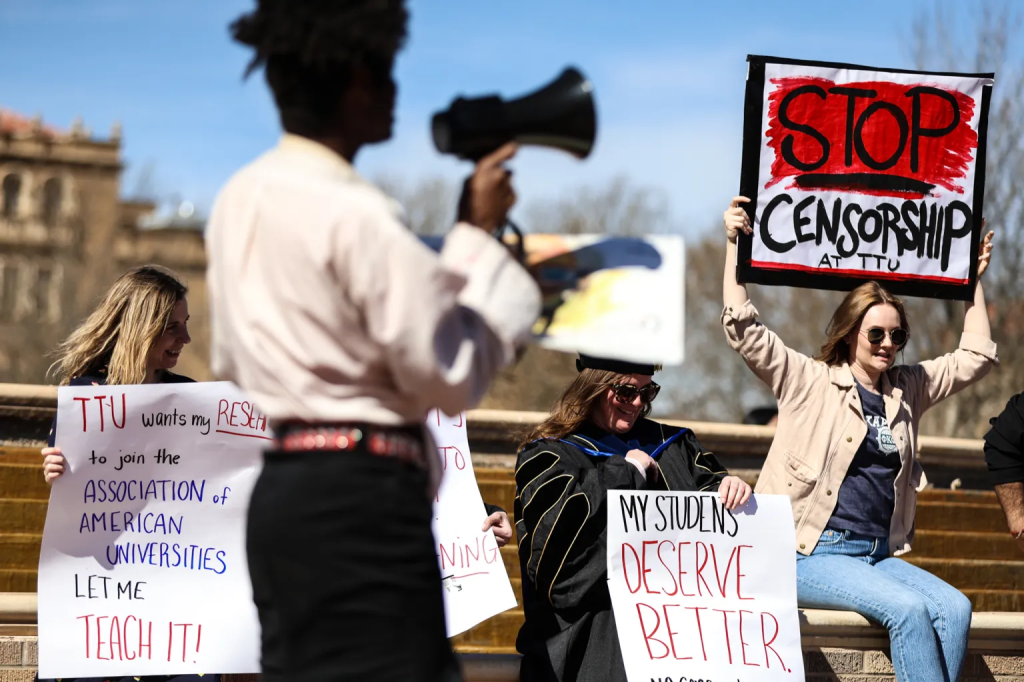
Texas Tech University System’s chancellor on Friday ordered campuses to phase out academic programs “centered on” sexual orientation and gender identity — a dramatically expanded policy that also places limits on what can be researched and which faculty can be hired.
Chancellor Brandon Creighton’s memo gives provosts until June 15 to identify targeted programs and requires the system’s five universities to freeze admissions and halt students from declaring majors in the phased out programs. Students already enrolled can finish their degrees.
Offerings that appear most likely to be affected include Texas Tech University’s women’s and gender studies undergraduate minor and graduate certificate, as well as women’s and gender studies minors at Midwestern State University and Angelo State University.
The memo also says graduate theses and dissertations may center on gender identity and sexual orientation only as a temporary exception for currently enrolled students and that future faculty hiring will “prioritize recruitment in alignment with this memorandum.”
Faculty, it says, must recognize only “two human sexes” and not teach gender identity as a spectrum or more than two genders as fact — policies Creighton introduced last year.
In core and lower-level undergraduate courses, the memo says instructors generally cannot assign materials that are “centered on” or “include” sexual orientation or gender identity and defined the concepts:
“Centered on” is when course content, readings, assignments or lectures that have sexual orientation or gender identity “as the primary subject, main theoretical framework, central narrative or driving pedagogical purpose.”
“Includes” means “these themes are present, but serve only as secondary background context, demographic data points, or minor components of a broader academic subject.”
If an industry-standard textbook contains such content, the memo says faculty do not have to redact it, but they cannot highlight it, test students on it or spend class time on it.
The memo makes some exceptions for upper-level undergraduate and graduate courses, including analysis of active public policy and legal disputes, historical subjects such as the AIDS epidemic where sexual orientation or gender identity is inseparable from the topic, datasets that include those variables and some clinical, counseling or psychology instruction.
The memo also says “currently employed faculty members may continue to research and publish topics of their choosing,” but future faculty will be recruited and hired in accordance with the memo’s priorities.
Jen Shelton, an associate professor of English who has taught at Texas Tech for 25 years, said the provost’s office had repeatedly assured faculty that their research would not be affected. She said this feels like a “betrayal.”
“The good news is I think the whole university has been betrayed. I think even the provost did not expect it to look like this because it’s people from the provost’s office who have been coming to us and saying, ‘Don’t worry. This part is all going to be fine,’” Shelton said in an interview with The Texas Tribune.
Cailyn Green, a Texas Tech junior studying human development with a minor in community, family and addiction science, said the memo left her feeling that the university can no longer provide “an honest education.”
Green said one of her professors would not answer in class whether material about racial disparities in pregnancy outcomes would still be taught, instead asking to discuss it privately.
“At the rate that we’re going, I’m not going to be able to continue learning everything that I need to know in my degree, and I won’t be able to help people,” said Green, who works in Section 8 housing, helping low-income residents connect with food, health care and other assistance.
Paul Ingram, a Texas Tech associate professor of psychological sciences, said students had been calling him all day, some saying they regretted coming to Texas Tech. He said a graduate student had already dropped out because of the earlier memos and another graduate student is writing a dissertation on gender that, under the new policy, could not be proposed again.
He said faculty across the university are openly discussing looking for other jobs.
“Everyone sees that the grass isn’t always greener on the other side, but this grass is looking pretty dead,” Ingram said.
Antonio Ingram, a senior counsel at the NAACP Legal Defense Fund, said the memo appears to target perspectives involving gender identity and sexual orientation for political reasons, not academic purposes, raising serious constitutional concerns because public universities cannot discriminate based on viewpoint.
Antonio Ingram also questioned the memo’s prohibition against teaching “as absolute truth” that people are inherently racist, sexist or oppressiveand that “individuals bear responsibility or guilt for actions of others of the same race or sex.” Ingram said there is no definition of “absolute truth,” creating vagueness that may deter teaching about systemic racism, reparations and the history of enslavement.
“I think in many ways, this is a doubling down on a political project that is not meant to help students. It is really meant to uphold a political worldview that, you know, Chancellor Creighton couldn’t enact legislatively and is now doing through his role as chancellor,” Ingram said.
In a statement, Creighton said he and the system’s regents are “focused on ensuring our academic programs are rigorous, relevant, and produce degrees of value.”
“That focus is matched by our unwavering support for the First Amendment and the open exchange of ideas that define a public university. Texas Tech will continue to be a national leader on both fronts,” he said.
Some students have supported the system limiting classroom discussion of sex and gender. In an October interview with the Tribune, Preston Parsons, president of the campus Turning Point USA chapter, said he believed the policy protected students and that professors who disagree should speak up outside the classroom.
“There’s a right and a wrong way to do everything, and I don’t believe the classroom is the right place to do that,” said Parsons, who wasn’t available to comment on Friday’s memo.
Creighton served nearly two decades as a Republican state lawmaker and authored major higher education reforms before he became chancellor in November. In December, he ordered faculty to submit for review course content touching on race, sex, gender identity and sexual orientation. If campus leaders wanted to keep the information in a course and it was not required for professional licensure, certification or patient care, they had to forward it to the Board of Regents for final review. Regents were expected to take up the issue publicly at their Feb. 26 meeting but did not, leaving professors in limbo.
Speaking at the Texas Public Policy Foundation’s summit in Austin on Thursday, Creighton said Texas Tech had “built an AI algorithm” to help review courses and would release findings within days.
At the summit, Creighton said what some faculty call “academic drift” had left “quite a bit of garbage in curriculum” on university campuses across the country. He said the Texas Tech University System has “a very good plan in place” to address that.
“I believe it will produce the best curriculum in America, and I believe it will be a national model once we’re finished,” he said.
In a news release Friday, the system said that of the 1,403 courses initially identified, only 92 were reviewed by the board of regent’s Academic, Clinical and Student Affairs Committee and fewer than 60 were recommended for modification. Another 299 were “proactively modified” before reaching the committee.
Creighton has framed the push at Texas Tech as a way to steer the university toward degrees that lead to high-paying jobs in high-demand fields. He made the same arguments for bills he wrote in 2023 to ban diversity, equity and inclusion in higher education and in 2025 to expand regents’ control over curriculum.
Shelton said that view misses a central role of college, which is to teach students how to interpret the world around them, ask hard questions and think through unfamiliar problems. This memo, she said, “impoverishes” students “not just as future workers, but as human beings.”
Authorities have charged a Utah transgender woman with kidnapping her own 10-year-old child.
According to an April 21 press release issued by the U.S. Attorney’s Office for the District of Utah, Rose Inessa-Ethington and her partner, Blue Inessa-Ethington, have been charged with International Parental Kidnapping for allegedly taking Rose’s daughter, who is also trans, to Cuba without the consent or knowledge of Rose’s ex-wife, with whom she shared custody.
As the Washington Blade reports, in an affidavit filed on April 16, FBI Special Agent Jennifer Waterfield alleges that the 10-year-old, identified as “Minor Victim 1” (MV 1), traveled to Canada with the Inessa-Ethingtons and Blue’s 3-year-old child on March 28 for a planned camping trip. But, Waterfield’s affidavit alleges, the group never arrived at either their hotel or the campground, and after MV 1 contacted her mother on March 28, the Inessa-Ethingtons were unreachable.
The group allegedly flew from Vancouver to Mexico City on March 29, and from there to Havana, Cuba, on April 1, which was confirmed by Mexican immigration authorities, according to the affidavit.
Rose Inessa-Ethington’s custody agreement with her former spouse, identified in the affidavit as “LB,” stipulated that MV 1 would be returned to LB on April 3. According to Waterfield, this never happened. According to Waterfield’s affidavit, “Interviews of MV 1’s family members provided significant concerns for MV 1’s well-being, as MV 1 was born a male, however, identifies as a female child, which is largely believed to be due to manipulation by Rose Inessa-Ethington. Concerns exist that MV 1 was transported to Cuba for gender reassignment surgery prior to puberty.”
Cuba’s national healthcare system has provided free gender-affirming surgeries since 2008, but the AP notes that gender-affirming surgery is banned for minors in the Caribbean nation. Gender-affirming surgery is difficult for adults to access in Cuba.
Upon searching the Inessa-Ethingtons’ home, authorities found “to-do” lists that included items like “Confirm Cuba limit- 100lb/50lb/1 bag/ 2 bags,” and “empty USU bank.” They also found a note that allegedly included instructions from a Washington, D.C., mental health therapist “on gender affirming medical care for children.” The affidavit does not specify whether this note included any information about gender-affirming surgeries, and it is unclear whether MV 1 was already receiving gender-affirming medical care.
A 2023 Utah law banned gender-affirming surgeries for minors — despite such surgeries being exceptionally rare — and instituted an indefinite moratorium on providing puberty blockers and hormone replacement therapy (HRT) to minors for the purposes of gender-affirming care.
In her affidavit, Waterfield said that she believed that “due to the extensive planning and preparation exhibited by both Rose Inessa-Ethington and Blue Inessa-Ethington to isolate MV 1 and take MV 1 to Havana, Cuba, without notifying or requesting permission from MV 1’s mother indicates they are likely not planning to return to the United States with MV 1,” and requested an arrest warrant for both parties.
As the U.S. Attorney’s Office for the District of Utah notes, a judge in Utah ordered MV 1 returned to LB and granted her sole custody on April 13. Authorities in Cuba located the Inessa-Ethingtons on April 16, and they were later deported back to Richmond, Virginia, on a Department of Justice plane, where they were arraigned.
“We decided to call her ‘Amada’ because she came into our home to be cherished,” said Lorena Bonilla, whose transgender daughter was recently authorized to change her identity documents under a ruling by Ecuador’s Constitutional Court.
Her case — alongside another decided in March — has opened the door for Ecuadorian adolescents seeking to modify their name and sex in official records. Adults gained that right after years of advocacy efforts culminating in a 2024 reform.
“In Ecuador there are still political, religious and social sectors that portray gender recognition for adolescents as a threat,” said Cristian González Cabrera, an LGBTQ+ rights researcher at Human Rights Watch. “That climate can translate into institutional hostility, delays and unjustified denials.”
Bonilla and her daughter, 17, experienced that firsthand in 2018. Their legal battle began when Amada was 9 and school authorities refused to admit her because her legal documents did not match her gender identity.
“We went through 14 schools and none would take her in,” Bonilla said. “We then knew we needed to change her name.”
A court initially granted Amada the right to modify her identity documents. But the civil registry appealed the decision and a higher court later ruled that her passport and ID card should reflect her birth name and sex.
“It was a step backward for our rights,” Bonilla said.
LGBTQ+ rights in Ecuador have largely been shaped by court rulings rather than by lawmakers or government officials. A similar dynamic has unfolded in other Andean countries such as Colombia and Peru.
“The legislative and executive branches represent the country’s broad majorities, yet LGBTQ people are often overlooked,” said Christian Paula, president of the Pakta Foundation, which provides legal support in cases like Amada’s. “Turning to the courts reflects a lack of openness and sensitivity within our institutions.”
Among Ecuador’s most important advances in LGBTQ+ rights, three have come through the courts. They include the decriminalization of homosexuality in 1997, a 2009 ruling that allowed an Ecuadorian transgender woman to change her name, and the legalization of same-sex marriage in 2019.
Those court decisions sparked a backlash from right-wing and religious groups.
In a post on X following the Constitutional Court’s 2026 rulings, André Santos, president of one of Ecuador’s most vocal conservative groups, said the court had overstepped its authority. He has also spoken against school protocols allowing students to use uniforms and bathrooms that align with their gender identity.
The country’s Catholic bishops conference also expressed concern over the court’s action. “Allowing adolescents to make decisions of this nature poses serious risks to their overall development,” it said.
President Daniel Noboa has not been as outspoken against transgender causes as some other conservative leaders in Latin America, but his administration has shown little support for LGBTQ+ rights.
As a candidate, he pledged to defend the traditional family. Since taking office, violence and economic instability have overshadowed gender and diversity issues in his political agenda.
“What worries us are his ministers,” said Diane Rodríguez, a lawyer and president of Ecuadorian LGBTQ+ organization Silueta X.
Rodríguez, a trans woman, pointed to officials in the Education Ministry, including current minister Gilda Alcívar, who has rejected the inclusion of what she calls “gender ideology” in education. That climate, Rodríguez said, is reflected in her daily interactions.
From Guayaquil, where she raises a 4-year-old daughter with her partner, a trans man, Rodríguez has faced difficulties at her child’s school.
“We had trouble enrolling her because people see me and assume I’m going to turn children transgender because of how I look,” Rodríguez said.
Throughout her career, she has provided legal support for people facing sex-based discrimination and backed a program providing hormone treatment for trans people. Her work has also focused on raising awareness about violence against her community.
Silueta X publishes an annual record of killings of LGBTQ+ people. Its first report in 2013 documented two killings and the numbers have risen every year. The 2025 publication reported 30 deaths, 21 of them trans women.
Amada told her parents that she was a girl at age 3. She asked for a princess-themed birthday party. But Bonilla and her husband — both raised Catholic — assumed she was confused and dressed her as a prince instead.
It took them a few years to understand their daughter and dismiss psychologists who said something was wrong with her or that they had done a poor parenting job.
“Comments can be ruthless and people have no idea what families like ours go through,” said Mauricio Caviedes, Amada’s father. “I hope education on this issue changes so people can understand.”
As they learned more about the trans community, their fight to modify Amada’s identity documents evolved into a broader cause. Bonilla and Caviedes became activists, bringing their kids with them to protests and conferences. They supported other LGBTQ+ causes such as same-sex marriage and founded an organization for families of trans children like their own.
“That became the only way we could fight the state,” Bonilla said. “We were 25 families with transgender children of different ages, the oldest being 12.”
Her family moved to Canada during the COVID-19 pandemic. And while she treasures how welcoming their new home has been for her daughter, she keeps advocating for LGBTQ+ rights in Ecuador.
Amada, now a strong student who dreams of becoming a nurse, was shaped by years of watching her parents support trans friends and community members struggling to access health care without discrimination. She has never appeared publicly on camera, but the visibility of her case feels like a lifelong legacy for Bonilla.
“People think the destiny of transgender people is to become sex workers or live in hiding,” Bonilla said. “But we want every parent to know that one day their child can become whatever they want to be.”
Idaho Gov. Brad Little (R) signed a severe anti-trans bill into law last Friday that will require child care providers, health care providers, and educational institutions to out trans kids to their parents if they express any desire to act in a way perceived as discordant with their sex assigned at birth.
The Pediatric Secretive Transitions Parental Rights Act, which will take effect in July, bans folks who care for minors “from facilitating a pediatric sex transition or social transition without informing and obtaining informed consent from a minor child’s parents or guardians.”
The bill aims to close a “loophole” in the state’s anti-trans laws, as cosponsor state Sen. Ben Toews (R) reportedly put it during the state Senate’s debate on the legislation. That loophole, Toews said, is the fact that the state’s gender-affirming care ban does not cover social transitions, which he referred to as “the process by which vulnerable children are led into the pipeline.”
The legislation defines social transition as “the process by which an individual goes from identifying with and living as a gender that corresponds to the individual’s sex to identifying with and living as a gender different from the individual’s sex and may involve social, legal, or physical changes, including adopting a name, pronouns, appearance, or dress that does not correspond to the individual’s sex.”
The covered entities, then, must notify a student’s parents within 72 hours if they request to be referred to using new pronouns or a different name than their legal name; if they ask to use facilities like bathrooms and locker rooms that don’t correspond with their sex assigned at birth; or if they ask to join a sports team that does not align with their birth sex.
Not doing so, the bill says, means “aiding and abetting” a child’s transition before parental consent is obtained. Parents will also be allowed to sue entities for violating the bill, and the attorney general will be authorized to seek civil penalties of up to $100,000.
Democrats argued against the bill for its vague language and the possibility that it would put children with unaccepting families in unsafe situations.
“When we write these bills, we write these statutes, we’re writing them for all families,” argued state Sen. James Ruchti (D), according to the Idaho Statesman. “And so when nurses, when doctors, when educators, tell us we need a little room to be able to handle these situations carefully… and being required to report this within 72 hours takes that out of our hands, and it means that we have to possibly go to a family… and tell them something that that family may not be in a great place to hear.”
State Sen. Melissa Wintrow (D) called the bill “one more that’s just overcontrolling overreach and just goes far beyond what’s necessary.”
“Life isn’t that black and white,” she said.
A lone Republican, state Sen. Jim Guthrie, spoke out against the bill, saying it will “force our teachers to be tattletales” and “put additional stress on teachers that are already stressed… already overworked, and more and more they have to deal with laws like this that are going to force them within 72 hours to make a judgment.”
After the legislature passed the bill, ACLU of Idaho spokesperson Rebecca De León called it an “example of unconstitutional, big government overreach into our private lives.”
“HB 822 threatens to undermine bedrock free speech protections for students, teachers, and health care professionals and is clearly unconstitutional,” she said. “Politicians who stand for small government and personal liberties should not regulate how people dress or express themselves.”
Jane Migliara Brigham, a writer for trans news publication The Needle, slammed the bill for turning doctors, teachers, and the like into “a kind of gender secret police.”
“The language is written such that there is no clear limit on what does not constitute social transition,” Brigham explained. “As a result, whether or not some behavior which is not listed here actually constitutes social transition will be in the eye of the beholder, or more accurately, in the eye of whoever is reporting the behavior to the child’s parents. This ambiguity leaves room for personal judgment, especially where that judgment is informed by anti-trans bigotry.”
Brigham questioned whether a boy wearing pink could count as evidence of a social transition and whether the legislation does not make clear where such an act would fall.
“Most casual observers cannot reliably tell the difference between a child who is trans, gay, gender non-conforming, or one who is simply socially awkward. As a result, what does and does not get reported to parents will, in all likelihood, be determined by bigotry and stereotypes, rather than any clear guidelines.”
At the end of March, Little also signed the nation’s most extreme bathroom ban. The law is the fourth in the U.S. to criminalize trans people’s use of bathrooms and other sex segregated spaces that don’t match the sex they were assigned at birth — similar laws have been enacted in Florida, Kansas, and Utah.
Guthrie was again the lone Republican against the bill. “If [a trans woman goes] in the bathroom of their biological sex, they’re going to upset a lot of people and freak people out,” he told the Associated Press. “If they go in the bathroom that is consistent with their looks — they are knowingly and willingly going into the bathroom — that is breaking the law.”
“They’re human beings,” he said, “just like us, and what are they supposed to do?”
As the Trump administration continues to curtail federal education protections – with particular cruelty aimed at LGBTQ+ students – lawmakers in Maryland have advanced a sweeping bill to protect marginalized students against discrimination in virtually all educational institutions in the state.
H.B. 649, named the Advancing Equal Educational Opportunities for All Students in Maryland Act, creates stronger enforcement mechanisms against “discrimination and retaliation” based on “race, color, national origin, ethnicity, ancestry, religion, sex, pregnancy, sexual orientation, gender identity, disability, age, or marital status.”
The legislation allows students and families to report discrimination to either the state superintendent or the Maryland Commission on Civil Rights to investigate. It also gives students and families the right to sue an educational institution directly. It broadly defines an educational institution as any pre-K program, elementary school, secondary school, institution of postsecondary education, institution of higher education, or any other program that culminates in a certificate, diploma, or degree.
The bill also says that the state may withhold funding from a school in violation of the anti-discrimination protections and may also withhold funding if a school does not remedy the problem once it’s found.
Cleveland Horton II, the executive director of the Maryland Commission on Civil Rights, told Fox Baltimorethat the bill is “about making sure that when Maryland students experience discrimination, there is a clear, reliable, and timely place to turn at the state level.”
“This bill addresses a state-level enforcement gap in education discrimination, particularly in higher education. This bill is not intended to replace the Office of Civil Rights, but again, to provide a state-level parallel safeguard, and to reduce the over-reliance on the federal capacity.”
In written testimony in favor of the bill, the ACLU of Maryland emphasized that passage is “urgent.”
“When the current president was inaugurated in January 2026, there were over 270 pending complaints from Maryland residents through OCR [The federal Office for Civil Rights]. Many or perhaps most of these cases have already been dismissed without an investigation. With the dismantling of USDE and OCR, Maryland must fill the gap to ensure that the civil rights of all Maryland students are protected and upheld.”
The ACLU also pointed out that current Maryland anti-discrimination law does not cover students in higher education: “These students must rely on federal anti-discrimination laws. And with the aforementioned changes at the federal level, Maryland families have fewer practical options for filing complaints with the OCR.”
Religious institutions, on the other hand, have expressed concern.
“We are deeply concerned that H.B. 649 proposes that religious and faith-based schools would have their decisions judged by a State commission that will not respect or consider the sincerely held religious beliefs of the school or, accordingly, their constitutional rights,” the Maryland Catholic Conference said in written testimony, according to Fox Baltimore. “Allowing a commission that is unrelated to educational practices and procedures to literally police faith-based schools regarding broad terms of discrimination, potentially resulting in a cause of action which could result in compensatory or punitive monetary damages, is clearly unconstitutional and an overreach.”
Nevertheless, the bill passed the state House of Delegates 100-35 and is now being considered in the state Senate.
In a blow to LGBTQ rights, the Supreme Court on Tuesday ruled that Colorado’s ban on conversion therapy aimed at youths struggling with their sexual orientation or gender identity violates the free speech rights of a conservative Christian therapist.
The 8-1 decision in favor of therapist Kaley Chiles on her claim brought under the Constitution’s First Amendment is likely to have national implications — more than 20 states have similar laws. It could also have an impact on other forms of medical treatment that involve speech.
Writing for the majority, Justice Neil Gorsuch said that “the First Amendment stands as a shield against any effort to enforce orthodoxy in thought or speech in this country.”
Colorado’s law “does not just ban physical interventions,” Gorsuch wrote. It also “censors speech based on viewpoint.”
In deciding the case, the court embraced Chiles’ argument that the Colorado law banning conversion therapy regulates speech, not conduct, as Colorado had argued. As such, the measure is not like other health care regulations that focus on conduct, the court concluded. The case, decided on the global Transgender Day of Visibility, will now return to the lower courts.
“The Supreme Court’s ruling is a victory for counselors and, more importantly, kids and families everywhere,” Chiles said in a statement. With the ban not in effect, she will be able to speak freely to clients “when they choose the goal of growing comfortable with their bodies,” she added.
Liberal Justice Ketanji Brown Jackson was the sole dissenter, taking the unusual step of reading a summary of her opinion in the courtroom. She focused on the distinction between speech and conduct.
“Under our precedents, bedrock First Amendment principles have far less salience when the speakers are medical professionals,” Jackson wrote.
Conversion therapy, favored by some religious conservatives, seeks to encourage gay or lesbian minors to identify as heterosexual and for transgender children to identify as the gender assigned to them at birth. Colorado bans the practice for licensed therapists, not for religious entities or family members.
The ruling could have an impact on other forms of medical regulation, with Jackson saying the court could be “ushering in an era of unprofessional and unsafe medical care” where some forms of treatment are effectively free from regulation. She mentioned as an example what are known as “informed consent” regulations that require medical practitioners to ensure patients are aware of any potential risks before they undergo a treatment.
“The fallout could be catastrophic,” Jackson added.
Fellow liberal Justice Elena Kagan wrote a concurring opinion making it clear the Colorado law did implicate free speech rights, but so would what she called “mirror image” laws that could seek to ban therapy aimed at affirming a teen’s gender identity.
“Once again, because the state has suppressed one side of a debate, while aiding the other, the constitutional issue is straightforward,” she said, describing how courts would address such a measure.
The Supreme Court has a 6-3 conservative majority that has frequently ruled in favor of Christian conservatives who bring free speech cases that touch upon their religious beliefs.
The ruling follows a similar 2018 decision in which the conservative majority backed a free speech challenge to a California law that requires anti-abortion pregnancy centers to notify clients about where abortion services can be obtained.
The Supreme Court has backed LGBTQ rights in the past, legalizing same-sex marriage in 2015 and ruling five years later that a federal law barring employment discrimination applies to both gay and transgender people.
But, in a separate string of cases, the court has embraced free speech and religious expression rights when they conflict with anti-discrimination laws aimed at protecting LGBTQ people.
Last year, for example, the court backed a religious rights challenge to a Maryland school district’s policy of featuring LGBTQ-themed books in elementary schools without providing an opt-out option for families.












You must be logged in to post a comment.