
Recent studies reveal that the poorest fifth of households pay, on average, a tax rate 60% higher than the top 1% of households.
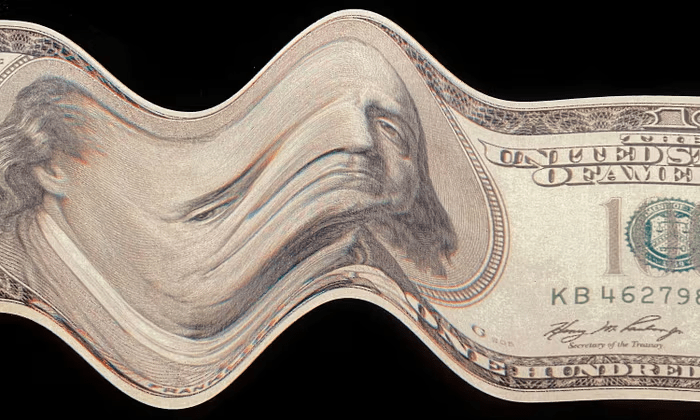
An analysis has determined that 44 out of the 50 US states contribute to inequality by imposing a lower share of income taxes on the wealthy compared to lower-income individuals.
The latest research reveals that state and local tax systems are ‘upside-down,’ with inadequate or absent personal income taxes in several states enabling wealthier Americans to evade taxes. This imbalance is exacerbated by a dependence on regressive sales and excise taxes, which disproportionately affect lower-income individuals.
When surveying public opinion on a fair tax code, the consensus is overwhelmingly against the idea that the wealthiest should pay the least,” remarked Carl Davis, Research Director of the Institute on Taxation and Economic Policy (ITEP), the organization behind the analysis.
“But despite this public sentiment, a significant disparity exists between what citizens desire and the tax systems currently in place in most states. It’s a concerning mismatch between public preferences and the actions taken by state legislators,” highlighted Carl Davis, Research Director of the Institute on Taxation and Economic Policy (ITEP).
“Out of the 50 states, along with the District of Columbia, merely six states boast tax systems designed to alleviate rather than exacerbate inequality. On average, the poorest fifth of individuals face a tax rate 60% higher than the top 1% of households in the majority of states,” emphasized the report.
“The ultra-wealthy receive notably favorable treatment from the tax system, with the top 1% contributing less than any other income group in 42 states. Additionally, in 36 states, the most impoverished residents are subjected to a higher tax rate than any other demographic,” highlighted the analysis.
Ranked in order of regressive taxation, the states with the most inequitable tax systems are Florida, Washington, Tennessee, Pennsylvania, and Nevada. Conversely, the least regressive jurisdictions are the District of Columbia, Minnesota, Vermont, New York, and California.
State-level policies, including tax cuts benefiting the affluent under the guise of stimulating economic activity, have exacerbated this issue, according to the report. In recent decades, inequality in the US has surpassed that of comparable countries. While certain pandemic-era measures, like a child tax credit, temporarily alleviated the burden on the poorest, many of these interventions have expired.
“But we know this doesn’t have to be the case,” stated Aidan Davis, ITEP’s state policy director.
“There’s a clear path to reverse regressive tax systems, and we’ve seen several states come close to achieving it. The regressive state tax laws we witness today are a deliberate policy choice, and it’s evident that lawmakers have better options available,” expressed Aidan Davis, ITEP’s state policy director.
This article was updated on January 11, 2024. Due to inaccurate information provided to us, an earlier version incorrectly listed New Jersey as the fifth least regressive tax jurisdiction according to the ITEP report, when it should be California.
 fleeredstates.blog
You must be logged in to post a comment.