
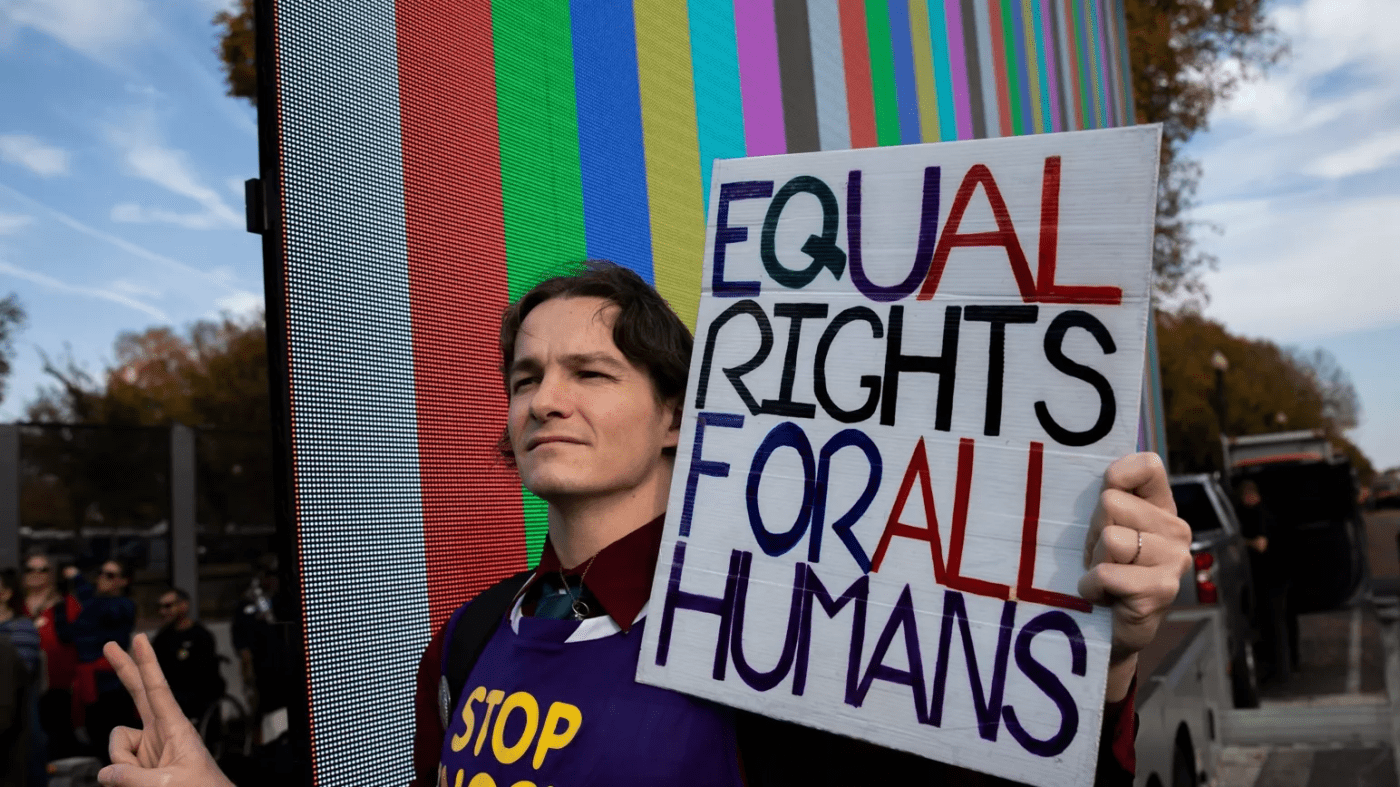
Read more at LGBTQ Nation.
President Donald Trump’s second term has especially targeted two groups in particular: immigrants and LGBTQ people. On his first day in office, he ended the U.S. Refugee Admissions Program, which left thousands of refugees who had already been approved to live in the United States stranded. He also drastically lowered the cap on the number of refugees allowed to enter the U.S. from 125,000 to 7,500. Thankfully, Immigration Equality is here to help.
“For many decades, we’ve seen clients arrive with nothing but hope and fear, and walk out with safety and freedom,” Anto Chavez, Immigration Equality’s communications director, told LGBTQ Nation. “It’s just becoming harder to fight, but we’re still here with them. We still hold their hand every step of the way. We have more than 700 active legal cases, our legal staff trains thousands of lawyers nationwide to represent queer immigrants pro bono, and we fight in the courts and Congress to expand protections.”
Founded in 1994, Immigration Equality provides free legal help for immigrants and asylum seekers who are LGBTQ+ or HIV-positive. The group is fighting Trump’s seemingly arbitrary executive orders on immigration in courts — and winning.
Chavez spoke with LGBTQ Nation about how the sociocultural landscape around immigration has changed now that Trump is back in office and what average citizens can do to fight for the rights of queer immigrants in our community.
For forever, immigrant communities have learned how to take care of each other without relying on systems that have failed us. We have to continue to do that. We have to continue to fight. Anto Chavez, Immigration Equality communications director
LGBTQ Nation: What has changed under Trump’s second term for immigrants applying for asylum to escape anti-LGBTQ persecution in their home countries?
Anto Chavez: The anti-immigrant rhetoric has shaped the culture and the cultural shift in our country; this happened during Trump’s term as well. But it really changes how queer immigrants even envision themselves in the U.S.
At the beginning of this administration, some of our clients were refugees. We have an asylum program and a refugee program. Historically, we have worked with ICE (Immigration and Customs Enforcement), but we opened up our refugee program a few years ago. After we launched it, some folks were really scared to even just decide to come to the U.S. I think there was a lot of misinformation, [but] this is still a place that’s safer for many folks.
But when it comes to policy — I mean, if we talk about refugee work, every avenue has been blocked for us. The refugee resettlement program went from thousands a year to zero, and so we’ve had to really look into other options.
How has Donald Trump’s executive order drastically lowering the refugee cap affected refugees who were already approved?
Since January 20, after the executive order suspending the refugee resettlement program and halting the process for many folks, we had people who were ready to travel and had to cancel. So for queer and trans asylum seekers, this means just fewer pathways for relocation or protection from persecution.
The U.S. has historically been a place where queer immigrants have been able to come and live freely. It’s scary to think it’s starting to change.
There are increased barriers for asylum seekers who are already here as well. Policies like what was called “Remain in Mexico,” were reinstated. The CBP (Customs and Border Patrol) One app, which allowed those migrating for humanitarian reasons to schedule asylum interviews at ports of entry, was ended, and existing appointments were canceled.
There has been increased deportation, including of multiple LGBTQ asylum seekers. There’s also the abuse that happens in detention, particularly to queer and trans immigrants. It’s just out of this world. We have some reports that queer immigrants are more likely to be assaulted and abused in ICE detention and put into solitary confinement.
 fleeredstates.blog
Leave a comment