Florida’s 12 public universities are eliminating courses that may “distort significant historical events” or “teach identity politics” to comply with S.B. 266, a law passed by the state legislature in 2023. This law restricts schools from using state or federal funds for initiatives advocating diversity, equity, and inclusion (DEI), or promoting political and social activism. In addition, it has led to the closure of LGBTQ+ student centers and the dismantling of cultural support programs on campuses.
As a result, universities are scrapping classes such as Anthropology of Race & Ethnicity, Introduction to LGBTQ+ Studies, Sociology of Gender, Women in Literature, Chinese Calligraphy, The History of Food and Eating, Humanities Perspectives on Gender and Sexuality, Social Geography, and a course on Magic, Witchcraft, and Religion. A class examining racial and gender inequality and crime, titled Social Problems, is also being impacted, according to a Politico report.
Some of these courses have been removed entirely, while others have lost their “general education” designation, meaning they will only be available as electives for upper-level students in certain disciplines, rather than as part of the broader general education curriculum. Additionally, some course descriptions and student outcomes have been revised to ensure compliance with the law.
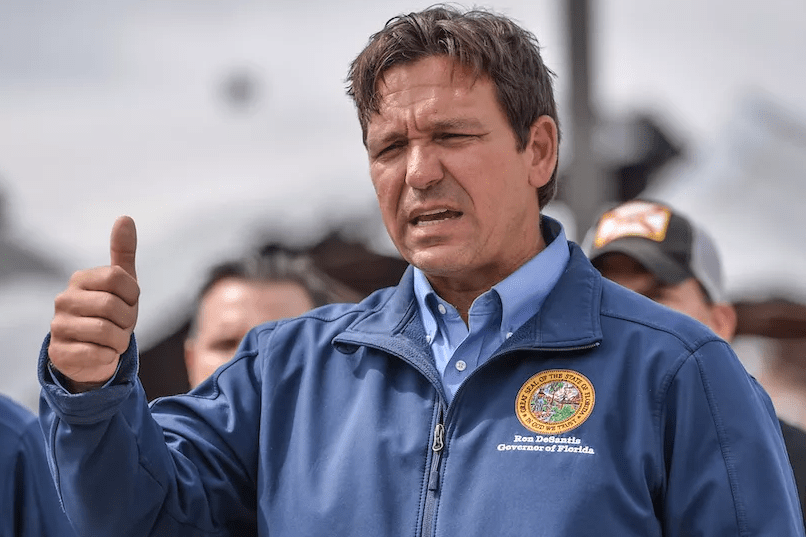
The Board of Governors will review each institution’s proposed course offerings for the 2025-26 academic year and may suggest changes. Schools that refuse to comply could risk losing vital state funding or face other penalties from Governor Ron DeSantis and the Board.
Critics argue that this law undermines academic freedom, enforces government-approved viewpoints, and could drive talented students and educators away from Florida’s universities. Some also warn that the law could jeopardize the accreditation of certain schools that are required by national accreditation bodies to have DEI programs as a core component of their education. Others have expressed concern about the vague language of the law, which leaves many unsure about what is permitted and what is not.
Historically, decisions about course content have been left to individual universities. However, this law is part of Governor DeSantis’ broader effort to challenge DEI policies and shift the state’s educational institutions toward a more conservative ideology.
While signing the law in May 2023, DeSantis said, “DEI has basically been used as a veneer to impose an ideological agenda, and that is wrong. If you want to do things like gender ideology, go to Berkeley, go to some of these other places… You don’t just get to take taxpayer dollars and do whatever the heck you want to do and think that’s somehow OK.”
This law follows DeSantis’ 2022 signing of the so-called Stop WOKE Act, which bans educational programs on racism and gender-based discrimination in schools and businesses. That law is currently on hold as courts review its constitutionality.
Federal Judge Mark E. Walker, who blocked the Stop WOKE Act in 2022, described the law as “positively dystopian,” saying it “officially bans professors from expressing disfavored viewpoints in university classrooms while permitting unfettered expression of the opposite viewpoints.” He emphasized that academic freedom should allow professors to express their perspectives, as long as they do not only align with state-approved views.
Activists claim investigation by Ron DeSantis’ agency into potential fraud is an act of voter intimidation.
Florida law enforcement officials are investigating voters who signed a petition to place a high-profile abortion rights measure on this fall’s ballot, with officers reportedly showing up unannounced at residents’ homes. Activists argue this approach is intended to intimidate voters.
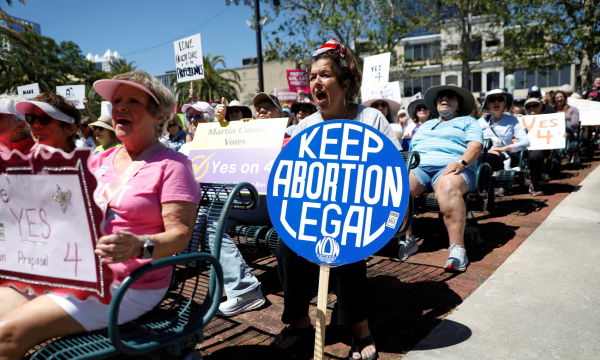
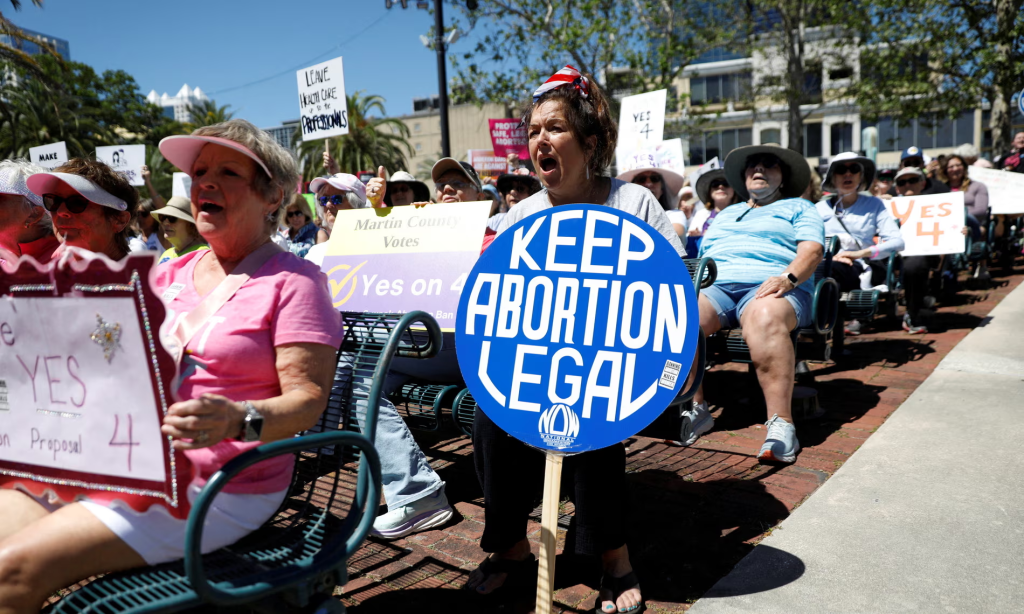
Organizers submitted over 900,000 signatures in January to secure a measure that would enshrine abortion rights in Florida’s constitution. While the deadline to challenge these signatures has passed, a state agency established by Governor Ron DeSantis to investigate voter fraud has initiated a probe into possible fraud during the signature-gathering process.
Isaac Menasche, a Fort Myers resident, signed the petition months ago at a local farmer’s market. He recalled writing down his name, birthday, and address, and quickly scribbling his signature. Last week, a law enforcement officer appeared at his door with a copy of his signature, asking him to confirm its authenticity, which Menasche did.
Menasche described the experience as unsettling. “The experience left me shaken. What troubled me was that the officer had a folder on me with about 10 pages of my personal information. I saw a copy of my driver’s license and the petition I signed,” he shared in a Facebook post. “It was clear that significant resources were used to confirm whether I had indeed signed the petition. I wonder if the same effort would be made if the petition were for a less controversial issue.”
Governor Ron DeSantis has defended the investigation, stating at a press conference, “They’re doing what they’re supposed to do.” He explained that discrepancies in signatures could arise, and if voters confirm they signed, the investigation would likely conclude. “That is absolutely possible. And if that’s what you say, I think that’s probably the end of it,” DeSantis added.
The investigation, however, coincides with broader efforts by DeSantis and Florida Republicans to block the amendment, which requires 60% voter support to pass this fall. Last week, the Florida Agency for Health Care Administration posted a webpage criticizing the amendment, a move DeSantis denied amounted to electioneering. In response, civil rights groups filed a lawsuit on Thursday, accusing the state of using the agency’s messaging to influence voters.
The Florida supreme court has also permitted a controversial financial impact statement, criticized for being misleading, to be printed alongside the amendment on the ballot.
In Florida, local election officials are responsible for verifying signatures submitted with petitions. According to Lori Edwards, the supervisor of elections in Polk County, groups sponsoring petitions must cover the costs of the verification process. This involves matching the voter’s signature, name, address, and date of birth with their registration details. Edwards noted that her office had not been asked for any information regarding the abortion amendment.
The Office of Election Crimes and Security, a multimillion-dollar agency established by DeSantis to investigate voter fraud, reported earlier this year that it had been “inundated with an alarming amount of fraud related to constitutional initiative petitions.”
However, Mary Jane Arrington, supervisor of elections in Osceola County, told the Associated Press that her office had never been asked to review already validated signatures in her 16 years in the role, raising further questions about the state’s approach to this investigation.
Florida Democrats and voting rights groups have sharply criticized DeSantis for the investigation, accusing him of using it as a blatant attempt to intimidate voters. They argue that the state’s focus on verifying signatures long after they’ve been validated is part of a broader effort to suppress participation in the ballot initiative, particularly on such a contentious issue as abortion rights.
Critics point out that this investigation, combined with other actions by DeSantis’ administration, such as the misleading financial impact statement and the Florida Agency for Health Care Administration’s public opposition to the amendment, shows a coordinated attempt to influence the outcome of the vote. Many view these tactics as part of a wider strategy by the governor and state Republicans to undermine the ballot measure and discourage voter engagement.
“This is all about theater, this is all about intimidation of the voters as people are about to go to the ballot box,” said Nikki Fried, chair of the Florida Democratic Party, during a press conference on Monday, denouncing the ongoing investigation.
Earlier this summer, the Florida Department of State informed the Florida Department of Law Enforcement (FDLE) that it had opened an investigation into over 40 individuals paid to circulate abortion-related petitions. The department claimed to have obtained “credible information” that several petition circulators in Palm Beach County had submitted fraudulent signatures. According to a letter from the department, the local supervisor of elections received complaints from voters who said they did not sign the petitions. The letter further alleged that some circulators forged signatures of deceased individuals and inserted personal information without consent.
The Department of State provided petition forms allegedly containing fraudulent signatures, with the voter details redacted, and also released three complaints from voters claiming they had not signed the petitions. Mark Ard, spokesperson for the Florida Department of State, said the agency has a duty to protect Florida citizens from fraud and will continue the investigation, referring cases to FDLE as needed.
Floridians Protecting Freedom, the group behind the amendment, hired PCI Consultants to manage most of the signature collection. Angelo Paparella, president of PCI Consultants, explained that his company reviewed all signatures before submitting them to election officials and flagged any suspicious ones. He acknowledged that a tiny fraction of the more than 1 million signatures collected appeared fraudulent but emphasized that this did not undermine the legitimacy of the vast majority of signatures.
“If they find someone who committed any kind of forgeries, then prosecute them,” Paparella said. “It takes nothing away from the nearly million valid signatures that the counties found.”
It remains unclear how many voters have been affected by the investigation, but reports indicate that at least six counties have been asked to provide information on signatures that had already been verified.
One of the counties involved is Alachua County, where state officials requested to review 6,141 petitions, all submitted by six circulators suspected of submitting fraudulent signatures. In Osceola County, the state sought to review around 1,850 petitions from specific circulators, according to Supervisor Mary Jane Arrington’s office. Similarly, in Hillsborough County, election officials were asked to review nearly 7,000 petitions.
Palm Beach County saw one of the largest requests, with state officials wanting to review 17,000 signatures, as reported by the Tampa Bay Times. In Orange County, home to Orlando, officials requested the review of 11,500 petitions. This widespread scrutiny of signatures across multiple counties is part of the state’s larger investigation into potential fraud surrounding the abortion ballot initiative.
The investigation is the latest action by the Office of Election Crimes and Security, an agency that has faced criticism since its inception, as instances of voter fraud are extremely rare. In 2022, the agency came under fire for arresting individuals with felony convictions who had voted, many of whom appeared confused about their eligibility. The agency has also targeted voter registration groups, issuing fines for relatively minor errors, which has led many of these groups to stop their activities in Florida altogether.
Brad Ashwell, director of the Florida chapter of All Voting is Local, a voting rights organization, condemned the investigation, saying, “It’s been clear from day one that the purpose of the election police was to harass voters who don’t share the same viewpoints as the governor.”
Ashwell added, “By going after a petition for Amendment 4, which is already on the ballot, Governor DeSantis is undermining the will of voters and trampling over their democratic freedoms for his own political gain.”
Most of the extreme bills have failed to pass, but trans adults are closely monitoring statehouses with heightened anxiety.
This year, states have attempted to restrict transgender people from using public bathrooms and updating identity documents like driver’s licenses. Legislators in multiple states are working to redefine sex based on reproductive capacity and to exclude gender identity from discrimination protections.
So far, these bills aiming to weaken civil rights protections for trans people and bar them from public facilities haven’t made significant progress. According to the ACLU, only five anti-LGBTQ+ bills have been enacted into law this year. Additionally, several states notorious for advancing such legislation, like Florida, Utah, and West Virginia, have concluded their legislative sessions for the year.
Nonetheless, these efforts could have disastrous impacts on the lives of trans adults. Medical health professionals are concerned about the long-term physical and mental health effects of ongoing political attempts to restrict LGBTQ+ rights. Additionally, many of the active bills could create gaps in medical care for trans people during this period of heightened anxiety.
Currently, Ashton Colby is experiencing a state of chronic stress. As a 31-year-old white transgender man living near Columbus, Ohio, he has felt intense whiplash due to the unexpected changes in state policies on gender-affirming care over the past few months.
“With my fundamental, basic humanity being publicly debated and scrutinized, I feel gutted, dehumanized, and completely misunderstood for all that I am,” he said.
Colby has been stressed for years about anti-trans policies, but he never imagined that trans adults might be forced to go without medical care. In Ohio, that nearly happened. Republican Governor Mike DeWine proposed restricting gender-affirming care for adults instead of supporting a statewide ban on minors’ care. However, after public outcry, the state’s health agency announced it would not implement those restrictions for adults.
Colby initially feared he would lose his medical provider of eight years and considered moving to Denver. He also worries that if Republicans win the White House and Congress this year, his ability to access necessary documentation and his rights as a trans person will be at risk.
Dr. Carl Streed, president of the U.S. Professional Association for Transgender Health (USPATH), constantly contemplates the negative health outcomes for trans people who do not feel safe in society. He believes anti-trans policies will exacerbate isolation during what the surgeon general has called an epidemic of isolation and loneliness in the United States.
“These policies that restrict people’s public life are effectively directly harming them, both in terms of immediate issues around mental health, connection to community, accessing care in urgent situations, but long-term, we’re going to see worse health outcomes in probably the next five, ten years, if not sooner,” he said.
What do those worse health outcomes look like? Increased isolation and inability to participate in public life and engage in-person with the community lead to poorer cardiovascular fitness and a higher likelihood of high cholesterol and hypertension. This, in turn, increases the risk of heart attacks and strokes. Isolation is also associated with worse cognitive function and decreased memory, according to Streed.
“They’re definitely creating a complex patchwork of restricted public spaces,” remarked Streed, a primary care physician at the Boston Medical Center. “But the concern is that these are national discussions. What unfolds in Florida becomes a topic I discuss with my patients in the examination room.”
Transgender individuals in states without healthcare or public space restrictions may still feel anxious about such policies in other states, he noted. These restrictions can impact them even when visiting friends and family.
As of this year, the ACLU is monitoring around 200 active anti-LGBTQ+ bills in various state legislatures. While some bills have been defeated, the transgender community, along with much of the broader LGBTQ+ community, continues to experience heightened fear and anxiety.
Simone Chriss, an attorney with the Southern Legal Counsel in Florida and director of the organization’s transgender rights initiative, highlighted during a press call in February that Florida has implemented a series of often perplexing anti-LGBTQ+ policies designed to instill fear.
“The intention is to instill fear and confusion, making us uncertain about our rights, leading us to err on the side of caution. The vagueness and ambiguity are deliberate,” she asserted. Chriss addressed a gathering of advocates, locals, and members of the press at an emergency “town hall” aimed at clarifying the legal implications and debunking myths surrounding Florida’s new driver’s license policy.
Angelique Godwin, an Afro-Latina transgender woman and advocate with Equality Florida, shared with The 19th how transgender individuals in Florida have been rallying around each other amid increasing limitations on their everyday lives. Last spring, Godwin faced a setback in her healthcare access when Gov. Ron DeSantis signed a law barring patients from receiving gender-affirming care from nurse practitioners. Subsequently, she encountered difficulty refilling her prescription for estradiol valerate, an essential component of her gender-affirming care. This confusion stemmed from pharmacies refusing service to patients in the aftermath of the law’s enactment, a challenge also faced by other transgender individuals in Florida.
“Fortunately, I had a stash, my own little reserve of medications. But for people close to me who were affected, they had no access,” she explained. “It came out of nowhere for them.”
Later, Godwin discovered a facility in Tampa with a doctor who operated on a sliding-scale payment system, enabling her to continue her care. She also obtained coverage through the federal government’s health insurance marketplace, which provided further assistance. Additionally, she managed to maintain appointments with her regular doctor for mental health visits despite the new law.
Additional gaps in care have been filled by mutual aid grants and organizations like Folx Health, an LGBTQ+ telehealth provider. Folx mandates an in-person doctor’s visit, during which patients review and sign a consent form to ensure care aligns with state regulations.
“During those initial three months from June to August, many people faced challenges. However, since then, most of the individuals I’m acquainted with who are in Florida have remained.”
About 30 bills aiming to limit transgender individuals’ access to healthcare are currently progressing through state legislatures, according to the ACLU. These bills seek to prohibit gender-affirming care, including puberty blockers and hormone therapy, for transgender youth. Additionally, they aim to block insurance or Medicaid coverage for such care and impose restrictions on access to these services for incarcerated transgender individuals.
Accessing gender-affirming care is already challenging for transgender individuals in many parts of the country, even without additional state-level restrictions. For numerous trans individuals, obtaining essential healthcare necessitates traveling across state borders.
Dr. Angela Rodriguez, a plastic surgeon specializing in transgender care in San Francisco, frequently treats patients who journey to California. This isn’t solely due to a lack of trans-affirming care elsewhere; she’s had transgender individuals travel from places like Alabama, where finding quality dental or primary care is challenging.
Over the past few years, she has heard a recurring concern from patients from out of state: Who will provide ongoing care for them in the future?
“I have patients who choose to return, flying all the way from the East Coast, because they don’t feel comfortable discussing their needs with a local physician,” she noted. She collaborates with patients traveling from other states to ensure they have a support network in California to assist them post-surgery, whether it’s a loved one or a friend.
Dr. Johanna Olson-Kennedy, the president-elect of USPATH and a practitioner at Children’s Hospital Los Angeles, highlighted the deteriorating mental health of her adolescent and young adult trans patients due to the recent bans on gender-affirming care for minors in certain states. Additionally, her patients express concerns about their safety and ability to exist publicly, especially regarding the use of public restrooms. With extreme bathroom bans in states like Florida and Utah, coupled with eight other states prohibiting trans individuals from using restrooms aligning with their gender identity in school settings, the fears among trans youth are compounded.
“I don’t think people fully grasp the mental health toll of the pandemic, let alone the added weight of these laws,” she remarked. Olson-Kennedy emphasized that many of her patients, who are mostly preparing for college or graduate school, are opting to avoid states implementing anti-trans legislation when considering their educational pursuits.
Olson-Kennedy herself finds social media to be an unsafe space. As a provider of gender-affirming care, she faces hostility and politicization from Republican lawmakers, lobbyists, and far-right media figures.
“You should be shot when you leave your clinic because you can only handle so much hearing.” That’s not something that medical school curriculums teach. Pediatricians and children’s hospitals have never dealt with anything like this before.
Olson-Kennedy stated that more individuals should be aware of what gender-affirming care entails. She explained that the care is given over an extended period of time, with parents and guardians participating for kids, and it addresses the extreme hopelessness that many trans persons experience as a result of gender dysphoria.
“I wish people could see above their personal discomfort and ignorance and truly acknowledge the medical necessity of this therapy. It saves and transforms people’s lives, and it’s incredibly significant,” she remarked.
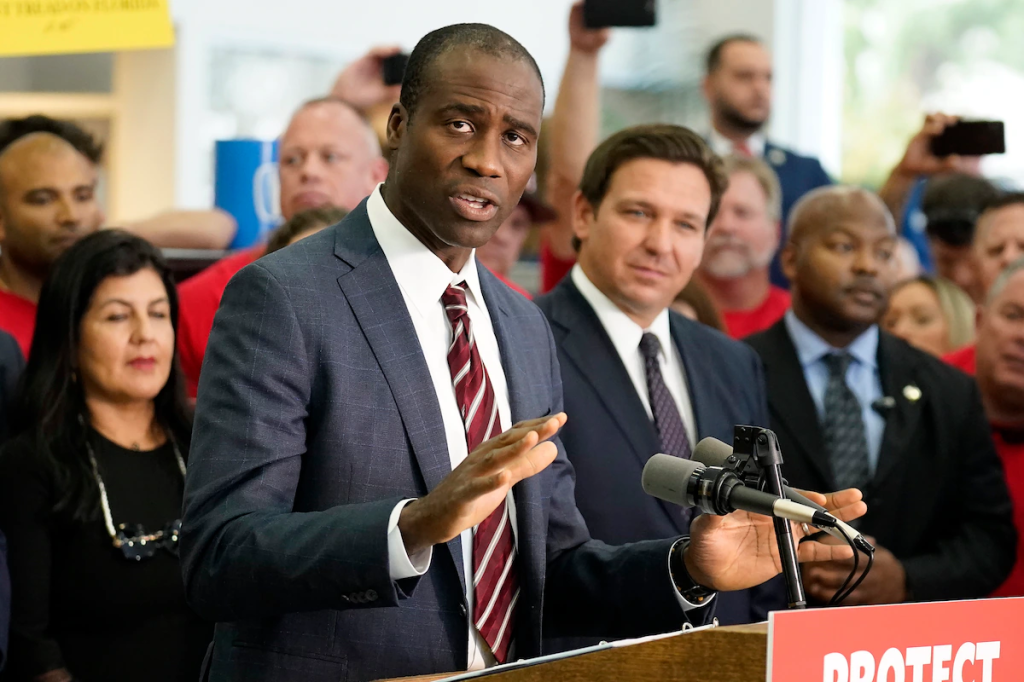
As a Florida elementary school grapples with a growing measles outbreak, the state’s top health official is providing advice that contradicts scientific consensus, potentially putting unvaccinated children at risk of contracting one of the most contagious pathogens on Earth, according to clinicians and public health experts.
In a letter to parents at a Fort Lauderdale-area school following six confirmed measles cases, Florida Surgeon General Joseph A. Ladapo failed to urge parents to vaccinate their children or to keep unvaccinated students home as a precaution.
Instead of following the “normal” recommendation that parents keep unvaccinated children home for up to 21 days — the incubation period for measles — Ladapo stated that the state health department “is deferring to parents or guardians to make decisions about school attendance.”
Ladapo’s controversial decision continues a pattern of defying public health norms, especially regarding vaccines. Last month, he called for halting the use of mRNA coronavirus vaccines, a move widely condemned by the public health community.
Ben Hoffman, president of the American Academy of Pediatrics, criticized Florida’s guidance, stating that it contradicts longstanding and widely accepted public health recommendations for measles, a disease that can lead to severe complications, including death.
“It contradicts everything I’ve ever heard and read,” Hoffman stated. “It goes against our policy and what the Centers for Disease Control and Prevention would recommend.”
In 2024, measles outbreaks have surged, with the CDC recording at least 26 cases across 12 states, doubling the count from the previous year. Apart from the six cases identified in the Florida school, instances have been documented in Arizona, California, Georgia, Maryland, Minnesota, Missouri, New Jersey, New York City, Ohio, Pennsylvania, and Virginia.
The surge in measles outbreaks is attributed to the increasing number of parents seeking exemptions from childhood vaccinations. This trend has emerged in the wake of political opposition to COVID-19 mandates and widespread dissemination of misinformation regarding vaccine safety.
In January, the CDC issued a caution to healthcare providers to remain vigilant for additional measles cases. Contagion can occur from four days before the onset of a rash until four days after.
Because measles virus particles can persist in the air and on surfaces for up to two hours after an infected individual departs, up to 90 percent of non-immune individuals may contract measles if exposed. Those who have been infected or have received both doses of the MMR vaccine are 98 percent protected and highly unlikely to contract the disease. This is why public health officials usually recommend vaccination during outbreaks.
“The measles outbreak in Florida schools is a result of too many parents failing to ensure their children are protected by the safe and effective measles vaccine,” explained John P. Moore, a professor of microbiology and immunology at Weill Cornell Medical College. “And why is that? It’s because anti-vaccine sentiment in Florida is propagated from the top of the public health hierarchy: Joseph Ladapo.”
When requested for comment, the Florida health department provided a link to Ladapo’s letter.
Ladapo’s reluctance to utilize public health measures mirrors the efforts of conservative and libertarian factions to weaken public health’s capacity to control diseases such as the highly contagious measles. In an outbreak in Ohio that commenced in late 2022, most of the 85 afflicted children were eligible for vaccination, but their parents opted against it, according to officials. In 2021, the state legislature curtailed health officials’ authority to mandate quarantine for individuals suspected of having an infectious disease.
Ladapo’s communication with parents arrives amidst increased concern regarding the public health impacts of anti-vaccine sentiment, an ongoing issue that has resulted in declines in childhood immunization rates in various areas across the United States. Federal data released last year revealed that the percentage of kindergartners exempted from at least one state-required childhood vaccination reached its highest level yet during the 2022-2023 school year, standing at 3 percent.
According to Paul Offit, a pediatric infectious diseases expert at Children’s Hospital of Philadelphia, Ladapo’s neglect to promote vaccination puts children at risk.
“In light of the data showing measles as the most contagious vaccine-preventable disease, surpassing even influenza or COVID, is Ladapo attempting to suggest otherwise?” Offit questioned in an email.
Measles is highly contagious, spreading swiftly, particularly affecting young children who receive their first dose of the vaccine between 12 to 15 months of age. The CDC advises two doses of the MMR vaccine, with the second typically administered between 4 to 6 years old.
When measles vaccination coverage falls below 95 percent, it undermines herd immunity, facilitating the virus’s rapid spread. While Florida’s overall vaccination coverage stands at 90.6 percent, it doesn’t pinpoint areas with potentially lower coverage rates.
If unvaccinated individuals fail to adhere to public health guidelines and stay home from school during the contagious period, the outbreak could escalate dramatically, posing a significant community risk. Patsy Stinchfield, President of the National Foundation for Infectious Diseases and a nurse practitioner in Minneapolis, has firsthand experience managing measles outbreaks, including the 2017 outbreak in Minnesota, which impacted 75 individuals, predominantly unvaccinated children.
Approximately 1 in 5 unvaccinated individuals in the United States who contract measles require hospitalization, as reported by the CDC. Among children, up to 1 out of 20 develop pneumonia, which is the leading cause of death from measles in this age group. Additionally, around 1 child out of every 1,000 with measles experiences brain swelling, which can result in seizures and long-term consequences such as deafness or intellectual disability. Unvaccinated infants who contract measles face an even graver risk, with 1 in 600 developing a fatal neurological complication that may remain latent for years.
This week, officials at Manatee Bay Elementary School, located approximately 20 miles west of Fort Lauderdale, confirmed six cases of measles. According to Broward County Schools Superintendent Peter B. Licata, out of the school’s 1,067 students, 33 have not been vaccinated with the MMR vaccine. During a school board meeting on Wednesday, Licata provided this information. Additionally, a district official mentioned that the district has organized “four vaccination opportunities,” comprising two sessions held at the school and two at other venues within the community.
Florida health officials reported the first case on Friday, involving a third-grade child with no travel history abroad.
School officials redirected inquiries to the Broward County school district, which stated it is adhering to guidance from the state health department.
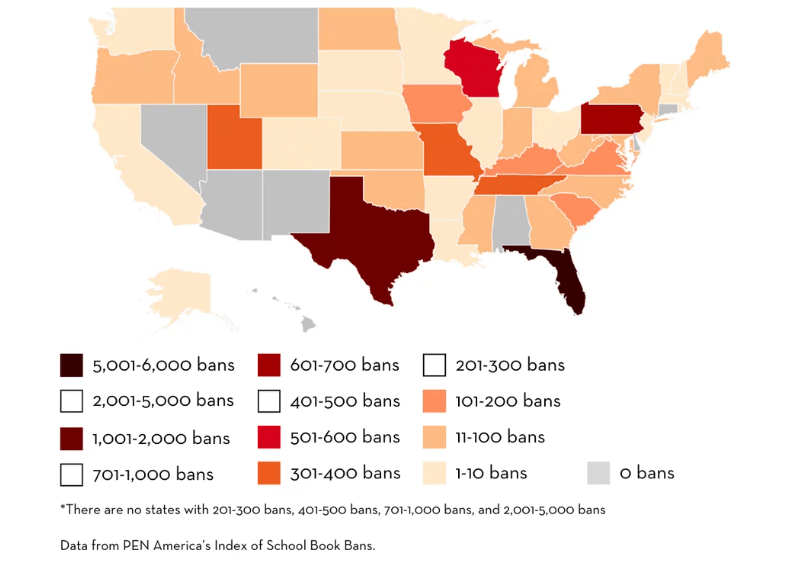
A recent report from PEN America claims that there was a “unprecedented” spike in book bans in the second half of 2023.
According to the free expression organization, 4,349 book bans occurred in 52 public school districts and 23 states between July and December of last year. According to the research, over those six months, more books were prohibited than during the entire 2022–2023 school year.
The source of PEN America’s ban data is allegedly “publicly available data on district or school websites, news sources, public records requests, and school board minutes.”
Key lessons learned include:
With 3,135 prohibitions spread among 11 of the state’s school districts, Florida accounted for the great bulk of school book bans. An NPR representative for the Florida Department of Education declined to comment.
Book bans are frequently started by a small group of individuals. A Wisconsin school district temporarily banned 444 books after receiving challenges from a single parent.
According to the research, those who advocate for book bans frequently use to “obscenity laws and hyperbolic rhetoric about ‘porn in schools’ to justify banning books about sexual violence and LGBTQ+ topics (and in particular, trans identities).”
The research claims that there has been a comparable upsurge in opposition to the bans. Students, writers, and others are “fighting back in powerful and creative ways.”
Who is enforcing the ban?
According to a survey published in The Washington Post, “Just 11 people were responsible for filing 60 percent” of book challenges in 2021–2022.
Advocates for free speech from across the nation who joined PEN America today to address prohibitions spoke at a news conference about the ostensibly enormous influence of a small but vociferous minority.
Quinlen Schachle, a senior in high school and the president of the Alaska Association of Student Governments, expressed his dismay at attending school board meetings, saying, “It’s, like, [the same] one adult that comes up every day and challenges a new book. It’s not a concerned group of parents coming in droves to these meetings.”
According to Texas Freedom to Read Project Co-Director Laney Hawes, books are frequently prohibited due to “a handful of lists that are being circulated to different school districts” rather than “a parent whose child finds the book and they have a problem with it.”
PEN America describes a book ban as “any action taken against a book based on its content…that leads to a previously accessible book being either completely removed from availability to students, or where access to a book is restricted or diminished.”
The American Enterprise Institute, a conservative think tank, expressed disapproval of PEN America’s April 2022 report on banned literature. “Almost three-quarters of the books that PEN listed as banned were still available in school libraries in the same districts from which PEN claimed they had been banned,” the Education Freedom Institute (AEI) reported in a report.
Governor Ron DeSantis signed a law last year prohibiting Florida College System schools from sustaining DEI programs such as LGBTQ+ centers.
This week, the University of North Florida (UNF) closed three offices focused on diversity, equity, and inclusion (DEI) in compliance with a law enacted last year that bars state funding for such initiatives.
As reported by WTLV, the Intercultural Center, Interfaith Center, LGBTQ Center, Women’s Center, and Office of Diversity and Inclusion at UNF have been closed this week. Additionally, the Victim Advocacy Program, responsible for addressing sexual misconduct on campus, has been transferred to the office of the Dean of Students, according to UNF Media Relations Manager Amanda Ennis.
Since last year, the University of North Florida (UNF) has been gradually closing all five offices, including the LGBTQ+ center, following the enactment of Senate Bill 266 by Florida Governor Ron DeSantis. This bill prohibits Florida College System schools from maintaining Diversity, Equity, and Inclusion (DEI) programs like LGBTQ+ centers. Additionally, state-funded schools are barred from engaging in political or social activism and offering courses based on theories of systemic racism, sexism, oppression, and privilege. The legislation, authored by state Sen. Erin Grall, who previously served in the state House of Representatives, has been part of a series of DeSantis-approved bills, including various abortion restrictions and the anti-trans “Safety in Private Spaces Act.”
In January, the Florida Board of Governors, responsible for overseeing the state university system, announced plans to gradually eliminate these programs, prompting protests on campuses. Carlos Guillermo Smith, a policy director at Equality Florida, a LGBTQ+ advocacy group, condemned the Board for complying with Governor DeSantis’ directives. Smith expressed disappointment, stating, “The Board of Governors had the opportunity to hit the brakes, but instead, shamefully followed their censorship agenda off a cliff in service to DeSantis’s failed political ambitions,” in an interview with NBC.
According to Ennis’s statement to WTLV, employees who previously worked at the now-closed offices “have transitioned to other available positions within the university.” Prior to the closure of the programs, several staff members chose to depart from the university. Some of them joined OneJax Inc., an interfaith diversity nonprofit that separated from its affiliation with UNF in July last year.
“I realized I needed to find another avenue for this important work, or it would simply cease to exist,” explained Matt Hartley, who previously served as the director of UNF’s Interfaith Center and now holds the position of director of interfaith programs at OneJax. This statement was made in an interview with the Florida Times-Union back in November.
With a history of opposing LGBTQ+ rights, DeSantis has directed his political agenda towards DEI programs as a central component of his ongoing “anti-woke” campaign in Florida. In early 2023, he effectively gained control of the board of New College, a progressive liberal arts institution, and in August of the same year, he eliminated the university’s gender studies program through a motion proposed by board member Christopher Rufo, known for his involvement in the anti-LGBTQ+ “groomer” panic. DeSantis’ actions have sparked frequent protests from students, some of whom have alleged experiencing police brutality during demonstrations.
Over the past few years, anti-DEI policies have become increasingly common, particularly in conservative strongholds. In March, Alabama enacted a law prohibiting DEI programs and courses, labeling them as “divisive concepts.” Additionally, the law mandated strict segregation of multi-stall restrooms based on sex assigned at birth. In another instance, Republicans in March attempted to defund DEI programs through multiple amendments to the omnibus spending package. However, these efforts were thwarted, and the final budget did not include such provisions.
In the state, Republican legislators have already submitted a minimum of twelve bills that LGBTQ advocates argue could adversely impact the community.
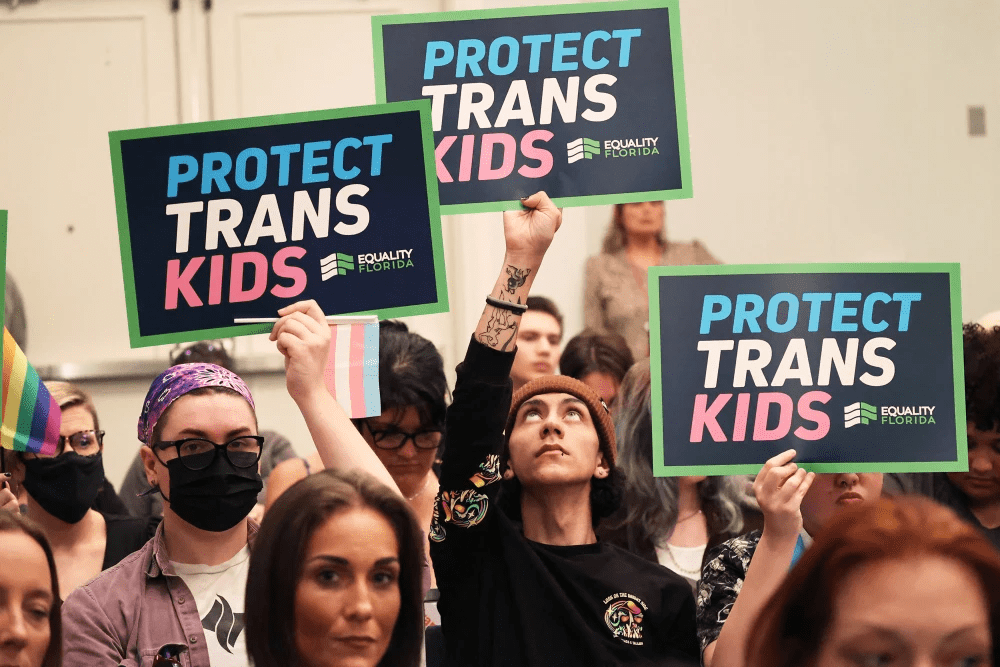
Individuals display signs during a collaborative board meeting of the Florida Board of Medicine and the Florida Board of Osteopathic Medicine in Lake Buena Vista in the year 2022.
The legislative session in Florida commenced just this week, and within the first few days of the new year, Republican lawmakers have already presented more bills aimed at the LGBTQ community than there are days elapsed.
Certain bills, such as one seeking to alter the state’s definition of sex and another intending to criminalize “lewd or lascivious grooming,” stand out as some of the most extreme among the hundreds introduced in state Legislatures this year. Additionally, there’s a proposal to prevent government employees from being compelled to use their colleagues’ requested pronouns, and another bill aims to shield children from “harmful material” online. However, the ambiguous nature of what constitutes harmful material raises concerns among advocates, as it could potentially encompass LGBTQ content.
Moreover, a proposal put forth by Republican state Senator Jason Brodeur aims to classify almost all public allegations of anti-LGBTQ bias as “defamation per se.” This legislation would prohibit journalists from defending such claims by referencing the subject’s “constitutionally protected religious expression or beliefs” or scientific beliefs. Those found liable in successful lawsuits would face damages of no less than $35,000.
“Florida has consistently led in introducing new challenges to freedom and equality, and this year’s array of bills continues the trend,” remarked Brandon Wolf, a representative for the Human Rights Campaign, an LGBTQ advocacy group, and a survivor of the Pulse nightclub mass shooting in Orlando, Florida. “During this session, we anticipate heightened assaults on education, medical freedom, and the basic right of transgender individuals to live authentically.”
One of the most far-reaching bills comes from Republican Representative Dean Black, introducing a comprehensive measure that mandates Floridians to submit an affidavit confirming that their driver’s license or other state ID aligns with the sex indicated on their original birth certificate. Consequently, transgender individuals in Florida would be compelled to surrender any existing ID reflecting their gender identity and would be barred from obtaining such identification in the future.
Additionally, Black’s proposal mandates that any health insurance policy in the state covering transition-related “prescriptions or procedures” must also include coverage for “treatment to detransition” from such procedures. The bill further necessitates the inclusion of so-called conversion therapy in health insurance policies, compelling coverage for mental health services that aim to address a person’s perception that their gender is inconsistent with their sex assigned at birth, thereby affirming their birth sex.
Furthermore, the legislation would compel any school district or state agency engaged in collecting vital statistics for anti-discrimination compliance or accurate data on public health, crime, economics, or other purposes to include the identification of individuals’ birth sex in the dataset. This provision has the potential to impose limitations on the comprehensive collection of data concerning transgender individuals.
Black stated that the purpose of the bill is to address the “defining question of this decade: ‘What constitutes a woman?'”
“In truth, this legislation merely seeks to formalize what is already universally accepted but has unfortunately been manipulated by an extremist political movement determined to alter the laws of nature to suit their distorted agenda,” Black declared in a press statement.
Gillian Branstetter, a communications strategist with the American Civil Liberties Union, noted that Florida is not the inaugural state to contemplate a measure restricting transgender individuals from obtaining driver’s licenses reflecting their gender identity. Montana, North Dakota, Kansas, and Tennessee have already implemented comparable laws, with the ACLU presently involved in legal action against Kansas’ restriction. Additionally, Nebraska and Oklahoma have instituted executive orders that similarly define sex within state law.
Branstetter asserted that the bills represent a “clear attempt” to counter the Supreme Court’s decision in Bostock v. Clayton County, which established that federal employment law safeguards LGBTQ individuals from discrimination. Justice Neil Gorsuch’s opinion explicitly clarified that discrimination grounded in sex encompasses both sexual orientation and gender identity.
“In essence, these bills are designed to provide extensive authority to the state to erase the existence of ‘transgender,'” Branstetter stated.
A new proposal introduced by Republican Representative Taylor Yarkosky criminalizes “lewd or lascivious grooming,” categorizing it as an offense. The bill defines this as an individual “preparing or encouraging a child to participate in sexual activity through overtly sexually themed communication with the child or engaging in conduct with or in the presence of the child without permission from the child’s parent or legal guardian.”
While the bill doesn’t explicitly mention LGBTQ individuals, one of its Republican sponsors has publicly voiced criticism of all-ages drag performances. Additionally, the term “grooming” has been recently employed by some conservative officials to characterize LGBTQ
Florida’s series of legislative measures extends a trend that has persisted for several years. In the previous year, state Republican legislators presented 10 bills specifically addressing LGBTQ individuals, and four of them were enacted into law. Among these was a measure that extended the reach of Florida’s Parental Rights in Education Act, commonly criticized as the “Don’t Say Gay” law.
“Florida might serve as a testing ground for anti-LGBTQ+ hostility, but it is not isolated,” remarked Wolf, the advocate from the Human Rights Campaign. “The bills originating from the state are indicative of a broader agenda orchestrated by a national extremist network seeking to enforce these measures nationwide.”
Last year, conservative legislators introduced an unprecedented number of bills aimed at LGBTQ individuals, surpassing 500 filings nationwide, as reported by the ACLU. An analysis by NBC News revealed that seventy-five of these bills were enacted into law.
As of last month, Branstetter mentioned that the ACLU has documented 212 bills of such nature for the year 2024.
Alabama has been granted the ability to enforce its felony ban on gender-affirming health care for minors, as per a federal court ruling on Thursday.
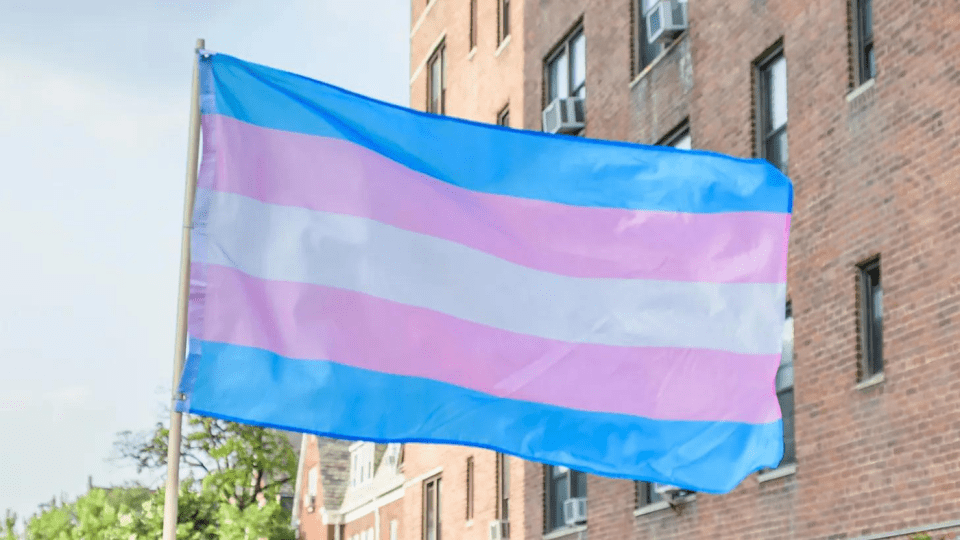
A transgender pride flag is displayed.
The decision allows the state to proceed with the ban, lifting a preliminary injunction that had prevented officials from enforcing it for over a year.
On Thursday, the U.S. 11th Circuit Court of Appeals lifted the injunction against Alabama’s 2022 law, turning it into a felony for physicians to prescribe puberty blockers or hormones to transgender individuals under 19. Convictions could lead to sentences of up to a decade in prison.
When the injunction was issued in 2022, U.S. District Judge Liles C. Burke stated that Alabama failed to provide credible evidence demonstrating that gender-affirming treatments are “experimental.”
In August, a federal appeals court reversed this decision, stating, “The use of these medications in general—let alone for children—almost certainly is not ‘deeply rooted’ in our nation’s history and tradition,” referencing the Supreme Court’s decision overturning Roe v. Wade.
In November, Alabama’s attorneys requested the 11th Circuit stay the enforcement of the district court’s preliminary injunction, which was granted Thursday in a brief unsigned order.
A September request for a rehearing made by the Alabama families challenging the law is still pending, and a full trial on the constitutionality of the ban is slated for August.
Alabama Attorney General Steve Marshall praised Thursday’s decision as “a significant victory for our country, for children, and for common sense.”
In a joint statement, lawyers representing the families challenging the law said the ruling will cause significant harm to children and parents in Alabama.
“Alabama’s transgender healthcare ban will harm thousands of transgender adolescents across the state and will put parents in the excruciating position of not being able to get the medical care their children need to thrive,” according to the statement, issued Thursday by the National Center for Lesbian Rights, GLBTQ Legal Advocates & Defenders, the Southern Poverty Law Center, and the Human Rights Campaign.
Including Alabama, 23 states have enacted laws or policies that heavily restrict or ban gender-affirming health care for transgender minors. Laws passed in five states — Alabama, Florida, Oklahoma, North Dakota, and Idaho — include provisions that make it a felony crime to provide treatment to trans youth under 18.
In alignment with a House bill introduced in November, a Senate Republican presented a proposal on Thursday that aims to impose limitations on the use of personal pronouns by government agencies.
Senator Jonathan Martin, representing Fort Myers and a member of the Republican party, submitted the proposal (SB 1382) for deliberation in the upcoming 2024 legislative session, commencing this Tuesday. The identical House bill (HB 599) has been filed by Representative Ryan Chamberlin, a Republican from Belleview.
The introduction of these bills may contribute to ongoing legislative debates on matters concerning gender identity. The bills assert, in essence, that the state policy recognizes a person’s sex as an unchangeable biological characteristic. It further states that assigning a pronoun not corresponding to the person’s sex is considered inaccurate.
These bills would prohibit state and local government agencies from mandating employees and contractors to use a person’s preferred personal title or pronouns if they don’t align with the sex assigned to that person at birth.
Furthermore, these bills would bar employees of government agencies and contractors from presenting preferred pronouns to their employers that “do not correspond to his or her sex.” Additionally, employers would be prohibited from requesting workers to provide personal pronouns.
In a federal court on Wednesday, December 13, 2023, a transgender girl’s mother broke down in tears as she considered the possibility of relocating away from her Navy officer husband to access healthcare for her 12-year-old.
A federal judge presiding over a case challenging a ban on transgender health care for minors and restrictions for adults observed on Thursday that Republican Florida Governor Ron DeSantis has consistently disseminated misinformation about doctors mutilating children’s genitals, despite no documented cases supporting such claims.
Judge Robert Hinkle remarked to Mohammad Jazil, a lawyer for the state, that the law was presented as a measure to protect children from mutilation, whereas, in reality, it is aimed at obstructing transgender children from accessing healthcare.
Judge Hinkle inquired, “When I’m examining the governor’s motivation, how should I interpret these statements? This appears to go beyond mere exaggeration.”
Hinkle stated that he will issue a ruling in the coming year regarding whether the Legislature, the Department of Health, and presidential candidate DeSantis intentionally singled out transgender individuals with the new law. Expressing some doubt about the state’s motives, he did so as lawyers presented their concluding arguments.
The trial revolves around contesting Florida’s prohibition on medical interventions for transgender children, encompassing treatments like hormone therapy or puberty blockers—legislation championed by DeSantis in his presidential bid. The law also imposes limitations on transgender healthcare for adults.
Jazil argued that the intent behind the law was primarily to ensure public safety in an area that requires greater oversight and can have lasting consequences.
“It’s about addressing a medical condition; it’s not about singling out transgender individuals,” Jazil stated.
Jazil argued that if the state intended to target transgender people, it could have prohibited all treatments for both adults and children. Hinkle promptly countered that defending such a law would pose challenges.
Hinkle, appointed by former President Bill Clinton, has temporarily halted the enforcement of the law concerning minors until the trial concludes. The legal challenge also questions restrictions on adult transgender care, which have been permitted to be in effect during the trial.
Laws limiting or prohibiting gender-affirming medical care for transgender minors have been enacted in at least 22 states. Several of these states are confronting legal challenges, and court decisions have been varied. The initial law in Arkansas, the first of its kind, was invalidated by a federal judge who asserted that the prohibition on care violated the due process rights of transgender youth and their families.
The enforcement of similar laws has been blocked in two states aside from Florida. In seven other states, enforcement is either currently allowed or set to go into effect soon.
Thomas Redburn, representing trans adults and families of trans children, argued that Governor DeSantis and the Legislature have consistently targeted transgender people. He pointed to recent laws affecting the community, such as restrictions on pronoun use and the teaching of gender identification in schools, regulations on public bathrooms, and the prohibition of trans girls from participating in girls’ sports.






 fleeredstates.blog
You must be logged in to post a comment.