A federal judge in Texas ruled this week that the state’s drag ban is an unconstitutional restriction of free speech in violation of the First Amendment.
US District Court Judge David Hittner’s Tuesday decision strikes down S.B. 12, a 2023 law signed by anti-LGBTQ+ Gov. Greg Abbott (R). While the law does not explicitly mention the word drag, it criminalized “sexually explicit” performances in the presence of minors, defining such performances as those featuring “a male performer exhibiting as a female, or a female performer exhibiting as a male, who uses clothing, makeup, or other similar physical markers and who sings, lip syncs, dances, or otherwise performs before an audience.”
Under the law, businesses that host all-ages drag shows faced up to $10,000 in fines, and performers could be charged with a Class A misdemeanor resulting in up to one year in prison.
S.B. 12 was initially scheduled to take effect on September 1, 2023. But several LGBTQ+ advocacy organizations and drag groups — including The Woodlands Pride, Abilene Pride Alliance, and 360 Queen Entertainment — challenged the law. In September 2023, Hittner issued a permanent injunction blocking enforcement of the law, ruling that it constituted “viewpoint discrimination” and that it was “substantially overbroad” and “unconstitutionally vague.”
After Texas appealed the decision, the US 5th Circuit Court of Appeals overturned Hittner’s permanent injunction last November, sending the case back to the lower court and instructing Hittner to focus only on the claims from 360 Queen Entertainment. The appeals court’s ruling also allowed the law to go into effect while the case played out.
On Tuesday, Hittner once again ruled that S.B. 12 “is an UNCONSTITUTIONAL restriction on speech” that “violates the First Amendment,” even under the conditions the 5th Circuit outlined, according to The Texan.
The law, Hittner wrote, “applies to countless protected performances that might contain elements that are ‘in some sense erotic’ and meet either the law’s definition of ‘nude’ or ‘sexual conduct’ but are not obscene or obscene for minors and are thus constitutionally protected.” Hittner cited examples including a gymnast performing in a leotard and a singer performing in a lowcut dress.
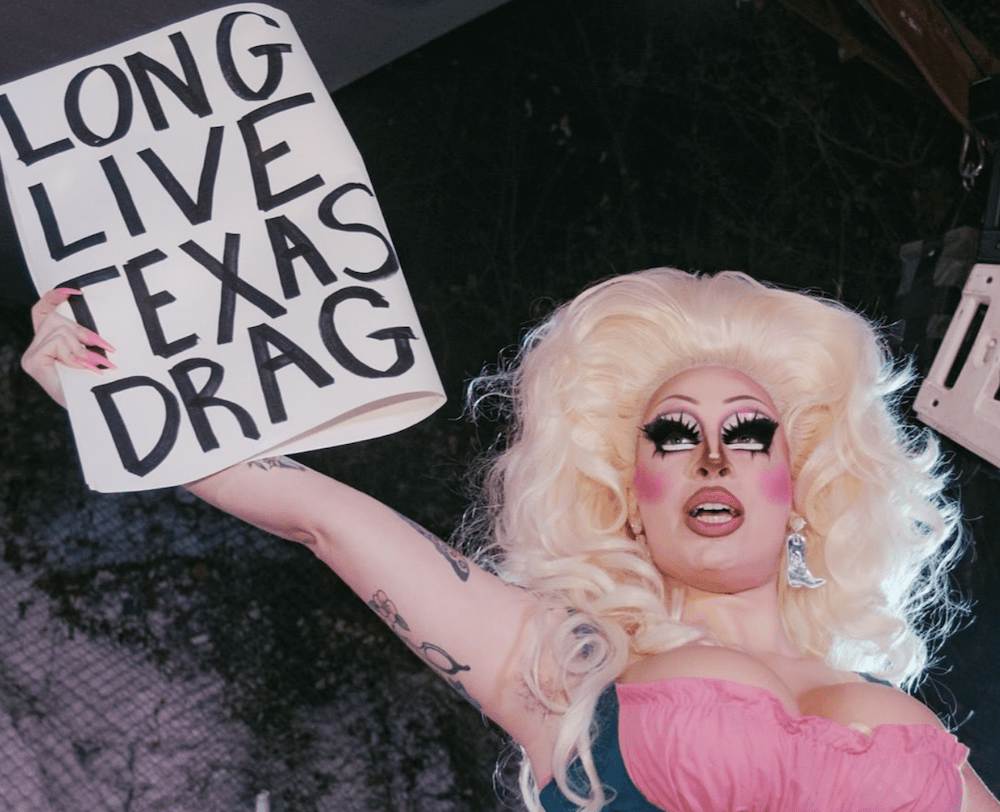
As NBC News notes, Hittner went so far as to cite the late Dolly Parton, an LGBTQ+ ally who supported drag performers and even gifted a rhinestone guitar to drag performer and advocate Brigitte Bandit, one of the plaintiffs in the case, as an example of a performer who might be targeted by the law for her reputation “as a voluptuous sex symbol because of her big hair, flamboyant clothes and breast exposure.”
Hittner further ruled that “S.B. 12 is unconstitutionally vague because it fails to give a reasonable person notice of what is prohibited.” While “multiple aspects of the law render it vague,” Hittner wrote, the “most glaring issue” relates to the inclusion of the term “prurient interest in sex.” The fact that the term “is undefined in Texas law, lacks a readily ascertainable ordinary meaning, and applies to all performances targeted by the statute,” Hittner wrote, “renders S.B. 12 irredeemably vague… in violation of the Fourteenth Amendment’s Due Process Clause.”
“Finally, for those who find such activities as described in this case offensive, the solution is relatively simple,” Hittner wrote. “Just don’t go.”
In several Instagram Stories posts Tuesday, Bandit responded to Hittner’s ruling, writing that “drag is free speech b—-” and that the decision “is a huge win for Texas and my t——.”
Meanwhile, Texas Attorney General Ken Paxton (R), who is running for US Senate, described Hittner’s ruling as “a profoundly flawed decision that endangers our children and is an affront to Texas values.”
“I will appeal this decision immediately and continue to fight to protect our kids,” Paxton wrote in an X post.
Transgender students are absorbing the consequences of a growing fight in Cabarrus County Schools, where two federal lawsuits and a Trump administration investigation are challenging how the district handles bathroom access, LGBTQ advocates say. For months, parents, elected officials and community members clashed over whether transgender students should be allowed to use bathrooms and locker rooms that align with their gender identity. But advocates say another question has received less attention: What does the fight mean for LGBTQ students going to school every day?
“When I think about a trans girl going into a girl’s restroom, I worry about her harassment, not what she will do to other young people,” said Sarah Mikhail, CEO of Time Out Youth. Time Out Youth serves LGBTQ young people ages 13 to 24 in Charlotte and surrounding communities. Within the organization, young people regularly talk about the broader social climate surrounding bathrooms, sports and LGBTQ issues in schools, she said. Mikhail said the effect shows up in basic routines. Some young people Time Out Youth works with avoid school bathrooms entirely because they do not feel safe using them. She said that kind of vigilance does not stay confined to the restroom. Students who are constantly calculating where they can go, who might be watching them or whether an adult will support them can have a harder time concentrating, asking for help or feeling comfortable enough to learn. “We have young people that do not go to the bathroom all day at school,” Mikhail said. “This is not uncommonly reported.”
LGBTQ students not only face school rules, they also hear messages from politicians, social media, family members and community leaders about what gender means and what transgender people should be allowed to do. For some students, those messages arrive before they even figure out how they identify or whether they feel safe coming out. That uncertainty, she said, can impact whether students feel comfortable telling a teacher they had a hard night, asking for help on an assignment or using the name and pronouns that feel right to them. “You need to feel emotionally okay to share and be yourself at school,” Mikhail said. “So then you can be open to learning.” How Cabarrus became a legal battleground Cabarrus County Schools does not have a separate policy governing transgender students’ bathroom access. School board attorney William Isenhour has said the district handles the relatively rare situations on a case-by-case basis while attempting to comply with federal law.
The district has repeatedly pointed to a 2020 Fourth Circuit Court of Appeals ruling, Grimm v. Gloucester County School Board. In that case, the court ruled a Virginia school board violated Title IX and constitutional protections when it required a transgender boy to use bathrooms based on his sex assigned at birth or use a private restroom. Because the Fourth Circuit includes North Carolina, Cabarrus officials have said the ruling binds the district. The Trump administration now takes a different view. The U.S. Department of Education’s Office for Civil Rights opened a Title IX investigation into Cabarrus in June after complaints that the district allowed transgender students to use girls’ bathrooms and locker rooms. Federal officials said the administration interprets Title IX based on biological sex and is investigating whether the district violated the privacy and safety rights of female students. On July 31, three anonymous 17-year-old Cox Mill High School students and their parents sued the district. Represented by the conservative legal organization America First Legal, they argue transgender students should not be permitted to use multi-person bathrooms and locker rooms corresponding with their gender identity.
A second lawsuit followed one week later. Cabarrus father Brandon Matthews sued after school officials declined to promise they would notify him if transgender students were permitted to use the same sex-segregated bathrooms or locker rooms as his children. He argues parents have a constitutional and religious right to receive that information and request another arrangement. The Cabarrus controversy comes as transgender rights have become a major national political talking point, with fights over girls’ sports, bathroom access and school policies playing out in courts and school board meetings. ‘Stop arguing about bathrooms’ Rebecca Herrick, a mother of three Cabarrus County Schools students, said she sees the bathroom fight as a distraction from other issues in the district. Her own children have thrived socially in CCS, Herrick said, and she wants transgender students to be treated the same. She said the controversy pulls energy away from issues that affect students more, including the district’s ongoing financial and operational challenges.
“It is time to stop arguing about bathrooms,” Herrick said. “By shifting the conversation to social issues, they are successfully diverting public energy.” Herrick said she worries that it sends a message about who belongs in school when adults devote so much attention to policing which bathrooms students use. She said the repeated lawsuits and public fights over bathrooms risk turning transgender students themselves into the subject of controversy. “These bathroom bills and the resulting lawsuits create a climate of fear and exclusion that treats transgender students as problems rather than children who deserve support,” Herrick said. ‘They’re just kids’ Joshua Jernigan said he is already hearing that fear from families. Jernigan founded the Gender Education Network, which works with transgender and gender-diverse children age 12 and younger and their families across North and South Carolina.
Jernigan said his organization has heard directly from families since the lawsuits and federal investigation intensified attention on the district. Some have reached out worried about what the legal fight could mean for their children and whether it will make school feel less safe. “We’ve had a lot of families reach out in a bit of a panic,” Jernigan said. He said transgender and gender-diverse children may not follow the legal arguments themselves, but they hear how adults in their communities talk about people like them. When they hear phrases like “these people” or “those people,” Jernigan said, they understand they are being singled out. That can be especially unsettling for children approaching middle school, he said, when situations involving locker rooms and trying to fit in already feel scary. “There’s nothing sinister or nefarious about trans kids,” Jernigan said. “They’re just kids who want to go out for recess and hate math.”
An affordable senior housing community, described as “Maine’s first affordable senior housing community with programs and services for LGBTQ+ and older adults,” opens Wednesday (August 19).
Equality Commons is a 54-unit community that is opening next to the Equality Community Center (ECC) at 25 Casco Street in downtown Portland, according to a release from the Equality Community Center.
The community for residents aged 55 and older will provide “affordable homes and a safe, inclusive place for LGBTQ+ older adults and their allies to age with grace and dignity,” the release stated.
The grand opening and ribbon-cutting ceremony will take place on Wednesday from 5:30-7:30 p.m., officials said.
The housing will be situated next to the ECC at 15 Casco Street, which will offer programs and services tailored for the seniors residing there, “specifically designed to support LGBTQ+ older adults,” according to the release.
ECC said the new community will not only address the shortage of affordable housing but also provide a safe, inclusive environment where LGBTQ+ older adults and “other marginalized community members and their allies can age with dignity while remaining connected to community.”
“Equality Commons brings affordable housing, community resources and LGBTQ+-affirming services together in one location,” Ed Gardner, an ECC founding member, said.
According to the release, “LGBTQ+ older adults can face higher risks of poverty, social isolation, chronic health conditions, discrimination and unstable or hostile living environments. Many are more likely to live alone and have limited family support or caregivers and may encounter discrimination in rental housing because of their sexual orientation or gender identity. As people age and become more reliant on others for care and support, some also fear discrimination or retaliation if they are open about who they are.”
The apartments in Equality Commons are affordable for households earning about 50 to 60 percent of the adjusted median income in the greater Portland area, as determined by MaineHousing, the release stated.
More than 250 people have joined the waitlist for the 54 apartments, officials said. Leasing has officially begun, and they are still accepting names for the waitlist.
Equality Commons features studio, one-bedroom, and two-bedroom apartments, a community room, a retail café with outdoor seating, a back patio, laundry facilities, and a bike room. Nineteen of the apartments are accessible, the release stated.
Eleven accessible units have been designated for residents with disabilities, including those living with HIV/AIDS, in collaboration with the Frannie Peabody Center.
The Human Rights Campaign Foundation today released updated population estimates showing that a record-high 12% of U.S. adults – roughly 25.6 million people – identify as lesbian, gay, bisexual, transgender, or gender diverse. The analysis, drawn from more than 2.4 million responses to the U.S. Census Bureau’s Household Pulse Survey collected between 2021 and 2024, is one of the most comprehensive looks at the LGBTQ+ population to date. The Household Pulse Survey is one of the last major federal data sources to include a gender identity measure before the Trump Administration removed sexual orientation and gender identity questions from roughly 360 federal data collections.
Key Data Points:
40: Number of states with an LGBTQ+ population of greater than 10% (plus the District of Columbia).
That includes electoral battleground states such as Arizona (13.34%), Georgia (11.46%) Michigan (10.95%), New Hampshire (11.88%), North Carolina (10.56%), Ohio (11.29%), Pennsylvania (11.14%), and Texas (12.54%),
25.6 million: Number of U.S. adults who identify as LGBTQ+
12%: Percentage of adult population who identify as LGBTQ+
More than half of all LGBTQ+ adults (53.8%) are between 18 and 34 – a signal of sustained, long-term growth in political and economic power as this generation ages into peak spending and voting years.
Growing diversity across the community: Hispanic adults make up a larger share of the LGBTQ+ population (18%) than of non-LGBTQ+ adults (13%); Black adults make up a smaller share, about 9%, compared to 12%, reinforcing that LGBTQ+ identity cuts across every racial and ethnic community.
Bisexual+ people are the largest group at over 7% of all U.S. adults.
Why It Matters:
HRCF’s estimate is notably higher than Gallup’s most recent 9% figure, a gap that researchers attribute to differences in survey methods rather than a sudden shift in identification. The new population figures come as midterm 2026 elections ramp up across the nation and LGBTQ+ people are a deciding voting bloc for many tight races that will determine control of Congress. At the same time, federal agencies have stripped sexual orientation and gender identity questions from hundreds of data sets. This is a disturbing Trump Administration trend meant to erase the LGBTQ+ community from the statistics that shape public policy, community resource development, corporate strategy, and campaign outreach.
“Reliable data are essential for understanding who lives in this country and what our communities need to thrive. Removing sexual orientation and gender identity questions from surveys like the one used for this analysis introduces significant gaps in this understanding. These findings show that LGBTQ+ people are a substantial and growing segment of the population, underscoring the need for our continued inclusion in data collection efforts, said HRC Foundation Sr. Director of Research and Education Tari Hanneman.
The economic influence of the LGBTQ+ community continues to grow at a time when diversity and inclusion initiatives are under federal attack. A recent HRCF consumer report showed LGBTQ+ consumers wield over $1.4 trillion in spending power, with 7 in 10 already putting it behind companies that invest in inclusive policies and practices that lead to stronger consumer trust, market share growth, and better talent retention.
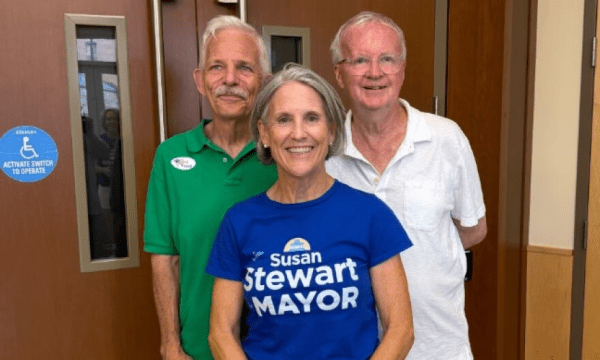
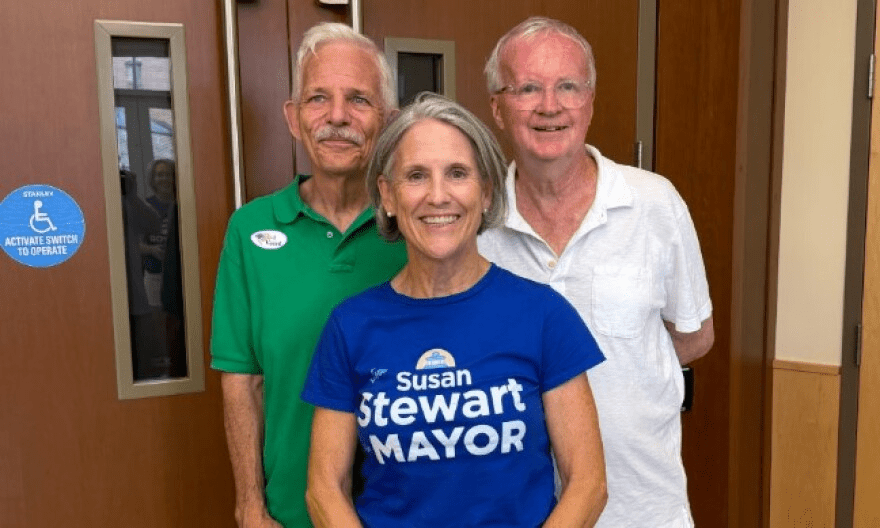
Residents of Rehoboth Beach chose a new mayor last weekend. Susan Stewart was elected by a wide margin, winning more than 60% of the vote out of four mayoral candidates.
Stewart’s win is significant; she will be the first openly gay mayor of Rehoboth Beach, and the first woman elected mayor in decades.
The win comes only a year after Stewart was elected to the city’s Board of Commissioners.
“I went knocking on all these doors for the second summer in a row, because I ran last year for commissioner,” Stewart told WHYY News. “Every commissioner should have to do it because it’s such an enlightening experience to sit down and hear people.”
She said she didn’t have plans to run for mayor after that election, but was encouraged to campaign by local residents, leaders and organizations. Stewart said it took her a long time to think about running again, but decided to start campaigning as she felt she was the only person right for the position.
Preserving Rehoboth Beach’s charm
Stewart started her professional career as an attorney, but spent most of it in financial services. She is originally from Bucks County, Pennsylvania, and lived in Washington, D.C., prior to Rehoboth Beach. She had a vacation home in the city since 2013, but moved to the beach full time during the COVID-19 pandemic.
During her campaign, Stewart emphasized her desire to preserve the character of Rehoboth Beach. She told WHYY News there is a physical charm to the city, showcased through old buildings, outdoor spaces and the beach itself.
Stewart also said there is a fun atmosphere to the area, pointing to specific traditions like the Mrs. Roper Romp, where crowds of people dress up like the character Mrs. Roper from the 1970s sitcom “Three’s Company,” and walk through the city.
“I don’t have the skill set to articulate what I like about it, but I know I like it,” Stewart said.
Before her term as an elected official, she served on the city’s Planning Commission, as well as the Mixed-Use Zoning Ordinance Task Force and Stormwater Utility Task Force.
While serving in these groups, Stewart said she learned about zoning codes, challenges in the commercial district and the city’s comprehensive development plan. It outlines goals and policies for how the city’s land is used. That includes increasing mixed-use developments, workforce housing, walkability and how bicycle-friendly the city is. When Stewart decided to run, she said the city was at a tipping point with expanding growth, business and tourism.
“We really needed to be very thoughtful and purposeful about what we see as the future of Rehoboth Beach, and that it needed a leader that would help us articulate that in a way that preserves our quality of life and our charm that was getting away from us,” Stewart said.
Stewart said that more than 60% of the city’s revenue is tourism related, including parking, the hotel accommodations tax and the short-term rental tax, while about 10% comes from property taxes. According to Stewart, the majority of the voting population in town are property owners, while “revenue generators are a different cohort.”
“What we need to do as a community of engaged residents is to figure out how we preserve that revenue stream, but perhaps more importantly, how we find a way to preserve our quality of life, because some of the tourism is what causes tension,” she said.
Stewart said that she plans to continue having the city consult with experts ranging in topics from urban planning to business development to traffic, as well as gather community input on what the city should look like over the next decade. Their input will help form a city master plan.
“I believe all our interests are aligned, residents and business owners and commercial property owners and developers. It’s just never been considered holistically before,” she said. Rehoboth Beach adopted its first five-year strategic plan in May 2025, and is currently in the process of rewriting its zoning code. Stewart said this is foundational to creating a master plan.
“Harmonizing our code will be important, because there are gaps in our existing code that lead to tensions,” she said. “If a zoning code or building code doesn’t address something clearly, then that leaves it subject to interpretation.”
Last month, the city hosted a week’s worth of events and public meetings with the urban planning group Dover Kohl & Partners to gather community feedback on zoning changes.
The city reported that some of the top concerns from residents involved downtown revitalization, increasing mixed-use development and workforce housing, reducing parking requirements and traffic, and supporting local business and cultural and art programs.
Stewart said the events during the week, like a walking tour of the city, helped visualize some of these ideas.
“When you turn onto Rehoboth Avenue, it’s our boulevard, and it’s the boulevard to our beautiful nature and our boardwalk, but it’s filled with cars,” she said. “Our forebears did a great job of laying out the city, but it was done decades and decades ago.”
To Stewart, the event was valuable to the city and she believes it’s important to keep engaging in consistent dialogue with residents.
Mike Venanzi is a business owner and board member for Rehoboth Beach Main Street, a nonprofit designed to promote the downtown area of the city. He said he supports Stewart as mayor, and believes her election will benefit the city as a whole. “I think having a commissioner and a mayor that welcome the business owners, speak with them, invite them to have conversations, are good for business, good for the residents of Rehoboth and good for the tourists,” Venanzi said. “That’s really [what] Susan and the entire crew there are focused on that.”
He said he hopes that during her term, Stewart is able to encourage growth as well through policy.
“Some of the growth that should have happened here in town — that was really stalled — because of rules, regulations that don’t make sense anymore,” Venanzi said.
Stewart said she also wants to make the city government more efficient. She said that after she was elected commissioner, she realized that the governing body can keep city staff from getting work done by being too involved in daily operations.
“I’ve been trying to work on a set of rules for us as a governing body that will help us get back to the point where we can concentrate on strategy and vision and let the professionals execute that vision,” she said. A historic election
Robin Brennan is the executive director for CAMP Rehoboth, a nonprofit focused on cultivating an inclusive environment for LGBTQ+ individuals. She described the election as “incredible.”
“My first thought was really about representation and how much it matters,” Brennan said. “When people see themselves reflected in leadership positions, it sends a powerful message about who belongs and that our voices matter, that we’re heard.”
Rehoboth Beach has had a strong LGBTQ+ presence for decades, and Brennan said having an openly gay mayor reflects an important population that has shaped the city’s history.
The Human Rights Campaign’s Municipal Equality Index, which rates cities based on how their policies serve LGBTQ+ residents, issued Rehoboth Beach a perfect score last year. It was an increase from the 61 out of 100 the city received in 2024. City officials cited a stronger partnership with CAMP Rehoboth as the reason the score improved.
Stewart said she believes community members and organizations like CAMP Rehoboth have helped the city become more welcoming. Though she acknowledges that there are still struggles for LGBTQ+ people, she said she feels there is less division in Rehoboth Beach.
“This is just a place where everyone are people, and that’s the aspiration for everything,” Stewart said.
Brennan said she hopes that partnership can continue to grow under Stewart’s leadership.
Seattle leaders could soon distribute $300,000 to LGBTQ+ organizations to welcome displaced transgender people to the city. The boost for local nonprofits comes as social services feel the strain of a massive influx of people fleeing persecution in Republican-led states.
The Seattle City Council’s Finance, Native Communities & Tribal Governments Committee voted last week to allot money from the city’s JumpStart Fund to the Seattle Human Services Department, according to Source One News. The increase in LGBTQ+ people moving to Washington comes as many Republican-controlled states enact policies hostile to LGBTQ+ rights, from outlawing gender identity-related health care for minors to criminalizing the use of restrooms that do not correspond with a person’s sex assigned at birth.
The JumpStart Fund comes from revenue generated by a tax on the city’s biggest employers and helps pay for housing services and economic recovery efforts launched after the COVID-19 pandemic.
Councilmember Alexis Mercedes Rinck proposed a budget amendment allotting $300,000 for grants to organizations that serve the LGBTQ+ community. The money won’t be restricted to serving trans and queer refugees from other states, but the proposal comes as organizations helping those populations plead for support.
Seattle’s LGBTQ Commission in May formally requested that Seattle Mayor Katie Wilson declare a state of civil emergency because of the mass migration to the Emerald City. To date, the city has not officially declared such an emergency.
“Community-based organizations are already responding to this crisis: Gender Justice League, TRACTION, KOI, MANTIS, UTOPIA, Seattle’s LGBTQ+ Center, and other citywide and countywide organizations and mutual aid networks have provided support for 2SLGBTQIA+ individuals and families. Many IDPs have relocated from states such as Texas, Florida, Tennessee, Kansas, and Idaho due to anti-trans legislation, threats to personal safety, and barriers to healthcare and legal recognition,” reads a recommendation from the commission.
The increase in displaced LGBTQ+ people has caused significant new demand for services, the commission said, including emergency financial aid, transportation, housing assistance, legal help, safety planning, community support, and access to gender-affirming care.
Funding for the grants must now be approved by the full Seattle City Council. The funding was not included in a budget recommendation from Wilson’s office.
The government agency Health Canada announced last week it has ended its restrictions on gay and bisexual sperm donors.
Aziz M. told CBC he has “had a wonderful experience” as a sperm donor, with one child conceived with his sperm remaining an active part of his life. But when he encouraged other queer friends to donate, he realized it wasn’t an option for many.
Health Canada’s policy until 2024 banned men from donating sperm if they had sex with other men within three months due to an alleged higher risk of HIV and other STIs. Aziz challenged the policy in 2023.
“It kind of reminded me of all the prejudice that we gay and bisexual men get in life and all the negative opinions that society often holds against us,” he explained. “It felt like it was a group judgment. Like, anybody from that group is having, you know, risky sexual behavior and they’re diseased.”
He decided to continue the suit even after Health Canada changed the language from banning men who have sex with men to anyone engaging in anal sex. Aziz felt that was merely transferring “an explicit discrimination to an implicit one” since “the same group of people are more likely to be disqualified.”
Affidavits submitted by three medical experts explained that the process in place to screen sperm for infectious disease was sufficient without needing to ban anyone for sexual behavior, CBC reported.
Dr. Mona Loutfy, who specializes in infectious diseases, reportedly wrote that HIV testing methods today “are highly sensitive and accurate, such that there is effectively no residual risk associated with current testing methods.”
And now, before Aziz presented the case in court, Health Canada announced it will completely eliminate the sexual behavior questions targeting gay and bisexual men from the donor screening process. In a statement, it said, “The Government of Canada is committed to making sure that sperm and ova donation policies are safe, non-discriminatory and based on scientific evidence.”
Bennett Jensen, legal director for the LGBTQ+ advocacy group Egale Canada, called the case “an important opportunity to examine long-standing assumptions about sexual orientation in relation to HIV.”
Jensen also told CTV News he is “filled with so much gratitude towards Aziz for tirelessly fighting this issue and not being willing to give up. It’s incredibly burdensome to be handling litigation, especially with respect to something that’s so personal. And I think that he’s done just an incredible public service for Canadians.”
Gregory Ko, a lawyer on the case, called the move “an important and precedent-setting step in ending decades-long discrimination against gay and bisexual men.”
Another lawyer, Frank Nasca, said the change “really took a massive push from Aziz and from others to get the government to really look closely.”
Canada does not allow payment for sperm donation and so suffers from a lack of supply. Emily McIntosh, executive director of the Canadian Fertility and Andrology Society, told CBC eliminating the unnecessary rules could help.
Aziz is excited about the update and hopes more queer men will donate as a result. “For a lot of queer people, it’s very hard to have to build our own family and to have our own kids,” he told CBC. “It takes a lot of money and a lot of effort. This is a way to contribute and enrich our lives at the same time.”
The Central European nation of Slovakia rejected a gay couple’s attempt to have their marriage registered, possibly setting up a clash with the European Union (EU).
Ivan Novotný and Metod Špaček, who are both Slovak, got married in Austria in 2020. Both nations are EU member states.
This past December, they applied to have their marriage registered in their country, and they finally got a response this past Monday in the form of a rejection letter. IBTimes notes that the letter didn’t come from the registrar’s office like it normally would have, but directly from Slovak Minister of Interior Matúš Šutaj Eštok.
“We submitted our application to the registry office, and it was the registry office that should have made the decision,” Novotný said. “Instead, we learned of the rejection—which was based on weak legal arguments—only through a letter from the incompetent Šutaj Eštok.”
Novotný claims that Slovak Prime Minister Robert Fico went to the registry office on June 12 to order them to refuse to register the marriage certificate, citing the country’s recently adopted constitutional ban on same-sex marriage rights.
The couple plans to sue to challenge the decision. “I reiterate that I have no doubt we will ultimately achieve equality for all in Slovakia as well,” Novotný said.
The Court of Justice of the European Union (CJEU) ruled last November that EU member states had to recognize same-sex marriages performed in other EU member states in a lawsuit involving a Polish couple that married in Germany. While a Polish court originally abided by the CJEU ruling, the country’s Constitutional Tribunal ultimately overturned that decision in July.
The European Commission denounced Slovakia’s rejection of the marriage as well as its defiance of the CJEU decision.
“One of the foundations of our Union is that EU law, as interpreted by the Court of Justice of the EU, takes precedence over national law,” the European Commission said in a statement. “All Member States have the obligation to fully implement all judgments of the CJEU. We will continue to monitor the situation very closely and, if necessary, will not hesitate to use all the instruments at our disposal.”
Slovakia is a Christian-majority nation where same-sex relationships have been legal since 1962, when it was part of Czechoslovakia. Sexual orientation and gender identity are protected categories under the nation’s anti-discrimination laws, and LGBTQ+ people can serve in the military.
The federal agency that runs Medicaid and the Children’s Health Insurance Program will no longer pay for gender-affirming care for minors who don’t identify with the sex they were assigned at birth.
The Department of Health and Human Services announced Aug. 12 that it finalized a rule after more than a year of taking steps to use the federal government’s power to limit this type of medical care.
“We are not going to pay for our innocent children to undergo these barbaric surgeries and practices, which result in unthinkable and irreversible harm to their young bodies,” President Donald Trump wrote in a social media post.
The rule goes into effect Oct. 13 and includes a six-month grace period for children with government insurance who are currently using hormone therapy, according to HHS. It does not affect mental health coverage.
“Children deserve our protection, not experimental interventions that pose serious risks and convey no proven benefits,” Dr. Mehmet Oz, who runs the Centers for Medicare and Medicaid Services, said in a news release. He said the move is “protecting children from potentially irreversible harm.”
HHS did not say how much federal money it currently spends on surgeries, puberty blockers or hormone therapy, or how many children enrolled in government health insurance are receiving gender-affirming care.
Most gender-affirming care is sought by young adults, not children, but as many as one in four people getting this type of care are covered by Medicaid.
Rep. Mark Takano, a Democrat who chairs the Congressional Equality Caucus, called the move “another cruel, overreaching attack” on transgender youth.
“Decisions about a young person’s care should be between the patient, their parents, and their provider – not politicians,” Takano wrote.
Trump first took action against gender-affirming care for minors with an executive order in January 2025. In April 2025, Oz told states not to use Medicaid funding for surgeries or hormone treatment.
In December, HHS Secretary Robert F. Kennedy Jr. announced his department was beginning an administrative process to end funding for hospitals who provide gender-affirming surgeries.
The Food and Drug Administration, which regulates medical devices, also sent warning letters to manufacturers of breast binders telling them not to market their devices to children with gender dysphoria.
After a nearly four-year legal battle, Fabiana Banzer and Scarlett Rocha became the first same-sex couple to be civilly married in the South American country of Bolivia. Despite these women’s recent wedding, the country’s constitution still forbids same-sex marriages. Nevertheless, their legal victory could open the door to other same-sex couples eventually marrying.
The couple applied for a civil marriage certificate on October 12, 2022, with the legal support of the non-governmental LGBTQ+ rights organization IGUAL Bolivia. The organization noted that, on January 9, 2018, the Inter-American Court of Human Rights (IACHR), which oversees 21 Caribbean, Central, and South American countries issued an advisory opinion stating that countries that had signed onto the 1969 American Convention on Human Rights should grant same-sex couples “accession to all existing domestic legal systems of family registration, including marriage, along with all rights that derive from marriage.”
However, Article 63 of Bolivia’s constitution limits marriage to heterosexual couples. The lengthy subsequent legal battle for Banzer and Rocha resulted in courts issuing two constitutional injunctions, an extraordinary judicial remedy used to protect citizens against actions that violate basic constitutional rights, Merco Press reported.
The couple eventually won their battle, but their court victory applies only to them, and no legislative or constitutional changes have occurred to allow same-sex marriages nationwide. Nevertheless, the victory could open the door to similar challenges that could accelerate the path towards marriage equality.
“Scar and I have been together for more than 4 years,” Banzer wrote in a public August 8 Facebook post. “It makes me very happy to announce to our family and friends that after a legal fight of 3 years and 10 months we have finally been able to access civil marriage as two women.”
Interestingly, Banzer and Rocha are the second same-sex couple to win legal recognition from their home country. In December 2020, David Aruquipa and Guido Montaño won their court battle to become the first same-sex couple to register their partnership as a civil union (a form of legal recognition that bestows many of the same legal privileges as marriage).
In Aruquipa and Montaño’s case, the Second Constitutional Chamber of the La Paz departmental court issued a ruling in the couple’s favor that was upheld by the Plurinational Constitutional Court. But similar to Banzer and Rocha’s case, the men’s legal victory didn’t immediately open the door to legalized same-sex unions across the country until further legal challenges resulted in spring 2023 court rulings requiring Bolivia’s Civil Registry Service to allow same-sex unions.
Aruquipa said on Sunday that he considers the women’s recent marriage to be a significant development in the country’s longer journey towards marriage equality. “Rather than speaking of a beginning, we should speak of a historical continuity: from the first recognized union to the first civil marriage,” he said.
While Bolivia doesn’t criminalize same-sex sexual encounters and has LGBTQ+ anti-discrimination protections, same-sex couples and partners aren’t legally allowed to adopt children, lesbian couples aren’t guaranteed access to in vitro fertilization (IVF), and conversion therapy remains legal.










You must be logged in to post a comment.