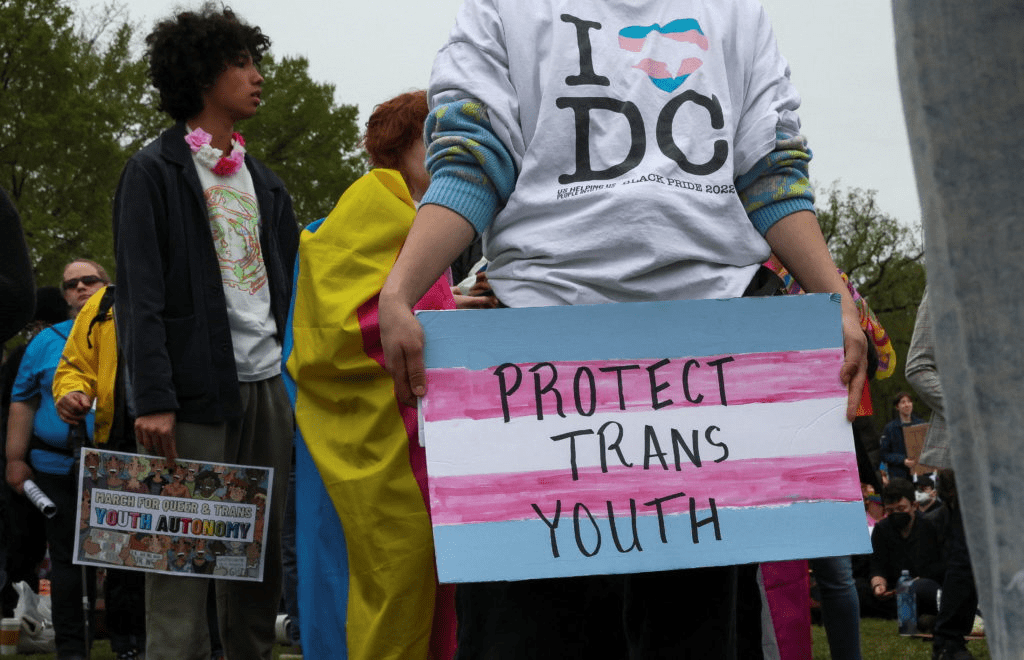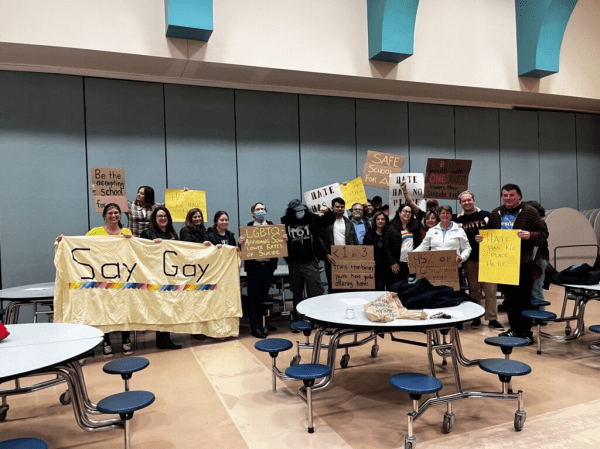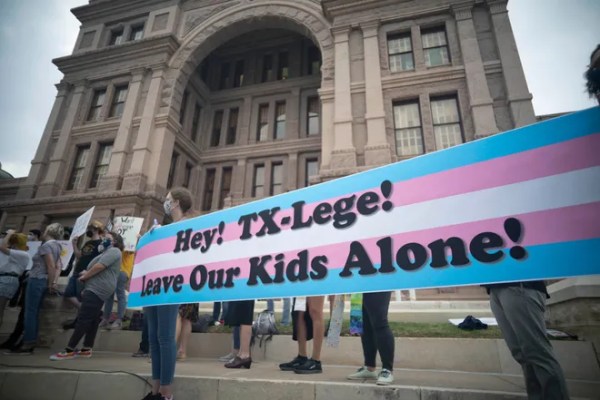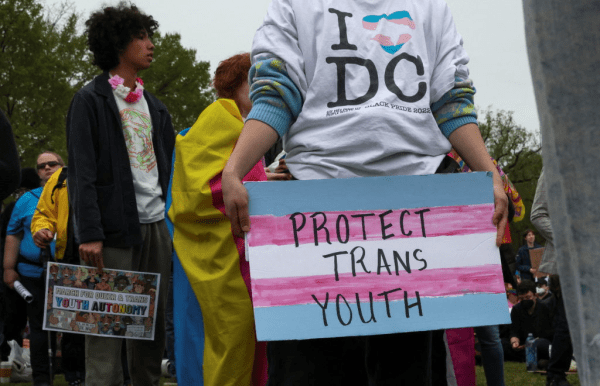
Republican missteps led to the demise of two anti-trans bills in the Mississippi legislature.

The GOP couldn’t get its act together before a key legislative deadline.

Two bills deemed transphobic in the Mississippi legislature failed to advance after Republican legislators couldn’t reconcile their differences before a Monday cutoff, as per the Associated Press. One bill aimed to mandate that transgender individuals use facilities in public establishments corresponding to the gender assigned on their birth certificates. The other sought to affirm the binary notion of sex, stipulating that sex is determined solely at birth and consists of either male or female genders.

The Republican factions in the state House and Senate had previously approved distinct iterations of both bills. However, they failed to reach a consensus on a unified version of each bill to present to Gov. Tate Reeves (R). Reeves had previously endorsed laws prohibiting transgender athletes from participating in competitive sports teams corresponding to their gender identities and banning transgender minors from accessing gender-affirming healthcare.

State Rep. Joey Hood (R) argued that the bills, now defunct, were crucial “to ensure boys utilize boys’ bathrooms and girls utilize girls’ bathrooms.” The proposed bathroom legislation would have empowered individuals to file lawsuits against transgender individuals using bathrooms or changing areas aligned with their gender identity. However, the bill included exemptions for children under 12, emergency medical personnel, custodial staff, janitors, and individuals requiring assistance, as per the AP. Stay engaged with your community.

State Representative Zakiya Summers (D), who is Black, drew parallels between the bathroom bill and discriminatory legislation from the Jim Crow era, which imposed restrictions on which bathrooms Black people were permitted to use.

Summers remarked, “It brought to mind the struggles my ancestors faced when they were barred from using certain bathrooms and wouldn’t even consider dipping a toe in a pool.”

The second bill, now defunct, titled the “Mississippi Women’s Bill of Rights,” aimed to define gendered terms such as “woman,” “man,” “mother,” “father,” “female,” “male,” and “sex” based on the sex assigned by doctors at birth. This legislation would have hindered transgender individuals from altering the gender designation on their official government documents.

In March, when Reeves signed the prohibition on gender-affirming care into law, he was accompanied at the signing event by anti-trans filmmaker and Daily Wire columnist Matt Walsh, along with activists from Alliance Defending Freedom and Madison County Moms for Liberty, two organizations known for their opposition to LGBTQ+ rights.

A statement from The Spectrum Center, an LGBTQ+ advocacy group in Hattiesburg, characterized Reeves’s approval of the bill as “an act of violence,” asserting that he and the legislators advocating for it are deliberately disregarding the specific requirements of transgender youth, obstructing their access to medical treatment, and conveying a stigmatizing and exclusionary message.

Professional medical organizations such as the American Medical Association, the American Academy of Pediatrics, and the American Psychiatric Association, among others, have unequivocally supported gender-affirming care, deeming it safe, effective, and vital for the overall health of transgender individuals. Research indicates that gender-affirming care significantly enhances the mental well-being of transgender youth.

Florida colleges are closing LGBTQ+ centers due to DeSantis’ “Anti-Woke” campaign.

This blog originally appeared at THEM.

Governor Ron DeSantis signed a law last year prohibiting Florida College System schools from sustaining DEI programs such as LGBTQ+ centers.


This week, the University of North Florida (UNF) closed three offices focused on diversity, equity, and inclusion (DEI) in compliance with a law enacted last year that bars state funding for such initiatives.

As reported by WTLV, the Intercultural Center, Interfaith Center, LGBTQ Center, Women’s Center, and Office of Diversity and Inclusion at UNF have been closed this week. Additionally, the Victim Advocacy Program, responsible for addressing sexual misconduct on campus, has been transferred to the office of the Dean of Students, according to UNF Media Relations Manager Amanda Ennis.

Since last year, the University of North Florida (UNF) has been gradually closing all five offices, including the LGBTQ+ center, following the enactment of Senate Bill 266 by Florida Governor Ron DeSantis. This bill prohibits Florida College System schools from maintaining Diversity, Equity, and Inclusion (DEI) programs like LGBTQ+ centers. Additionally, state-funded schools are barred from engaging in political or social activism and offering courses based on theories of systemic racism, sexism, oppression, and privilege. The legislation, authored by state Sen. Erin Grall, who previously served in the state House of Representatives, has been part of a series of DeSantis-approved bills, including various abortion restrictions and the anti-trans “Safety in Private Spaces Act.”

In January, the Florida Board of Governors, responsible for overseeing the state university system, announced plans to gradually eliminate these programs, prompting protests on campuses. Carlos Guillermo Smith, a policy director at Equality Florida, a LGBTQ+ advocacy group, condemned the Board for complying with Governor DeSantis’ directives. Smith expressed disappointment, stating, “The Board of Governors had the opportunity to hit the brakes, but instead, shamefully followed their censorship agenda off a cliff in service to DeSantis’s failed political ambitions,” in an interview with NBC.

According to Ennis’s statement to WTLV, employees who previously worked at the now-closed offices “have transitioned to other available positions within the university.” Prior to the closure of the programs, several staff members chose to depart from the university. Some of them joined OneJax Inc., an interfaith diversity nonprofit that separated from its affiliation with UNF in July last year.

“I realized I needed to find another avenue for this important work, or it would simply cease to exist,” explained Matt Hartley, who previously served as the director of UNF’s Interfaith Center and now holds the position of director of interfaith programs at OneJax. This statement was made in an interview with the Florida Times-Union back in November.

With a history of opposing LGBTQ+ rights, DeSantis has directed his political agenda towards DEI programs as a central component of his ongoing “anti-woke” campaign in Florida. In early 2023, he effectively gained control of the board of New College, a progressive liberal arts institution, and in August of the same year, he eliminated the university’s gender studies program through a motion proposed by board member Christopher Rufo, known for his involvement in the anti-LGBTQ+ “groomer” panic. DeSantis’ actions have sparked frequent protests from students, some of whom have alleged experiencing police brutality during demonstrations.

Over the past few years, anti-DEI policies have become increasingly common, particularly in conservative strongholds. In March, Alabama enacted a law prohibiting DEI programs and courses, labeling them as “divisive concepts.” Additionally, the law mandated strict segregation of multi-stall restrooms based on sex assigned at birth. In another instance, Republicans in March attempted to defund DEI programs through multiple amendments to the omnibus spending package. However, these efforts were thwarted, and the final budget did not include such provisions.


Four Southern states are suing the Biden admin for the right to discriminate against LGBTQ+ kids|LGBTQNation

This blog originally appeared at LGBTQ NATION.

They assert that the recently implemented Title IX regulations, which prohibit harassment and discrimination, infringe upon the rights of parents.

Four Southern states, in collaboration with four conservative organizations, have filed a lawsuit against the Biden administration regarding a recent regulation prohibiting discrimination against the LGBTQ+ community in education.

Earlier this month, the Department of Education (DOE) introduced new Title IX regulations aimed at addressing the needs of LGBTQ+ students. These regulations interpret Title IX, which prohibits sex-based discrimination in education, as providing legal protection against anti-LGBTQ+ school policies.

The argument posits that discriminating based on sexual orientation or gender identity inherently involves considering sex, a legal reasoning previously employed by the Supreme Court in its 2020 Bostock v. Clayton Co. decision regarding workplace discrimination.

The new regulation stipulates that any educational institution receiving federal funding must refrain from discriminating against LGBTQ+ students. This could impact states and school districts with policies that either disclose LGBTQ+ students’ identities to parents or restrict transgender students’ access to bathrooms corresponding with their gender identity. Additionally, the regulations could offer students facing discrimination a legal recourse through federal courts.

Alabama, South Carolina, Florida, and Georgia are contesting the Biden administration’s authority to enact this rule, arguing that it exceeds the original scope of Title IX, as reported by CBS News. These states are joined in the lawsuit by the Independent Women’s Network, Parents Defending Education, Speech First, and the Independent Women’s Law Center.

Nicole Neily, president of Parents Defending Education, criticized the rule, stating, “The role of Cabinet agencies is to interpret laws as written by Congress – not to redefine the meaning of words to suit a fringe group of activists.” She further argued that the rule undermines parents’ rights and freedom of speech.

Florida Attorney General Ashley Moody emphasized the need to protect biological females and claimed that the rule deviates significantly from the original intent of Title IX.

The lawsuit alleges that the rule clashes with state laws governing various aspects of education, including harassment, bathroom policies, sports participation, and parental rights.

Notably, the new rules do not address transgender student-athletes and their eligibility for sports teams. The Department of Education is reportedly planning to issue a separate rule specifically addressing this matter.

In a separate lawsuit, Texas Attorney General Ken Paxton challenged the new rule, arguing that Biden misinterpreted Title IX. Paxton claimed that the Supreme Court’s Bostock ruling, which interpreted Title VII, differs from Title IX’s language and scope.

Governor Greg Abbott of Texas directed the Texas Education Agency to disregard the new Title IX rules, echoing similar actions taken by other states such as Louisiana, Florida, Oklahoma, and South Carolina. Paxton asserted that the Biden administration’s actions endanger women’s legal protections and vowed to oppose what he described as “extremist, destructive policies.”

Texas AG sues Biden administration over Title IX rules that expand transgender student protections | The Hill

This blog originally appeared at THE HILL.

Texas Attorney General files lawsuit against Biden administration regarding Title IX regulations broadening protections for transgender students.

On Monday, Texas Attorney General Ken Paxton (R) initiated legal action against the Biden administration, challenging the newly established federal nondiscrimination safeguards for transgender students. This lawsuit targets alterations made to Title IX by the Education Department, which, after more than a year of postponements, recently solidified comprehensive amendments. Scheduled for implementation on August 1, these revisions encompass protections against discrimination based on sexual orientation and gender identity, provoking discontent among certain conservative circles.

Paxton, in a press release announcing the lawsuit, vehemently opposed what he termed Joe Biden’s arbitrary alteration of Title IX, alleging it compromises legal safeguards for women in favor of an extreme fixation on gender ideology. He characterized this endeavor as patently unlawful, undemocratic, and detached from reality.

Notably, the Education Department refrained from immediate comment on the matter.

The lawsuit was filed in the Amarillo Division of the Northern District of Texas, where U.S. District Judge Matthew Kacsmaryk is likely to preside. Kacsmaryk, the sole federal judge in the division, has publicly voiced opposition to laws safeguarding LGBTQ individuals, including the Equality Act, which endeavors to designate sexual orientation and gender identity as protected classes.

Before his appointment to the federal bench in 2019 by former President Trump, Kacsmaryk submitted a brief in support of the Gloucester County School Board in Virginia in 2016. This brief contested a lawsuit filed by Gavin Grimm, a transgender student who was denied access to the boys’ restroom at his school, alleging discrimination under Title IX.

In his brief, Kacsmaryk advocated against interpreting “sex” in Title IX to include gender identity.

In the lawsuit filed on Monday, Paxton criticized the Biden administration’s new Title IX regulations as ambiguous and excessively broad, contending they misconstrue the Supreme Court’s ruling in Bostock v. Clayton County. He asserted that these regulations wrongly conflate discrimination based on sexual orientation and gender identity with sex discrimination.

The Biden administration frequently cites the landmark 2020 Supreme Court ruling as a basis for fortifying federal protections for transgender individuals. A recent rule finalized by the Health Department that enhances the Affordable Care Act’s ban on sex discrimination similarly relies on this precedent.

Paxton, alongside America First Legal, raised concerns in the lawsuit about the adverse impacts of the final Title IX rule, arguing that expanding the definition of sex discrimination to encompass gender identity will detrimentally affect women and girls. Moreover, Republican-led states, including Louisiana, have vowed to challenge the administration’s new Title IX rules, asserting they will penalize individuals who decline to use a transgender person’s preferred name or pronouns.

Louisiana, joined by Montana, Idaho, and Mississippi, filed a lawsuit on Monday, contending that the new regulations significantly weaken Title IX. It’s worth noting that all federally funded schools must adhere to these final regulations to receive government funding.

Additionally, the Biden administration has yet to finalize a separate rule regarding athletics eligibility. A proposal disclosed by the Education Department last April seeks to prevent schools from implementing policies that outrightly bar transgender student-athletes from participating in sports teams aligned with their gender identity.

Maryland Governor Signs “Freedom to Read Act” Into Law | Truthout

This blog originally appeared at TRUTHOUT.

“Maryland takes a bold step forward in safeguarding the rights and dignity of LGBTQ+ youth and educators.”

On Thursday, Maryland Gov. Wes Moore (D) enacted HB 0785, known as the Freedom to Read Act, into law, prohibiting libraries that receive state funding from banning books.

“Schools should be working to build inclusive environments that reflect the diversity of their student body and community. It is especially critical that state leaders like Governor Moore rise up for policies that foster inclusive learning when resources and supports for LGBTQI+ youth continue to be targeted by extremists across the country,” GLSEN’s Executive Director Melanie Willingham-Jagger said in a statement emailed to Truthout.

HB 0785 safeguards the autonomy of libraries that receive state funding by prohibiting the censorship of books based on the creator’s background, origin, or viewpoints, as well as partisan disapproval. The bill also ensures protection for school and public library staff who adhere to the state library standards outlined in the bill, shielding them from retaliation. Violation of these provisions could result in the loss of state funding for libraries.

“This session, I wanted to put some safeguards and best practices in place to prevent intolerance and hate from taking further root in our state institutions and schools,” said Speaker Adrienne Jones (D), one of the sponsors of the bill.

In the previous year, Maryland witnessed 148 book challenges in both public schools and libraries, placing the state among the 17 nationwide to exceed 100 contested titles. According to the Maryland State Library Agency, there has been a 133 percent surge in formal challenges to library collections since 2019. The agency’s research revealed that 53 percent of librarians felt hesitant about acquiring specific books, despite believing they would benefit students, while 52 percent expressed that book challenges have added complexity to their roles.

“We are protecting libraries, librarians and literature,” said state House Delegate Dana Jones (D).

According to the American Library Association, nearly half of the challenged titles in 2023 revolved around themes involving LGBTQ+ individuals or Black, Indigenous, and other people of color. Banning books with these themes leads to the “othering” of students who share these identities, advocates say.

“Our public schools should help our children pursue their dreams, learn new ideas, and understand different perspectives. That means giving students an honest and accurate education without banning books and politically motivated censorship,” the Maryland State Education Association said in a statement. “At a time when we’re seeing record levels of attempted book bans, which are all too often motivated by extremist politics, it’s time to take a stand for an honest and accurate education by supporting the Freedom to Read Act.”

Moore also signed HB 1386, a bill requiring anti-bias training for all school employees, into law. The bill mandates the implementation of a program developed in consultation with the State Department of Education and the Professional Standards and Teacher Education Board. These guidelines must be culturally sensitive and inclusive, meeting the diverse needs of educators and students. Additionally, school boards are tasked with providing training to public school employees who frequently interact with students as part of their duties.

“With Governor Moore’s signature on HB785, the ‘Freedom to Read Act,’ and HB1386, instituting vital anti-bias training for school employees, Maryland takes a bold step forward in safeguarding the rights and dignity of LGBTQ+ youth and educators,” Willingham-Jagger said.

This article is licensed under Creative Commons (CC BY-NC-ND 4.0), and you are free to share and republish under the terms of the license.

7 suspects identified in brutal campus anti-LGBTQ+ attack. They can’t be charged with a hate crime. | LGBTQNation

This blog originally appeared at LGBTQ NATION.

Following this crime, Michigan Attorney General Dana Nessel strongly criticized the state legislature for its failure to designate LGBTQ+ individuals as a protected class.

Michigan State University police have pinpointed seven suspects linked to an assault on two university students inside the school library on Monday. The group reportedly made derogatory comments regarding the victims’ sexual identity before the attack occurred.

“The suspects assaulted two victims, with indications suggesting they targeted the victims due to their sexual orientation,” stated MSU Police and Public Safety in a release on Tuesday.

University officials confirmed that “none of the suspects are affiliated with MSU” and stated they will request prosecutors to press charges once the investigation concludes.

The victims faced harassment near the library’s entrance on the first floor, as reported by MSU spokesperson Emily Guerrant. “The two MSU students then retreated to the third-floor study area to meet with some other friends,” Guerrant told MSU radio station WKAR, detailing how the group of high school-age boys pursued them upstairs. “An altercation ensued at that point,” Guerrant added.

MSU’s library remains open to the public until 6:00 p.m., and the attack occurred at 5:50 p.m. on Monday. Although school officials did not specify the extent of the victims’ injuries, a disturbing video shared on an anonymous message board depicts the altercation amid the library stacks.

Officials emphasized the significance of the attack happening during MSU’s LGBTQ Pride Month. “Discrimination or harassment, including hate crimes, based on protected identities can have a significant impact,” stated school administrators, asserting that everyone deserves to feel safe and respected.

Currently, Michigan state law only considers racial bias for hate crime classification. Legislators have debated expanding these protections to include other groups, such as LGBTQ+ individuals, but no proposal has reached Governor Gretchen Whitmer’s desk.

Michigan Attorney General Dana Nessel highlighted the inability of prosecutors to charge the suspects with a hate crime solely based on anti-LGBTQ+ bias. “It’s not an included class under the Ethnic Intimidation Act,” Nessel explained at a press availability on Tuesday, advocating for legislative action to address this gap.

Nessel criticized proposed bills in the Democrat-controlled Michigan House and Senate as insufficient, particularly regarding sentencing guidelines for hate crime convictions. “Two years is nothing,” Nessel remarked, expressing her dissatisfaction with the proposed penalties.

Last year, Michigan lawmakers passed an “institutional desecration” bill targeting hate-motivated vandalism to various institutions, including those related to the LGBTQ+ community. However, this law only covers anti-LGBTQ+ bias in specific contexts.

As of now, twenty-two states and jurisdictions have LGBTQ+-inclusive hate crime laws, while eleven have laws protecting “sexual orientation” but not “gender identity.”

Former student describes brutal culture of anti-LGBTQ+ bullying at Nex Benedict’s high school | LGBTQNation

This blog originally appeared at LGBTQ NATION.

The sentiment echoed by the student resonates with the experiences of many: officials at Owasso High School turn a blind eye to bullying.

Just over two months following the tragic passing of Nex Benedict, a transgender teenager, the Human Rights Campaign (HRC) has unveiled a new advertisement. In it, an alum of Owasso High School recounts firsthand the culture of anti-LGBTQ+ bullying she encountered at the same school Benedict attended.

Benedict’s passing on February 8 occurred shortly after a violent altercation with three fellow students in an Owasso High School bathroom. While ruled a likely suicide by the Oklahoma state medical examiner, the incident has sparked national attention to the challenges faced by LGBTQ+ students within the Owasso school district and across Oklahoma. Benedict, described by friends as identifying as transgender and predominantly using he/him pronouns, had reported being targeted by the three students, who allegedly assaulted him because of his gender identity until he lost consciousness.

LGBTQ+ advocacy groups have condemned both the school and the Owasso Police Department for their handling of the altercation preceding Nex Benedict’s tragic passing, as well as the pervasive culture of anti-LGBTQ+ bullying reported by current and former students. In February, Human Rights Campaign (HRC) President Kelley Robinson urged Attorney General Merrick Garland to initiate a Department of Justice investigation into Benedict’s death. Robinson also reached out to U.S. Secretary of Education Miguel Cardona, urging the department to utilize its enforcement tools to prevent similar tragedies in the future. In March, the U.S. Department of Education announced an investigation into the Owasso Public School District.

The HRC advertisement, unveiled on Monday, features Marley H., a 2022 Owasso graduate, who sheds light on school officials’ neglect in addressing anti-LGBTQ+ bullying. Recounting an incident on a school trip, Marley describes a teacher’s refusal to intervene when another student repeatedly used derogatory language targeting her and her peers.

“It’s painful to realize that not only do your teachers fail to support you personally, but if a student bullies, harasses, or belittles you, they won’t take action,” she shares. “It fosters an environment where reporting issues feels futile.”

Addressing teachers who turn a blind eye to bullying and harassment, Marley emphasizes, “Consider the consequences faced by students like Nex Benedict. That’s the severity of the situation. That’s the result when you witness something and remain silent.”

Marley’s testimony echoes the sentiments of other current and former Owasso students who participated in a walkout in late February. Despite Owasso Public Schools’ official prohibition of bullying in its student conduct code, students told NBC News they were unaware of the district’s bullying policies and doubted the school’s willingness to address complaints.

“Even if an incident occurs, there’s no incentive to approach administrators or teachers because nothing will change,” remarked Ally, a senior at Owasso and a friend of Benedict’s. “I’ve witnessed this repeatedly with my friends.”

Marley points out a “trickle-down effect,” wherein students are exposed to anti-LGBTQ+ rhetoric from their parents, who, in turn, hear similar rhetoric from Oklahoma Republicans advocating anti-LGBTQ+ legislation. “These children hear their parents’ words. And these children go to school. The rhetoric passed down from elected officials to parents to children then impacts entire school districts.”

At the forefront of these elected officials is Oklahoma’s Superintendent of Public Instruction, Ryan Walters (R), known for his anti-LGBTQ+ stance. Even prior to Benedict’s tragic passing gaining national attention, Walters faced criticism from both Republican and Democratic state lawmakers for appointing Chaya Raichik, the figure behind the anti-LGBTQ+ platform “Libs of TikTok,” to Oklahoma’s library advisory committee in January.

Following Benedict’s death, a letter dated February 28 addressed to the Oklahoma state legislature, signed by over 350 public figures and LGBTQ+ rights groups, called for Walters’ removal. Additionally, in March, the Human Rights Campaign (HRC) initiated “Walters Watch,” a campaign aimed at holding Walters accountable for what the organization perceives as his “extremist rhetoric and mismanagement of Oklahoma schools,” contributing to a climate of anti-LGBTQ+ bullying and harassment.

Kelley Robinson, in a statement, acknowledged the courage of students from Owasso and elsewhere in Oklahoma who have spoken out against bullying and harassment perpetuated by figures like Ryan Walters. Robinson emphasized Marley’s story as both heartbreaking and enraging, asserting that there is a path forward. She emphasized the importance of speaking out against injustices, making it harder for the truth to be ignored. Robinson concluded that the first step towards healing is for Ryan Walters to step down.

For those in crisis or in need of support, assistance is available. You can call or text 988, or chat at 988lifeline.org. The Trans Lifeline (1-877-565-8860) offers support staffed by transgender individuals without involving law enforcement. The Trevor Project provides a safe and judgment-free platform for youth to chat, text (678-678), or call (1-866-488-7386). Support is offered in both English and Spanish at all three resources.

No Charges Will be Filed Over Nex Benedict’s Death or Preceding Fight, DA Says

This blog originally appeared at THEM.

LGBTQ+ advocates persist in urging for an autonomous inquiry into Benedict’s passing.

Tulsa County District Attorney Stephen Kunzweiler announced this week that no criminal charges would be pursued in the case of Nex Benedict’s death, referring to the altercation leading to Benedict’s demise as “mutual combat.” Benedict, a 16-year-old high school sophomore, passed away on February 8 following a confrontation with three alleged bullies the previous day, during which Benedict reported experiencing a momentary loss of consciousness. Kunzweiler, in a press release Thursday using Benedict’s former name, stated that after reviewing police reports, both Benedict and the assailants had been engaging in mutual antagonism for several days prior to the altercation, making juvenile charges untenable.

The District Attorney further referenced the pending report from the state Office of the Chief Medical Examiner, indicating that the autopsy did not reveal any internal injuries consistent with causing Benedict’s death. Instead, Kunzweiler reiterated the preliminary determination that Benedict died from a combined overdose of diphenhydramine and fluoxetine, commonly known as Benadryl and Prozac respectively. While medical experts acknowledge such overdoses are rare, they are not without precedent.

Despite Kunzweiler’s stance, LGBTQ+ advocates and Benedict’s family remain skeptical as more details emerge. The Benedict family’s legal representation, Biby Law Firm, released a statement last week containing additional autopsy findings, including injuries contradicting claims that the assault on Nex was insignificant. These injuries reportedly include lacerations, hemorrhages, and bruising across Benedict’s body.

Amid mounting concerns, suspicions over the credibility of the official autopsy escalated following revelations about the unaccredited status of Oklahoma’s Chief Medical Examiner’s Office since 2009. Advocates have also criticized state Superintendent for Public Instruction Ryan Walters, alleging his anti-trans stance and support for controversial figures created an unsafe environment for LGBTQ+ students in Oklahoma.

GLAAD president and CEO Sarah Kate Ellis condemned various authorities involved in the case, calling for an independent investigation into Benedict’s death and holding leaders accountable for serving their communities with fairness and compassion.

Bomb Threat Interrupts Drag Story Hour Event at Arlington Gay Bar

This blog originally appeared at BLADE.

The event at Freddie’s Beach Bar resumed following a thorough search by police and a bomb-sniffing dog. After ensuring the safety of the premises, the event continued without further interruption.

During a Drag Story Hour event at Freddie’s Beach Bar, a popular gay bar and restaurant in Arlington, Virginia, attendees were unexpectedly evacuated due to a bomb threat received via email on April 6. Parents and children participating in the event were ushered into the rear outdoor seating area and parking lot while law enforcement, including a bomb-sniffing dog, conducted a thorough search of the premises. Fortunately, no explosives were found.

Freddie Lutz, the owner of Freddie’s Beach Bar situated in Crystal City, South Arlington, disclosed that the threatening email arrived during the inaugural Drag Story Hour event. This event, where drag performers read children’s stories to accompanied families, had drawn a sizable crowd of neighborhood residents, including kids, babies, and even a grandmother. Despite the disruption, attendees patiently waited until authorities gave the all-clear signal before returning inside.

During the Drag Story Hour event at Freddie’s Beach Bar, two protesters made their presence known outside the venue. Freddie Lutz revealed that prior to the event, drag performer Tara Hoot had warned him about potential disruptions, as some of her previous Drag Story Hour events had faced bomb threats and protests.

“We were somewhat prepared, mentally at least,” Lutz commented. “As anticipated, we received an unsettling email threatening both the bar and me personally at my residence, although thankfully nothing was found there,” he added, referring to his nearby South Arlington home.

Arlington police responded to the bomb threat report, conducting a thorough search of the premises and finding no evidence of criminal activity. The investigation remains ongoing.

Tara Hoot, who has been organizing Drag Story Hour events in the D.C. area for over a year, revealed that several of her past events have encountered hostile protests or bomb threats, with no actual explosives ever discovered. At the Freddie’s event, two protesters, a man and a woman, invoked religious reasons for opposing the Drag Story Hour, spreading messages of intolerance and attempting to shame parents for attending with their children.

Despite such opposition, Hoot’s performances cater to children’s interests with songs, readings from books like “The Very Hungry Caterpillar,” which promotes positive themes like bravery, and engaging activities like blowing bubbles and using rainbow ribbons. She describes the atmosphere as one of fun, love, and joy.

Originating in San Francisco in 2015 under the auspices of an organization named Drag Story Hour, these events have spread nationwide, occurring in various settings including libraries, bookstores, restaurants, and bars. The organization aims to create spaces where children can witness individuals defying conventional gender norms, fostering a vision of a world where everyone can express their true selves freely.

Kansas Governor Vetoes gender-affirming Trans Youth Care Ban

This blog originally appeared at ABC NEWS.

Last year, Governor Laura Kelly vetoed a comparable bill.

Kansas Governor Laura Kelly, a Democrat, rejected a measure aiming to prohibit gender-affirming medical care for transgender minors within the state.

In her statement on Friday, Kelly denounced the proposed legislation as divisive, asserting that it unfairly targets a small segment of Kansans and imposes governmental interference in parental decision-making regarding child-rearing and healthcare. “I do not view this as a conservative principle, nor does it align with the values of Kansas,” she affirmed.

This isn’t the first time Governor Kelly has stood against such legislation. Almost a year prior, she vetoed a similar bill, citing the adverse economic consequences of discriminatory measures. “Corporations have unequivocally expressed their reluctance to engage with states endorsing discrimination against employees and their families,” she emphasized.

Kelly further emphasized that such bills not only strip away the rights of Kansans but also expose the state to costly legal battles, ultimately undermining its economic prosperity and potential for securing new business ventures.

State GOP legislators are poised to challenge Kelly’s veto, potentially overriding it through legislative means.

To achieve this, the legislature must secure a two-thirds majority vote, equivalent to 84 votes in the House and 27 in the Senate. While the Republican-sponsored bill has garnered sufficient support in the Senate to surpass the threshold required for an override, the situation in the House is more nuanced. In addition to existing support, two House Republicans who were previously marked as absent must also cast their votes in favor of the bill to tip the balance and override the governor’s decision.

The legislation in question places limitations on the use of puberty blockers, a medical intervention utilized by transgender minors to delay the onset of gender-specific characteristics associated with puberty. It’s important to note that puberty blockers are reversible and commonly employed for children undergoing premature puberty.

The bill also places restrictions on hormone therapy, which older minors may utilize to achieve desired changes in certain gender-specific characteristics, such as their body shape, hair distribution, or voice pitch. Unlike puberty blockers, the effects of hormone therapy are less reversible. Additionally, the bill imposes limitations on surgeries, which medical professionals assert are rare for minors and typically only performed in severe cases.

Nevertheless, the legislation provides exceptions for these procedures for minors who are intersex, possess ambiguous sex characteristics, or suffer from disorders of sex development.

Healthcare providers found in violation of these provisions could face civil repercussions and potential revocation of their licenses if the bill becomes law.

Moreover, the bill prohibits state employees or facilities from facilitating a minor’s social transition, which encompasses changes in pronouns, names, attire, and other aspects.

Advocates of gender-affirming care bans argue that such treatments are detrimental to minors. Some proponents advocate for transgender youth to delay accessing gender-affirming care until they reach adulthood.

Kansas Senate President Ty Masterson, a Republican, lauded the legislation’s advancement through the legislature, stating, “The Senate took a firm stand in support of helping and not harming children by making it clear that radical transgender ideology and the mutilation of minors is not legal nor welcome in Kansas.”

Conversely, critics of the gender-affirming care ban characterized the bill as “more extreme and misinformed than similar bills in other parts of the country.” The ACLU of Kansas, in a statement urging Governor Kelly to veto the bill, argued, “In addition to depriving parents and families of medical freedom, this bill actually punishes teachers, doctors, nurses, and more for just doing their jobs by respecting and supporting Kansas kids, including transgender kids.”

Transgender youth, often subjected to gender-related discrimination and experiencing gender dysphoria, are at heightened risk of anxiety, depression, and suicidal ideation and attempts, as per the Centers for Disease Control and Prevention. Moreover, a recent study published in the New England Journal of Medicine concluded that hormone therapy can positively impact the mental health of transgender adolescents and teenagers.

Restrictions on transgender youth’s access to gender-affirming care have been enacted in a minimum of 23 states, with some facing legal contests asserting that these bans infringe upon the rights of the youth, their families, and their healthcare providers. While gender-affirming care bans have been successfully challenged in court in states like Arkansas, Idaho, Florida, and Montana, they have been upheld in others.

The ACLU reports that over 480 bills targeting the LGBTQ community have been introduced nationwide. Of these, at least 135 bills have ceased advancing through state legislatures, as per the ACLU’s findings.

Blog at WordPress.com.

Up ↑